
1. Background
Myocardial infarction (MI) is a subdivision of a greater group of diseases called ischemic heart diseases (IHDs). IHD is one of the most common and serious life-threatening chronic diseases in the US. It is likely that the number of IHD cases will increase globally, making it the most common cause of death in the world by 2020. In the US, more than 13 million people have IHD diseases, more than 6 million people have angina pectoris and more than 7 million people have had an MI incident. A major part of the heart tissue is composed of muscles and the perfusion of blood into these muscles is through the coronary arteries which are branches of the aorta. An occlusion of the coronary arteries or one of their branches can cause an MI (1-4). The risk factors for coronary artery diseases include, but are not limited to age, gender, smoking, hypertension (HTN), hyperlipidemia, and diabetes. Japanese researchers have concluded that endorphins and endogenous opioids play an important role in MIs (5-7). Almost 180 million people globally have tried illegal drugs at least once and around 13.5 million people around the world are addicted to opium (8). In Iran, about 3% of the population is addicted to some types of drugs (9). Still, the most commonly abused drug in Iran is opium which is mainly used through smoking and sometimes in edible form. The prevalence of opium addiction in the general population is 2.5% - 4%. This rate has been about 19% among patients with MI (5). The prognosis for patients with MIs is very different and is dependent on the patients’ conditions and treatments (1). In a comparative study in Tehran, Iran, two groups of addicted and non-addicted people were investigated. The results showed that the hospitalization period following a heart attack was remarkably longer in the addicted group. Additionally, the mortality rate among the hospitalized opium-addicted patients was 4.4% v.s 3.4% in the non-addicted patients (10).
2. Objectives
The fact that most people believe in the positive effects of opium on the heart function, along with the high prevalence of IHDs and the high costs of their diagnosis and treatment, magnifies the importance of prevention, risk factor investigation, diagnosis and treatment of these diseases. This study aimed to determine, the relationship between opium, age and gender with the mortality rate of hospitalized patients with MI in the coronary care unit (CCU) of Khatamolanbia hospital of Zahedan, Iran, from 2007 to 2010.
3. Patients and Methods
The present retrospective study was carried out in Khatamolanbia hospital in Zahedan, Iran, in 2011. After the official arrangements and approval from the hospital manager, security and supervisor, we referred to the archive center of the hospital. All the documents related to patients who had experienced acute MI for the first time and who were hospitalized in the CCU of the hospital from June 2007 to March 2010 were collected. Data relating to age, gender and opium consumption was extracted from each patient’s medical history. The type of heart attack was also extracted from the final diagnosis which was completed by their respective physician. All the data was moved to data sheets and other data including underlying diseases, cardiac output percentages, lab results and echocardiographies were extracted from the patients’ documents and were added to the questionnaire of each patient.
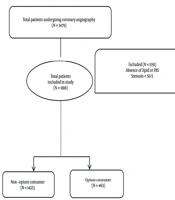
All the patients who were either dependent on opium or not and who were hospitalized during the aforementioned period were included in this study. Patients who had previous heart attacks or had a history of major mental or physical stress, including other types of serious medical illnesses such as congenital heart diseases, cancer or other serious medical conditions, were excluded from this study. It is prudent to note that other risk factors of cardiovascular disease were apt to be confounding factors in this study and included diabetes, hypertension, hyperlipidemia, smoking, cardiac output after MI, type of MI, C-reactive protein (CRP) and leukocytosis. These factors were analyzed precisely in both groups of opium-dependent and non-opium-dependent patients. Patients with incomplete data forms or those who had moved and were not accessible were automatically excluded from the study. The sampling method used in this study was through census and included patients with the prerequisites of entering the study. Based on the inclusion and exclusion criteria, 400 patients were eligible to participate in this study. They were contacted over the phone. The objectives of the study and the confidentiality of patients’ information were explained to all the study participants. All the ethical issues were considered and informed consent was obtained from each patient.
It was determined whether the study patients were still alive or had passed away. In the event the patient passed away, it was important to know how long the patient lived following hospitalization. If the patient was alive, it was important to know if there were reoccurrences of heart problems. All data was entered into the data sheets. After investigating the obtained results, description and analysis of the data were performed using t-test and chi-squared test through statistical package for the social sciences (SPSS) version 16. The sampling and research methods and procedures were confirmed by the ethical committee of Zahedan University of Medical Sciences.
4. Results
In this retrospective study, 400 patients were investigated, of which 328 (82%) were male and 72 (18%) were female. Of the total number of cases, 78 (19.5%) were dependent on opium and 322 (81.5%) were non-opium-dependent. Considering the age variable, the youngest case was 35 and the oldest was 90 years old. The mean age was 45 ± 10.9. From the total number of patients including opium-dependent and non-opium-dependent ones, 28 (7%) had passed away and 372 (93%) were alive. In the non-opium-dependent group, 19 (5.9%) had passed away and 303 (94.1%) were alive. In the dependent group, 9 (11.5%) had passed away and 69 (88.5%) were alive. No statistically significant difference was observed between the two groups (P = 0.072). In the ≤ 40-year-old group, no deaths had occurred and all the 43 patients (100%) were still alive. In the 41 - 64-year-old group, 10 patients (3.6%) had passed away and 267 (96.4%) were alive (P < 0.001). In the ≥ 65-year-old group, 18 patients (22.5%) had passed away and 62 (77.5%) were alive (P < 0.001). In the non-opium-dependent group, no death had occurred in the category of ≤ 40 and all the 32 patients (100%) were still alive. In the age range of 41-64 years, 7 patients (3.1%) had passed away and 216 patients (69.9%) were alive. In the age group of ≥ 65, 12 patients (17.9%) had passed away and 55 (82.1%) were alive (P < 0.001). In the opium-dependent group, the ≤ 40 category had no deaths and all the 11 patients (100%) were alive. In the age range of 41 - 64 years, three patients (5.6%) had passed away and 51 (94.4%) were alive. In the category of ≥ 65, 6 patients (42.2%) had passed away and 7 (53.8%) were alive (P < 0.001). The statistical tests revealed that the mortality rate was higher in the higher age groups for both the opium-dependent and the non-opium-dependent groups. When referencing gender, 19 male patients (5.8%) had passed away and 309 (94.2%) were alive, while 9 female patients (12.5%) had passed away and 63 (87.5%) were alive (P = 0.043). Among the non-opium-dependent group, 5% of males had passed away and 95% were alive, while 6 (9.5%) females had passed away and 57 (90.5%) were alive (P = 0.174). Among the opium-dependent cases, 8.7% of males had passed away and 91.3% were alive, while 33.3% of females passed away and 66.7% of them were alive (P = 0.030). Based on the statistical tests, there was a significant difference in the mortality rate between male and female cases (Table 1). The rates of hospitalization due to heart disease in the non-opium-dependent group were as follows: 29 patients (9%) were re-hospitalized once, 11 (3.4%) twice, 4 (1.3%) more than twice and 278 (86.3%) had no history of re-hospitalization. In the opium-dependent group, 18 (23.1%) were re-hospitalized once, 8 (10.3%) twice, 4 (5.1%) more than twice and 48 (61.5%) were not re-hospitalized (P = 0.001). Based on the statistical tests, there was a significant difference between the opium-dependent and non-opium-dependent groups with regards to their respective re-hospitalization rate (P = 0.001) (Table 2). Among the non-opium-dependent patients who had diabetes, 14.1% had passed away and 85.9% were alive (P < 0.001). In the diabetic opium-dependent patients, 28.6% had passed away and 71.4% were alive (P < 0.001). Based on the statistical analysis, there was a significant difference in the mortality rate between the diabetic and non-diabetic patients (P < 0.001). With regards to hypolipoproteinemia (HLP), no significant difference was observed between the two groups (P = 0.2). The same can be said for hypertension (P = 0.93) as well as smoking (P = 0.86). There was, however, a significant difference in the relationship of CRP and mortality rate between the opium-dependent and non-opium-dependent groups (P < 0.001). With regards to leukocytosis, there was also a significant relationship between the two groups (P < 0.001). Based on the statistical tests in the opium-dependent and non-opium-dependent groups, a significant difference was observed in the mortality rate of patients with extensive MIs in comparison to other types of MIs (P < 0.001). Based on the χ2 test of both groups, a significant difference was observed between the patients with ejection fraction (EF) > 40% and patients with EF < 40% (P < 0.001).
Table 1.
The Chi-Square Test Results of the Mortality Rate Among Males and Females in Two Groups of Opium-Dependent and Non-Opium-Dependent Patients
| Opium Dependency | Dead a | Alive a | Total | P Value |
|---|---|---|---|---|
| Non-opium-dependent | 0.174 | |||
| Male | 13 (5) | 246 (95) | 259 | |
| Female | 6 (9.5) | 57 (90.5) | 63 | |
| Opium-dependent | 0.030 | |||
| Male | 6 (8.7) | 63 (91.3) | 69 | |
| Female | 3 (33.3) | 6 (66.7) | 9 |
a Values are presented as No (%).
Table 2.
The Chi-Square Test Results of the Re-Hospitalization Rate Among Males and Females in Two Groups of Opium-Dependent and Non-Opium-Dependent Patients
| One-Time Hospitalization a | Two Times of Hospitalization a | Three Times of Hospitalization a | No Re-Hospitalization a | Total | P Value | |
|---|---|---|---|---|---|---|
| Opium Dependency | < 0.001 | |||||
| Non-opium-dependent | 29 (1.2) | 11 (3.4) | 4 (9) | 278 (86.3) | 322 | |
| Opium-dependent | 18 (33.1) | 8 (10.3) | 4 (5.1) | 48 (61.5) | 78 |
a Values are presented as No. (%).
5. Discussion
There are several known risk factors for cardiovascular diseases, including gender, age, smoking, history of hypertension, diabetes, and hyperlipidemia. Other risk factors such as opium consumption are still under investigation; however, erroneous belief in the positive effects of opium on the cardiovascular system still exists. This study investigated 400 patients who had experienced a heart attack, 19.5% of which were dependent on opium and males had a higher ratio than women. No significant difference was observed in the mortality rate between the opium-dependent and non-opium-dependent patients (P = 0.072). However, the P value was close to significant (P = 0.05); hence, more extensive research is needed. The results obtained in this study comply with the results of similar studies. For instance, in a study by Davoodi et al. (10) in 2004, patients with MI were followed up for six months. No significant difference was observed in the mortality rates between opium-dependent and non-opium-dependent patients; hence, they just used the results of their study to indicate a need for more research in this area (10). With regards to the mortality rate distribution, no significant difference was observed during the first, second, and third years after hospitalization between opium-dependent and non-opium-dependent patients. No similar study was found in this area. Considering the age factor, a comparison carried out on the total number of patients revealed that mortality rates were significantly higher in older ages (P < 0.001). Likewise, a comparison between opium-dependent and non-opium-dependent patients revealed higher mortality rates in older patients without the influence of opium. This means that age is an independent risk factor. In a broader gender comparison, mortality rate was significantly higher in females than in males (P = 0.043). Moreover, in a comparison between opium-dependent and non-opium-dependent patients, females’ mortality rates were significantly higher than males’ mortality rates in the opium-dependent group (P = 0.030). Considering the low number of overall females in this study (18%) (nine opium-dependent cases), the data collected was not sufficient to provide a reliable result and therefore, more extensive research is necessary. In a study conducted by Davoodi, opium-dependent females were eliminated from the study due to low enrolment in the study (10). The number of hospitalizations was significantly higher in the opium-dependent group (P = 0.001), which is comparable to analogous studies. For instance, in a study by Safaei (11), the six-month prognosis of patients with coronary artery bypass grafting (CABG) surgery was compared among opium-dependent and non-opium-dependent patients. The results revealed that the opium-dependent group was more frequently hospitalized than the non-opium-dependent one (P < 0.05) (11). As previously mentioned, some recognized risk factors of cardiovascular diseases can have a confounding effect. Hence, each cardiovascular risk factor was analyzed separately. An investigation into the effects of HTN in opium-dependent and non-opium-dependent patients showed that mortality rates were significantly different among the two groups. Hypertensive patients in the non-opium-dependent group had a higher mortality rate (P = 0.036). However, the opium-dependent patients did not indicate a significant difference in the mortality rates of patients with or without HTN (P = 0.93). This can indicate that opium might decrease the effect of HTN as a risk factor; however, no similar research was found in this area. With regards to hyperlipidemia, no significant difference was observed in the mortality rates of the two groups. This was true in patients with and without hyperlipidemia. The assessment of diabetic patients revealed that in both groups, the mortality rate was higher in patients with diabetes. The difference was significant in both groups and opium consumption had no effect on the outcome. Diabetes was an independent risk factor. In a study by Sadr Bafghi et al. (8) in Yazd, Iran, the effects of hyperlipidemia and diabetes on mortality rates were not significant among opium-dependent and non-opium-dependent patients. As for smoking, no significant difference was observed in the two groups. These results were backed by the results of Safaei’s study, carried out in Tabriz, Iran (11). With regards to CRP, patients with positive CRP had a higher mortality rate in both groups. Additionally, opium was ineffective in this case. The assessment of leukocytosis showed a significant difference and a higher mortality rate in the opium-dependent and non-opium-dependent patients. However, positive CRP and leukocytosis have been considered as possible risk factors in the literature and are still under investigation. In this study, positive CRP and leukocytosis were considered as risk factors. Their effects were independent from opium consumption and they were not confounding. Patients with extensive MIs had a higher mortality rate (P < 0.001). Opium consumption did not make any difference and the type of MI had no confounding effect. The evaluation of post-MI EF revealed that in both groups, patients with EF ≤ 40% had a higher mortality rate. Opium abuse did not affect the mortality rate and this risk factor also had no confounding effect. These results are also in compliance with the results of previous studies (11-13).
The present study came to the conclusion that the mortality rate in MI patients was not significantly different between the opium-dependent and non-opium-dependent patients and opium consumption did not cause a higher mortality. However, the P-value was very close to being significant. It is possible that a more extensive study reveal significant results. The number of post-MI re-hospitalizations due to heart issues was significantly higher in the opium-dependent group. Opium consumption did not affect the mortality rate, but influenced morbidity (14). Based on the obtained results (which are consistent with analogous studies), education is imperative (13-16), as it helps to inform people (17-20) of the effects of opium consumption on the cardiovascular system. It may also correct the erroneous belief (20, 21) that opium can have a protective effect on the heart. As a result, the outbreak of opium consumption, the related heart problems and the high expenses of treatment can be reduced.