
1. Background
Impulsivity is a multidimensional personality trait related to deficits in control and inhibition such as the inability to delay gratification as well as deficits in approaching behaviors such as persistence and planning (1, 2). Indeed, all human functions are influenced by three core personality system: approach, avoidance, and supervisory control (3-5). The approach motivation system is characterized by action or go system, that is responsible for motivational response as well as behavioral activation and facilitation systems and approach of goal (6-9), while the avoidance motivation system is characterized by withdrawal or freezing system, which is responsible for behaviors related to avoid threat, and behavioral inhibition as well as fight-flight-freeze system (6, 8-11). The last and important system in this category is the supervisory control system, which is linked to psychological constructs of inhibitory and executive functioning to effortful control over motivational impulses as well as moderating the action of approach and avoidance system (12-15). However, the biological models of human behavior classified all three systems as a distinct system in the human neural system (3-5). Different studies showed that greater left frontal asymmetry relates to approach and activation systems, on the other hand, greater right frontal asymmetry relates to avoidance system (3-5, 12, 16). In contrast, there are no consistent results about the relationship between frontal asymmetry and supervisory system (3, 5). However, one of the recent studies on neurophysiological traits of emotion based on impulsivity (3) hypothesized that the link between frontal asymmetry and positive urgency is related to the reduced right-frontal activity. The reduced right-frontal activity may be a potential neurobiological trait related to the supervisory control system. This result is consistent with the other previously conducted studies such as that of Gianotti et al., (17) demonstrating that right-frontal theta and delta activities relate to greater risk taking-behaviors or (12) the study that showed this asymmetric activity may be linked to the right inferior frontal gyrus. This region of the brain is linked with response inhibition on a Go/No-go task and inability to ignore drug-related cues in active cocaine users (18, 19). Therefore, some recent studies hypothesized a relationship between frontal asymmetry, especially asymmetric activities of the right inferior frontal gyrus by the supervisory control system. As previously mentioned, impulsivity is a multidimensional conception, which encompasses negative urgency, lack of premeditation, sensation seeking, lack of perseverance, and positive urgency (5). Negative and positive urgency refers to the tendency towards rash action in response to extreme negative or positive emotional states (3, 5). Lack of premeditation also refers to an individual’s tendency to act without consideration of the potentially dangerous consequences of the behavior, and sensation seeking refers to an individual’s readiness to seek activities that are exciting and novel also lack of perseverance includes an individual’s tendency to give up in the face of boredom, fatigue, or frustration (20). A recent study by Grimshaw and Carmel (21) suggested that greater relative left frontal asymmetry is associated with different impulsivity dimensions. Also, different researchers show that positive urgency, sensation seeking and response inhibition are associated with greater relative left frontal asymmetry (3, 19, 22). Also, a more recent study (5) suggested that the greater relative left frontal activities are related to multiple facets of impulsivity: negative urgency, lack of premeditation, lack of perseverance, and positive urgency. Another recent study (3) showed that greater positive urgency is associated with greater relative left frontal electroencephalography (EEG) activity. All of these recent consistent results may shed light on how impulsivity works beneath human brain and provides supports for biological models of impulsivity in human behavior. But, to understand the exact mechanism of human brain functioning based on the three personality core systems for impulsivity traits, there is a need for more investigation and more consistent results.
2. Objectives
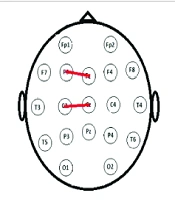
The current study aimed to investigate the correlation of QEEG connectivity indices in FP1 / Fp2 brain areas and multiple facets of impulsivity.
3. Patients and Methods
3.1. Instruments
3.1.1. Electroencephalogram
QEEG was recorded by Neruoscan SynAmps RT amplifier units (EL Paso, TX); at the beginning, electro cup mounted by 19 channels based on the 10 - 20 system with ground electrode between Fpz1 and Fpz2 embedded in participants’ scalp. Also, it is noteworthy that the reference used to record data was a bipolar reference. Accordingly, EEG recorded data were sent to quantitative NneruoGuide software for analysis. In the first step, data were visually inspected to eliminate artifacts, but to make sure, the final 60 - 70 seconds hand-selected electroencephalography from all part of the six minutes were recorded. Asymmetry as a connectivity index was computed via Z scored FFT (fast Fourier transform) amplitude asymmetry relating Fp1 and Fp2 areas. Finally, this index was correlated with impulsive behavior traits via SPSS.
3.1.2. The UPPS Impulsive Behavior Scale
This scale was developed by Lynam et al., (23) and consists of 59 questions that assess five different dimensions of impulsivity traits: negative urgency, lack of premeditation, sensation seeking, lack of perseverance, and positive urgency. Lynam et al., (24) also showed that the subscales had a significant relationship with alcohol-consuming in the non-clinical young adults. Also, alpha coefficients of all subscales were reported higher than 80%.
3.2. Patients and Methods
Ninety-seven college students (60 females and 37 males), randomly selected by multiphasic cluster sampling, participated in the current study. However, nine participants were excluded due to failing to complete the inventory or excessive artifacts in the EEG data. Finally, 88 participants were included in the data analysis. At the beginning, participants completed sets of demographic information such as age, gender, handedness, family income, etc., and the impulsive behavior scale. After completion of the questionnaires, EEG activates were assessed for six minutes both in the opened eye and closed eye statuses in the laboratory of psychology located in the University of Mohaghegh Ardabili.
4. Results
As it can be observed in Table 1, most of the participants were in the age range of 19 to 25 years, MA student, jobless, single, and female.
Table 1.
Demographic Characteristics of the Study Participants (n = 88)
| Demographic Variable | Frequency | Percentage |
|---|---|---|
| Gender | ||
| Female | 60 | 68.2 |
| Male | 28 | 31.8 |
| Marital status | ||
| Married | 12 | 13.6 |
| Single | 74 | 84.1 |
| Divorced | 2 | 2.3 |
| Occupational status | ||
| Employed | 20 | 22.7 |
| Jobless | 68 | 77.3 |
| Education status | ||
| Bachelor of arts | 36 | 40.9 |
| Masters of arts | 52 | 59.1 |
| Age, y | ||
| 19 - 25 | 56 | 63.6 |
| 26 - 35 | 30 | 34.1 |
| 36 - 44 | 2 | 1.0 |
As shown in Table 2, the means of negative urgency, positive urgency, lack of premeditation, lack of perseverance, and sensation seeking were 30.5, 40.8, 19.4, 21.9, and 22.2, respectively. Also, the means for the brain waves in the closed eye status varied 1.1 - 1.6 and in the open eye status from 1.6 to 4.5.
Table 2.
Mean and Standard Deviation of the Participants Scores in the Study Variables
| Variable | Number | Mean ± SD |
|---|---|---|
| Negative urgency | 88 | 30.5 ± 7.0 |
| Positive urgency | 88 | 40.8 ± 9.5 |
| Lack of premeditation | 88 | 19.4 ± 5.4 |
| Lack of perseverance | 88 | 21.9 ± 5.8 |
| Sensation seeking | 88 | 29.2 ± 6.7 |
As can be observed through the Pearson correlation table, there was a positive and significant relationship between negative urgency and delta waves in the closed eye condition (r = 0.374). Besides, there was a significant, but negative relationship between beta wave in open eye condition and lack of premeditation (r = -0.232). Additionally, there were negative significant relationships between high beta wave in closed eye condition and lack of perseverance (r = -0.235); likewise, a negative and significant relationship between positive urgency and beta wave in open eye condition (r = -0.223). Except for these significant relationships, they were no significant relationships between any of impulsivity traits and connectivity of brain waves in FP1 and Fp2 areas.
5. Discussion
The current study aimed to identify the possible relationships between brain waves asymmetry in FP1 and Fp2 areas and multiphasic facets of impulsivity. Impulsivity is reported in many psychiatric problems and includes deficits in several cognitive functions such as attention, inhibitory control, risk-taking, delay discounting, and planning. The prefrontal cortex (PFC), especially orbitofrontal cortex (Fp1 and Fp2 areas) may have a key role in impulsivity. Studies showed that prefrontal asymmetry is associated with controlling impulsive behaviors (3, 19, 22). However, each facet of impulsivity (negative urgency, lack of premeditation, sensation seeking, lack of perseverance, and positive urgency) is separately associated with different brain waves asymmetry in the prefrontal cortex (3, 19, 22). But, interestingly Fp1 is identified as one of the important centers of impulsivity control and Fp2 is known for its role in inhibition system (3, 22). Therefore, correlation between asymmetry as a connectivity index between these two areas and multiple aspects of impulsivity may reveal important information. Similar to previous studies (5), the current study demonstrated significant relationships between prefrontal connectivity asymmetry and nearly all facets of impulsivity, but in this case only in two specific areas of prefrontal lobe. Along with the current study results, previously conducted studies suggested that positive urgency and lack of premeditation were associated with greater relative left frontal asymmetry (3, 19, 22), however, the current study by concentration on the connectivity asymmetry of FP1 and Fp2 areas observed a negative relationship between positive urgency and beta wave as well as a negative relationship between this wave and lack of premeditation in the same eye condition suggesting that these two facets of impulsivity may be controlled by the same process in the three core personality system.
Beta rhythms in EEG refer to “fast” frequencies and normally increase during mental activation. Increased power in beta frequencies is one of the bioelectrical landmarks of anxiety. Increased beta oscillations are observed in normal subjects during states of induced anxiety as compared with relaxation (25), as well as in anxiety disorders (26). Thus, it may be speculated that the relationship between beta asymmetry and facets of positive urgency can be caused by anxiety.
Another interesting finding showed a positive relationship between negative urgency and delta waves in closed eye condition, which provided more support for a previous study (12) suggesting a positive relationship between higher delta activity and risk-taking behaviors. The delta wave is a restorative rest state for the brain, but if excessively present during awake states, it can interfere with cognitive and emotional processing. It appears that the increased delta in one hemisphere compared with the other can block logical thinking and ultimately, result in impulsivity.
The last significant relationship in the current study was observed between high beta activity in closed eye condition and lack of perseverance; this relationship was also negative.
Along with this finding (5), a significant relationship was reported between greater relative frontal asymmetry and lack of perseverance. These results were consistent with those of previous studies related to activation of PFC neurons to inhibit impulsive behavior. More elevated beta and high beta-gamma amplitude at location Fp1 than Fp2 are necessary for forethought and perseverance; since the left hemisphere has an important role in this performance. The low asymmetry between Fp1 and Fp2 in high beta indicate the poor activation of the left hemisphere, something that can lead to impulsivity.
Consequently, some of the limitations of the current study include using only the self-report scale to assess impulsivity traits and more importantly restriction of participants to non-clinical people, thus, it is hoped that in the forthcoming studies, researchers replicate the current study by clinical samples, especially by patients struggling with impulsivity control disorder. Also, it is noteworthy that the current study was descriptive; therefore, it did not provide a causal relationship between variables.
In conclusion, the results of the current study were consistent with prior findings highlighting the importance of the high beta and low delta activities in the prefrontal lobe in impulsive behaviors. These results suggested that besides the important role that prefrontal lobe played in the executive functions and all three core personality systems, it also had an important role in regulating impulsive behaviors via the inhibition system. And this idea was supported by correlation of different dimensions of impulsivity traits by FP1 and Fp2 areas in the prefrontal lobe.
Table 3.
Pearson Correlation Matrix Between the Study Variablesa
| Delta (C) | Theta (C) | Alpha (C) | Beta (C) | High Beta(C) | Alpha 1 (C) | Alpha 2 (C) | Beta 1 (C) | Beta 2 (C) | Beta 3 (C) | Delta (O) | Theta (O) | Alpha (O) | Beta (O) | High Beta(O) | Alpha 1 (O) | Alpha 2 (O) | Beta 1 (O) | Beta 2 (O) | Beta 3 (O) | |
|---|---|---|---|---|---|---|---|---|---|---|---|---|---|---|---|---|---|---|---|---|
| Negative urgency | 0.37** | 0.15 | 0.11 | 0.01 | 0.02 | 0.10 | 0.06 | 0.12 | 0.12 | 0.08 | 0.06 | 0.09 | 0.13 | 0.10 | -0.09 | 0.18 | 0.04 | 0.14 | 0.09 | 0.06 |
| Lack of Premeditation | - 0.13 | 0.04 | -0.15 | 0.09 | 0.06 | -0.09 | 0.03 | 0.16 | 0.04 | 0.13 | 0.01 | 0.07 | 0.04 | -0.03 | 0.08 | 0.13 | 0.05 | -0.23** | 0.02 | 0.04 |
| Lack of perseverance | 0.11 | 0.04 | 0.04 | -0.13 | -0.24 | 0.09 | 0.17 | -0.08 | 0.15 | 0.04 | 0.02 | -0.09 | 0.14 | 0.04 | 0.13 | 0.08 | 0.05 | 0.14 | -0.06 | 0.08 |
| Sensation seeking | 0.06 | 0.13 | -0.08 | 0.07 | 0.04 | 0.08 | -0.09 | 0.14 | 0.06 | 0.13 | 0.04 | 0.07 | 0.05 | 0.14 | 0.05 | -0.08 | 0.02 | 0.17 | 0.00 | -0.10 |
| Positive urgency | 0.07 | 0.06 | -0.09 | 0.02 | 0.05 | 0.04 | 0.13 | 0.09 | 0.05 | 0.15 | -0.14 | 0.07 | 0.06 | -0.23** | 0.01 | 0.07 | 0.02 | 0.10 | 0.07 | 0.03 |
Abbreviations: C, closed eye condition; O, open eye condition.
a* Correlation is significant at 0.05 (2-tailed), ** Correlation Is significant at 0.01 (2-tailed).