
1. Context
Coronavirus disease (COVID-19) began in China in December 2019 and spread rapidly all over the world. Up to 15 April 2020, coronavirus infected about two million people (1) in more than 200 countries (2).
There is a robust transmission of COVID-19 from human-to-human. Thus children and neonates are also vulnerable to this disease (3). Although COVID-19 cases were rare in infants and newborns, Chinese authors reported nine hospitalized infants and newborns, aged 1 to 4 months, from December 2019 till February 2020 (4). Case reports from other countries followed them.
The estimated rate of affected children with COVID-19 is 1-5%, and this rate in the newborns is unknown. This appraisal maybe underestimated because they show mild or no-symptoms of the disease and may not refer to doctor, in addition, the small number of COVID-19 in newborns may be due to the possible low risk of exposure to the virus or to a mild or asymptomatic disease which cannot be recognized (4-6). Newborns are at high risk of being infected with COVID-19 when they are born to infected mothers or have close contact with a family member infected with COVID-19, or live in the pandemic area (4, 7, 8). The number of infected pregnant women is increasing, and there is much concern about their babies getting infected. To date, 30 neonates appear to be COVID-19 infected worldwide. In this study, we reviewed clinical symptoms, laboratory data, radiological signs, diagnostic tests, and treatments.
The reported neonates were 23 from China, three from Italy, one from Iran, one from Spain, and two from the USA. We reported one death in one preterm infant in this review. In the present study, we searched articles that provided information about neonatal infection with COVID-19 to find the best approach to these neonates.
2. Methods
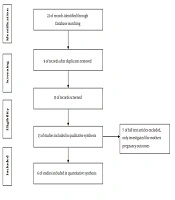
We searched articles published in PubMed, EMBASE, and Google Scholar databases written in English from March 1, to April 15, 2020 that provided information about neonatal infection with COVID-19. We have reviewed all neonates with COVID-19 reported worldwide.
3. Vertical Transmission
The two potential routes of transmission in neonates from their mothers are vertical (maternal-fetal), or horizontal (maternal-neonatal) (3).
The possibility of vertical transmission is unknown. Currently there is no definite evidence for vertical transmission in women who develop COVID-19, likely it occurs very rarely (3, 5, 9-14). However, there are a few data about the possibility of mother-fetal transmission in COVID-19 (3, 15, 16), it is still a controversy because when the viral load is not high enough, the detection of the virus is limited and false negative tests may occur (13). Thus the risk of vertical transmission during the peak of infection and while symptoms are very acute is unknown (17). These data do not exist during the pandemic, and only limited information is currently available to address these issues (1).
One study in Iran followed a total number of 31 infected pregnant mothers with COVID-19, no infection was found in their neonates or placentas (13).
In one cohort study in China, a follow up of 33 neonates born to mothers with COVID-19 revealed infection in three neonates (18). Experts believe this is because of the strict infection control and prevention procedure during the delivery in China. Sources of COVID-19 were maternal in origin, although all samples of amniotic fluid, cord blood, breast milk, were negative for COVID-19 (3, 19).
In another study in China, a neonate born to mother with COVID-19 had elevated IgM antibody and cytokine level, two hours after birth. The elevated IgM antibody level suggests the neonate was infected in utero because IgM antibodies do not pass through the placenta (4).
Also, in a study in China, blood samples were collected for COVID-19 antibodies from 6 infected pregnant women and their neonates. Two neonates had IgG and IgM concentration higher than the average level. Their mothers had elevated levels of IgG and IgM too. Three neonates had elevated IgG but normal IgM levels. All three mothers had elevated IgG, and two also had elevated IgM levels. Inflammatory cytokine IL-6 was increased in all infants. The throat swabs and blood samples for COVID-19 in all neonates were negative.
Another study in China analyzed symptoms of ten neonates (including two twins) born to nine mothers with COVID-19. In four cases, the onset of clinical symptoms was before delivery, two cases on the day of delivery, and three cases after delivery (9).
4. Neonatal Screening
All neonates born to suspected/confirmed COVID-19 mothers should be sampled with a nasopharyngeal swab within 24 hours after birth or as soon as the mother’s test is reported positive. If the result of the first swab is positive, the second sample should be obtained to differentiate between surface contamination versus persistent viral shedding. If the result of the first swab is negative, the test has to be repeated only if symptoms are suspicious for COVID-19. However, a neonate who requires hospital admission will be tested again on day 5 (20, 21). Discharge criteria in sick neonates are: (1) Normal Temperature for more than three days; (2) Improved respiratory symptom and chest radiography; (3) Negative nasopharyngeal and pharyngeal swabs for COVID-19 for two times (with 24-hour interval) (7).
5. Demographic Characteristics
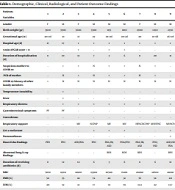
Seventy-six percent of neonates were male, and 24% were female. 30% of the infected neonates were preterm, and 20% of them were LBW (low birth weight). 66.6% of neonates were born via cesarean section due to routine indications. All neonates except one were born from mothers with COVID-19 infection. In four neonates, reports showed infection of fathers. In one neonate, one of eight household contacts of the patient, a 49-year-old woman, was symptomatic. Full protective measures were observed in 70% of newborns, and five neonates had not met precautions due to unawareness of the mother’s condition, but the result of all COVID-19 PCR tests on the amniotic fluid, placenta, cord, and breast milk was negative (Table 1).
Table 1.
Demographic Data
| Study | Country | No. of Cases | Gender | Gestational Age, wk | Birth Weight | Delivery | History of Illness | Apgar | Contact Precaution | |||||||
|---|---|---|---|---|---|---|---|---|---|---|---|---|---|---|---|---|
| Male | Female | < 37 | ≥ 37 | < 2800 | 2800 - 4000 | > 4000 | C/S | NVD | Mother | Father | Other | |||||
| Zeng et al. (18) | China | 3 | - | - | 1 | 2 | 1 | 2 | 3 | 0 | 3 | 1 | - | 8 - 9 | Yes | |
| Zhu et al. (22) | China | 10 | 8 | 2 | 6 | 4 | 2 | 7 | 1 | 7 | 3 | 10 | - | - | 7 - 10 | Yes |
| Wang et al. (21) | China | 1 | 1 | - | - | 1 | - | 1 | - | 1 | - | 1 | - | - | 8 - 9 | Yes |
| Yu et al. (12) | China | 1 | - | - | - | 1 | - | 1 | - | 1 | - | 1 | - | - | 9 - 10 | Yes |
| Dong et al. (22) | China | 1 | - | 1 | - | 1 | - | 1 | - | 1 | - | 1 | - | - | 9 - 10 | Yes |
| Zeng et al. (23) | China | 2 | NAa | NAa | - | 2 | NAa | NAa | NAa | 2 | - | 2 | - | - | 9 - 10 | 1 Yes |
| Ferrazzi et al. (24) | Italy | 3 | NAa | NAa | - | 1 | NAa | NAa | NAa | - | 3 | 3 | - | - | 9 - 10 | 2 neonate Feed Without protection |
| Kamali Aghdam et al. (25) | Iran | 1 | 1 | - | - | 1 | - | 1 | - | 1 | - | 1 | 1 | - | ? | No |
| Alonso Diaz et al. (26) | Spain | 1 | - | 1 | - | - | 1 | - | - | 1 | - | 1 | 1 | - | 7 - 9 | No |
| Lingkong (27) | China | 1 | 1 | - | - | 1 | - | 1 | - | NAa | NAa | 1 | 1 | - | 8 - 9 | We do not have complete information |
| Zhang et al. (28) | China | 4 | 3 | 1 | - | 4 | NAa | NAa | NAa | NAa | NAa | 4 | - | - | ? | 1 neonate Feed Without protection |
| Paret et al. (29) | USA | 1 | 1 | - | - | 1 | NAa | NAa | NAa | NAa | NAa | 1 | 1 | - | ? | No |
| Coronado Munoz et al. (30) | USA | 1 | 1 | - | 1 | - | NAa | NAa | NAa | NAa | NAa | - | - | 1 | ? | No |
aNA, we do not have complete information.
6. Neonatal Clinical Manifestation
Infants under one year of age and children with underlying disorders are at risk for severe disease (3, 9).
Neonates with COVID-19 infection are classified into two groups, with presence or absence of symptoms (15). Term neonates born to COVID-19 mothers are usually asymptomatic or present non-specific symptoms such as temperature instability, apnea, respiratory distress, GI symptoms, hypotension (31).
Clinical manifestation of infected neonates, especially in preterm, might be nonspecific (7). Some of the symptoms are temperature instability, respiratory and cardiovascular symptoms including tachypnea, grunting, nasal flaring, work of breathing, apnea, cough, tachycardia, poor feeding, lethargy, a gastrointestinal symptom such as vomiting, diarrhea, abdominal distention. Some neonates can develop ARDS (Acute respiratory distress syndrome) (7, 15).
In neonates, it is challenging to differentiate between the symptoms of COVID-19 and RDS, TTN (Transient Tachypnea of the newborn), and sepsis. In our review 56.5% of neonates were asymptomatic and in the others, the most common symptoms were: shortness of breath, tachypnea, cough, apnea, temperature instability, tachycardia (Table 2).
Table 2.
Clinical Manifestations of COVID-19 in Neonates
| Study | Number | Day of begin Symptom After Birth | Lethargy | Respiratory | Sneezing | Cardiac | Temperature | Gastrointestinal | ||||||||
|---|---|---|---|---|---|---|---|---|---|---|---|---|---|---|---|---|
| Shortness of Breath | Cough | Tachy Pnea | hypoxia | Apnea | Tachy Cardia | Hyper Thermia | Hypo Thermia | Poor feeding | Vomiting | Diarrhea | Abdominal Distention | |||||
| Zeng et al. (18) | 3 | 1 - 2 | 2 | 1 | - | 1 | - | - | - | - | 2 | - | - | 1 | - | - |
| Zhu et al. (22) | 10 | 2 neonate on day 7 -9; we don’t know about the others | - | 6 | - | - | - | - | - | 1 | 2 | 0 | 4 | 1 | - | - |
| Wang et al. (21) | 1 | 1 | - | - | - | - | - | - | - | - | - | - | - | 1 | - | - |
| Yu et al. (12) | 1 | 1 | - | 1 | - | - | - | - | - | - | - | - | - | - | - | - |
| Dong et al. (22) | 1 | No sign | - | - | - | - | - | - | - | - | - | - | - | - | - | - |
| Zeng et al. (23) | 2 | No sign | - | - | - | - | - | - | - | - | - | - | - | - | - | - |
| Ferrazzi et al. (24) | 2 | 1 neonate on day 1; 2 neonate had no sign | One neonate had respiratory symptoms We do not have complete information | |||||||||||||
| Kamali Aghdam et al. (25) | 1 | 15 | 1 | 1 | - | 1 | - | - | - | 1 | - | 1 | - | - | - | - |
| Alonso Diaz et al. (26) | 1 | 9 | - | - | - | 1 | - | 1 | - | - | - | - | - | - | - | - |
| Lingkong (27) | 1 | 17 | - | - | - | - | - | - | 1 | - | 1 | - | - | 1 | 1 | - |
| Zhang et al. (28) | 4 | 1 neonate on day 1; 2 neonate on day 5; 1 neonate on day17 | - | 1 | 1 | - | - | - | - | - | 2 | - | - | 1 | - | - |
| Paret et al. (29) | 1 | Day 26 | - | - | - | - | - | - | - | 1 | 1 | - | - | - | - | - |
| Coronado Munoz et al. (30) | 1 | Day 21 | - | - | - | 1 | 1 | - | - | 1 | - | 1 | 1 | - | - | - |
7. Laboratory Data
The diagnosis of COVID-19 depends on history and laboratory tests. Diagnostic tools are the nucleic acid or virus gene tests (9) on samples obtained from nasopharyngeal swab, sputum, secretion of the lower respiratory tract, blood, and stool. Nasopharyngeal swab is the most common way of sampling, but its “positive detection rate” is less than 50%, so it needs to be repeated (9). The bronchoalveolar lavage fluid has a “high positive detection rate” but may increase the risk of cross-infection (9). Laboratory examination may include normal or decreased leukocyte counts or decreased lymphocyte counts, mild thrombocytopenia, elevated levels of creatine kinase, alkaline phosphatase, alanine aminotransferase (ALT), aspartate aminotransferase (AST) and lactate dehydrogenase (LDH) (15). Lab data that represent the disease in children are normal CRP (C-reactive protein) (9), procalcitonin, and D Dimer (3). Elevated inflammatory markers are less common in children, and lymphocytopenia is rare (5). In Iran, leukopenia and lymphopenia (infants < 3000 and children < 2000) were reported just in 30% of children with COVID-19 (32). Information about lab data in neonates is limited. In 15 neonates, the primary nasopharyngeal swab test of COVID-19 PCR was positive. The second test was positive in three of the cases too, and in others, the second test was negative. In one case, although the first test was negative, the second test was positive. In one neonate who was referred at 15 days of age, the test was positive on the same day. Overall in 56% of neonates, the nasopharyngeal swab test of COVID-19 PCR was positive.
Fifty six point five percent of neonates were asymptomatic. We found leukopenia in one, lymphopenia in 3 (10%), thrombocytopenia in 3 (10%), elevated CPK (creatine kinase) in 5 (16.6%), elevated CRP in 1 (3.3%), elevated procalcitonin in 2 (6.6%) and abnormality in liver test in 4 (13%) neonates (Table 3).
Table 3.
The Laboratory Data
| Study | Number | COVID-19 | PCR Test | COVID-19 Ab | CBC Diff | CPK↑ | CRP↑ | Procalcitonin ↑ | LDH ↑ | LFT ↑ | COVID PCR | ||||
|---|---|---|---|---|---|---|---|---|---|---|---|---|---|---|---|
| Primary | Secondary | IgM | IgG | Leukopenia (≤ 10000) | Lymphopenia (≤ 3000) | Thrombocytopenia (≤ 150000) | Milk | Amnion Placenta Cord | |||||||
| Zeng et al. (18) | 3 | 3 (day 2 - 4) | (day 6 - 7) | - | - | 1 | 1 | 1 | - | 1 | - | - | Negative | Negative | |
| Zhu et al. (22) | 10 | 0 | Denied | - | - | - | 2 | - | - | - | - | 2 | Denied | Denied | |
| Wang et al. (21) | 1 | 1 (day 2) | Denied | - | - | 1 | - | 1 | - | - | - | 1 | Negative | Negative | |
| Yu et al. (12) | 1 | 1 (day 2) | Denied | NAa | NAa | NAa | NAa | NAa | NAa | NAa | NAa | NAa | NAa | NAa | |
| Dong et al. (22) | 1 | Negative | - | Positive | Positive | - | 1 | - | 1 | - | - | - | 1 | Negative | Denied |
| Zeng et al. (23) | 2 | Negative | Denied | Positive | Positive | - | - | 2 | - | - | - | - | Denied | Denied | |
| Ferrazzi et al. (24) | 3 | Positive after birth-day 1-day 3 | - | NAa | NAa | NAa | NAa | NAa | NAa | NAa | NAa | NAa | NAa | NAa | NAa |
| Kamali Aghdam et al. (25) | 1 | - | Positive in 15 day | - | 1 | - | - | - | - | - | - | - | Denied | Denied | |
| Alonso Diaz et al. (26) | 1 | Negative (day 6) | Positive (day 8) | - | - | - | - | - | - | - | - | - | Denied | Denied | |
| Lingkong et al. (27) | 1 | Positive (day 17) | - | - | - | - | - | - | - | - | - | - | Denied | Denied | |
| Zhang et al. (28) | 4 | Positive (day 1 - 5 - 9 - 19) | - | NAa | NAa | NAa | NAa | NAa | NAa | NAa | NAa | NAa | NAa | NAa | NAa |
| Paret et al. (29) | 1 | Positive (day 26) | - | - | - | - | - | - | - | - | - | - | Denied | Denied | |
| Coronado Munoz et al. (30) | 1 | Positive (day 21) | - | - | - | - | - | - | 1 | 1 | - | - | Denied | Denied | |
aNA, we do not have complete information.
8. Diagnostic Imaging
As most of the neonates do not have a severe respiratory sign, plain chest x-ray cannot identify all the pulmonary lesions, so previous guidelines recommend chest CT for diagnosis and management. However, recent guidelines do not recommend a chest CT scan for diagnosis unless in complicated cases.
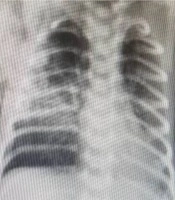
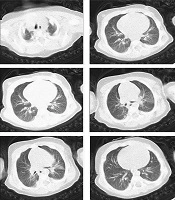
Radiographic findings in the chest x-ray and CT scan of the chest may show pneumonia, subpleural lesions with localized inflammatory infiltration, and graphy of the abdomen may show ileus intestinal (15, 33).
In our review, the characteristic finding in chest x-ray was pneumonia and ground glass view, and in chest CT scan, high-density nodular shadow under pleura was seen (Table 4).
Table 4.
Radiologic Findings
| Study | Number | Chest X-Ray | Chest CT Scan |
|---|---|---|---|
| Zeng et al. (18) | 3 | Pneumonia, respiratory distress syndrome | - |
| Zhu et al. (22) | 10 | Infections (4), neonatal respiratory distress syndrome (2), pneumothorax (1) | - |
| Wang et al. (21) | 1 | Thickened Lung texture | The high-density nodular shadow under Pleura, small pieces of patchy shadow |
| Yu et al. (12) | 1 | Mild pulmonary infection | Denied |
| Dong et al. (22) | 1 | Denied | Normal |
| Zeng et al. (23) | 2 | Denied | Denied |
| Ferrazzi et al. (24) | 3 | We do not have complete information | |
| Kamali Aghdam et al. (25) | 1 | Normal | |
| Alonso Diaz et al. (26) | 1 | Ground glass opacity | Denied |
| Lingkong (27) | 1 | A slight blur of the lower left and upper right lungs. | The enhanced texture of the two lungs and small strips of blurred shadows `seen in both lung lob |
| Zhang et al. (28) | 4 | We do not have complete information | Increased lung marking |
| Paret et al. (29) | 1 | We do not have complete information | |
| Coronado Munoz et al. (30) | 1 | Bilateral linear opacities and consolidation in the right upper lobe | Denied |
9. Treatment
There is no specific drug for COVID-19 (9). The primary therapy is supportive care and symptomatic treatment of complications, which include oxygen therapy, maintenance of water-electrolyte, acid-base balance, inhalations, nutritional support. For the newborn with severe acute respiratory distress syndrome, high -dose surfactant, NO (nitric oxide), high-frequency oscillatory ventilation, and ECMO (extracorporeal membrane lung) is suggested. One study in IRAN suggests, corticosteroids and interferon-alpha 2b nebulization in critically ill infant accompanying intravenous immunoglobulin. There is no supportive evidence for the effectiveness of gamma globulin, interferon, or hormone therapy. Inappropriate use of antibiotics is troublesome. Antibiotics are suggested just for cases with clinical or paraclinical signs of bacterial superinfection (15, 17, 23). Unfortunately, the information in neonates is limited.
In our review, most of neonates received supportive care and symptomatic treatment (Table 5).
Table 5.
Treatment
| Study | Number | Ventilation | Antibiotic | IVIG | Corticosteroid | Antiviral Therapy | Discharge | Death | |
|---|---|---|---|---|---|---|---|---|---|
| Invasive | Noninvasive | ||||||||
| Zeng et al. (18) | 3 | - | 1 | 1 | - | - | - | 3 | - |
| Zhu et al. (22) | 10 | 1 | 1 | - | 1 | 1 | - | 5 (until report) | 1 (DIC) |
| Wang et al. (21) | 1 | - | - | 1 | - | - | - | 1 | - |
| Yu et al. (12) | 1 | - | - | - | - | - | - | 1 | - |
| Dong et al. (22) | 1 | - | - | - | - | -- | - | - | - |
| Zeng et al. (23) | 2 | - | - | - | - | - | - | - | - |
| Ferrazzi et al. (24) | 3 | 1 | - | NAa | NAa | NAa | NAa | NAa | NAa |
| Kamali Aghdam et al. (25) | 1 | - | 1 | 1 | - | - | Oseltamivir | 1 | - |
| Alonso Diaz et al. (26) | 1 | - | 1 CPAP after birth for 2 hours | - | - | - | - | 1 | - |
| Lingkong (27) | 1 | - | - | - | - | - | - | 1 | - |
| Zhang et al. (28) | 4 | - | - | - | - | - | -- | 4 | - |
| Paret et al. (29) | 1 | - | - | 1 | - | - | - | 1 | - |
| Coronado Munoz et al. (30) | 1 | 1 | 1 | 1 | - | - | 1 | 1 | - |
aNA, we do not have complete information.
10. Preventative Strategies
COVID-19 infection is not an indication for pregnancy termination unless the pregnant woman is critically ill, and her condition may cause intrauterine fetal demise. About the mode of delivery, there is no clear benefit of delivery via cesarean in women with COVID-19 infection. Fetal heart rate monitoring and ultrasound should be used for COVID-19 positive mothers to evaluate the fetal status. Studies do not support amniocentesis. Severe preventative strategies can prevent neonates from getting infected. In neonates born to COVID-19 positive mother or suspected to be infected, we have to maintain contact and droplet precaution in mother and neonate (3, 17, 21).
The delivery room or operating room for suspected or confirmed infected mothers should be specially prepared, preferably with negative pressure. The medical staff should use personal protective equipment (PPE). Additional support person waiting in the hallway unless needed. Mothers should wear a surgical mask outside the isolation room. Attempts should minimize the number of infant resuscitation team attendants. Examine the placenta of pregnant women with COVID-19 infection. We do not recommend delayed cord clamping and skin to skin contact, and neonates should be cleaned and dried immediately. Neonate of mothers with suspected or diagnosed COVID-19 infection should be isolated for 14 days after birth and closely monitored for any symptoms. The neonate must be referred to the designated neonatal ward and isolated in a single room with an isolated air cycle system. All medical staff should observe hygiene protocols and wearing personal protective equipment (3, 7, 17, 20).
Breast milk is the best source of nutrition for most neonates. However, some studies revealed that samples obtained from breast milk did not show the presence of COVID-19 (21).
Some studies suggest that near term and term neonates can be roomed-in with their mothers and breastfed with observing precautions including washing mother’s hands before touching, wearing a face mask before each feeding or when the neonate is out of the incubator. However, the preterm neonates and ill neonates should be separated from their mothers and can be nourished by expressed breast milk with a bottle. The neonates whose mothers are too sick to breastfeed or to express breast milk can use formula (20, 21).
11. Discussion
We reviewed articles that provide information about neonatal infection with COVID-19 to find the best method of approaching to these neonates. Based on this study:
Infection of newborns with COVID-19 is possible in three ways:
1) Being born to mothers diagnosed with COVID-19 (maternal-fetal or maternal-neonatal)
2) Having close contact with the family member’s infection with COVID-19
There are a few data about the possibility of mother-fetal transmission in COVID-19, but there is no definite evidence for vertical transmission.
In our review, all samples (amniotic fluid, cord blood, breast milk) were negative for COVID-19, but three neonates had elevated COVID-19 IgM antibodies. The maternal-fetal transfer passage is not proven yet, because, most infants meet full protective measures.
Clinical manifestation of infected neonates might be nonspecific, such as temperature instability, apnea, respiratory distress, GI symptoms, and hypotension, the predominant symptom being mild respiratory symptoms. Term neonates are usually asymptomatic (31).
In our review, 56.5% of neonates were asymptomatic, in other reviews, the most common symptoms were: shortness of breath, tachypnea, cough, apnea, temperature instability, and tachycardia.
The incubation period in a neonate is between 3 and 7 days on average, with one day as the shortest and 14 days the longest (4, 15). In our review, seven neonates showed symptoms after the first week of life.
Radiographic findings in neonates may be likely to show pneumonia, and in the chest CT scan (computed tomography), we may see subpleural lesions with localized inflammatory infiltration (15, 33). The most common findings on chest radiographs and chest CT in our review were: thickened lung texture, mild pulmonary infection, ground glass (respiratory distress syndrome), high density modular, and patchy shadow under pleura.
In our review, one neonate had leukopenia, and three neonates had lymphopenia. Three neonates had thrombocytopenia. Five neonates had elevated CPK (creatine phosphokinase). One neonate had elevated CRP, and two had elevated procalcitonin. Other studies emphasized that in infants and children, unlike adults, elevated inflammatory markers are less common, CRP does not increase in neonates, and leukopenia and lymphopenia are less common (3, 5, 9, 15). In Iran, leukopenia, and lymphopenia (infant < 3000 and children < 2000) are reported just in 30% of children suffering COVID-19 (32). However, our data about neonates are minimal.
Symptomatic and supportive care and treatment of complications are the primary therapeutic measures for COVID-19. These include oxygen therapy, maintenance of water-electrolytes, acid-base balance, inhalations, and nutritional support. For a newborn with severe acute respiratory distress syndrome, high-dose surfactant, NO (nitric oxide), high-frequency oscillatory ventilation, and ECMO (extracorporeal membrane lung) is implemented. Experts do not recommend antiviral drugs. Antibiotics are suggested just for cases with clinical or paraclinical signs of bacterial superinfection. One study in Iran recommended corticosteroids and interferon-alpha 2b nebulization for critically ill neonates; intravenous immunoglobulin is also suggested although there is no evidence supporting the effectiveness of gamma globulin, interferon, or hormone therapy (9, 32).
In our review, one neonate in the USA received hydroxychloroquine, and in one case in Iran, oseltamivir was prescribed. In four neonates antibiotics were prescribed because of the possibility of superinfection. In one study in China IVIG (intravenous immunoglobulin) and a corticosteroid was prescribed for an ill neonate.
Three neonates underwent mechanical ventilation, and in the others, noninvasive ventilation and oxygen therapy were initiated. According to studies, preferred ventilation mode in the neonate with COVID-19 is high-frequency oscillatory ventilation.
Some local protocols recommend cesarean section, but there is no clear benefit of delivery via cesarean in women with COVID-19 infection (17). 66.6% of neonates were born via cesarean section because of routine indications in our review.
Strict prevention strategies in neonates born to suspected or confirmed COVID-19 mothers decrease infection in neonates. We have to maintain contact and droplet precaution in mother and neonate, and separate them for 14 days after birth (3, 17, 21). In our review, in all but for five neonates protective care was taken at birth.
Although protective care was utilized in most infants in our study, it should be noticed that this study only regarded infected neonates and has not reviewed the vertical transmission rate. Numerous studies have reviewed mother-neonate transmission of COVID-19 and have shown the effect of protecting care in the prevention of neonatal infection. Therefore, it is reasonable that protective measures should be provided in all deliveries in which the mother is infected with COVID-19. In three neonates, the father was also affected. Therefore, the isolation of the newborn should be eligible for all family members.
All neonates born to suspected/confirmed COVID-19 mothers get first nasopharyngeal swab collected within 24 hours after birth or as soon as mother’s test is reported positive, the second swab has to differentiate between surface contamination and persistent viral shedding. Anyway, the nasopharyngeal swab’s “positive detection rate” is less than 50% (9, 20, 21). Since the incubation period in newborns is unknown, one concern is that testing a single sample may not be sufficient, and a negative result does not rule out infection, so additional tests are required (26).
In our review, the primary test for COVID-19 was positive in 15 neonates. In 3 neonates, the second test was positive, although the initial test was negative. This confirms that a single test may not suffice, and a negative result does not rule out infection, so it is necessary to perform a second test in neonates with high suspicion.
Despite low morbidity and mortality rate in neonates with COVID-19, the transmission of the disease from them to other family members is very likely. Therefore, to reduce transmission rate, we have to pay close attention to this age group.
12. Conclusions
The possibility of vertical transmission (maternal-fetal) of COVID-19 is unknown, and there is no definite evidence for vertical transmission. In order to prevent horizontal transmission (maternal-neonatal), protective measures are mandatory. Neonates are vulnerable to COVID-19 infection. The estimated rate of COVID-19 infection in the newborn is unknown. COVID-19 infection in neonates may be asymptomatic or show mild symptoms, and deaths have been infrequent.