
1. Background
In late December 2019, a new coronavirus, named SARS-CoV-2, causing so-called COVID-19 disease, has emerged globally and severely impacted the world (1). Only over a few months, COVID-19 quickly turned into a pandemic, crossing 20 million positive cases and more than 700 thousand confirmed deaths so far (2, 3). Initial studies revealed that elderly people, immune compromised individuals and those with preexisting conditions are at higher risk of infection and mortality from COVID-19 (4).
Despite the early evidences indicating that children might be not affected by the novel coronavirus, however by accelerating the number of cases, it has been observed that COVID-19 develops in children and even causes moderate to severe respiratory disease in this age-category (5). Further studies have also reported hyper-inflammatory shock, features similar to Kawasaki like disease, among children infected with COVID-19 (6, 7). In addition, some autoimmune diseases such as vasculitis can be triggered by COVID-19 infection (8-10).
One of the major issues concerned during COVID-19 pandemic, is the management and adherence of patients with preexisting chronic illnesses (11). Due to the massive lockdowns and suggested solutions like social distancing to contain the spread of the virus, these populations may not be able to access their routine care and healthcare facilities for medical management. Children with rheumatic diseases are one of those groups that might be affected severely during COVID-19 outbreak. Since these patients often are treated long-term with corticosteroids, non-steroidal anti-inflammatory drugs, immunosuppressants, and/or some biological drugs, their parents are confused whether they continue or stop the medication in the era of COVID-19. Therefore, essential services are needed during the pandemic, in order to help the patients with preexisting chronic illnesses or their parents in decision making and medical adherence.
2. Objectives
Based on the mentioned notes, in the present study we aimed to study the management of childhood rheumatic diseases during the COVID-19 pandemic focusing on the involvement of patients’ parents.
3. Methods
This is a descriptive cross-sectional study based on an online questionnaire survey at Children’s Medical Center, Pediatrics Center of Excellence, Tehran, Iran. The study population was the parents of those children who had records in our institute and had confirmed childhood rheumatic diseases. The parents were informed about the purpose; methodology and volunteer nature of the study and singed consent letters were taken from the participants. All the protocols of this study were approved by the Ethical Committee of Tehran University of Medical Sciences (code: IR.TUMS.VCR.REC.1399.066).
A number of 139 parents were enrolled in this study and questionnaires were sent to them. The questionnaires had a multiple set of questions comprehensively covering all the demographics of patients and their parents as well as their attendance at health care centers. Furthermore, there were questions asked from parents about their approaches in the management of children during the COVID-19 pandemic (stopping or continuing their children’s medicines). It should be mentioned that since this study examines the approaches of the parents in the medical management of their children, the questionnaires were essentially filled by the parents. Other clinical features of the patients needed in study were retrieved from institutional databases.
We were in close contact with the parents of children with rheumatic diseases through a virtual line has been set up under the supervision of pediatric rheumatologists. The aim of this line was to answer the questions of parents of children with rheumatic diseases. The links of this channel was provided to all parents with sick children so that they could ask their questions and receive the necessary consultations during 24 hours.
4. Results
All the participants (139) have filled the questionnaires online, of which 125 questionnaires were found to be filled out correctly and were put into the analysis in this survey.
The patients consisted of 66 male children (52.8%) and 59 female children (47.2%). The age of the cases ranged from 1 to 18 years, with the median age of 8.64 years. The mean age of male and female children was 8.21 and 9.07 years, respectively.
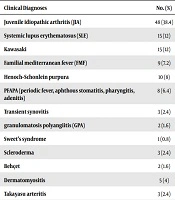
The clinical characteristics of the children with rheumatic diseases are summarized in Table 1. As it is obvious, the majority of the cases had Juvenile idiopathic arthritis (JIA). In addition to rheumatic disease, five children had other conditions, including hypothyroidism, asthma, favism, sensorineural hearing loss, and cystic fibrosis. Twenty-six children (20.8%) did not take any medication because of their illness remission. Among these 26 cases, eight cases had Henoch-Schonlein purpura, five cases were JIA, ten cases were Kawasaki, and three cases had transient synovitis.
Table 1.
The Clinical Diagnoses of Study Population
| Clinical Diagnoses | No. (%) |
|---|---|
| Juvenile idiopathic arthritis (JIA) | 48 (38.4) |
| Systemic lupus erythematosus (SLE) | 15 (12) |
| Kawasaki | 15 (12) |
| Familial mediterranean fever (FMF) | 9 (7.2) |
| Henoch–Schonlein purpura | 10 (8) |
| PFAPA (periodic fever, aphthous stomatitis, pharyngitis, adenitis) | 8 (6.4) |
| Transient synovitis | 3 (2.4) |
| Granulomatosis polyangiitis (GPA) | 2 (1.6) |
| Sweet’s syndrome | 1 (0.8) |
| Scleroderma | 3 (2.4) |
| Behçet | 2 (1.6) |
| Dermatomyositis | 5 (4) |
| Takayasu arteritis | 3 (2.4) |
| Sarcoidosis | 1 (0.8) |
The types of medication have been used by the study population are listed in Table 2.
Table 2.
Drugs Used by the Patients
| Drug | No. (%) |
|---|---|
| Prednisolone | 78 (62.4) |
| Methotrexate | 43 (34.4) |
| Hydroxychloroquine | 15 (12) |
| Etanercept | 15 (12) |
| Infliximab | 5 (4) |
| Adalimumab | 6 (4.8) |
| Colchicine | 15 (12) |
| NSAID | 8 (6.4) |
| Nifedipine | 2 (1.6) |
| Vitamin D | 98 |
Abbreviation: NSAID, non-steroidal anti-inflammatory drugs.
Twenty-three children (18.4%) have been reported to had respiratory disease in the last two months, 11 of whom (8.8%) have not visited a physician and rested at home, 12 cases (9.6%) had been visited by a physician, of which 4 patients (3.2%) had been admitted in hospital and remaining 8 cases (6.4%) were treated on an outpatient basis. Among these 23 children with a recent respiratory disease history, 13 cases became asymptomatic in less than 5 days, 9 patients were symptomatic for 5 to 10 days, and only one child was symptomatic for more than 10 days. Among the 4 admitted children due to the respiratory illness with precedent rheumatic diseases, 1 had been hospitalized for 5 days, 2 for 10 days, and 1 for more than 10 days.
Parents of 5 out of the 23 (21.7%) children who showed respiratory illness symptoms, remarked that another child of their family had similar symptoms before. Furthermore, the symptoms of pulmonary disease have been reported in another family member of 6 (26.08%) rheumatic children with symptomatic respiratory disease.
The parents of 19 out of 23 (82.6%) rheumatoid cases with symptomatic respiratory illness had continued to give their children rheumatic drugs, but 4 of them (17.3%) refrained from giving their children rheumatic medications (prednisolone and methotrexate).
Moreover, based on the results, the parents of 9 children who did not exhibit any respiratory illness symptoms have also discontinued their children’s medication due to COVID-19 concerns.
Taken together, a total of 13 (10.4%) of children had been refrained from routine rheumatic medication (10 cases for one week and 3 cases for 2 weeks or more). Among these 13 cases, 7 parents were reported to have experienced worsened rheumatic symptoms, but 6 did not experienced altered symptoms. In addition, during the last two months 76 out of 125 children with rheumatic illnesses were visited by a physician (55 due to rheumatic disease by a pediatric rheumatologist, 18 due to fever and cough by a pediatrician and 3 due to diarrhea by a general practitioner), however the remaining 49 cases did not visit a doctor in this period.
Except for only 13 out of 129 (10.4%) cases, the majority of the study population, i.e. 116 (89.6%) cases, responded to the consultations and continued their treatment. Accordingly the overall response rate in this study was estimated at 89.6%. Moreover, among the symptomatic cases 19 out of 23 rheumatoid cases have continued to take their routine medications, and the response rate among this group was 82.6%. It is notable that none of the parents who had visited a pediatric rheumatologist during this time had discontinued their children’s medicines, which means a response rate of 100%.
According to the data obtained from the questionnaires, only 3 of 125 children had been confirmed to be infected with COVID-19.
5. Discussion
The coronavirus disease 2019 (COVID-19) outbreak has affected healthcare systems worldwide. In many affected countries, like Iran, hospitals are overburdened and mainly occupied with COVID-19 patients (12). It has been well-known that patients with compromised immune system or those who suffer from a chronic disease are at higher risk of infection from COVID-19 (12). During the epidemics and prevalence of seasonal infections, it is of considerable importance for patients with preexisting conditions to adhere to their routine treatments. However, due to the stressful situation, patients or their parents may refuse to continue their treatment which can threaten their physical and mental health conditions. Therefore, consultation with doctors during these tough periods could improve the health status of the patients.
The patients with chronic conditions rely heavily on their medicines accessibility. In addition to the availability of the essential medicines, adequate therapeutic outcomes strongly depend on the strict adherence of patients with chronic conditions to their drug regimens (12, 13). Children with rheumatic disease are one of the populations which may be affected in the era of COVID-19 (13). Corticosteroids are the frontline drugs have been used for treating rheumatic disorders over many years and benefit patients with rheumatic illnesses; however these agents can also result in a wide array of side effects, including immunosuppression. Therefore, due to the immunosuppressive characteristics of these therapeutics and the high levels of stress from COVID-19, parents of children with rheumatic disorders may stop to give their children’s medicines (12).
Based on the mentioned notes, in the present study we aimed to examine the approach of parents in the management of their children with rheumatic diseases during the COVID-19 pandemic.
A number of 125 patients were enrolled in this study. Our analysis showed that 10.4% parents had refrained from giving their children medications at least one week due to the COVID-19 concerns. Among these patients 7.2% had no respiratory disorders, but 3.2% had exhibited symptoms of respiratory diseases.
Based on their parents’ reports, among the children studied in this survey 18.4% cases had respiratory symptoms, while 2.4% cases had confirmed COVID-19 infection.
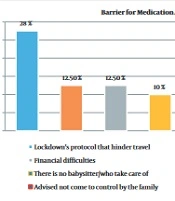
We found that 60.8% of patients had been visited by a physician at least once in the past two months as a periodic visit of their rheumatic disease or other causes (fever, cough, and diarrhea), however still a large part of the study population (29.2%) did not visit their physician, mainly due to COVID-19 concerns. Furthermore, none of the patients who visited their pediatric rheumatologist during this time had discontinued their previous medications. This shows that, those parents who are in close contact with their children’s doctors take correct decision and could help their children better than those who did not have this contact. In general, the results of this study indicate that patients with chronic illness, especially children with rheumatic disorders, need integrated psychological and physical care during the outbreak of COVID-19.
Recently, Koker et al. (14) have conducted an interesting study to examine whether the immunosuppressive treatment entails an additional risk for children with rheumatic disorder. The authors found that although some circumstances such as social distancing policy and self-isolation could influence the patients’ outcomes, but treatment with immunosuppressive agents does not add an additional risk in terms of COVID-19. They concluded that, the abrupt discontinuation of rheumatic medicines could exacerbate underlying diseases and worsen the outcomes (14).
In another study, Haslak et al. (15) have investigated the concerns regarding the management of childhood-onset autoinflammatory diseases during the era of COVID-19. Their findings showed that children with childhood-onset autoinflammatory disorder who received biologic treatment and/or colchicine may not be at higher risk of infection from COVID-19 or experiencing severe disease course (16). The results of these two studies highlight the importance of reliance on the therapeutic regimen during the COVID-19 pandemic.
There are several studies that support our findings. In this regards, Zhang et al. (16) have also investigated the impact of COVID-19 pandemic on the treatment of children with chronic kidney disease (CKD) in China. In line with our findings, Zhang et al. (16) showed that the majority of the parents (81.1%) were concerned about the condition of their children. Moreover, they found that only 1.12 of the parents decided to stop the medicines or treatment of their children. However, the main part of their study population adhered more strongly to the guidance of doctors. Additionally, they found that 67.5% of parents of children with CKD had stress levels higher than the general population (16).
Few other studies have also been done regarding the management of adulthood or childhood chronic disorders during recent coronavirus pandemic, but further investigations are needed to confirm their results. Lee et al have reviewed the studies published on the management of asthma and allergic patients in the era of COVID-19 in Asia (17). The authors were concerned about whether the systemic corticosteroid therapy could pose this population at higher risk of more severe outcomes from COVID-19. They concluded that the allergic patients should follow their prescribed therapeutic regimen under a controlled status and minimize their attendance at healthcare centers or wear protective equipments when they visit the health care providers (14). Moreover, a recent meta-analysis on the childhood asthma and COVID-19 has been conducted by Castro-Rodriguez and Forno (18). The main objective of the Castro-Rodriguez and Forno study was to assess whether the childhood asthma is associated with higher risk of infection from COVID-19 or disease severity among children. However, due to the scarcity of data on this topic, they obtained inconclusive results and the authors suggested further studies to put the light on this issue (18).
Some other studies have also investigated the challenges parents of children with chronic disorders faced with during the COVID-19 outbreak. In this regard, Narzisi (19) has considered the handling of young children who suffer from autism spectrum disorder (ASC) and recommended 10 tips which can help parents to help their children more efficiently in this pandemic situation. Such recommendations or approaches can also decrease parental stress which in turn improves the treatment procedure. It seems that it will be very helpful if the decision makers in heath organizations provide guidelines and handbooks for each chronic disease which can help parents to be involved correctly in the treatment of their children during the COVID-19 pandemic.
5.1. Limitations and Strengths
The study is a cross-section study in the context of a Public Health Emergency of International Concern.
One of the limitations of this study was that those patients residing in the suburban or deprived areas or those who had not online access were not able to use these consultations, thus unfortunately were excluded from the study. Furthermore, the patients who had been involved in this research were of different rheumatic diseases categories, and further studies should be done on the patients with specific category to obtain more conclusive results. However, taken together, the findings of the present study could help decision makers and provide the basis for the future investigations.
5.2. Conclusions
In this study we tried to identify the needs of parents of children with rheumatic disorders and apply the necessary solutions and guidance. Based on our results, during the COVID-19 outbreak, the parents of children with such chronic diseases should necessarily be in a close contact with their children’s doctors and rheumatologists in order to provide better helps to their children. Online consultation has the potential to be considered as an effective way in this era; however it needs some improvements and should be implemented in a scheduled manner.