1. Background
Respiratory disorders are extremely prevalent, especially in children (1-3). Every year, a large amount of money is spent on diagnosing, treating, and controlling respiratory disorders (1, 4). Asthma and allergies are among the most prevalent childhood respiratory disorders (1, 5).
According to the necessity of respiratory performance, it is important to address the potential impact of factors, such as physical fitness and obesity, on respiratory functions in the introduction of any respiratory-related study. Previous studies have highlighted the prevalence of underweight and overweight in schoolchildren and the potential impact of physical fitness and exercise on lung function and weight loss in obese children (6, 7).
Recent studies have reported a high prevalence of bruxism in children with asthma and allergies (8-10). Bruxism is a condition of jaw motor function defined by teeth grinding or clenching (10). Studies showing a high prevalence of sleep bruxism have also indicated an increase in allergies and chronic respiratory disorders in children and adolescents (11, 12).
According to studies, bruxism is more common in children than adults (13-17). In 2018, Carra stated in a study that bruxism is highly prevalent in children and adolescents (18). A recent systematic study on bruxism in children showed a prevalence as high as 40.6% (19). In two studies conducted in the United States and Brazil, according to parental reports, the prevalence of sleep bruxism in children was 38% and 35.3%, respectively (20, 21). Adult bruxism can be confirmed by clinical signs and symptoms, such as pain, masticatory muscle hypertrophy, temporomandibular joint (TMJ) disorders, and headache. However, the assessment and identification of bruxism in children is difficult. Therefore, parental reports are among the most critical parameters in diagnosing bruxism in the absence of quantitative data, such as sleep recordings, because bruxism causes certain sounds that are easily heard by family members (13).
The pathophysiology of bruxism is still unknown. Bruxism is a multifactorial condition potentially influenced by the central nervous system (CNS), oral motor performance, sleep-wake cycle, autonomic nervous system, and catecholaminergic, genetic, and psychological factors (22). Studies have associated occlusal interference (23), the rhythmic or tonic activity of the masseter and temporalis muscles (24), and abnormal anatomy of the TMJ (25) with the incidence of bruxism. They have also shown the relationship between bruxism and psychological factors, such as stress and anxiety (24, 26-28). Childhood bruxism might persist into adulthood. Diagnosis and, as a result, timely treatment prevents damage to the masticatory system. In addition to its destructive effects on the mouth, its peripheral structures, and TMJ, sleep bruxism in children can cause sleep disorders, reduced quality of life, and behavioral and cognitive disorders during the day (13).
The evidence has also proposed a chance of bruxism being caused by the CNS as a consequence of an increase in negative pressure in the middle or inner ear induced by allergic edema of the Eustachian tube mucosa, resulting in a reflex in the TMJ and stimulation of the trigeminal nerve nucleus (29). Respiratory disorders associated with bruxism can lead to children’s sleepiness, hyperactivity, and inattention during the day (30). Sleep bruxism contributes to TMJ sounds, jaw muscle fatigue, and more frequent headaches in children (31).
Numerous studies have been conducted on the prevalence of asthma and allergic reactions in Iranian children in different cities (32-34). Finding the relevant causes and risk factors and assessing the relationship between respiratory disorders and bruxism can help develop preventive and therapeutic strategies for these two diseases (2).
2. Objectives
Considering the previous reports on the high prevalence of respiratory diseases and the complications of bruxism in Iranian children and the lack of studies on this matter in Iran to date, this study is the first phase of the assessment of sleep bruxism and respiratory disorders and aimed to investigate the prevalence of bruxism and respiratory disorders in children 8 - 11 years in primary schools of Kerman, Iran.
3. Methods
3.1. Statistical Population
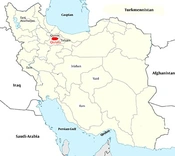
This cross-sectional study was conducted on primary school students 8 - 11 years in Kerman between 2018 - 2019. The sampling design was based on the World Health Organization standard pathfinder sampling method (35). To determine the required sample size for estimating the prevalence of bruxism, a first-type error level of 5% was considered. Since the prevalence of bruxism was not known beforehand at the data collection center, an absolute error of 10% of the caries prevalence value was assumed, similar to other studies (36, 37). To determine the sample size in the pathfinder sampling method, it is recommended to select at least 25 - 50 subjects in each sampling location. First, a list of different districts and schools was obtained from the Kerman Department of Education. Afterward, 20 schools (10 female and 10 male schools) from different city areas, including the center, north, south, east, and west, were randomly selected. The children with class II division 2 type of malocclusion or jaw abnormalities were excluded from the study. After explaining the aims and objectives and obtaining written consent from the parents to participate in the study, 30 students from each school were randomly included. This study was approved by the Ethics Committee of Kerman University of Medical Sciences (ethics code: IR.KMU.REC.1397.079).
3.2. Research Tools
The parents filled out a checklist that included personal information, a history of respiratory disorders, and the existence of bruxism or any unusual jaw movement. Respiratory disorders in children were assessed according to the medical history provided by the parents. Then, the pediatric examination was performed under the supervision of a dental specialist using catheters and mirrors and the light of a lamp, according to the method described in Bricker’s book (38), and the symptoms of bruxism (including tooth wear and restoration fractures) were recorded. In addition, the children’s tooth sensitivity and pain, masticatory muscles, TMJ, and paranasal sinuses were carefully examined.
3.3. Statistical Analysis
For statistical analysis, the collected data were coded and entered anonymously into SPSS software (version 21; SPSS Inc, Chicago, Illinois, USA). Descriptive statistics (i.e., frequency and percentage) were used to describe the data. The Chi-square test was used to investigate the possible relationship between respiratory disorders and bruxism and the prevalence of bruxism between groups. Finally, multivariate analysis (logistic regression) was performed. The effects of the independent variables of gender, tooth wear and pain, pain and sensitivity to touching the TMJ, muscles, and sinuses, and restoration fractures on the dependent variables of bruxism and respiratory diseases were investigated in two separate analyses.
4. Results
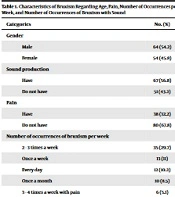
In the present study, the parents of 573 children (95.5%) out of 600 completed the questionnaire. These children, 294 (51.3%) of whom were male, were then examined. The prevalence of bruxism and respiratory diseases was observed to be 20.6% (n = 118) and 26.5% (n = 152), respectively. Of the 118 children with bruxism, 64 (54.2%) and 54 (45.8%) cases were male and female, respectively (P = 0.475). Bruxism was observed in 63 (41.4%) and 55 (13.1%) children with and without respiratory disorders, respectively (P < 0.001). Moreover, 38 (32.2%) and 67 (56.8%) children had bruxism with and without pain, respectively. Nearly 30% of children with bruxism had bruxism with sound 2 to 3 times a week (Table 1).
Table 1.
Characteristics of Bruxism Regarding Age, Pain, Number of Occurrences per Week, and Number of Occurrences of Bruxism with Sound
| Categories | No. (%) |
|---|---|
| Gender | |
| Male | 64 (54.2) |
| Female | 54 (45.8) |
| Sound production | |
| Have | 67 (56.8) |
| Do not have | 51 (43.2) |
| Pain | |
| Have | 38 (32.2) |
| Do not have | 80 (67.8) |
| Number of occurrences of bruxism per week | |
| 2 - 3 times a week | 35 (29.7) |
| Once a week | 13 (11) |
| Every day | 12 (10.2) |
| Once a month | 10 (8.5) |
| 3 - 4 times a week with pain | 6 (5.1) |
| 5 times a week | 3 (2.5) |
| Total | 79 (66.9) |
| Participants who did not respond | 39 (33.1) |
| Number of occurrences of bruxism with sound | |
| 2 - 3 times a week | 29 (43.3) |
| Once a week | 12 (17.9) |
| Every day or night | 8 (11.9) |
| 3 - 4 times a week | 4 (6) |
| Five times a week | 3 (4.5) |
| Total | 56 (83.6) |
| Participants who did not respond | 11 (16.4) |
Pediatric examinations showed that 148 children (25.8%) had restoration fractures or sensitivity to touching the masticatory muscles, TMJ, or paranasal sinuses. Moreover, 175 children (31.1%) had tooth wear. In 118 children, tooth wear was observed in all jaw quadrants. Tooth wear was observed in 100 (84.7%) and 78 (17.1%) children with and without bruxism, respectively. Restorative fractures (P = 0.003), sensitivity to palpation in masticatory muscles (P < 0.001) and TMJ (P < 0.001), and sensitivity and pain in the examination of paranasal sinuses (P < 0.001) were significantly higher.
Multivariate analysis showed that the adjusted prevalence of bruxism did not differ significantly (adjusted odds ratio = 1.6, 95% confidence interval [CI]: 0.4 - 6.4) between children with and without the condition. However, the odds of bruxism prevalence were 2.3 (95% CI: 2.2 - 2.4) times higher in children with sound production than those without sound production. Additionally, the odds of bruxism prevalence were 4.5 (95% CI: 4.4 - 4.6) and 3.8 (95% CI: 3.3 - 4.3) times higher in children with TMJ and paranasal sinuses, respectively, than their respective counterparts without these conditions. Finally, the odds of bruxism prevalence were 1.4 (95% CI: 1.3 - 1.6) times higher in children with respiratory disorders than in children without respiratory disorders (Table 2).
Table 2.
Adjusted Prevalence Odds Ratios for Bruxism by Variables of Gender, Respiratory Disease, Sound Production, Pain, Sensitivity of Masticatory Muscles, Sensitivity of Temporomandibular Joint, and Sensitivity of Paranasal Sinuses
| Variables | Category | Adjusted Odds Ratio | 95% Confidence Interval for Adjusted Odds Ratio | P-Value |
|---|---|---|---|---|
| Gender | Male vs. female | 1.64 | 0.42 - 6.47 | 0.928 |
| Respiratory disease | Have vs. do not have | 1.45 | 1.34 - 1.63 | 0.343 |
| Sound production | Have vs. do not have | 2.34 | 2.25 - 2.43 | < 0.001 |
| Pain | Have vs. do not have | 0.89 | 0.15 - 5.19 | 0.987 |
| Sensitivity of masticatory muscles | Have vs. do not have | 1.04 | 0.12 - 8.98 | 0.996 |
| Sensitivity of temporomandibular joint | Have vs. do not have | 4.52 | 4.43 - 4.61 | < 0.001 |
| Sensitivity of paranasal sinuses | Have vs. do not have | 3.82 | 3.35 - 4.36 | 0.011 |
| Tooth wear | Have vs. do not have | 1.12 | 0.41 - 3.04 | 0.977 |
5. Discussion
In the present study, the prevalence of bruxism and respiratory disorders was 20.6% and 26.5%, respectively. It was also revealed that children with respiratory disorders had a significantly higher rate of bruxism. Bruxism prevalence was positively associated with sound production, the sensitivity of TMJ, and the sensitivity of paranasal sinuses. The prevalence of bruxism was not observed to be dependent on gender, pain, sensitivity of masticatory muscles, and tooth wear.
The bruxism prevalence was estimated at 31.6% worldwide (39). The prevalence of bruxism in a study conducted by Seraj et al. (36) on children within 4 - 12 years in Tehran, Iran, was reported to be 26.2%, which is slightly higher than the present study. Cheifetz et al. (20) estimated the prevalence of bruxism in American children under the age of 17 years to be 38%, according to their parents. However, in another study conducted by Redline et al. (26) in the USA, the prevalence of bruxism in children aged 3 - 17 years was estimated to be 15.1%. Moreover, Chen et al. (40) demonstrated that 36.4% of children aged 3 - 6 years in China have bruxism. However, in another study conducted in China, Liu et al. (41) showed that the prevalence of bruxism in children aged 2 - 12 years was 6.5%, which is significantly lower than the present study’s result. Farsi reported the prevalence of bruxism in children in Saudi Arabia as 8.4% (42). The prevalence of bruxism was different in previous documents (36). These differences in the prevalence of bruxism are due to the difficult diagnosis of bruxism, different methods of data collection, and samples collected from different races.
The present study showed a significant association between bruxism and respiratory disorders, with 41.4% of children with respiratory disorders exhibiting bruxism, compared to only 13.1% of those without respiratory disorders. Furthermore, the odds of bruxism prevalence were 1.4 times higher in children with respiratory disorders than those without respiratory disorders. These results are consistent with the results of previous studies that have shown a link between bruxism and sleep-disordered breathing, such as obstructive sleep apnea, which is a known cause of respiratory problems. Ohayon et al. have also demonstrated a significant association between bruxism and sleep-disordered breathing (24). Furthermore, Sakaguchi et al. examined the relationship between mandibular position and obstructive sleep apnea, a type of respiratory disorder linked to bruxism, in previous studies. These studies provide further support for the current study’s findings and suggest that the association between bruxism and respiratory disorders might be explained by the effects of sleep-disordered breathing on the body (43).
There are some controversies in the literature regarding the association between sleep disorders and bruxism. A systematic review in 2014 showed that there was insufficient evidence to confirm the association between bruxism and sleep-related breathing disorders (44). However, in the same year, in an evidence-based review, Balasubramaniam et al. concluded that bruxism is associated with sleep-related breathing disorders, and both have common risk factors (45). They also suggested that bruxism might act as a reactive or protective mechanism against upper airway obstruction. When patients with bruxism and painful TMJ disorders complain of insomnia, snoring, or sleep apnea, they should be screened for respiratory disorders. This screening is performed in collaboration with sleep medicine specialists using recording systems at home or in the laboratory by electromyographic analysis of the masseter and temporalis muscle activity (45). A study by Motta et al. in Brazil showed that 62.5% of children with respiratory disorders had bruxism. They also showed a link between bruxism, respiratory disorders, and tooth decay (46). However, Seraj et al.’s study reported that asthma and allergies had no association with bruxism (11, 36).
For the mechanism involved in the obtained results, DiFrancesco et al. showed that children with airway obstructions tend to move their mandibles forward and downward to facilitate air passage, which can stimulate the upper airway receptors and increase muscle tone, leading to bruxism (47). In this study, children with respiratory issues had a higher prevalence of bruxism, which could be attributed to the mandibular position changes reported by the aforementioned study. This knowledge is critical for dentists to refer children for medical evaluation, contributing to the reduction of the adverse effects of respiratory disorders on growth and craniofacial development.
The present study also demonstrated that the odds of bruxism prevalence were higher in children with sound production, TMJ sensitivity, and paranasal sinus sensitivity. These findings suggest that bruxism might be associated with lifestyles and underlying neurological or physiological conditions, such as TMJ disorders, sinusitis, or anxiety, which can cause clenching or grinding of the teeth. According to Suwa et al.’s study, the prevalence of sleep bruxism among Japanese children living in Tokyo is strongly associated with sleep pattern disturbances and psychological stress, which could be due to the lifestyle of both children and their parents (48). On the other hand, the present study’s findings contrast with a previous study’s finding that showed a link between bruxism and obstructive sleep apnea (43), which suggests that there might be different underlying causes of bruxism in different populations. Similarly, Berger showed no significant association between bruxism and TMJ disorders (49). However, further research is needed to better understand underlying mechanisms and potential causal relationships between these conditions (50).
The current study did not show a significant difference in the prevalence of bruxism between male and female children, in accordance with the literature. Nevertheless, other studies have shown no significant gender differences in the prevalence of bruxism (51, 52). This finding is contrary to the findings of some previous studies that have reported a higher prevalence of bruxism in male children. For instance, Nahas-Scocate et al. reported a significantly higher prevalence of bruxism in male than female children. However, the lack of gender differences in bruxism prevalence in this study might be due to the differences in study populations, such as age range or geographic location (53). Future studies should continue to investigate gender differences in bruxism prevalence to better understand potential underlying factors and how they might affect treatment approaches.
The present study did not demonstrate a significant association between bruxism with pain, sensitivity of masticatory muscles, or tooth wear. These findings suggest that bruxism might not always lead to these common symptoms, which are often reported in clinical practice. It is possible that other factors, such as the severity and frequency of bruxism episodes, the age of the individual, or the presence of other underlying conditions, might influence the development of these symptoms. These results are inconsistent with some previous studies that have reported a significant association between bruxism and pain or tooth wear (54, 55). One possible explanation for this discrepancy is the differences in the study population, methodology, or definition of bruxism used in these studies.
Headache, tooth sensitivity to hot or cold food, tooth fracture or restoration, tooth wear, pain in the masticatory muscles, and joint sounds on touching the TMJ might be present in the examination of patients with bruxism, especially in more advanced cases (22). In the present study, the pediatric examination showed that sensitivity and pain in the masticatory muscles and TMJ were significantly higher in patients with bruxism and respiratory disorders. Recently, some clinicians have suggested the possibility of sleep-related breathing disorders in patients with TMJ disorders, assuming that patients with TMJ disorders caused by bruxism might have an underlying respiratory disorder. In these cases, it was recommended that the respiratory disorder that is the cause of bruxism be treated to eliminate the signs and symptoms related to TMJ (45). In the present study, most patients with TMJ disorders also had pain and sensitivity in the masticatory muscles. Paranasal sinus involvement and restoration fractures were also examined; however, they were observed in only a few cases. The low number of restorative fracture cases was probably why restoration fractures did not show a significant relationship with bruxism and respiratory disorders in multivariate analysis. However, this relationship was significant for the sensitivity of paranasal sinuses. Furthermore, although the number of paranasal sinus involvement cases was low, most cases were observed in children with bruxism, especially those with respiratory disorders. Therefore, according to the present study’s results, which were in line with the results of the above-mentioned studies (22, 45), respiratory diseases, bruxism, TMJ involvement, pain, and sensitivity of the muscles and paranasal sinuses can all occur together.
It should be noted that most population-based epidemiological studies on the prevalence of bruxism are based solely on questionnaires (i.e., self-assessment or parents’ report of bruxism), whose validity as diagnostic tools is still debated due to many confounding factors. For instance, the normal sound of bruxism caused by teeth grinding is not necessarily heard in all patients with bruxism and all bruxism stages. The sound was estimated to be produced in 50 - 60% of cases. Furthermore, not hearing teeth-grinding sounds during sleep does not ensure the absence of bruxism (18). The present study showed that in almost half of the cases, the sound of bruxism was heard by the parents (29). Pediatric examinations also showed that the prevalence of tooth sensitivity and pain and tooth wear were significantly higher in children with bruxism compared to the others. Tooth wear, pain, and tooth sensitivity were often observed concomitantly. Due to bruxism and respiratory disorders, these symptoms were significantly higher in children with respiratory problems. This finding is in line with Antunes et al.’s findings showing that bruxism in childhood was associated with respiratory disorders, tooth wear, tooth decay, and malocclusion (8).
The present study’s strengths include a large sample size and accurate data collection, which ensure the validity of the estimates. Additionally, the sampling method prevents selection biases, further adding to the robustness of the study. One of the limitations of this study is that the assessment of children’s respiratory disorders was based only on their parents’ reports and pediatric medical history. Moreover, information about the prevalence of bruxism was based solely on questionnaires of parents’ assessment of bruxism, which can affect the accuracy of the results. In this study, the potential effects of these factors have been controlled to ensure the accuracy and reliability of the results. Specifically, some measures, such as standardized physical fitness tests and body mass index assessments, have been employed to control these factors. However, it is important to acknowledge that despite these measures, some limitations might still exist due to the complex nature of these factors and their potential impact on respiratory function. Accordingly, any findings presented in this study should be interpreted with caution.
5.1. Conclusions
The prevalence of bruxism and respiratory diseases was observed to be high. Moreover, it was suggested that bruxism is significantly higher in children with respiratory disorders than those without respiratory disorders. Due to the association of these two disorders, the review of the history of patients with bruxism should include special attention to respiratory disorders and sleep disorders. Overall, the present study highlights the importance of identifying and treating bruxism in children, particularly those with respiratory disorders, sound production, TMJ sensitivity, or paranasal sinus sensitivity. Early diagnosis and intervention can help prevent further damage to teeth and alleviate associated symptoms, such as headaches and jaw pain. This study also underscores the need for further research to investigate the underlying causes of bruxism and its association with other medical conditions.