1. Background
Poisoning accounts for about 7% of all accidents in children under 5 years and is implicated in about 2% of all childhood deaths in the developed world, and over 5% in developing countries (1-3). Toxicity by opium or its derivatives is one of the most common forms of child poisoning which is very dangerous, and can lead to loss of consciousness, respiratory suppression, apnea, coma and eventually death (4, 5). Evidence has shown that the incidence of poisoning with opium and its derivatives is growing (6-11). The pattern of poisoning in children is constantly changing, and every day we face new, unknown and dangerous compounds (5). Methadone (Dolophine) is a synthetic opioid with a long half-life (5, 12). In recent years methadone syrup and tablets are commonly used in Iran for relieving pain and treating addiction. Methadone syrup containing five milligram methadone per each milliliter and consuming one milligram of methadone per each kilogram of the child’s weight could be fatal (13). Methadone syrup is a bright amber colored liquid, and most parents keep this liquid in the bottles of mineral water in refrigerators, and this unsafe keeping leads to methadone poisoning in children (14). Symptoms of the methadone poisoning include nausea, lethargy, sleepiness, apnea and even death. Other side effects of methadone consumption in children are cardiac signs such as increased QT interval (15-18). It should be considered that the information given in pamphlets about the signs and symptoms, diagnosis and treatment of methadone poisoning refers to adults and people with chronic drug abuse, and the overdose of methadone in children is under-investigated. Few studies have been conducted to determine the clinical symptoms and signs of methadone poisoning in children (13, 19-24).
2. Objectives
Due to the potential risks of methadone poisoning and increased cases of methadone poisoning in children, this study was performed to investigate the causes, signs and symptoms of methadone toxicity in children. The results of this study and similar studies can provide a practical approach to determine the causes and clinical course of methadone poisoning in children.
3. Patients and Methods
This retrospective, descriptive, cross-sectional study was carried out at pediatric intensive care unit of Shahid Beheshti Hospital in Kashan, a city located in the center of Iran, with a population of 400,000 people. Information about methadone poisoning in children under 12 years, from 2009 to 2013, was collected from the medical records provided by hospital doctors and interns. All suspected poisonings were initially included, but patients were excluded from the study if the initial diagnosis of methadone poisoning was rejected, clinically or otherwise. The information obtained from the conscious patients or their relatives was the basis of diagnosis of intoxication with methadone or co-ingested compounds. The inclusion criteria were age below 12 years, and a diagnosis of methadone toxicity based on history and practitioners’ judgment. Cases that were not confirmed to be methadone poisoning and children, who used other substances in addition to methadone, were excluded from the study. The information about each case was recorded in standardized forms. The data included demographic information, clinical signs and symptoms, laboratory findings, and how children had access to methadone. Medical terms such as increased or decreased heart rate was defined according to Nelson Textbook of Pediatrics (25). Finally, the obtained data was entered into the Statistical Package for the Social Sciences (SPSS) software, version 16.0 (SPSS, Inc., Chicago, IL, USA). Quantitative variables were shown as the mean and standard deviation, while qualitative variables were expressed as frequencies and percentages. Subgroup analyses were performed using chi-square tests.
4. Results
Fifty eight patients were admitted to Shahid Beheshti Hospital, Kashan, due to methadone poisoning during the period of four years, from 2009 to 2013.
4.1. Age and Sex
The mean age of patients was 5.2 ± 1.0 years with the minimum age of 3 months and maximum of 12 years. Of 58 patients 33 (56.9%) were male and 25 (43.1%) female.
4.2. Route of Exposure
All the cases of poisoning had happened with the syrup form of methadone due to unsafe holding of methadone in bottles of mineral water or other medications. 87.9% of children had inadvertently used methadone themselves, and in 12.1% of patients, parents fed them methadone by mistake.
4.3. Amount of Methadone Ingestion
In most cases it is impossible to determine the exact amount of methadone ingestion, and when the container is available, the amount of methadone can only be estimated. In this study, the information about the amount of methadone intake has been estimated based on the parents’ report. Accordingly, the least amount of intake was 10 mg and the highest was 100mg, with the average methadone consumption of 30 ± 18.2 mg.
4.4. Onset of Symptoms
The interval between methadone consumption and the onset of symptoms ranged from 90 to 150 minutes. On average, 120 ± 15.2 minutes after consuming methadone, the patients' symptoms started to appear.
4.5. Signs and Symptoms
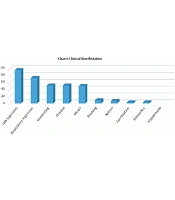
The majority (91.4%) of children with methadone poisoning suffered from drowsiness and loss of consciousness. Miosis, vomiting and ineffective breathing (any kind of breathing problem except apnea) were other most common signs and symptoms, 75.9%, 69% and 62.1%, respectively (Table 1). Twenty eight (48.3%) patients had respiratory infection (pneumonia) in the course of their hospitalization. There was a significant direct relationship between the amount of methadone consumption and the incidence of apnea in children (P = 0.000). 15.5% of children had hypotension. None of the children had any change in body temperature (neither high nor low) at the time of admission; while their heart rates were variable; 5.2% of children had increased heart rate while 10.3% had decreased heart rate. The classic triad of methadone poisoning in adults, loss of consciousness (somnolence), ineffective respiration and miosis, were observed in 53% of the children.
Table 1.
The Frequency of Clinical Signs and Symptoms in Children With Methadone Poisoning a
| Clinical Signs or Symptoms | |
|---|---|
| 53 (91.4) | |
| 44 (75.9) | |
| 40 (69.0) | |
| 36 (62.1) | |
| 31 (53.4) | |
| 25 (43.1) | |
| 5 (8.6) | |
| 4 (6.9) | |
| 2 (3.4) |
a Data are presented as No. (%).
4.6. Paraclinical Findings
Respiratory acidosis was the most (73%) common laboratory finding in patients, and leukocytosis was observed in less than half (46%) of the patients. Only 14% of the patients had changes (increased QT interval) in their electrocardiography (ECG) at the time of admission.
4.7. Treatment and Outcome
The mean treatment time (naloxone infusion) in the patients was 57.3 ± 2.3 hours. Patients with apnea had significantly longer naloxone infusion than others (P = 0.000). In 5.2% of the patients, symptoms recurred after discontinuation of naloxone. Two patients died as a result of methadone poisoning. One of them had cerebral hemorrhage and brain death and the other one had cardiopulmonary arrest at the time of admission.
4.8. Complications in the Course of Hospitalization
Twenty eight (48.3%) children had pneumonia and aspiration pneumonia in the course of their hospitalization, as a result of loss of consciousness and apnea. The occurrence of pneumonia was significantly more frequent among patients with apnea (P = 0.000). In the course of hospitalization one child had cerebral hemorrhage and brain death.
5. Discussion
Methadone is a synthetic long-acting opioid the use of which has been rising during the recent years (26-28). Poisoning by methadone is very dangerous and could have irreversible side effects. Hence, in most countries, in addition to putting warning labels on drug containers and keeping them away from children´s reach, methadone is distributed in containers that children are not able to open (29).
Since 2003 methadone has been used as an alternative treatment for addiction and today there are 1500 methadone treatment centers in Iran. Unfortunately, in these centers, patients do not receive methadone syrup in proper and safe packaging, because these centers are required to return the standard bottles of methadone syrup to distributing institutions. On the other hand, without any training about how to maintain methadone and sufficient information about the risks of drug toxicity, especially in children, this dangerous substance is delivered to patients. In most cases, patients use mineral water bottles, soda bottles or other drug containers to receive methadone syrup from these centers and hold these bottles in refrigerator, as a result of which, methadone poisoning in children is increasing.
Farnaghi et al. (30) examined methadone poisoning among Iranian children in 2009. In his study the mean age of children was 55 months. The average age of children in the current study is 5.2 years (62.4 months). It should be considered that at these ages children are highly curious and also they have the ability to drink independently. As a result, more cases of methadone poisoning at this age is anticipated. In this study, the number of boys (56.9%) was more than that of girls (43.1%). In other studies, including the study by Farnaghi et al. (30), sex differences were not mentioned.
Based on the parents’ report, on average 120 minutes after consuming methadone, the symptoms started to appear. The results of this study showed that the most common signs in children with methadone poisoning are drowsiness and miosis. The majority of children in the course of intoxication, progressively suffer from drowsiness and loss of consciousness. These results were consistent with those of previous studies, such as Farnaghi’s et al. (30) in which drowsiness and miosis were reported to be the most common signs. Unfortunately, drowsiness and loss of consciousness are soundless symptoms and could not be detected soon by parents. Therefore, usually there is a long interval between children’s exposure to methadone and the time when parents realize the poisoning. Based on the parents’ reports, in this study children mostly felt sleepy at first and then the feeling of nausea and vomiting appeared. Over time, children become less conscious and problems like long pauses between breaths happen.
The classic triad of methadone poisoning in adults, including loss of consciousness (somnolence), ineffective respiration and miosis (12), were seen in 53% of the subjects of the current study. Farnaghi also reported the frequency of 62% for this triad. On the other hand, Zamani et al. (31) observed this triad in only 25% of patients with opium poisoning. So the chance of this classic triad being caused by methadone poisoning is higher than by any other form of opioid poisoning.
The mean duration of treatment (naloxone infusion) was 57.3 ± 2.3 hours. After discontinuation of naloxone, in 5.2% of the patients naloxone infusion was restored because of recurring symptoms. The mean duration of naloxone infusion in Farnaghi’s study (30) was 51 hours and the frequency of recurring symptoms after discontinuation of naloxone was reported to be 3%. It should be considered that children with methadone poisoning should be monitored for 72 hours. On the other hand, the absence of symptoms cannot guarantee non-recurrence thereof. In this study, 8.6% of patients had a seizure before treatment (naloxone) began and children who received naloxone had no seizure in the course of hospitalization. 6.2% of patients in Farnaghi’s study also suffered from seizures. In the current study, only in 14% of the children increased QT interval was observed. In Farnaghi’s study, 23.8% of children had increased QT interval. Thus, methadone toxicity could not be ruled out by normal ECG. 5.2% of children had increased and 10.3% decreased heart rate. Variable heart rate was also observed in other studies, including the study by Farnaghi in which 12.5% of the cases experienced increased heart rate and 6.2% had decreased heart rate. However, in some studies only bradycardia was reported (32). In the present study, ataxia (6.9%) and delirium (3.4%) were observed, which is consistent with the results obtained by Farnaghi, where ataxia and delirium were reported in 6.1% and 3.1% of the subjects respectively.
5.1. Mortality
Unfortunately two (3.4%) children of 58 children passed away. One 6-year-old child was taken to the hospital with complete loss of consciousness and apnea due to the inadvertent intake of 100 mg of methadone. At first, his parents refused to report methadone poisoning, but after several hours, they provided the physicians with the information. In the course of hospitalization, the child suffered from a cerebral hemorrhage and was transferred to the intensive care unit and connected to ventilator due to respiratory problems and had a severe pneumonia. Finally, he died a month later showing brain death.
Another child was two years old who inadvertently was fed with methadone which was kept in the bottle of acetaminophen syrup. The child had been left alone for hours before being taken to the hospital because his parents thought their child was asleep. At the time of admission the child was completely unconscious with apnea, unfortunately his resuscitation failed and the child died in the emergency department. Both children died because of a significant delay in receiving the required treatment, and this emphasizes the importance of quick transportation to medical centers. In a study in America, which was conducted on 30,000 cases from 2000 to 2008, 684 methadone poisoning deaths were reported. Twenty deaths occurred in children younger than 6 years old (33).
5.2. Conclusions
Keeping methadone in a standard bottle, away from children and warning methadone consumers about the dangerous side effects of methadone consumption and the symptoms of methadone poisoning in children may minimize the incidence of methadone poisoning and its complications in children.