
1. Background
Tens of millions of children around the world work or live on the street (1). It has been estimated that about 25% - 90% of street children (which was defined as people under 18 years of age) who live or work on the streets (2) use drugs in their daily lives (3). A recent meta-analysis of 22 studies from 22 low-income countries reported that 60% of street children have a lifetime history of drug use; inhalants were the most common substances used, followed by tobacco, alcohol, and marijuana (4). Most of these street children initiate their substance use with alcohol, tobacco, and inhalants due to the legal availability of these substances (4-7). Factors such as age, sex, duration of time spent on the street, and social systems affect the pattern of substance use among street youth (8).
High rates of substance use involvement among street children in Iran have been documented in several studies. One investigation on street children recruited from various areas of Tehran showed a lifetime prevalence of smoking of 36%, while the rates at which street children use alcohol and other substances were 8% and 3 - 4%, respectively; these The treatment setting was child more prevalent among boys than girls (9). Because of their lifestyle, street children are exposed to sexual and physical abuse, which leaves them susceptible to mental disorders, such as post-traumatic stress disorder (PTSD) and depression (10). Ghasemzade (2003) reported high rates (37%) of addiction, selling drugs (41%), depression (45%), a lifetime history of sexual abuse (50%), and physical health problems, including skin lesions (82%), low weight and height (80%), and anemia (84%), among 75 street children aged 14 - 19 in 2001 in Tehran (11).
Despite high rates of substance use disorders among street children, there is little evidence regarding the standard treatment for this sub-population in terms of the treatment setting and modalities. While it has been accepted that the treatment of children with substance use disorders should take place in less restrictive settings than those traditionally recommended for adults (12, 13), unique factors among these children, such as substance use within the family, the high rate of comorbid conditions, and the low willingness and motivation of parents or caregivers to cooperate with treatment, necessitate the use of inpatient settings.
The Iranian government ratified regulations for addressing the multidimensional needs of street children in 2005. These regulations define a street child as someone under 18 years of age who for a limited or unlimited period of time lives on the street, including either children who are in contact with their families and have a home to return to or children who make the street their home and have minimal or no relationship with their families. According to these regulations, the state welfare organization (SWO) is considered the main organization for providing housing and support services in Iran and also coordinates 10 other organizations, which are appointed to provide a range of services from legal assistance to healthcare (14).
Following some reports on the high prevalence of substance use among street children in Zahedan city, the drug control coordinating councils of the Sistan and Balouchestan provinces, the provincial welfare organization, and Zahedan University of Medical Sciences (ZUMS) implemented an urgent plan for police to gather street children and transfer them to foster care centers of local welfare organizations. Any children who suffered from withdrawal symptoms should be referred to child and adolescent psychiatric ward of Ali Ebne Abitaleb Hospital, which is affiliated with ZUMS.
2. Objectives
Here, we present the preliminary results of inpatient opioid withdrawal outcomes of these street children during hospitalization.
3. Methods
3.1. Treatment Setting
The treatment setting was child and adolescent psychiatric ward of Ali Ebne Abitaleb academic general hospital. The ward consisted of 10 beds in four rooms, one isolation room, one playroom equipped with a television (TV) and toys, and one time-out room. All rooms and corridors of the ward were monitored by closed-circuit TV.
The ward was staffed with eight nurses, five nursing aides, and one master-level clinical psychologist, who provided treatment services for the study participants under the direct supervision of one child and adolescent psychiatrist. This is an academic ward of child and adolescent psychiatry that occasionally includes rotating residents who are completing their adult general psychiatric training at ZUMS. Only one such resident participated in the treatment of the study participants during the study period.
The child and adolescent psychiatric outpatient clinic of the hospital is active four days per week and provided aftercare services for these patients after they were discharged from the ward.
3.2. Participants
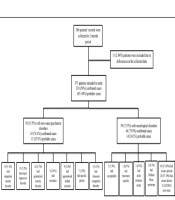
Data were extracted from the inpatient files of the first 40 serial cases of street opioid-dependent children admitted to child and adolescent psychiatric ward of Ali Ebne Abitaleb treatment and research center, which was affiliated with ZAUMS, in Zahedan, the center of the Sistan and Balouchestan provinces in southeast Iran, from November 2014 to May 2015. The study participants were children who had been detained by the police because they lived or worked on the street; the children were transferred to the foster care center of the SWO because of their parents’ incompetency for guardianship, which was mainly due to substance use disorders. At the foster care center, children and adolescents who were identified as being in need of treatment for a substance use disorder were referred to child and adolescent psychiatric ward. The study participants were all under the guardianship of the province’s attorney general and were therefore referred to the hospital with a court order that provided consent for all necessary treatment interventions. The procedures and treatment services of the ward were explained to all participants older than 7 years, and their informed consent was obtained. The study was approved by the ethics committee of ZAUMS.
All admitted patients were under 17 years old. A majority of the participants had families and a regular dwelling, patients was opioids. did not and/or spent the night in places not intended as residences, such as the street, parks, or abandoned buildings. The common characteristic of all participants was spending many hours each day on the streets.
Complete personal and familial histories were taken after admission. Mental and physical examinations were also conducted. The current substance dependence disorder was diagnosed based on DSM-IV-TR criteria and evidence of actively using a substance within the last 30 days.
Clonidine, ibuprofen, and hydroxyzine were used for the symptomatic treatment of opioid withdrawal. In this study, clonidine was initiated at 0.1 mg/per day in two divided doses, and then the dose was increased to 0.4 mg/day given in 2 - 3 divided doses based on the severity of the withdrawal symptoms on days 2 - 4 following admission. All clonidine doses were delivered after blood pressure had been controlled, which was indicated by a systolic blood pressure > 90 mmHg. The participants’ assisted withdrawal regimens were chosen based on the severity of their withdrawal symptoms.
Complaints of musculoskeletal pain were managed with ibuprofen. Either syrup or tablet formulations of ibuprofen were prescribed at doses of 4 - 10 mg/kg four to six times a day with a maximum dose of no more than 1200 mg/day. Hydroxyzine was administered at a dose of 1 mg/kg three to four times per day to control nausea and insomnia. Patients who developed severe diarrhea and/or vomiting received rehydration treatment via a half-normal intravenous saline solution.
Some children suffered from comorbid physical and psychiatric disorders. This group received additional pharmacotherapies based on the type of comorbidity. The study participants also were provided with psycho-education for coping with cravings and anger management.
3.3. Data Extraction and Analysis
Data were gathered through psychiatric interviews and physical examinations. The withdrawal symptoms were documented by an child and adolescent psychiatrist, who also performed the children’s physical examinations. The study data were analyzed using the statistical package for the social sciences (SPSS), version 20, with the Chi-squared test. All analyses were two-tailed, and a P-value < 0.05 was considered statistically significant.
4. Results
Forty consecutively admitted, opioid-dependent street children’s and adolescents’ clinical charts were reviewed. Twenty-four (60%) patients were male, and 16 (40%) were female. The mean age of the participants was 11.14 ± 3.60 years, with a range from 9 months to 17 years. Thirty-eight (95%) of the children reported having stable housing, while 2 (5%) did not. The parents of 35 (87.5%) of the study participants did not show competency for parenting or guardianship of them at the time of the study. The parenting eligibility was determined by a court order before the children were referred to our hospital. Two (0.5%) patients admitted a previous history of criminal involvement. A high incidence of a low educational level was documented among the participants’ parents, with 55% of their fathers and 67.5% of their mothers being illiterate. The demographic characteristics of the participants by gender and age (less than 12 years of age and 12 years and older) are presented in Tables 1 and 2.
Table 1.
The Demographic Characteristics of the Study Participants and their Parents by Sex and Agea
| Demographic Variables | Total | Female | Male | P-Value | Under 12 years | 12 years and Older | P-Value |
|---|---|---|---|---|---|---|---|
| Study Participants | |||||||
| Age, mean ± SD | 11.14 ± 3.60 | 11.18 ± 2.58 | 11.11 ± 4.20 | > 0.05 | 50 | 50 | - |
| Religion | > 0.05 | > 0.05 | |||||
| Shia (Shiites) | 75 | 87.5 | 66.6 | 75 | 75 | ||
| Sunni | 25 | 12.5 | 33.3 | 25 | 25 | ||
| Education | > 0.05 | 0.001 | |||||
| None | 37.5 | 37.5 | 37.5 | 55 | 20 | ||
| Primary School (Grades 1 - 5) | 30.0 | 43.8 | 20.8 | 30 | 30 | ||
| Secondary School (Grades 6 - 8) | 10.0 | 18.8 | 29.2 | 0 | 50 | ||
| Unspecified | 7.5 | 0 | 12.5 | 15 | 0 | ||
| Homeless | 5 | 0 | 8.3 | > 0.05 | 0 | 10 | > 0.05 |
| Previous History of Incarceration | 5 | 6.3 | 4.2 | > 0.05 | 2.5 | 2.5 | > 0.05 |
| Parents of the Study Participants | |||||||
| Legal Competency for Guardianship | > 0.05 | > 0.05 | |||||
| Eligible | 12.5 | 0 | 20.8 | 5 | 20 | ||
| Ineligible | 87.5 | 100 | 79.2 | 95 | 80 | ||
| Father | > 0.05 | > 0.05 | |||||
| Deceased | 12.5 | 6.3 | 16.7 | 5 | 20 | ||
| Living | 87.5 | 93.7 | 83.3 | 95 | 80 | ||
| Education | > 0.05 | 0.030 | |||||
| None | 55 | 62.5 | 50 | 80 | 30 | ||
| Primary School (Grades 1 - 5) | 15 | 18.8 | 12.5 | 5 | 25 | ||
| Secondary School (Grades 6 - 8) | 2.5 | 0 | 4.2 | 0 | 5 | ||
| Unspecified | 15 | 12.5 | 16.7 | 10 | 20 | ||
| Mother | > 0.05 | > 0.05 | |||||
| Deceased | 2.5 | 0 | 4.2 | 5 | 0 | ||
| Alive | 97.5 | 100 | 95.8 | 95 | 100 | ||
| Education | > 0.05 | > 0.05 | |||||
| None | 67.5 | 81.3 | 58.3 | 75 | 60 | ||
| Primary School (Grades 1 - 5) | 7.5 | 6.3 | 8.3 | 5 | 10 | ||
| Secondary School (Grades 6 - 8) | 10.0 | 0 | 16.7 | 10 | 10 | ||
| Unspecified | 12.5 | 12.5 | 12.5 | 5 | 20 | ||
aValues are expressed as % unless otherwise indicated.
Among the 40 patients, 38 were experiencing opioid withdrawal at the time of hospital admission; the remaining 2 were not because there had been an interval of a few days between their incarceration and hospital admission. The main problem drug for all patients was opioids. The heroin Kerack (which goes by the street name of crystal in southeast Iran) was the most common (70%) drug of use, followed by opium (10%) and opium residue (7.5%). The main drug of use was not significantly different according to gender or age group (P > 0.05) (Table 2).
Table 2.
Pattern of Drug Use and Comorbiditiesa
| Demographic Variables | Total | Female | Male | P-Value | Under 12 Years | 12 Years and Older | P-Value |
|---|---|---|---|---|---|---|---|
| Main Drug of Use | > 0.05 | > 0.05 | |||||
| Heroin | 5.0 | 6.3 | 4.2 | 5 | 15 | ||
| Opium | 10.0 | 6.3 | 12.5 | 5 | 15 | ||
| Opium residue (Shireh) | 7.5 | 0 | 12.5 | 10 | 5 | ||
| Tramadol | 0 | 0 | 0 | 0 | 0 | ||
| Methadone | 2.5 | 0 | 4.2 | 5 | 0 | ||
| Heroin Kerack | 75.0 | 87.6 | 64.9 | 75 | 75 | ||
| Polysubstance Use | > 0.05 | > 0.05 | |||||
| No | 65.0 | 43.7 | 79.2 | 75 | 55 | ||
| Yes | 35.0 | 56.3 | 20.8 | 25 | 45 | ||
| Two drugs | 27.5 | 43.8 | 16.7 | 15 | 40 | ||
| Three drugs | 7.5 | 12.5 | 4.2 | 10 | 5 | ||
| Polysubstance Forms | > 0.05 | > 0.05 | |||||
| Heroin Kerack + Opium | 35.7 | 36.3 | 33.3 | 40 | 33.4 | ||
| Heroin Kerack + Methamphetamine | 28.5 | 27.3 | 33.3 | 40 | 22.2 | ||
| Heroin Kerack + Opium residue | 14.2 | 9.1 | 33.3 | 0 | 22.2 | ||
| Heroin Kerack + Cannabis | 7.1 | 9.1 | 0 | 0 | 11.1 | ||
| Heroin Kerack + Opium + Opium residue | 7.1 | 9.1 | 0 | 0 | 11.1 | ||
| Heroin Kerack + Opium + Heroin | 7.1 | 9.1 | 0 | 20 | 0 | ||
| Route of Administration | > 0.05 | > 0.05 | |||||
| Smoking | 85 | 100 | 79.1 | 80 | 95 | ||
| Swallowing | 15 | 0 | 20.9 | 20 | 5 | ||
| Sniffing | 0 | 0 | 0 | 0 | 0 | ||
| Injecting | 0 | 0 | 0 | 0 | 0 | ||
| Comorbid Conditions | > 0.05 | > 0.05 | |||||
| No | 77.5 | 87.5 | 70.8 | 85 | 70 | ||
| Yes | 22.5 | 12.5 | 29.2 | 15 | 30 | ||
| Physical (Other than pediculosis) | 10.0 | 6.3 | 12.5 | 5 | 15 | ||
| Psychiatric | 12.5 | 6.3 | 16.7 | 10 | 15 | ||
| No. of Previous Hospitalizations | > 0.05 | > 0.05 | |||||
| Zero | 97.5 | 100 | 95.8 | 100 | 95 | ||
| One | 0 | 0 | 0 | 0 | 0 | ||
| Two | 2.5 | 0 | 4.2 | 0 | 5 |
aValues are expressed as %.
Significant comorbid physical and mental health problems were observed in 9 (22.5%) patients; 5 (12.5%) had psychiatric comorbidities. One child was diagnosed with bipolar mood disorder with psychotic features. He had a history of childhood physical and sexual abuse and suicidal attempts. He did not show progress on poly-psychopharmacotherapy and finally received eight sessions of electroconvulsive therapy during his hospital stay. One child had amphetamine-type stimulant-induced psychosis. One participant each was diagnosed with attention deficit hyperactivity disorder (ADHD) alone and conduct disorder alone, while another child suffered from both ADHD and conduct disorder concurrently. Four (10%) had significant physical comorbidities, including 1 (2.5%) seizure disorder, 2 (5%) pneumonia and 1 (2.5%) endocarditis superimposed on a ventricular septal defect (VSD). Twenty-two (55%) had pediculosis, which was treated with 1% Lindane shampoo and hair dressings.
The mean length of hospital stay was 10.8 ± 7.30 (2 - 48) days, and the mean duration of withdrawal signs and symptoms was 1.63 ± 0.94 days (a few hours-3 days). Musculoskeletal pain and diarrhea were the most commonly reported withdrawal symptoms during the hospital stay. Withdrawal signs and symptoms were not significantly different by gender or age group (P > 0.05). Furthermore, there was no significant relationship between the duration of withdrawal and gender or age group (P > 0.05) (Table 3).
Table 3.
Signs and Symptoms of Opioid Withdrawal Syndrome Among Participantsa
| Demographic Variables | Total | Female | Male | P-Value | Under 12 Years | 12 years and Older | P-Value |
|---|---|---|---|---|---|---|---|
| Signs and symptoms | > 0.05 | > 0.05 | |||||
| Musculoskeletal pain | 77.5 | 87.5 | 70.8 | 70 | 85 | ||
| Diarrhea | 47.5 | 62.5 | 33.3 | 45 | 50 | ||
| Runny nose | 27.5 | 43.7 | 16.6 | 30 | 25 | ||
| Sneezing | 22.5 | 31.2 | 16.6 | 25 | 20 | ||
| Abdominal pain | 20 | 37.5 | 8.3 | 20 | 20 | ||
| Yawning | 12.5 | 12.5 | 16.6 | 20 | 15 | ||
| Restlessness | 17.5 | 0 | 29.1 | 15 | 15 | ||
| Aggression | 7.5 | 0 | 12.5 | 5 | 10 | ||
| Drowsiness | 2.5 | 0 | 4.1 | 5 | 0 | ||
| Duration of the Withdrawal Syndrome (Days) | > 0.05 | > 0.05 | |||||
| Mean ± SD | 1.63 ± 0.94 | 1.68 ± 0.94 | 1.59 ± 0.95 | 1.66 ± 0.96 | 1.60 ± 0.94 | ||
| Range | 0 - 3 | 0 - 3 | 0 - 3 | 0 - 3 | 0 - 3 |
aValues are expressed as % unless otherwise indicated.
Table 4.
Treatment Servicesa
| Demographic Variables | Total | Female | Male | P-Value | Under 12 Years | 12 Years and Older | P-Value |
|---|---|---|---|---|---|---|---|
| Length of hospital stay, days | > 0.05 | > 0.05 | |||||
| Mean ± SD | 10.80 ± 7.30 | 9.94 ± 5.06 | 11.38 ± 8.53 | 9.40 ± 3.81 | 12.20 ± 9.52 | ||
| Range | 2 - 48 | 2 - 23 | 3 - 48 | 2 - 15 | 3 - 48 | ||
| Pharmacotherapies | |||||||
| Withdrawal management | > 0.05 | ||||||
| Clonidine | 75.0 | 100 | 52.5 | 70 | 80 | ||
| NSAIDs (ibuprofen) | 75.0 | 87.5 | 70.8 | 55 | 90 | ||
| Hydroxyzine | 70.0 | 68.7 | 70.8 | 50 | 90 | ||
| Benzodiazepines (Lorazapam, clonazepam) | 7.5 | 0 | 12.5 | 10 | 5 | ||
| Methadone | 10.0 | 0 | 16.6 | 0 | 0 | ||
| No medication | 2.5 | 0 | 4.1 | 5 | 0 | ||
| Other pharmacotherapies | > 0.05 | > 0.05 | |||||
| Olanzapine | 7.5 | 0 | 12.5 | 10 | 5 | ||
| Risperidone | 12.5 | 0 | 20.8 | 10 | 15 | ||
| VPA | 7.5 | 12.5 | 4.1 | 0 | 15 | ||
| CBZ | 2.5 | 0 | 4.1 | 0 | 5 | ||
| Psychosocial Services | > 0.05 | > 0.05 | |||||
| Coping with craving and anger management psycho-education | 95 | 93.8 | 95.8 | 90 | 100 | ||
aValues are expressed as % unless otherwise indicated.
5. Discussion
The present study was conducted in 40 street children and adolescents who used drugs and had been referred to a psychiatric ward for children and adolescents. Although a small percentage of these children perceived themselves as homeless, we documented other factors, such as the death or lack of a qualified guardian and parental illiteracy or a very low literacy level, which could have contributed to the participants’ situation as substance-using youth. This observation is consistent with international studies that have reported the complex needs of families referred to child welfare services because of parental substance use and child neglect (15-17). The high rate of parenting incompetency indicates that any medical and psychiatric interventions initiated among this population must be implemented within the context of a comprehensive program to provide parental substance abuse treatment, psychosocial support, literacy education initiatives, legal assistance, and foster care.
In this study, most (75%) patients were taking heroin Kerack, followed by opium and opium residue; the most common route of administration was smoking, which was inconsistent with international studies that have reported inhalants, tobacco and alcohol (4), and methamphetamine (18, 19) as the most commonly used substances by street children in different countries. This variation may be explained by the ease of availability of opioids in the Sistan and Balouchestan province of Iran due to the proximity of Afghanistan, the main producer of illegal opioids in the world. All study participants used drugs through routes other than injection, which was in line with findings from other low-income countries (8, 20). About one-third of these children had used more than one substance, which reflects a high intensity of drug involvement in this population.
Musculoskeletal pain, diarrhea, and runny nose were the most common signs and symptoms observed during the withdrawal period; there was no significant difference in withdrawal length or symptomatology by age and gender. For the medical management of withdrawal, clonidine, ibuprofen, and hydroxyzine were the most frequently used medications. The symptomatic treatment of opioid withdrawal was well tolerated by the children, and no severe adverse events were seen.
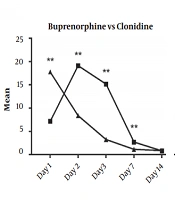
One head-to-head trial that compared clonidine and buprenorphine in a community-based treatment program for opioid dependence among adolescents showed a higher efficacy for buprenorphine in terms of treatment retention and negative urine tests (21). Little evidence exists regarding the use of maintenance medications to treat opioid dependence. Methadone maintenance treatment for opioid dependence among patients younger than 18 years is highly regulated, and its use is limited to very severe cases (22). In addition, buprenorphine might have some advantages over methadone in terms of its adverse effects. In a multi-site trial of adolescents and young adults, buprenorphine maintenance increased retention and decreased opioid-positive urine tests compared to patients who received two weeks of buprenorphine detoxification only (23). Another case series study indicated the feasibility and safety of community-based extended-release naltrexone shots that were given to adolescents and young adults each month for four months in a community-based setting (24). The use of pharmacotherapies to manage pediatric opioid withdrawal is in its early stages in Iran. More studies are currently needed to determine the status of opioid pharmacotherapies for symptomatic withdrawal in terms of their effectiveness and costs.
The high rate of comorbid physical and psychiatric disorders observed in this study has important clinical implications. First, a clinician working with street children might encounter substance use issues that co-occur with other mental disorders and therefore should be prepared for this possibility. Second, the identification and treatment of physical health issues are crucial while working with this population. A trend toward higher levels of physical and psychiatric comorbidities was seen among boys in this clinical sample, which was not significant due to the small sample size. More studies with larger sample sizes will therefore be needed to determine any differences in the pattern of comorbidities.
Practical implementation issues identified in this study included work load, costs, insurance coverage, administrative issues, and insufficient inter-sectoral collaboration. Cost and insurance coverage issues were also prominent. There were limitations of this study, including its observational design without a control group, the absence of standardized questionnaires to monitor outcomes, and limitations of the outcomes to the inpatient period.
The study suggests that inpatient withdrawal management with clonidine, antihistamines, and non-steroidal anti-inflammatory drugs could be feasible for and well tolerated by children and adolescents with opioid dependence during the inpatient period. To develop standards of care for opioid treatment in this population, further studies that test the efficacy of opioids agonist medications on the severity of withdrawal, the length of stay, and the success rate of post-discharge treatment follow-ups are warranted.