1. Background
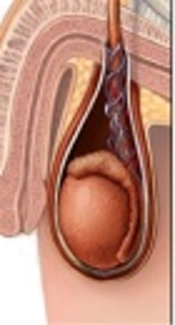
Testicular torsion occurs when a testis twists the spermatic cord resulting in cutting off of blood supply. TT implies obstruction of first venous, and later, arterial flow. The extension of testicular ischemia depends on the degree of twisting (180 - 720) and duration of the torsion. Testicular salvage mostly happens in those who are treated within 4 - 6 hours after the onset of torsion. TT accounts for at least up to 26% of cases of acute scrotum (1), but Beni-Israel et al. reported it even from 17 - 72% (2). Anatomically there are two types of testicular torsion which occur in different age groups: 1) Extra-vaginal (supra-vaginal): torsion occurs at the level of the external inguinal ring, which is seen in neonates. 2) Intra-vaginal: a more common variety due to bell clapper deformity that typically occurs in adolescents and young adults. Typically, sudden onset of severe pain followed by inguinal/scrotal swelling and nausea or vomiting is the most common symptom of TT (2-5).
CDU and high-resolution ultrasonography are the modality of choice for diagnosis of scrotal disorders in children, and near infrared spectroscopy is a novel diagnostic approach (1, 6, 7). Early surgical exploration is recommended by most authors in acute scrotum to prevent or confirm torsion (8, 9). When the diagnosis of TT is established, the surgeon faces another dilemma, i.e. whether or not to remove the testis; here only surgical exploration can make the decision. There are no definite objective criteria to assess testicular viability. There are many studies about TT but no experience in second look exploration to be compared with.
2. Objectives
In recent study we have performed combination of early exploration, and second-look operation only in our 70 cases.
3. Patients and Methods
In a historical cohort study 70 boys out of 124 patients underwent early exploration and 48 hours later second look exploration due to TT in Mofid children’s hospital from January 2008 to December 2013. Fifty four cases of TT which were explored in one stage only, and neonatal torsions were excluded from the study. After color-doppler ultrasonography (CDU) and necessary lab tests, emergency surgical exploration was performed in included 70 cases and after intraoperative bleeding test, this group of patients underwent second look exploration after 48 hours.
Evaluation of bleeding test: when tunica albuginea is incised, the onset of active arterial bleeding (bright blood) from the cut edge: Grade I: immediate bleeding after incision. Grade II: delayed bleeding before 10 minutes. Grade III: bleeding is absent after 10 minutes (10).
All patients were followed-up, and checked by High-resolution ultrasonography and CDU every 3 months. Data included age at admission, side of pathology, relation of TT with season of year, duration of preoperative history, degree of testicular torsion, CDU findings, and degree of bleeding, results of second look exploration, follow-up, and outcomes were analyzed, and descriptive statistical analysis was performed by SPSS 16 software.
4. Results
Totally 70 patients were included in this study within five years, with a mean age of 28.6 ± 32.9 (range 1 to 144) months, 48% of our patients had nausea and vomiting. Preoperative CDU showed weak flow in 50 (71.4%) cases. Most frequently (44%) referred cases of testicular torsion occurred in winter. Orchidopexy was performed in 44 (63%) and orchidectomy in 26 (37%) cases after second look exploration. Table 1 shows the duration of symptoms before surgery, intraoperative arterial bleeding test of patients in first exploration and degree of torsion in our cases. Salvageability was independent of the degree of torsion. Mean follow-up lasted 3.1 ± 1.4 years. 4 cases (9%) in orchidopexy group developed testicular atrophy during follow-up; of these, blood flow was absent in one (25%) and weak in the other (75%) on preoperative CDU. All four cases had a history of longer than 12 hours and grade II testicular bleeding test intra-operatively. Other orchidopexy patients were salvaged. 26 patients, who were in grade III, underwent orchidectomy in second look exploration. Cold season, degree higher than 360° and a history longer than 12 hour were not specific signs of testicular non-viability. Sensitivity, specificity, PPV and NPV of variables are shown in Table 2.
Table 1.
Comparison of Parameters Based on Type of Surgery a
| Parameters | Orchidectomy (n = 26) | Orchidopexy (n = 44) | P Value |
|---|---|---|---|
| 0.599 | |||
| < 6 | 6 (23.1) | 16 (364) | |
| 6 - 12 | 11 (42.3) | 13 (29.5) | |
| 12 - 24 | 5 (19.2) | 7 (15.9) | |
| > 24 | 4 (15.4) | 8 (18.2) | |
| < 0.001 | |||
| Grade I | 0 (0) | 20 (45.5) | |
| Grade II | 0 (0) | 24 (54.5) | |
| Grade III | 26 (100) | 0 (0) | |
| 0.377 | |||
| 0 - 180 | 4 (15.4) | 5 (11.4) | |
| 181 - 360 | 11 (42.3) | 28 (63.6) | |
| 361 -540 | 9 (34.6) | 9 (20.5) | |
| 541 - 720 | 2 (7.7) | 2 (4.5) | |
| 0.172 | |||
| Spring | 3 (11.5) | 9 (20.5) | |
| Summer | 4 (15.4) | 1 (2.3) | |
| Autumn | 7 (26.9) | 15 (34.1) | |
| Winter | 12 (46.2) | 19 (43.2) |
a Values are presented as No (%).
Table 2.
Comparison of Four Parameters in Predicting Testicular Viability a
| Orchidectomy (n = 26) | P Value | Sensitivity | Specificity | PPV | NPV | ||
|---|---|---|---|---|---|---|---|
| 9 (34.6) | 15 (34.1) | 1.0 | 34.1 | 65.4 | 62.5 | 37 | |
| 19 (73.1) | 27 (61.4) | 0.436 | 61.4 | 26.9 | 58.7 | 29.2 | |
| 19 (73.1) | 34 (77.3) | 0.776 | 77.3 | 26.9 | 64.1 | 41.2 | |
| 26 (100) | 0 (0) | < 0.001 | - | - | - | - |
a Values are presented as No (%) or %.
5. Discussion
TT torsion is an emergency condition with risk of irreversible ischemic injury if not promptly treated. It is caused by the torsion of the spermatic cord within the space of the tunica vaginalis in children and adolescents. It may result due to lack of normal fixation of testis or epididymis to the facial and muscular layers of cord or scrotum. TT accounts for only about 20 - 25% of all cases of acute scrotum in children (11). Boettcher et al. (12) reported 19 TT with median age of 10 (range 0 - 15) years, in our research mean age was 28 (range 1 - 144) months. The most common symptoms in TT are swelling/erythema, nausea and vomiting. Incidence of nausea and vomiting in our study was 48%, and in Mellick (13) it was 32%. The incidence of TT is more common in left side, as it was 74% in our patients, and 63% in Boettcher et al. (12) study. Duration of symptoms before surgery is an important predictor of outcome in TT (14). Jefferson et al. (15) reported that no testicle with a history longer than 12 hours could be salvaged. Other researchers (11) observed testicular necrosis, even atrophy after orchidopexy in patients with the history shorter than 10 hour. Sessions et al. (14) reported testicular atrophy during follow-up in 27% of patients after orchidopexy within 4 hours of onset of symptoms. In our study 63% of TT of which 47% lasted shorter than 12 hour, and 16% longer than 12 hour were salvaged after second look exploration. Barbalias and Liatsikos (16) have reported testicular salvage more than 24 hour after onset of symptoms. Kaye et al. (17) reported that in boys whose torsed testis was salvaged the pain was present for averagely 20 hours. Degree of torsion can be one of predictors in TT. Cimador et al. (10), and Mellick (13) found that there is no significant difference in TT with rotation degree of 360 to those with more than 360 degree. In our patients series orchidopexy was performed in 20 cases which had more than 360 (360 - 540) degree and of which 16 were salvaged. Testis in high and transverse position, thickening of epididymis, retractile testis, and some times lack of the cremasteric reflex can cause TT (2, 13, 18, 19). Boettcher et al. (20) believe that a lack of the cremasteric reflux is another feature highly associated with TT, and was effective as a predictor in half of their patients. CDU is a consistently reliable tool for confirming the diagnosis of TT. Kalfa et al. (21) reported that twisted testis can be detected 96% by high-resolution ultrasonography, and 76% by CDU (22). Preoperative CDU showed absent/weak flow in 50 cases in recent study. During surgical exploration, a deep incision of the tunica albuginea after detorsion to evaluate active bleeding within 10 minutes is mandatory. Arda and Ozyaylali (23) believe that this test is an effective means to assess objectively testicular viability during surgery. We performed this test in all cases, of which in orchidopexy group 20 cases were in grade I and 24 in grade II, but all orchidectomy groups were in grade III. Cimador et al. reported two cases of testicular atrophy in their follow-up within orchidopexy group, and we had only four cases within our follow-up. Korkes et al. (24) reported a higher number of TT during colder months, with a significant increase during winter. In recent study of 70 cases with TT, 31 (44%) were in winter season, and 22 (31%) patients referred during autumn season. Early diagnosis and exploration can prevent medico legal risks (25, 26).
TT requires emergency attention in order to optimize the testicular salvage rate. Imaging/radionuclide scanning should not be a cause of delay, also ultrasonography may produce false negative results, so early surgical exploration is mandatory, and second look exploration can be more effective in salvageability. Cold season, torsion degree higher than 360° and a history longer than 12 hours were not specific signs of testicular non-viability. The school age group which is the most vulnerable one, should be informed about his topic to prevent testicular damage.