
1. Background
Neonatal abstinence syndrome (NAS) consists of a spectrum of neurologic, gastrointestinal and metabolic signs and symptoms that typically occur during the first 48 - 72 postnatal hours in neonates who had prenatal opioid exposure (1-4). Studies in USA have revealed that from 2000 to 2009, there was more than four-fold increase in the rate of prenatal maternal opioid use as well as three-fold increase in the incidence of NAS (5). With the increase of NAS incidence, its total hospital charges have also dramatically increased (5). Based on a recent report of national survey on drug use and health (NSDUH) in the United States 5.9% of pregnant women are using illicit drugs during gestation (6). Among the neonates who were exposed to illicit drugs in utero, withdrawal signs and symptoms requiring medical intervention develop in 27% - 91% (7).
Untreated NAS can cause significant morbidity and mortality (2). Defining the target population for treatment is of paramount importance, and deciding to start, adjust and terminate the treatment depends on the exact clinical evaluation of severity of signs caused by drug cessation (8). Different NAS scoring methods have been developed to assess the need for treatment in such neonates. The neonatal abstinence scoring system, often termed the “method of Finnegan” or the “Finnegan scoring system”, which was proposed by Finnegan et al. (9), is widely used in neonatal units to initiate and guide NAS therapy, and has been shown to have a good sensitivity for identifying the 20 most common withdrawal signs in neonates (9). However, the Finnegan scoring system has several limitations that make it difficult to be used by many healthcare providers; it requires considerable training for reliable use, there are difficulties in judging some items accurately (e.g., the difference between “mild” and “marked” tremors) and different items weighting (10). Additionally the Finnegan scoring system is time consuming and is difficult to be carried out in short intervals, especially in the referral centers with limited numbers of healthcare providers. Finally, changes in neonatal care in which neonates now sleep on their back make the two items of the Finnegan scoring system that measure excoriation of the knees and nose less informative (11).
Due to the aforementioned reasons the scientists have tried to find a brief and easier method for determining the requirement for treatment in neonates with NAS, therefore many scoring systems were proposed; neonatal drug withdrawal scoring system (NDWSS) (also known as the Lipsitz Scale) (12), the Ostrea tool (13), neonatal narcotic withdrawal index (NNWI) (14), the neonatal withdrawal inventory (NWI) (15), the withdrawal assessment tool (WAT-1), opioid and benzodiazepine withdrawal scale (OBWS) (16), and the brief 3-item screening index (17), are among the proposed screening tools.
Well-trained and skillful nurses, with constant presence at the neonates’ bedside for accurate observation, are required to use and work with the aforementioned methods to assess the requirement for NAS treatment, which is not practical due to the insufficient number of expert nurses and healthcare providers on each work shift in many neonatal wards, especially in the developing countries. Therefore, despite all the proposed measurements, many experienced clinicians, especially in the referral centers with limited human and facility resources, use their clinical judgements for initiating and continuation of NAS treatment.
We conducted this study to evaluate the degree of association between the clinical judgments of experienced neonatologists and the Finnegan scoring system to initiate NAS treatment, and to identify the most prevalent and discriminative items of the Finnegan scoring system which are independently associated with the need for treatment in NAS neonates.
2. Methods
2.1. Study Population and Study Design
This multi-centric prospective cohort study evaluated 60 neonates who were born to illicit drugs dependent mothers and exhibited signs and symptoms of NAS who were admitted to two referral centers from March 2014 to October 2015. Neonates were considered eligible if they were born within the study centers at ≥ 35 weeks of gestation, had a history of exposure to addictive drugs in utero (determined by maternal history and confirmed by positive maternal urine toxicology screens during the last trimester of pregnancy), and demonstrated signs and symptoms of NAS. Exclusion criteria were having intra uterine growth retardation (IUGR), congenital anomalies, major concomitant medical illness requiring oxygen therapy, intravenous fluids or medications, neurologic abnormalities, and breastfed neonates.
After explaining the whole study, a written informed consent was obtained from the parents before enrolling their neonate in the study. The investigators were extensively trained prior to the initiation of the study in order to keep the consistency of calculating the Finnegan score within the study centers and minimize interpersonal bias. The trained investigators evaluated neonates and scored their clinical signs based on the Finnegan scoring system. The Finnegan scoring system was applied for each neonate once at birth and repeated on a regular basis, every four hours until no treatment was required. All the signs and scores in each checking time were recorded in separate sheets and kept until discharge. The treatment of neonates with NAS was based on the Finnegan scoring system. Three consecutive Finnegan scores of ≥ 8 or two consecutive Finnegan scores of ≥ 12, calculated every four hours were considered as the requirement for treatment. The neonates who required treatment were treated with oral morphine based on the standardized protocol demonstrated in Table 1 (18). Treatment with oral morphine continued until Finnegan score remained below 8 for 72 hours then the drug was tapered gradually by 10% of maximal dose daily until it was entirely discontinued at the cessation dose of 0.1 mg/kg/24hours of morphine (18). In addition to the investigators, five expert neonatologists with > 15 years of experience in clinical practice as neonatologist in referral centers, visited the patients on a daily basis and their opinions for initiation of the medical treatment for NAS based on their clinical judgement were recorded. The correlation between the Finnegan scoring system and the clinical judgement of the experienced neonatologists regarding the requirement for NAS treatment were investigated. This study was approved by the ethics committee of our institute.
Table 1.
The Protocol of Treatment with Oral Morphine Sulfate
| Finnegan Score | 0.4 mg/mL Diluted Morphine Sulfate, mL/kg/24 h | Morphine Sulfate, mg/kg/24 h |
|---|---|---|
| 8 - 10 | 0.6 | 0.24 |
| 11 - 13 | 1.2 | 0.48 |
| 14 - 16 | 1.6 | 0.64 |
| 17 and above | 2 | 0.8 |
| Continued until Finnegan score remained below 8 for 72 h then | ||
| The drug was weaned gradually by 10% of maximal dose every day until it was entirely discontinued | ||
| Cessation dose: less than 0.1 mg/kg/24 h | ||
2.2. Statistical Methods - Statistical Analysis
Sample size was calculated for a power of 80%, α = 0.05, β = 20 %. All the statistical analyses were performed using SPSS statistical software (version 18.0.0: PASW, Chicago, IL). The Pearson correlation coefficient, Chi-square analysis, Fisher’s exact test, independent-samples t-test, logistic regression model, sensitivity, specificity, positive and negative predictive values and likelihood ratios were used for analyzing the data. The level of statistical significance was set at P value < 0.05.
3. Results
Seventy neonates were eligible to participate in the study, 10 were excluded of whom 5 were breastfed; 3 had IUGR; and 2 required intravenous fluids and medication due to sepsis. 60 neonates who were born to illicit drugs dependent mothers and exhibited signs and symptoms of NAS remained in the study. Upon enrollment the mean ± standard deviation (SD) for maternal age was 27.8 ± 3.1 years; gestational age 38.5 ± 2.3 weeks; birth weight 2759 ± 588 grams; 1-minute Apgar score 8.4 ± 1.3; 5-minute Apgar score 9 ± 1.4. Seventeen (28.3%) mothers were smokers, 31 (51.7%) neonates were male, 30 (50%) had been delivered through cesarean section. Opium (36.7%) and cocaine (36.7%) were the most common illicit drugs abused by mothers, followed by methadone (11.7%), and polysubstance (10%). Heroin was the least (5%) common abused drug.
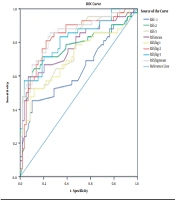
Based on the Finnegan scoring system 16 (26.7%) neonates required medical treatment while according to the clinical judgment of the neonatologists 18 (30%) neonates required treatment for NAS. There was an excellent significant correlation between Finnegan scoring system and clinical judgment of neonatologists regarding the initiation of treatment for NAS (r = 0.75, P < 0.001). The clinical judgment of experienced neonatologists for the initiation of NAS treatment was highly sensitive (87.5%, 95% CI = 61.6 - 98.4) and specific (90.9%, 95%CI = 78.3 - 97.4), with a positive predictive value of 77.8% (95% CI = 52.3 - 93.5), a negative predictive value of 95.2% (95% CI = 83.8 - 99.4), a positive likelihood ration of 9.62 (95% CI = 3.7 - 24.9), and negative likelihood ratio of 0.14 (95% CI = 0.04 - 0.5) for detecting neonates with NAS who require medical treatment based on the Finnegan scoring system.
We used logistic regression model to assess the most important signs and symptoms of NAS that are independently associated with the requirement for treatment based on the Finnegan scoring system; tremor (B = 5.02, OR = 25.5, 95%CI = 19.44 - 32.16, P < 0.001), convulsion (B = 3.06, OR = 21.45, 95%CI = 3.26 - 141.55, P = 0.001), projectile vomiting (B = 1.58, OR = 4.86, 95%CI = 1.86 - 12.65, P = 0.001), increased muscle tonicity (B = 1.29, OR = 3.63, 95%CI = 1.15 - 11.43, P = 0.02), tachypnea (B = 2.38, OR = 10.84, 95%CI = 1.07 - 109.29, P = 0.04), and poor feeding (B = 1.37, OR = 3.93, 95%CI = 1.06 - 16.02, P = 0.04).
4. Discussion
In this multi-centric prospective cohort study we evaluated 60 neonates with NAS, born to mothers with illicit drug abuse. Based on the Finnegan scoring system 16 (26.7%) neonates required medical treatment while based on the clinical judgment of the neonatologists 18 (30%) neonates required treatment for NAS. This was in accordance with the study of Strauss et al that evaluated 72 pregnant illicit drugs dependent mothers of whom 30% of their neonates required pharmacologic treatment with NAS (19). However in some other studies up to 90% of the neonates were reported to require pharmacologic treatment for NAS (7, 20). The treatment rate varies depending on the type of drugs abused by mothers; the requirement for pharmacologic treatment is usually higher among poly substance and opioid exposed neonates while it is lower in stimulants only exposed neonates whose the majority do not require pharmacologic treatment (7, 18).
In the current study tremor, convulsion, increased muscle tonicity, tachypnea, projectile vomiting, and poor feeding were the most important signs and symptoms of NAS, presence of which, regardless of their intensity and scale, was independently associated with the requirement for NAS treatment. Similarly in the study of Lipsitz, muscle tremor, increased muscle tonicity, tachypnea, irritability and intense crying were identified as the most important and prevalent signs (2). In Jones et al. study, a 3-sign index, consisting of hyperactive Moro reflex, mild tremors when undisturbed, and increased muscle tone, showed excellent discrimination, and the authors suggested using this 3-sign index for screening the neonates for NAS (17). Based on the studies that found Finnegan scoring system to be too complex by many nurseries for routine use (10), along with the aforementioned studies (12, 17), we suggest that using the identified signs and symptoms for screening neonates after birth may provide a cost-effective mechanism for the identification of opioid-exposed infants in crowded centers where insufficient number of expert nurses and healthcare providers are present.
In this study for the first time we evaluated the predictive values of the expert neonatologists for initiating NAS treatment, and assessed the association between expert opinion and the Finnegan scoring system for initiating NAS treatment. This study showed that there is excellent correlation between experts’ opinion and the Finnegan score for initiating the NAS treatment, in addition, the clinical judgment of experienced neonatologists was highly sensitive and specific with very good predictive values in detecting the neonates with NAS who required treatment based on the Finnegan scoring system. It should be noted that this study never intended to support the replacement of Finnegan scoring system by clinical judgments of experienced neonatologists. Due to the difficulties and time consuming nature of the Finnegan scoring system, many experienced clinicians, especially in the referral centers with limited human and facility resources, use their clinical judgement for initiating and continuation of NAS treatment. This study aimed to assess the accuracy of clinical opinions of the experienced neonatologists, and to evaluate whether ethically this method is acceptable. The results of this study documented that in special circumstances when using Finnegan scoring system in regular basis is not applicable, initiating NAS treatment based on the clinical judgment of expert neonatologists is acceptable and ethical because of its high sensitivity and specificity and excellent correlation with the Finnegan scoring system.