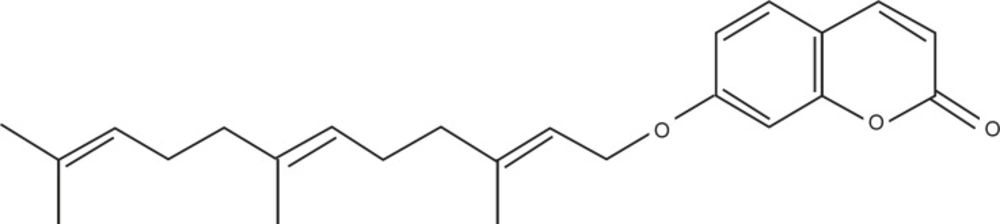
Umbelliprenin is produced in various Ferula species (
4-
6). It has also been found in various plant species consumed as food or used for food preparation (
e.g. celery). Ferula species used include,
Angelica archangelica,
Coriandrum sativum and
Citrus lemon (
13). Natural products have been the source of many medically beneficial drugs, and their importance in the prevention and treatment of cancer is becoming increasingly apparent. Natural products, including bryostatin 1, triterpenoids, and epigallocatechin gallate (EGCG), a polyphenol found in green tea, and their synthetic derivatives have previously been reported to demonstrate activity against B-CLL cells, and some of these compounds have entered clinical trials for treatment of B-CLL and other indolent B-cell malignancies (
14-
17). In addition, a Chinese herbal extract associated with a sustained complete remission in a B-CLL patient showed direct cytotoxicity to B-CLL cells in vitro (
18). Thus, there is reason to consider the use of medicinal botanicals and other natural compounds, perhaps in combination with existing therapies, in the treatment of CLL.
The cytotoxicity of umbelliprenin has been found to be related to the presence of the aliphatic sesquiterpenoid group linked at C7-OH. However, additional
in-vitro tests and, assays in animal model, are needed to determine the toxicity and the effectiveness of umbelliprenin. In a recent study, Barthomeuf
et al. studied the induction of apoptosis in a number of human carcinoma lines: colon (DLD1), breast (MCF7), ovary (PA1), prostate (PC3) and non-small cell lung (A549) carcinoma, on primary human fibroblasts and on human metastatic pigmented malignant melanoma M4Beu cells. They found that the level of inhibition varied with the cell line. The cell susceptibility to umbelliprenin decreased in the order: M4Beu>A549=PC3>PA1>fibroblasts= MCF7>DLD1. The IC
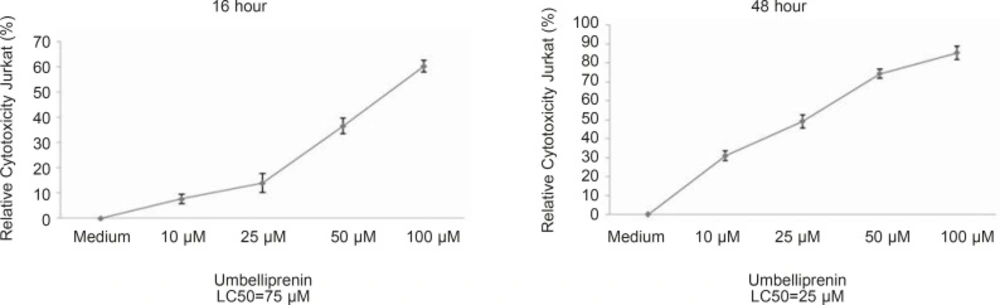
50 of umbellprenin in M4Beu cells after 48 h incubation was 12.4 µM. We found that the IC
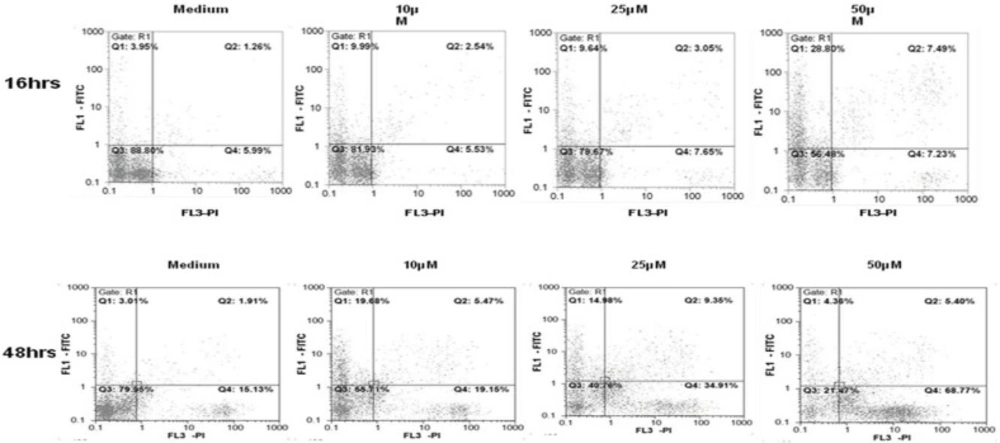
50 of umbelliprenin in Jurkat cells after 48 h incubation was 25 µM. Moreover, they found the number of early apoptotic cells as 17.7% in M4Beu cultures instead of 1.9% in fibroblast, after 48 h incubation with 25 µM concentration of umbelliprenin (
7). We also found the number of early apoptotic cells as 19.4% in Jurkat cultures, instead of 0% in PBMCs, after 48 h incubation by 25 µM concentration of umbelliprenin.
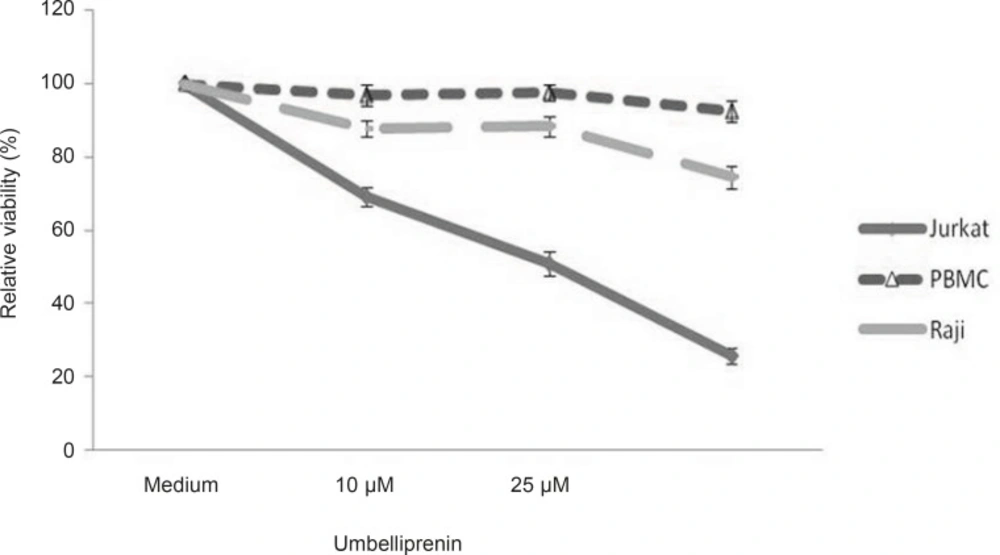
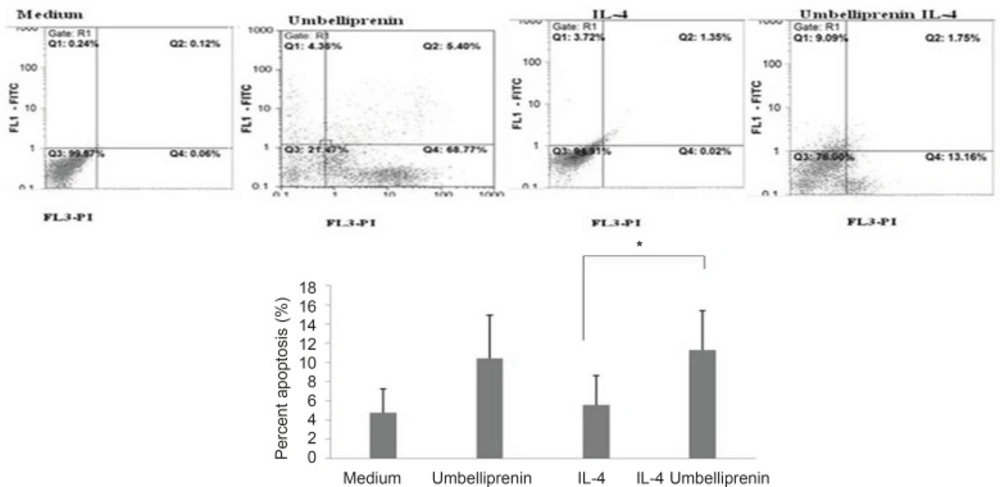
CLL is a disease characterized by the accumulation of apoptotic resistant lymphocytes. The natural product umbelliprenin has been reported to induce apoptosis in a variety of tumor cells. Therefore, we investigated whether umbelliprenin could overcome the apoptotic resistance inherent in CLL cells. We found that umbelliprenin acts directly on CLL cells to induce cytotoxicity in a manner that causes apoptosis within different times. Our data, the first in Jurkat and Raji cells, support previous work demonstrating the activity of umbelliprenin in cell lines and tumor models (
7). Umbelliprenin induced cytotoxicity toward Jurkat and Raji cells at concentrations that are minimally toxic to normal PBMCs.
We showed that incubation of CLL cells with IL-4 couldn`t inhibit the apoptotic effect of umbelliprenin. This phenomenon should be considered in future studies on apoptotic effects of umbelliprenin in the treatment of CLL.
Umbelliprenin may be proposed as an effective therapeutic agent in the treatment of CLL, and thus its application in clinical studies may be considered. Given its ability to overcome apoptotic resistance, umbelliprenin may also be effective in other hematopoietic malignancies. Further investigation of umbelliprenin in mouse models of CLL and other leukemias will contribute to additional understanding of its in-vivo activity toward malignant cells and its potential toxicity toward normal tissues. Finally, analysis of the mechanism of action of umbelliprenin in apoptosis pathways and elucidation of its molecular target are greatly needed and they are the subject of our presently ongoing research.