
1. Background
According to global reports, breast cancer was among the most commonly diagnosed cancers in women in 2023 (1). Treatment modalities for breast cancer include surgical tumor removal, radiotherapy, chemotherapy, targeted therapy, immunotherapy, and hormone therapy. The selection of an appropriate treatment regimen is typically based on tumor type, disease stage, and the patient’s clinical status (2).
Paclitaxel is widely used as a key chemotherapeutic agent for the treatment of breast cancer. It is primarily used in breast cancer chemotherapy regimens, particularly in combination with other drugs, such as doxorubicin and cyclophosphamide, as in the AC-paclitaxel regimen, or carboplatin, as in the paclitaxel-carboplatin regimen. These combinations are commonly administered in both early and advanced stages of breast cancer, particularly in more aggressive types, such as triple-negative breast cancer (3, 4). Paclitaxel for breast cancer is administered weekly at 80 mg/m2, every 2 weeks, or every 3 weeks at 175 mg/m2, depending on the patient’s condition (3). Although paclitaxel is effective and generally well tolerated, it is associated with certain adverse effects. Neuropathic pain is among the most common adverse effects, with 60% to 90% of patients experiencing neuropathy. Peripheral neuropathy manifests as various sensory disturbances, including hyperalgesia, allodynia, dysesthesia, and paresthesia.
These symptoms result from peripheral nerve damage or changes in neuronal function (5). Paclitaxel causes neuropathy by stabilizing microtubules, altering mitochondrial structure and function, and inducing inflammation, which ultimately disrupts axonal transport (6). This type of neuropathy is typically a sensory polyneuropathy affecting large fibers; however, it can also lead to motor weakness and autonomic dysfunction (7). Peripheral neuropathy can limit the treatment dose and may necessitate regimen adjustments, even when patients show positive responses to the medication (8).
Currently, several agents are used to manage taxane-induced neuropathy, including N-acetyl cysteine, vitamin E, L-glutamine, carnitine (9), vitamin D (10), and drugs such as duloxetine, pregabalin, gabapentin, venlafaxine (11), and melatonin (12). Although some of these drugs have shown effectiveness in treating neuropathy, none has been completely successful in preventing paclitaxel-induced neuropathy. Another study (13) reviewed evidence indicating that medicinal plants, such as chamomile, sage, cinnamon, and sweet flag, as well as phytochemicals, including matrine, curcumin, and thioctic acid, exert protective effects in animal models of CIPN. These agents act through mechanisms such as preventing axonal degeneration, reducing calcium overload, enhancing antioxidant defenses, and modulating apoptotic and inflammatory pathways. Although 5 clinical trials have explored herbal interventions in patients with CIPN, the evidence remains preliminary, highlighting the need for rigorously designed studies to establish clinical efficacy.
Curcumin, or diferuloylmethane, is a natural compound extracted from Curcuma longa L., a member of the Zingiberaceae family. As a member of the curcuminoid family, it has been studied for its potential benefits in treating various conditions, such as asthma, allergies, anorexia, cough, liver diseases, and sinusitis (13).
Previous studies have indicated that nanocurcumin has beneficial biological activities, including antibacterial, antiviral, anticancer, and antioxidant properties, and has shown preventive and therapeutic effects in various cancers, including breast cancer (14-16).
Nanocurcumin, a nanoformulation of curcumin, likely improves neuropathy through anti-inflammatory, antioxidant, anti-endoplasmic reticulum stress, neuroprotective, and glial-protective mechanisms (17).
Curcumin helps reduce postoperative allodynia (17, 18) and diabetic neuropathic pain (19, 20). It is known for its anti-inflammatory and neuroprotective properties, which involve reducing inflammation and protecting nerve tissue. In addition, curcumin can prevent the progression of diabetic neuropathy in streptozotocin-induced diabetic rats (21, 22) and decrease pain associated with depression (23).
2. Objectives
Given previous findings and the multiple beneficial properties of curcumin, particularly its ability to alleviate neuropathic pain through various mechanisms, the present study aimed to evaluate the effect of nanocurcumin on preventing paclitaxel-induced peripheral neuropathy in patients with breast cancer.
3. Methods
3.1. Participants and Trial Design
This study employed a randomized, double-blind, placebo-controlled clinical trial design. Participant enrollment occurred between December 2022 and March 2024 at the Mahan Hematology-Oncology Clinic in Isfahan, Iran, a specialized center providing comprehensive care to patients with hematologic and oncologic conditions. The study protocol was approved by the Ethics Committee of Isfahan University of Medical Sciences (code: IR.MUI.RESEARCH.REC.1402.020) and registered with the Iranian Registry of Clinical Trials (IRCT20180722040556N10). Written informed consent was obtained from all participants after review of the consent forms and clarification of any questions or concerns.
3.2. Sample Size Calculation
The sample size was calculated using a standard formula to evaluate differences in a specific parameter under 2 distinct conditions, as described by Asghari et al. (24).
where N represents the required sample size, z1 is the reliability coefficient corresponding to a 95% confidence level (1.96), z2 is the power coefficient for 80% statistical power (0.84), p1 and p2 denote the expected proportions in each group (both set at 0.5), and d is the margin of error (0.35). Substituting these values yields:
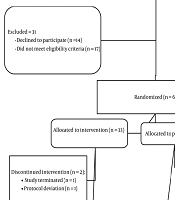
Thus, the estimated sample size was 32 participants per group. However, due to challenges in recruiting eligible patients, enrollment was terminated prematurely, resulting in a reduced sample size (Figure 1).
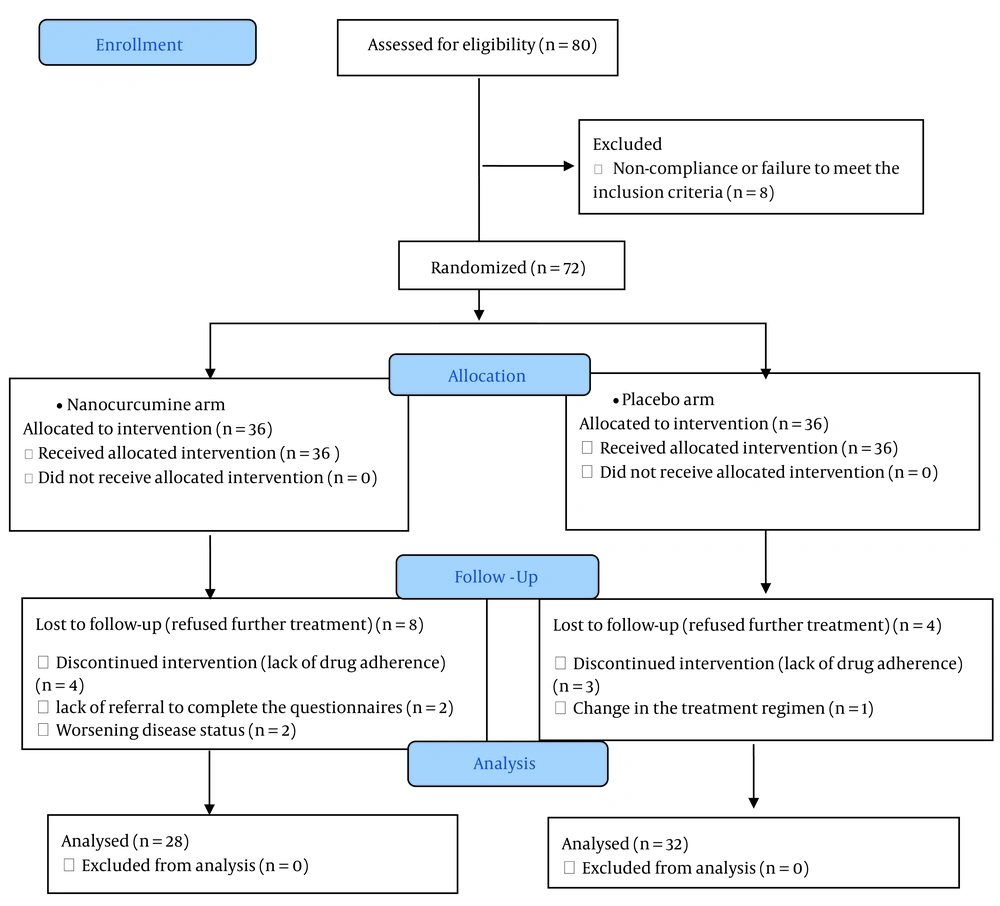
Figure 1.
The CONSORT flow diagram of the study
3.3. Inclusion and Exclusion Criteria
The study population comprised adult women aged 18 to 65 years with nonmetastatic breast cancer who were receiving paclitaxel monotherapy for the first time. Paclitaxel was administered at a dose of 175 mg/m2 of body surface area every 3 weeks for 4 cycles after completion of an anthracycline-based regimen. Eligible participants were required to have no evidence of pre-existing neuropathy at baseline; to demonstrate the ability and willingness to adhere to the study medication for at least 8 weeks; and to be able to orally ingest nanocurcumin capsules. In addition, participants were required to have sufficient educational background and cognitive capacity to complete the study questionnaires and to cooperate in neurological assessments.
Exclusion criteria included a history of peripheral neuropathy; documented allergy to turmeric or other plants belonging to the Zingiberaceae family; coronary or peripheral vascular disease; diabetes at any level; pregnancy or lactation; concurrent use of antiepileptic drugs, tricyclic antidepressants, or other neuropathic pain relievers; chronic smoking; substance abuse; alcohol consumption; hereditary or nutrition-related neuropathy; prior chemotherapy for other malignancies; central nervous system metastasis; or neurological involvement due to metastasis or tumor compression. Patients taking antiplatelet agents, such as aspirin, or other oral and injectable thrombosis medications were also excluded.
3.4. Concealment and Randomization
All patients who met the inclusion criteria were identified and entered into a blocked randomization procedure. Information on the number of treatment groups, block sizes, and total number of patients was entered into online randomization software available at https://www.sealedenvelope.com/simple-randomiser/v1/lists. The block size was a multiple of the number of groups and was set at 4 in this study to reduce complexity. Based on the codes derived from the final analysis, each patient entering the study was assigned a sequential code indicating whether they would receive the drug or placebo. Equal block randomization was used to allocate participants as evenly as possible between the 2 groups. After sampling was completed, each patient code was opened and matched with the software output, and every effort was made to ensure that the data collector and intervention provider remained unaware of the drug codes until after data analysis.
3.5. Intervention and Questionnaires
Patients receiving the paclitaxel regimen were allocated to 2 groups: an intervention group receiving nanocurcumin and a placebo group. Patients in the intervention group received 40 mg of nanocurcumin as a soft gelatin capsule twice daily for 8 weeks, whereas the placebo group received a visually identical placebo soft gelatin capsule. Both capsule types were supplied by Exir Nano Sina Company, Tehran, Iran, and were indistinguishable to ensure effective blinding. The nanocurcumin capsules comprised 72% curcumin, 25% demethoxycurcumin, and 3% bis-demethoxycurcumin, whereas the placebo soft gelatin capsules contained polysorbate 80.
These products were prepared in specified quantities for each patient, assuming completion of the entire course with twice-daily dosing, and were labeled with a specific code assigned to the student. Code information on the drug packaging was accessible only to the principal investigator, who was not involved in sampling. Other study collaborators, including patients, pharmacy students, and the physician conducting clinical assessments, were unaware of the specific codes, ensuring that sampling was conducted in a blinded manner.
After recruitment, neuropathy severity was assessed at weeks 4 and 8 using 3 tools: the Neuropathy Disability Score (NDS), Neuropathy Symptom Score (NSS), and Michigan Neuropathy Screening Instrument (MNSI). Validation of the NDS and NSS was conducted by Asghari et al. in 2015 (24).
The NDS is a clinical tool that assesses neuropathy severity, particularly in patients with peripheral neuropathy. It includes 4 clinical tests: The Achilles reflex, with 4 points for full impairment, and vibration, pinprick, and temperature sensation tests, with 2 points each for full impairment on both feet. Reflexes are scored from 0 (normal) to 2 (absent) for each foot. NDS scores range from 0 to 10, with severity classified as mild, 3 to 5; moderate, 6 to 8; and severe, 9 to 10 (25). To assess neuropathy components during the NDS evaluation, several clinical investigations were performed, including the pinprick test, diapason test, and thermal discrimination test. The results were used to calculate questionnaire item scores.
The NSS is a clinical tool that evaluates the presence and severity of neuropathic symptoms, particularly in patients with diabetic peripheral neuropathy. It assesses symptoms such as burning, tingling, numbness, and pain in the feet and legs, helping to identify the extent of neuropathic symptoms and to monitor progression over time. NSS scores determine neuropathy severity as mild, 3 to 4; moderate, 5 to 6; and severe, 7 to 9 (25).
The MNSI, validated by Nasrabadi et al. in 2005, was also used in this study (26). The MNSI is a clinical tool designed to screen for the presence of diabetic neuropathy. It consists of 2 parts: A history questionnaire completed by the patient and a physical examination conducted by a clinician. The history questionnaire comprises 15 self-administered items designed to evaluate foot-related sensory experiences, including pain, numbness, and sensitivity to temperature variations. The physical examination involves inspecting the feet for abnormalities, assessing vibration sensation, grading ankle reflexes, and performing monofilament testing (27).
3.6. Nerve Conduction Study
After study completion at week 8, patients who had completed the study and showed signs of neuropathy based on questionnaire results or clinical examinations were referred to a neurologist for confirmation of large-fiber neuropathy through nerve conduction testing, based on reduced or absent sensory and/or sensory-motor responses (28). The neurologist confirmed the diagnosis using nerve conduction studies and electromyography to evaluate mean nerve conduction in the wrist and calf through electrical impulses generated by muscle activity (28).
3.7. Patient Adherence, Adverse Drug Reactions, and Tumor Response Evaluation
At study initiation, participants received training on the proper administration of their coded medication. They were instructed to retain the original packaging and return it to the research team upon study completion. Adherence to the medication regimen was monitored using the pill count method, whereby participants presented their coded drug or placebo containers at scheduled follow-up visits for capsule reconciliation. In addition, each participant maintained a daily log documenting the timing of medication intake and any observed adverse effects.
The researcher made regular telephone calls to verify correct medication use and to identify potential adverse effects. A dedicated hotline was available for participants to report medication-related issues. At each follow-up visit, pill count data were documented, and participants received consistent feedback regarding adherence to the prescribed regimen. Individuals who failed to consume at least 80% of the total cumulative doses of nanocurcumin or the corresponding placebo were classified as noncompliant and subsequently excluded from the study. Adverse drug reactions reported during the 8-week follow-up period were evaluated according to the Common Terminology Criteria for Adverse Events (CTCAE), version 5 (29).
We also assessed 6-month tumor response based on the Response Evaluation Criteria in Solid Tumors (RECIST), version 1.1 (30, 31). RECIST provides a systematic approach to evaluating the effectiveness of anticancer treatments by analyzing changes in the visual characteristics of lesions using imaging techniques.
The primary outcome was a composite assessment at week 8 incorporating observed changes in NDS, NSS, and MNSI scores, along with structured clinical examinations. This integrated approach enabled a comprehensive evaluation of neuropathy burden and progression throughout the study.
3.8. Statistical Analysis
Data analysis was conducted using SPSS version 23. Descriptive statistics, including means and standard deviations, were used. The Shapiro-Wilk test was used to assess the normality of quantitative data, and the Levene test was used to assess homogeneity of variance. For qualitative variables, the chi-square test was used, whereas for quantitative variables, the t-test or its nonparametric equivalent, the Mann-Whitney test, was used. In addition, a generalized linear model (GLM) and a repeated-measures test were used to evaluate changes in scores over time between the 2 groups. The significance level for all tests was set at 0.05.
4. Results
As illustrated in Figure 1, a total of 80 eligible participants were enrolled over a 1-year period. After initial screening, 8 individuals were excluded because of noncompliance or failure to meet the inclusion criteria. The remaining 72 participants met all eligibility requirements and provided informed consent. These individuals were subsequently randomized in equal numbers, with 36 assigned to the placebo group and 36 assigned to the nanocurcumin intervention group.
During the study, 8 participants in the intervention group and 4 in the control group were excluded because of incomplete medication intake, changes in chemotherapy regimens, or recommendations from other physicians involved in their care. In total, 60 participants completed the full 8-week treatment regimen, including 32 in the placebo arm and 28 in the nanocurcumin intervention arm.
4.1. Clinical and Demographic Characteristics
As shown in Table 1, demographic characteristics and comorbidities were documented using a structured data collection form. The mean age of the patients enrolled in this study was 52 ± 7.58 years (range, 37 - 64 years). Statistical analysis showed no significant difference in mean age between the 2 treatment groups (P = 0.17). Furthermore, comparisons of other baseline variables, including body mass index (BMI; P = 0.53), paclitaxel dose (P = 0.94), and cumulative dose (P = 0.95), revealed no significant differences between the groups, indicating comparable baseline conditions.
Table 1.
Demographic and Clinical Characteristics of Involved Patients (N = 60) a
| Variables | All Patients (n = 60) | Nanocurcumin Group (n = 28) | Placebo Group (n = 32) | P-Value b |
|---|---|---|---|---|
| Age (y) | 52.0 ± 7.58 | 53.42 ± 7.8 | 50.75 ± 7.29 | 0.17 |
| Body Mass Index (kg/m2) | 23.85 ± 2.29 | 24.05 ± 2.66 | 23.67 ± 1.94 | 0.53 |
| Paclitaxel dose, mg (per 175 mg/m2) | 282 ± 14.93 | 282.14 ± 15.48 | 281.87 ± 14.68 | 0.94 |
| Cumulative dose (mg/m2) | 846 ± 44.8 | 846.42 ± 46.44 | 845.62 ± 44.06 | 0.95 |
| Family history of cancer | 0.17 | |||
| Yes | 5 (8.3) | 4 (14.3) | 1 (3.1) | |
| No | 55 (91.7) | 24 (85.7) | 31 (96.9) | |
| Comorbidity c | 8 (13.3) | 5 (17.8) | 3 (9.4) | 0.45 |
a Values are expressed as No. (%) or mean ± SD.
b P-values were calculated using the Fisher exact test, Student t-test, and the Mann-Whitney test, as appropriate.
c Predominantly hypertension and dyslipidemia.
Among the study population, 17.8% of patients in the nanocurcumin group and 9.4% in the placebo group had comorbid conditions, predominantly hypertension and dyslipidemia (P = 0.45). These conditions were managed with standard medications, including losartan, amlodipine, hydrochlorothiazide, and atorvastatin. No other significant comorbidities were identified during the 6-month follow-up period, and no deaths were reported in either group.
4.2. Questionnaire Results
The results of comparisons of indices from the 3 questionnaires, NSS, NDS, and MNSI, between the 2 study groups over time at baseline, 4 weeks, and 8 weeks are presented in Table 2. Initially, there was no significant difference in NSS scores between the groups. By week 8, NSS scores had significantly increased in the placebo group (P = 0.02), whereas the increase in the nanocurcumin group was not statistically significant (P = 0.54). Overall, the study showed significant changes in NSS scores between the groups over time (P = 0.02), with a greater increase in the placebo group.
Table 2.
Comparison of NSS, NDS, and MNSI Scores Between Study Groups Over Time a
| Factors and Times | Nanocurcumin Group (n = 28) | Placebo Group (n = 32) | Between-Group P-Value b |
|---|---|---|---|
| NSS score | |||
| Baseline | 0.142 ± 0.524 | 0.0 ± 0.0 | 0.13 |
| 4 weeks later | 0.0 ± 0.0 | 0.0 ± 0.0 | 1.00 |
| 8 weeks later | 0.214 ± 1.13 | 0.812 ± 2.20 | 0.21 |
| Within-group P-value c | 0.54 | 0.02 | |
| NDS score | |||
| Baseline | 0.0 ± 0.0 | 0.0 ± 0.0 | 1.00 |
| 4 weeks later | 0.0 ± 0.0 | 0.0 ± 0.0 | 1.00 |
| 8 weeks later | 0.142 ± 0.75 | 0.687 ± 1.87 | 0.16 |
| Within-group P-value c | 0.37 | 0.02 | |
| MNSI score | |||
| Baseline | 0.428 ± 0.835 | 0.0 ± 0.0 | 0.005 |
| 4 weeks later | 0.035 ± 0.188 | 0.0 ± 0.0 | 0.92 |
| 8 weeks later | 0.214 ± 0.95 | 0.656 ± 1.61 | 0.29 |
| Within-group P-value c | 0.16 | 0.01 |
Abbreviations: MNSI, Michigan Neuropathy Screening Instrument; NDS, Neuropathy Disability Score; NSS, Neuropathy Symptom Score.
a Values are expressed as mean ± SD.
b P values were calculated using the Mann-Whitney test and the GLM, as appropriate.
c P values were calculated using a repeated-measures test.
Similarly, there was no difference in NDS scores between the groups at the beginning of the study. By week 8, NDS scores had increased in both groups, with the increase being statistically significant in the placebo group (P = 0.018) but not in the nanocurcumin group (P = 0.37). Changes in NDS scores between the groups over time were significant (P = 0.03), with a more pronounced increase in the placebo group.
For the MNSI index, scores were significantly higher in the nanocurcumin group at the beginning of the study. By week 4, this index had decreased in the nanocurcumin group, making the 2 groups more comparable. However, by week 8, the MNSI index had increased in both groups, with a significantly greater increase in the placebo group (P = 0.01) compared with that in the nanocurcumin group (P = 0.15). Overall, changes in MNSI scores between the groups over time were significant (P = 0.02), with an increase in the placebo group and a decrease in the nanocurcumin group.
Higher NSS, NDS, and MNSI scores in the placebo group indicated mild to severe neuropathy in some patients, as determined by analysis of the related questionnaires. Therefore, statistical analysis of the study data demonstrates that nanocurcumin can significantly affect paclitaxel-induced neuropathy indices.
4.3. Comparison of Reported Symptom Frequencies
Symptoms reported by patients based on their responses to the MNSI, NDS, and NSS questionnaires during or at the end of the study (week 8) were collected separately; their frequencies were compared and are shown in Table 3. The data reveal that fatigue, muscle cramps, and pain were significantly more common in the placebo group than in the nanocurcumin group (P = 0.04). However, despite the higher prevalence of other symptoms in the placebo group, no significant differences were observed between the 2 groups.
| Measured Factor | Placebo Group | Nanocurcumin Group | P-Value c |
|---|---|---|---|
| Fatigue, muscle cramps, and pain | 28 | 7 | 0.04 |
| Burning sensation, numbness, and tingling | 18.7 | 3.6 | 0.11 |
| Impaired Achilles reflex | 0 | 0 | - |
| Impaired vibration test | 12.6 | 3.6 | 0.36 |
| Impaired pinprick test | 12.6 | 3.6 | 0.36 |
| Impaired temperature sensation test | 6 | 0 | 0.5 |
a Values are expressed as percent.
b Scoring for each symptom category was based on the presence of its constituent symptoms by week 8.
c P-values were calculated using the Fisher exact test.
4.4. Neuropathy Incidence and Nerve Conduction Study Results
All patients suspected of having neuropathy based on the questionnaires or the investigator's assessment were referred to a neurology specialist for further evaluation and nerve conduction studies (8 patients). Among these patients, based on nerve conduction study data, 3 cases of neuropathy were identified in the placebo group, whereas only 1 case of abnormal nerve conduction study results was observed in the nanocurcumin group. The incidence of neuropathy between the 2 groups was analyzed using both per-protocol and intention-to-treat methods. The results indicated that despite a significant difference in neuropathy incidence based on the questionnaires, there was no significant difference in the incidence of large-fiber neuropathy based on nerve conduction study data between the nanocurcumin and placebo groups in either analysis (P = 0.61 and P = 0.34 for per-protocol and intention-to-treat analyses, respectively).
4.5. Adverse Effects and Tumor Response Evaluation
Based on CTCAE version 5 criteria (29), no severe adverse effects necessitating discontinuation were reported in either group. The most frequently reported adverse effect was nausea and vomiting. In the nanocurcumin group, 10.7% of patients experienced grade 1 nausea and vomiting, whereas 6.3% of patients in the placebo group reported the same adverse effect. Statistical analysis revealed that the difference in the incidence of nausea and vomiting between the 2 groups was not statistically significant (P = 0.67) (Table 4).
Table 4.
Adverse Drug Reactions in Enrolled Patients Based on Common Terminology Criteria for Adverse Events (CTCAE), Version 5.0 a
| Adverse Drug Reactions b | Nanocurcumin Group (n = 28) | Placebo Group (n = 32) | P-Value |
|---|---|---|---|
| Nausea and vomiting | |||
| Grade 1 | 3 (10.7) | 2 (6.3) | 0.67 |
a Values are expressed as No. (%).
b During the study, no adverse events of grade 2 or higher were observed.
In addition, based on RECIST criteria, a complete response to treatment was observed in 28 patients in the nanocurcumin group and 29 patients in the placebo group. The results indicate no significant difference in response rates between the 2 groups (P = 0.24).
5. Discussion
This study demonstrated that nanocurcumin significantly improved the assessed indices of peripheral neuropathy in patients with breast cancer undergoing paclitaxel treatment. Our results specifically highlighted significant differences in changes in the NSS, MNSI, and NDS indices between the 2 groups. Despite achieving statistical significance in the comparative analysis of questionnaire scores, objective data from nerve conduction studies indicated no significant evidence of large-fiber neuropathy.
In addition, our study indicated that nanocurcumin has substantial potential to reduce neuropathy-related adverse effects, such as fatigue and muscle cramps, suggesting that this supplement may help improve these patients’ quality of life.
The NDS, NSS, and MNSI are widely recognized tools for assessing peripheral neuropathy. Studies have shown that combining these tools enhances neuropathy evaluation in clinical settings. For example, the MNSI is particularly effective for screening for diabetic neuropathy, whereas the NDS and NSS have been validated for their sensitivity and specificity in diagnosing neuropathy. Their proven reliability makes them valuable for determining both the presence and severity of neuropathy, which is why they were used in our study (32).
Nerve conduction studies have been used to assess taxane-induced peripheral neuropathy, but their diagnostic accuracy can vary. Research indicates that although nerve conduction studies can detect neurophysiological changes, discrepancies often exist between patient-reported symptoms and objective assessments (33). This finding aligns with previous literature. For instance, Cho et al. (34) demonstrated that although patients may subjectively report asymmetry in symptoms, nerve conduction studies frequently fail to capture significant electrophysiological asymmetry, underscoring the differential sensitivity of these assessment modalities.
In addition, the sensitivity of nerve conduction studies for diagnosing CIPN may be limited, particularly when relying on single-point evaluations. This suggests that although nerve conduction studies can provide valuable insights, they may not always align perfectly with clinical symptoms, highlighting the importance of combining nerve conduction studies with other diagnostic methods for a comprehensive evaluation.
In our study, nerve conduction test results, in contrast to questionnaire data, identified fewer patients with neuropathy, and the difference in neuropathy incidence between the 2 groups was not statistically significant. This outcome may be attributable to the limited sensitivity of nerve conduction studies for detecting neuropathy because these tests predominantly target large-fiber neuropathy and are less effective than questionnaires in identifying small-fiber neuropathy.
Our study provides important insights into the limitations of nerve conduction studies in identifying small-fiber neuropathy. These results align with existing evidence that nerve conduction tests are primarily designed to detect large-fiber neuropathy, making them less sensitive to small-fiber damage. Conversely, questionnaire-based assessments capture subjective patient-reported symptoms and are often more effective for detecting small-fiber involvement. The discrepancy observed between the 2 diagnostic methods underscores the need for a comprehensive approach that integrates nerve conduction studies with patient-reported data and complementary techniques, such as skin biopsy or quantitative sensory testing, to improve diagnostic accuracy for neuropathy.
Curcumin has been extensively studied for its potential benefits in the prophylaxis and treatment of neuropathy. Its multifaceted therapeutic properties, particularly its anti-inflammatory, antioxidant, and neuroprotective effects, have been demonstrated in both animal and human studies. For example, experimental models of peripheral neuropathy have shown significant reductions in pain and inflammation after administration of advanced curcumin formulations. Similarly, clinical trials in human subjects have reported improvements in neuropathic pain symptoms, further underscoring its potential as an adjunctive treatment.
However, the limited bioavailability of curcumin poses a significant challenge for clinical translation. To address this limitation, innovative delivery methods, such as curcumin-loaded nanoparticles and liposomal systems, have been developed and have shown promising results in enhancing therapeutic efficacy. Although these findings are promising, robust evidence from large-scale, placebo-controlled clinical trials is necessary to definitively establish the therapeutic value and safety profile of curcumin in the management of peripheral neuropathy.
Caillaud et al. (17) demonstrated curcumin’s antioxidant and protective properties in animal models of chemotherapy-induced neuropathy, findings that align with our results because we observed improvements in neurological function and reductions in neuropathy symptoms, such as tingling and numbness.
In addition, a study (35) in patients with diabetic neuropathy showed that nanocurcumin could alleviate neuropathic symptoms. In that study, 80-mg nanocurcumin capsules produced by Exir Nano Sina were administered for 8 weeks to reduce sensory and motor polyneuropathy in patients, resulting in improvements in neuropathy-related factors. Our findings are consistent with this study because both demonstrated improvements in sensory and motor indices and reductions in neuropathy severity. This underscores the efficacy of the nanocurcumin formulation, which likely enhances absorption and stability, thereby producing beneficial effects in patients.
Other studies, such as the research conducted (36), have investigated the combination of curcumin and paclitaxel in patients with breast cancer. In that study, 1 group received paclitaxel with placebo, whereas the other received paclitaxel with curcumin for 12 weeks, followed by a 3-month follow-up. The safety and efficacy of curcumin in combination with paclitaxel chemotherapy were evaluated in patients with metastatic breast cancer. Curcumin administration with paclitaxel enhanced antitumor efficacy by increasing the sensitivity of cancer cells to the drug and inducing apoptosis in cancer cells. In addition, the study showed that curcumin could improve overall patient well-being, although it did not demonstrate significant effects on survival or other adverse effects. The differences in results between that study and ours may be attributable to the use of nanocurcumin, as well as differences in dosage and follow-up duration. This approach may have greater efficacy in preventing peripheral neuropathy.
Additional animal and human studies have indicated that curcumin is effective against neuropathy induced by other chemotherapy drugs, such as cisplatin and vincristine (37, 38). These findings support the anti-inflammatory and antioxidant mechanisms of curcumin, which can help reduce inflammation and improve neurological function in patients receiving chemotherapy, further emphasizing the importance of our findings.
Curcumin is generally considered safe and well tolerated in humans, with gastrointestinal discomfort, such as dyspepsia, being the most frequently reported adverse effect at higher doses. Standardized oral extracts are commonly administered in divided doses, and clinical references indicate regimens of approximately 500 mg 4 times daily for dyspepsia, reflecting acceptable short-term tolerability in adults. Although several studies have investigated gram-level dosing, routine use should emphasize standardized preparations, careful monitoring for gastrointestinal adverse effects, and consideration of patient comorbidities and concomitant medications. Importantly, curcuminoids have been shown to influence drug metabolism and transport, particularly through inhibition of cytochrome P450 3A4 and modulation of P-glycoprotein, which may increase systemic exposure to coadministered drugs and elevate the risk of adverse events. Documented interactions include elevated plasma levels of multiple cytochrome P450 3A4 substrates, such as cyclosporine, everolimus, carbamazepine, and certain ergot derivatives, highlighting the need for caution and clinical monitoring when curcumin is used alongside narrow-therapeutic-index agents or in patients receiving polypharmacy. Furthermore, potential additive pharmacodynamic effects, particularly antiplatelet and anticoagulant activity, necessitate careful assessment of bleeding risk when curcumin is combined with agents such as warfarin or clopidogrel (39, 40).
First, although curcumin is generally regarded as safe at commonly studied oral doses, its potential for pharmacokinetic interactions with concomitant medications, particularly through inhibition of cytochrome P450 enzymes and P-glycoprotein, necessitates careful evaluation in oncology patients who often receive complex drug regimens.
5.1. Conclusion
Ultimately, this study suggests that nanocurcumin could be considered an adjunct treatment to improve the quality of life in patients with breast cancer undergoing paclitaxel chemotherapy and to reduce the neuropathic adverse effects associated with this treatment. These findings provide a foundation for further research to better understand and optimize the use of nanocurcumin in combination with other cancer therapies.
The findings of this study indicate that nanocurcumin can effectively improve measured indices related to neuropathy in patients with breast cancer. The study also demonstrated significant improvements in fatigue, muscle cramps, and pain in these patients compared with the placebo group. Therefore, nanocurcumin may be considered a complementary therapeutic option for this patient population. Larger-scale studies are warranted to confirm these findings and to determine the optimal dosage and duration of nanocurcumin supplementation.
5.2. Limitations
Although the findings of this study are encouraging, several limitations should be acknowledged. A potential limitation of our study design relates to the selection of assessment tools for quantifying CIPN. We used the NDS, NSS, and MNSI. Although these instruments were initially validated in the context of diabetic neuropathy (25), it is important to recognize their established utility as complementary assessments that effectively capture both sensory and motor deficits, including signs of small-fiber impairment. They help bridge the gap left by objective measures such as nerve conduction studies, which are insensitive to early small-fiber axonal damage typical of CIPN. Therefore, our approach sought to triangulate findings by combining subjective symptom reporting with quantifiable physical examination findings. The primary constraints that led to selecting this triad rather than other comprehensive batteries were practical and logistical. Specifically, the need for patient cooperation for repeated testing, the time required for comprehensive assessments during follow-up visits, and the requirement for instruments that could be deployed quickly in a high-volume clinical setting dictated our choice. Although these instruments are robust, these practical factors underscore the ongoing challenge of balancing thorough data collection with the demands of real-world clinical monitoring of taxane-induced toxicity. Future studies should aim to integrate fiber-specific assessments to provide a more comprehensive understanding of the underlying pathological changes induced by taxane therapy.
The relatively small sample size and limited follow-up duration may constrain the ability to fully evaluate the long-term efficacy of nanocurcumin in preventing peripheral neuropathy. A key limitation is the 8-week duration of both nanocurcumin prophylaxis and patient monitoring, which concluded before completion of the full chemotherapy regimen for all enrolled patients. Although this period was selected to capture the highest-risk window for established CIPN, it precludes definitive conclusions regarding the incidence or severity of neuropathy manifesting after cessation of prophylaxis, during later chemotherapy cycles, or during posttreatment follow-up. Future studies should aim to extend both the prophylactic intervention and subsequent neuropathy monitoring throughout the entire course of chemotherapy to fully characterize the potential for late-onset CIPN. Consequently, future research should include larger cohorts and longer observation periods to better elucidate the sustained effects and underlying mechanisms of nanocurcumin in mitigating chemotherapy-induced neuropathic complications.