
1. Context
Pharmacological management of anxiety and cooperation is essential for the safe performance of complex pediatric dental procedures (1, 2). Although these agents facilitate treatment at the interface of dentistry and pharmacotherapy, respiratory adverse events (RAEs) remain the most critical adverse reactions (3-5). These complications span a spectrum from mild events, such as oxygen desaturation and airway obstruction, to severe conditions, including apnea and laryngospasm. RAEs, including hypoxia, airway obstruction, and laryngospasm, are direct consequences of sedative pharmacodynamics. Children are uniquely vulnerable to drug-induced respiratory compromise because of anatomical and physiological characteristics, such as smaller airway diameters and higher metabolic oxygen demands (6, 7). Systematic reviews confirm that airway complications are the primary cause of morbidity during pediatric sedation, necessitating rigorous pharmacovigilance (8-10).
Different drugs exhibit distinct safety profiles. Midazolam, the most commonly used pediatric benzodiazepine, induces dose-dependent respiratory depression through potentiation of GABA activity, potentially leading to hypoventilation or transient obstruction (6, 11-13). Ketamine offers bronchodilatory advantages for asthmatic children; however, desaturation or apnea can occur, particularly during prolonged procedures or when combined with other agents (8, 14). Remimazolam, a recently introduced short-acting benzodiazepine with favorable pharmacokinetics, still carries a risk of hypoventilation, necessitating continuous monitoring (2, 15, 16).
Reported respiratory event rates vary: Huang et al. found oxygen desaturation in over 20% of patients (17), while other reports documented transient obstruction in most cases. Although such events are usually reversible with minimal intervention, serious outcomes, such as aspiration or hypoxia-related cardiac arrest, can occur, requiring constant vigilance. Furthermore, preexisting respiratory disorders, particularly asthma, increase susceptibility to sedation-related RAEs, such as bronchospasm and hypoxemia, necessitating adjustments to sedation protocols and dosing (18-20). Higher ASA status, longer treatment duration, and invasive procedures correlate with increased respiratory risk. These factors underscore the need for rational, individualized pharmacotherapy to optimize safety and efficacy.
Safe sedation requires standardized protocols, precise dosing, and rigorous monitoring (21). Guideline-adherent institutions have been shown to have lower complication rates, while other reports emphasize pulse oximetry and capnography for early detection (22). These pharmacovigilance principles require that adverse reactions be anticipated, promptly detected, and systematically reported (3, 15).
The clinical setting is critical: while hospitals can manage airway emergencies effectively, outpatient dental clinics often lack comparable resources, heightening the need for prevention and early detection in non-hospital environments (23).
Syndromic children and those with comorbidities face disproportionately higher risks, requiring tailored pharmacological planning (19). However, inconsistent RAE definitions and reporting standards hinder comparisons across studies and limit generalizability (3, 24). Furthermore, the scarcity of prospective multicenter investigations, with most evidence being retrospective, limits the development of universal safety guidelines and the definition of clear pharmacological risk thresholds (25-28).
Balancing sedation efficacy with safety remains challenging. Nitrous oxide may provoke airway irritation in sensitive children, while potent agents such as propofol and remimazolam achieve rapid sedation but carry a risk of dose-dependent respiratory depression, necessitating strict monitoring (1, 15). The literature consistently recommends rational drug use, individualized dosing, thorough preoperative screening, and advanced monitoring to mitigate risks (3, 15, 27, 29).
In summary, RAEs are the primary adverse drug reactions in pediatric dental sedation, arising from interactions among drug effects, patient vulnerability, and procedural conditions. This scoping review synthesizes evidence on drug-related respiratory events to identify recurring pharmacological themes and knowledge gaps. Ultimately, it aims to assist clinicians and pharmaceutical scientists in promoting safer and more rational drug use for children undergoing dental treatment.
2. Evidence Acquisition
2.1. Study Design
This scoping review follows the Arksey and O'Malley framework, refined by Levac et al. (30), and adheres to the PRISMA-ScR guidelines. This methodology was selected to systematically map the extent, range, and nature of the evidence on RAEs associated with sedative drugs in pediatric dentistry.
2.2. Research Questions
This review addresses the types of respiratory complications in pediatric sedation, the associated pharmacological agents, risk factors, and mitigation strategies. These questions follow the PCC framework: Population (P), children and adolescents (≤18 years) undergoing dental treatment; Concept (C), RAEs (e.g., hypoxia, apnea, laryngospasm, bronchospasm, airway obstruction) linked to sedative drugs; and Context (C), outpatient clinics, hospitals, or academic settings.
2.3. Eligibility Criteria
The inclusion criteria comprised studies involving patients ≤ 18 years undergoing dental sedation that reported RAEs (hypoxia, hypoventilation, apnea, laryngospasm, bronchospasm, airway obstruction, or aspiration). Eligible study designs included clinical trials, observational studies, systematic or narrative reviews, and case reports or case series. The exclusion criteria comprised studies focused on adults, non-sedative use, or outcomes unrelated to RAEs. Articles addressing dental procedures without reference to pharmacological sedation were also excluded.
2.4. Information Sources and Search Strategy
A comprehensive search was conducted in PubMed/MEDLINE, Scopus, Web of Science, the Cochrane Library, and Google Scholar (for grey literature). Studies published from 2016 to 2025 were included. The search used MeSH terms and keywords, including "pediatric dentistry," "sedation," and "RAEs" (e.g., hypoxia, apnea, airway obstruction), combined with Boolean operators.
2.5. Selection of Sources of Evidence
All references were managed in EndNote/Zotero, and duplicates were removed. Two independent reviewers screened titles and abstracts, followed by full-text evaluation based on the eligibility criteria. Disagreements were resolved through discussion or consultation with a third reviewer to reach consensus.
2.6. Data Charting Process
Data were extracted using a standardized form. Key information included authorship, publication year, country, study design, and sample characteristics. Specific data on sedative types, dental procedures, and RAEs (type, frequency, severity) were recorded, along with identified risk factors and recommended monitoring or prevention strategies.
2.7. Data Synthesis
Extracted data underwent descriptive and thematic synthesis rather than statistical analysis. Findings were categorized by RAE type and incidence, associated pharmacological agents, risk factors, and prevention strategies. Owing to heterogeneity in study designs, populations, and outcome definitions, a meta-analysis was not feasible; therefore, the synthesis remained qualitative.
2.8. Ethical Considerations
The protocol was approved by the Ethics Committee of the National Research Institute of Tuberculosis and Lung Diseases (NRITLD), Shahid Beheshti University of Medical Sciences (IR.SBMU.NRITLD.REC.1404.053). As this was a review of published literature, no primary data collection involving human participants was required.
3. Results
3.1. Selection of Sources of Evidence
Based on the PRISMA-ScR flowchart (Figure 1), 358 records were initially identified. After removal of 46 duplicates, 312 unique records underwent title and abstract screening, resulting in 107 exclusions. Of the 134 full-text articles assessed, 81 were excluded (reasons: off-topic, no primary data, non-clinical, or non-English). Ultimately, 51 studies were included in the review.
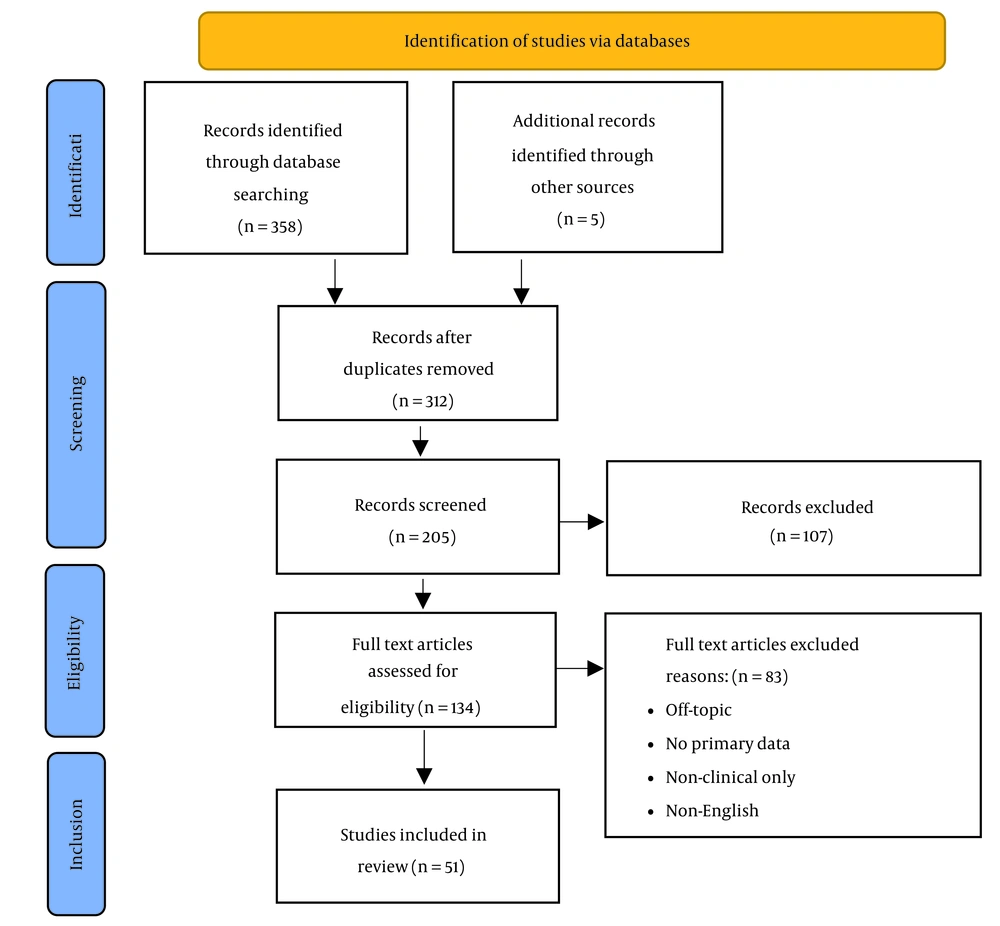
Figure 1.
Study selection process (PRISMA-ScR flowchart)
3.2. Geographic and Temporal Mapping
Analysis of 51 studies (Table 1) reveals a global research shift from Western contexts toward Asia and the Middle East between 2016 and 2025. The highest research volume originated from India, Iran, and Turkey, reflecting a focus on pharmacological sedation as a safe, cost-effective alternative to general anesthesia. Contributions from Germany, Italy, South Korea, Vietnam, and Iraq further highlight a diverse landscape, with recent clinical innovation increasingly centered in emerging medical hubs.
Table 1.
Characteristics of Included Studies and Populations
| Author (y) | Country | Study Design | Sample Size | Age range | Sex (M/F) | Patient Conditions | Setting | Type of Dental Procedure | Notes |
|---|---|---|---|---|---|---|---|---|---|
| Vašáková et al. (2020) (42) | Czech Republic | Retrospective Observational | n = 272 (418 sessions) | 5.5y (± 1.9) | 139 M / 133 F | NR | University Hospital Dept. | Fillings, Extractions, SSC, Surgery | EAPD guidelines; 9 incomplete cases; 5 Flumazenil used |
| Albaker et al. (2022) (39) | USA | Retrospective Review | n = 324 (404 sessions) | 6.85y (± 2.31) | NR | Mostly ASA I-II | Hospital Dental Clinic | Exodontia (39%), Restorative | 1 Adverse event (Tachycardia, resolved) |
| Hammadyeh et al. (2019) (44) | Syria | RCT | n = 40 | 2 - 6y (Mean: 4.0) | 17 M / 23 F | ASA I | University Pediatric Clinic | Pulpotomy | No adverse/resp events; SpO2 > 97% |
| Alzein et al. (2022) (45) | Syria | Randomized Clinical Trial | n = 46 | 3 - 6y | NR | ASA I–II; no systemic diseases | NR | Dental treatments (Deep sedation) | Sevoflurane vs Propofol groups |
| Thakur et al. (2021) (46) | India | Randomized Clinical Trial | n = 36 | 5.5y (± 1.3) | 55.6% M / 44.4% F | ASA I | Hospital Minor OT | Pulpotomy + Restorations | Vitals q15 - 20 min; SpO2 ≥ 93%; No resp events |
| Hammadyeh et al. (2019) (47) | Syria | Randomized Controlled Trial | n = 40 | 2 - 6y | 19 M / 21 F | ASA I | Damascus University Clinic | Pulpotomy | No AE;SpO2 > 97%; Shorter recovery in Dex group (D: 10/10; K: 9/11) |
| Kip et al. (2019) (40) | Turkey | Retrospective Clinical Study | n = 553 | 5.99y (± 2.53) | 248 M / 305 F | ASA I–III | Faculty of Dentistry Clinic | Various treatments (15 - 120 min) | Large sample size; SPSS analysis (χ^2, t-test) |
| Ansari et al. (2018) (48) | Iran | Randomized Crossover Trial | n = 26 | 2 - 6y | NR | ASA I (Frankl I) | Dental School Clinic | Restorative + Pulpotomy | Houpt scale used; IV sedation |
| ElKhatib et al. (2024) (49) | Egypt | Triple-blind RCT | n = 72 | 4 - 6y | 44 M / 28 F | ASA I-II | Pediatric Outpatient Clinic | Restorations, Pulpotomy, SSC, Extractions | Nebulized Dex/Midazolam; Evaluated sedation & analgesia |
| Rienhoff et al. (2022) (41) | Germany | Retrospective Longitudinal | n = 311 | 74.2mo (± 24.7) | 169 M / 142 F | ASA I–II | Private Pediatric Clinic | Restorations, Pulpotomy, SSC, Extractions | Midazolam + Hypnosis; up to 3 sessions |
| Wu et al. (2023) (37) | China | Retrospective | n = 342 | 4.9y (Median) | 234 M / 108 F | ASA < III | Outpatient Pediatric Dentistry | Mixed (1 - 13 teeth) | 10.2% coughing; 2155 teeth treated; incl. neuro disorders |
| Binh et al. (2025) (50) | Vietnam | Prospective Double-blind RCT | n = 80 | 4.7y (± 0.9) | NR | ASA I–II | Outpatient Pediatric Clinic | Extraction, RCT, Fillings, SSC | 95 - 100% Success; Procedures < 30 min |
| Sado-Filho et al. (2021) (33) | Brazil | Triple-blind RCT | n = 88 | 18 - 87mo | 50 M / 38 F | ASA I–II | University Sedation Clinic | ART (Manual caries removal) | 90.9% Completed; 9% Aborted behavior-wise |
| Mehran et al. (2017) (51) | Iran | Randomized Crossover Trial | n = 17 | 4.5y (± 0.9) | 9 M / 8 F | ASA I (Frankl II) | Dental School (Pediatric Dept) | Pulpotomy + SSC (after LA) | Two sessions; ≥1-week interval; Intranasal sedation |
| Patel et al. (2025) (52) | India | Triple-blind Parallel RCT | n = 50 | 4 - 8y | NR | ASA I (Frankl 1 - 2) | Pediatric Dentistry Dept | Multiple Primary Extractions | Intranasal MID vs DEX; Atomized; Fasting 6h |
| Ghajari et al. (2016) (53) | Iran | Randomized Crossover Trial | n = 16 | Mean 48mo (3 - 6y) | 6 M / 10 F | ASA I (Frankl 1) | University Sedation Unit | Pulpotomy + SSC + LA | 2 sessions; No deep sleep; NPO 6h/4h |
| Abdulhamid et al. (2016) (35) | USA | Open-label Clinical Trial | n = 24 | <10y (Mean: 4.8) | 13 M / 11 F | ASA I–II (Mild asthma) | Hospital Dental Clinic | Restorations, Extractions, Pulpectomy | Chloral hydrate safety in asthmatic children |
| Joshi et al. (2020) (54) | India | Randomized Comparative Trial | n = 30 | 4 - 8y | NR | ASA I–II | Dental Outpatient Clinic | Restorations, Extractions, Pulp therapy | IV Ketamine-Propofol vs Ketamine-Dex; ECG/BP monitoring |
| Preethy & Somasundaram (2022) (55) | India | Split-mouth Crossover RCT | n = 35 | 5.66y (± 0.77) | 18 M / 17 F | ASA I (Frankl 1 - 2) | Academic Dental Hospital | Bilateral Pulpectomy (IANB) | Crossover design; Physiological monitoring |
| Janiani et al. (2024) (56) | India | Randomized Crossover Trial | n = 14 | 6.14y (± 1.56) | 7 M / 7 F | ASA NR (Healthy) | Academic Dental Hospital | Single-visit Pulpectomy | 3-arm (IN DEX, IN MID, N_2O); 1-week washout |
| Hamod et al. (2022) (36) | Syria | Randomized Double-blind RCT | n = 20 | 7.9y (± 0.9) | NR | ASA I–II (Down Syndrome) | Damascus Univ. Clinic | Endo, Conservative, Extractions | IN DEX vs MID; Vitals every 5 min (AAPD) |
| Arnaout et al. (2025) (57) | Syria | Single-blind Comparative RCT | n = 40 | 4.8y (± 0.9) | NR | ASA I–II | University Dental Clinic | Pulpotomy + SSC | Comparison study (Lower molar treatment) |
| Zouaidi et al. (2022) (24) | USA | Retrospective Observational | n = 690 | 7.4y (± 4.1) | 358 M / 332 F | ASA I–II (100%) | Academic Dental School | Routine Care (Sedation) | EHR-based AE monitoring; Avg 2 visits/child |
| Yinger et al. (2024) (34) | USA | Retrospective Chart Review | n = 82 | 10.7y (± 2.2) | 32 M / 50 F | ASA I-II (9% Dev. Disability) | Academic Sedation Clinic | Permanent 1st Molar Extraction | Anxiety/Cooperation focus; Reasons for sedation |
| Razavi & Malekianzadeh (2022) (58) | Iran | Retrospective Cohort | n = 250 | 3.7y (2.5 - 5) | 170 M / 80 F | ASA I–II | Pediatric Hospital Dental Office | Multiple procedures (Deep sedation) | --- |
| Unkel et al. (2021) (59) | USA | Retrospective Chart Review | n = 149 | 4.6y (± 1.0) | 63 M / 86 F | ASA I–II (Extensive exclusion) | Hospital Pediatric Sedation | Restorations, Pulp, Extractions | DEX+N_2O vs MID+N_2O vs MID+HYD+N_2O |
| Liu et al. (2025) (38) | China | Retrospective Cohort | n = 513 | 4.80y (± 1.27) | 359 M / 154 F | ASA I–II (6.8% Autism) | Academic Hospital | Treatments < 2h | ROC cutoff 79 min for AE prediction |
| Gomes et al. (2017) (60) | Brazil | Triple-blind RCT Protocol | n = 84 | 2 - 6y | NR | ASA I–II (Low airway risk) | Academic Dental Sedation Center | Restorative (under LA) | NCT02447289; 3-arm comparison |
| Kocaoğlu et al. (2025) (43) | Turkey | Retrospective Cross-sectional | n = 504 | 5.8y (± 1.7) | 259 M / 245 F | ASA I–III | Academic Hospital | Restorative, Endo, Extractions | STROBE guidelines; Hypoxemia risk analysis |
| Wang et al. (2023) (61) | China | Prospective Cohort | n = 60 | 51.5mo (Median) | 27 M / 33 F | ASA I–II | Outpatient Dental Clinic | Caries + Supernumerary Extraction | Oral + Intranasal (Moderate sedation); Biased coin design |
| Canpolat et al. (2016) (62) | Turkey | Randomized Clinical Study | n = 60 | 3 - 9y | 25 M / 35 F | ASA I–II | University Dental Clinic | Extractions (IV sedation) | Compared IV Ketamine, Propofol, and Ketamine+Propofol |
| Ghabchi et al. (2025) (63) | Turkey | Retrospective 10-year Review | n = 96 (128 visits) | 4 - 12y | 63 M / 33 F | ASA I–II | University Pediatric Clinic | Extractions, Endo, Restorative, Surgery | 162 procedures; Extractions (66%); 10-year record review |
| Talukdar et al. (2025) (64) | India | Retrospective Comparative Study | NR | Pediatric | NR | Anxious children | Dental Clinic | Routine Pediatric Procedures | Compared MID, DEX, and MID+KET protocols |
| Patel et al. (2018) (65) | India | Randomized Controlled Trial | n = 44 | 4 - 9y | NR | ASA I (Uncooperative) | Dental College Clinic | Pediatric treatments under sedation | Intranasal vs Oral Dexmedetomidine; 4 dosing groups |
| Jeong et al. (2025) (32) | Republic of Korea | Retrospective (5-year) | n = 1248 | 4.46y | 805 M / 443 F | Mixed (ED Trauma) | Pediatric Emergency Dept | Closure, Splinting, Extraction, Pulp | Sedation rate 25.4%→29.2%; 348 sedated pts |
| Peerbhay & Elsheikhomer (2016) (66) | South Africa | Triple-blind RCT | n = 118 | 4 - 6y | NR | ASA I (Anxious) | Emergency Dental Clinic | Extractions | IN Midazolam (0.3 vs 0.5 mg/kg); Pulse oximetry |
| Ansari et al. (2018) (67) | Iran | Crossover Double-blind RCT | n = 23 | 2 - 6y | 17 M / 6 F | ASA I (Frankl 1) | University Dental Clinic | Pulpotomy, Restoration, Extraction | Melatonin vs Midazolam; Two visits per child |
| Chen et al. (2023) (68) | Taiwan | Retrospective (BIS vs non-BIS) | n = 206 | 2 - 8y | NR | ASA I–II | Outpatient Dental Clinic | Restorations, Crowns, RCT, Extractions | IV Propofol (TCI); BIS monitored (n = 113) |
| Mozafar et al. (2018) (69) | Iran | Randomized Crossover RCT | n = 18 (36 sessions) | 3 - 6y | 9 M / 9 F | ASA I (Frankl 1 - 2) | Hospital Dental Clinic | Restorative (2 visits) | Video-rated behavior; Crossover design |
| Moore et al. (2019) (70) | USA | Retrospective Comparative | n = 1856 | 21mo–13y | ~928 M / 928 F | ASA I–II (BMI < 35) | Tertiary Pediatric Clinic | Restorative, Extractions (1h) | IOGA vs Oral sedation; Success/Safety comparison |
| Alhaidari et al. (2022) (71) | Saudi Arabia | Randomized Crossover RCT | n = 32 | 3 - 6y | 18 M / 14 F | ASA I (Uncooperative) | University Dental Hospital | Restorations, Pulp, Crowns, Extractions | Fentanyl quality improvement; Crossover design |
| Chen & Tanbonliong (2018) (72) | USA | Retrospective Cohort | n = 271 | 2 - 13y | 148 M / 123 F | ASA I–II (Fearful) | University Outpatient Clinic | Comprehensive Dental Treatment | Comparison of 2 morphine-based oral regimens |
| Yousif et al. (2025) (73) | Iraq | Double-blind RCT | n = 40 | 5 - 10y | 9 M / 31 F | ASA I (Anxious) | University Dental Clinic | Pulpotomy, Pulpectomy, SSC | Dexmedetomidine vs Ketofol IV; Endo focus |
| Singh et al. (2025) (74) | India | Crossover Clinical Study | n = 54 | 3 - 9y | 31 M / 23 F | ASA I–II | Pediatric Dental Clinic | Bilateral Restorative Treatment | Temperament-based analysis |
| Dubey et al. (2024) (75) | India | Randomized Crossover RCT | n = 47 | 3 - 9y | NR | ASA I (Frankl 2) | Dental Hospital / Minor OT | Extractions, Pulpectomy, Restorative | 1-week washout; Same patients for both regimens |
| Nathan (2022) (31) | USA | Retrospective Cohort (35y) | n = 2610 (visits) | 3 - 7y | NR | ASA I–II (Anxious) | Private Pediatric Clinic | Restorative & Surgical care | CH–H doses with/without Meperidine comparison |
| Van Anh et al. (2025) (76) | Vietnam | Single-arm Intervention | n = 32 | 3 - 16y | 21 M / 11 F | ASA I–II (Gag reflex) | Hospital Pediatric Dept. | RCT, Extractions, Restorations, SSC | 100% completion; Stable vitals; No AE |
| Hussien et al. (2022) (77) | Egypt | Double-blind RCT | n = 40 | 5 - 10y | 33 M / 7 F | ASA I (Uncooperative) | Hospital Dental Unit | Pulpotomy, Pulpectomy, SSC | IV sedation (Anesthesiologist supervision) |
| Jaikaria et al. (2018) (78) | India | Triple-blind RCT | n = 34 | 3 - 9y | NR | ASA I (Frankl 1 - 2) | Minor OT | Extractions, Pulpectomy, Restorative | Oral sedative combinations comparison |
| Mehran et al. (2018) (79) | Iran | Double-blind Crossover RCT | n = 30 | 2 - 6y | 14 M / 16 F | ASA I (Frankl 1) | Hospital Pediatric Clinic | Pulp therapy on similar teeth | Self-control design; Two visits per child |
| Rehman et al. (2021) (80) | India | Randomized Controlled Trial | n = 30 | 2 - 5y | 25 M / 5 F | ASA I (Uncooperative) | Hospital Pediatric Unit | Endodontics (Maxillary Incisors) | Oral Midazolam premedication in both groups |
3.3. Study Design Architecture
The review demonstrates a sophisticated methodological landscape. Many studies, particularly those from Iran and India, used randomized controlled trials (RCTs) with crossover designs, strengthening internal validity by using patients as their own controls. While smaller RCTs focused on efficacy, large-scale studies, notably Nathan et al. (n = 2,610) (31) and Jeong et al. (n = 1,248) (32), provide robust data for detecting rare RAEs. This combination of rigorous RCTs and large retrospective cohorts strengthens the overall evidence base for assessing both efficacy and safety.
3.4. Sample Size and Statistical Power
Sample sizes varied substantially, ranging from 14 to over 2,600 participants. Studies of novel interventions, such as intranasal dexmedetomidine, typically included 30 to 60 subjects to maintain adequate statistical power. A notable methodological shift is observed from single-center, moderate-sized cohorts toward longitudinal analyses of large-scale hospital registries. This transition enhances the epidemiological understanding of adverse-event patterns and supports a more robust safety assessment across diverse pediatric populations.
3.5. Demographic Profiling
The 3 - 6-year age group is the most frequently studied cohort, representing the "critical window for dental anxiety" and higher physiological vulnerability due to narrower airways. The inclusion of outliers, infants under 2 (33) and adolescents over 10 (34), enhances the external validity of the findings across the pediatric spectrum. Most studies report a balanced (50/50) sex distribution, indicating that biological sex is not a determining factor in sedation modality selection or the incidence of RAEs.
3.6. Clinical Risk Assessment
While most participants were classified as ASA I and II, the review includes high-risk populations, such as children with asthma (35), Down syndrome (36), autism spectrum disorder (ASD), and neurological impairments (37, 38). Recent research shows a paradigm shift toward identifying high-risk subgroups, with an increased clinical focus on body mass index (BMI) and tonsillar hypertrophy. These factors are now recognized as critical predictors for understanding the mechanisms of upper airway obstruction during pharmacological sedation.
3.7. Clinical Settings and Infrastructure
Research was predominantly conducted in academic pediatric dental departments or hospital-based clinics (e.g., Albaker (39) and Kip et al. (40)), ensuring an "anaesthetic safety net" with specialists and resuscitative equipment. In contrast, private-practice studies (e.g., Rienhoff et al. (41)) favor short-acting agents such as oral midazolam because of their wider therapeutic indices. Recent trends (e.g., Liu et al. (38)) show increasing use of minor operating theaters (minor OT) for deeper sedation. This reflects a clear clinical demarcation between office-based and hospital-based protocols, dictated by drug dosage and patient systemic status.
3.8. Clinical Interventions and Procedural Complexity
Sedation is primarily reserved for an "invasive triad": pulpotomy, extractions, and stainless-steel crowns, treatments characterized by high-decibel noise, physical pressure, and long durations. While minor procedures (e.g., fissure sealants) are less common, their inclusion highlights that dental phobia can necessitate sedation regardless of clinical complexity. A significant emerging trend is full-mouth rehabilitation in a single session. This shift leads to extended sedation durations, which the literature identifies as an independent risk factor for respiratory fatigue and potential airway obstruction.
3.9. Qualitative Synthesis and Clinical Observations
Clinical notes reveal critical safety patterns. Vašáková et al. highlight the need for pharmacological reversal (flumazenil) for unpredictable paradoxical reactions, even under strict guidelines (42). Studies by Sado-Filho (33) and Wu et al. (37) show a 9 - 10.2% treatment-discontinuation rate, reflecting a "safety culture" that prioritizes aborting procedures over hazardous dose escalation. Notably, recent research identifies a 79-minute duration cut-off, beyond which respiratory risks increase exponentially (38, 43). Findings also emphasize that respiratory safety depends more on meticulous patient selection (BMI and tonsillar status) than on dosage alone.
3.10. Strategic Synthesis of Findings
A holistic evaluation of Table 1 reveals a multi-layered landscape. Layer I (methodological maturity): research has evolved from case reports to rigorous crossover RCTs and large-scale cohorts, providing high statistical power and a reliable foundation for clinical guidelines. Layer II (vulnerable populations): focus has shifted toward high-risk cohorts (obesity, airway obstruction, systemic comorbidities), aiming to optimize safety for the most challenging patients. Layer III (the setting-safety paradox): while hospitals provide advanced infrastructure, clinical challenges such as coughing or movement are driven by procedural invasiveness (surgical stimulus) rather than by environment or expertise. This suggests that procedural intensity remains a primary determinant of sedation stability.
3.11. Pharmacological Landscape: Dose Dynamics and Paradigm Shifts
Table 2 reveals a shift from the gold-standard midazolam (0.5 mg/kg PO; 0.2 - 0.3 mg/kg IN) toward dexmedetomidine (1 - 3 µg/kg), especially in 2020 - 2025 studies. This transition prioritizes "cooperative sedation" without the respiratory depression seen with benzodiazepines. Concurrently, a dose-sparing strategy is evident in synergistic combinations such as ketofol or triple cocktails (e.g., Albaker et al. (39)), reducing individual drug toxicity while enhancing overall safety.
Table 2.
Drug Interventions and Respiratory Outcomes
| Author (Year) | Drug (name) | Dose (mg/kg or total) | Route | Drug Combinations | Respiratory Monitoring Method | Observed respiratory adverse events (RAEs) | Severity | Management / Intervention | Final Outcome | Authors’ Recommendations |
|---|---|---|---|---|---|---|---|---|---|---|
| Vašáková et al. (2020) (42) | Midazolam syrup | 0.5 mg/kg (Max 12 mg) | Oral | None (Mixed with syrup) | Pulse Oximetry, HR, BP | None (SpO2 > 95%) | None | Flumazenil (for paradoxical reactions) | Discharged (~2h) | 0.5 mg/kg dose; Pulse-ox + Flumazenil backup |
| Albaker et al. (2022) (39) | Diazepam, Meperidine, Hydroxyzine | DIA: 0.28, MEP: 1.94, HYD: 1.53 | Oral | Diazepam + Meperidine + Hydroxyzine | Pulse Ox, HR, RR, BP (AAPD) | None (1 tachycardia event) | Mild | O_2 for tachycardia | Safe Discharge | Essential monitoring; Polypharmacy is effective |
| Hammadyeh et al. (2019) (44) | Ketamine, Atropine, Dexmedetomidine | KET: 5, ATR: 0.01 / DEX: 3 µg/kg | Oral | G1: KET+ATR, G2: DEX | Pulse Ox, HR, BP (Every 10 min) | None (SpO2 > 97%) | None | None | Safe; DEX had faster recovery | Oral DEX: comparable efficacy, faster recovery |
| Alzein et al. (2022) (45) | Sevoflurane/ Propofol | SEVO: 8%→2 - 3% / PROP: 2 mg/kg→100 - 150µg | SEVO: Inh. / PROP: IV | Oxygen only | Pulse Ox, Capnography, ECG, NIBP | 3 desaturations (SpO2 < 92%) | Mild | O_2 + Airway maneuvers | Safe Discharge | Mandatory monitoring for both agents |
| Thakur et al. (2021) (46) | Midazolam + Ketamine | A: 0.2+5 / B: 0.3+3 / C: 0.4+2 | Oral (Honey) | Midazolam + Ketamine combinations | Pulse Ox, HR, BP (15 - 20 min intervals) | None (SpO2 ≥ 93%) | None | None (1 vomiting/hallucination) | Safe Discharge | Group B (0.3+3 mg/kg) most successful |
| Hammadyeh et al. (2019) (47) | Dexmedetomidine, Ketamine, Atropine | DEX: 1µg/kg + 0.2µg/h / KET: 2 mg/kg + ATR: 0.01 | Intravenous | Ketamine + Atropine (Group K) | Continuous SpO2, HR, BP | None | None | None | Both safe; DEX: better behavior & faster recovery | Dexmedetomidine is more effective than KET+ATR |
| Kip et al. (2019) (40) | Sevoflurane, Ketamine, Propofol, Midazolam, Fentanyl | Varied (Ketamine IM/IV; Propofol bolus; Ketofol 1:1) | IV / Inhalation | Multiple (e.g., Ketofol; Sevoflurane + N_2O) | Continuous SpO2, BP, HR | Resp. depression 1.15%; Bronchospasm 0.7% | Mild to Moderate | Observation; No intubation | Safe recovery without sequelae | Ketofol reduces nausea/resp. depression; Continuous monitoring |
| Ansari et al. (2018) (48) | Midazolam, Atropine, Promethazine, Ketamine | MID: 0.5 + ATR: 0.25 / PROM: 1 (Premed) + KET: 2 | Oral / IV | Crossover: MID+ATR vs. Promethazine | Continuous HR, BP, RR, SpO2 | None (No hypoxia/apnea) | None | None | Safe recovery; Minor N/V | Promethazine effective as MID; Lower vomiting; Similar safety |
| ElKhatib et al. (2024) (49) | Dexmedetomidine, Midazolam | DEX: 5 or 3 + MID: 0.3 / MID: 0.5 | Nebulized | DEX ± MID vs. MID alone | SaO_2, HR, BP continuously | Mild transient bradycardia (DEX); No desaturation | Mild | None | Stable respiration; Full recovery | DEX alone: better cooperation and easier completion than MID |
| Rienhoff et al. (2022) (41) | Midazolam | 0.4 mg/kg (Max 7.5 mg) | Oral | None | Pulse Oximetry (SpO2, HR) | None reported | Mild/Transient | Continuous observation | Safe sedation; 6.1% discontinued 1st session | Midazolam + Hypnosis effective; ≤2 sessions recommended |
| Wu et al. (2023) (37) | Dexmedetomidine, Midazolam, Sevoflurane, Propofol | DEX: 2µg/kg IN; MID: 0.5 mg/kg PO; SEV (Induction); PROP: 2 - 3µg/ml | IN / PO / Inh. / IV | Dex/Midaz Premed; SEV (if needed) | SpO2, EtCO2, RR, BP, HR, ECG, BIS | 35 cough; 18 desat < 95%; 25 hypoxemia ≤ 90% | Minor | Suction; Head-tilt; O_2 mask (7 cases) | All recovered < 30s; No serious events | Longer TX & cough ↑ risk; Desaturation most common |
| Binh et al. (2025) (50) | Midazolam | 0.3 mg/kg or 0.6 mg/kg | Oral | None | Continuous HR & SpO2 (T0–T5) | None reported | None | Not required | Both doses safe; No hypoxia | 0.6 mg/kg: better cooperation & longer sedation |
| Sado-Filho et al. (2021) (33) | Dexmedetomidine, Ketamine | DEX: 2.5 µg/kg / DK: DEX 2 + KET 1 | Intranasal | Dex alone vs. Dex+Ketamine | Continuous HR & SpO2 (ASA) | One desaturation (88%); Vomiting episodes | Minor | Supplemental O_2 (for desaturation) | Similar efficacy; DK: longer recovery (1.3×) | DEX alone: fewer AEs and faster recovery |
| Mehran et al. (2017) (51) | Midazolam, Ketamine | Midazolam: 0.2 mg/kg; Ketamine: 0.5 mg/kg | Intranasal | None (Crossover design) | HR, BP, RR, SpO2 (T0–T4) | Desaturation (SpO2 < 90%) reported | Minor | Monitoring only | Both effective; KET: less crying & more sleep | Both agents effective for dental sedation |
| Patel et al. (2025) (52) | Midazolam, Dexmedetomidine | MID: 0.3 mg/kg; DEX: 1.5 μg/kg | Intranasal (Atomized) | None | Pulse Oximetry, HR, SBP, DBP | MID: 3 cases SpO2 = 94%; DEX: None | Mild, Transient | No treatment needed | DEX: 92% completion & lower HR/BP | IN DEX: safe/effective for anxious children |
| Ghajari et al. (2016) (53) | Midazolam | 0.3 mg/kg or 0.5 mg/kg | Oral | Midazolam + Hydroxyzine (1 mg/kg) | SpO2, HR, RR (Alborz B9) | None (SpO2 remained normal) | None | Not needed | Both doses safe; Vitals normal | Both doses similarly effective and safe |
| Abdulhamid et al. (2016) (35) | Chloral hydrate | 65 mg/kg (Single dose) | Oral | ± Nitrous oxide (50%) | Continuous SpO2 & HR | SpO2 < 95% (3/24); Resp. depression (2/24) | Mild | O_2 supplement; TX interruption; ED observation | Safe recovery; No hospitalization | Consider alternatives due to respiratory risk |
| Joshi et al. (2020) (54) | Ketamine, Propofol, Dexmedetomidine | KP: KET 1 + PROP 1 / KD: DEX 1 + KET 1 | IV | Midazolam premed; O_2 (3 L/min) | ECG, HR, BP, SpO2 (Every 5 min) | None (SpO2 > 95%) | None | Routine monitoring only | Adequate sedation; KD better quality | KD superior; Both stable and safe for IV |
| Preethy & Somasundaram (2022) (55) | Midazolam, Nitrous oxide | MID: 0.3 mg/kg / N_2O: 30 - 70% | IN (MAD) / Inhalation | None | Continuous SpO2, HR, RR, BP | N_2O: 5 vomiting; MID: Sneezing/Coughing | Mild | Routine monitoring only | Both methods safe; MID faster onset | IN Midazolam: safe alternative to N_2O |
| Janiani et al. (2024) (56) | Dexmedetomidine, Midazolam, Nitrous oxide | DEX: 1 μg/kg / MID: 0.3 mg/kg / N_2O: 30 - 50% | IN (Atomized) / Inhalation | None | Pulse Oximetry (SpO2), HR | MID: 64% coughing, 1 desat (94%); DEX: 14% coughing | Mild | Routine observation | All effective; MID deeper than DEX | MID: effective N_2O alternative; DEX: slower onset |
| Hamod et al. (2022) (36) | Dexmedetomidine, Midazolam | DEX: 1 μg/kg / MID: 0.2 mg/kg | Intranasal | None | SpO2, RR, PR, BP (Every 5 min - AAPD) | None (No significant difference in SpO2) | None | No intervention required | Stable vitals; Both effective in Down Syndrome | Both agents safe for children with Down syndrome |
| Arnaout et al. (2025) (57) | Midazolam | 0.3 mg/kg | Intranasal / Buccal | None | Vital signs monitoring (General) | None reported | None | None | Both routes effective (Success > 80%) | Buccal & IN MID are effective for behavior management |
| Zouaidi et al. (2022) (24) | Midazolam, Meperidine, Hydroxyzine, Diazepam, Ketamine | Varied (IM Ketamine; Oral combos) | Oral / IM / Inh. (N_2O) | Multiple Oral combos (e.g., MEP+HYD; MID+HYD) | Continuous vitals; TROOPS classification | Low SpO2 (0.4%); Lung mucus (0.3%); Laryngospasm (0.1%) | Mild to Moderate | Suction; Positive pressure O_2; Extended monitoring | No deaths; Very low serious AE incidence | Standardized AE tracking (TROOPS) improves safety |
| Yinger et al. (2024) (34) | Triazolam | 0.125 - 0.50 mg | Oral | Nitrous oxide (50%) for all | HR + SpO2 (Every 5 min) | SpO2 < 93% (n = 4); HR anomalies | Mild and Transient | No reversal; No airway intervention | Zero severe events/admissions | Triazolam is likely safe for mild–moderate sedation |
| Razavi & Malekianzadeh (2022) (58) | Midazolam, Propofol | MID: 0.5 mg/kg PO + PROP: 2 mg/kg IV + Infusion | Oral + IV | Oxygen via nasal cannula | ECG, NIBP, Pulse Oximetry | Laryngospasm (n = 5); Hypoxia 90 - 94% (n = 17); 1 repeated desat | Mild to Moderate | PPV; Bag-valve-mask; Airway maneuvers; Suction | 99.6% success; No intubation; No PONV | Deep sedation safe with anesthesiologist & monitoring |
| Unkel et al. (2021) (59) | Dexmedetomidine, Midazolam, Hydroxyzine, Nitrous Oxide | DEX: 3µg/kg IN / MID: 0.5 - 0.7 mg/kg PO / HYX: 1 mg/kg PO | Intranasal + Oral | All groups with N_2O (50%) | BP, SpO2, HR, RR, EtCO2, ECG | 1 Bradycardia (DEX); Hypotension events (All groups) | Minor | Self-corrected; No intervention required | Safe discharge; No apnea or obstruction | IN DEX + N_2O is safe and comparable to MID regimens |
| Liu et al. (2025) (38) | Dexmedetomidine, Propofol, Sevoflurane | DEX: 2µg/kg IN; PROP: 4 - 10 mg/kg/h (TCI) | IN → IV | Sevoflurane (for rescue induction) | SpO2, EtCO2, BIS (50 - 70), ECG, BP | Hypoxemia 8.6%; Choking cough 12.3% | Mild (↑ risk in Tonsillar hypertrophy) | Jaw thrust; Dose reduction; Suction; O_2 3 L/min | 100% completion; No morbidity | Safe GA alternative; Airway screening essential |
| Gomes et al. (2017) (60) | Ketamine, Midazolam | IN: KET 4 + MID 0.2 / OR: KET 4 + MID 0.5 / OR: MID 1 | Intranasal / Oral | 3-arm Comparison | Continuous HR & SpO2 (Planned) | Not reported (Study Protocol) | N/A | N/A | N/A | Study Protocol; Aims to compare safety and efficacy |
| Kocaoğlu et al. (2025) (43) | Propofol, Midazolam, Lidocaine | MID: 0.05 mg/kg IV; PROP (TCI): 2 - 5µg/ml; LIDO: 0.5 mg/kg | IV | Propofol TCI + O_2 (2 L/min) | SpO2, EtCO2, BIS, HR, BP | Hypoxemia 10.3%; Bradycardia 1.8% | Mild to Severe (WHO) | Jaw-thrust; Chin-lift; Modify depth; Bag-mask | 99.6% completion; Complications manageable | Hypoxemia risk ↑ with dose, time, & tonsillar hypertrophy |
| Wang et al. (2023) (61) | Esketamine, Midazolam, Sevoflurane | Midazolam: 0.5 mg/kg PO + Esketamine: 1.99 mg/kg IN | Oral + Intranasal | Sevoflurane (for rescue) | SpO2, HR, BP (Every 5 min) | 0% Desaturation; Tachycardia 8.3%; N/V 8.3% | Mild, Transient | Observation; Rescue SEVO if needed | 88.3% success; Mean wake-up: 89.4 min | Safe noninvasive outpatient sedation (2 - 6 years) |
| Canpolat et al. (2016) (62) | Ketamine, Propofol | K: 1 / P: 1 / KP: 0.5 + 0.5 (mg/kg) | Intravenous | Single drug vs. Combination | ECG, HR, MAP, SpO2, EtCO2, RR, Capnography | Resp. depression (3 cases in Propofol group); Tachycardia | Mild, short-term | Supplemental O_2 and observation | Propofol: fastest recovery; KP: highest satisfaction | Propofol alone caused more respiratory depression |
| Ghabchi et al. (2025) (63) | Nitrous oxide, Oxygen | 30 - 50% N_2O; 100% O_2 (Pre/Post) | Inhalation (Nasal mask) | Monotherapy | HR, SpO2, BP (Continuous) | None reported (128 sessions) | None | No intervention required | Safe and effective for dental anxiety | 100% procedural success rate |
| Talukdar et al. (2025) (64) | Midazolam, Dexmedetomidine, Ketamine | Not reported (Retrospective) | IV or Oral (Not specified) | Three protocols compared | Observation of Resp. depression & Agitation | MID: 12%; MID+KET: 18%; DEX: 4 - 5% | Mild (Highest in combo group) | Not stated (No major complications) | DEX is safest and most effective | Authors recommend future RCTs |
| Patel et al. (2018) (65) | Dexmedetomidine | 2, 2.5, 4, 5 µg/kg | Intranasal / Oral | None | SpO2 BP, HR (Every 10 min) | None reported | None | No intervention required | IN DEX: faster onset & better depth than Oral | IN DEX is more effective than Oral with no AEs |
| Jeong et al. (2025) (32) | Ketamine, Midazolam | Ketamine: 1.24 - 2.08 / Midazolam: 0.1 (mg/kg) | IV (ED Sedation) | Ketamine alone vs. Ketamine + Midazolam | Continuous SpO2; Hypopnea/Apnea monitoring | Hypopnea (2.87%); Apnea (0.29%); Emesis; Hypersalivation | Mild to Moderate | O_2 (Mask/Prong); Flumazenil; BVM; Suction | Combo group: more respiratory AEs | Close monitoring recommended; Ketamine alone safer |
| Peerbhay & Elsheikhomer (2016) (66) | Midazolam | 0.3 mg/kg vs. 0.5 mg/kg | Intranasal (MAD) | None | Pulse Oximetry | One case SpO2 drop to 90% (≈1%) | Mild | Observation only | Both doses safe; 0.5 mg/kg better behavior control | INM 0.3 - 0.5 mg/kg is safe; 0.5 mg/kg more effective |
| Ansari et al. (2018) (67) | Melatonin, Midazolam, Ketamine, Atropine | 0.5 mg/kg (Oral) + IV protocol | Oral (Preme) / IV | Midazolam vs. Melatonin before IV KET+ATR+MID | HR, RR, BP, SpO2 (q15 min) | No significant respiratory events | Mild transient SpO2 drop (MID only) | Standard monitoring only | MID: deeper sedation/satisfaction; more N/V. Melatonin: fewer side effects | Midazolam preferred for efficacy; Melatonin safer |
| Chen et al. (2023) (68) | Propofol, Midazolam, Ketamine, Chloral hydrate, Fentanyl, Alfentanil | TCI PROP (Mean 341 ± 135 mg) | IV | Premed: MID/KET/CH; Rescue: Fentanyl/Alfentanil | Pulse Ox, NIBP, EtCO2, BIS | Hypoxia, Apnea, Cough (lower in BIS group); Bronchospasm | Mostly Mild to Moderate | Repositioning; Suction; Mask ventilation; 1 Intubation per group | Lower RAEs & faster discharge with BIS | BIS + TCI improves airway safety and recovery |
| Mozafar et al. (2018) (69) | Midazolam, Promethazine | MID: 0.5 mg/kg / PROM: 1 mg/kg | Oral | Combined with N_2O-O_2 (50%) | Pulse Oximetry (SpO2, HR q10 min) | Lowest SpO2 = 91% (Both groups) | Mild transient desaturation | O_2; Routine monitoring | Both safe; MID better behavior and less crying | Midazolam + N_2O preferred for quality |
| Moore et al. (2019) (70) | Chloral hydrate, Meperidine, Hydroxyzine, Midazolam, Diazepam, Sevoflurane, Propofol, Fentanyl | Standard clinical doses | Oral / Inhalation / IV | Multidrug Oral vs. TIVA or Inhalation GA | Standard monitoring; SpO2, EtCO2 | Obstruction 18%; Emergent Succinylcholine 2.9%; Intubation conversion 8.4% | Mostly Mild-Moderate; 1 serious AE | O_2; Succinylcholine (for laryngospasm); Intubation | 99.5% completion; 0.2% serious AE rate | IOGA (Anesthesia-led) is safe and improves completion |
| Alhaidari et al. (2022) (71) | Midazolam, Fentanyl | MID: 0.7 mg/kg (Oral); FEN: 1 µg/kg (IN) | Oral + Intranasal | Oral Midazolam + IN Fentanyl | Continuous SpO2, HR, BP | Transient desaturation (1.6%); No apnea | Mild | Head tilt; Suction; Reassurance | No reversal needed; Safe completion | Combination improves sedation & behavior |
| Chen & Tanbonliong (2018) (72) | Morphine sulfate, Midazolam, Diazepam, Hydroxyzine, Nitrous Oxide | Morphine: 0.5 - 0.7 mg/kg | Oral | Morphine + Mid/Dia + Hyd + N_2O/O_2 | Pulse ox; Pretracheal stethoscope; BP | Transient desat (2.2%); Wheezing/Asthma (0.7%) | Mild to Moderate | Repositioning; Albuterol; Flumazenil (1 case) | Success > 80%; No serious sequelae | Morphine regimens effective with minimal AEs |
| Yousif et al. (2025) (73) | Ketamine, Propofol (Ketofol), Dexmedetomidine | Ketofol: KET 2 + PROP 4 (mg/ml); DEX: 2 μg/kg | IV | Ketofol vs. Dexmedetomidine alone | Pulse oximetry, RR, ECG, NIBP | RR fluctuations (Ketofol); Bradycardia (Dex) | Mild to Moderate | Dose adjustment; Close monitoring | Both effective; Dex: more stable respiration | Dex preferred for better respiratory stability |
| Singh et al. (2025) (74) | Nitrous Oxide, Oxygen | Up to 50% N_2O | Inhalation | Nitrous Oxide / Oxygen | Pulse oximetry, Pulse Rate (PR) | None (SpO2 ≥ 95%) | None | Routine monitoring only | Both titration methods safe | Rapid titration beneficial for negative temperament |
| Dubey et al. (2024) (75) | Ketamine, Midazolam, Dexmedetomidine | KET: 7 mg/kg / MID: 0.3 mg/kg + DEX: 3 µg/kg | Intranasal | IN Ketamine alone vs. IN MID-DEX | SpO2, Pulse Rate, BP (Continuous) | None reported | None | Routine monitoring only | KET: faster onset, recovery, and discharge | IN Ketamine preferred for efficacy, safety, and acceptability |
| Nathan (2022) (31) | Chloral hydrate, Hydroxyzine, Meperidine | CH: 25 - 50 mg/kg; MEP: 1 - 2 mg/kg | Oral | CH-H ± Meperidine | Pulse oximetry; Ventilation assessment | Rare desaturation; Somnolence | Mostly Mild | Verbal/physical stimulation; Rare Naloxone use | Higher success & fewer restraints with MEP | Lower CH doses with MEP: safer and more effective |
| Van Anh et al. (2025) (76) | Nitrous Oxide, Oxygen | 30 - 40% N_2O (Max 50%) | Inhalation | None | SpO2, RR, BP, HR | None reported | None | O_2 titration; Routine monitoring | 100% completion; High cooperation; Stable vitals | N_2O/O_2: safe and effective alternative to GA |
| Hussien et al. (2022) (77) | Ketamine, Propofol (Ketofol), Dexmedetomidine | Ketofol: KET 2 + PROP 4 (mg/ml); DEX: 2 µg/kg load | IV | Ketofol vs. Dexmedetomidine alone | SpO2, RR, HR, NIBP, ECG | No respiratory depression; ↑ RR variability in Ketofol | Mild | Dose titration; Rescue Propofol if needed | Both effective; Dex: more stable respiration | Dex preferred for respiratory stability |
| Jaikaria et al. (2018) (78) | Midazolam, Ketamine, Dexmedetomidine, Fentanyl | MID: 0.3; KET: 5 (mg/kg); DEX: 2; FEN: 3 (µg/kg) | Oral | MK vs. DF vs. DK combinations | Pulse oximetry | None reported | None | Continuous monitoring only | MK success: 72.8%; DF: 58.3%; DK comparable | Oral MK and DK are effective combinations |
| Mehran et al. (2018) (79) | Midazolam, Chloral hydrate, Promethazine | MID: 0.4 mg/kg + CH: 50 mg/kg or PROM: 5 mg/kg | Oral | Midazolam + CH vs. Midazolam + PROM | Pulse oximetry, BP, PR (q15 min) | No hypoxia (Lowest SpO2 = 94%) | Mild | Observation only | MID+CH: better sedation depth and cooperation | Prefer Midazolam + Chloral hydrate for better cooperation |
| Rehman et al. (2021) (80) | Propofol, Dexmedetomidine | DEX: 1 µg/kg; PROP: 1 mg/kg bolus + infusion | IV | Propofol ± Dexmedetomidine | Continuous SpO2, RR, HR, NIBP | Desaturation in Propofol-only group (3/15); None with DEX | Mild, transient | Supplemental oxygen; Monitoring | Successful sedation; Reduced Propofol dose with DEX | Dexmedetomidine is a safe and effective adjunct to Propofol |
3.12. Routes of Administration: From Conventional to Innovative Delivery
The oral (PO) route remains common because of its simplicity, but recent shifts toward mucosal atomization devices (MAD) (e.g., Patel (52) and Janiani et al. (56)) highlight a preference for bypassing first-pass metabolism. The intranasal (IN) route appears superior for uncooperative patients, offering a less traumatic alternative to IV access. Innovations such as nebulized dexmedetomidine (49) further reflect the pursuit of "stress-free" induction and improved patient compliance.
3.13. Respiratory Monitoring Modalities: From Oxygenation to Ventilation
Continuous pulse oximetry (SpO2) remains the universal "gold standard," used in 100% of the included studies. However, the systematic adoption of capnography (EtCO2) and bispectral index (BIS) monitoring is observed in studies employing deep-sedation protocols or propofol (e.g., Liu et al. (38); Kocaoğlu et al. (43)). This highlights a critical clinical evolution: as sedation depth increases, the monitoring paradigm shifts from assessing oxygenation (via SpO2) to ensuring adequate ventilation (via EtCO2). Additionally, the use of a pretracheal stethoscope, as noted in several studies, underscores the continued relevance of acoustic monitoring as the most immediate clinical method for detecting early signs of airway obstruction.
3.14. Characterization of Observed RAEs
Table 2 reveals a distinct risk distribution across agents. The midazolam profile is generally uneventful or limited to transient desaturations (SpO2 > 90%), confirming its respiratory stability. In contrast, propofol and deep sedation show the highest rates of adverse events (apnea/hypopnea), with Kocaoğlu et al. (43) reporting a 10.3% hypoxemia rate, highlighting a narrow safety window. The ketamine profile features minimal respiratory depression but carries a risk of hypersalivation-induced laryngospasm at high doses. Finally, the intranasal route often triggers coughing and sneezing, reaching 64% in Janiani et al. (56); while not systemically dangerous, these reactions cause significant procedural interruptions.
3.15. Clinical Management and Rescue Interventions
Most RAEs were successfully managed with supplemental oxygen (2 - 3 L/min) and physical maneuvers (e.g., head-tilt/chin-lift, jaw-thrust). This indicates that pediatric dental complications are predominantly obstructive (mechanical collapse) rather than the result of central respiratory depression. However, the recorded need for bag-valve-mask (BVM) ventilation or agents such as succinylcholine (for laryngospasm, per Moore et al. (70)) underscores the need for crisis preparedness. Such interventions emphasize the critical requirement for advanced airway-management skills, particularly when intravenous-based sedation is used.
3.16. Authors' Recommendations
Analysis reveals three safety-oriented trajectories. First, continuous multimodal monitoring is a non-negotiable cornerstone of pediatric patient safety. Second, dexmedetomidine is identified as the superior agent for respiratory stability because of its minimal impact on ventilatory drive compared with benzodiazepines. Finally, 2024 - 2025 research emphasizes mandatory preoperative screening for tonsillar hypertrophy, shifting the focus toward risk mitigation through meticulous patient selection to prevent complications rather than managing them intraoperatively.
3.17. Integrated Synthesis of Findings (Pharmacological and Safety Dynamics)
Axis I (pharmacological risk stratification): a distinct risk hierarchy exists. Midazolam offers the lowest rate of severe events but carries a risk of sedation failure. Conversely, propofol ensures procedural completion through deep sedation but shows the highest rates of hypoxemia (up to 10.3%) and apnea. Meanwhile, dexmedetomidine has emerged as a "game changer," resolving the paradox between sedation depth and ventilatory safety through remarkable respiratory stability even at higher dosages.
Axis II (evolution of monitoring paradigms): high-impact studies (e.g., Liu et al. (38); Chen et al. (68)) indicate a shift from passive to active monitoring. While SpO2 remains the standard, capnography (EtCO2) and BIS are becoming the new benchmarks, allowing pre-hypoxia detection of respiratory depression, a clinical revolution in mitigating complications before they manifest systemically.
Axis III (dominance of physical maneuvers): a critical finding is that manual dexterity (e.g., jaw-thrust, suctioning) proved more frequent and effective than reversal agents (e.g., flumazenil). This underscores that events are predominantly obstructive (anatomical) rather than central (chemical), making airway maintenance clinically superior to manipulating drug chemistry.
4. Conclusions
4.1. Discussion
Table 1 reveals a transition from traditional monotherapies to multimodal protocols. Despite its frequent use, midazolam as a standalone agent often yields suboptimal behavioral outcomes. Preethy and Somasundaram (55) support this observation, reporting no significant differences in sedation across various midazolam delivery routes. Thus, modifying the administration route alone fails to improve behavior or safety, underscoring the need for synergistic drug combinations to address the limitations of benzodiazepine monotherapy.
Table 1 demonstrates an increasing shift toward dexmedetomidine (DEX) and combination regimens for uncooperative pediatric patients. This aligns with Haridoss et al. (81), whose review found that midazolam provides the shortest recovery (mean difference: 19.1 min), whereas DEX provides superior, high-quality sedation. These findings corroborate our Table 1 results, identifying DEX as highly successful. Clinicians must therefore navigate the trade-off between midazolam’s rapid recovery and DEX’s advantage of high-quality sedation without respiratory depression.
The synthesis indicates a shift toward combination therapy to reduce dosages and RAEs. Swaminathan et al. (82) confirm that combining midazolam with ketamine or dexmedetomidine improves onset and behavioral success and outperforms monotherapy. However, Marques et al. (9) highlight low-quality evidence for midazolam–nitrous oxide combinations. This evidence gap reinforces the need for the stringent monitoring protocols identified in Table 2 to maintain safety.
Managing children with ASD remains challenging because of higher risks of aggression during induction and secondary RAEs. Alyahyawi et al. (83) suggest combining nitrous oxide with oral benzodiazepines for ASD, consistent with the protocols in Table 1. However, Vallogini et al. (84) emphasize precise dose titration to prevent overdose and RAEs. This caution mirrors our findings, identifying accurate dosing as pivotal in preventing oxygen desaturation in this vulnerable population.
Table 2 shows substantial heterogeneity in RAE frequency and severity. Romagnolo et al. (85) note that complications depend on specific agents and patient traits, mirroring our findings of RAEs ranging from coughing to transient apnea. Consequently, non-pharmacological interventions are essential; Gao and Wu (2) argue that behavior management reduces pharmacological load and adverse events. This suggests that many documented RAEs may be preventable through optimized behavior management as a first-line defense against sedative risks.
A pivotal finding is the high success of midazolam–ketamine in enhancing efficacy while mitigating complications. Gharavi et al. (86) support this, reporting that this regimen outperforms monotherapies for pediatric sedation and pain relief. This confirms our Table 2 data, suggesting that combination protocols enable dose-sparing effects that minimize respiratory risks. Furthermore, the 84% success rate reported by Rathi et al. (87) is consistent with the high success rates for multimodal protocols extracted from our tables.
Table 2 indicates that, although oxygen desaturation is the most concerning, complications such as bradycardia, hypotension, and postoperative nausea and vomiting (PONV) also occur. Abuokal et al. (88) found no significant differences in these non-respiratory events across groups, consistent with our data. Additionally, Taneja and Jain (89) reported no significant disparities in induction outcomes or sedation depth. This underscores that procedural success often depends more on clinician expertise in physical and behavioral management than on the specific pharmacological agent used.
Evidence quality remains suboptimal in several domains. Oza et al. (90) assigned “extremely low certainty” to the available evidence because of limited trials and unconventional parameters, mirroring our observation of discrepant RAE definitions. Additionally, Khole et al. (91) found no significant differences (P = 0.64) and a high risk of bias in most studies. These limitations necessitate cautious interpretation of our results and underscore the need for high-standard randomized clinical trials with standardized outcome reporting.
The synthesis from Tables 1 and 2 identifies four key themes. The anatomy-pharmacology nexus: respiratory safety depends on the interaction between patient characteristics (Table 1) and pharmacological profiles (Table 2). Even agents considered safe, such as dexmedetomidine, can cause problems in patients with anatomical risks (e.g., tonsillar hypertrophy), making preoperative screening as important as dose titration. Shift to precision management: pediatric dentistry is moving from single-agent midazolam toward “monitored polypharmacy with capnography.” This shift prioritizes respiratory quality alongside behavioral success, ensuring physiological stability during treatment. Novel administration routes: intranasal atomization acts as a “missing link,” reducing physiological stress by avoiding IV cannulation; by minimizing crying and agitation, this route may indirectly prevent RAEs such as laryngospasm. Safety versus efficacy paradigm: high-safety protocols (e.g., nitrous oxide) are suitable for short procedures in cooperative patients, whereas for complex, full-mouth rehabilitation in uncooperative children, intravenous combinations (e.g., ketofol) are becoming the standard because of their high success rates, provided that advanced hospital monitoring is used.
4.2. Study Limitations
Several limitations were identified. First, evidence certainty in trials is often low or very low. Second, substantial heterogeneity in RAE definitions hindered direct comparisons and limited generalizability. Finally, the lack of long-term and oral-health-related quality-of-life (OHRQoL) data necessitates caution in generalizing the findings to broader clinical contexts.
4.3. Concluding Remarks
Pediatric sedation has transitioned from traditional single-agent approaches to sophisticated multimodal protocols and safer, next-generation drugs. Combination regimens enhance clinical success and minimize severe respiratory risks through dose-sparing effects. Modern sedation is now a comprehensive risk-management system in which drug selection, administration route, and patient anatomy interact to safeguard respiratory integrity. Ultimately, success requires integrating behavior management with pharmacological protocols to ensure physiological safety and improve the child’s long-term quality of life and psychological well-being. These findings support individualized sedative selection and monitoring based on patient risk profiles.