

Full Text
Full text is available in PDF
IJ Radiology
Benign prostatic hyperplasia (BPH) has a high prevalence rate in men aged 50-79 years and is ubiquitous with aging. Prostatectomy by open surgery or by transurethral resection of the prostate is still considered the gold standard of treatment. Alternative options include minimally invasive treatments. Urinary tract infection, strictures, postoperative pain, incontinence or urinary retention, sexual dysfunction, and blood loss are complications associated with surgical treatments. Minimally invasive treatments were originally conceived as an attempt to offer equivalent efficacy without the burden and risk of operative morbidity. The introduction of arterial embolization to treat uterine fibroids has led to its use for BPH. Prostatic arterial embolization (PAE) is a technically demanding procedure that blocks the blood supply of the arteries that supply the prostate gland. With CTA we define the male pelvic vascular anatomical pattern and the PA anatomy (number of independent PAs, their origin, trajectory, termination, and anastomoses with surrounding arteries). Each pelvic side should be considered separately. The inferior vesical artery and finally the prostatic vessels were selectively catheterized with a 3-F coaxial microcatheter. For embolization, nonspherical 200 ?m PVA particles were used. We conclude that PAE is a feasible procedure, with preliminary results and short-term follow-ups suggesting good symptom control without sexual dysfunction in suitable candidates, associated with a reduction in prostate volume.
© 2014, Author(s). This open-access article is available under the Creative Commons Attribution 4.0 (CC BY 4.0) International License (https://creativecommons.org/licenses/by/4.0/), which allows for unrestricted use, distribution, and reproduction in any medium, provided that the original work is properly cited.
Ketabchi AA, Ketabchi M, Barkam M. The Effect of Modified TURP (M-TURP) in Intra and Postoperative Complications. Nephro-Urol Mon. 2013;5(2):758-61. doi: https://doi.org/10.5812/numonthly.6607
El-Shazly M, El- Enzy N, El-Enzy K, Yordanov E, Hathout B, et al. Transurethral Drainage of Prostatic Abscess: Points of Technique. Nephro-Urol Mon. 2012;4(2):458-461. doi: https://doi.org/10.5812/numonthly.3690
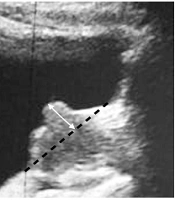
Yahyazadeh SR, Izadi SS, Inanloo SH. Clinical Significance of Intravesical Prostatic Protrusion Index in Patients with Clinical Diagnosis of Benign Prostatic Hyperplasia. Nephro-Urol Mon. 2022;14(2):e119224. doi: https://doi.org/10.5812/numonthly-119224
Ozturk H. Intrarenal Pseudoaneurysm After Percutaneous Nephrolithotomy at Solitary Kidney. Nephro-Urol Mon. 2014;6(5):e19037. doi: https://doi.org/10.5812/numonthly.19037
Heidari R, Behjati M, Alizadeh Sani Z, Alizadehsani R. Case Series of Angioembolization of Genitourinary System Between 2004 and 2016. Multidiscip Cardio Annal. 2023;14(1):e112695. doi: https://doi.org/10.5812/mca-112695

Checking
Last Update: 2 weeks ago
Last Update: 2 weeks ago
Last Update: 2 weeks ago
Last Update: 4 days ago
Ordering Reprints
Articles are published under the Creative Commons license stated on each article. No permission or royalty fee is required for uses permitted by that license. CCC handles optional bulk and customized reprint orders. Any quotation covers production and delivery services only, not copyright permission. > Request Reprints from CCC