
1. Context
Peripheral nerve blocks (PNBs) play a central role in regional anesthesia by providing targeted analgesia during surgical procedures and in the management of chronic pain conditions (1-3). By delivering local anesthetics directly to targeted nerves rather than producing systemic distribution, PNBs reduce opioid requirements, decrease the incidence of postoperative nausea and vomiting (PONV) (4-6), and facilitate early mobilization (4, 7). As a result of these advantages, improved postoperative outcomes have been reported in patients undergoing orthopedic, thoracic, and abdominal surgical procedures (4, 5, 8).
In patients with chronic pain conditions, including entrapment neuropathies such as carpal tunnel syndrome (CTS), PNBs may aid in diagnostic confirmation while simultaneously providing therapeutic benefit by reducing nerve compression and perineural inflammation (1, 2, 9, 10). Recent studies have demonstrated that the use of PNBs is associated with a reduction in opioid-related adverse effects and accelerated postoperative recovery (11, 12). Research consistently demonstrates reduced pain intensity and decreased opioid consumption during the first 24 - 48 hours following surgery (11, 13-15). Evidence suggests that the use of intrathecal opioids may reduce the incidence of postoperative delirium and opioid dependence in older adult patients (16). Despite these significant advantages, challenges remain, including variability in block duration (11, 17) and rebound pain, defined as an acute exacerbation of pain severity following resolution of the nerve block (18-20). These limitations necessitate the use of adjuvants to enhance analgesic efficacy and promote sustained pain control (21). Adjuvants used in PNBs include dextrose 5% in water (D5W) and dexamethasone, each characterized by distinct clinical applications and mechanisms of action (22, 23).
In peripheral entrapment neuropathies, D5W is utilized as a non-inflammatory adjuvant, particularly in ultrasound-guided hydrodissection procedures (22, 24). This technique involves the perineural injection of D5W to mechanically separate nerves from surrounding tissues, potentially reducing adhesions and improving nerve gliding (24). D5W has demonstrated favorable clinical outcomes in the treatment of entrapment neuropathies, including CTS and meralgia paresthetica. In fact, studies suggest that D5W may provide analgesic efficacy comparable to, and in some cases exceeding, that of corticosteroids, while exhibiting a more favorable safety profile (22, 25-27). Additionally, D5W has been reported to be effective in the management of chronic neuropathic pain and may serve a role in both the diagnosis and treatment of neurapraxia (28, 29). Although the precise mechanism of action has not yet been fully elucidated, the prevailing hypothesis suggests that D5W may facilitate restoration of the nervi nervorum and vasa nervorum. Owing to its potential regenerative effects and the absence of steroid-related adverse outcomes, D5W has increasingly been adopted as a preferred injectate for hydrodissection procedures (24, 30).
Dexamethasone remains a widely used adjuvant in acute surgical care for prolonging the duration of local anesthetic nerve blocks. It is effective whether administered perineurally or intravenously, typically in doses of 4 - 8 mg (23, 31). However, the route of administration has important clinical implications. Although perineural administration significantly prolongs postoperative analgesia, it is associated with delayed block onset and prolonged motor blockade (23). Current evidence suggests that intravenous administration (at 10 mg) offers comparable analgesic benefits to perineural use (at 8 mg). Given the comparable efficacy and lower risk of local adverse effects, intravenous administration is increasingly regarded as the preferred approach for harnessing dexamethasone’s anti-inflammatory properties (31).
The primary clinical applications of these agents differ substantially: Dextrose 5% in water is predominantly used for chronic therapeutic injections and hydrodissection in peripheral entrapment neuropathies, whereas dexamethasone is primarily employed to extend perioperative analgesia through augmentation of local anesthetic nerve blocks (22, 23).
Perineural dexamethasone has been extensively reviewed as a pharmacologic adjuvant for prolonging PNB duration (11, 32) through anti-inflammatory (31) and neurophysiologic mechanisms (33). In contrast, D5W represents a non-steroidal approach (22) that exerts analgesic effects via metabolic and sensorineural modulation (34), with growing evidence supporting its role in neurogenic inflammation (35) and peripheral nerve entrapment syndromes (22, 36, 37). Existing literature largely evaluates these agents in isolation, focusing either on dexamethasone-mediated block prolongation or D5W-based hydrodissection and neuropathic pain management. This narrative review addresses this gap by directly comparing metabolic modulation (D5W) with anti-inflammatory prolongation (dexamethasone), with particular emphasis on safety, metabolic effects, and clinical applicability in patients with diabetes or pre-existing neuropathy.
2. Scope and Terminology Clarification
In this narrative review, the term PNB refers specifically to regional anesthetic techniques involving targeted deposition of local anesthetic around named peripheral nerves or plexuses for surgical anesthesia or postoperative analgesia. Evidence related to perineural injections in other clinical contexts—such as ultrasound-guided hydrodissection for entrapment neuropathies, epidural dextrose injections, or chronic pain interventions without concomitant local anesthetics—is discussed only when mechanistically relevant. In such cases, conclusions are interpreted cautiously, and extrapolation to acute perioperative PNBs is explicitly acknowledged as limited.
3. Search Method
This review was conducted using a structured literature search strategy. Electronic searches were performed in PubMed, Scopus, and Google Scholar up to 2025 for relevant literature. Search terms were used alone or in combination and included “5% dextrose”, “dextrose water”, “D5W”, “perineural injection”, “hydrodissection”, “peripheral nerve block”, “entrapment neuropathy”, “regional anesthesia”, “dexamethasone”, and “nerve block adjuvant”. Peer-reviewed articles were considered, including randomized controlled trials, observational studies, systematic and narrative reviews, meta-analyses, and relevant preclinical mechanistic studies. As this was a narrative review, no formal risk-of-bias assessment or quantitative synthesis was performed.
4. Dextrose 5% in Peripheral Nerve Blocks
Dextrose 5% in water, once historically regarded only as a simple fluid vehicle or diluent, has recently emerged as a distinct therapeutic agent within the landscape of regional anesthesia and pain medicine (22, 38). Its mechanism of action appears to be unique, setting it apart from traditional local anesthetics that inhibit nerve conduction or corticosteroids that suppress inflammation via genomic pathways (38). Consequently, D5W’s clinical application has rapidly expanded well beyond a simple injectate for hydrodissection, establishing it as an active pharmacological intervention for the treatment of peripheral entrapment neuropathies and chronic neuropathic pain syndromes (22, 38).
4.1. Mechanisms of Action of Dextrose 5%
The pain-relieving effects of injecting D5W around a nerve probably come from a combination of factors: partly the physical separation of tissues (the hydrodissection effect), partly something happening at the nerve level itself, and partly metabolic changes (30).
Beyond mechanical effects, several hypothesized sensorineural mechanisms have been proposed. One frequently discussed but not yet definitively proven hypothesis is modulation of transient receptor potential vanilloid 1 (TRPV1) channel (39, 40), which plays a central role in nociceptive C-fiber activation and neurogenic inflammation (40, 41). This hypothesis is derived from indirect preclinical observations, including studies demonstrating reduced capsaicin-induced pain following exposure to non-electrolyte sugars such as mannitol, suggesting that osmotic or metabolic factors may influence TRPV1-mediated nociception (42). One study explicitly states that 5% dextrose solution treats neurogenic inflammation and neuropathic pain by blocking TRPV1 ion channels (39).
Pioneering work by Dr. John Lyftogt introduced perineural dextrose injection to reduce neurogenic inflammation by inhibiting capsaicin-sensitive receptors (e.g., TRPV1). This inhibition suppresses the secretion of neuropeptides such as substance P and calcitonin gene-related peptide (CGRP), which mediate pain and inflammation in nerves and surrounding tissues (43). Beyond this receptor-mediated anti-inflammatory effect, D5W may also modulate systemic inflammatory pathways. For instance, glucose has been shown to inhibit TNF-α-induced NF-κB activation and proinflammatory cytokine upregulation, mitigating metabolic dysfunction and neuroinflammation (44). Additionally, emerging hypotheses suggest a neuro-regenerative role for dextrose. While some attribute its lasting effects to an unknown regenerative process (45), preclinical evidence indicates that high glucose levels can upregulate neurotrophic factors such as nerve growth factor (NGF) and brain-derived neurotrophic factor (BDNF) in Schwann cells via p42/p44 MAPK activation (46). These findings point to a possible dose-related neuro-regenerative potential, though further in vivo and in vitro studies are needed (47). Importantly, D5W’s favorable safety profile—with no serious adverse events reported in animal or human studies—supports its use as a non-neurotoxic alternative to corticosteroids (45, 48).
Peripheral nerves have substantial metabolic requirements and are characterized by high energy demands (49). When a nerve becomes entrapped or compressed, local microvascular perfusion may be compromised, resulting in reduced delivery of oxygen and glucose. This state, often referred to as neural glycopenia, may independently contribute to abnormal neuronal excitability, resulting in pain and dysesthesia sensory symptoms. Earlier experimental studies demonstrated that reduced glucose availability can increase the excitability and firing frequency of nociceptive C-fibers (50). These findings underscore the critical dependence of peripheral nerve function on adequate metabolic substrate availability. Accordingly, one plausible hypothesis is that perineural administration of 5% dextrose may transiently restore local glucose availability, improve metabolic homeostasis, stabilize neuronal membrane potentials, and thereby reduce aberrant nociceptive signaling (30). It is a tidy theory, but we still need more solid studies to confirm that this is really happening in patients getting D5W injections.
Dextrose 5% in water is widely used as an effective volume expander during ultrasound-guided nerve hydrodissection (22, 24, 30). This technique involves the perineural injection of fluid to mechanically separate the nerve from adjacent fascial adhesions and fibrotic tissue. By creating this space, the nerve is decompressed, which may also help improve its internal microcirculation (22, 30). This mechanical release is considered one of the main advantages of hydrodissection, particularly in conditions involving peripheral nerve entrapment (22).
The idea that D5W offers combined mechanical, metabolic, and neuromodulatory benefits, distinguishing it from saline, is supported. Saline provides mechanical decompression alone without metabolic or neuromodulatory activity. Comparative studies have shown that D5W can demonstrate clinical benefits over saline in certain chronic pain settings. For example, epidural 5% dextrose injections provided greater short-term pain reduction compared to saline for chronic low back pain (35). In lateral epicondylopathy, dextrose prolotherapy outperformed saline in some patient-rated outcomes (51). A meta-analysis concluded that dextrose prolotherapy is more effective than saline injections for chronic musculoskeletal pain (52). While saline can separate tissues for hydrodissection, D5W has been shown to offer superior electrical isolation in certain procedures, which could be relevant to its protective effects on tissues (53).
It should be noted that most mechanistic hypotheses regarding D5W, including TRPV1 modulation, neurogenic inflammation attenuation, and correction of local neural glycopenia, are derived from studies of chronic perineural injection therapy, hydrodissection for entrapment neuropathies, or experimental pain models. While these mechanisms are biologically plausible, their direct translation to acute perioperative PNBs has not been definitively established and should be interpreted as hypothesis-generating rather than confirmatory.
4.2. Clinical Efficacy of Dextrose 5%
The majority of clinical evidence supporting D5W derives from chronic perineural injection and hydrodissection paradigms, rather than from conventional perioperative PNBs. Randomized trials and systematic reviews have primarily evaluated D5W in the management of peripheral entrapment neuropathies—most notably CTS and meralgia paresthetica—where it is administered as a stand-alone injectate without local anesthetics (22, 26, 27).
Consequently, the demonstrated mid- to long-term analgesic and functional benefits of D5W in these settings should not be interpreted as evidence of block prolongation or surgical analgesic equivalence to dexamethasone when used as a PNB adjuvant. Rather, these findings support D5W as a therapeutic perineural intervention with distinct indications and mechanisms.
In the treatment of chronic entrapment neuropathies, D5W has shown meaningful clinical benefit. Multiple randomized controlled trials and systematic reviews have specifically examined the use of D5W hydrodissection for CTS (26, 54, 55). A randomized double-blind trial demonstrated that, although corticosteroids provided rapid short-term symptom relief, D5W hydrodissection resulted in greater pain reduction and superior functional outcomes at 4 - 6 months of follow-up (26).
Studies comparing perineural D5W injections with corticosteroid therapy in patients with mild to moderate CTS have generally reported that both approaches reduce pain, decrease symptom severity, and improve parameters such as median nerve cross-sectional area and electrophysiological function. In several studies, however, the therapeutic effects observed with D5W were sustained for longer durations or were comparable to those achieved with corticosteroid therapy (54). A separate meta-analysis also reported that using D5W together with splinting produced the greatest reduction in pain and symptom severity at the 3- and 6-month follow-ups (55).
In patients with persistent or recurrent CTS following surgery, hydrodissection with 5% dextrose has been reported to result in significant and sustained symptomatic improvement. A substantial proportion of these patients describe the treatment as effective (56).
The therapeutic efficacy of D5W hydrodissection appears to be influenced by the administered volume. Administration of 4 mL of D5W has been shown to provide superior short-term symptomatic relief and functional improvement compared to smaller volumes (57). Long-term follow-up studies indicate that the majority of patients maintain favorable outcomes, with the degree of symptomatic improvement correlating with baseline disease severity (45).
D5W hydrodissection has demonstrated potential efficacy in the management of various peripheral nerve entrapment syndromes. For example, in patients with meralgia paresthetica, a well-designed double-blind study demonstrated that ultrasound-guided D5W injections were more effective than corticosteroid injections at 4–6 months follow-up, with a lower incidence of adverse effects (27). Several case reports have documented substantial symptomatic improvement in patients with chronic meralgia paresthetica following D5W hydrodissection, including reductions in pain and paresthesia, as well as improvements in electrophysiological parameters (36). An alternative approach involving repeated small-volume perineural D5W injections, often referred to as neural prolotherapy, has been reported to reduce pain and paresthesia and facilitate the restoration of functional activity in patients with meralgia paresthetica (58).
The treatment has shown its versatility. In long-term studies, D5W hydrodissection successfully relieved symptoms and improved function for patients with pronator teres syndrome (59). Additionally, D5W hydrodissection has been applied in individual case reports for the management of sciatic neuropathic pain secondary to rhabdomyolysis of the piriformis muscle (60).
Although D5W is not conventionally utilized as an adjuvant to prolong the duration of nerve blocks, its chemical and physical properties have been investigated in detail by researchers. Several studies have examined the use of D5W either as a diluent for local anesthetics or as a separate perineural injection administered immediately prior to anesthetic delivery. Ultrasound-guided perineural circumferential hydrodissection was performed immediately prior to the administration of local anesthetics. This procedure did not significantly alter the onset or overall efficacy of the nerve block, indicating that D5W did not accelerate anesthetic onset (61). It has been hypothesized that D5W could enhance the onset of nerve blocks by reducing extracellular sodium concentration, thereby facilitating local anesthetic penetration into the nerve.
Dextrose 5% in water is widely regarded as safe for perineural administration, with studies reporting no serious adverse events and only infrequent minor complications, such as localized bruising at the injection site. This safety profile contrasts favorably with the potential risks and adverse effects associated with perineural corticosteroid injections (22, 27).
5. Dexamethasone in Peripheral Nerve Blocks
As a common additive (adjuvant) in regional anesthesia, dexamethasone is a potent synthetic steroid used primarily to prolong both sensory and motor blockade (62, 63). In contrast to D5W, dexamethasone acts as a pharmacological agent that prolongs the duration of nerve blockade and exerts anti-inflammatory effects (63). However, the optimal route of administration—whether perineural or intravenous—remains a topic of ongoing scientific investigation (64, 65).
5.1. Mechanisms of Action of Dexamethasone
Dexamethasone exerts its effects via multiple mechanisms, including local actions at the site of administration and systemic absorption. Perineural administration of dexamethasone is hypothesized to inhibit nociceptive C-fiber activity by modulating specific potassium channels, thereby attenuating nerve excitability. This mechanism contributes to the prolonged duration of sensory and motor blockade observed following dexamethasone administration (63).
Both dexamethasone and methylprednisolone are corticosteroids widely utilized across various clinical contexts. Dexamethasone is particularly effective in the prevention of nausea and in the modulation of inflammatory responses. Its mechanisms of action include inhibition of prostaglandin synthesis, stimulation of endogenous anti-inflammatory mediators, and modulation of the endogenous opioid system (66).
By preventing the release of inflammatory mediators like interleukins and cytokines and promoting the release of anti-inflammatory mediators, dexamethasone has strong local anti-inflammatory effects. Reduced postoperative pain is a result of this anti-inflammatory action. Moreover, evidence suggests that dexamethasone may induce vasoconstriction, potentially reducing the rate of local anesthetic absorption and thereby prolonging its perineural residence time (63).
It is important to consider the physical and chemical interactions between dexamethasone and local anesthetics. The combination of specific additives with local anesthetics may result in solution precipitation, raising theoretical concerns regarding crystal formation in perineural or intravascular spaces (67). Dexamethasone sodium phosphate may precipitate when combined with ropivacaine, occasionally generating a limited number of microscopic crystals that are not visible macroscopically. In contrast, lidocaine generally demonstrates good compatibility with corticosteroids and does not typically precipitate. However, ropivacaine and bupivacaine may precipitate at physiological pH when combined with betamethasone sodium phosphate, and the combination of ropivacaine with dexamethasone sodium phosphate may similarly result in crystal formation (68, 69). The pH of the mixture also plays a role in whether crystals form. Solutions with higher pH exhibit an increased propensity for crystallization when combined (67). The practice of combining drugs in regional anesthesia should be carefully evaluated, especially when their physical or chemical compatibility has not been clearly established (70).
5.2. Clinical Efficacy of Dexamethasone
Over the past decade, many clinical studies have closely examined the benefits of perineural dexamethasone and compared its effects with those of systemic administration (11, 65). Meta-analyses and randomized controlled trials consistently show that adding dexamethasone to local anesthetics in PNBs significantly extends the duration of analgesia (11, 65, 71).
A key question in recent research is whether giving dexamethasone around the nerve provides any meaningful clinical advantage compared with administering it intravenously. Several meta-analyses suggest that perineural dexamethasone provides a longer duration of analgesia than intravenous administration, with average extensions of about 2.7 to 3.8 hours (65, 72, 73). This extended effect has also been seen in the duration of both motor and sensory blocks (65).
However, some studies note that although the difference reaches statistical significance, it does not always translate into a truly meaningful clinical benefit (72, 73). For instance, one meta-analysis reported that perineural dexamethasone extended analgesia by about 3.1 hours compared to intravenous administration, yet the average reduction in postoperative pain did not exceed the pre-defined threshold for a clinically meaningful difference (11). Another meta-analysis concluded that the differences in block characteristics between perineural and intravenous dexamethasone were not meaningful from a clinical perspective (74).
Some studies have found that perineural and intravenous dexamethasone produce similar effects, especially when epinephrine is not given alongside them (64). The debate is ongoing; some studies suggest that perineural administration may be more effective, particularly at lower doses (4 - 5 mg), while others report no significant difference at higher doses (≥ 8 mg) (75).
Rebound pain, defined as the sudden onset of intense pain following resolution of a nerve block, represents a clinically important concern (18). Dexamethasone has been shown to help reduce the severity of rebound pain (20, 76, 77). Both intravenous and perineural dexamethasone are more effective than using no dexamethasone at all for preventing rebound pain after PNBs, with intravenous administration often providing the greatest benefit (78, 79). By attenuating the acute inflammatory response, dexamethasone reduces sensitization of peripheral nociceptors (20).
Clinical evidence indicates that perineural dexamethasone significantly reduces the incidence and severity of rebound pain following surgery and is associated with improved postoperative sleep quality (76, 77). Intravenous dexamethasone demonstrates comparable effects, including reductions in rebound pain and improvements in both sleep quality and overall postoperative recovery (80, 81). Administration of 8 mg intravenous dexamethasone prior to elective laminectomy under general anesthesia has been shown to reduce post-extubation coughing and postoperative sore throat, thereby providing a safe and effective strategy for mitigating airway irritation without an increased risk of serious adverse effects (82).
There remains ongoing debate regarding the safety of perineural dexamethasone. Clinically apparent nerve injury appears to be rare; however, several preclinical studies have raised safety concerns. In vitro investigations suggest that dexamethasone alone does not exhibit neurotoxic effects at clinically relevant concentrations. Potential neurotoxicity has been observed when dexamethasone is combined with local anesthetics at high concentrations (83, 84). In addition, the use of preservative-containing dexamethasone formulations has been associated with nerve injury in animal models (85). By contrast, studies evaluating preservative-free dexamethasone at low doses in animal models generally do not demonstrate sustained neural inflammation or structural damage. Notably, many of these preclinical studies are characterized by a high risk of bias (83).
6. Dextrose 5% vs. Dexamethasone in Peripheral Nerve Blocks
Direct comparisons between D5W and dexamethasone must be interpreted within the context of their fundamentally different evidence bases. Dexamethasone has been extensively evaluated as an adjuvant to local anesthetics in perioperative PNBs, with multiple randomized trials and meta-analyses demonstrating prolonged sensory and motor blockade (23, 65, 88). In contrast, most clinical data supporting D5W originate from chronic perineural or hydrodissection-based interventions rather than surgical nerve blocks (22, 28). Therefore, comparisons in this review are conceptual and mechanistic rather than equivalence-based, and conclusions are restricted to each agent’s established clinical domain.
Taken together, the evidence summarized below indicates that D5W and dexamethasone represent fundamentally different perineural strategies rather than interchangeable adjuvants. While dexamethasone primarily prolongs analgesia through anti-inflammatory and neurophysiologic mechanisms, D5W appears to exert its effects through metabolic and sensorineural modulation. The following subsections synthesize these differences across mechanisms, clinical effects, safety, and patient-specific considerations.
6.1. Differences in Primary Use and Mechanisms
Both D5W and dexamethasone are used in the perineural space; however, they are employed for distinct indications and exert their effects through different mechanisms (11, 22). Dexamethasone primarily functions as an adjuvant to prolong the duration of local anesthetic-induced nerve blocks (11, 31, 89). In contrast to dexamethasone, D5W does not primarily function as a block-prolonging adjuvant but is most commonly used in hydrodissection and chronic neuropathic pain management (22, 90).
Through multiple mechanisms, perineural dexamethasone prolongs analgesia (11). It is hypothesized to exert its effects via local vasoconstriction, thereby reducing local anesthetic absorption, as well as through direct modulation of signal transmission in unmyelinated C-fibers via glucocorticoid receptor activation. Its potent anti-inflammatory properties suppress ectopic neuronal discharge and reduce perineural edema by inhibiting the release of nociceptive mediators (91). Studies have demonstrated that both perineural and intravenous dexamethasone, when added to PNBs, can extend the duration of sensory blockade while reducing postoperative pain scores and opioid requirements (11, 23, 32, 92). That said, the perineural route appears more likely to slow the onset of both sensory and motor blocks and to prolong motor blockade compared with the intravenous approach (23).
In acute regional anesthesia, D5W is investigated as a non-electrolyte diluent. The "Sodium Antagonism Hypothesis" suggests that diluting local anesthetics with saline (which contains high Na+) may competitively antagonize the sodium channel blockade essential for anesthesia. On the other hand, diluting with D5W lowers the injectate's sodium concentration, which may make it easier for the local anesthetic to bind to sodium channels and speed up the onset of block. One study found that dilution with D5W provided an earlier onset of axillary brachial plexus block with ropivacaine compared to saline dilution. In chronic pain practice, particularly in the context of perineural injections or hydrodissection for entrapment neuropathies, D5W has demonstrated clinically meaningful benefits (22, 27). Meralgia paresthetica represents a well-described example, in which several studies have reported that ultrasound-guided hydrodissection with D5W provides superior pain relief at 4 - 6 months compared with local corticosteroid injections, while being associated with fewer adverse effects (27). Although the precise mechanisms underlying these effects remain incompletely understood, the prevailing hypothesis suggests a sensorineural mode of action, potentially involving downregulation of TRPV1 channel activity and hyperpolarization of sensitized unmyelinated C-fibers (22).
6.2. Comparative Clinical Outcomes
There is now considerable evidence, including several meta-analyses, that adding dexamethasone perineurally really does extend both sensory and motor blockade in a meaningful (11, 74, 93). With the usual doses of 4 - 8 mg, most studies show analgesia lasting several hours longer than with placebo alone (11, 93). For example, one meta-analysis found that perineural dexamethasone added roughly 6.7 hours to sensory block duration compared with placebo (11). Another pooled analysis showed that incorporating dexamethasone into the local anesthetic mix prolonged analgesia by an average of about 351 minutes and motor block by around 277 minutes, both highly significant differences (93).
Collectively, comparative studies suggest that perineural dexamethasone modestly prolongs sensory blockade relative to intravenous administration, although the clinical relevance of this difference remains debated (11, 72, 74). According to certain research, perineural dexamethasone causes analgesia to last longer than intravenous dexamethasone, but this prolongation may be slight and not clinically significant (72). Taken together, these findings indicate that dexamethasone reliably extends postoperative analgesia and reduces opioid consumption, reinforcing its role as a pharmacologic block extender (11, 94, 95). Additionally, it has been demonstrated to lower the frequency of rebound pain (95, 96).
6.3. Contribution of Volume vs. Glucose Content in D5W Efficacy
A critical consideration when interpreting the benefits of D5W compared to corticosteroids is whether observed improvements result from the glucose itself or from the larger injection volumes typically used with D5W (often 4 - 10 mL) compared to steroid doses (usually 1 - 2 mL). Evidence suggests both factors play a role. Larger volumes enhance mechanical decompression, nerve gliding, and separation from adhesions, which is supported by a randomized trial showing superior short-term outcomes with 4 mL of D5W versus 1 mL or 2 mL in CTS (57). However, studies comparing D5W to saline at similar volumes indicate that dextrose provides additional benefit beyond mechanical effects alone (22, 35). For example, D5W has demonstrated greater long-term pain reduction and functional improvement than corticosteroids despite differences in volume (26, 27), and systematic reviews conclude that D5W is more effective than saline for hydrodissection in entrapment neuropathies (22). These findings support a combined mechanism: mechanical benefits from volume plus specific sensorineural and metabolic effects of glucose. Direct comparative trials that control for volume across glucose-containing and non-glucose injectates are needed to further clarify the relative contributions of these components.
6.4. Safety and Side Effect Profiles
Perineural dexamethasone is one of the most extensively studied adjuvants in regional anesthesia, with robust clinical evidence supporting its safety at commonly used doses (4 - 8 mg) (11, 97). Large randomized controlled trials and multiple meta-analyses have not demonstrated an increased incidence of permanent neurologic injury, persistent sensory deficits, or clinically significant nerve damage attributable to perineural dexamethasone when preservative-free formulations are used (83, 97). Importantly, clinical studies have not identified a meaningful increase in block-related complications compared with intravenous administration, aside from predictable pharmacodynamic effects such as prolonged sensory and motor blockade (11, 65, 98). Overall, the existing human data support a favorable safety profile for perineural dexamethasone in routine perioperative practice (11, 65, 75)
Systemic absorption of dexamethasone occurs regardless of the route of administration (99-101). Transient hyperglycemia is a well-documented and clinically relevant adverse effect, particularly in patients with diabetes or impaired glucose tolerance (102, 103). Both perineural and intravenous dexamethasone have been shown to increase postoperative blood glucose levels, typically peaking within the first 24 hours and resolving spontaneously in non-diabetic patients (104-106). Although these glucose elevations are usually modest and clinically manageable, they warrant consideration in patients with poorly controlled diabetes, where even transient hyperglycemia may contribute to postoperative complications (107).
In contrast to D5W, several safety concerns frequently cited in the literature originate primarily from in vitro or animal studies, rather than from clinical outcome data (83, 84). Laboratory investigations have demonstrated that dexamethasone sodium phosphate may form microscopic crystals when mixed with certain local anesthetics (particularly ropivacaine or bupivacaine) under specific pH conditions (68, 69). These findings raise a theoretical concern regarding particulate deposition near neural structures (69, 108). Similarly, some in vitro and animal studies suggest potential neurotoxicity when dexamethasone is combined with high concentrations of local anesthetics or when preservative-containing steroid formulations are used (83, 84). However, these experimental conditions do not reliably replicate clinical practice, and direct clinical evidence of neurotoxicity attributable to preservative-free perineural dexamethasone at standard doses remains lacking (11, 83). Consequently, these risks should be interpreted as theoretical rather than established clinical hazards (11, 109, 110).
Patient-specific factors play a critical role in the risk–benefit assessment of perineural dexamethasone (11, 97). In individuals with diabetes mellitus, the potential for steroid-induced hyperglycemia may justify preference for intravenous administration or alternative non-steroidal adjuvants, particularly when metabolic control is suboptimal (107). In patients with pre-existing peripheral neuropathy, theoretical concerns regarding steroid-related neurotoxicity, despite limited clinical evidence, may influence clinician preference toward injectates with a more benign neurobiological profile, such as 5% dextrose in water (D5W) (27, 83). Unlike corticosteroids, D5W has not been associated with neurotoxicity, crystallization, or systemic metabolic effects and has demonstrated excellent tolerability even with repeated perineural administration (22, 27, 28).
For perineural injection, D5W has a good safety profile, in contrast to dexamethasone. It is considered non-neurotoxic and safe for direct intraneural injection, with studies reporting no serious adverse events (22, 111). D5W injection is usually well tolerated, though there may be brief injection site pain or bruising (111, 112). It is a safe choice for diabetic populations because the small amount of glucose given in a block usually has no effect on systemic blood glucose levels (28).
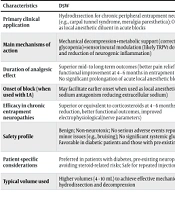
Key comparative differences between D5W and dexamethasone discussed in this section are summarized in Table 1.
Table 1.
Comparative Characteristics of D5W and Dexamethasone as Perineural Adjuvants
| Characteristics | D5W | Dexamethasone | References |
|---|---|---|---|
| Primary clinical application | Hydrodissection for chronic peripheral entrapment neuropathies (e.g., carpal tunnel syndrome, meralgia paresthetica); Occasional use as local anesthetic diluent in acute blocks | Adjuvant to prolong sensory and motor blockade in acute perioperative peripheral nerve blocks | (11, 22, 26, 27, 31) |
| Main mechanisms of action | Mechanical decompression+metabolic support (correction of neural glycopenia)+sensorineural modulation (likely TRPV1 downregulation and reduction of neurogenic inflammation) | Glucocorticoid receptor-mediated anti-inflammation+direct inhibition of nociceptive C-fibers (potassium channel modulation)+possible local vasoconstriction | (22, 30, 32, 74) |
| Duration of analgesic effect | Superior mid- to long-term outcomes (better pain relief and functional improvement at 4 - 6 months in entrapment neuropathies); No significant prolongation of acute local anesthetic block | Acute prolongation of sensory (~6.7 h vs. placebo) and motor block; Modest additional benefit over intravenous route | (11, 26, 27, 93) |
| Onset of block (when used with LA) | May facilitate earlier onset when used as local anesthetic diluent (via sodium antagonism reducing extracellular sodium) | May delay sensory and motor block onset and prolong motor blockade duration | (23, 90) |
| Efficacy in chronic entrapment neuropathies | Superior or equivalent to corticosteroids at 4 - 6 months (greater pain reduction, better functional outcomes, improved electrophysiological/nerve parameters) | Provides strong short-term relief (1 - 3 months); Effect may diminish or be inferior by 4 - 6 months | (22, 26-28) |
| Safety profile | Benign; Non-neurotoxic; No serious adverse events reported; Rare minor issues (e.g., bruising); No significant systemic glucose impact; Favorable in diabetic patients and those with pre-existing neuropathy | Transient hyperglycemia (caution in diabetics); Theoretical neurotoxicity and crystal precipitation (especially when mixed with certain local anesthetics or preservatives) | (22, 27, 68-70, 83-85) |
| Patient-specific considerations | Preferred in patients with diabetes, pre-existing neuropathy, or when avoiding steroid-related risks; Safe for repeated injections | Highly effective for acute surgical analgesia but metabolic and potential local risks may limit use in vulnerable populations | (28, 83, 84) |
| Typical volume used | Higher volumes (4 - 10 mL) to achieve effective mechanical hydrodissection and decompression | Lower volumes (typically combined with local anesthetic, 1 - 5 mL total injectate) | (30, 57) |
Abbreviations: D5W, 5% dextrose in water; TRPV1, transient receptor potential vanilloid 1.
7. Conclusion and Future Directions
This narrative review demonstrates that dexamethasone and D5W serve fundamentally different roles in perineural practice. While dexamethasone’s efficacy is supported by high-level evidence within perioperative PNBs, the clinical benefits of D5W are best established in chronic perineural and hydrodissection-based interventions, and extrapolation to surgical nerve blocks remains limited. As dexamethasone is noted for reliably extending block duration, the safety profile of D5W makes it a preferable adjunct for patients with diabetes or neuropathy.
Although sequential use of corticosteroids followed by D5W hydrodissection has shown promise in a retrospective study for residual symptoms in CTS (113), there are currently no published data on the simultaneous co-administration or mixing of D5W and dexamethasone in PNBs or hydrodissection. Future randomized trials should explore these potential combined approaches, including optimal timing, dosing, and safety (e.g., physicochemical compatibility and neurotoxicity risks), to determine if synergistic effects exist beyond individual agent use.