
Fulltext
The full-text is available in pdf.
International Cardiovascular Research Journal
An annual journal in scientific affiliation with the Cardiovascular Research Center, Shiraz University of Medical Sciences
Image Credit:Int Cardiovasc Res J
Authors
Background:
Cardiac Resynchronization Therapy (CRT) is one of the suggested managements in patients with Left Bundle Branch Block (LBBB) and heart failure with reduced ejection fraction. Finding a predictor for poor response to CRT may help better candidate selection for device implantation and better final outcome.
Objective:
This retrospective study aimed to assess QRS left axis deviation as a novel indicator of clinical and echocardiographic response to CRT.
Methods:
This retrospective single-center analysis was done on 95 CRT patients with LBBB in their electrocardiograms (47 patients had normal QRS axis and 48 had left QRS axis deviation). These patients were followed up for 19 ± 3 months after CRT implantation. Response to CRT was evaluated by assessment of New York Heart Association (NYHA) functional class, echocardiographic examination, and number of hospitalizations within six months before and after CRT implantation.
Results:
The response rate to resynchronization was 65.9% in the left axis group and 77.3% in the normal axis group, and the difference was statistically significant (P = 0.013). Improvement in echocardiographic findings, including increase in the left ventricular ejection fraction (P = 0.004), decrease in the end diastolic volume (P = 0.010), and decrease in the end systolic volume (P = 0.014), were also noted. However, improvement in NYHA class was reported in both groups without any statistically significant difference (P = 0.066).
Conclusion:
Left axis deviation was associated with a lower rate of CRT response in patients with CRT implantation and LBBB.
The full-text is available in pdf.
© 2020, Author(s). This open-access article is available under the Creative Commons Attribution 4.0 (CC BY 4.0) International License (https://creativecommons.org/licenses/by/4.0/), which allows for unrestricted use, distribution, and reproduction in any medium, provided that the original work is properly cited.
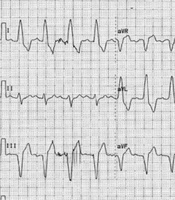
Payami B, Zoroufian A, Majidi S, Bidarvand Heidari R. Predictive Value of QRS Complex Morphology in Treatment Response to Cardiac Resynchronization. Jundishapur J Chronic Dis Care. 2025;14(3):e161174. doi: https://doi.org/10.5812/jjcdc-161174
Hassaniani Z, Kheirkhah J, Moladoust H, Bonakdar H, Assadian-Rad M, et al. Evaluation of Left Ventricular Systolic Function after Cardiac Resynchronization Therapy in Heart Failure Patients. Zahedan J Res Med Sci. 2013;15(9):e92847. doi:
Emkanjoo Z. The Significance of Left Axis Deviation in Response to CRT. Int Cardiovasc Res J. 2020;14(3):e108467. doi:

Amirzadegan A, Hosseini K, Tajdini M, Baradaran A, Hosseinsabet A. Does Isolated Left Bundle Block Cause Heart Failure With Reduced Ejection Fraction? A Retrospective Cohort Study. Thrita J Neu. 2017;6(2):e14081. doi: https://doi.org/10.5812/thrita.14081
Valipoor R, Eslami M, Sattarzadeh-Badkoubeh R, Shahmohamadi E, Rezaei M, et al. Evaluation of Response to Cardiac Resynchronization Therapy in Patients with Non-Ischemic Cardiomyopathy Based on Echocardiographic Features Including Sphericity Index and Global Longitudinal Strain. Int Cardiovasc Res J. 2021;15(2):e114876. doi:
Last Update: 1 month ago
Last Update: 1 month ago
Last Update: 1 month ago
Last Update: 6 hours ago
Last Update: 10 hours ago
Last Update: 4 days ago

