
1. Background
Cardiovascular diseases (CVDs) remain a leading cause of death and disability worldwide, affecting millions of people annually. As the frontline of healthcare, nurses play a vital and undeniable role in the prevention, early detection, management, and rehabilitation of patients with these disorders (1). In the specialized field of education for CVDs, which is considered one of the most complex and critical areas of nursing care, the use of innovative teaching methods is of particular importance (2). Traditional nursing education, however, often faces challenges that may not fully prepare students for the complexities and dynamics of real-world clinical environments, particularly in cardiac intensive care units (CICUs) (3). Traditional teaching methods, which are primarily based on theoretical and content-based instruction, may be insufficient in strengthening the critical thinking, problem-solving, and clinical decision-making skills that are essential for managing cardiovascular emergencies (4).
Medical science education in the 21st century faces profound challenges, necessitating a fundamental revision of traditional teaching and learning methods. The remarkable advancements in technology and the evolving learning patterns of the new generation of students have made the use of innovative educational strategies more evident than ever (5). In this context, game-based learning — particularly educational escape rooms — has garnered increasing attention as a novel interactive approach in medical and nursing education (6).
Educational escape rooms are among the most popular and effective educational games that have become a powerful tool in academic settings in recent years (7). An educational escape room is an interactive and immersive environment where students encounter challenges, puzzles, and tasks that must be solved within a limited time frame. This innovative method offers a smart combination of experiential learning, problem-solving, and critical thinking, which can play an unparalleled role in enhancing students’ cognitive, motor, and emotional skills (8). There is growing evidence of the effectiveness of escape rooms in health sciences education, particularly in nursing (9). Studies have shown that these methods significantly increase student motivation and enhance their satisfaction with the learning experience (10).
In the specific field of CVD education, the use of escape rooms has been shown to improve students’ content knowledge and better prepare them to face clinical challenges related to these disorders. Numerous studies have demonstrated that the use of educational games in the cardiovascular field significantly enhances students’ abilities to interpret electrocardiograms, manage cardiac emergencies, and comprehend complex pathophysiological concepts (11). Beyond their educational aspects, escape rooms have also emerged as a novel assessment method (12). This method provides a comprehensive evaluation of students’ clinical knowledge, skills, and competencies, including emotional and psychological aspects, without necessarily inducing the anxiety associated with traditional exams (13). This active assessment approach aligns with national and international educational policies that emphasize active learning, continuous evaluation, and competency-oriented development in nursing curricula (14). The use of escape rooms as a novel assessment tool can thus evaluate students’ ability to apply theoretical knowledge in real-world scenarios and strengthen critical skills for cardiovascular patient care by creating a dynamic and challenging environment (15).
Although educational escape rooms have shown considerable promise in enhancing learning outcomes within health sciences education, critical gaps remain that several important gaps remain unaddressed. Existing research has predominantly focused on the instructional and motivational benefits of escape rooms, relying mainly on descriptive or pilot designs with small sample sizes, while their potential as structured and psychometrically sound assessment tools has been largely underexplored. Moreover, recent reviews highlight notable methodological inconsistencies across studies, including insufficient transparency in scenario design, content validation, and implementation procedures. Such limitations compromise both the reproducibility and external validity of existing evidence. As digital and virtual learning modalities continue to expand, further questions have emerged regarding the equivalence, validity, and measurement properties of virtual escape room-based assessments compared with traditional evaluation formats. Yet empirical investigations addressing these critical psychometric and design-related challenges remain scarce, underscoring the urgent need for standardized frameworks and rigorous validation efforts to establish escape rooms as credible, evidence-based assessment methods in health sciences education (11, 16, 17).
2. Objectives
By bridging this research gap, the present study aims to provide further evidence on the potential of escape rooms as a tool for deep learning and comprehensive assessment in a specialized and critical field of education. Therefore, the present research was designed to investigate the effect of virtual escape room game-based assessments on the learning of CVDs among undergraduate nursing students at Abadan University of Medical Sciences.
3. Methods
The present study was conducted during the second semester of the academic year 2024 - 2025 at Abadan University of Medical Sciences. A total of 62 fifth-semester undergraduate nursing students who had taken the CVD course were recruited for the study using a convenient, census sampling method. Exclusion criteria were non-attendance at the orientation webinar, absence on the day of the exam, and incomplete questionnaires. The design, implementation, and evaluation of this research were carried out in six phases.
3.1. Designing the Escape Room Exam Scenario
A team composed of members of the exam evaluation committee, with the participation of the dean, educational deputy of the faculty, and faculty members of the nursing field involved in designing the escape room exam scenario. After holding brainstorming sessions, the exam specifications, the number of rooms, the exam topics, the scoring alignment, and the evaluation method were determined. Afterward, the scenarios pertaining to each room were first designed by the instructor with the help of the Digital Escape Room Creator and the Medical School Exam AI. The prompt-writing for the scenarios was carried out based on the course objectives and main curriculum-aligned resource (Brunner & Suddarth’s Textbook of Medical-Surgical Nursing). Subsequently, the scenarios for each room were reviewed and approved by the selected team. To enable the review and comparison of the CVD online multiple-choice exam and the virtual escape room exam, the questions were designed to be of a similar level.
3.2. Assessing the Scenarios’ Validity and Reliability
To assess content validity, the scenarios designed in the previous stage were reviewed by faculty members. For this purpose, 50 specific questions designed based on the relevant lesson blueprint and adhering to the criteria outlined in Millman’s standard checklist, were reviewed and confirmed. To determine reliability, Cronbach’s alpha coefficient, the correlations between room scores, and the correlation between the total exam score and the scores of each room were calculated. A questionnaire comprising 14 questions was designed to assess student satisfaction with escape room and multiple-choice exams. The questions investigated three areas: The exam implementation method, the impacts of the exam implementation, and the exam implementation in future years. The content validity of the satisfaction survey was evaluated by 12 faculty members, and its reliability was approved with a Cronbach’s alpha of 0.87.
3.3. Preparation and Implementing a Pilot Run of the Escape Room
After the scenarios were designed and approved, the virtual escape room exam was developed. At this stage, 5 online escape rooms were created using the Google Forms digital environment.
3.3.1. Room 1
Room 1 was designed based on a puzzle exam to strengthen analytical and clinical decision-making skills, as well as to recognize logical connections in the treatment and care of patients with heart failure (HF). This room contained 5 questions about diagnosing the type of HF, interpreting diagnostic findings, selecting appropriate drug therapy, implementing immediate nursing interventions, and providing patient education.
3.3.2. Room 2
Room 2 was designed to focus on the nursing process for managing a patient with a myocardial infarction (MI), based on the project management professional (PMP) exam. This room contained 5 questions about assessment and recognition, nursing diagnosis, goal setting and planning, selecting key executive actions, and identifying monitoring and control actions.
3.3.3. Room 3
Room 3 was designed to enhance the ability to identify clinical signs for rapid diagnosis and therapeutic decision-making in patients with cardiac tamponade based on a pattern recognition exam. This room contained 5 questions about diagnosing classic signs of cardiac tamponade, recognizing echocardiographic findings, identifying the hemodynamic response after pericardiocentesis, identifying interventions to prevent the recurrence of tamponade, and patient education.
3.3.4. Room 4
Room 4 was designed to enhance clinical reasoning skills for the clinical management of a patient with pericardial effusion in the format of a key feature problem (KFP) exam. This room included 5 questions about key signs for diagnosing pericardial effusion, high-priority nursing actions, monitoring vital indices, determining high-priority nursing diagnoses, and patient education for discharge.
3.3.5. Room 5
Room 5 was designed to enhance the ability to analyze situations, prioritize actions, and make clinical decisions for a patient with mitral regurgitation (MR) based on a clinical reasoning process (CRP) exam. This room included 5 questions about analysis of clinical data and identification of the patient’s primary clinical problem, decision-making for initial nursing actions, analysis of laboratory and echocardiography data, evaluation of treatment effectiveness, and patient education planning. Figure 1 shows the map of the escape room.
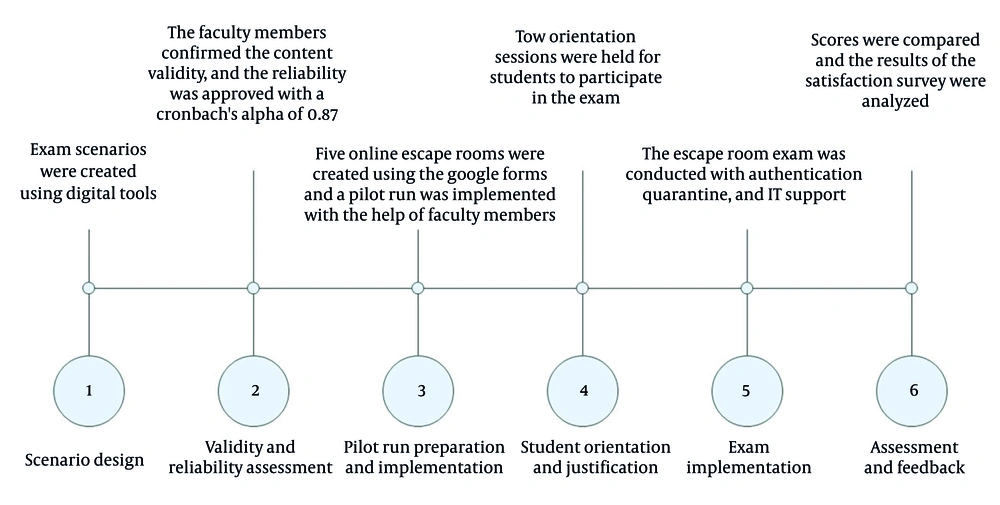
Figure 1.
Escape room map
Students were initially assigned Simple randomly to take either the online multiple-choice exam or the virtual escape room exam. Upon completion of the first exam, they were allowed to enter the second exam. Both exams consisted of 25 questions with different scenarios of equivalent difficulty.
In each room of the escape room exam, students, with the help of guides, had to find clues and correctly answer questions to advance to the next stage. A correct answer to each question revealed a password letter, and at the end of each room, a five-letter password was discovered, which was used as the entry code for the next room. If a student did not answer the questions correctly and could not find the password, they would not be able to enter the next room. There was no time limit for answering the questions in each room until the password was found; however, the total time for the escape room exam was set at 50 minutes. After the exam was designed, 12 faculty members first participated in a pilot run to identify and resolve any issues.
3.4. Familiarizing the Students with the Escape Room Exam
To familiarize students with the exam, two sessions were held. During these sessions, the exam implementation method was explained, and guidance on how to participate was provided, and students’ questions and ambiguities were addressed. Subsequently, the exam date was announced to students through the designated communication channels.
3.5. Implementing the Escape Room Exam
Students were first randomly divided into two groups to participate in either an online multiple-choice exam or a virtual escape room exam. This exam was held in the university’s virtual exam hall. To enter the exam, students were authenticated using personal information, such as their national ID number and student ID number. In the initial stage of the virtual escape room exam, students first registered their personal details, including their first and last names and student ID numbers, after which they could view the escape room map. Subsequently, by clicking the “Enter the CVD Escape Room Exam” button, they entered room 1, and the exam commenced. After correctly answering the questions and finding the code for each room, students were able to advance to the next room. To ensure the proper exam implementation, three selected faculty members were present in the exam hall. The information technology unit experts were also present in the virtual exam hall to resolve any technical issues that might arise during the exam in the shortest possible time. After the exam time concluded, the answer sheets were sent to the professors for review and grading. The exam results were announced to the students within 24 hours of the exam’s conclusion. The passing score for each exam was determined by the participating faculty members to be a correct response rate of 50%.
3.6. Evaluating and Completing the Survey Form
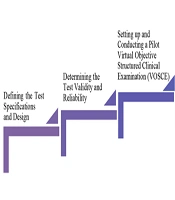
Following the completion of the exam, the students’ final scores on the online multiple-choice and virtual escape room exams were compared. In addition, survey forms were distributed to the students at the end of the exam to assess their perspectives on the level of learning and their satisfaction with this method. Figure 2 summarizes the stages of designing, implementing, and evaluating the CVD escape room.
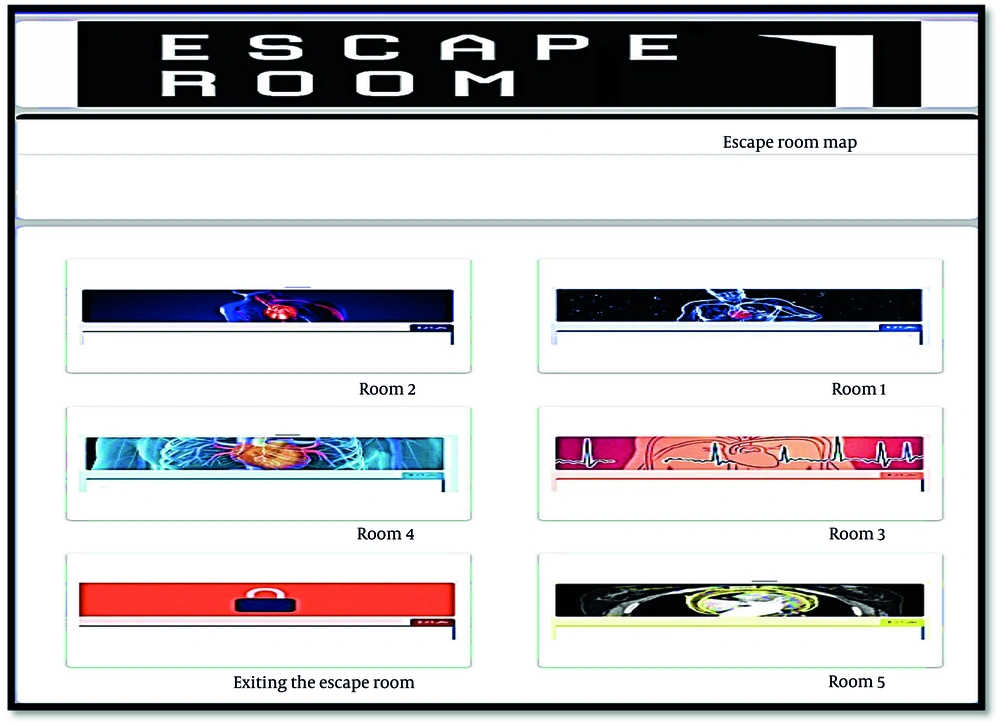
Figure 2.
A summary of the stages of designing, implementing, and evaluating the cardiovascular disease escape room
3.7. Ethical Considerations
This study, derived from a master’s thesis in nursing (IR.ABADANUMS.REC.1404.029, project number: 2221), was conducted in full accordance with ethical research and publication standards. Participants received comprehensive information about the study’s objectives, procedures, and implications, after which written informed consent was obtained. Confidentiality was strictly preserved, and participation was entirely voluntary, allowing students to withdraw at any stage without any academic or personal consequences.
3.8. Statistical Analysis
After data collection, the data were analyzed using SPSS 26 software. The Kolmogorov-Smirnov exam was employed to assess the normal distribution of the data. Descriptive statistics, including the mean and standard deviation, and inferential statistics, including paired t-test, Wilcoxon signed-rank test, and Pearson’s correlation coefficient, were used for data analysis.
4. Results
This study included 62 nursing students. The sample consisted of 34 females (54.8%) and 28 males (45.2%). The mean total score on the virtual escape room exam was 16.93 ± 1.53, and the mean score on the online multiple-choice exam was 15.03 ± 2.52. A paired t-test revealed a statistically significant difference between the mean total scores of the two exams (P = 0.002). These results indicate that students performed better on the escape room exam compared to the multiple-choice exam.
The results of Pearson’s correlation analysis revealed a positive, strong, and significant correlation between students’ scores in different rooms of the virtual escape room exam and their corresponding topics in the online multiple-choice exam. Specifically, the correlation coefficients in both methods ranged from 0.838 to 0.925, indicating a high alignment between participants’ performance in these two assessment methods. The highest correlation was for room 3 (cardiac tamponade) (r = 0.925, P = 0.001), and the lowest was for the topic of MI in the online multiple-choice exam (r = 0.838, P = 0.003). Additionally, the overall correlation between the total scores of the two exams was found to be very strong and significant (r = 0.921, P = 0.001). These findings confirm that the virtual escape room exam performed in alignment with the online multiple-choice exam in assessing students’ knowledge and abilities, and can be used as a valid alternative or complement in the evaluation process (Table 1).
Table 1.
Correlation Between the Scores of Each Escape Room and Traditional Exam Topics
| Exams and Parts | Pearson’s Correlation Coefficient (r) | P-Value |
|---|---|---|
| Escape room | ||
| Room 1 (HF) | 0.912 | 0.001 |
| Room 2 (MI) | 0.887 | 0.002 |
| Room 3 (cardiac tamponade) | 0.925 | 0.001 |
| Room 4 (pericardial effusion) | 0.894 | 0.001 |
| Room 5 (MR) | 0.918 | 0.001 |
| Traditional | ||
| The HF topic | 0.852 | 0.002 |
| The MI topic | 0.838 | 0.003 |
| The cardiac tamponade topic | 0.865 | 0.001 |
| The pericardial effusion topic | 0.841 | 0.002 |
| The MR topic | 0.857 | 0.001 |
| Escape room and traditional exams | 0.921 | 0.001 |
Abbreviations: HF, heart failure; MI, myocardial infarction; MR, mitral regurgitation.
The mean Difficulty Index of questions in the virtual escape room exam (0.914) was slightly higher than that in the online multiple-choice exam (0.902). This was particularly evident in topics related to cardiac tamponade and pericardial effusion, indicating a higher complexity for these questions. However, the students’ mean score in the total escape room exam (16.12 ± 1.53) was still higher than that in the multiple-choice exam (15.62 ± 1.66), suggesting better student performance in the escape room environment (Table 2). These findings demonstrate that increasing the difficulty of escape room questions, while maintaining student engagement and participation, can enhance effective learning, leading to higher scores (Table 3).
Table 2.
Comparison of Students’ Scores on Escape Room and Traditional Exams
| Variables | Lowest Score | Highest Score | Mean ± SD | P-Value |
|---|---|---|---|---|
| Total score of the escape room exam | 12 | 20 | 16.12 ± 1.53 | 0.002 |
| Score of the traditional exam | 5.73 | 17.28 | 15.62 ± 1.66 |
Table 3.
Mean Difficulty Index of Questions and Mean Scores of the Exams
| Exams, Rooms or Topics | Mean Difficulty Index | Mean ± SD Score |
|---|---|---|
| Escape room | ||
| Room 1 (HF) | 0.880 | 16.5 ± 1.5 |
| Room 2 (MI) | 0.870 | 16.8 ± 1.5 |
| Room 3 (cardiac tamponade) | 0.970 | 15.2 ± 1.6 |
| Room 4 (pericardial effusion) | 0.950 | 15.5 ± 1.4 |
| Room 5 (MR) | 0.890 | 16.6 ± 1.6 |
| Total exam | 0.914 | 16.12 ± 1.53 |
| Traditional | ||
| The HF topic | 0.880 | 16.0 ± 1.7 |
| The MI topic | 0.860 | 16.2 ± 1.6 |
| The cardiac tamponade topic | 0.950 | 14.8 ± 1.8 |
| The pericardial effusion topic | 0.940 | 15.0 ± 1.5 |
| The MR topic | 0.880 | 16.1 ± 1.7 |
| Total exam | 0.902 | 15.62 ± 1.66 |
The mean scores for satisfaction with the virtual escape room exam the online multiple-choice exam were 83.30 ± 6.31 and 62.80 ± 6.95, respectively. The Wilcoxon signed-rank test revealed a statistically significant difference in the mean scores of satisfactions with the escape room and traditional exams, with students expressing higher satisfaction with the escape room exam (P = 0.023) (Table 4).
Table 4.
Comparison of Satisfaction with the Escape Room and Traditional Exams Among Students
| Variables | Mean ± SD | P-Value |
|---|---|---|
| Satisfaction with the escape room exam | 83.30 ± 6.31 | 0.023 |
| Satisfaction with the traditional exam | 62.80 ± 6.95 |
The results of surveying satisfaction with the escape room exam revealed that 70% to 92% of students expressed high or very high satisfaction with various areas. In the area of exam implementation method, the highest satisfaction belonged to “the questions aligned with the topics taught” (91.9%), while the lowest to “the exam duration was appropriate” (77.4%). Regarding the impacts of the exam implementation, the highest satisfaction was attributed to “the exam implementation enhances student learning” (85.5%), and the lowest belonged to “the exam helps improve clinical skills learning” (74.2%). In the area of the exam implementation in future years, the highest satisfaction was related to “continuing to implement the exam in future years” (90.3%), while the lowest satisfaction belonged to “before the exam, students should be surveyed about how to be implemented” (71.0%). Table 5 shows the results of the student satisfaction survey for the escape room exam.
Table 5.
Frequency and Percentage of Responses Regarding Satisfaction with the Escape Room Exam a
| Areas and Items | Very Low | Low | Moderate | High | Very High | Overall Satisfaction |
|---|---|---|---|---|---|---|
| The exam implementation method | ||||||
| Prior to the exam, I was provided explanations on its implementation and procedures. | 0 (0.0) | 2 (3.2) | 4 (6.5) | 18 (29.0) | 38 (61.3) | 56 (90.3) |
| The time allocated for the exam was appropriate. | 1 (1.6) | 3 (4.8) | 10 (16.1) | 16 (25.8) | 32 (51.6) | 48 (77.4) |
| The questions were aligned with the topics taught. | 0 (0.0) | 2 (3.2) | 3 (4.8) | 17 (27.4) | 40 (64.5) | 57 (91.9) |
| The questions were aligned with the assessment methods outlined in the course syllabus. | 1 (1.6) | 3 (4.8) | 9 (14.5) | 18 (29.0) | 31 (50.0) | 49 (79.0) |
| The impacts of the exam implementation | ||||||
| The implementation of this exam enhances student motivation. | 1 (1.6) | 2 (3.2) | 7 (11.3) | 18 (29.0) | 34 (54.8) | 52 (83.9) |
| This exam enables students to review forgotten material. | 1 (1.6) | 2 (3.2) | 9 (14.5) | 18 (29.0) | 32 (51.6) | 50 (80.6) |
| The exam assesses the student’s level of readiness for hospital placement. | 1 (1.6) | 2 (3.2) | 8 (12.9) | 18 (29.0) | 33 (53.2) | 51 (82.3) |
| The exam contributes to the improvement of clinical skills. | 1 (1.6) | 4 (6.5) | 11 (19.4) | 18 (25.8) | 28 (45.2) | 46 (74.2) |
| The implementation of this exam promotes student learning. | 1 (1.6) | 1 (1.6) | 7 (11.3) | 18 (29.0) | 35 (56.5) | 53 (85.5) |
| The exam increases student self-confidence and a sense of empowerment. | 1 (1.6) | 2 (3.2) | 7 (11.3) | 18 (29.0) | 34 (54.8) | 52 (83.9) |
| The exam implementation in future years | ||||||
| It is beneficial to continue the exam implementation in future years. | 1 (1.6) | 1 (1.6) | 4 (6.5) | 18 (29.0) | 38 (61.3) | 56 (90.3) |
| The exam feedback should be communicated to the professors in an appropriate manner. | 1 (1.6) | 1 (1.6) | 5 (8.1) | 18 (29.0) | 37 (59.7) | 55 (88.7) |
| The electronic exam can be a substitute for the in-person exam in the future. | 1 (1.6) | 1 (1.6) | 6 (9.7) | 18 (29.0) | 36 (58.1) | 54 (87.1) |
| Before the exam, students should be surveyed about how to be implemented. | 2 (3.2) | 4 (6.5) | 12 (19.4) | 16 (25.8) | 28 (45.2) | 44 (71.0) |
a Values are expressed as No. (%).
5. Discussion
The results of this study demonstrated that nursing students performed better on the virtual escape room exam compared to the online multiple-choice exam. Over recent years, numerous studies have underscored the efficiency of the escape room method as an innovative approach. A study by Beheshtifar et al. showed that an escape room significantly enhanced nursing students’ knowledge and attitudes compared to a lecture, and also improved their performance when dealing with clinical scenarios (18).
According to the results of Morrell and Eukel’s study, nursing students in a cardiovascular escape room exhibited a significant improvement in knowledge scores (2). The findings of the present study also align with the findings of Celik’s study, reporting that using a wound care escape room significantly enhanced student learning (19). This consistency in results strengthens the validity of the present study’s findings and suggests that the escape room method can be employed as an effective assessment tool in nursing education (6).
A strong correlation between the scores of escape room and online multiple-choice exams indicates high concurrent validity for the escape room method. This finding confirms that the escape room exam measures the same academic standards as the online multiple-choice exam. It also aligns with the results of various studies on escape rooms in nursing education, emphasizing the higher effectiveness of this game-based method compared to traditional assessment methods (9, 20). In the same line, previous studies have shown that escape rooms are particularly effective for complex cardiovascular topics (21, 22) and can be employed as a supplement to traditional assessment methods to provide a more comprehensive learning experience (23).
Another finding of this study was the higher Difficulty Index of the questions of the escape room exam compared to the online multiple-choice exam. However, students performed better in the escape room. This phenomenon suggests that the motivating and interactive environment of the escape room can prepare students to face more complex challenges (24, 25). The highest difficulty was observed in the topics of cardiac tamponade and pericardial effusion, reflecting the clinical complexity of these conditions. Nevertheless, the students’ acceptable performance on these topics indicates that the escape room has been able to facilitate effective learning (26).
High student satisfaction with the virtual escape room exam compared to the online multiple-choice exam was also another key finding of this study. This significant difference (P = 0.023) indicates high acceptance of this method by students and its potential to improve the learning experience (17, 27). The high student satisfaction suggests that this method can enhance motivation for lifelong learning (28, 29). Detailed results from the satisfaction survey revealed that over 90% of students expressed high or very high satisfaction with areas like the questions’ alignment with the topics taught (91.9%) and the enhancement of student learning (85.5%). These findings are consistent with numerous studies that have reported the positive effects of escape rooms on student motivation and engagement (19, 30, 31). Similarly, a study by Yagcan et al. also indicated that students in a postpartum care escape room achieved high motivation scores, with 88.2% considering it an opportunity to gain experience (27). The results of Backhouse and Malik’s study on using escape rooms to teach patient safety to medical students revealed that students considered this method effective. In a survey, they gave the highest scores to acquire new knowledge and skills and increasing their self-confidence through this method (32). This consistency of results confirms the international validity of the findings of the present study.
The results of this study also demonstrated that over 90% of students were in favor of continuing the exam implementation in future years. The findings of a study by Birganinia et al. also suggested that the majority of students were highly satisfied with the escape room game, considering it a useful and effective novel educational method, and they requested its continuation at the faculty (33). In Gomez-Urquiza et al.’s study, students were highly satisfied with their participation in the escape room game, stating they would be willing to participate again if it were implemented in future years (13). These results are consistent with the results of the present study, given the high percentage of student satisfaction.
The research was conducted among undergraduate nursing students from a single university, which may limit the generalizability of the findings to other institutions, disciplines, or cultural settings. Future research with larger and more diverse samples from multiple universities is recommended to enhance external validity. Also, the study employed a cross-sectional interventional design, which allows for the assessment of immediate learning outcomes following the intervention but does not capture long-term knowledge retention or clinical performance. Therefore, longitudinal studies are suggested to evaluate the sustained impact of virtual escape room assessments on students’ learning and motivation over time.
5.1. Conclusions
The present study showed that benefitting from the escape room exam as a novel assessment approach for evaluating the learning of CVDs has high potential, enhancing learning and motivation among students. A comparison of the mean scores and difficulty indices denotes that despite the escape room exam having a higher level of difficulty than the multiple-choice exam, students were able to demonstrate better performance.
Overall, the findings reveal that the escape room exam can serve as a valuable alternative or complement to traditional exams because it not only helps assess theoretical knowledge but also enhances problem-solving and critical thinking skills. These findings pave the way for the development of game-based assessment methods in nursing education and can play a significant role in improving the quality of nursing education. However, its successful implementation requires careful planning, appropriate resource allocation, and instructor training. Accordingly, it is recommended that the design and application of these exams be expanded in clinical educational programs, and that future studies continue by focusing on their long-term outcomes on professional performance, clinical confidence, and patient care quality.