
1. Background
Mechanical ventilation (MV) is frequently required after pediatric cardiac surgery, particularly in children recovering from repair or palliation of congenital heart disease (CHD). Although ventilatory support is often indispensable in the immediate postoperative period, unnecessary prolongation may expose patients to preventable complications, including pulmonary collapse, airway or facial pressure injury, ventilator-associated infection, and delayed recovery. Early but safe extubation has therefore become an important goal in pediatric cardiac intensive care, as shorter ventilation duration may reduce morbidity, resource use, and hospital length of stay (1-4).
In children undergoing CHD surgery, MV plays a key role in postoperative care, and its duration varies (4). Prolonged mechanical ventilation (PMV) is a well-recognized complication in this population. However, its definition remains inconsistent, with thresholds ranging from 48 hours to more than 21 days across studies and patient populations (5, 6). One study of patients undergoing pediatric CHD surgery defined PMV as ventilation extending beyond 72 hours (medium PMV) and beyond seven days (extended PMV). Ventilation lasting more than 72 hours has been associated with a 25 - 50% increase in mortality (7, 8).
Previous studies have linked delayed extubation after congenital heart surgery to a range of patient-related, procedural, and postoperative factors. Younger age or smaller body size, impaired cardiac performance, and pulmonary hypertension may increase preoperative vulnerability (9). Intraoperatively, greater procedural complexity, as assessed by the Risk Adjustment for Congenital Heart Surgery (RACHS-1) category, longer cardiopulmonary bypass (CPB) exposure, and impaired oxygenation after bypass may increase the postoperative respiratory burden. Postoperatively, persistent hemodynamic instability, longer pediatric intensive care unit stays, high vasoactive-inotropic requirements, failed extubation, reintubation, an open sternum, infection, and sepsis have all been associated with longer ventilation (10-12).
Complex congenital lesions, cyanotic heart disease, major noncardiac structural anomalies (e.g., tracheoesophageal fistula and cleft palate), chromosomal abnormalities (e.g., Down, Turner, and DiGeorge syndromes), hospital-acquired infections, noninfectious pulmonary complications (e.g., pleural effusion and pneumothorax), and unsuccessful weaning attempts have also been linked to an increased risk of PMV (7, 13). Emerging bedside tools, such as diaphragmatic ultrasound, have shown promise in predicting weaning outcomes by evaluating respiratory muscle function, but these specialized assessments are not yet part of routine practice in many centers (14).
2. Objectives
Given the clinical importance of minimizing PMV and extubation failure, as well as the variability in reported predictors across studies, we aimed to conduct a comprehensive analysis of pediatric CHD surgery patients at our institution. Our objective was to identify prevalent risk factors and quantify their associations with PMV, thereby informing strategies to reduce PMV rates and improve patient outcomes.
3. Methods
3.1. Study Design
We conducted a retrospective observational study using routinely collected clinical records from pediatric patients undergoing congenital heart surgery. The study interval, eligibility criteria, and primary outcome definition were specified before chart review. Reporting followed relevant items of the Strengthening the Reporting of Observational Studies in Epidemiology (STROBE) statement to enhance methodological rigor and transparency (15).
3.2. Setting
The study was conducted at Children’s Medical Center, a major tertiary referral hospital for pediatric care in Tehran, Iran. Data were collected from the Pediatric Open Heart Intensive Care Unit (POHICU) between March and September 2018. The POHICU admits postoperative pediatric patients undergoing CHD surgery and provides specialized cardiac intensive care, including MV when necessary. The study period encompassed surgical admissions and postoperative follow-up during hospitalization.
3.3. Participants
The study included all pediatric patients aged < 18 years who underwent CHD surgery and required postoperative MV in the POHICU at Children’s Medical Center from March to September 2018. Patients were identified using intensive care unit (ICU) admission logs, and complete medical records, including paper charts and electronic health records, were reviewed.
The exclusion criteria were:
1) Sepsis before or during the hospital stay.
2) Death before successful weaning from MV.
3) Insufficient or incomplete medical documentation.
Consecutive sampling was used, and all potentially eligible patients during the study period were screened to maximize sample size and minimize selection bias. Medical records for 286 potentially eligible patients were initially identified. Following sequential screening and eligibility assessment, 18 records were excluded for the reasons detailed in the study flow diagram (Figure 1), including two patients who died before successful ventilator weaning. Consequently, 268 patients met the eligibility criteria and were included in the final analysis. Patients who died before weaning were excluded because the primary aim of the predictive model was to identify factors associated with PMV among patients who underwent weaning, rather than factors associated with overall postoperative mortality. No clear pattern was observed among records excluded because of missing data. Missing information resulted from the loss of paper blood test sheets or ICU charts, incomplete data in existing charts, or electronic system errors that caused random deletion of patient records over time. These documentation problems are an inherent limitation of this retrospective study design.
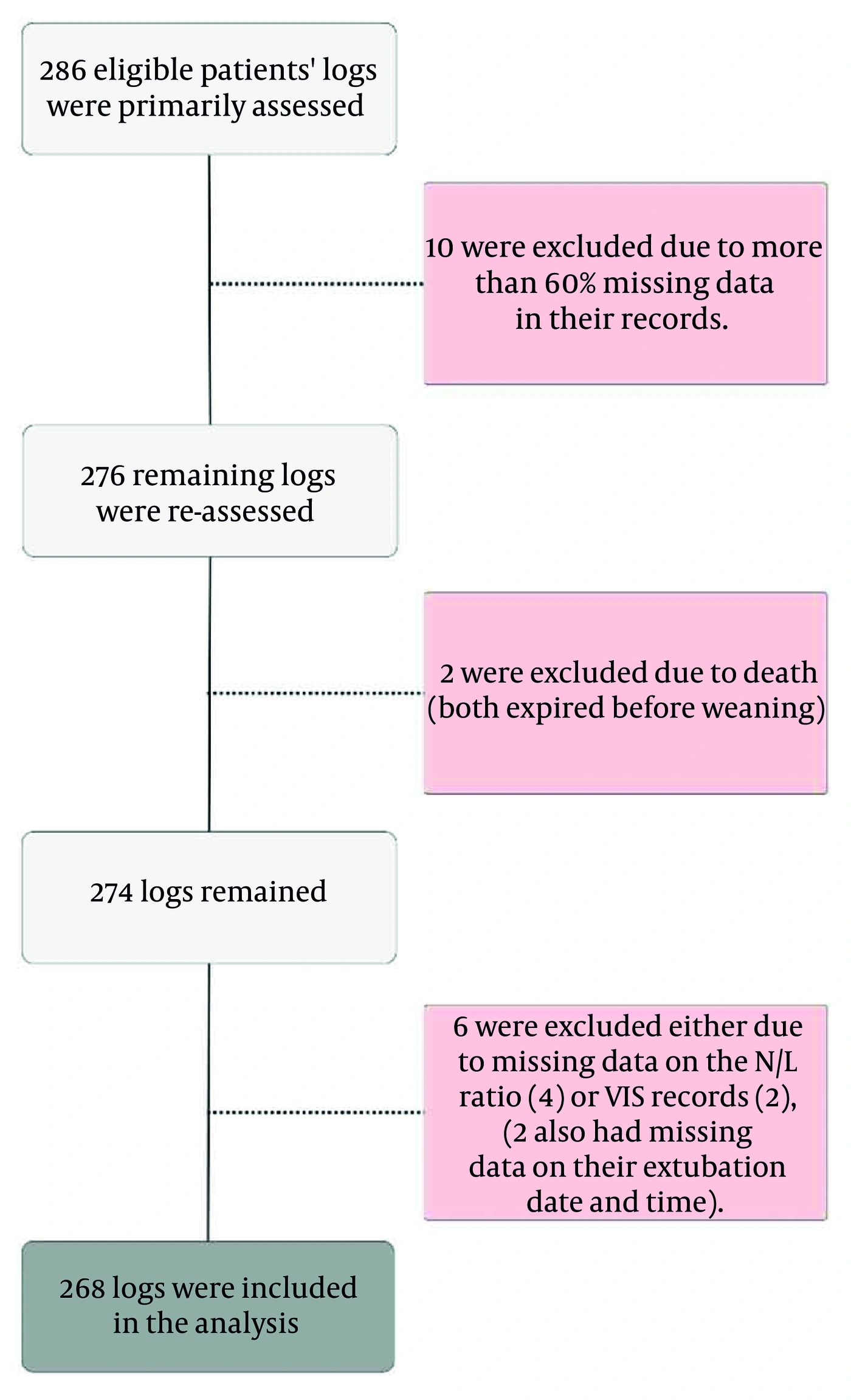
Figure 1.
Patient flow diagram and exclusion reasons
3.4. Variables and Data Measurement
Clinical, operative, and laboratory data were retrospectively abstracted from paper charts and electronic hospital records at Children’s Medical Center. Data extraction was performed using a predefined form completed by trained medical students under faculty supervision.
The primary outcome was the duration of MV following CHD surgery. MV duration was defined as the time from documented intubation (in the operating room or after surgery) to documented successful weaning/extubation in the ICU records and was cross-checked against daily physician and nursing notes. PMV was defined as postoperative MV lasting ≥ 48 hours. The following predictor variables were collected from patient records:
Demographic characteristics: Age (months), sex, and body weight (kg).
Clinical and diagnostic factors: The underlying CHD diagnosis was obtained from surgical and echocardiographic reports. For descriptive and univariable analyses, diagnoses were grouped into seven clinically relevant categories: Ventricular septal defect (VSD), tetralogy of Fallot (TOF), dextro-transposition of the great arteries, atrial septal defect (ASD), coarctation of the aorta (CoA), total anomalous pulmonary venous connection (TAPVC), and “Other.” This grouping improved interpretability and reduced sparsity in low-frequency diagnostic subgroups. The RACHS-1 score is a categorical surgical complexity score that classifies congenital heart procedures into six categories, 1 - 6, with higher scores indicating greater procedural complexity and higher predicted mortality. It was determined from the specific surgical procedure and operative notes according to published guidelines (16).
Surgical and perioperative data: CPB duration was measured in minutes and extracted from anesthesia records and ICU flow sheets.
Postoperative parameters: White blood cell count, the neutrophil-to-lymphocyte (N/L) ratio (unitless), and the vasoactive-inotropic score (VIS; score points) were collected for the first two postoperative days. The VIS was calculated from ICU charts, physician prescriptions, and nursing reports using the following standard formula:
VIS= Dopamine + Dobutamine + 100×Epinephrine + 10×Milrinone + 10,000×Vasopressin + 100×Norepinephrine.
The VIS was calculated using vasoactive and inotropic drug doses documented in ICU medication charts, physician orders, and nursing administration records. Dopamine, dobutamine, epinephrine, milrinone, and norepinephrine doses were expressed in μg/kg/min, whereas vasopressin was expressed in units/kg/min. The VIS was analyzed as a continuous score, and its odds ratio (OR) was reported per 1-point increase.
All variables were measured uniformly across patients using the same sources and methods. The primary statistical objective was to identify predictors of PMV. Candidate predictors were selected based on univariable findings and clinical relevance. Because age and weight, and POD1 VIS and POD2 VIS, provided overlapping information and showed evidence of collinearity, the final reduced multivariable model retained weight, RACHS-1 score, and POD2 VIS.
3.5. Bias
All eligible pediatric patients aged < 18 years who required postoperative MV after congenital heart surgery were consecutively included to minimize selection bias. Information bias was reduced by using standardized definitions to extract data from electronic and paper records. Potential confounding was addressed by considering clinically relevant variables and variables associated with PMV in univariable analyses. A reduced multivariable logistic regression model was subsequently constructed to limit overfitting and avoid the simultaneous inclusion of collinear predictors.
3.6. Statistical Analysis
This retrospective study included all eligible pediatric patients aged < 18 years who underwent congenital heart surgery. No prior sample size calculation was performed because a census sampling approach was used. Quantitative variables, including age (months), weight (kg), VIS (score points), CPB duration (minutes), and the N/L ratio (unitless), were analyzed as continuous variables and reported as means ± standard deviations (SDs). The Kolmogorov–Smirnov test was used to assess normality. Depending on the distribution, independent t tests or Mann–Whitney U tests were used for group comparisons. Categorical variables were analyzed using chi-square or Fisher exact tests, as appropriate. The underlying CHD diagnosis was also examined as a grouped categorical variable. Associations between diagnostic category and PMV were first assessed descriptively using cross-tabulation. Univariable logistic regression was then performed for diagnostic categories, using VSD as the reference category because it was the most frequent diagnosis and represented a clinically reasonable baseline group.
To identify factors associated with PMV, univariable analyses were conducted first. Variables with P < 0.05 in univariable analyses or established clinical relevance were considered for multivariable logistic regression. The initial multivariable model included seven candidate predictors: age, weight, RACHS-1 score, POD1 VIS, POD2 VIS, POD1 N/L ratio, and POD2 N/L ratio.
Before model construction, collinearity among candidate predictors was assessed using tolerance and variance inflation factor (VIF) statistics. Substantial collinearity was observed between POD1 VIS and POD2 VIS, with VIFs of 14.124 and 14.470, respectively. Age and weight also showed elevated VIFs of 6.376 and 5.202, respectively. In contrast, POD1 and POD2 N/L ratios showed lower collinearity, with tolerance values of 0.513 and 0.534 and VIFs of 1.948 and 1.871, respectively. Given the limited number of outcome events and the need to reduce coefficient instability and overfitting, a clinically justified reduced model was constructed. Weight was retained instead of age, and POD2 VIS was retained instead of POD1 VIS.
Two multivariable logistic regression models were examined. The primary reduced model included weight, RACHS-1 score, and POD2 VIS. A four-predictor sensitivity model was also fitted by adding the POD2 N/L ratio to assess whether this inflammatory marker provided additional independent predictive information. The three-predictor model was prespecified as the primary final model because it was more parsimonious and less susceptible to overfitting. Diagnostic categories were not included in the final multivariable model because several subgroups had limited sample sizes, potentially making the estimates unstable. Diagnosis-related analyses were therefore considered exploratory and reported separately from the primary predictor model.
Odds ratios with 95% confidence intervals (CIs) were reported. For continuous predictors in the final model, ORs were expressed per 1-kg increase in weight, per one-category increase in RACHS-1 score, and per 1-point increase in POD2 VIS.
Model calibration was evaluated using the Hosmer–Lemeshow goodness-of-fit test. Model discrimination was assessed using a receiver operating characteristic curve based on the predicted probabilities generated by the final reduced logistic regression model, and the area under the ROC curve (AUC) was reported.
The final analytic cohort comprised 268 patients with complete data for all variables included in Tables 1-3. The same sample size was therefore used across descriptive, univariable, and multivariable analyses. All statistical analyses were performed using SPSS version 27, and P < 0.05 was considered statistically significant.
Table 1.
Primary Outcomes a
| Variables | PMV (n = 42) | Non-prolonged mechanical ventilation (Non-PMV; n = 226) | P-Value |
|---|---|---|---|
| Gender | 0.142 | ||
| Female | 14 (33.3) | 104 (46) | |
| Male | 28 (66.7) | 122 (54) | |
| Age (mon) | 5.75 ± 10.08 | 35.65 ± 36.45 | < 0.001 |
| Weight (kg) | 4.53 ± 2.54 | 11.98 ± 8.45 | < 0.001 |
| RACHS-1 (1 - 6 units) | 2.86 ± 0.65 | 2.18 ± 0.73 | < 0.001 |
| VIS on POD1 (score points) | 19.76 ± 30.80 | 9.45 ± 11.82 | < 0.001 |
| VIS on POD2 (score points) | 17.86 ± 21.88 | 5.87 ± 8.91 | < 0.001 |
| CPB time (min) | 131.26 ± 93.67 | 105.85 ± 88.85 | 0.066 |
| N/L ratio on POD1 | 2.86 ± 2.04 | 4.23 ± 3.07 | 0.001 |
| N/L ratio on POD2 | 5.40 ± 2.74 | 8.31 ± 5.97 | 0.004 |
a Values are expressed as No. (%) or mean ± SD. P values were calculated using the Mann–Whitney U test for continuous variables and chi-square or Fisher exact tests for categorical variables. Abbreviations: PMV, prolonged mechanical ventilation; SD, standard deviation; RACHS-1, Risk Adjustment for Congenital Heart Surgery; VIS, vasoactive-inotropic score; POD, postoperative day; CPB, cardiopulmonary bypass; N/L, neutrophil-to-lymphocyte.
Table 2.
Univariable Association of Underlying Disease with PMV a
| Variables | OR | 95% CI | P-Value |
|---|---|---|---|
| VSD | Reference | - | - |
| TOF | 2.17 | 0.66 - 7.14 | 0.202 |
| d-TGA | 16.95 | 5.67 - 50.65 | <0.001 |
| ASD | 0.62 | 0.07 - 5.38 | 0.663 |
| CoA | 6.85 | 1.92 - 24.44 | 0.003 |
| TAPVC | 6.36 | 1.30 - 31.02 | 0.022 |
| Other | 1.56 | 0.42 - 5.85 | 0.509 |
a Abbreviations: PMV, prolonged mechanical ventilation; OR, odds ratio; CI, confidence interval; VSD, ventricular septal defect; TOF, tetralogy of Fallot; d-TGA, dextro-transposition of the great arteries; ASD, atrial septal defect; CoA, coarctation of the aorta; TAPVC, total anomalous pulmonary venous connection. Other includes patent ductus arteriosus, single-ventricle physiology, and a heterogeneous group of rare anomalies, mostly presenting as isolated cases.
Table 3.
Multivariable Logistic Regression for PMV a
| Variables | OR (95% CI) | P-Value |
|---|---|---|
| Weight | 0.56 (0.45 - 0.70) | < 0.001 |
| RACHS-1 | 2.18 (1.21 - 3.94) | 0.010 |
| POD2 VIS | 1.13 (1.08 - 1.19) | < 0.001 |
a Weight is modeled per 1-kg increase; RACHS-1 is a categorical surgical risk score; VIS is modeled per 1-unit increase. Abbreviations: PMV, prolonged mechanical ventilation; OR, odds ratio; CI, confidence interval; RACHS-1, Risk Adjustment for Congenital Heart Surgery; POD, postoperative day; VIS, vasoactive-inotropic score.
4. Results
A total of 268 pediatric patients who underwent cardiac surgery were included in the final analysis. The final analytic sample was obtained after excluding patients who died before successful weaning from MV and those with insufficient documentation, as shown in the flow diagram (Figure 1).
The mean age was 30.96 ± 35.41 months, and the mean weight was 10.81 ± 8.28 kg. Most patients had a RACHS-1 score of 2 (53.4%). According to the study criterion (≥48 hours), 42 patients (15.7%) experienced PMV. The duration of MV ranged from 2 to 970 hours (mean ± SD, 33.53 ± 90.07). PMV was significantly more frequent in younger patients and those with lower weight. Higher RACHS-1 scores, higher VIS on POD2, and lower N/L ratios were also associated with PMV in univariable comparisons (Table 1).
The most common underlying congenital heart diseases were VSD (35.4%), TOF (17.5%), d-TGA (11.2%), ASD (9.3%), CoA (7.1%), and TAPVC (3.7%). The remaining cases (15.7%) comprised less frequent diagnoses, including patent ductus arteriosus (PDA; 2.2%), single-ventricle physiology (2.2%), and a heterogeneous group of rare congenital heart lesions (11.3%), mostly occurring as isolated cases. The grouped diagnoses and their univariable associations with PMV are summarized in Table 2. In univariable analyses, patients with d-TGA, CoA, and TAPVC had significantly higher odds of PMV than those with VSD.
In the multivariable logistic regression model, lower weight, higher RACHS-1 scores, and higher VIS on POD2 were independently associated with PMV (Table 3). In a sensitivity analysis, the POD2 N/L ratio was added to the primary model, which included weight, RACHS-1 score, and POD2 VIS. After adjustment, the POD2 N/L ratio was not independently associated with PMV (OR, 0.881; 95% CI, 0.750 - 1.035; P = 0.122), whereas the associations of weight (OR, 0.562; 95% CI, 0.449 - 0.703; P < 0.001), RACHS-1 score (OR, 2.259; 95% CI, 1.219 - 4.186; P = 0.010), and POD2 VIS (OR, 1.143; 95% CI, 1.087 - 1.203; P < 0.001) remained materially unchanged. Accordingly, the three-predictor model was retained as the final model (Table 3).
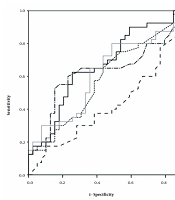
The final three-predictor multivariable model showed excellent discrimination, with an AUC of 0.934 (95% CI, 0.890 - 0.979; P < 0.001) (Figure 2). Although the model effectively distinguished patients with and without PMV, the Hosmer–Lemeshow test indicated poor calibration (P < 0.001). Similarly, the four-predictor sensitivity model, which incorporated the POD2 N/L ratio, showed no improvement in calibration (Hosmer–Lemeshow P < 0.001).
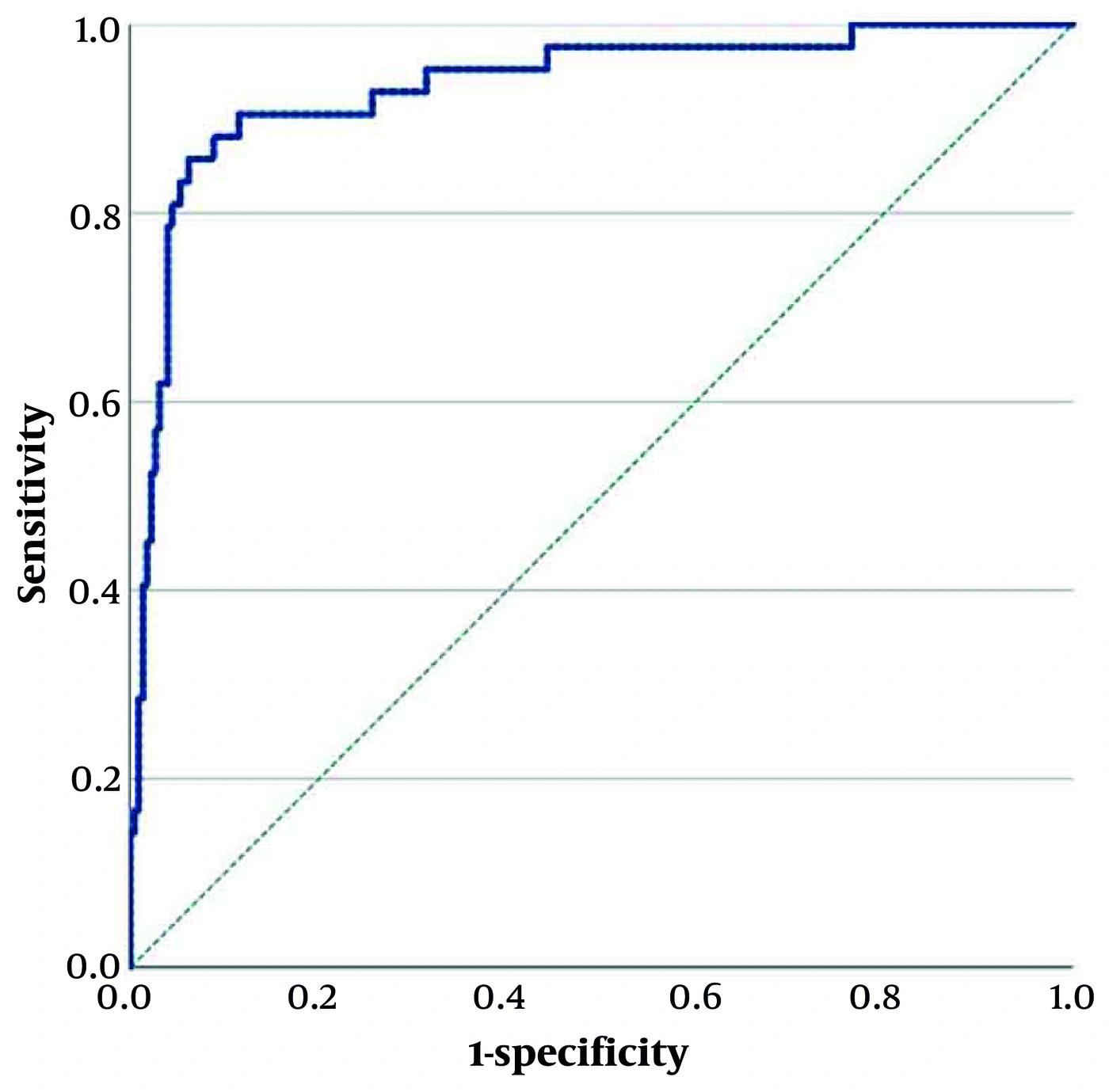
Figure 2.
Receiver operating characteristic curve of the final three-predictor model (weight, Risk Adjustment for Congenital Heart Surgery [RACHS-1] score, and postoperative day 2 vasoactive-inotropic score) for predicting prolonged mechanical ventilation. The y-axis shows sensitivity (true-positive rate), and the x-axis shows 1 - specificity (false-positive rate). The solid blue line represents the model’s discrimination, and the dashed diagonal line indicates chance-level performance (area under the curve = 0.50). The model showed excellent discrimination (area under the curve = 0.934; 95% confidence interval, 0.890 - 0.979).
In the exploratory diagnosis analysis, grouped diagnosis was significantly associated with PMV (Pearson χ2 = 47.760; df = 6; P < 0.001). Using VSD as the reference category, d-TGA (OR, 16.95; 95% CI, 5.67 - 50.65; P < 0.001), CoA (OR, 6.85; 95% CI, 1.92 - 24.44; P = 0.003), and TAPVC (OR, 6.36; 95% CI, 1.30 - 31.02; P = 0.022) were significantly associated with PMV, whereas TOF, ASD, and Other were not (Table 2).
5. Discussion
In this retrospective cohort of 268 children requiring postoperative ventilation after congenital heart surgery, PMV occurred in 15.7% of patients using a ≥ 48-hour definition. Lower body weight, higher RACHS-1 scores, and higher VIS on POD2 were independently associated with PMV. In contrast, the POD2 N/L ratio was not independently associated with PMV in the adjusted sensitivity analysis. Exploratory diagnostic analyses showed higher univariable odds of PMV among patients with d-TGA, CoA, and TAPVC. The final parsimonious model showed excellent discrimination (AUC = 0.934) but poor calibration (Hosmer–Lemeshow P < 0.001). Thus, although the model distinguished patients with and without PMV well in this cohort, its predicted probabilities should not yet be interpreted as those of a validated clinical prediction tool.
Compared with other cohorts, our observed PMV prevalence (15.7%) was modest, particularly given the inclusive cutoff of ≥ 48 hours. Many studies define PMV using longer thresholds, such as > 72 hours or > 7 days, which naturally yield a lower proportion of extreme prolonged-ventilation events. For example, in a 300-patient pediatric congenital heart surgery cohort, Abrishami et al. reported PMV lasting > 72 hours in 20% and > 7 days in 10.7% of cases (7). A study of 257 patients undergoing congenital heart surgery reported a prevalence of 14.8%, similar to that in our study (9). This variability highlights the difficulty of comparing PMV incidence across institutions and the importance of standardized definitions.
5.1. Lower Weight and Age
Lower body weight was independently associated with a higher risk of PMV, indicating that smaller children were at greater risk of prolonged ventilation. This finding is biologically plausible because low body weight often reflects limited physiologic reserve, greater surgical complexity relative to patient size, and increased susceptibility to postoperative cardiopulmonary instability. Several previous cohorts have identified low weight or low body surface area as independent predictors of prolonged ventilation or failure to extubate (6, 7, 9, 10). In practice, patients with low weight may require more cautious weaning, slower escalation of support, and closer hemodynamic surveillance.
Age was not retained in the final model after accounting for weight. In this cohort, chronological age and body weight provided overlapping information, but weight appeared to capture clinically relevant vulnerability more directly. Given the limited number of PMV events, retaining both variables would also have increased the risk of unstable estimates.
5.2. Higher Risk Adjustment for Congenital Heart Surgery Scores
The RACHS-1 score also remained independently associated with PMV, emphasizing the contribution of procedural complexity to postoperative respiratory recovery. Operations in higher RACHS-1 categories often involve more extensive repair, greater physiologic disturbance, and a higher likelihood of postoperative circulatory or pulmonary compromise. These factors may delay readiness for extubation even when the surgical repair is technically successful (6, 17, 18). Previous studies have reported longer ventilation and worse early outcomes in children undergoing higher-risk congenital heart procedures (7, 9, 19, 20). These findings underscore the importance of meticulous planning and effective resource allocation for complex procedures (18).
5.3. Vasoactive-Inotropic Support
The POD2 VIS was one of the strongest postoperative markers associated with PMV. Beyond reflecting medication exposure, a high VIS on the second postoperative day likely indicates ongoing circulatory support needs and incomplete hemodynamic recovery. Children who continue to require substantial vasoactive or inotropic support may be less suitable for early extubation because liberation from ventilation depends on stable cardiac output, adequate perfusion, and tolerable work of breathing. The exclusion of POD1 VIS from the final model was not interpreted as a lack of clinical relevance; rather, it reflected the strong collinearity with POD2 VIS and the need to maintain a parsimonious model.
The broader literature supports an association between higher postoperative VIS and adverse outcomes, including PMV, longer ICU stays, renal dysfunction, and mortality. In a systematic review and meta-analysis, Sun et al. found that elevated early postoperative VIS predicted prolonged MV (OR, approximately 5.2), mortality, acute kidney injury, and ICU stay (21). Crow et al. also linked the duration and magnitude of vasopressor support to longer ventilation times (22). Dilli et al. reported that, in newborns with CHD, higher VIS within 72 hours correlated with longer MV duration (23). More recently, composite scores, such as the vasoactive-ventilation-renal score, have been proposed to integrate hemodynamic, respiratory, and renal stress, potentially improving prognostication beyond VIS alone (24). Prolonged ventilator dependence in the ICU is also likely influenced by other aspects of critical care management, including sedation and analgesia strategies. A comparative study in mechanically ventilated ICU patients showed that sedative regimens may affect neurologic biomarker responses and recovery-related outcomes, such as ventilation duration and ICU stay, highlighting the multifactorial nature of delayed liberation from ventilation (25).
These findings support the clinical value of tracking VIS over time, although prospective studies are required before specific VIS-based extubation thresholds can be recommended.
5.4. Lack of an Independent Association for the POD2 Neutrophil-to-Lymphocyte Ratio
Some studies have proposed that postoperative inflammation or neutrophil–lymphocyte dynamics may predict worse outcomes or prolonged recovery (26, 27). In our study, N/L ratios were associated with PMV in univariable analyses, but the POD2 N/L ratio did not provide independent information after adjustment for weight, RACHS-1 score, and POD2 VIS. Neither N/L ratio was retained in the primary three-predictor model. These findings suggest that, in our cohort, the POD2 N/L ratio was less informative than body size, operative complexity, and hemodynamic status. One explanation is that N/L ratios measured during the first two postoperative days may not fully capture the timing or magnitude of the inflammatory response relevant to delayed extubation. Alternatively, the apparent univariable association may reflect the severity of postoperative illness rather than an independent inflammatory pathway.
5.5. Underlying Cardiac Diagnoses
In exploratory univariable analyses, patients with d-TGA, CoA, and TAPVC had significantly higher odds of PMV. These associations may reflect the inherent complexity and physiologic disturbances associated with these conditions. For example, d-TGA often requires complex arterial switch procedures, with risks including myocardial ischemia, coronary manipulation, and pulmonary hypertension. Coarctation of the aorta may be associated with left ventricular dysfunction, hypertension, and systemic perfusion problems. Total anomalous pulmonary venous connection is frequently complicated by pulmonary venous obstruction and pulmonary hypertension, and its repair is a complex procedure that may be followed by postoperative pulmonary hypertensive crises, low cardiac output, and delayed ventilator weaning. Diagnostic categories were not included in the final multivariable model; therefore, the observed associations are exploratory and univariable. These diagnoses may nevertheless serve as clinically relevant indicators for risk stratification.
Studies focusing on the arterial switch operation for d-TGA identify lesion-specific and perioperative factors associated with prolonged recovery and ventilatory support, reinforcing the potential clinical relevance of d-TGA for risk recognition (28-31). Contemporary series of arterial switch operations for d-TGA also report a high incidence of ≥ 48-hour ventilation, consistent with the higher odds of PMV observed for d-TGA in our study (32).
5.6. Clinical Implications and Strategies to Mitigate Prolonged Mechanical Ventilation
Although causal inferences cannot be drawn from this retrospective, single-center study, our findings may inform future prospective research. Lower weight, higher RACHS-1 categories, and greater vasoactive support on POD2 were independently associated with PMV and may assist in early risk recognition. However, these variables should be interpreted as statistical associations rather than proven modifiable causal factors. Trends in VIS may reflect postoperative hemodynamic instability or overall illness severity rather than a direct therapeutic target. Future prospective studies are needed to determine whether incorporating these factors into structured risk-stratification or extubation-readiness frameworks improves clinical outcomes.
5.7. Limitations and Future Directions
Our findings should be interpreted in light of several methodological constraints. First, the retrospective, single-center design limits generalizability and introduces the possibility of unmeasured confounding. Second, defining PMV as ≥ 48 hours is relatively inclusive and may capture patients with delayed but expected postoperative ventilation, rather than only the most severe cases of respiratory prolongation. Third, excluding two patients who died before successful ventilator weaning introduces possible survivor-selection bias. Our findings are therefore applicable only to patients who survived long enough to undergo weaning.
Although the overall cohort was sizeable, the number of PMV events (n = 42) limits power for multivariable modeling and may obscure modest but real associations. Several potentially relevant variables were unavailable, including preoperative functional status, pulmonary hypertension severity, fluid balance trajectories, echocardiographic ventricular function, pleural effusion or lung injury, standardized extubation attempts and failures, open sternum status, and reintubation. Some essential information was lost because of missing paper records or random electronic documentation errors and deletions over time, leading to the exclusion of some cases. Residual confounding inherent to the retrospective design also limits causal interpretation of the associations identified for weight, RACHS-1 category, and VIS.
Future studies should use prospective multicenter designs with harmonized definitions, standardized extubation protocols, and more detailed perioperative variables. Alternative endpoints, including PMV thresholds of > 72 hours or > 7 days, ventilator-free days, extubation failure, and dynamic serial VIS modeling, may provide a more nuanced understanding of postoperative respiratory recovery. Incorporating composite scores that integrate cardiovascular, respiratory, and renal stress, such as the VVR score, or developing tailored integrative indices for pediatric CHD surgery may improve risk stratification beyond single-domain metrics such as VIS or the N/L ratio.
5.8. Conclusions
In our cohort of pediatric patients undergoing CHD surgery, PMV (≥48 hours) occurred in 15.7% of cases. Independent predictors included lower body weight, greater surgical complexity (RACHS-1), and higher POD2 VIS. These findings reinforce the multifactorial nature of prolonged ventilation and suggest that persistent postoperative vasoactive support on POD2 may help identify patients at risk. Clinically, early identification of high-risk patients, protocolized weaning strategies, and vigilant postoperative optimization may help reduce PMV incidence. However, because of poor model calibration, the model is currently explanatory rather than a validated clinical prediction rule. Future prospective studies and refined dynamic predictive models are needed to confirm and extend these observations.