Despite advances in preventive and medical care strategies, the etiology of congenital heart diseases (CHDs) is not completely understood yet (
1). CHD affects the structure and function of the heart in approximately 1% of all live births and can occur through a heterogeneous and complex process. Besides, it can be caused by several genes or multifactorial conditions resulting from interactions between environmental and genetic risk factors, including infections, drugs, maternal exposures, and teratogens. In order to find genetic factors in CHD, early studies on familial CHD often showed different malformations, such as ventricular septal defects (VSDs), tetralogy of fallot (TOF), and atrial septal defects (ASDs) (
2,
3). Now, efforts for identifying the genetic determinants of CHD have been focused on nuclear genomes, discovering that several genes were associated with the risk of CHD (
4). However, the mitochondrial genetic effects on the progression of CHD have remained poorly explored. Therefore, it is obvious that any study dealing with involvement of mtDNA sequence alterations in CHDs may represent interest for further understanding of genetic basis and molecular mechanisms of CHD development. mitochondrial respiratory chain (MRC) defects are responsible for a large variety of clinical syndromes in adults and children (
5). It has been determined that reduction in mitochondrial respiration was the leading cause of increase in oxidative stress, defective contractile and intracellular regulatory proteins, decrease in energy production, aberrant apoptotic induction, and selective cardiac dysfunctions (
6). Recent studies have also suggested that alterations in metabolic levels of energy in mitochondria might be associated with defects in heart myofilament functions and cause cardiomyocytes death (
7). Cardiac manifestations of mitochondrial disorders include arrhythmias, heart failure, stroke, and types of cardiomyopathy (
8-
10). Mitochondria contain their own DNA (mtDNA), which is a circular, 16,569 bp sequence with 37 genes encoding for 13 structural proteins all of which being subunits of various respiratory chain complexes, 22 transfer RNAs, and 2 ribosomal RNAs (
11). Mitochondrial oxidative phosphorylation (OXPHOS) is performed by five large multisubunit complexes (I-V) (
12). Point mutations that arise in the mtDNA can occur in both tRNA genes and genes encoding MRC subunits. They are thus associated with a large number of clinical presentations. One of the mtDNA located genes associated with cardiac disease is MT-CYB encoding for
Cytochrome-b. The base substitutions in human MT-CYB gene are associated with a wide spectrum of diseases, such as cardiac and muscular defects (
13,
14). MT-CYB, a component of complex III, is an extremely conserved protein, reflecting its fundamental role in energy production in mitochondria. It catalyzes the reversible electron transfer from ubiquinol to
Cytochrome c coupled to proton translocation (Q-cycle) (
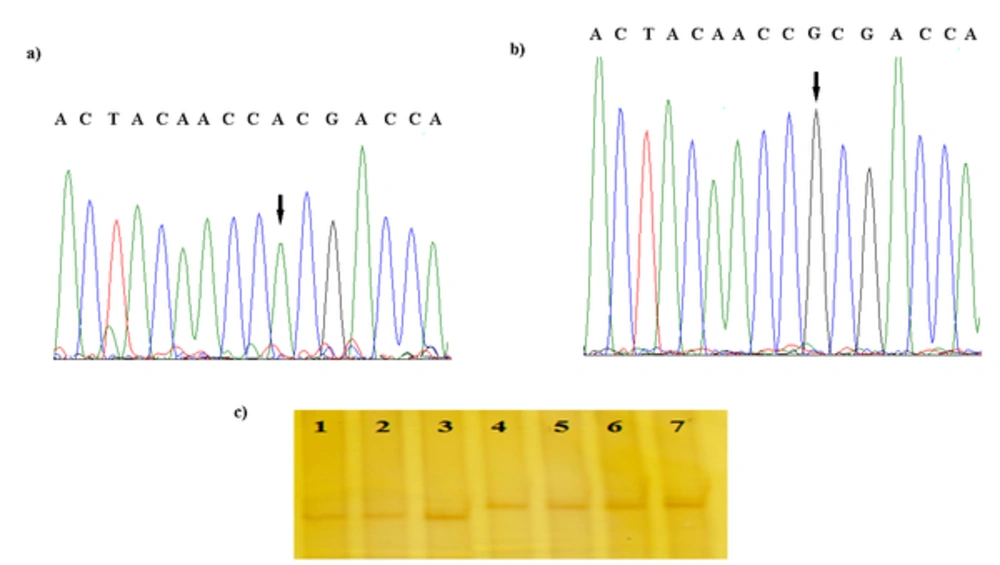
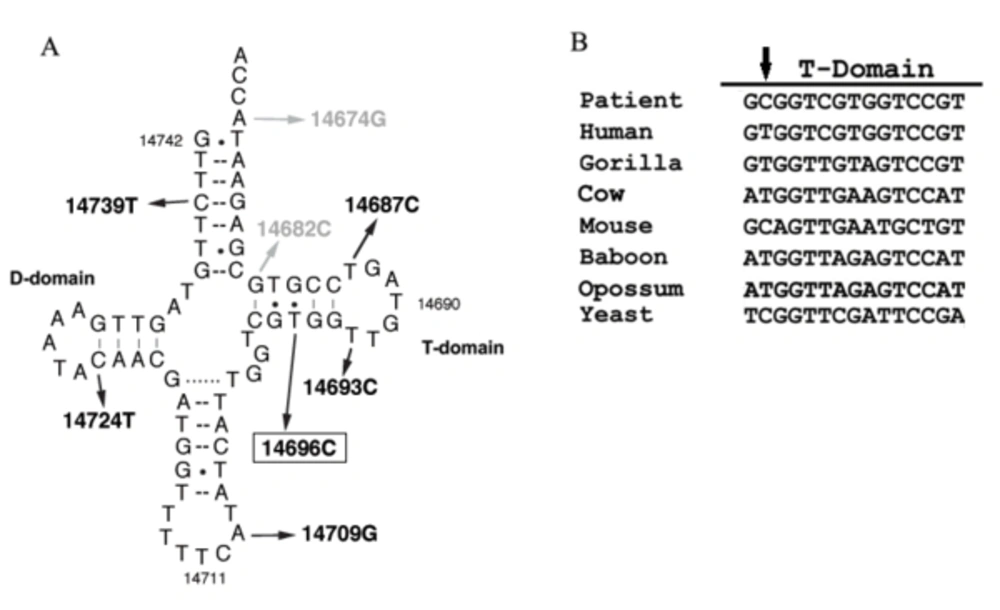
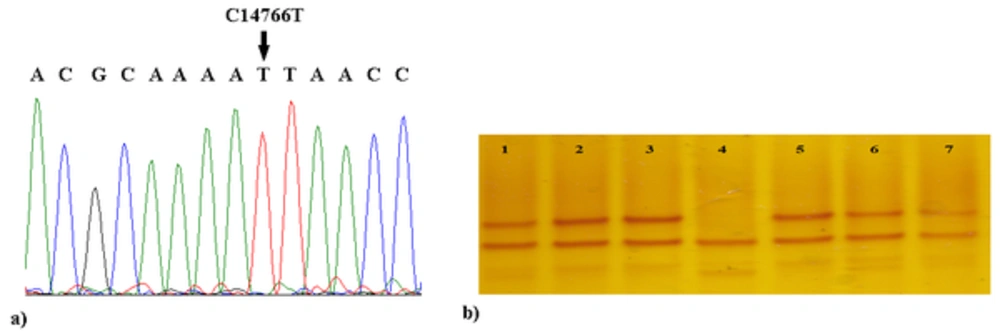
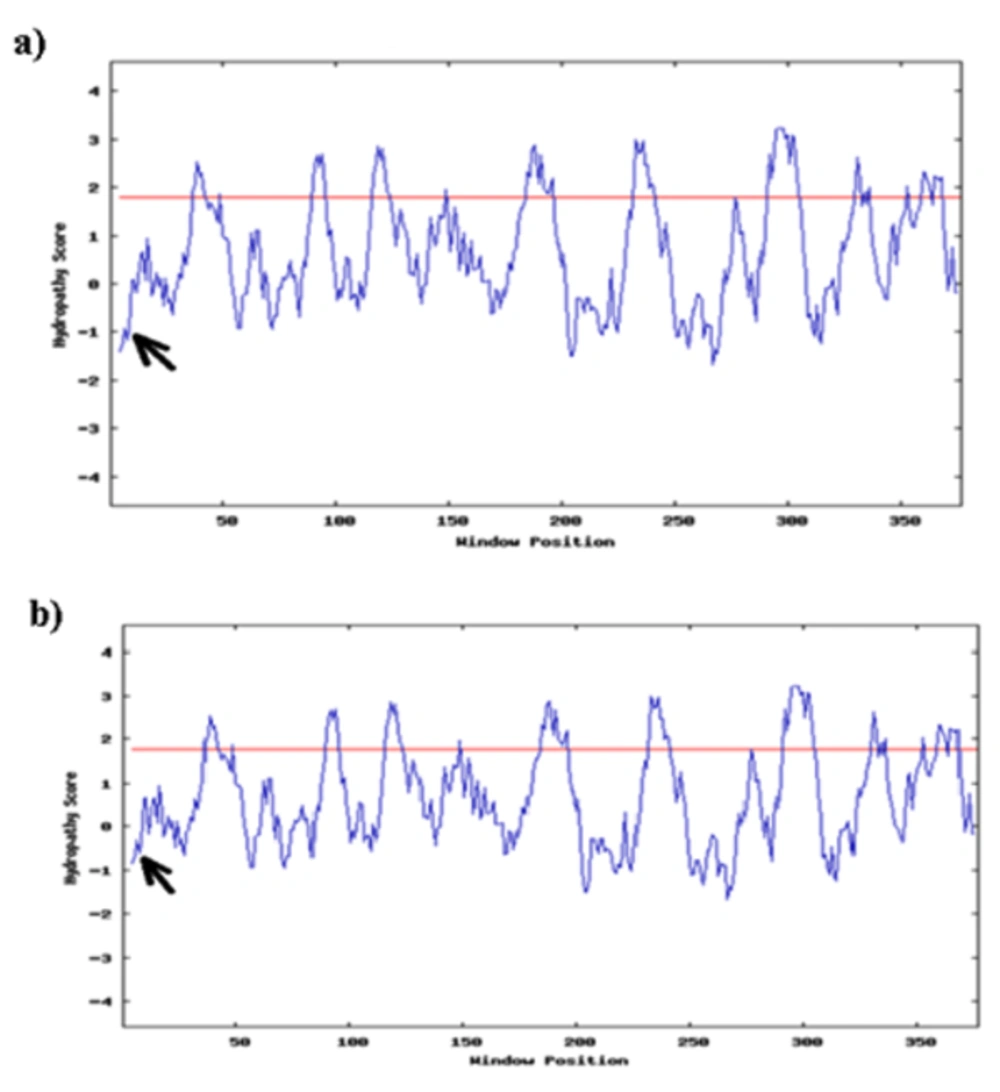
15). The present study aims to assess the role of variations in tRNA
Glu and MT-CYB genes in Iranian CHD patients and controls and to identify the potential pathogenic mutations associated with CHD.