
1. Background
The use of anesthetic drugs dates back to 150 years ago, and these drugs are continued in surgeries (1). Inhalation contact with these substances occurs when anesthetics are used in the operating room (OR), and it can cause genetic damage by destroying the DNA of cells (2). It also increases cancer risk by inhibiting neutrophil apoptosis (3, 4). Other side effects of anesthetics include headache, irritability, neurobehavioral changes, and infertility (5, 6). Allergic asthma and allergic contact dermatitis have also been reported in rare cases (7, 8). On the other hand, these substances can cause physiological injuries, especially liver injuries in operating room personnel (9). Recently, serious liver problems have been reported in patients and staff following these gases as anesthetic retainers (10, 11). According to the World Organization for Occupational Safety and Health (OSHA), more than 250,000 hospital staff in the United States are exposed to these gases and are at risk (12).
Causes of air pollution in operating rooms with anesthetic gasses include leakage of gas from anesthesia machines through the vaporizer, lack of a purge system, some common anesthetic methods, pouring of anesthetics, patient exhalation, inefficiency and closure of the system's gas inlet valves, and use of chip tubes without a cuff (13). The balance between the supply of oxygen to the liver via blood circulation and the liver tissue supplying oxygen to the hepatocytes is an important factor in liver metabolism (14). Inhalation of anesthetic gasses reduces the oxygen available to these cells and decreases liver metabolism (15). It interferes with liver metabolism and even causes ischemia of liver cells (16).
The liver is a very important organ for detoxifying xenobiotics that enter the body from the environment, drugs, alcohol, and food (17). Aminotransferases are among the most important and commonly used enzymes for the diagnosis of liver diseases and include aspartate aminotransferase (AST) and alanine aminotransferase (ALT) (18). AST and ALT are enzymes released by hepatic parenchymal cells, and their elevated serum levels are considered the "gold standard" tests for hepatotoxicity associated with anesthetics (19). Other factors used to diagnose hepatitis include CRP and ESR (20). The CRP test is more sensitive and has a better response index than ESR (21). In acute inflammation, CRP rises more rapidly than ESR and falls more rapidly after recovery (22).
There are various supplements and antioxidants, such as chamomile tea (23), cinnamon (24), mountain tea (25), green tea (26), lemon balm (27), milk thistle (28), etc., which have been reported in various studies to have the ability to reduce several oxidative stress parameters. The use of milk thistle to treat liver problems has a long history, and these effects have been demonstrated in recent years by extensive studies in this field (29). Milk thistle is a potent and direct antioxidant, eliminating toxic free radicals. It increases intracellular glutathione and superoxide dismutase activity and acts as a protective barrier for the liver (30). It inhibits the formation of leukotrienes, increases the activity of the enzyme RNA polymerase in the nucleus, and enhances the regenerative capacity of liver cells by stimulating the synthesis of ribosomal proteins (31). Because of its richness in polyphenolic compounds and flavonoids, green tea is a potent antioxidant compared with vitamins C and E and other foods containing antioxidants (32). Cinnamon contains various phenolic antioxidants such as flavonoids, tannins, coumarins, eugenol, acetyleugenol, cineole, and cinnamaldehyde. Cinnamon's antioxidant activity prevents oxidation of hepatocyte walls in a dose-dependent manner, i.e., its antioxidant activity increases at higher concentrations and decreases with decreasing extract concentrations (33).
2. Objectives
Because non-chemical therapeutic interventions have minor side effects compared to chemical compounds and also considering that there is an increase in operating room staff and people who are exposed to these gases, this study aimed to investigate the effect of these gases on liver function and compare the effect of the consumption of milk thistle, green tea, and cinnamon on the level of liver enzymes in the operating room medical staff in a clinical trial to introduce an effective and low-cost intervention with minimal side effects.
3. Methods
3.1. Ethical Principles
This study involved no additional interventions outside the normal diagnostic-therapeutic process and imposed no financial cost on the patients. The tests were performed with blood samples prepared for other regular tests, and no additional blood samples were taken from the patients. Patients were informed about the study and consented to participate. Patients’ information was kept confidential by the research team. The Dezful University of Medical Sciences Ethics Committee monitored this study by approved ethical regulations IR.DUMS.REC.1399.010.
3.2. Sampling
This clinical trial study was performed on anesthesia and operating room staff of the operating theatre of Dr. Ganjavian Hospital in Dezful in 2019, and from among the staff, 64 were selected based on inclusion and exclusion criteria and entered the study. The study subjects were included based on the following inclusion criteria: Age range 24 to 64 years, at least one-year work experience, working at least 6 hours daily in the operating room, no more than three days off in the last 60 days, and not taking any antioxidant supplements. The exclusion criteria included: Consumption of alcohol, smoking or illicit drug use, taking medications that affect the level of liver enzymes, being under general anesthesia as a patient in the last three months, and any allergy to the studied beverages (9, 31).
3.3. Study Data Extraction
Data were extracted using a pre-made form: First author's last name, year of publication, study site, study design, target population, study duration, sex, mean age, and the concentration of cinnamon and other extracts. The exact values of different measurements were not mentioned in the results, and just the mean values have been reported.
3.4. Study Selection
Hematological and biochemical parameters were assessed by taking 5 ml of venous blood from each patient under sterile conditions by a trained laboratory technician in a standard medical diagnostic laboratory. Albumin, bilirubin, ALT, AST, GGT, CRP, ESR, ALP, and PT were measured in all patients.
3.5. Randomization of the Samples
To randomize the samples and make a balance between the study groups, patients were randomly divided into four groups. As such, each patient was placed in one of 4 groups: A (control), B (green tea), C (cinnamon tea), and D (milk thistle). Blocking was done in an 8 randomized block design, and 8 blocks were formed according to the sample population. We anticipated all possible scenarios for the groups. For example, the first block would be AACCDDBB, and the next block, for example, would be ABABDCDC, and the rest would be defined similarly. Due to the large number of blocks, block randomization software was used. The subjects were randomly selected and allocated to the blocks, so ultimately, 16 people were in the green tea group, 16 in the cinnamon tea consumer group, 16 in the milk thistle consumer group, and 16 in the control group. In group D, the brew of a teabag containing 3 grams of crushed milk thistle seeds in 300 mL of boiled water was prepared, and the subjects were asked to consume three same serving portions daily. In group B, the brew a tea bag containing 1 gram of green tea leaves in 300 mL of boiled water was prepared and was consumed three times a day, similar to the previous group. In group C, brew a teabag containing one gram of chopped cinnamon stick in 300 mL of boiled water was prepared and consumed at the same dose three times a day for four weeks, similar to the previous two groups. Control group (A) was also asked not to use medications or traditional compounds that could alter the liver enzyme levels during the study period and to follow their usual nutritional pattern. All tea bags were prepared in pure form and purchased from Isfahan University Jahad Medicinal Plants Research Institute (Jahad University Medicinal Plants Research Institute, Isfahan, Iran).
3.6. Statistical Analysis
Data analysis of the study was performed using STATA version 12 software (STATA Corp, College Station, TX, USA). The effect rate was calculated by Hedges' g26 using the difference between the mean serum levels of liver markers (milk thistle, cinnamon, and green tea compared with control). Data were expressed as mean ± standard error (mean standard error) for continuous variables and percentages for classification variables. The normality of variables was assessed by Kolmogorov-Smirnov or Shapiro-Wilk test. Continuous variables were assessed by one-way analysis of variance (ANOVA), and the Tukey post hoc test performed multiple comparisons. The difference between the two groups was analyzed by t-test. A value of < 0.05 was considered significant. Data were analyzed using SPSS 22.0 software (SPSS) (Chicago, IL, USA).
4. Results
4.1. Patient Characteristics
A total of 62 people completed the study. Initially, the two groups had no significant differences in age, sex, education level, and severity of fatty liver disease. Biochemical factors before and after the intervention are shown in Tables 1 - 3 as mean ± SD of biochemical factors. The groups were similar in weight (86.20 ± 12.65 kg and 89.49 ± 13.89 kg in the intervention and control groups) and liver enzymes.
4.2. Evaluation of Biochemical Factors in the Subjects
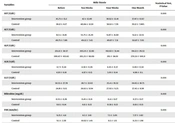
Using repeated measures analysis of variance, the difference between the group of sagebrush and liver enzymes in the four time periods before the intervention, two weeks after the intervention, and four weeks after the intervention was measured. There was a significant difference in the stage. As can be seen in Table 1, the levels of AST, ALT, ALP, ALB, GGT, bilirubin, and ESR enzyme decreased four weeks after the end of the interventions, and enzymes of the milk thistle group seem to have decreased more after the end of the interventions. In addition, individual differences (P-value < 0.05) were found in AST, ESR, and GGT enzyme levels. AST levels showed that AST decreased in all subjects in the experimental group. GGT, ALT, and ESR levels were sharply decreased in all subjects in the experimental group. The highest decrease among liver enzymes was related to ALT, ALP, albumin, and ESR.
Table 1.
Mean Liver Enzymes with Consumption of Milk Thistle Wort at Different Stages of Intervention
| Variables | Milk Thistle | Statistical Test, P-Value | |||
|---|---|---|---|---|---|
| Before | Two Weeks | Four Weeks | One Month | ||
| AST (U/dL) | 0.001 | ||||
| Intervention group | 45.75 ± 13.2 | 42 ± 12.49 | 38.62 ± 12.41 | 37.87 ± 12.67 | |
| Control | 38.12 ± 8.17 | 40.84 ± 12.01 | 38.62 ± 7.39 | 39.12 ± 7.885 | |
| ALT (U/dL) | 0.001 | ||||
| Intervention group | 61.5 ± 21.81 | 55.75 ± 21.29 | 51.87 ± 21.68 | 51.12 ± 22.51 | |
| Control | 49.75 ± 7.86 | 49.12 ± 7.43 | 49.87 ± 7.31 | 50.87 ± 7.95 | |
| ALP (U/dL) | 0.001 | ||||
| Intervention group | 215.12 ± 38.57 | 203.25 ± 32.96 | 192.62 ± 31.44 | 191.12 ± 29.53 | |
| Control | 266.87 ± 103.82 | 265.25 ± 99.69 | 265 ± 98.61 | 270.35 ± 106.11 | |
| ALB (U/dL) | 0.001 | ||||
| Intervention group | 4.7 ± 0.34 | 4.56 ± 0.39 | 4.45 ± 0.37 | 4.49 ± 0.34 | |
| Control | 4.91 ± 0.18 | 4.97 ± 0.13 | 5.01 ± 0.14 | 4.96 ± 0.1. | |
| GGT (U/dL) | 0.001 | ||||
| Intervention group | 34.55 ± 27.78 | 28.7 ± 22.63 | 25.4 ± 19.32 | 24.65 ± 18.75 | |
| Control | 24.81 ± 9.15 | 26.63 ± 9.94 | 27.02 ± 9.25 | 27.45 ± 8.98 | |
| Bilirubin (mg/dL) | 0.001 | ||||
| Intervention group | 0.55 ± 0.26 | 0.45 ± 0.21 | 0.4 ± 0.17 | 0.37 ± 0.17 | |
| Control | 0.6 ± 0.14 | 0.6 ± 0.13 | 0.58 ± 0.13 | 0.61 ± 0.13 | |
| ESR (mm/hr) | 0.001 | ||||
| Intervention group | 9.25 ± 4.8 | 8.5 ± 3.61 | 7.5 ± 3.05 | 7.37 ± 2.82 | |
| Control | 9.5 ± 2.36 | 10.62 ± 1.45 | 11.5 ± 1.15 | 11.25 ± 1.98 | |
Abbreviations: AST, Aspartate aminotransferase; ALT, alanine aminotransferase; ALP, alkaline phosphatase; ALB, albumin; GGT, gamma-glutamyl transpeptidase; ESR, erythrocyte sedimentation rate.
Table 2 shows the trend of changes in the mean of the group that consumed green tea and the control group. As can be seen, the levels of AST, ALT, ALP, ALB, GGT, bilirubin, and ESR decreased four weeks after the end of the intervention, but it seems that in the group that consumed milk thistle, it decreased more after the end of the intervention. Looking closely at the test results, GGT, ALP, albumin, and ESR levels were drastically decreased in all subjects in the experimental group who consumed green tea.
Table 2.
Mean Liver Enzymes with Green Tea Consumption Wort at Different Intervention Stages
| Variables | Green Tea | Statistical Test, P-Value | |||
|---|---|---|---|---|---|
| Before | Two Weeks | Four Weeks | One Month | ||
| AST (U/dL) | 0.001 | ||||
| Intervention group | 41.87 ± 12.96 | 40.5 ± 12.84 | 38.87 ± 13.56 | 38.75 ± 13.92 | |
| Control | 38.12 ± 8.17 | 40.84 ± 12.01 | 38.62 ± 7.39 | 39.12 ± 7.885 | |
| ALT (U/dL) | 0.001 | ||||
| Intervention group | 53.12 ± 20.02 | 51.25 ± 19.76 | 49 ± 19.86 | 48.75 ± 20.05 | |
| Control | 49.75 ± 7.86 | 49.12 ± 7.43 | 49.87 ± 7.31 | 50.87 ± 7.95 | |
| ALP (U/dL) | 0.001 | ||||
| Intervention group | 273.37 ± 100.66 | 250.12 ± 85.06 | 241.5 ± 80.71 | 242 ± 80.54 | |
| Control | 266.87 ± 103.82 | 265.25 ± 99.69 | 265 ± 98.61 | 270.35 ± 106.11 | |
| ALB (U/dL) | 0.001 | ||||
| Intervention group | 4.91 ± 0.3 | 4.83 ± 0.33 | 4.73 ± 0.32 | 4.73 ± 0.32 | |
| Control | 4.91 ± 0.18 | 4.97 ± 0.13 | 5.01 ± 0.14 | 4.96 ± 0.1. | |
| GGT (U/dL) | 0.001 | ||||
| Intervention group | 46.03 ± 32.24 | 43.62 ± 29.78 | 41.08 ± 27.88 | 40.96 ± 27.60 | |
| Control | 24.81 ± 9.15 | 26.63 ± 9.94 | 27.02 ± 9.25 | 27.45 ± 8.98 | |
| Bilirubin (mg/dL) | 0.001 | ||||
| Intervention group | 0.57 ± 0.26 | 0.47 ± 0.23 | 0.45 ± 0.22 | 0.45 ± 0.22 | |
| Control | 0.6 ± 0.14 | 0.6 ± 0.13 | 0.58 ± 0.13 | 0.61 ± 0.13 | |
| ESR (mm/hr) | 0.001 | ||||
| Intervention group | 9.5 ± 4.5 | 8.75 ± 4.05 | 8.12 ± 3.7 | 7.87 ± 3.4 | |
| Control | 9.5 ± 2.36 | 10.62 ± 1.45 | 11.5 ± 1.15 | 11.25 ± 1.98 | |
Abbreviations: AST, Aspartate aminotransferase; ALT, alanine aminotransferase; ALP, alkaline phosphatase; ALB, albumin; GGT, gamma-glutamyl transpeptidase; ESR, erythrocyte sedimentation rate.
Results of data obtained using analysis of variance and repeated measures, the difference between the enzymes of milk thistle, green tea, cinnamon, and AST, ALT, ALP, ALB, GGT, bilirubin, and ESR were measured in 4 stages, including before entering the study, 2 weeks, and 1 month weeks after the end of the study, and 1 month after the end of the intervention. Considering the level of significance, it can be said that there was a significant difference between the three groups in the three stages. The findings of Tables 1 - 2 show that within-group changes in the experimental group are significant (P-value < 0.05).
As shown in Table 3, the intensity of the decrease in AST, ALT, ALP, ALB, GGT, bilirubin, and ESR enzyme in the four measurements was much higher in the experimental group than in the control group. ALT, ALP, bilirubin, albumin, and ESR levels were significantly decreased in all subjects in the experimental group who consumed cinnamon, and the increase in this enzyme was more marked in the control group.
Table 3.
Mean Liver Enzymes with Consumption of Cinnamon Wort at Different Stages of the Intervention
| Variables | Cinnamon | Statistical Test, P-Value | |||
|---|---|---|---|---|---|
| Before | Two Weeks | Four Weeks | One Month | ||
| AST (U/dL) | 0.001 | ||||
| Intervention group | 44 ± 14.79 | 43 ± 14.34 | 42.12 ± 13.56 | 42.37 ± 13.26 | |
| Control | 38.12 ± 8.17 | 40.84 ± 12.01 | 38.62 ± 7.39 | 39.12 ± 7.885 | |
| ALT (U/dL) | 0.001 | ||||
| Intervention group | 51.12 ± 14.23 | 49.5 ± 14.48 | 48.25 ± 14.25 | 48.25 ± 13.75 | |
| Control | 49.75 ± 7.86 | 49.12 ± 7.43 | 49.87 ± 7.31 | 50.87 ± 7.95 | |
| ALP (U/dL) | 0.001 | ||||
| Intervention group | 231.25 ± 94.52 | 225.5 ± 92.19 | 220.37 ± 91.84 | 219.62 ± 91.35 | |
| Control | 266.87 ± 103.82 | 265.25 ± 99.69 | 265 ± 98.61 | 270.35 ± 106.11 | |
| ALB (U/dL) | 0.001 | ||||
| Intervention group | 5.01 ± 0.3 | 4.96 ± 0.25 | 4.91 ± 0.23 | 4.92 ± 0.26 | |
| Control | 4.91 ± 0.18 | 4.97 ± 0.13 | 5.01 ± 0.14 | 4.96 ± 0.1. | |
| GGT (U/dL) | 0.001 | ||||
| Intervention group | 21.23 ± 10.85 | 21.23 ± 10.85 | 20.58 ± 10.53 | 20.06 ± 10.44 | |
| Control | 24.81 ± 9.15 | 26.63 ± 9.94 | 27.02 ± 9.25 | 27.45 ± 8.98 | |
| Bilirubin (mg/dL) | 0.001 | ||||
| Intervention group | 0.57 ± 0.14 | 0.53 ± 0.15 | 0.52 ± 0.12 | 0.50 ± 0.13 | |
| Control | 0.6 ± 0.14 | 0.6 ± 0.13 | 0.58 ± 0.13 | 0.61 ± 0.13 | |
| ESR (mm/hr) | 0.001 | ||||
| Intervention group | 10 ± 5.26 | 9 ± 4.22 | 8.37 ± 3.61 | 7.87 ± 2.6 | |
| Control | 9.5 ± 2.36 | 10.62 ± 1.45 | 11.5 ± 1.15 | 11.25 ± 1.98 | |
Abbreviations: AST, Aspartate Aminotransferase; ALT, Alanine Aminotransferase; ALP, Alkaline Phosphatase; ALB, albumin; GGT, Gamma-Glutamyl Trans peptidase; ESR, erythrocyte sedimentation rate.
5. Discussion
Waste anesthetic gases (WAG) present in the OR environment create various occupational hazards, one of the most important being liver dysfunction (34). This study aimed to investigate the effect of milk thistle, green tea, and cinnamon consumption enzyme levels in operating room personnel. A marked increase in the number of days of extract consumption was associated with a decrease in liver enzymes. Biochemical findings were similar to previous studies and confirmed the hepatic protective role of the extracts in all four groups. In our study, there were no statistically significant differences between all four groups regarding weight and body mass index. Regarding fatty liver, overweight and the importance of the role of body mass index (BMI) have been demonstrated in many studies (35-37).
In the present study, we investigated the effects of milk thistle, green tea, and cinnamon administration on surgical personnel liver function tests. Thistle milk, green tea, and cinnamon significantly restored elevated liver enzyme levels. These observations may be due to the presence of natural liver-protective bioactive compounds in milk thistle extract, green tea, and cinnamon, which have the ability to reduce free radical-induced liver damage. This indicates that these compounds help regenerate liver cells, improve liver structure and function, prevent liver damage, and prevent further damage to the liver parenchyma. The most common laboratory tests for liver disease are ALT, AST, and ALP. Numerous studies have found an association between markers of liver dysfunction, cardiovascular disease or mortality from vascular and nonvascular causes, and the risk of developing T2 diabetes after controlling for important risk factors. Therefore, studying liver enzymes may play an important role in the prognosis and prevention of chronic diseases. Recently, much attention has been paid to the effect of cinnamon on liver enzymes and fatty liver.
Many experimental and clinical investigations have confirmed the hepatoprotective effect of extracts and their active components. Milk thistle (Silybum marianum) has many benefits, including antioxidant, anti-inflammatory, liver protection, and neuroprotective effects. A marked reduction in the plasma levels of liver enzymes such as ALT, AST, and ALP by silymarin has been repeatedly reported (38-40). The mild to moderate increase in serum aminotransferases (ALT and AST) that were initially found in our subjects indicates that the most common abnormality in patients was nonalcoholic fatty liver disease (NAFLD) (41). Their serum levels decreased significantly after diet and treatment with silymarin. Consistent with our study, in a study conducted by Solhi et al. to investigate the effect of silymarin in the treatment of nonalcoholic steatopathy as a clinical trial in 64 nonalcoholic staphylococcal patients in 6 months, the levels of liver enzymes AST and ALT were higher than normal. The results showed that a daily intake of 210 mg oral silymarin for a period of 8 weeks caused a significant decrease (P value > 0.05) in the levels of these enzymes in the intervention group (42). In a study by Dongiovanni et al., silymarin showed beneficial effects as a supportive treatment in most forms of liver disease, including cirrhosis and alcohol abuse-induced liver injury. Clinical studies in cirrhotic patients also demonstrated a significant reduction in deaths due to liver diseases by silymarin (43). Silymarin intake has also been demonstrated to significantly improve liver histopathological and structural abnormalities in liver diseases of various causes (44, 45). Much attention has been paid to silymarin's antioxidant and anti-inflammatory properties, but despite extensive studies, its exact function has not been fully elucidated. (46). It appears to do so in several ways, including direct free radical scavenging activity, inhibition of reactive radical species formation, and restoration of mitochondrial function (47, 48). In addition, its potent anti-inflammatory property is due to its inhibitory effect on the major transcription factor NF-kB, which has been mentioned in many studies (38, 46, 49, 50).
In the present study, a significant increase in liver biochemical markers was observed in the control group. However, the groups treated with green tea extract showed liver protective activity by restoring the altered serum levels of liver biochemical markers. In addition, total protein and albumin were reduced in the control group, while green tea extract restored total protein and albumin to an almost normal range. In this study, the group that consumed green tea significantly decreased AST and ALT levels after four weeks (P-value < 0.001). Based on these results, it can be claimed that green tea has a beneficial effect on improving liver enzyme levels in the operating room medical staff. But in the results of Sakata et al., who evaluated the laboratory parameters, liver, and histology, they observed that ALT decreased after consuming 100 mg of green tea three times a day for 12 weeks, while AST and ALP levels remained unchanged (51). The difference between the results of Sakata et al. 's study and our study is probably in the dosage of green tea.
Recently, the beneficial effects of cinnamon on fatty liver and liver enzymes have been of great interest (52-54). In a study conducted by Sheybani Asl et al. (55), The effect of cinnamon and licorice extract from Cichorium intybus L. on the parameters of liver function in patients with NAFLD was investigated. The results demonstrated that in addition to HDL and cholesterol, other factors such as AST, ALT, ALP, FBS, and TG were somewhat improved by injection of the extracts, and interestingly, the reduction of ALT and AST was significant. In conclusion, according to the data of the present study, ingesting cinnamon had no significant effects on liver enzymes in adults and anesthesia personnel in the operating room. However, at doses up to 1500 mg/day in studies conducted for 12 weeks and in studies conducted for both sexes, the effect of cinnamon on the levels of ALT was significant (56, 57).
The results of this study demonstrated that the levels of AST, ALT, ALP, ALB, GGT, bilirubin, and ESR decreased four weeks after the end of the interventions, and it seems that the milk thistle group showed a further decrease after the end of the interventions. In addition, individual differences (P value < 0.05) were found in enzyme levels and AST, ESR, and GGT. GGT, ALT, and ESR levels decreased sharply in all subjects in the experimental groups. The greatest decrease in liver enzymes was found in ALT, ALP, albumin, and ESR, indicating that the intake of milk thistle, green tea, and cinnamon positively affect liver enzymes in surgical personnel. Long-term consumption of green tea promotes weight loss, which may attenuate its beneficial effect in treating NAFLD. It would be feasible that further studies should be conducted before recommending this tea as a treatment. In conclusion, the results show that all extracts reduced AST, ALT, ALP, ALB, GGT, bilirubin, and ESR. Still, milk thistle herb can significantly reduce ALT, ESR, and GGT and also improve liver parameters. In addition, silymarin is well tolerated and appears to have no side effects when taken for at least four weeks. However, long-term studies with silymarin may be needed.
5.1. Conclusions
Milk thistle consumption significantly improved surgical personnel's liver metabolic, chemical, and inflammatory parameters. It can be argued that milk thistle extract can improve serum levels of liver enzymes in surgical personnel and mitigate the toxic effects of anesthetics.