
1. Background
Alzheimer's disease (AD) is a complex, progressive neurodegenerative disease characterized by the accumulation of neurofibrillary tangles and amyloid plaques, leading to declines in cognitive function, mental ability, learning, and memory, dementia, and ultimately death (1). It has been recognized by the World Health Organization as a public health priority and is associated with marked clinical manifestations, including progressive impairment of memory, attention, language, and visuospatial abilities (2).
The pathology of AD has not been fully determined; however, some reports indicate that brain lipid peroxidation is highly important because of the brain’s high lipid content and excessive oxygen utilization. Therefore, measuring lipid peroxidation products is useful for identifying the impact of oxidative stress on neurodegeneration and may be considered a valuable biomarker for the diagnosis of AD (3).
Studies have shown that cysteinyl leukotrienes (CysLTs) play key roles in asthma and certain inflammatory diseases. Accordingly, cysteinyl leukotriene receptor antagonists (LTRAs) can successfully control respiratory complaints. These receptors also have important roles in neural cell signaling pathways. LTRAs affect neuronal pathways, inflammation, and oxidative stress, suggesting a therapeutic role for LTRAs in Parkinson disease (PD) and AD. Despite the widespread use of montelukast since 1998 for asthma and some inflammatory diseases, studies have reported neuropsychiatric adverse drug reactions, suggesting an expanding potential for these agents in the management of neurodegenerative diseases (4).
Moreover, previous reports indicate that the NO-cGMP-KATP channel pathway is involved in the anti-inflammatory effects of montelukast, for example, in an acetic acid-induced model of colitis (5). PPARγ receptors and the NO/cGMP/KATP channel pathway also contribute to montelukast-induced antinociception, indicating the potential of montelukast as a novel antinociceptive remedy (6).
2. Objectives
This study investigated the effects of montelukast on LPS-induced learning and memory impairment and lipid peroxidation in a mouse model of AD. However, this model reflects inflammation-associated cognitive dysfunction rather than a comprehensive model of AD. To elucidate potential mechanisms, the roles of PPARγ receptors and the NO/cGMP/KATP channel pathway were evaluated.
3. Methods
Behavioral evaluation included a shuttle-box test for passive avoidance memory assessment and a Y-maze test for spatial memory assessment. Subsequently, the mice were decapitated, the brains were removed, and MDA levels were measured in hippocampal samples to evaluate lipid peroxidation.
3.1. Animals
Ninety male NMRI mice weighing 25 - 30 g were purchased from Jundishapur University of Medical Sciences (Ahvaz, Iran). The mice had free access to food and water. A 12-hour light/dark cycle was maintained at a temperature of 22 ± 2°C and a humidity of 80%. The Ethics Committee of Dezful University of Medical Sciences approved this project (IR.DUMS.REC.1400.017). All procedures were conducted according to the NIH Guide for the Use of Laboratory Animals (National Institutes of Health Publications No. 80 - 23, revised 1978) and the ARRIVE guidelines. In each group, the number of mice was limited to 6 - 8 to ensure reliable scientific data.
3.2. Drugs
Montelukast was obtained from Sobhan Pharmaceutical Co., and pioglitazone was obtained from Osveh Company (Tehran, Iran). Lipopolysaccharide, L-NAME, L-arginine, diazoxide, sildenafil, and glibenclamide were obtained from Sigma-Aldrich. GW9662 was purchased from Tocris Bioscience (UK). Methylene blue was obtained from Merck. Saline was used to dilute the drugs, except for GW9662, pioglitazone, and glibenclamide, which were dissolved in 1% dimethyl sulfoxide and then diluted to 10 times the primary volume with saline. These drugs were administered intraperitoneally at 10 mL/kg body weight. The dose and route were selected based on previous reports (5, 7).
3.3. Study Design
The study design is shown in Figure 1. All groups received LPS (0.25 mg/kg, 0.1 mL/10 g body weight, intraperitoneally, dissolved in saline) daily for 7 consecutive days to induce a mouse model of AD. However, this model reflects inflammation-associated cognitive dysfunction rather than a full AD model. The control group received an equal volume of saline instead (8, 9). The first set of trials was designed to identify an effective dose of montelukast in the shuttle-box and Y-maze tests. Montelukast at doses of 5, 10, and 20 mg/kg intraperitoneally, or 10 mL/kg solvent, was administered for 14 consecutive days, 30 minutes before the tests.
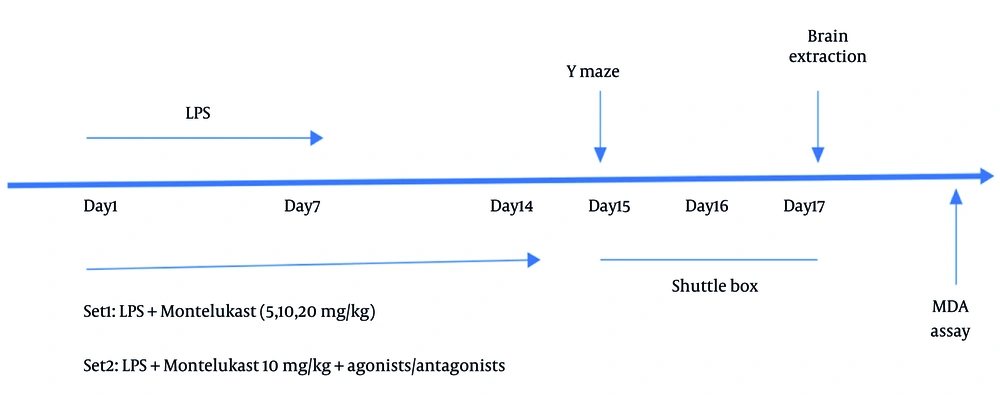
Figure 1.
Treatment roadmap
In the second set of experiments, to determine the potential involvement of nitric oxide (NO) in the effects of montelukast, the mice were pretreated with L-NAME (10 mg/kg, intraperitoneally, a nonspecific NO synthase inhibitor), L-arginine (750 mg/kg, intraperitoneally, an NO precursor), or vehicle 15 minutes before injection of montelukast (10 mg/kg, intraperitoneally) (10). The involvement of cyclic GMP (cGMP) was assessed by injection of sildenafil (5 mg/kg, intraperitoneally, a PDE-5 inhibitor), methylene blue (20 mg/kg, intraperitoneally, a NOS/guanylyl cyclase inhibitor), or vehicle 15 minutes before montelukast (10 mg/kg, intraperitoneally) (11). The involvement of K+ channels was assessed by pretreatment with glibenclamide (1 mg/kg, intraperitoneally, an ATP-sensitive K+ channel inhibitor), diazoxide (5 mg/kg, intraperitoneally, an ATP-sensitive K+ channel opener), or vehicle 15 minutes before montelukast (10 mg/kg, intraperitoneally) (12). To determine the possible role of PPARγ receptors, pioglitazone (5 mg/kg, intraperitoneally, a PPARγ receptor agonist), GW9662 (2 mg/kg, intraperitoneally, a PPARγ antagonist), or vehicle was injected 15 minutes before montelukast (10 mg/kg, intraperitoneally) (10, 13).
3.4. Shuttle-Box Test
The device consisted of two compartments with similar dimensions (27 × 14.5 × 14 cm). The floors of the compartments comprised stainless-steel bars 2 mm in diameter, spaced 1 cm apart. One compartment was illuminated with a 5-W lamp. The test included a 3-day protocol. On the first day, mice were allowed to become familiar with the device for 10 minutes. On the second day, each mouse was placed individually in the bright compartment, and 10 seconds later, the door was opened. The latency to enter the dark compartment was recorded as a cognition index (initial latency [IL]). Next, the door was closed, and a low-level electric shock (0.3 mA, 3 seconds) was delivered through the floor grids. The animals were returned to their cage after 3 minutes. On the third day, the mice were placed in the light compartment. The latency to enter the dark compartment was recorded as step-through latency (STL), indicating the learning and memory index, with a cutoff of 300 seconds. On this day, no shock was delivered (14, 15).
3.5. Y-Maze Test
The device consisted of 3 arms (A, B, and C) with identical dimensions (30 × 5 × 12 cm) and a 120° angle between them. Each animal was evaluated for 8 minutes. First, the mouse was released into one arm, and the sequence of arm entries was recorded. The number of entries into each arm was also recorded. The alternation percentage was calculated as the ratio of the actual number of alternations to the possible number, defined as the total number of arm entries minus 2, multiplied by 100. Total arm entries were considered an index of locomotor activity (8, 15, 16).
3.6. MDA Measurement
The extracted hippocampal tissues were washed with saline and stored at -80°C until analysis using ELISA kits. Each tissue sample was weighed, homogenized, and shaken for 90 minutes. Next, the samples were centrifuged at 4°C and 4000 × g for 15 minutes. Finally, the supernatant was collected (17). MDA assay ELISA kits were obtained from LDN Immunoassays (Germany), and the analyses were performed according to the manufacturer's instructions.
3.7. Statistical Analysis
Data are shown as mean ± SEM. Normality was assessed using the Kolmogorov-Smirnov test. All data had a normal distribution, and statistical analyses were performed using SPSS version 22 and one-way analysis of variance followed by the Tukey post hoc test for intergroup comparisons. A P value less than 0.05 was considered significant.
4. Results
4.1. Effect of Montelukast in the Shuttle-Box Test
Initial latency was significantly increased by LPS treatment (P < 0.01), and LPS also decreased STL (P < 0.01) compared with the control group. Montelukast at doses of 10 and 20 mg/kg decreased IL (P < 0.01 and P < 0.05, respectively) and increased STL (P < 0.05) compared with the LPS + saline group (Figure 2A).
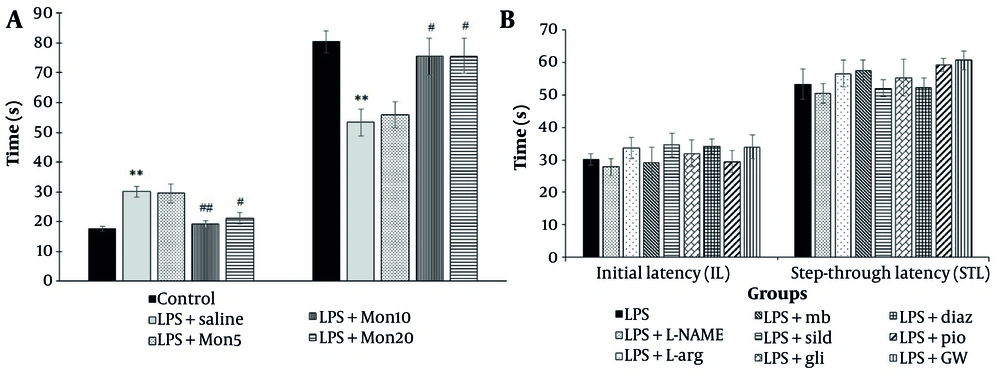
Figure 2.
Effects of montelukast (5, 10, and 20 mg/kg, intraperitoneally) on IL/STL time in the shuttle-box test (A). Effects of agonists/antagonists on IL and STL when used alone (B). Data are shown as mean ± SEM (n = 6). ** P < 0.01 compared with the control group. # P < 0.05 and ## P < 0.01 compared with the LPS + vehicle-treated group (one-way analysis of variance followed by Tukey test).
To evaluate the potential contribution of PPARγ receptors and the NO/cGMP/KATP pathway to the effects of montelukast, animals were pretreated with the corresponding agonists and antagonists, as described below. These agonists and antagonists did not significantly affect IL or STL when administered alone, without montelukast (Figure 2B).
4.2. Contribution of NO to the Effect of Montelukast in the Shuttle-Box Test
Pretreatment with L-NAME (10 mg/kg, intraperitoneally) increased IL (P < 0.05) and decreased STL (P < 0.05) compared with the LPS + montelukast (10 mg/kg, intraperitoneally)-treated group. Pretreatment with L-arginine (750 mg/kg, intraperitoneally) had no significant effect (Figure 3A).
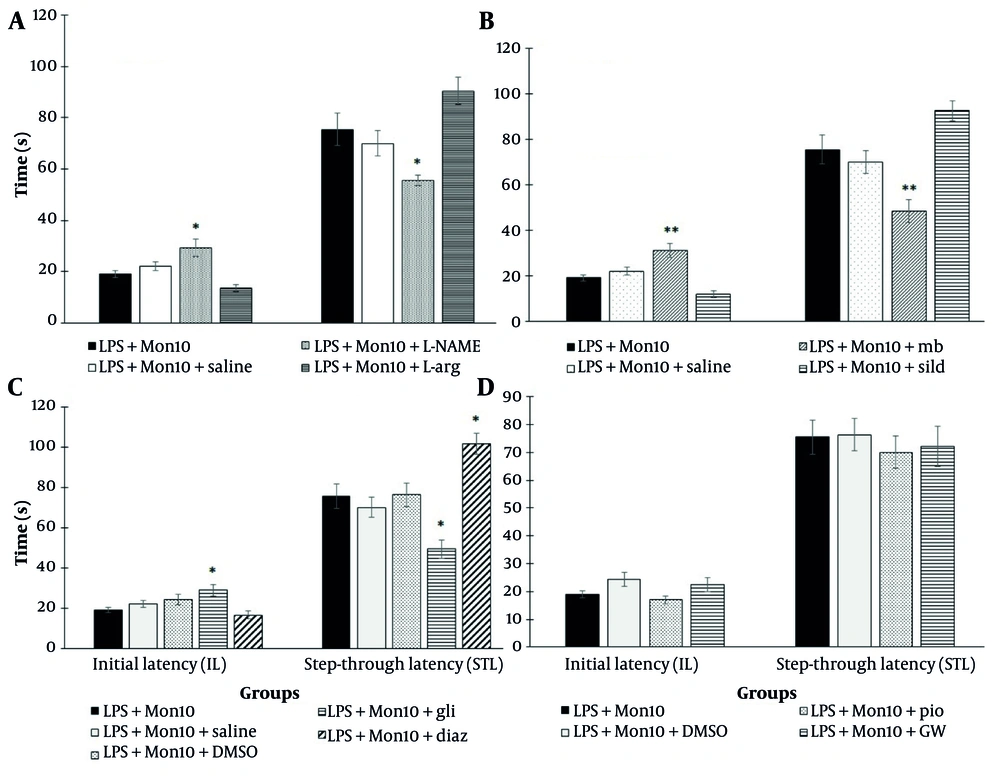
Figure 3.
Contribution of PPARγ receptors and the NO/cGMP/KATP channel pathway to the effect of montelukast (10 mg/kg) in the shuttle-box test (panels A, B, C, and D, respectively). Data are shown as mean ± SEM (n = 6). * P < 0.05 and ** P < 0.01 compared with the LPS + montelukast (10 mg/kg)-treated group, analyzed using one-way analysis of variance followed by Tukey post hoc test.
4.3. Contribution of cGMP to the Effect of Montelukast in the Shuttle-Box Test
Pretreatment with methylene blue (20 mg/kg, intraperitoneally) increased IL (P < 0.01) and decreased STL (P < 0.01) compared with the LPS + montelukast (10 mg/kg, intraperitoneally)-treated group. Pretreatment with sildenafil (5 mg/kg, intraperitoneally) had no significant effect (Figure 3B).
4.4. Contribution of KATP Channels to the Effect of Montelukast in the Shuttle-Box Test
Pretreatment with glibenclamide (1 mg/kg, intraperitoneally) increased IL (P < 0.05) and decreased STL (P < 0.05) compared with the LPS + montelukast (10 mg/kg, intraperitoneally)-treated group. In contrast, pretreatment with diazoxide (10 mg/kg, intraperitoneally) increased STL (P < 0.05) compared with the LPS + montelukast (10 mg/kg, intraperitoneally)-treated group (Figure 3C).
4.5. Contribution of PPARγ Receptors to the Effect of Montelukast in the Shuttle-Box Test
Pretreatment with pioglitazone (5 mg/kg, intraperitoneally) and GW9662 (2 mg/kg, intraperitoneally) had no significant effect (Figure 3D).
4.6. Effect of Montelukast in the Y-Maze Test
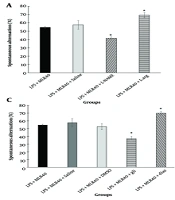
Total arm entries did not differ significantly among groups. LPS injection decreased spontaneous alternation percentage compared with the control group (P < 0.01). Montelukast increased this parameter at doses of 10 and 20 mg/kg (P < 0.01 and P < 0.001, respectively) (Figure 4A). To assess the potential contribution of PPARγ receptors and the NO-cGMP-KATP pathway, animals were pretreated with the agonists and antagonists described below. When administered alone, without montelukast, these agonists and antagonists had no significant effect on spontaneous alternation percentage (Figure 4B).
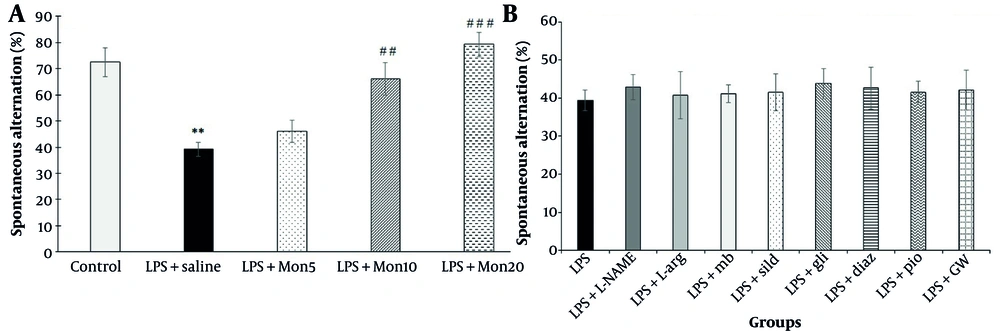
Figure 4.
Effects of montelukast (5, 10, and 20 mg/kg, intraperitoneally) on spontaneous alternation percentage in the Y-maze test (A). Effects of agonists/antagonists when used alone (B). Data are shown as mean ± SEM (n = 6). ** P < 0.01 versus the control group. ## P < 0.01 and ### P < 0.001 versus the LPS + vehicle-treated group (one-way analysis of variance followed by Tukey test).
4.7. Contribution of NO to the Effect of Montelukast in the Y-Maze Test
Pretreatment with L-NAME (10 mg/kg, intraperitoneally) decreased spontaneous alternation percentage (P < 0.05) compared with the LPS + montelukast (10 mg/kg, intraperitoneally)-treated group. Pretreatment with L-arginine (750 mg/kg, intraperitoneally) had no significant effect (Figure 5A).
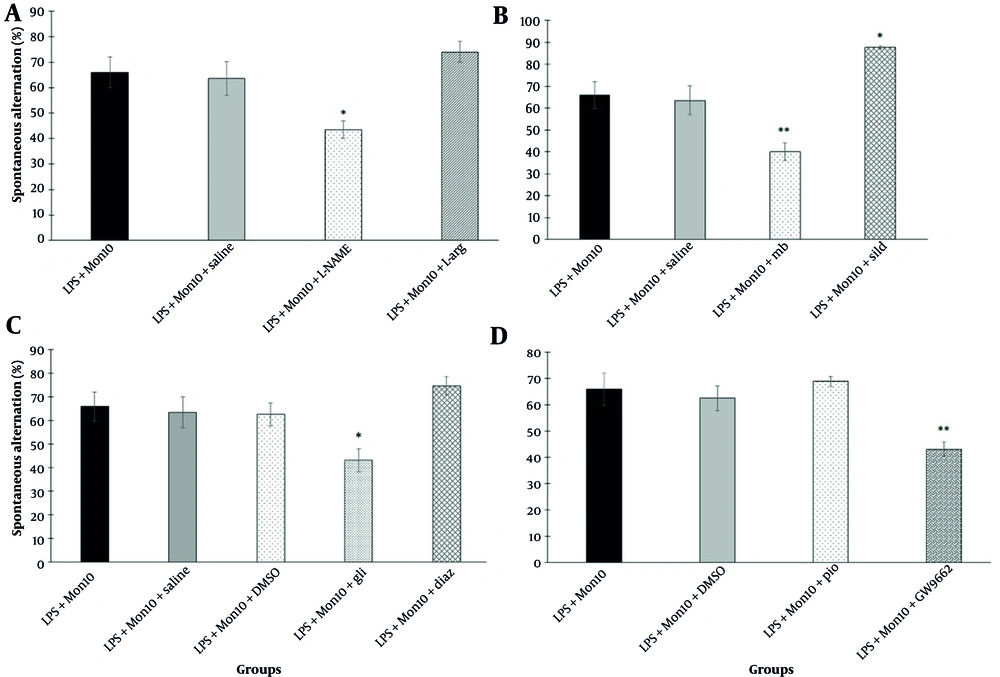
Figure 5.
Contribution of PPARγ receptors and the NO/cGMP/KATP channel pathway to the effect of montelukast (10 mg/kg) in the Y-maze test (panels A, B, C, and D, respectively). Data are shown as mean ± SEM (n = 6). * P < 0.05 and ** P < 0.01 versus the LPS + montelukast (10 mg/kg)-treated group, analyzed using one-way analysis of variance followed by Tukey post hoc test.
4.8. Contribution of cGMP to the Effect of Montelukast in the Y-Maze Test
Pretreatment with methylene blue (20 mg/kg, intraperitoneally) decreased spontaneous alternation percentage (P < 0.01) compared with the LPS + montelukast (10 mg/kg, intraperitoneally)-treated group. In contrast, this parameter was increased by pretreatment with sildenafil (5 mg/kg, intraperitoneally) (P < 0.05) (Figure 5B).
4.9. Contribution of KATP Channels to the Effect of Montelukast in the Y-Maze Test
Pretreatment with glibenclamide (1 mg/kg, intraperitoneally) decreased spontaneous alternation percentage (P < 0.05) compared with the LPS + montelukast (10 mg/kg, intraperitoneally)-treated group. Pretreatment with diazoxide (10 mg/kg, intraperitoneally) had no significant effect (Figure 5C).
4.10. Contribution of PPARγ Receptors to the Effect of Montelukast in the Y-Maze Test
Pretreatment with GW9662 (2 mg/kg, intraperitoneally) decreased spontaneous alternation percentage (P < 0.01) compared with the LPS + montelukast (10 mg/kg, intraperitoneally)-treated group. Pretreatment with pioglitazone (5 mg/kg, intraperitoneally) had no significant effect (Figure 5D).
4.11. Effect of Montelukast on Brain Tissue MDA Concentration
Malondialdehyde, a marker of lipid peroxidation, was evaluated in hippocampal tissue. LPS injection increased MDA concentration compared with the control group (P < 0.001). Montelukast at doses of 10 and 20 mg/kg reduced MDA levels (P < 0.01) (Figure 6A). To assess the potential contribution of PPARγ receptors and the NO-cGMP-KATP pathway, animals were pretreated with the agonists and antagonists described below. When administered alone, without montelukast, these agonists and antagonists had no significant effect on MDA levels (Figure 6B).
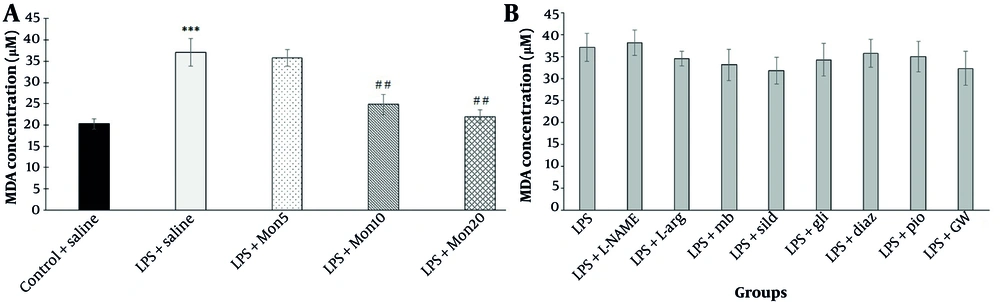
Figure 6.
Effects of montelukast (5, 10, and 20 mg/kg, intraperitoneally) on MDA levels (A). Effects of agonists/antagonists when used alone (B). Data are shown as mean ± SEM (n = 6). *** P < 0.001 versus the control group. ## P < 0.01 versus the LPS + vehicle-treated group (one-way analysis of variance followed by Tukey test).
4.12. Contribution of NO to the Effects of Montelukast on Brain Tissue MDA Levels
As shown in Figure 7A, pretreatment with L-NAME (10 mg/kg, intraperitoneally) increased MDA concentration (P < 0.05) compared with the LPS + montelukast (10 mg/kg, intraperitoneally)-protected group. In contrast, MDA concentration was decreased by L-arginine (750 mg/kg, intraperitoneally) (P < 0.05).
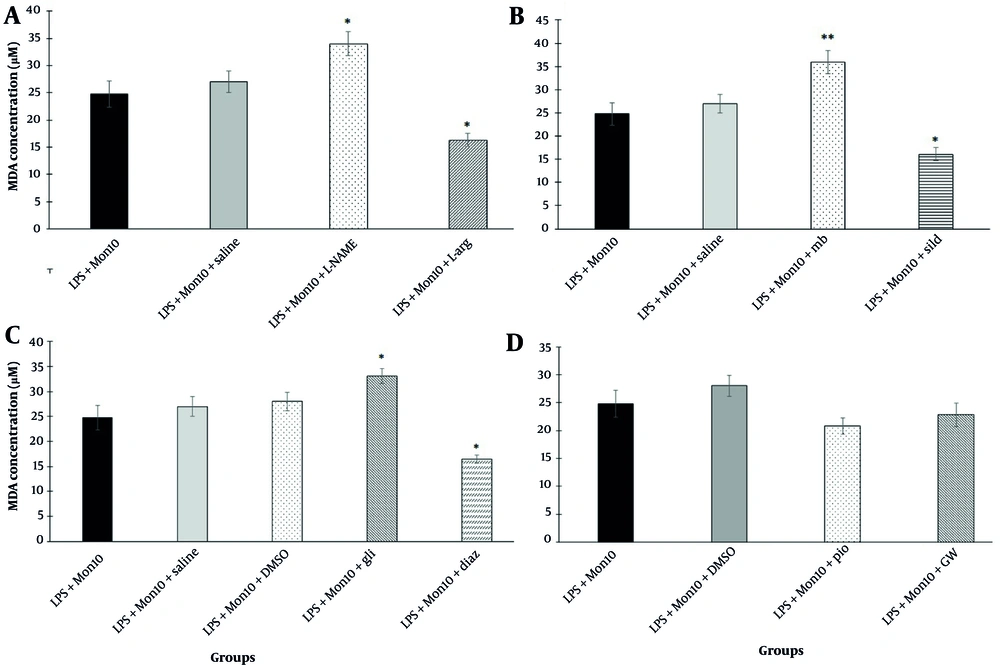
Figure 7.
Contribution of PPARγ receptors and the NO/cGMP/KATP channel pathway to the effect of montelukast (10 mg/kg) on MDA levels (panels A, B, C, and D, respectively). Data are shown as mean ± SEM (n = 6). * P < 0.05 and ** P < 0.01 versus the LPS + montelukast (10 mg/kg)-treated group, analyzed using one-way analysis of variance followed by Tukey post hoc test.
4.13. Contribution of cGMP to the Effects of Montelukast on Brain Tissue MDA Levels
Pretreatment with methylene blue (20 mg/kg, intraperitoneally) increased MDA concentration (P < 0.01) compared with the LPS + montelukast (10 mg/kg, intraperitoneally)-protected group. In contrast, MDA concentration was decreased by pretreatment with sildenafil (5 mg/kg, intraperitoneally) (P < 0.05) (Figure 7B).
4.14. Contribution of KATP Channels to the Effects of Montelukast on Brain Tissue MDA Levels
Pretreatment with glibenclamide (1 mg/kg, intraperitoneally) increased MDA concentration (P < 0.05) compared with the LPS + montelukast (10 mg/kg, intraperitoneally)-protected group. In contrast, MDA concentration was decreased by pretreatment with diazoxide (10 mg/kg, intraperitoneally) (P < 0.05) (Figure 7C).
4.15. Contribution of PPARγ Receptors to the Effects of Montelukast on Brain Tissue MDA Levels
Pretreatment with pioglitazone (5 mg/kg, intraperitoneally) and GW9662 (2 mg/kg, intraperitoneally) did not significantly affect MDA concentration (Figure 7D).
5. Discussion
This study investigated the effects of montelukast on LPS-induced learning and memory impairment and lipid peroxidation in a mouse model of AD. The contributions of PPARγ receptors and the NO/cGMP/KATP channel pathway were assessed to determine the potential mechanisms.
Several studies provide evidence supporting montelukast as a potential candidate medication for AD management (18). For example, montelukast showed protective effects in scopolamine-induced AD animal models by reducing memory loss, oxidative stress, and neuroinflammatory mediators (19).
In the shuttle-box test, LPS increased IL, indicating cognitive damage, and decreased STL, indicating learning and memory impairment. Montelukast decreased IL and increased STL. Therefore, montelukast may improve LPS-induced cognitive, memory, and learning impairment. Because L-NAME pretreatment increased IL and decreased STL, whereas L-arginine pretreatment decreased IL and increased STL, the improving effect of montelukast on cognitive, memory, and learning impairment may be potentiated by L-arginine and reduced by L-NAME. Overall, the NO pathway may contribute to the improving effect of montelukast. Previous studies have shown that the NO/cGMP cell signaling pathway contributes to several brain activities, including cognition, memory, learning, and synaptic conduction. This pathway is also perturbed in many neurodegenerative diseases, suggesting that targeting it may represent a novel and important therapeutic approach (20).
In this study, methylene blue pretreatment increased IL but decreased STL, indicating that methylene blue attenuated the beneficial effect of montelukast. Therefore, cGMP may contribute to the improving effects of montelukast on LPS-induced cognitive, memory, and learning impairment. Collectively, these findings suggest that the NO/cGMP pathway has important roles in central nervous system disorders, including neurodegenerative diseases (20).
Moreover, glibenclamide pretreatment increased IL but decreased STL, indicating attenuation of the improving effect of montelukast. In contrast, diazoxide increased STL. Therefore, KATP channels may contribute to the improving effects of montelukast on LPS-induced cognitive, memory, and learning impairment. This effect may be related to the modulatory role of KATP channels in various cellular pathways through a link between the electrical functions of cellular membranes and metabolic functions. Opening of these channels may provide neuroprotection, decrease central nervous system injury, and improve learning and memory by restoring synaptic networks (21). However, some reports suggest a possible involvement of certain types of KATP channels in AD and indicate that pharmacological manipulation of these channels has therapeutic potential for reducing amyloid-β pathology in patients with diabetes (22).
In this study, pretreatment with pioglitazone and GW9662, as PPARγ receptor agonist and antagonist, respectively, had no significant effect in the shuttle-box test. Therefore, PPARγ receptors did not appear to be involved in the improving effects of montelukast on LPS-induced cognitive, memory, and learning impairment in this test.
Similarly, in the Y-maze test, LPS reduced the spontaneous alternation percentage, whereas montelukast improved it. This finding indicates an improving effect of montelukast on LPS-induced cognitive, memory, and learning impairment. L-NAME and methylene blue pretreatments decreased the spontaneous alternation percentage; therefore, they reduced the beneficial effect of montelukast. However, sildenafil increased the spontaneous alternation percentage and therefore enhanced the improving effect of montelukast. Consequently, the NO/cGMP cell signaling pathway may contribute to the improving effects of montelukast on LPS-induced cognitive, memory, and learning impairment. Nitric oxide stimulates cGMP production by activating guanylate cyclase. Thus, insufficiency of the NO/cGMP pathway impairs the ability to learn Y-maze tasks, indicating the role of this pathway in this ability (23).
In this study, glibenclamide pretreatment decreased the spontaneous alternation percentage. Therefore, it could reduce the beneficial effects of montelukast. Accordingly, KATP channels may contribute to the improving effects of montelukast on LPS-induced cognitive, memory, and learning impairment. This finding is consistent with reports showing that glibenclamide enhances the spontaneous alternation percentage, suggesting that KATP channels may play a role in cognition (24).
Some Y-maze studies have shown that pioglitazone can improve diabetes-associated memory and learning impairment. Thus, PPARγ receptors may be a probable target for research attention (25). Here, GW9662 pretreatment decreased the spontaneous alternation percentage and could therefore reduce the improving effects of montelukast. In the Y-maze test, GW9662 significantly reduced spontaneous alternation in the montelukast-treated group, suggesting at least partial involvement. Finally, PPARγ receptors appeared to be involved in the improving effects of montelukast on LPS-induced cognitive, memory, and learning impairment.
Previous findings have shown a relationship between brain lipid peroxidation and AD. Derivatives produced from brain lipid peroxidation could serve as possible biomarkers involved in inflammation, neurotoxicity, and apoptosis in AD pathology (3). The results of this study showed that LPS increased brain tissue MDA concentration as an indicator of lipid peroxidation. Montelukast reduced MDA concentration, indicating an improving effect on LPS-induced lipid peroxidation in hippocampal tissue.
L-NAME and methylene blue pretreatments also increased MDA concentration. Thus, they attenuated the improving effect of montelukast on LPS-induced lipid peroxidation. In contrast, L-arginine and sildenafil pretreatments decreased MDA concentration. Therefore, they potentiated the improving effect of montelukast on LPS-induced lipid peroxidation. Consequently, the NO/cGMP cell signaling pathway may contribute to the improving effects of montelukast on LPS-induced brain lipid peroxidation. This pathway may also be involved in the protective effect of metformin on LPS-induced brain lipid peroxidation, as shown in our previous study (15). Studies have shown that KATP channels contribute to neuroprotection against brain tissue lipid peroxidation (26). Our results showed that glibenclamide pretreatment increased MDA concentration, attenuating the improving effect of montelukast on LPS-induced lipid peroxidation. In contrast, diazoxide decreased MDA concentration, potentiating the improving effect of montelukast on LPS-induced lipid peroxidation. Consequently, KATP channels may contribute to the improving effects of montelukast on LPS-induced brain lipid peroxidation. Pretreatment with pioglitazone and GW9662 had no significant effect on MDA concentration. Therefore, PPARγ receptors did not appear to be involved in the improving effects of montelukast on LPS-induced brain lipid peroxidation. Conversely, some reports indicate that PPARγ receptors can have a molecular regulatory role in lipid metabolism (27).
In conclusion, as some studies have shown the protective potential of montelukast in neurodegenerative diseases such as PD (28), epilepsy (29), AD (19), and neurotoxicity (30), the results of this project showed that montelukast improves LPS-induced learning and memory impairment and brain tissue lipid peroxidation. The KATP/cGMP/NO pathway also contributes to this effect. However, PPARγ receptors do not appear to have a remarkable role, although they showed some significant outcomes.