
1. Context
Cancer remains one of the most significant global health challenges, affecting millions of people worldwide each year. Despite considerable advances in therapeutic strategies, including chemotherapy, radiotherapy, and immunotherapy, several limitations continue to hinder effective and durable treatment. These limitations include systemic toxicity, the development of drug resistance, inadequate targeting of tumor cells, and reduced therapeutic efficacy within the tumor microenvironment (4, 7, 8). Consequently, research attention over the past decade has increasingly focused on novel drug delivery systems, particularly biological nanocarriers.
Among these systems, exosomes have been recognized as promising platforms for targeted drug delivery because of their favorable biological properties, including high biocompatibility, nanoscale dimensions of approximately 30 - 150 nm, the ability to cross critical biological barriers such as the BBB, stability in the bloodstream, and suitability for both surface and cargo engineering (11, 22). Exosomes are endosome-derived extracellular vesicles that encapsulate a diverse range of bioactive molecules, including proteins, lipids, DNA, messenger RNA, and microRNA, and typically express surface markers such as CD63, CD81, and TSG101. These vesicles play central roles in intercellular communication, the modulation of physiological and pathological processes, and the selective transfer of molecular cargo (7, 11, 12).
Recent studies have shown that exosome engineering through strategies such as the incorporation of targeting ligands, including RGD and GE11, surface modification with polymers such as polyethylene glycol (PEG), and the loading of drugs and nucleic acids by electroporation, sonication, and genetic engineering can improve targeting accuracy, stability, and anticancer performance (1-3, 9). However, several important questions remain unresolved. These include which surface-engineering strategy provides the greatest tumor specificity, which loading approach achieves the highest efficiency while preserving exosomal structural integrity, and how challenges related to large-scale production, standardization, and long-term safety evaluation can be overcome.
The present review aims to compare surface engineering strategies for tumor targeting, evaluate cargo-loading methods in terms of efficiency and integrity, discuss barriers to clinical translation and regulatory gaps, and propose future solutions, including artificial intelligence-assisted design and microfluidic technologies (16).
To reduce ambiguity, key specialized terms used in this article are defined here. Exosomes are endosome-derived extracellular vesicles that encapsulate diverse bioactive molecules. Surface engineering refers to the chemical or genetic modification of the exosomal membrane to enhance targeting specificity or improve stability. The BBB is one of the most important biological barriers limiting the delivery of anticancer therapeutics to the central nervous system. PEGylation refers to the conjugation of PEG to improve stability and reduce immune-mediated clearance.
2. Evidence Acquisition
This review was conducted in accordance with the PRISMA guidelines to ensure transparency and reproducibility.
2.1. Search Strategy
A comprehensive literature search was conducted in PubMed, Scopus, and Google Scholar. The search was limited to articles published between January 2015 and April 2026. The following keywords and keyword combinations were used: engineered exosomes, targeted drug delivery, cancer therapy, surface engineering, exosome loading methods, CRISPR/Cas9 delivery, extracellular vesicles, PEGylation, RGD peptide, GE11, doxorubicin, paclitaxel, siRNA, miRNA, celastrol, curcumin, and multidrug resistance.
2.2. Inclusion and Exclusion Criteria
Studies were included if they met the following criteria: 1) original research articles, peer-reviewed reviews, or preclinical studies; 2) investigation of exosome engineering for anticancer drug delivery or CRISPR/Cas9 delivery; 3) reporting outcomes related to loading efficiency, targeting specificity, tumor suppression, or biosafety; and 4) publication in English. Studies were excluded if they were conference abstracts, editorials, patents, or non-peer-reviewed articles; focused solely on exosome biomarkers without therapeutic application; or lacked sufficient methodological detail.
2.3. Study Selection and Data Extraction
Two independent reviewers screened the titles and abstracts of all retrieved records. The full texts of potentially eligible studies were subsequently assessed. Disagreements were resolved through discussion. Extracted data included the exosome source, engineering strategy, cargo-loading method, therapeutic agent, tumor model, and key outcomes, including efficacy and safety.
2.4. Quality Assessment and Final Selection
The quality of the included studies was evaluated based on experimental design, sample size, methodological clarity, and relevance to the review objectives. A total of 27 references listed at the end of this article met the inclusion criteria and were included in the final synthesis. These included landmark studies on exosome biogenesis (4, 7, 11, 12, 22), surface engineering (1, 2, 3, 9, 20), drug loading (5, 9, 10, 11, 13, 21), CRISPR/Cas9 delivery, and clinical translation (16, 22). The study selection process is illustrated in Figure 1.
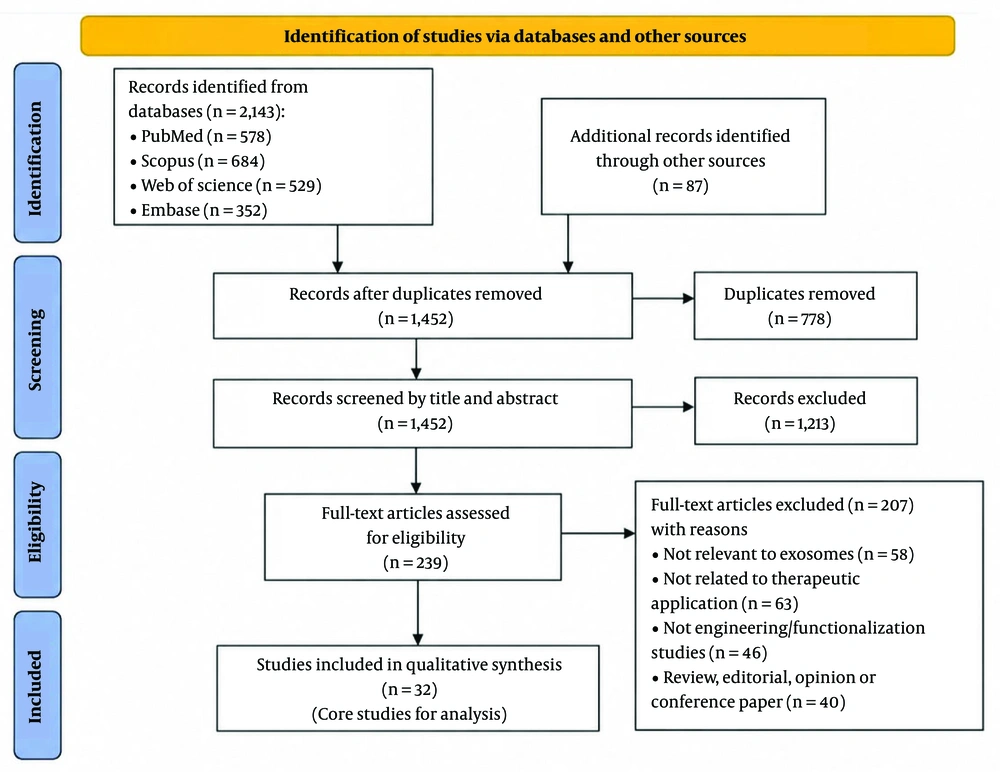
Figure 1.
PRISMA 2020 flow diagram of the study selection process in this review.
No formal quality assessment tool was applied because the review included heterogeneous preclinical and review studies. Nevertheless, only peer-reviewed articles published in reputable journals and directly relevant to the scope of this review were included.
3. Results
3.1. Structure and Biology of Exosomes
3.1.1. Definition and Origin of Exosomes
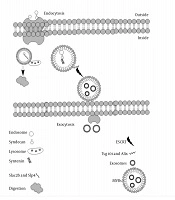
Exosomes are a subgroup of extracellular vesicles secreted by most cell types under both physiological and pathological conditions. These nanovesicles are of endosomal origin and are generated through a regulated intracellular biogenetic pathway. In this process, endocytosis of the plasma membrane gives rise to early endosomes, which subsequently mature into late endosomes. Within these endosomal compartments, smaller vesicles known as intraluminal vesicles are formed through inward budding of the endosomal membrane, ultimately resulting in the formation of multivesicular bodies (4, 22).
Exosomes possess a lipid bilayer membrane and carry proteins, lipids, and nucleic acids that mediate intercellular communication. Their biogenesis and release are regulated by both ESCRT-dependent and ESCRT-independent pathways. Common exosomal markers include CD9, CD63, CD81, TSG101, and Alix. The molecular composition of exosomes varies according to the cell of origin and determines their biological functions (7, 10, 11, 22) (Figure 2).
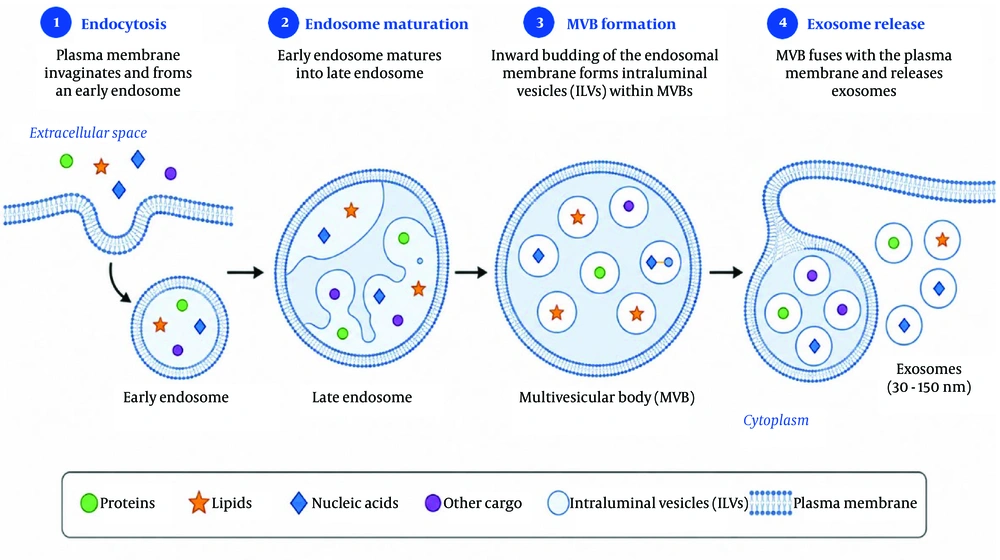
Figure 2.
Schematic representation of exosome biogenesis, including endocytosis, endosome maturation, multivesicular body formation, and exosome release.
3.1.2. Diversity of Cellular Origin and Functions of Exosomes
The biological activity of exosomes depends largely on their cellular origin. Immune cell-derived exosomes participate in immune regulation, cancer cell-derived exosomes contribute to tumor progression and metastasis, and stem cell-derived exosomes are associated with regenerative and anti-inflammatory effects (12, 13).
3.1.3. Role of Exosomes in Intercellular Communication
Exosomes are important mediators of intercellular communication. They transfer proteins, lipids, and nucleic acids to recipient cells. After uptake via endocytosis, receptor interaction, or membrane fusion, exosomal cargo can influence multiple cellular signaling pathways (12).
3.1.4. Importance of Exosomes in Disease Diagnosis and Therapy
The widespread presence of exosomes in biological fluids, including blood, urine, saliva, cerebrospinal fluid, and breast milk, has made them valuable tools for the non-invasive diagnosis of disease. Analysis of exosomal molecular cargo can provide information about the status of the cells of origin, disease progression, and treatment responses, particularly in cancer, neurological disorders, and autoimmune diseases. Beyond diagnosis, exosomes have attracted considerable attention as natural drug-delivery vehicles because of their biocompatibility, stability, and engineering flexibility, making them promising platforms for targeted cancer therapy.
3.2. Methods for Exosome Surface Engineering and Cargo Loading
Cell-based therapies, despite their considerable therapeutic potential, are associated with important safety challenges, including the risk of unintended immune activation and systemic toxicity in the host. At the same time, recent advances in gene therapy have led to the development of viral and non-viral vectors for the delivery of therapeutic agents, although limitations related to safety, stability, and target specificity remain (1, 4, 8).
In this context, exosomes have attracted increasing attention as natural biological carriers that transport proteins, lipids, mRNAs, and microRNAs. Their efficient uptake by recipient cells, together with the possibility of engineering both their surface and internal cargo, has made exosomes promising platforms for the delivery of drugs, proteins, and therapeutic RNAs to tumor cells (1, 9).
Because of their stable structure and ability to fuse with the plasma membrane, exosomes can deliver therapeutic cargo directly into target cells, thereby enhancing treatment efficacy. In addition, studies have shown that allogeneic exosomes generally induce lower immune responses than other cellular or synthetic delivery systems, a feature that may reduce one of the major obstacles associated with cell-based therapies (13, 14).
A notable advantage of exosomes is their potential to transport anticancer drugs to the central nervous system. Many chemotherapeutic agents cannot cross the BBB, which limits the effectiveness of treatment for brain tumors and cerebral metastases. Preclinical studies have shown that exosomes derived from brain endothelial cells, after being loaded with drugs such as doxorubicin and paclitaxel, can cross the BBB and deliver cargo to brain tissue. Fluorescence tracking of these exosomes in animal models has further supported their potential for brain targeting and tumor burden reduction (13, 19).
3.2.1. Exosome Loading and Encapsulation
Loading exosomes with therapeutic agents is a key step in the development of exosome-based drug-delivery systems. Various therapeutic agents, including nucleic acids such as siRNAs and antisense oligonucleotides, proteins, chemotherapeutic drugs, and immunomodulatory agents, can be used as intravesicular cargo (9-11). A comparison of pre-secretory and post-secretory loading methods is presented in Table 1.
Table 1.
Comparison of Pre-Secretory and Post-Secretory Loading Methods for Therapeutic Cargo Encapsulation in Exosomes
| Method type | Example | Loading Efficiency | Preservation of Exosome Integrity | Preservation of Drug Bioactivity | Main Limitation | Reference |
|---|---|---|---|---|---|---|
| Pre-secretory | Genetic modification of parent cells | Low to moderate | High | High | Difficult to control cargo amount | (1, 9) |
| Pre-secretory | Co-incubation with drug | Low | High | High | Limited loading efficiency | (5, 11) |
| Post-secretory | Electroporation | Moderate to high | Moderate | Moderate | Damage to exosomal membrane and sgRNA aggregation | (9, 10) |
| Post-secretory | Sonication | Moderate | Moderate | Moderate | May affect membrane structure | (9, 11) |
| Post-secretory | Simple incubation | Low | High | High | Very low efficiency | (5, 13) |
| Post-secretory | Extrusion | High | Low | Low | Disrupts membrane integrity | (9, 13) |
When designing loading strategies, three fundamental factors should be considered: 1) achieving appropriate loading efficiency; 2) preserving exosome structural integrity; and 3) maintaining the biological activity of the therapeutic agent (9, 12). In general, loading strategies are divided into two main categories: pre-secretory and post-secretory methods.
3.2.2. Surface Engineering of Exosomes
Natural exosomes, when used directly in tumor therapy, may increase the effective concentration of a therapeutic agent; however, factors such as a short circulation half-life and insufficient targeting ability limit their clinical application. Surface engineering of exosomes is regarded as one of the principal strategies for overcoming these limitations. An overview of genetic, chemical, and hybrid membrane engineering strategies is provided in Table 2.
Table 2.
Comparison of Exosome Surface Engineering Strategies Used to Enhance Targeting Ability, Circulation Stability, and Immunocompatibility
| Type of Engineering | Example Ligand/Polymer | Targeting (Receptor Type) | Increased Blood Stability | Reduced Immunogenicity | Reference |
|---|---|---|---|---|---|
| Genetic engineering | GE11 peptide | EGFR receptor | Moderate | High | (1, 2) |
| Genetic engineering | RGD peptide | Integrins (αvβ3, αvβ5) | Moderate | High | (1, 9) |
| Chemical engineering | PEG (polyethylene glycol) | Non-targeted stealth effect | High | High | (9) |
| Chemical engineering | Mannose | Mannose receptor on immune cells | Low | Moderate | (1, 20) |
| Hybrid membrane engineering | RGD + PEG | Integrins + stealth effect | High | High | (1, 20) |
| Hybrid membrane engineering | Antibody fragment, such as anti-HER2 | HER2 receptor | Moderate | Moderate | (2, 20) |
A schematic overview of surface-engineering and cargo-loading strategies is presented in Figure 3.
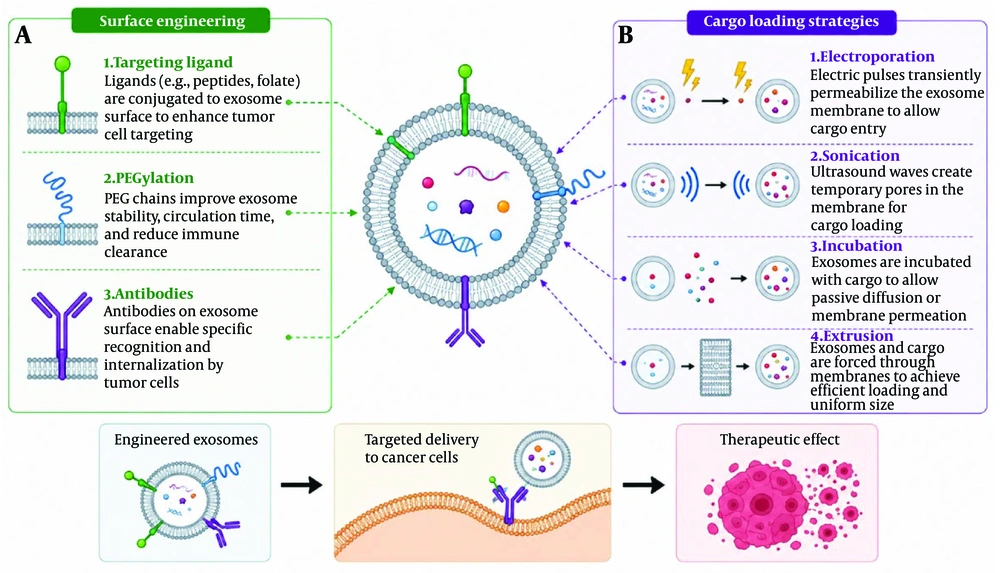
Figure 3.
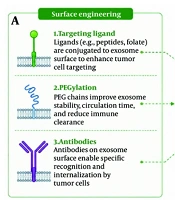
Schematic illustration of surface engineering strategies, including targeting ligands, PEGylation, and antibodies, and cargo-loading strategies, including electroporation, sonication, incubation, and extrusion, for engineered exosomes in targeted cancer therapy.
3.2.3. Immune System Modulation by Engineered Exosomes
Exosomes can either stimulate or suppress immune pathways through antigen presentation, transfer of regulatory microRNAs, and surface protein expression. Engineering the exosomal surface with MHC-peptide complexes can directly silence self-reactive T lymphocytes. Conversely, loading exosomes with Toll-like receptor agonists, such as CpG, can convert them into adjuvants for antitumor immunity. Depending on the engineering strategy, exosomes can therefore act as either an accelerator or a brake on the immune system (12, 13).
3.3. Applications of Surface-Engineered Exosomes in Targeted Anticancer Drug Delivery
Exosomes are nanoscale vesicles enclosed by a lipid bilayer membrane and have emerged as promising biological carriers because of their unique biological properties. These properties include their relative ability to evade phagocytosis by mononuclear macrophages, prolonged circulation time in the bloodstream, and the capacity to cross vascular walls and the extracellular matrix. Their low immunogenicity, high biocompatibility, appropriate systemic distribution, stability, and functional efficiency further support the use of these nanovesicles in biological environments (5, 11).
On the basis of these characteristics, natural or engineered exosomes have been proposed as targeted carriers for the delivery of nucleic acids, proteins, and chemotherapeutic agents. An ideal exosome-based delivery system should have a sufficient circulation half-life, the ability to accumulate within tumor tissue, effective penetration into the tumor microenvironment, efficient cellular internalization, and controlled release of therapeutic cargo (20).
3.3.1. Delivery of Chemotherapeutic Drugs
Many chemotherapeutic agents exert their effects on intracellular targets, and their therapeutic efficacy therefore depends on successful passage across the cellular membrane. However, poor solubility, a short half-life, and systemic toxicity limit the clinical application of these drugs. The lipid bilayer membrane of exosomes can protect loaded drugs and, through interactions mediated by surface proteins, facilitate efficient entry into target cells. Compared with synthetic carriers, exosomes exhibit lower immunogenicity and reduced toxicity, thereby decreasing immune clearance and tissue damage (13).
Doxorubicin is one of the most widely used drugs for the treatment of various cancers; however, dose-dependent cardiotoxicity limits its long-term use. Evidence has shown that loading doxorubicin into exosomes can facilitate more rapid entry into tumor cells and increase intracellular accumulation while reducing toxicity toward normal cells, particularly cardiomyocytes. A summary of therapeutic agent types and their key anticancer effects is shown in Table 3.
Table 3.
Summary of Therapeutic Agent Types, Exosome Sources, and Key Anticancer Effects in Preclinical Studies
| Therapeutic agent type | Exosome Source | Key Effect | Reference |
|---|---|---|---|
| Doxorubicin | Mesenchymal stem cell (MSC) | Reduced cardiotoxicity and increased intracellular accumulation | (13, 21) |
| Doxorubicin | HEK293 cell | Higher cellular uptake and greater antitumor efficacy | (13) |
| Paclitaxel | Macrophage | Overcoming multidrug resistance | (13, 21) |
| Paclitaxel | Brain endothelial cell | Crossing the BBB | (13, 19) |
| siRNA, such as KRAS-targeting siRNA | Mesenchymal stem cell (MSC) | Gene silencing in pancreatic cancer | (12) |
| miRNA, such as miRNA-497 | Various cancer cells | Inhibition of migration and invasion | (10) |
Studies using exosomes derived from mesenchymal stem cells or HEK293 cells have demonstrated that Exo-Dox formulations exhibit higher cellular uptake, greater antitumor efficacy, and lower cardiotoxicity than free doxorubicin. These effects are likely related to the surface characteristics of exosomes and their specific interactions with tumor cells (13, 21).
Another major obstacle in chemotherapy is multidrug resistance, which reduces the efficacy of many anticancer agents (6). In this context, paclitaxel has emerged as one of the most extensively studied drugs in exosome-based delivery systems. Preclinical studies have shown that paclitaxel-loaded exosomes, particularly those derived from macrophages, can overcome drug resistance and significantly increase intracellular drug accumulation in resistant tumor cells (13, 21).
3.3.2. Delivery of Biological Therapeutics
RNA interference technology is a powerful tool for suppressing the expression of oncogenes and key cancer-related pathways. However, challenges such as rapid degradation by nucleases, low bioavailability, and off-target effects have limited its clinical application. Exosomes have emerged as suitable carriers for siRNA, miRNA, and other nucleic acids because of their high biocompatibility and low immunogenicity (2, 12).
Various studies have shown that exosome-mediated delivery of siRNA can result in effective silencing of genes involved in the proliferation, migration, and metastasis of cancer cells. Similarly, transfer of miRNAs such as miRNA-497 via exosomes has been shown to inhibit the migration and invasion of tumor cells in both two-dimensional and three-dimensional models (10).
3.3.3. Delivery of Natural Compounds
The use of exosomes for the delivery of natural anticancer compounds has attracted increasing attention. Compounds such as celastrol, triptolide, and curcumin, despite their substantial anticancer potential, face clinical limitations due to poor solubility, limited stability, and low bioavailability (3, 17, 18).
Exosome-based formulations of these compounds have been shown to enhance stability, cellular uptake, and antitumor efficacy while reducing systemic toxicity. For example, exosome-loaded celastrol has been reported to inhibit tumor growth in preclinical models without causing significant adverse effects (3, 17).
3.3.4. Application of Exosomes in Autoimmune Diseases
Preclinical applications of engineered exosomes in autoimmune diseases are summarized in Table 4.
Table 4.
Preclinical Applications of Engineered Exosomes in Autoimmune Diseases, Including Molecular Targets and Key Outcomes
| Autoimmune Disease | Type of Exosome Engineering | Molecular Target | Key Preclinical Outcome | Reference |
|---|---|---|---|---|
| Rheumatoid arthritis | Loading of regulatory miRNA | Pro-inflammatory genes, including TNF-α, IL-6, and IL-1β | Reduced expression of pro-inflammatory genes and improved clinical symptoms | (13) |
| Rheumatoid arthritis | Dendritic cell-derived exosomes with miR-146a | NF-κB pathway | Significant reduction in joint inflammation | (12) |
3.3.5. Engineered Exosomes as Carriers for the CRISPR/Cas9 System
Exosomes have attracted considerable attention as carriers for the delivery of the CRISPR/Cas9 system because of their inherent ability to transfer biological molecules between cells, high biocompatibility, stability in circulation, and suitable loading capacity (1, 2, 3). Studies have shown that exosomes can deliver various CRISPR/Cas9 components, including DNA, mRNA, and the Cas9/sgRNA protein complex, to target cells and thereby mediate genome editing. Exosome engineering has therefore emerged as a strategy for improving the safety and efficacy of CRISPR-based gene therapy.
3.3.5.1. Methods for Loading CRISPR Components Into Exosomes
Strategies for loading CRISPR components into exosomes can be divided into two main categories: direct loading after exosome isolation and indirect loading through engineering of parent cells.
In direct post-isolation loading, exosomes are combined with CRISPR components after isolation. Electroporation introduces the Cas9/sgRNA complex into exosomes by creating transient pores in the exosomal membrane. This method may provide moderate to high loading efficiency, although potential damage to the exosomal membrane and aggregation of sgRNA are important limitations. Simple incubation involves direct incubation of exosomes with CRISPR components without an electric field. Although this approach has relatively low loading efficiency, exosome structure and integrity are generally preserved, and the method is technically simple and cost-effective. Overall, direct loading methods must be selected by balancing loading efficiency with preservation of exosomal structural stability.
Indirect pre-loading strategies are based on engineering the parent cells. In this approach, exosome-producing cells are engineered to express CRISPR components or to tether them to membrane-associated domains. For example, fusion of Cas9 to membrane proteins such as CD63 can result in the production of exosomes that naturally contain Cas9. Viral-exosomal hybrid systems can also be used. Incorporation of viral envelope proteins, such as VSV-G, into exosomes may facilitate entry into target cells and improve delivery efficiency. These systems combine the advantages of viral and non-viral carriers, although safety considerations remain important.
3.3.5.2. Optimization of CRISPR-Loaded Exosome Performance
Surface engineering of exosomes can improve the performance of CRISPR-loaded exosomes. Incorporation of peptides such as RGD onto the exosomal surface can enable selective binding to integrins that are overexpressed in cancer cells, thereby improving tissue targeting. PEG modification can prolong circulation time in the bloodstream and reduce recognition by the immune system.
The stability of CRISPR cargo can also be improved. Lipid-based formulations, particularly cationic lipids such as DOTAP, can protect sgRNA against nuclease-mediated degradation. Nuclease inhibitors may further enhance the stability of RNA components in biological environments.
3.3.5.3. Challenges and Limitations
Despite progress in engineering parent cells, obtaining uniform and controllable loading across all exosomes remains a major technical challenge. Large-scale production is another limitation. Current processes for the production and purification of engineered exosomes are often costly and time-consuming. Technologies such as microfluidics have been proposed as emerging strategies to improve scalability.
Biological challenges also remain. Although exosomes are generally considered biocompatible, they may still induce immune responses under certain conditions. In addition, despite substantial advances in surface engineering, unintended binding of exosomes to non-target cells remains an important limitation.
3.3.5.4. Clinical Applications and Future Perspectives
Preclinical models of diseases such as Duchenne muscular dystrophy have shown that exosome-mediated delivery of CRISPR/Cas9 can lead to partial restoration of functional protein expression and improvement in tissue performance. In anticancer applications, engineered exosomes carrying CRISPR components may target genes involved in cancer cell survival and suppress tumor growth without severe systemic toxicity (1-6). The development of smart delivery systems responsive to tumor microenvironmental stimuli, such as low pH or specific enzymes, may further improve the precision, safety, and efficiency of CRISPR/Cas9 delivery in the future (19-22).
3.4. Clinical Translation of Exosomes and Emerging Challenges
3.4.1. Clinical Application of Exosomes in Medicine
Exosomes have emerged as promising carriers in drug delivery and gene therapy because of their unique properties, including nanoscale size, the ability to cross physiological barriers such as the BBB, and the capacity to load various biomolecules (2, 5). Unlike synthetic nanoparticles, exosomes have inherent biocompatibility and, in most cases, induce milder immune responses (5, 11). These characteristics have led to growing interest in their application for the treatment of chronic diseases, including cancer and neurodegenerative disorders (7, 8).
3.4.2. Examples of Ongoing Clinical Trials
In recent years, exosomes have progressed from laboratory investigations to early-phase clinical trials (16). Reports from initial clinical studies indicate that mesenchymal stem cell-derived exosomes have been evaluated as safe carriers for the delivery of drugs and small interfering RNAs (16). For example, exosome-mediated delivery of KRAS-targeting siRNA has created a new perspective for the targeted treatment of pancreatic cancer in preclinical models and early-stage studies (12).
Despite encouraging early results, translation of exosome-based therapeutics into clinical practice remains limited. Not all preclinical successes have translated into clinical benefit. For instance, although exosome-mediated siRNA delivery showed tumor suppression in murine models of pancreatic cancer (12), subsequent attempts to replicate these results in larger animal models have encountered challenges related to batch-to-batch variability and inconsistent RNA loading efficiency (16). Furthermore, early-phase clinical trials using unmodified mesenchymal stem cell-derived exosomes for cancer therapy have reported modest efficacy despite acceptable safety profiles, with no clear dose-response relationship established (16). These observations highlight that exosome source, purification method, and storage conditions critically influence therapeutic outcomes. A balanced view of the literature indicates that exosome-based platforms are promising but have not yet demonstrated superior efficacy over synthetic nanocarriers in head-to-head comparative studies, and several technical hurdles remain unresolved before widespread clinical adoption can be justified (22).
Major challenges include variability in exosome composition, a lack of standardized manufacturing protocols, limited scalability, and insufficient long-term safety data. These factors have contributed to slower clinical advancement compared with other nanocarrier systems.
3.4.3. Challenges of Industrial-Scale Production and Purification
One of the major barriers to clinical translation is the large-scale production of exosome preparations with uniform and reproducible quality (16). Conventional production methods, such as two-dimensional cell culture or bioreactor-based systems, remain insufficient to meet therapeutic demands at the clinical scale and are associated with high costs and batch-to-batch variability (16).
Exosome purification also requires precise and reliable techniques. Methods such as ultracentrifugation, size-based chromatography, and antibody-based isolation each have specific advantages and limitations, and the most suitable method depends on the intended application (9). Common exosome isolation and purification methods are summarized in Table 5.
Table 5.
Advantages, Limitations, and Typical Applications of Common Exosome Isolation and Purification Methods
| Method of Isolation/Purification | Advantages | Limitations and Challenges | Typical Application | Reference |
|---|---|---|---|---|
| Ultracentrifugation | Common, standard, and readily accessible | Time-consuming, requires expensive equipment, and has limited yield | Isolation from medium-volume samples | (9, 16) |
| Nanofiltration / Size-exclusion chromatography | Gentle purification and preservation of exosome structure | Limited yield and need for specialized equipment | Purification for laboratory studies | (16) |
| Immunoaffinity | Precise targeting of specific subpopulations | High cost and low scalability | Isolation of specific subpopulations | (9) |
| 2D cell culture | Easy to establish | Large-scale production is limited and quality may be variable | Small-scale production | (16) |
| Closed bioreactors | Higher production capacity than 2D culture | Expensive equipment and need for standardization | Large-scale production | (16) |
3.4.4. Regulatory Considerations and the Need for Standardization
The absence of clearly defined regulatory frameworks for exosome-based products represents another major challenge in clinical translation (16, 22). Despite efforts made through guidelines such as MISEV2018, comprehensive standards for evaluating the safety, efficacy, and quality of exosomes in therapeutic applications have not yet been fully established (22). A comparison of exosomes with synthetic nanocarriers is presented in Table 6 (5, 11, 22).
Table 6.
Comparative Properties of Exosomes and Synthetic Nanocarriers in Terms of Immunogenicity, Circulation Half-Life, BBB Crossing Ability, and Organ Accumulation
This regulatory gap highlights the need for exosome-specific Good Manufacturing Practice guidelines and close collaboration among research institutions, industry, and regulatory authorities (16).
3.4.5. Emerging Approaches to Improve Clinical Translation
Several innovative strategies have been proposed to overcome current barriers. Surface engineering of exosomes through the addition of targeting ligands such as RGD or other specific peptides may increase selective accumulation in tumor tissue (1, 20). In addition, advanced manufacturing technologies, including microfluidic systems, have been introduced as potential solutions for improving production scalability and batch-to-batch uniformity.
3.4.6. Future Clinical Perspectives
Recent advances in exosome biology, genetic engineering, and nanobiotechnology have created a strong foundation for broader use of these carriers in personalized medicine (4, 5). However, realizing this potential will depend not only on technological advances but also on learning from past failures, including the need for rigorous quality-control metrics and reproducible manufacturing processes that have been lacking in several early-stage trials (16). Engineered exosomes may serve as multifunctional platforms for the delivery of anticancer drugs, therapeutic RNAs, and genome-editing systems such as CRISPR/Cas9 (12). Nevertheless, full realization of this clinical potential will require robust manufacturing infrastructure, global standardization, and resolution of existing regulatory barriers (16, 22).
4. Conclusions
Engineered exosomes have created important opportunities for targeted anticancer therapy. The evidence reviewed here indicates that surface engineering with specific ligands, including targeting peptides such as RGD and single-chain antibodies, can improve tumor tissue targeting and may reduce the adverse effects of anticancer drugs (1, 20). Exosomes have also demonstrated the capacity to deliver diverse therapeutic cargos, including drugs, nucleic acids, and genome-editing systems, thereby expanding their potential applications in precision medicine (12).
Despite these advances, major challenges remain in the clinical translation of engineered exosomes. Large-scale production of exosomes with consistent quality and compliance with Good Manufacturing Practice standards requires scalable and reliable manufacturing methods (16). Comprehensive evaluation of the biosafety of engineered exosomes and assessment of their potential to induce unwanted immune responses remain essential requirements for future preclinical and clinical studies (5, 16).
Future progress in engineered exosome technology will depend on advances in manufacturing, purification, cargo loading, and regulatory standardization. Emerging approaches, including artificial intelligence-assisted design and improved targeting strategies, may further enhance therapeutic precision and clinical applicability. Continued interdisciplinary collaboration among biologists, engineers, nanotechnology specialists, and clinicians will be essential to translate engineered exosomes into safe and effective therapeutic platforms for patients with cancer.