


1. Context
2. Evidence Acquisition
3. Results
3.1. History, Fundamental Concepts, and Functional Roles of Dendritic Cells in the Immune System
3.1.1. Historical Background
3.1.2. Origin and Development
3.1.3. Classification and Subtypes of Dendritic Cells
3.1.4. Antigen Recognition, Uptake, and Presentation in Dendritic Cells
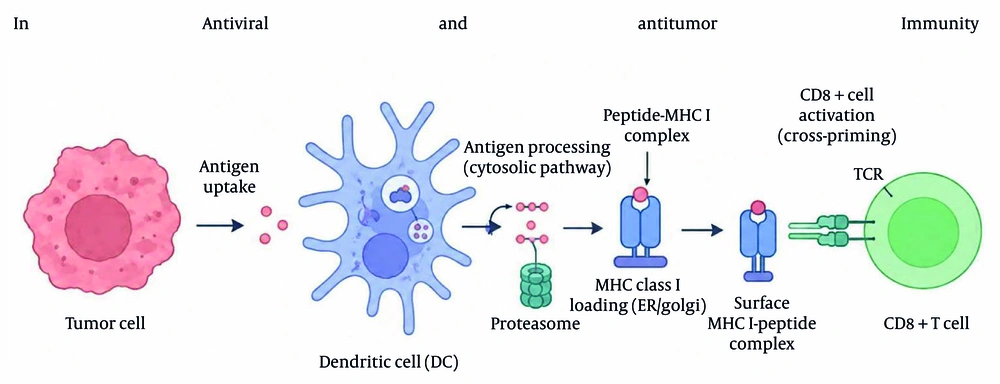
Mechanism of dendritic cell-mediated cross-presentation of tumor antigens. Following antigen uptake from tumor cells, dendritic cells process antigens and present peptide fragments on MHC-I molecules, thereby initiating CD8+ cytotoxic T-cell responses through cross-priming (created using BioRender).
3.2. Types of Dendritic Cell-Based Vaccines
3.2.1. Autologous vs Allogeneic Vaccines
3.2.2. Peptide-Loaded and Neoantigen Vaccines
3.2.3. DC/Tumor Fusion Vaccines
3.2.4. DC-Derived Exosome Vaccines
3.2.5. pDC-Based Vaccines
3.3. Design and Production of DC Vaccines
3.3.1. Monocyte Differentiation Into DCs
3.3.2. Antigen Loading Strategies
3.3.3. Maturation and Activation Signals
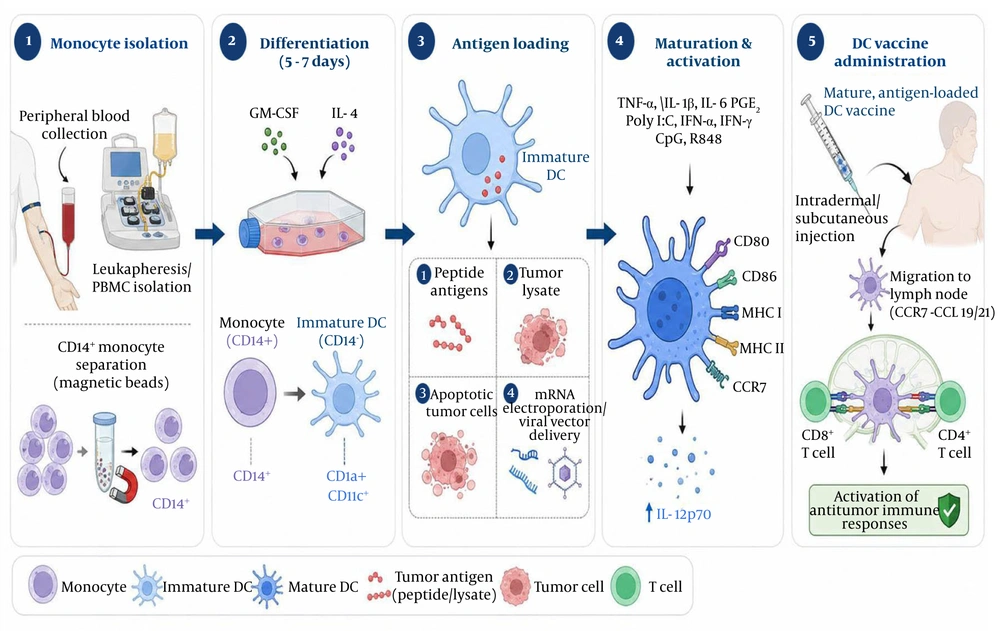
Schematic image of monocyte-derived dendritic cell (MoDC) vaccine generation and preparation. The workflow illustrates: (1) isolation of CD14 + monocytes from patient PBMCs, (2) cytokine-driven differentiation (GM-CSF/IL-4) into immature DCs, (3) tumor antigen loading using alternative strategies, (4) cocktail-induced maturation and activation (characterized by upregulated CCR7, MHC, and costimulatory molecules), and (5) therapeutic administration to trigger CD4 +and CD8 + T-cell-mediated antitumor immunity.
3.4. Mechanisms of DC Vaccines Against Tumors
3.4.1. Overview of DC-Based Vaccine Mechanisms
3.4.2. Activation of CD8+ Cytotoxic T Lymphocytes
3.4.3. Activation of CD4+ Helper T Cells
3.4.4. Induction of Immunological Memory
3.4.5. Interaction With the Tumor Microenvironment
3.4.6. Synergy With Other Immunotherapies
3.5. Clinical Evidence
3.5.1. Organ-Specific Clinical Evidence
3.5.1.1. Melanoma
| Authors (y) | Main Objective | Stage of disease | Cell type used | conclusion |
|---|---|---|---|---|
| Bulgarelli et al. (50); (2025) | Evaluate the safety and immune activity of autologous DC vaccination as adjuvant therapy in resected stage III/IV melanoma | Resected Stage III/IV melanoma | Autologous DCs | Induces immunological activity; May improve relapse-free survival (RFS) |
| Ribas et al. (51); 2004 | Further characterize the immune activity of MART-1 peptide-pulsed DC vaccine and assess its link with determinant spreading | Stage II-IV melanoma | Autologous ex vivo generated immature DC pulsed with MART-1 (23, 24, 25, 26, 27, 28, 29, 30) peptide | The vaccine induced immunologic activity.; Determinant spreading may indicate an effective antitumor response.; DC phenotype and cytokine profile did not correlate with T-cell induction.; Clinical efficacy remains uncertain.; Sequential CTLA-4 blockade may enhance immune effects. |
| Oshita et al. (52); 2012 | Evaluate the efficacy of a peptide-pulsed dendritic cell vaccine in metastatic melanoma (mainly HLA-A24) | Metastatic melanoma (mostly chemo resistant) | Autologous DCs pulsed with a 5-peptide melanoma antigen cocktail (gp100, tyrosinase, MAGE-A2, MAGE-A3, MART-1/MAGE-A1) + KLH | Peptide-pulsed DC vaccination induced strong anti-tumor immune responses.; Immune response markers correlated with better prognosis.; DC vaccination was associated with a significant prolongation of overall survival in metastatic melanoma. |
| Bulgarelli et al. (53); 2019 | Evaluate TNE changes after DC vaccination in metastatic melanoma | Melanoma metastatic | Autologous DC loaded with tumor lysate/homogenate | DC vaccination "heated up" the TME.; But tumors simultaneously upregulated PDL1, causing adaptive resistance.; This supports DC vaccine + checkpoint inhibitor combination strategies. |
| Dannull et al. (54); 2013 | Evaluate whether DCs engineered to process antigens via constitutive proteasomes (cPs) improve anti-melanoma immune responses | Metastatic melanoma | Monocyte-derived mature DC transfected with RNA encoding melanoma antigens (MART-1, MAGE-3, gp100, tyrosinase) | CP-engineered DCs generated stronger and more durable antigen-specific T-cell responses.; They reduced circulating melanoma cells and induced tumor-specific cytotoxicity.; Only the CP-engineered group showed clinical responses (1 PR, 1 CR), suggesting enhanced therapeutic efficacy. |
| Chakraborty et al. (55); 2004 | To evaluate how CD4+ T-regulatory cells influence antitumor CTL responses after vaccination with peptide- or tumor lysate-loaded APC/DC vaccines in melanoma patients | Melanoma cancer | Autologous APC/DCs loaded with MART-1 (23, 24, 25, 26, 27, 28, 29, 30), MAGE-1 (161 - 169) peptides, or autologous tumor lysate | Vaccination induced a transient expansion of antigen-specific CTLs in peripheral blood.; This CTL response subsequently declined in parallel with an expansion of CD4+CD25+ T cells.; Findings indicate that CD4+CD25+ regulatory T cells can down-modulate vaccine-induced antitumor CTL responses. |
| Lesterhuis et al. (56); 2011 | To compare wild-type vs. modified gp100 peptides (with higher MHC class I affinity) for DC loading in advanced melanoma vaccination | Metastatic melanoma (HLA-A2.1+) | Autologous mature DCs loaded with KLH, tyrosinase peptide, and either wild-type or modified gp100 peptides | Both wild-type and modified peptide vaccines were similarly immunogenic.; Only 3 patients developed detectable gp100-specific T cells; Two long-term complete responses occurred (one in each group), indicating no clear benefit from peptide modification. |
| Schreibelt et al. (57); 2016 | To evaluate the feasibility, safety, and immune efficacy of vaccination with primary circulating CD1c(+) myeloid DCs in stage IV metastatic melanoma patients | Stage IV metastatic melanoma, treatment-naïve for metastatic disease | Autologous primary CD1c(+) myeloid DCs, briefly activated ex vivo and loaded with tyrosinase and gp100 antigens | Vaccination induced multifunctional CD8+ T-cell responses with cytolytic activity (e.g., high CD107a, IFNγ, TNFα).; Primary myeloid DC vaccination is feasible, safe, and promotes effective anti-tumor immunity linked to clinical benefit. |
| Escobar et al. (58); 2005 | To evaluate toxicity, immunological, and clinical responses of autologous DCs pulsed with melanoma cell lysate alone or combined with low-dose IL-2 in stage III/IV melanoma patients | Stage III or IV malignant melanoma | Autologous monocyte-derived DCs pulsed with melanoma cell lysate | 50% patients showed increased IFN-γ responses, confirming immune activation.; Positive delayed-type hypersensitivity (DTH) correlated with disease stability and survival.; Combination with IL-2 did not significantly enhance responses; vaccination alone is safe and partially effective. |
| Chang et al. (59); 2009 | To evaluate the efficacy and safety of autologous melanoma apoptotic bodies (MAB)-pulsed DCvaccination in metastatic melanoma patients | Metastatic refractory melanoma | Autologous monocyte-derived DCs pulsed with melanoma apoptotic bodies (MAB) | MAB-pulsed DC vaccine showed modest efficacy: 1 partial response, 2 stable disease > 24 months.; Delayed-type hypersensitivity to KLH was consistent; no DTH to tumor antigens.; Safe but limited clinical benefit; suggests need for combination with other therapies. |
| Vreeland et al. (60); 2021 | To evaluate safety and efficacy of tumor lysate particle-loaded dendritic cell (TLPLDC) vaccine in preventing recurrence in resected stage III/IV melanoma patients (randomized, placebo-controlled Phase IIb trial) | Resected stage III/IV melanoma | Autologous DCs loaded with tumor lysate particles (TLPLDC vaccine) | Vaccine improved 24-month disease-free survival (DFS) in patients completing primary vaccine series (62.9% vs. 34.8%).; No DFS difference in intention-to-treat (ITT) analysis.; Supports further Phase III trial combining TLPLDC with checkpoint inhibitors. |
| Davar et al. (61); 2024 | Evaluate neoadjuvant intratumoral TLR9 agonist vidutolimod plus anti-PD-1 nivolumab in high-risk resectable melanoma | High-risk resectable melanoma | Tumor and peripheral immune cells analyzed, especially CD8+ T cells, plasmacytoid dendritic cells / pDCs, myeloid cells, macrophage-related signature | Vidutolimod + nivolumab produced a 55% major pathologic response in high-risk resectable melanoma.; Response was associated with broad immune activation, including increased CD8+ T cells and pDCs in the tumor microenvironment.; Baseline myeloid gene signatures and gut microbiota composition may help predict response. |
| Vounckx et al. (62); 2024 | Evaluate safety, feasibility, and efficacy of SBRT + pembrolizumab with or without intratumoral avelumab/ipilimumab + myeloid dendritic cells in anti-PD-1-pretreated oligometastatic patients | Anti-PD-1-pretreated oligometastatic patients | Isolated autologous CD1c/BDCA-1+ and CD141/BDCA-3+ myeloid dendritic cells / myDCs | SBRT plus pembrolizumab with intratumoral checkpoint blockade and myDC injection was safe and feasible.; Arm A showed a 20% objective response rate, with 2 partial responses among 10 patients.; The trial failed to meet its primary endpoint, as 1-year PFS remained low. |
| Bhardwaj et al. (63); 2020 | Test whether Flt3 ligand / CDX-301 pre-treatment can expand dendritic cells and enhance immune responses to a DC-targeting anti-DEC-205-NY-ESO-1 vaccine | High-risk melanoma patients | DEC-205+ dendritic cells targeted in vivo; no ex vivo cellular vaccine used | Flt3 L/CDX-301 expanded circulating dendritic cells, including cDC1, cDC2, and pDCs.; Anti-DEC-205-NY-ESO-1 vaccine plus poly-ICLC induced significant NY-ESO-1-specific humoral and T-cell responses. |
| Carpenter et al. (64); 2023 | To evaluate whether TLPLDC and TLPO vaccines could prevent melanoma recurrence in high-risk patients | Clinically disease-free stage III/IV melanoma | TLPLDC: ex vivo matured autologous DCs loaded with yeast cell wall particles containing autologous tumor lysate. TLPO: autologous tumor lysate-loaded yeast particles designed for in vivo DC loading | TLPO and TLPLDC without G-CSF were associated with significantly better DFS and OS compared with placebo/TLPLDC+G-CSF groups.; The addition of G-CSF during DC harvest did not improve vaccine efficacy and was linked to poorer survival outcomes |
| Slingluff et al. (65); 2003 | To compare clinical and immunologic responses to a multipeptide melanoma vaccine given either with GM-CSF/Montanide adjuvant or loaded onto monocyte-derived DCs | Advanced melanoma | Two vaccine approaches: 1) melanoma peptides + tetanus helper peptide with GM-CSF and Montanide ISA-51, 2) peptides pulsed on monocyte-derived dendritic cells | The GM-CSF/Montanide peptide vaccine produced stronger melanoma-specific T-cell responses than the DC-pulsed peptide vaccine.; Clinical tumor regression occurred in a small number of patients, mainly in the GM-CSF/adjuvant group. |
| Saberian et al. (66); 2021 | To determine whether adding MART-1 peptide-pulsed DCs to adoptive TIL therapy improves persistence of MART-1-specific T cells and clinical responses | Advanced stage IV melanoma | Tumor-infiltrating lymphocytes / TILs, especially MART-1-specific CD8+ T cells; plus monocyte-derived DCs pulsed with MART-1 peptide | MART-1-specific TILs persisted well after infusion in both treatment arms.; Adding MART-1-pulsed DCs did not significantly improve TIL persistence compared with TIL alone |
| Storkus et al. (67); 2021 | To evaluate the safety and immunologic/clinical activity of a type-1-polarized DC vaccine targeting tumor blood vessel antigens/TBVA combined with dasatinib in HLA-A2+ patients with advanced melanoma | Advanced melanoma: cutaneous | Monocyte-derived type-1-polarized dendritic cells/DC1 loaded with HLA-A2 peptides from TBVA: DLK1, EphA2, HBB, NRP1, RGS5, TEM1; combined with dasatinib | The vaccine induced specific CD8+ T-cell responses against tumor blood vessel antigens in 6/13 evaluable patients.; Responding tumors showed signs of stronger immune activation, including TCR convergence, inflammatory immune infiltration, and formation of tertiary lymphoid structures/TLS. |
| Jansen et al. (68); 2020 | To evaluate the safety and activity of adjuvant TriMixDC-MEL compared with standard follow-up in melanoma patients | Stage III/IV melanoma | Autologous monocyte-derived dendritic cells co-electroporated with mRNA encoding CD40 L, CD70, caTLR4, and melanoma-associated antigens; vaccine known as TriMixDC-MEL | TriMixDC-MEL as adjuvant therapy was safe and tolerable, with only transient local reactions, flu-like symptoms, and chills.; Gene expression profiling suggested four possible predictive biomarkers: STAT2, TPSAB1, CD9, CSF2. |
| Chick et al. (69); 2021 | To evaluate efficacy of TLPLDC vaccine versus placebo in subgroup analyses of a randomized, blinded phase IIb trial, especially in patients with resected stage III/IV melanoma and possible interaction with checkpoint inhibitors | Resected stage III/IV melanoma, patients rendered disease-free by surgery | TLPLDC vaccine: tumor lysate, particle-loaded, dendritic cell vaccine; a cell-based autologous vaccine strategy | TLPLDC vaccine was safe in resected stage III/IV melanoma patients.; DFS benefit was mainly seen in patients who completed the full vaccine series, especially resected stage IV patients.; Results support phase III testing of TLPLDC with checkpoint inhibitors. |
| Dillman et al. (70); 2018 | To compare autologous tumor cell vaccine / TCV with autologous dendritic cell vaccine / DCV loaded with autologous tumor-associated antigens in metastatic melanoma | Metastatic melanoma | Autologous dendritic cells loaded ex vivo with autologous tumor-associated antigens; compared with autologous tumor cell vaccine | DCV improved overall survival compared with TCV in metastatic melanoma.; Median OS was 43.4 months with DCV vs 20.5 months with TCV.; DCV had minimal toxicity, and DTH reactions did not predict survival benefit. |
| Ribas et al. (71); 2010 | To evaluate the efficacy and antitumor activity of IDD-3 dendritic cell vaccine in favorable-prognosis metastatic melanoma | Limited metastatic melanoma involving skin/subcutaneous tissue/lung; stage IIIc, M1a, M1b | IDD-3: autologous monocyte-derived mature DCs, pulsed with lysates from three allogeneic melanoma cell lines | IDD-3 induced strong immune activation against melanoma antigens.; Antitumor activity was observed, with 1 CR, 2 PR, and tumor growth control rate of 27%.; Toxicity was minimal, supporting further evaluation of mature DC vaccines. |
| Ellebaek et al. (72); 2012 | To evaluate whether adding metronomic cyclophosphamide and celecoxib to a DC vaccine can reduce immunosuppression and improve efficacy | Progressive metastatic melanoma | Autologous DC vaccine pulsed with survivin, hTERT, and p53 peptides in HLA-A2+ patients or tumor lysate in HLA-A2- patients; combined with IL-2, cyclophosphamide, and celecoxib | Stable disease was observed in 57% of patients, with prolonged SD in some cases.; Immune responses increased after vaccination, but regulatory T cells did not decrease. |
| van den Hout et al. (73); 2016 | To evaluate whether local low-dose CpG-B ± GM-CSF can strengthen immune defenses in the sentinel lymph node, SLN, before SLN excision | Clinical stage I-II melanoma; pre-surgical | DC-targeting immune adjuvant approach: intradermal CpG-B alone or combined with GM-CSF around the melanoma excision site | Low-dose CpG ± GM activated antitumor immunity in the sentinel lymph node, increasing melanoma-specific CD8 T cells.; Treatment also increased Treg activity (FoxP3↑, CTLA-4↑, IL-10↑), partially counterbalancing the immune boost.; SLN metastases were reduced in CpG and CpG+GM groups compared to saline. |
| Butterfield et al. (74); 2017 | to evaluate adjuvant GM-CSF and/or multiepitope melanoma peptide vaccine versus placebo | Completely resected high-risk stage III/IV melanoma | Multiepitope melanoma peptide vaccine: Tyrosinase, gp100, MART-1 peptides in montanide ± GM-CSF as DC-stimulating adjuvant | No significant RFS or OS improvement was observed with peptide vaccine or GM-CSF versus placebo.; Vaccination increased peptide-specific CD8+ T-cell responses compared with no vaccine.; Anti-GM-CSF neutralizing antibodies correlated with improved RFS and OS. |
| Dillman et al. (75); 2012 | To compare two patient-specific immunotherapy products: autologous tumor cell vaccine vs autologous DC vaccine loaded with tumor antigens | Metastatic melanoma | Autologous DC vaccine loaded with antigens from autologous melanoma cells vs irradiated autologous proliferating tumor cell vaccine; both with GM-CSF | DC vaccine improved survival compared with tumor cell vaccine.; Median survival was not reached in the DC arm vs 15.9 months in the tumor cell vaccine arm.; Treatment was well tolerated, supporting DC vaccine as a consolidation immunotherapy. |
| Schadendorf et al. (76); 2006 | To compare autologous peptide-loaded DC vaccination with standard dacarbazine, DTIC, chemotherapy | Stage IV melanoma | Autologous dendritic cell vaccine loaded with MHC class I and II-restricted peptides | DC vaccination was not superior to DTIC chemotherapy in stage IV melanoma.; Objective response was low in both groups: DC 3.8% vs DTIC 5.5%.; Better survival in the DC arm was associated with Karnofsky = 100 and HLA-A2+/HLA-B44- haplotype. |
| Bloemendal et al. (77); 2021 | To evaluate immunological responses to adjuvant vaccination with naturally occurring dendritic cell subsets in melanoma | Completely resected stage III melanoma | Naturally occurring DC subsets: CD1c+ myeloid dendritic cells / cDC2s, plasmacytoid dendritic cells / pDCs, or their combination | Natural DC vaccine production was feasible for all patients, with vaccines meeting release criteria.; Vaccination induced strong immunological responses: antigen-specific CD8+ T cells were detected in 80% of skin test-derived T cells and 55% of peripheral blood samples.; The treatment was safe, causing only grade 1 - 2 adverse events, mainly fatigue. |
| Charles et al. (78); 2020 | To evaluate the safety, tolerability, and immunogenicity of an allogeneic plasmacytoid dendritic cell line-based melanoma vaccine, and explore its potential combination with immune checkpoint blockade | Metastatic stage IV melanoma | Allogeneic irradiated plasmacytoid dendritic cell line / PDC line, loaded with 4 melanoma antigens; circulating anti-tumor specific T lymphocytes analyzed | The allogeneic PDC line-based vaccine was safe and well tolerated, with no serious vaccine-induced adverse events.; It induced immune activation in some patients, including increased circulating anti-tumor specific T cells and a shift from naïve to memory phenotype.; Preliminary clinical activity was observed, including 4 stable diseases by IrRC, vitiligoid lesions, and survival of 4 patients at week 48; combination with anti-PD-1 was supported by in vitro synergy. |
| Adams et al. (79); 2023 | To compare clinical outcomes and RNA gene-expression profiles of TLPLDC vaccine according to dendritic cell harvest method, with or without G-CSF pretreatment | Resected stage III/IV melanoma | Autologous dendritic cells loaded with autologous tumor lysate packaged in yeast cell wall particles / YCWPs; DCs harvested either by direct blood draw or after G-CSF pretreatment; RNA-seq performed on TLPLDC vs TLPLDC+G vaccines | TLPLDC vaccine without G-CSF improved outcomes, with better 36-month DFS and OS than TLPLDC+G or placebo.; G-CSF pretreatment appeared detrimental or non-beneficial, because TLPLDC+G outcomes were similar to placebo.; RNA-seq showed that directly harvested TLPLDC vaccines had upregulated DC maturation genes and downregulated genes linked to DC suppression or immaturity. |
| De Keersmaecker et al. (80); 2020 | To evaluate TriMixDC-MEL IPI-induced tumor-associated antigen-specific T-cell responses in peripheral blood of melanoma patients | Pretreated stage III/IV advanced melanoma | Monocyte-derived dendritic cells electroporated with mRNA encoding CD70, CD40 L, constitutively active TLR4, and melanoma antigens tyrosinase, gp100, MAGE-A3, MAGE-C2; PBMC-derived T-cell responses analyzed | TriMixDC-MEL + ipilimumab elicited specific T-cell responses against melanoma antigens in most evaluable patients; ELISPOT responses were seen in 12/15 patients.; Patients with complete or partial responses had stronger, broader, and more multifunctional T-cell responses than patients with stable/progressive disease.; Polyfunctional and multiantigen CD8+ T-cell responses may be a benchmark for achieving sustained remission in melanoma. |
| Santos et al. (81); 2020 | To investigate immune and molecular features associated with clinical response to DC vaccines expressing three full-length melanoma antigens | Melanoma patients receiving DC vaccination | Melanoma antigen-specific CD8 T cells, dendritic cells expressing three full-length melanoma antigens, lymphocytes, and tumor samples | Antigen expression level in DCs did not significantly affect T-cell or clinical responses.; Better clinical outcomes were associated with low PD-1 expression on melanoma antigen-specific CD8 T cells.; High immune checkpoint gene expression networks, including PD-1 and CTLA-4, correlated with poorer clinical outcomes. |
| van Decar et al. (82); 2024 | To compare TLPO vaccine with TLPLDC vaccine in patients with resected Stage III/IV melanoma, evaluating recurrence and survival outcomes | Resected Stage III/IV melanoma | TLPLDC: ex vivo dendritic cells loaded with autologous tumor lysate particles.; TLPO: yeast cell wall particles loaded with autologous tumor lysate, injected directly for in vivo DC loading | TLPO and TLPLDC showed equivalent clinical outcomes, with no significant difference in DFS or OS between the two vaccine arms.; Both vaccines were well tolerated, with no difference in related adverse events between treatment groups.; Because TLPO avoids ex vivo DC manufacturing and has practical manufacturing advantages, further testing in a Phase III trial is warranted. |
| Dasyam et al. (83); 2023 | To determine whether adding α-galactosylceramide / α-GalCer to autologous NY-ESO-1 long peptide-pulsed DC vaccines improves NY-ESO-1-specific T cell responses compared with peptide-pulsed DC vaccine alone | Fully resected stage II-IV malignant cutaneous melanoma | Autologous monocyte-derived mature dendritic cells loaded with long NY-ESO-1-derived peptides, with or without α-GalCer; analyzed NY-ESO-1-specific T cells, mainly CD4+ T cells, and type 1 NKT cells | The vaccine was well tolerated and induced increases in total T cell responses, predominantly CD4+ T cells.; Adding α-GalCer did not significantly improve NY-ESO-1-specific T cell responses compared with DC vaccine alone.; NKT cell activation by α-GalCer was limited, with no significant increase in circulating NKT cells or cytokine responses in the α-GalCer arm. |
| Maurer et al. (84); 2020 | To profile autologous DC vaccines used in melanoma patients and identify critical molecules/pathways responsible for effective antitumor immune activation | Melanoma cancer | Autologous dendritic cell vaccines, melanoma patient DCs, antigen-specific CD8+ and CD4+ T cells from naïve donors; analyzed ICOSL, NF-κB signaling | Ex vivo maturation-induced checkpoint/costimulatory molecules in DC vaccines correlated with in vivo vaccine activity.; Melanoma patient DCs showed reduced surface ICOSL expression and defective intrinsic canonical NF-κB signaling, which impaired optimal T-cell priming.; Soluble/extracellular ICOSL released from vaccine DCs positively correlated with clinical outcomes, suggesting ICOSL/NF-κB and ADAM10/17-regulated shedding as therapeutic optimization targets. |
3.5.1.2. Glioblastoma
| Authors (y) | Main Objective | Stage of Disease | Cell Type Used | Conclusion |
|---|---|---|---|---|
| Yao et al. (88); 2018 | To evaluate safety and efficacy of a dendritic cell vaccine loaded with glioblastoma stem cell-like (GSC) antigens in GBM patients (double-blind placebo-controlled phase II trial) | GBM (post-surgery; primary or recurrent GBM) | Autologous DCs loaded with GSC antigens | DC vaccination significantly prolonged overall survival after adjustment for molecular factors.; Patients with IDH1WT / TERT-mutant tumors showed improved OS and PFS with increased IFN-γ and CCL22 levels.; Low B7-H4 expression identified patients more likely to benefit from DC vaccine therapy. |
| S Vleeschouwer et al. (89); 2008 | To investigate feasibility, safety, and therapeutic impact of adjuvant vaccination with autologous mature DCs loaded with autologous tumor lysate in relapsed GBM | Relapsed glioblastoma multiforme (WHO grade IV) | Autologous mature DCs loaded with autologous tumor lysate | DC vaccination was feasible and generally safe, with evidence of some long-term survival.; Faster vaccination schedules showed a trend toward improved progression-free survival.; Better outcomes were associated with younger age and especially minimal residual disease/total resection at vaccination start. |
| Akiyama et al. (90); 2012 | To evaluate safety, feasibility, and immunological/clinical effects of α-type-1 polarized dendritic cell (DC1) immunotherapy in recurrent high-grade glioma patients (HLA-A2/A24) | Recurrent high-grade gliomas (including GBM) | Autologous monocyte-derived α-type-1 polarized DCs pulsed with HLA-A2/A24-restricted synthetic peptides | DC vaccine induced peptide-specific immune responses in majority of patients.; Clinical benefit was limited, but one patient receiving multiple vaccinations showed prolonged recurrence-free survival. |
| Vik-Mo et al. (91); 2013 | To evaluate the feasibility, safety, immunogenicity, and potential clinical benefit of a DC vaccine targeting glioblastoma cancer stem cells (CSCs) | Glioblastoma after surgery and standard post-operative radio-chemotherapy | Autologous monocyte-derived DCs transfected with amplified mRNA from autologous glioblastoma cancer stem cells (tumorspheres) | CSC-targeted DC vaccination induced immune responses in all treated patients.; Vaccinated patients showed markedly longer progression-free survival than matched controls, suggesting potential clinical benefit. |
| Sakai et al. (92); 2015 | To evaluate the safety, feasibility, and immune responses of WT1-pulsed dendritic cell vaccination in patients with relapsed malignant glioma | Relapsed malignant gliomas (6 GBM, others anaplastic gliomas) | Autologous dendritic cells pulsed with WT1 peptide and/or autologous tumor lysate, administered with OK-432 adjuvant | WT1-pulsed DC vaccination was safe and feasible in relapsed malignant glioma patients.; Vaccine induced WT1-specific CTL responses and positive skin reactions in most patients.; Disease stabilization observed in several patients, with tumor shrinkage and neurological improvement in some cases. |
| Ardon et al. (93); 2012 | To evaluate feasibility, safety, and clinical efficacy of integrating dendritic cell vaccination into standard postoperative radiochemotherapy in newly diagnosed GBM | Newly diagnosed glioblastoma | Autologous DC loaded with autologous tumor antigens (tumor lysate-based DC vaccine) | Integration of DC vaccination with standard radiochemotherapy was feasible and safe.; Promising survival outcomes were observed; Better outcomes were associated with favorable prognostic factors such as lower RPA class and MGMT promoter methylation. |
| Erhart et al. (94); 2018 | To investigate immune factors associated with outcome and the immunological effects of Audencel in GBM patients treated in a phase II trial | GBM | Audencel: autologous dendritic cells loaded with autologous whole tumor lysate and matured in vitro with danger signals | Audencel did not improve progression-free or overall survival and showed no clinical efficacy in the phase II trial.; Despite lack of clinical benefit, Audencel induced measurable immune activation, including Th1-related responses (e.g., IFN-γ, IL-2, T-bet).; Better survival was associated with favorable pre-existing and post-vaccination immune parameters, suggesting a role for biomarkers and combination strategies. |
| Sampson et al. (95); 2009 | to evaluate the safety and immunogenicity of a DC-based vaccine targeting the tumor-specific EGFRvIII mutation in newly diagnosed GBM | Newly diagnosed GBM after gross-total resection and radiotherapy | Autologous mature DCs pulsed with EGFRvIII-specific peptide conjugated to KLH | EGFRvIII-targeted DC vaccination was safe and feasible in newly diagnosed GBM patients; Most patients developed EGFRvIII-specific immune responses.; Survival outcomes appeared encouraging compared with historical expectations, supporting EGFRvIII as a tumor-specific immunotherapy target. |
| Chang et al. (96); 2010 | To evaluate the clinical and immunological effects of autologous dendritic cell-tumor vaccine therapy in patients with malignant glioma after surgery | Malignant glioma (newly diagnosed and relapsed cases) | Autologous dendritic cells loaded with autologous tumor antigens (DC-tumor vaccine) | DC-tumor vaccination increased tumor-infiltrating CD8+ lymphocytes and showed evidence of tumor shrinkage.; Survival appeared longer compared with historical controls. Treatment was generally safe, with only transient liver enzyme elevations reported. |
| Ridolfi et al. (97); 2024 | To evaluate 3-month PFS and safety of DCvax combined with standard therapy in resected glioblastoma patients | Resected glioblastoma / grade 4 | Dendritic cell vaccine using patient-derived tumor material; immune response assessed by DTH skin test to KLH and autologous tumor homogenate | DCvax plus standard RT-TMZ/TMZ therapy was well tolerated in resected GBM patients.; No DCvax-related grade 3 - 4 toxicities were observed in the first 9 evaluable patients.; The trial met its first-step criteria, with median PFS of 12.2 months from surgery, so enrollment continued. |
| Everson et al. (98); 2024 | To evaluate whether adding TLR agonists — poly-ICLC or resiquimod — to ATL-DC vaccination improves immune potency and safety | Newly diagnosed or recurrent WHO grade III-IV malignant gliomas | Autologous tumor lysate-pulsed dendritic cells / ATL-DC; analyzed CD4+ T cells, CD8+ T cells, monocytes, and interferon-response genes | ATL-DC vaccination combined with TLR agonists was safe in malignant glioma patients.; Poly-ICLC enhanced interferon-related immune activation, especially in monocytes and T cells.; Higher interferon-response gene expression correlated with prolonged survival and delayed progression, suggesting a potential blood biomarker. |
| Bota et al. (99); 2025 | To evaluate the feasibility, safety, and clinical outcomes of autologous DC-ATA vaccine added to standard RT/TMZ and adjuvant TMZ | Newly diagnosed glioblastoma | Autologous dendritic cells differentiated from peripheral blood monocytes and loaded with autologous tumor antigens / ATA from short-term autologous tumor cell lines | DC-ATA vaccine was feasible and well tolerated in newly diagnosed GBM patients.; Median PFS was 10.7 months, reported as higher than historical standard-treatment trial medians.; Outcomes worsened after vaccine completion, suggesting longer or extended vaccination may be needed to improve OS. |
| Mitsuya et al. (100); 2020 | To evaluate the therapeutic effect of peptide-cocktail-pulsed α-type-1 DC vaccine combined with standard therapy in newly diagnosed high-grade glioma patients | Newly diagnosed high-grade gliomas | α-type-1 dendritic cells generated from enriched monocytes and pulsed with a cocktail of 5 synthetic peptides; CTL responses analyzed by ELISPOT | α -type-1 DC vaccines produced high levels of IL-12, which may enhance antitumor T-cell immunity.; 10 of 15 evaluable patients developed peptide-specific CTL responses by ELISPOT.; After 6 years, 5 patients were still alive and 2 were relapse-free, suggesting a potential survival benefit. |
| Liau et al. (101); 2018 | To evaluate whether adding DCVax-L, an autologous tumor lysate-pulsed dendritic cell vaccine, to standard therapy improves outcomes in glioblastoma | Newly diagnosed glioblastoma | Autologous dendritic cells pulsed with autologous tumor lysate; vaccine: DCVax-L | DCVax-L was feasible and safe when added to standard surgery, radiotherapy, and temozolomide in newly diagnosed GBM.; Median OS in the ITT population was 23.1 months, and patients with MGMT promoter methylation had longer survival: 34.7 months.; The study showed an extended-survivor population, but interpretation is complicated because nearly 90% of patients eventually received DCVax-L due to crossover. |
| Bota et al. (102); 2022 | To evaluate manufacturing success, safety, and survival outcomes of AV-GBM-1, an autologous DC vaccine loaded with irradiated autologous tumor-initiating cell lysate | Newly diagnosed GBM | Autologous dendritic cells incubated with lysate of irradiated autologous Tumor-Initiating Cells / TICs; vaccine admixed with GM-CSF before subcutaneous injection | AV-GBM-1 manufacturing was highly successful, with 97% success for both TIC production and monocyte collection, and vaccine produced for 63/63 patients.; The vaccine was generally well tolerated, with mainly injection-site reactions and flu-like symptoms attributed to treatment.; mPFS was encouraging at 10.4 months, but mOS was 16.0 months, so no clear overall survival improvement was shown. |
| Batich et al. (103); 2020 | To evaluate long-term clinical outcomes and vaccine migration across sequential clinical trials using CMV-specific DC vaccines in patients with newly diagnosed GBM | Newly diagnosed glioblastoma | Autologous dendritic cells targeting cytomegalovirus / CMV antigens, with assessment of DC vaccine migration to draining lymph nodes | CMV-specific DC vaccines were associated with exceptional long-term survival in a subset of newly diagnosed GBM patients.; Across sequential trials, nearly one third of the vaccinated population remained without recurrence or survived long-term, including 5-year survival rates around 36% in one study.; Enhanced DC migration to draining lymph nodes was observed in a two-arm trial and reproduced in a larger confirmatory study, suggesting a potentially important mechanism for vaccine efficacy. |
| Wen et al. (104); 2019 | To evaluate efficacy, safety, quality of life, and immune response of ICT-107 in newly diagnosed GBM | Newly diagnosed glioblastoma (HLA-A1+ and/or HLA-A2+ patients) | Autologous dendritic cells pulsed with six synthetic peptide epitopes targeting MAGE-1, HER-2, AIM-2, TRP-2, gp100, and IL13Rα2; control arm used unpulsed DC | ICT-107 was safe and well tolerated, with no meaningful difference in adverse events compared with unpulsed DC control.; In the ITT population, PFS improved significantly by 2.2 months, but OS improvement of 2.0 months was not statistically significant.; HLA-A2 patients showed stronger immune responses and greater clinical benefit, suggesting that HLA restriction and antigen presentation strongly influenced vaccine activity. |
| Inogés et al. (105); 2017 | To evaluate feasibility, safety, immune response, PFS, and OS after adding tumor lysate-pulsed autologous DC vaccination to maximal safe resection plus radiotherapy and temozolomide | Newly diagnosed GBM | Autologous dendritic cells generated from peripheral blood monocytes and pulsed with autologous whole tumor lysate | Tumor lysate-pulsed autologous DC vaccination was feasible and safe, with no severe adverse effects related to immunotherapy.; Survival outcomes were encouraging: median PFS = 12.7 months and median OS = 23.4 months.; A tumor-specific immune response after vaccination was detected in 11/27 patients, but this immune response did not correlate with survival. |
| Cho et al. (106); 2012 | To evaluate the effectiveness and safety of adjuvant autologous dendritic cell vaccine immunotherapy in patients with newly diagnosed GBM | Newly diagnosed GBM | Autologous dendritic cell vaccine, described as a whole-cell lysate DC vaccine; 10 vaccine inoculations over 6 months | Adjuvant autologous DC vaccination significantly improved overall survival, with median OS of 31.9 months versus 15.0 months in the control group.; 2-year and 3-year survival rates were significantly higher in the vaccine group, while the 1-year survival difference was not significant.; PFS was only slightly improved in the vaccine group, 8.5 vs 8.0 months, and this difference was not statistically significant. |
| Hu et al. (107); 2022 | To assess the safety and tolerability of an autologous dendritic cell (DC) vaccine in patients with GBM. | Newly diagnosed GBM and recurrent GBM cohorts | Autologous dendritic cells pulsed with lysate derived from an allogeneic GBM stem-like cell line | The autologous DC vaccine was found to be safe and well-tolerated in both newly diagnosed and recurrent GBM patient cohorts.; For newly diagnosed patients, the results were encouraging, with a median PFS of 8.75 months and a median overall survival of 20.36 months.; A subset of participants exhibited a measurable cytotoxic T-cell response, supporting the potential efficacy of immunotherapy as a treatment strategy for this aggressive malignancy. |
| Liau et al. (108); 2005 | o evaluate the feasibility, safety, and ability of autologous dendritic cell vaccination to induce systemic and intracranial T-cell responses in patients with glioblastoma multiforme. | Patients with histologically confirmed glioblastoma multiforme | Autologous dendritic cells pulsed with acid-eluted autologous tumor peptides | The vaccine induced measurable immune activity: 6 patients developed systemic antitumor CTL responses, and increased intratumoral cytotoxic T-cell infiltration was seen in some reoperated patients.; Clinical benefit seemed more likely in patients with less bulky or non-actively progressing tumors and tumors with low TGF-β2 expression, suggesting that tumor microenvironment factors strongly influence vaccine response. |
| Jan et al. (109); 2018 | To retrospectively evaluate clinical and immunological factors affecting outcomes in de novo GBM patients treated with autologous dendritic cell/tumor antigen vaccine therapy. | Newly diagnosed / de novo GBM | Autologous dendritic cells loaded with tumor antigens; described as autologous dendritic cell/tumor antigen vaccine, or ADCTA | Better outcomes were associated with younger age, gross total resection, and receiving CCRT with temozolomide.; A lower PD-1+/CD8+ ratio in tumor-infiltrating lymphocytes predicted longer OS and PFS.; A lower PD-1+/CD8+ ratio in PBMCs also predicted better survival and correlated with the tumor immune profile. |
| Batich et al. (110); 2017 | To evaluate pp65-specific cellular immune responses after dose-intensified temozolomide with pp65-targeted dendritic cell vaccination, and to assess effects on long-term PFS and OS in GBM patients | Newly diagnosed glioblastoma | Autologous dendritic cells pulsed with cytomegalovirus pp65 LAMP mRNA, given with GM-CSF | pp65-specific immune responses significantly increased after DI-TMZ plus three doses of pp65-DC vaccine.; Patients showed prolonged survival, with median PFS of 25.3 months and median OS of 41.1 months.; Despite increased regulatory T cells/Tregs after DI-TMZ, long-term PFS and OS were still observed. |
| Phuphanich et al. (111); 2013 | To evaluate the safety and immune responses induced by ICT-107, an autologous dendritic cell vaccine pulsed with class I peptides from glioma-associated antigens | Mainly newly diagnosed GBM | Autologous dendritic cells pulsed with class I TAA peptides: HER2, TRP-2, gp100, MAGE-1, IL13Rα2, and AIM-2 | ICT-107 was associated with immune responses in a subset of newly diagnosed GBM patients, with 33% immune responders among evaluable patients.; Higher pre-vaccine expression of several target antigens, especially MAGE-1 and AIM-2, correlated with longer PFS and OS.; Median survival outcomes in newly diagnosed GBM were encouraging: median PFS was 16.9 months and median OS was 38.4 months. |
| Prins et al. (112); 2011 | To assess the feasibility, safety, and toxicity of autologous tumor lysate-pulsed dendritic cell vaccination combined with TLR agonists, and to correlate clinical/immune responses with tumor gene expression profiles | Newly diagnosed and recurrent glioblastoma | Autologous dendritic cells pulsed with autologous glioma tumor lysate, followed by booster vaccination with TLR agonist adjuvants: imiquimod or poly-ICLC | Median overall survival was 31.4 months, with 1-, 2-, and 3-year survival rates of 91%, 55%, and 47%, respectively.; Patients with mesenchymal gene expression signatures appeared more responsive to DC vaccination and had more CD3+/CD8+ tumor-infiltrating lymphocytes |
3.5.1.3. Prostate Cancer
| Authors (y) | Main Objective | Stage of Disease | Cell Type Used | Conclusion |
|---|---|---|---|---|
| Xi et al. (116); 2002 | To evaluate safety, feasibility, and efficacy of DC vaccine loaded with rPSMA and rSurvivin peptides versus Docetaxel in hormone-refractory prostate cancer | Hormone-refractory prostate cancer (HRPC) | Autologous DCs loaded with recombinant PSMA and Survivin peptides Autologous DCs loaded with recombinant PSMA and Survivin peptides | DC vaccination induced immune responses (DTH) in all patients.; The DC arm demonstrated a higher objective response rate (ORR 72.7%) compared to the chemotherapy arm.; Disease stabilization and partial remissions were achieved, suggesting rPSMA/Survivin-DC vaccines are a safe and potent alternative to standard chemotherapy. |
| Thomas Kaskel et al. (117); 2006 | To evaluate feasibility, safety, and induction of antigen-specific immunity using PSCA and PSA peptide-pulsed DCs | Hormone- and chemotherapy-refractory prostate cancer | Autologous mature DCs pulsed with PSCA and PSA HLA-A2 binding peptides | DC vaccination targeting PSCA/PSA is safe and feasible in refractory patients.; Immune responses (DTH/tetramer) were linked to superior clinical outcomes.; Vaccine efficacy appears dependent on the patient's baseline immune competence. |
| Castiello et al. (118); 2017 | To identify DC molecular markers correlating with clinical and immunologic responses in TARP-peptide vaccination | Prostate carcinoma | Peptide-pulsed DCs (TARP) | DCs with a "less tolerogenic" gene signature are significantly more potent in inducing immune responses.; Specific markers (low CD14, IL-10, MCP-1 and high MDC) were identified as predictors of vaccine potency.; In-depth molecular characterization of DC products is critical to overcome the clinical efficacy hurdle in cell-based therapies. |
| Sonpavde et al. (119); 2017 | To evaluate safety and activity of BPX101 (CD40-modified APC vaccine) activated in vivo by Rimiducid | Metastatic castration-resistant prostate cancer (mCRPC) | Ad5f35-transduced autologous APCs expressing inducible CD40 (BPX101) | BPX101 allows for controlled, lymphoid-localized DC activation using a bioinert drug.; The platform showed promising clinical signals, including PSA declines and objective tumor regressions.; The strategy of combining antigen-targeting with inducible co-stimulation represents a robust, next-generation immunotherapy platform. |
| Frank et al. (120); 2010 | To evaluate safety and immunogenicity of an apoptotic tumor-DC vaccine modeled on PND immune responses | Prostate cancer | Autologous DCs pulsed with apoptotic allogeneic prostate tumor cells | The vaccine successfully induced both CD4+ and CD8+ T-cell proliferation without affecting regulatory T cells (Tregs).; It demonstrated significant clinical impact by slowing PSA velocity and doubling PSA doubling time.; Using apoptotic tumor cells is a potent strategy to harness natural anti-tumor immunity. |
| Pandha et al. (121); 2004 | To assess feasibility, toxicity, and immunogenicity of DC vaccine in advanced urological cancers | Hormone-refractory prostate cancer and metastatic renal cell carcinoma | Allogeneic tumor lysate-pulsed DCs (adjuvanted with KLH) | Cryopreservation of DC aliquots ensures consistent quality control and facilitates repeated administration.; The vaccine successfully induced both humoral and cellular (Th1/IFN-γ) immune responses.; Clinical benefit was observed in a subset of patients, including PSA stabilization/reduction and disease stabilization in renal cancer. |
| Waeckerle-Men et al. (122); 2006 | To evaluate the immunostimulatory capacity of autologous dendritic cells pulsed with multiple T-cell epitopes derived from four prostate-specific antigens in patients with advanced prostate cancer. | Advanced hormone-refractory prostate cancer | Autologous dendritic cells loaded with peptide epitopes from PSCA, PAP, PSMA, and PSA | The vaccine induced significant cytotoxic T-cell responses against all tested prostate-specific antigens.; Long-term vaccination with booster injections was associated with an increased PSA doubling time. |
| Rodríguez-Ruiz et al. (123); 2018 | To evaluate the safety, immune activity, and preliminary clinical efficacy of a combination radio-immunotherapy strategy using tumor-lysate-loaded dendritic cell vaccination, intratumoral Hiltonol, cyclophosphamide, and SABR in advanced cancer patients. | Advanced cancer patients; included a heavily pretreated castration-resistant prostate cancer patient | Monocyte-derived dendritic cells loaded with autologous tumor lysate and matured with poly-ICLC, TNF-α, and IFN-α; combined with intratumoral Hiltonol and SABR | The combination treatment was safe and well tolerated.; No objective responses were observed, but stable disease occurred in 9 patients, especially in the radiotherapy cohort.; The treatment induced immune-associated activity and showed signs of preliminary clinical efficacy, including an abscopal response in one prostate cancer patient. |
| Xi et al. (116); 2015 | To evaluate the safety, feasibility, clinical response, and immunological effects of a dendritic cell vaccine loaded with recombinant PSMA and Survivin peptides in patients with hormone-refractory prostate cancer (HRPC). | HRPC | Autologous dendritic cells loaded with recombinant PSMA and Survivin peptides; administered subcutaneously | DC vaccination was safe and well tolerated, with no grade 2 toxicity reported.; The vaccine induced cellular immune responses and delayed-type hypersensitivity in all patients. |
| Thomsen et al. (124); 2023 | To evaluate the safety, tolerability, immune effects, and preliminary clinical activity of combining prostate cryoablation with intratumoral autologous immature dendritic cells, with or without checkpoint inhibitors, in metastatic castration-resistant prostate cancer (mCRPC). | mCRPC | Prostate cryoablation + intratumoral autologous immature dendritic cells; in the second part, combined with checkpoint inhibitors (ipilimumab or pembrolizumab) | The combination was safe and well tolerated, with no dose-limiting toxicities and no adverse events grade 3.; Signs of antitumor immune activity were observed, including altered T-cell receptor repertoires.; About 33% of patients showed durable clinical benefit (>46 weeks), with a median overall survival of 40.7 months.; These findings support further phase II evaluation with biomarker-focused design. |
| Tryggestad et al. (125); 2022 | To evaluate whether a personalized dendritic cell vaccine could reduce the risk of biochemical relapse (BCR) after surgery in patients with high-risk prostate cancer | High-risk prostate cancer after robot-assisted laparoscopic prostatectomy (RALP), | Personalized dendritic cell (DC) vaccine | 11 of 20 patients remained BCR-free after long-term follow-up.; Vaccine-induced immune responses were associated with lower BCR risk, especially in high-risk subgroups such as EPE and ISUP grade 5 disease. |
| Vonderheide et al. (126); 2004 | To evaluate the safety, immunologic feasibility, and clinical impact of targeting human telomerase reverse transcriptase (hTERT) using a dendritic cell vaccine in advanced cancer patients | Advanced breast or prostate carcinoma; HLA-A2-positive patients | Ex vivo generated autologous dendritic cells pulsed with the HLA-A2-restricted hTERT I540 peptide, presented with keyhole limpet hemocyanin (KLH) | hTERT-specific T-cell responses were induced in 4 of 7 vaccinated patients, confirmed by tetramer, ELISPOT, and cytotoxicity assays.; The vaccine was well tolerated, with no significant toxicity despite hTERT expression in rare normal cells.; Clinical activity was limited but biologically meaningful: one patient showed partial tumor regression associated with CD8+ tumor-infiltrating lymphocytes. |
| Kongsted et al. (127); 2017 | To investigate whether adding an autologous dendritic cell vaccine (DCvac) to docetaxel induces immune responses and improves clinical outcomes in patients with metastatic castration-resistant prostate cancer | mCRPC | Autologous monocyte-derived dendritic cell vaccine (DCvac) | The addition of DCvac to docetaxel was safe, with vaccine-related toxicity mainly limited to local injection-site reactions.; Immune responses were induced in a substantial proportion of patients, with about 50% showing TAA-specific ELISpot responses and 78% showing vaccine-specific DTH responses.; Despite immunologic activity, no significant improvement was seen in PSA response, progression-free survival, or disease-specific survival compared with docetaxel alone. |
| Fuessel et al. (128); 2006 | To evaluate the safety, feasibility, and immunologic/clinical activity of a dendritic cell vaccine loaded with a peptide cocktail derived from multiple prostate cancer-associated antigens | HRPC | Autologous dendritic cells loaded with an HLA-A*0201-restricted peptide cocktail derived from PSA, PSMA, survivin, prostein, and trp-p8 | The vaccine was safe and feasible, with only local skin reactions reported.; Limited but encouraging clinical activity was observed: one patient achieved a partial PSA response and three others had stable PSA values or slower PSA increase. Antigen-specific CD8+ T-cell responses were detected in some clinical responders, particularly against prostein, survivin, and PSMA. |
| Westdorp et al. (129); 2019 | To investigate the immunological response and clinical outcome of vaccination with blood-derived dendritic cell subsets in patients with castration-resistant prostate cancer | Chemo-naive castration-resistant prostate cancer (CRPC) | Blood-derived mature CD1c+ myeloid dendritic cells (mDCs), plasmacytoid dendritic cells (pDCs), or a combination of both, stimulated with protamine/mRNA and loaded with NY-ESO-1, MAGE-C2, and MUC1 | Functional antigen-specific T cells were induced, particularly in delayed-type hypersensitivity skin-test biopsies rather than only peripheral blood.; Patients who developed functional antigen-specific T cells had better radiologic outcomes, with longer median rPFS compared with those without such T-cell responses. |
| Perambakam et al. (130); 2006 | To determine whether the HLA-A2-restricted PSA-derived peptide (PSA146 - 154) can induce specific anti-tumor T-cell immunity in prostate cancer patients | Locally advanced or metastatic prostate cancer | Vaccination with PSA146 - 154 peptide + GM-CSF by intradermal injection, or autologous dendritic cells pulsed with PSA146 - 154 peptide by intravenous administration | About 50% of patients developed positive DTH responses, indicating induction of antigen-specific cellular immunity.; T cells recovered from DTH sites showed PSA-specific cytokine responses and, in some patients, cytolytic CD8+ activity.; The immune response was predominantly type-1 biased (especially IFN-γ and TNF-α), suggesting biologically meaningful T-cell activation.; The study supports immunogenicity, but does not establish strong clinical benefit such as survival improvement. |
| Fucikova et al. (131); 2018 | To evaluate the safety and biological activity of DC-based immunotherapy in prostate cancer patients with rising PSA, a setting of presumed low tumor burden | Biochemical recurrence / rising PSA after prior treatment | Autologous dendritic cells pulsed with killed LNCaP cells (DCVAC/PCa) | PSA doubling time (PSADT) significantly increased after immunotherapy, suggesting slower biochemical progression.; PSA-reactive T lymphocytes increased early during treatment and remained stable.; The study supports immunogenicity and possible slowing of biochemical relapse, but definitive clinical benefit (e.g. metastasis-free survival or OS) was not proven. |
| Scheid et al. (132); 2016 | Evaluate the safety, immunogenicity, and biological activity of a Tn-MUC1 glycopeptide-loaded dendritic cell (DC) vaccine, supported by preclinical rhesus macaque studies. | Nonmetastatic castrate-resistant prostate cancer (nmCRPC) | Autologous dendritic cells loaded with Tn-MUC1 glycopeptide (tumor-associated hypoglycosylated MUC1 carrying Tn antigen) plus KLH control antigen. | Preclinical studies showed Tn-MUC1 glycopeptide induced much stronger humoral and cellular immune responses than unglycosylated MUC1 peptide.; Tn-MUC1-loaded DCs generated significant MUC1-specific CD4+ and/or CD8+ T-cell cytokine responses in patients.; Vaccine was well tolerated with no significant clinical toxicity and demonstrated biological activity through prolonged PSADT. |
| Prue et al. (133); 2015 | To evaluate the safety, feasibility, and immunologic activity of a dendritic cell vaccine using purified CD1c (BDCA-1) blood-derived dendritic cells loaded with prostate cancer-specific peptides | Advanced metastatic, hormone-refractory prostate cancer (HLA-A*0201 positive patients) | Autologous CD1c (BDCA-1) blood-derived dendritic cells (BDC) loaded with tumor-associated peptides (PSA, PAP, PSMA) + influenza control peptide + KLH | The vaccine was safe and well tolerated, with mainly grade 1 - 2 adverse events such as fever, pain, and injection-site reactions.; The study demonstrated the practical feasibility of using naturally circulating CD1c+ dendritic cells as a DC vaccine platform, although clinical efficacy was not established in this Phase I trial. |
3.6. Phase III Clinical Trials
| Cancer Types | Vaccine Name | Overall Survival Benefit (OS) | Progression-Free Survival Benefit (PFS) | Regulatory; Approval |
|---|---|---|---|---|
| Melanoma (stage IV); (76) | Autologous peptide-loaded dendritic cell vaccine vs dacarbazine | No | No | No |
| Melanoma (resected stage IIIB/C) 91 | MIND-DC | No | No | No |
| Glioblastoma; (113) | DCVax-L | Yes | Not reported / No clear benefit | Approved in UK,not FDA/EMA approved |
| Prostate cancer; (135) | Sipuleucel‑T | Yes | No | Yes |
| prostate cancer; (137) | Sipuleucel‑T / APC8015 | Yes | No | Yes |
| Prostate cancer; (145) | DCVAC/PCa + docetaxel/prednisone | No | No | No |


