
1. Context
Internet gaming disorder (IGD) has emerged as a pressing issue among adolescents, with a growing body of literature documenting its prevalence, adverse psychological outcomes, and associations with family interactions, emotional distress, and cognitive vulnerabilities. Research has also examined the underlying pathways of IGD, including its effects on neural architecture, emotion regulation, and social functioning (1).
Internet gaming and gaming addiction among adolescents in Iran have attracted attention because of their psychological effects, sociocultural context, and implications for academic performance and social relationships (2-4). Cultural and societal conditions may influence how IGD manifests, is recognized, and is addressed in Iran.
Internet gaming disorder has become a significant concern among adolescents in Iran. Research from Tehran reported a prevalence of 5.6% and significant associations with mood and social problems, particularly among second-year high school students (5).
Similar findings suggest that comparable psychological factors contribute to gaming addiction across settings (3). Beyond prevalence, gaming addiction has been associated with impaired cognitive and social functioning. For example, a validated scale used among Iranian children showed that higher levels of addiction were associated with poorer executive functioning (3). These findings indicate that excessive gaming may interfere with daily functioning, emotion regulation, and the ability to maintain healthy social relationships (1).
Sociocultural and family factors also appear to influence the development of gaming addiction in Iran (2). Qualitative evidence suggests that socioeconomic hardship may lead adolescents to view gaming as a viable career path, reinforcing dependence on gaming and its role in socialization and identity formation (4). Parental education, family financial status, and parenting style, particularly maternal involvement, have also been identified as important influences on gaming behavior, with adolescents from less advantaged or more unstable family backgrounds at greater risk (2, 5). The academic consequences are also noteworthy: Excessive gaming has been associated with poorer academic performance and reduced motivation to learn, partly through the mediating role of executive functions (6). Given these risks, studies have recommended school-based interventions emphasizing digital literacy, emotional resilience, and parental involvement, alongside broader preventive efforts involving educational institutions and families (7, 8).
Gaming-related addictive behaviors are an important mental health concern among adolescents. This study aimed to estimate their prevalence among Iranian adolescents and examine between-study heterogeneity.
2. Evidence Acquisition
2.1. Study Design
This study was conducted as a systematic review and meta-analysis of observational studies reporting the prevalence of gaming-related addictive behaviors among Iranian adolescents. The review was designed and reported in accordance with standard methodological principles for prevalence meta-analysis. We focused exclusively on cross-sectional studies that provided sufficient quantitative data to estimate prevalence or to extract case counts for gaming-related outcomes.
2.2. Search Strategy
We systematically searched PubMed, Scopus, Web of Science, and Magiran for publications from January 1, 2010, to January 1, 2026, to identify studies reporting the prevalence of gaming-related addictive behaviors among Iranian students aged 13 - 18 years. We also hand-searched the reference lists of relevant review articles to identify potentially eligible studies. The search strategy combined English and Persian Medical Subject Headings (MeSH)-based terms. The PubMed search syntax was as follows:
(("Internet Gaming Disorder"[MeSH] OR "internet gaming"[tiab] OR "online game*"[tiab] OR "video game*"[tiab] OR "gaming addiction"[tiab] OR "problematic gaming"[tiab]) AND ("Adolescent"[MeSH] OR adolescent[tiab] OR adolescent*[tiab] OR teen*[tiab] OR "13 year*"[tiab] OR "18 year*"[tiab]) AND (Iran[Affiliation] OR Iran[tiab] OR Iranian[tiab])) AND (prevalence[tiab] OR cross-sectional[tiab] OR "cross sectional"[tiab] OR survey[tiab] OR epidemiolog*[tiab])
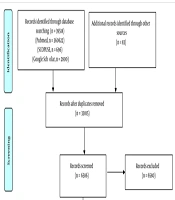
The search identified several records in the selected electronic databases. After removal of duplicates and screening of titles and abstracts, a number of articles were retained for full-text assessment. Four studies met the eligibility criteria and were included in the final review. The study selection process is presented in Figure 1 using the PRISMA 2020 flow diagram (9).
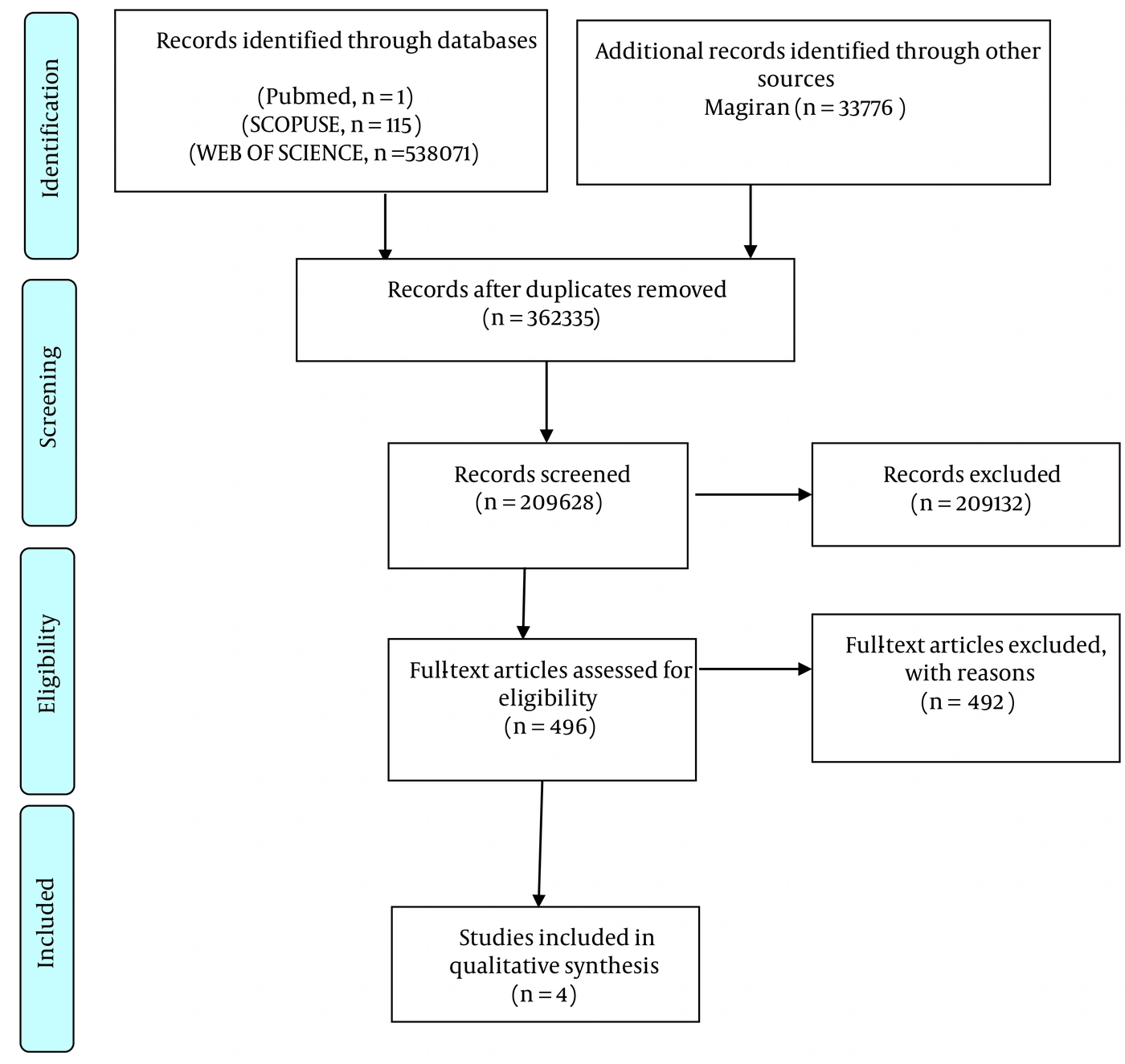
Figure 1.
Identification of studies through databases and registers using the PRISMA 2020 flow diagram
2.3. Eligibility Criteria
Studies were included if they: 1) used a cross-sectional design; 2) were conducted in Iranian samples comprising primarily adolescents or school-age youth aged 13 - 18 years; 3) reported an outcome relevant to gaming-related addictive behavior, including problematic gaming, internet gaming disorder, computer game abuse, or computer game dependence; 4) provided sufficient data to extract sample size and number of cases or prevalence estimates; and 5) used a clearly described instrument, diagnostic criterion, or case definition to identify gaming-related addiction.
Studies were excluded if they were not cross-sectional, did not involve Iranian participants, or did not report extractable quantitative data for gaming-related outcomes. Studies focusing on other behavioral addictions, such as smartphone addiction or general internet addiction, were excluded unless they reported an independent gaming-related prevalence estimate. When a study reported more than one gaming-related outcome from the same sample, each outcome was entered as a separate record only when the definitions differed meaningfully. Accordingly, computer game dependence and computer game abuse in Ahmadi et al. (13) were extracted and reported as two separate rows because they represented distinct outcomes.
2.4. Data Sources and Extraction
For each eligible study, we extracted the first author, publication year, participants’ mean age or age range, total sample size, number of gaming cases, prevalence, measurement instrument, key findings, and the numbers of male and female participants. When studies reported both prevalence and absolute case counts, these data were cross-checked for consistency. If a study provided more than one relevant prevalence estimate, each estimate was recorded separately when it referred to a distinct operational definition.
2.5. Outcome Definition
The primary outcome was the prevalence of gaming-related addictive behavior among Iranian adolescents. Because terminology and operational definitions varied across studies, the review accepted several conceptually related constructs, including problematic gaming disorder, internet gaming disorder, computer game abuse, and computer game dependence. An estimate was retained as a gaming outcome only when it directly referred to gaming behavior rather than unrelated internet-based behaviors.
For studies using threshold-based instruments, prevalence was based on the published cutoff criterion. For studies using interviews or diagnostic criteria, we extracted the proportion of participants meeting the defined case standard. When studies reported both abuse and dependence, these categories were treated as separate outcomes if they were defined distinctly in the original report.
2.6. Measurement Characteristics
The included studies used heterogeneous assessment methods. Some used standardized questionnaires, such as the Internet Game Addiction Questionnaire or the Ten-Item Internet Gaming Disorder Test (IGDT-10), whereas others used structured interviews based on Diagnostic and Statistical Manual of Mental Disorders (DSM) criteria. We extracted the original instrument and case definition exactly as reported by the authors. This approach was necessary to preserve the validity of the original prevalence estimates and to enable subsequent subgroup or sensitivity analyses by measurement method.
2.7. Quality Assessment
Two independent reviewers assessed the quality of the included studies using a modified version of the Quality Assessment Checklist for Prevalence Studies, adapted from Hoy et al. (10), for cross-sectional prevalence research. This checklist comprises ten items evaluating the potential risk of bias in prevalence estimates. Several items were tailored to the context of this review and to the methodological characteristics of the included studies. The finalized version was then used to appraise all articles.
Study quality was evaluated using a structured prevalence-study appraisal framework comprising four core items: whether an acceptable case definition was used; whether the study instrument appropriately measured internet or gaming addiction; whether the same mode of data collection was used for all participants; and whether the shortest prevalence period for the outcome of interest was appropriate. Studies were categorized according to the overall adequacy of these domains.
2.8. Statistical Approach and Subgroup Analysis
The extracted data were synthesized quantitatively using a meta-analysis of prevalence estimates. For each eligible study, the number of gaming cases and total sample size were used to calculate crude prevalence. When studies reported prevalence directly, these values were verified against the corresponding numerator and denominator whenever possible. Studies reporting more than one gaming-related outcome were entered as separate records only when the outcomes represented distinct operational definitions. Otherwise, the most appropriate estimate for the prespecified gaming outcome was selected to avoid duplication.
No subgroup analysis was conducted because the number of eligible studies was limited and the studies were heterogeneous in outcome definitions, assessment instruments, and measurement approaches. Accordingly, heterogeneity was explored using random-effects pooling, meta-regression, and publication bias assessment rather than stratified subgroup comparisons.
3. Results
3.1. Included Studies and Quality Assessment
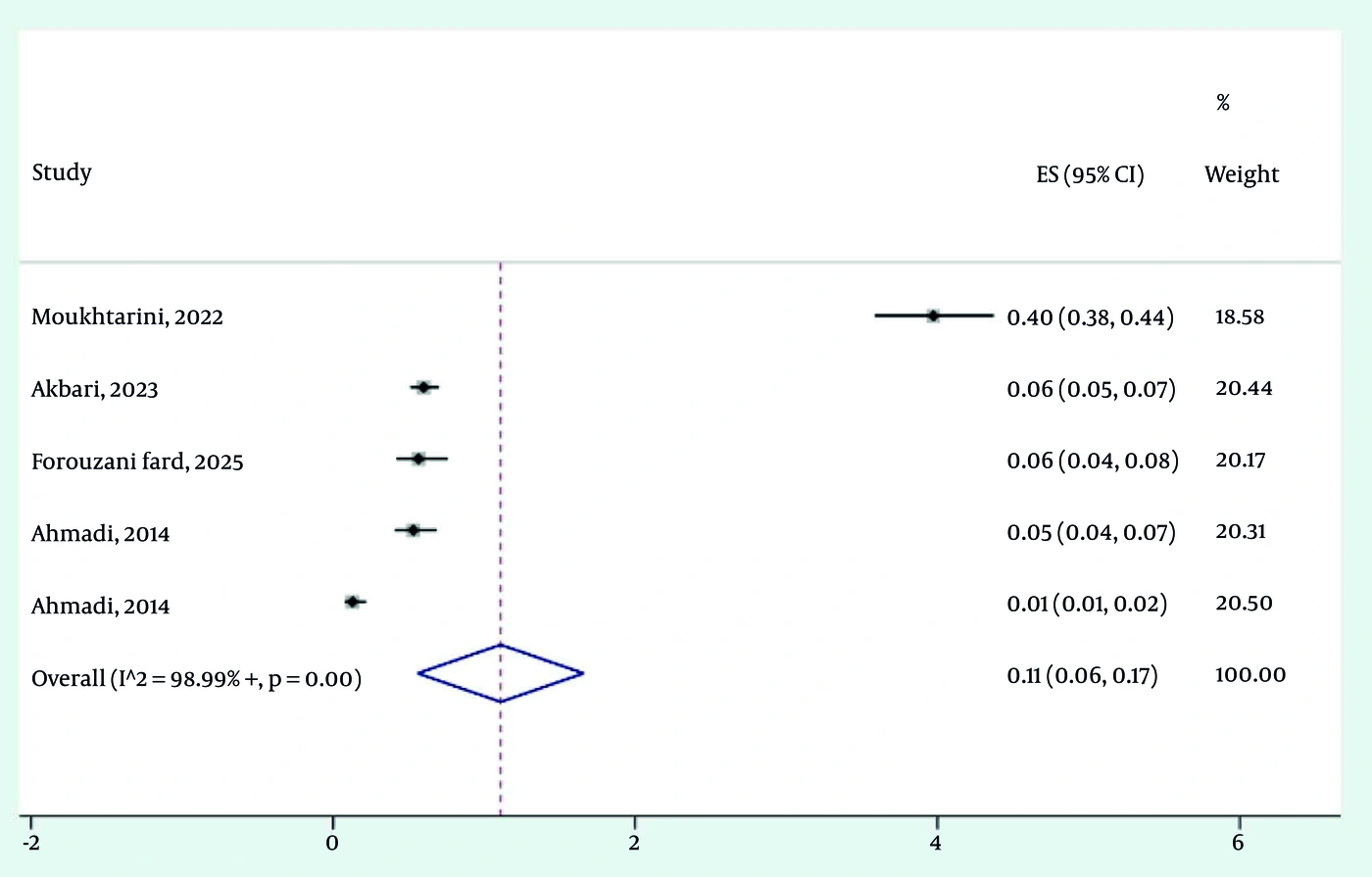
Five independent effect sizes from four studies were included in the meta-analysis (5, 11-13). Ahmadi et al. (13) contributed two separate gaming-related estimates, computer game dependence and computer game abuse, which were entered as independent records. Prevalence estimates varied substantially across studies, with comparatively higher prevalence reported by Mokhtarinia et al. (11) and lower estimates in the remaining studies (Table 1).
Table 1.
Characteristics of the Included Studies
| Author, Year (Reference) | Design | Mean Age or Age Range (y) | Male Participants | Female Participants | Type of Addiction | Gaming Addiction Prevalence | Total Sample Size | Assessment Instrument | Quality Assessment | Key Findings |
|---|---|---|---|---|---|---|---|---|---|---|
| Mokhtarinia, 2022 (11) | Cross-sectional | 14.5 | 200 | 385 | Smartphone | 40.00% | 585 | Smartphone Addiction Scale-Short Version (SAS-SV) | High quality of assessment | Greater smartphone use during the COVID-19 pandemic was primarily associated with eye strain and neck discomfort. Parents should consider possible long-term musculoskeletal and postural consequences and encourage smartphone-use habits and healthier posture that reduce eye and neck strain. |
| Akbari, 2023 (12) | Cross-sectional | 13 - 18 | 835 | 1555 | Problematic gaming disorders | 5.98% | 2390 | Ten-Item Internet Gaming Disorder Test (IGDT-10) | High quality of assessment | Adolescents with co-occurring problems involving social media use and gaming showed greater internalizing symptoms, sensation-seeking tendencies, and social anxiety. Those with both disordered gambling and problematic social media use also reported elevated internalizing symptoms. |
| Forouzani Fard, 2025 (5) | Cross-sectional | 15.16 ± 1.72 | 532 | 176 | Adolescent engagement in internet gaming | 5.60% | 708 | Internet Game Addiction Questionnaire | High quality of assessment | Prevalence was 5.6%. Higher internet gaming disorder was associated with shorter sleep duration, paternal education level, family financial status, and differences across educational levels. |
| Ahmadi, 2014 (13) | Cross-sectional | 510 | 510 | Computer game dependence | 5.30% (54/1020) | 1020 | Diagnostic and Statistical Manual of Mental Disorders, 4th edition (DSM-IV) criteria; interview-based assessment | High quality of assessment | Computer game abuse/dependence was associated with higher levels of anxiety and depression. | |
| Ahmadi, 2014 (13) | Cross-sectional | 510 | 510 | Computer game abuse | 1.30% (13/1020) | 1020 | Diagnostic and Statistical Manual of Mental Disorders, 4th edition (DSM-IV) criteria; interview-based assessment | High quality of assessment | Computer game abuse/dependence was associated with higher levels of anxiety and depression. |
All included studies were rated as being of high quality. As shown in Table 2, Mokhtarinia et al. (11), Akbari et al. (12), Forouzani Fard et al. (5), and Ahmadi et al. (13) were judged to have acceptable case definitions, appropriate study instruments, and consistent data collection procedures. Although Akbari et al. (12) received a “no” rating for the shortest prevalence period item, its overall quality rating remained high (Table 2).
Table 2.
Quality Assessment of the Included Studies
| Author, Year (Reference) | Was an acceptable case definition used? | Did the study instrument measure internet addiction? | Was the same mode of data collection used for all participants? | Was the shortest prevalence period appropriate? | Score |
|---|---|---|---|---|---|
| Mokhtarinia, 2022 (11) | Yes | Yes | Yes | Yes | High quality of assessment |
| Akbari, 2023 (12) | Yes | Yes | Yes | No | High quality of assessment |
| Forouzani Fard, 2025 (5) | Yes | Yes | Yes | Yes | High quality of assessment |
| Ahmadi, 2014 (13) | Yes | Yes | Yes | Yes | High quality of assessment |
3.2. Pooled Prevalence and Heterogeneity
Using a random-effects model, the pooled prevalence of gaming-related addictive behavior was 0.11 (95% CI, 0.06 - 0.17). Between-study heterogeneity was extremely high (χ2 = 397.95, df = 4, P < 0.001; I2 = 98.99%), indicating marked inconsistency across studies. Nevertheless, the overall pooled effect differed significantly from zero (z = 3.96, P < 0.001) (Figure 2).
Because subgroup analysis was not prespecified or feasible given the small number of studies, no stratified pooled estimates were calculated.
3.3. Meta-Regression
Meta-regression indicated that total sample size was not a significant predictor of effect size for gaming addiction prevalence (β = 0.0105, P = 0.894). The 95% confidence interval for the coefficient crossed zero, indicating no statistically significant association between sample size and effect size. The negative adjusted R2 suggests that sample size did not explain a meaningful proportion of between-study variance. Residual heterogeneity remained extremely high (I2res = 100%), indicating that the moderator did not account for variability across studies. Overall, total sample size did not appear to be an important source of heterogeneity in this meta-analysis (Figure 3).
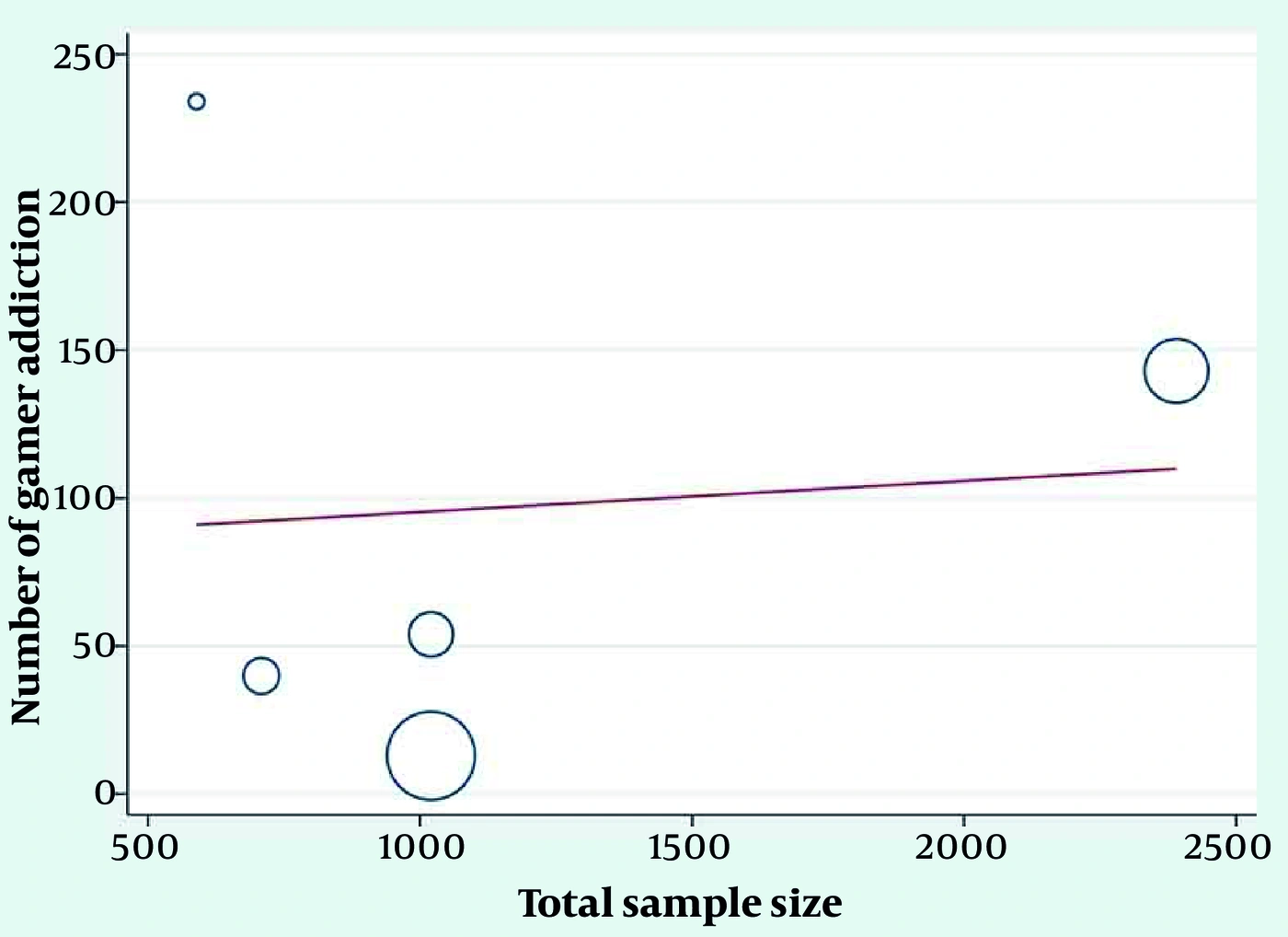
Figure 3.
Meta-regression of total sample size on gaming addiction prevalence
3.4. Small-Study Effects
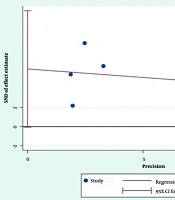
Egger’s test for small-study effects suggested evidence of asymmetry (P = 0.043). The regression slope was not statistically significant (slope = -0.048, P = 0.196), whereas the intercept was significant (bias = 17.69, P = 0.043), potentially indicating funnel plot asymmetry and small-study or publication bias effects (Figure 4).
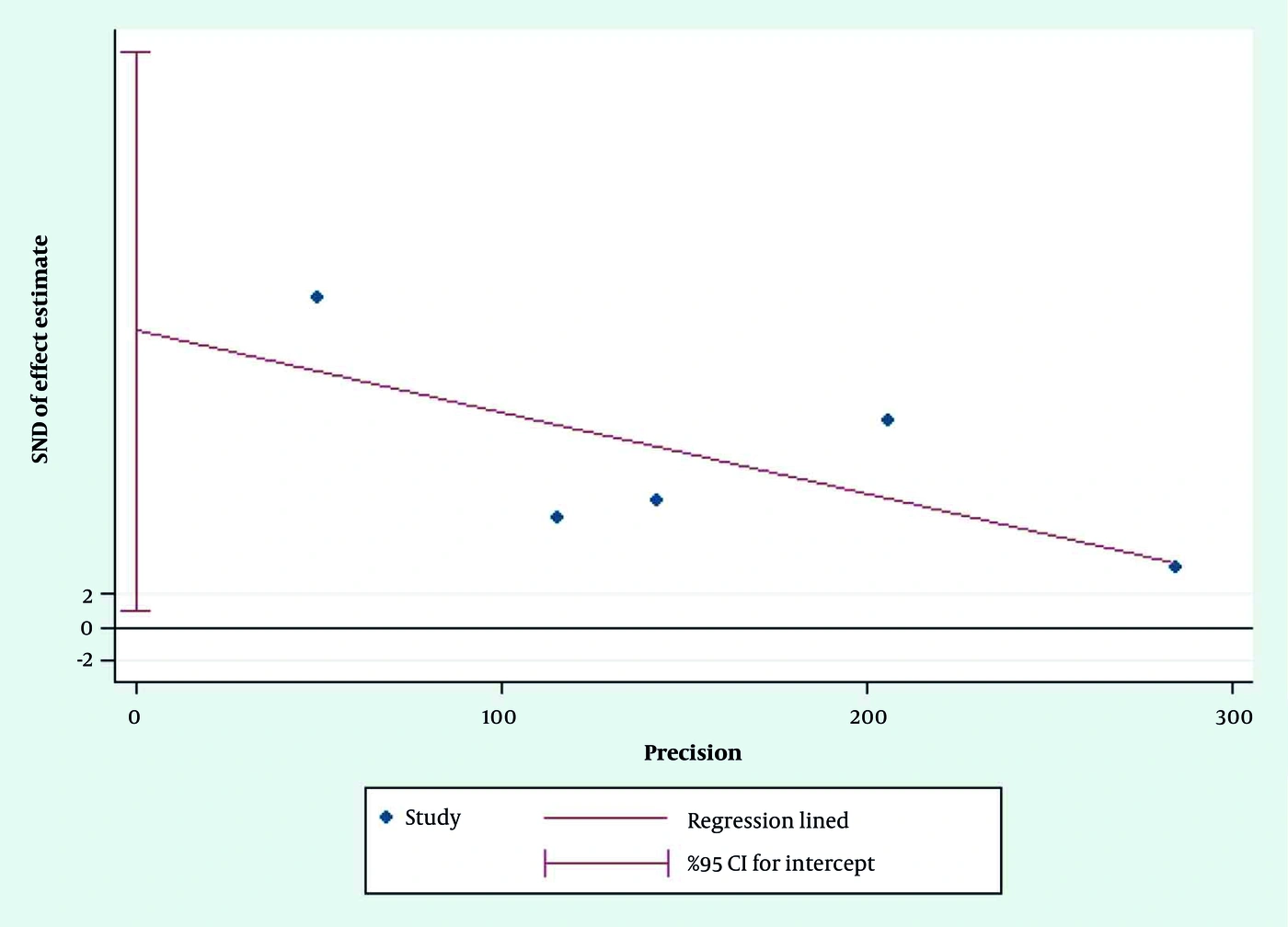
Figure 4.
Egger’s test for small-study effects
3.5. Discussion
This systematic review and meta-analysis indicates that gaming-related addictive behaviors represent a meaningful mental health concern among Iranian adolescents, with a pooled prevalence of 11% and marked between-study heterogeneity. This estimate is broadly consistent with international evidence showing that IGD is associated with significant psychological distress, mood problems, and social dysfunction during adolescence (14). In Iran, the included studies suggest that gaming problems have both behavioral and psychosocial dimensions, as they are associated with anxiety, depression, internalizing symptoms, and poorer executive functioning (8). These findings suggest that problematic gaming is associated with difficulties in self-regulation, particularly emotion regulation. Such difficulties may be especially salient during adolescence, a period of ongoing emotional and cognitive maturation (15).
Approximately 11% of Iranian adolescents met criteria for some form of gaming-related addiction. This finding is consistent with global and Asian estimates of IGD among children and adolescents, approximately 10%, and suggests that gaming-related addiction is also a serious public health concern in Iran. This prevalence is comparable to the 4% - 17% range reported in recent qualitative and quantitative studies of Iranian adolescents, suggesting that cultural and educational differences influence the occurrence and reporting of gaming disorder (16, 17). The high heterogeneity in this meta-analysis is also consistent with international meta-analyses of adolescents and young adults, which often report I2 values above 90%. This pattern suggests that differences in instruments, case definitions, and contextual conditions, such as the COVID-19 pandemic and internet access, substantially affect prevalence estimates (17).
From a clinical perspective, associations between gaming addiction and mood, anxiety, and social-functioning problems in Iranian and non-Iranian samples reinforce concerns that some adolescents are at risk of persistent emotional and academic difficulties. These associations highlight the need for school- and family-based interventions for early identification and targeted prevention (12). Overall, these findings are consistent with global evidence and underscore the need for standardized assessment tools, diagnostic definitions compatible with the Diagnostic and Statistical Manual of Mental Disorders, 5th edition (DSM-5), and the International Classification of Diseases, 11th Revision (ICD-11), and prospective studies in Iran. Such work is needed to estimate the burden of gaming disorder and its risk factors more accurately and to inform adolescent mental health policymaking (14).
4. Conclusions
Gaming-related addictive behaviors appear to be relatively common among Iranian adolescents and are associated with psychological, cognitive, social, and academic difficulties. These findings underscore the need for early identification, preventive screening, and targeted interventions involving schools, families, and mental health professionals. Given the multifactorial nature of this problem, reducing gaming-related harm will likely require coordinated action that addresses both individual vulnerabilities and the broader social environment.
4.1. Limitations
This review has several limitations. First, the small number of eligible studies limits the precision of the pooled estimate and the ability to conduct subgroup analyses. Second, the included studies used heterogeneous definitions, instruments, and cutoff points for gaming-related addiction, which likely contributed to the very high heterogeneity. Third, most of the evidence was cross-sectional, precluding causal inference. Finally, publication bias and small-study effects may have influenced the pooled prevalence estimate; therefore, the true burden may differ from this estimate.
4.2. Future Directions
Future research should use standardized diagnostic criteria and validated instruments to improve comparability across studies. Longitudinal designs are needed to clarify temporal relationships among gaming behavior, mental health problems, and academic outcomes. Research should also examine protective factors, such as family support, emotion regulation, and school connectedness, and test culturally appropriate interventions in Iran. Larger, more diverse samples from different regions of Iran would provide a more accurate picture of national prevalence and risk patterns.