Outline
Induced Therapeutic Hyperkalemia as a Method for Treatment of Refractory Arrhythmias after Aortic Declamping in Cardiac Surgical Procedures: A Narrative Review
Authors

Abstract
Cardiac surgical procedures are among the most complex operations with a detailed list of perioperative care. Weaning from CPB is associated with a number of disturbances in cardiac rhythm. One of the most challenging cardiac rhythm disturbances is the ventricular arrhythmia (tachycardia/fibrillation). Cardioversion and antiarrhythmic agents may be ineffective after aortic declamping; systemic hyperkalemia may be a therapeutic option. Here, we review the available studies regarding this issue and the possible underlying mechanisms of this therapeutic approach.
Highlights
References
- 1.References are in the PDF file of the article.
Copyright
© 2019, Author(s). This open-access article is available under the Creative Commons Attribution 4.0 (CC BY 4.0) International License (https://creativecommons.org/licenses/by/4.0/), which allows for unrestricted use, distribution, and reproduction in any medium, provided that the original work is properly cited.
Similar Articles
Benefits and Harms of Beta Blockers in the Perioperative Period of Non-Cardiac Surgery: A Narrative Review
Sherafati A, Mollazadeh R. Benefits and Harms of Beta Blockers in the Perioperative Period of Non-Cardiac Surgery: A Narrative Review. Arch Neurosci. 2017;4(4):e57718. doi: https://doi.org/10.5812/archneurosci.57718
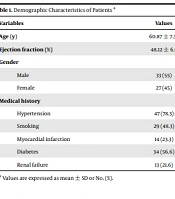
Evaluation of the Relationship Between Changes in Potassium Concentration and Arrhythmia During Coronary Artery Bypass Grafting Surgery
Jorairahmadi S, Javaherforooshzadeh F, Jannatmakan F, Soltani F, Shidel Zadeh L. Evaluation of the Relationship Between Changes in Potassium Concentration and Arrhythmia During Coronary Artery Bypass Grafting Surgery. Anesth Pain Med. 2022;12(1):e121809. doi: https://doi.org/10.5812/aapm.121809
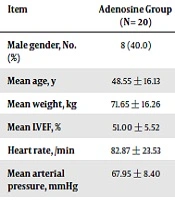
The Effects of Cold Blood Cardioplegia with and without Adenosine on Hemodynamic Status of Patients Undergoing Mitral Valve Surgery
Ghasemi F, Azarfarin R, Salahi S, Baharestani B, Alizadeh Ghavidel A. The Effects of Cold Blood Cardioplegia with and without Adenosine on Hemodynamic Status of Patients Undergoing Mitral Valve Surgery. Multidiscip Cardio Annal. 2020;11(1):e96919. doi: https://doi.org/10.5812/mca.96919
Impact of Procaine Hydrochloride Versus Lidocaine in Cardioplegic Solution, on Reperfusion Arrhythmia During Coronary Artery Bypass Graft Surgery
Sadeghi S, Austin N, Totonchi Z, Bakhshandeh H, Hadavand N, et al. Impact of Procaine Hydrochloride Versus Lidocaine in Cardioplegic Solution, on Reperfusion Arrhythmia During Coronary Artery Bypass Graft Surgery. Multidiscip Cardio Annal. 2018;9(2):e67749. doi: https://doi.org/10.5812/mcardia.67749
Investigation of Serum Electrolyte Imbalances in Neonates Undergoing Cardiac Surgery
Ozalp S, Aslanci Z, Coban S, Saglam S, Direnc Yucel E, et al. Investigation of Serum Electrolyte Imbalances in Neonates Undergoing Cardiac Surgery. Inn J Pediatr. 2025;35(3):e158045. doi: https://doi.org/10.5812/ijpediatr-158045
More by these authors
- Scopus by DOI: 1
Last Update: 1 month ago
- Scopus by Title: 1
Last Update: 1 month ago
- Scopus by Title (Ref): 0
Last Update: 1 month ago
- CrossRef: 0
Last Update: 6 days ago
- OpenAlex: 0
Last Update: 6 hours ago
- OpenCitations: 0
Last Update: 4 days ago