
1. Background
Autism spectrum disorder (ASD) is a complex neurodevelopmental disorder characterized by impairments in social communication, repetitive behaviors, and a limited range of interests and activities. Children with ASD face many challenges in socializing, forming new relationships, and navigating the social world (1). In 1943, Leo Kanner published a seminal paper titled “Autistic Disturbances of Affective Contact,” providing the first description of the disorder. Recent estimates suggest that approximately 1 in 36 children aged 8 years in the United States are diagnosed with ASD, with prevalence varying across regions and populations (2). Autism can be influenced by genetic, environmental, and epigenetic factors (3, 4). The prevalence of the disorder in Iraq and Kurdistan remains unknown because no validated statistical reports are available on the number of individuals with the disorder. Some estimates predict 89.4 cases per 10,000 children, but this figure does not establish the exact number (5).
In parallel with the increasing recognition of ASD, obesity has emerged as a critical public health issue worldwide. Obesity rates have surged over the past few decades, affecting both adults and children (6). In Erbil, the prevalence of overweight and obesity has risen markedly, posing a significant health risk. A community survey conducted in 2017 found that the prevalence of overweight in Erbil city was 33.4%, and that of obesity was 40.9% (7). In addition to psychiatric issues, people with ASD face many challenges that may exacerbate their risk of obesity, including low levels of physical activity, selective eating behavior, gastrointestinal problems, and medication side effects. These factors often result in abnormal anthropometric measurements and increased obesity rates in this population (8).
Recent studies have highlighted a significant correlation between obesity and ASD, emphasizing the need to understand the underlying risk factors (9). According to Body Mass Index (BMI) criteria, children whose BMI is above the 95th percentile are considered obese. Studies have reported that children diagnosed with ASD are 58% more likely to be overweight and obese than neurotypical children (10).
Risk factors for obesity in children with ASD include overconsumption of high-energy foods, low vegetable intake, and limited engagement in physical activities. Maternal BMI has also been reported to be associated with overweight in children with autism (11).
Similarly, in the Kurdistan region of Iraq, factors such as gender, familial factors (parental obesity and family structure), dietary habits and food selectivity, physical activity intensity, and family socioeconomic status were the main contributors to weight gain (12). According to Dhaliwal and Orsso (13), children with autism are at greater risk of gaining weight because of atypical mealtime behaviors, reduced physical activity, and sleep disturbances. These factors can lead to hormonal imbalances and sedentary behaviors. Although these factors are expected to contribute to obesity and weight gain, few studies have examined this issue, and most have considered only one or two factors in a single study. To our knowledge, information on ASD and obesity remains very limited, particularly regarding risk factors for obesity among children with ASD in Erbil, Iraq.
2. Objectives
Therefore, understanding the effects of sleep disturbance, physical activity, and mealtime on obesity in children with ASD is important for developing targeted interventions to address and prevent obesity in this population. Our findings can guide interventions to encourage better nutrition, sleep, and physical activity. Moreover, understanding different demographic factors will be crucial to raising awareness among parents in Erbil, Iraq.
3. Objectives
This study aims to explore the correlation among demographic factors, parental background, physical activity, sleep disturbance, and mealtime with obesity and BMI in ASD children in Erbil, Iraq.
4. Methods
3.1. Study Area and Population
The study was conducted in the Kurdistan Region of Iraq, focusing on children diagnosed with ASD at the Autism Emirate Center and the Bahoz Center for Autism in 2022 and 2023. The study involved 74 children aged 3 - 8 years who were diagnosed with ASD based on DSM-5 criteria. The sample consisted of 52 males and 22 females. The diagnosis of ASD was established by a multidisciplinary team comprising child psychiatrists, developmental pediatricians, clinical psychologists, and pediatric neurologists, according to the DSM-5 criteria. These criteria include persistent deficits in social communication and interaction, restricted and repetitive patterns of behavior, symptoms present during early development, and clinically significant functional impairment, with symptoms not better explained by intellectual disability or global developmental delay.
3.2. Ethical Considerations
The study was approved by the ethics committee of Hawler Medical University (Code: 2567). All procedures were conducted in accordance with the ethical standards of the institutional and national research committee and with the 1964 Helsinki Declaration and its later amendments.
3.3. Data Collection
3.3.1. Anthropometric Measurements
The children’s height and weight were measured using a tape measure and a mechanical personal scale, and Body Mass Index (BMI) was calculated using the formula BMI = weight (kg) / height (m)^2. BMI-for-age percentiles were determined using the Centers for Disease Control and Prevention (CDC) growth charts according to each child’s age and sex.
3.3.2. Parental Interview
Data were collected primarily through structured interviews with the parents of children with ASD, during which parents provided demographic information and details about their child's medical history, family background, and daily routines.
3.3.3. Questionnaires
This study was conducted using a combination of questionnaires and interviews with the parents of children with ASD, along with measurement of the children's BMI. The questionnaire battery comprised 4 questionnaires. The demographic and physical activity questionnaires were approved and validated by the scientific and ethics community of the Emirates Center for Autism. This section included questions for parents about the child's and parents' demographics, as well as general questions about the mother's experiences during pregnancy and after the baby was born. We also used the Children Sleep Habit Questionnaire (CSHQ) (14). The CSHQ questions focused on the child's experiences before, during, and after sleep and on the difficulties parents detected as they observed their child's sleep quality. For the child's diet and mealtime behaviors, we used a widely used questionnaire on the mealtime behaviors and actions of autistic children: the Brief Autism Mealtime Behavior Inventory, developed by Lukens and Linscheid (15). This questionnaire assessed the behaviors the child demonstrated during mealtimes and how the child reacted to different dietary and food preferences, based on 18 items rated from 1/0 (rarely/never) to 5 (almost every meal).
3.4. Sampling Method
Purposive sampling was used to select 74 children. Parents were interviewed to complete the questionnaires and provide consent for their child’s participation in the study. Verbal and written consent were obtained to ensure that ethical standards were met. In addition, age- and capacity-appropriate verbal assent was sought from children who were developmentally able to understand and respond to a simple explanation of the study. For children who were unable to provide assent because of their young age or the communication and cognitive characteristics associated with ASD, consent was provided on the child’s behalf by the parent or legal guardian, as approved by the ethics committee. Parents and children were informed that participation was voluntary and that they could withdraw or decline to participate at any stage without consequence. All data were collected using noninvasive anthropometric measurements and parent-completed questionnaires; no invasive or potentially distressing procedures were performed.
3.5. Statistical Analysis
Data were analyzed using Statistical Package for Social Sciences (SPSS) and Graph Pad Version 6. Frequency analysis was used to describe the demographic characteristics of the sample, and a normality test was conducted to assess whether the data followed a normal distribution. An unpaired T-test was used to compare BMI, age, and other parameters between the underweight/normal and overweight/obese groups. Multiple linear regression was used to examine the associations between mealtime behaviors, sleep disturbances, and BMI. Statistical significance was determined at a P value of less than 0.05.
5. Results
4.1. Demographic Information of Respondents
The study included 74 children diagnosed with ASD: 52 males and 22 females. The children were categorized into two groups based on BMI: the underweight/normal (UW/N) ASD group included 16 males and 10 females, whereas the overweight/obese (OW/OB) group included 36 males and 12 females, as shown in Table 1.
Table 1.
Gender Distribution of Children with Autism Spectrum Disorder
| Gender | UW/N ASD | OW/OB ASD |
|---|---|---|
| Male | 16 | 36 |
| Female | 10 | 12 |
4.2. Body Mass Index Distribution
The Body Mass Index (BMI) status of the 74 children with ASD is shown in Table 2. In our sample, 8.11% were underweight (BMI < 5th percentile), 27.03% had normal weight (BMI ≥ 5th to < 85th percentiles), 54.05% were overweight (BMI ≥ 85th to < 95th percentiles), and 10.81% were obese (BMI ≥ 95th percentile).
Table 2.
BMI of Autism Spectrum Disorder (ASD) Children
| BMI Status by Percentiles | No. | % |
|---|---|---|
| Underweight (BMI < 5th percentile) | 6 | 8.11 |
| Normal (BMI ≥ 5th to < 85th percentiles) | 20 | 27.03 |
| Overweight (BMI ≥ 85th < 95th percentiles) | 40 | 54.05 |
| Obese (BMI ≥ 95th percentiles) | 8 | 10.81 |
4.3. Age and Birthweight of Children With ASD
There was no significant difference in birthweight between UW/N and OW/OB children (2.908 ± 0.2208 and 2.728 ± 0.1794, respectively). However, although the mean age was 6.238 ± 0.9687 for UW/N children and 7.630 ± 1.392 for OW/OB children, the latter was not significantly higher (Figure 1A, B).
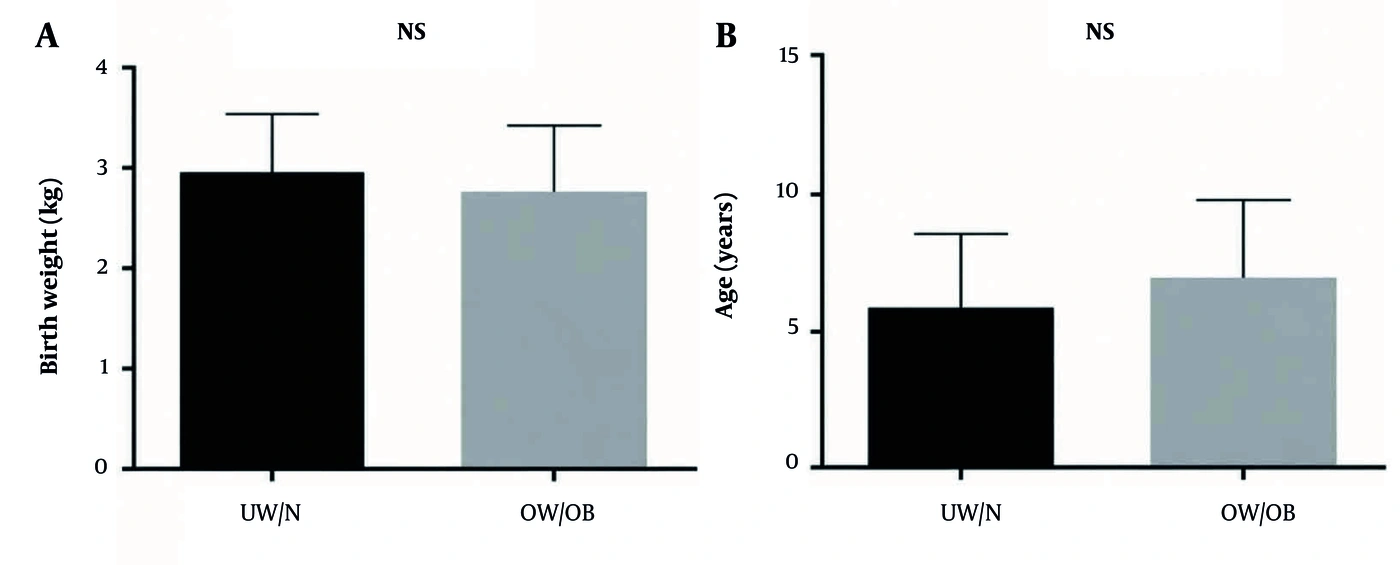
Figure 1.
Age and birth weight of children with autism spectrum disorder (ASD). A: comparison of birth weight (kg), and B: age (years) between two groups: underweight/normal (UW/N) and overweight/obese (OW/OB). An unpaired T-test was used, and statistical significance was determined at a P value of less than 0.05. NS indicates a non-significant difference (P ≥ 0.05). Data are presented as the mean ± SEM.
4.4. Parental BMI
Maternal BMI was significantly higher in the OW/OB group than in the UW/N ASD group (26.85 ± 3.381 vs 23.47 ± 1.464). No significant difference in paternal BMI was observed between the groups; the mean was 25.92 ± 1.013 among fathers of UW/N ASD children and 26.58 ± 0.6586 among fathers of OW/OB children, as shown in Figure 2.
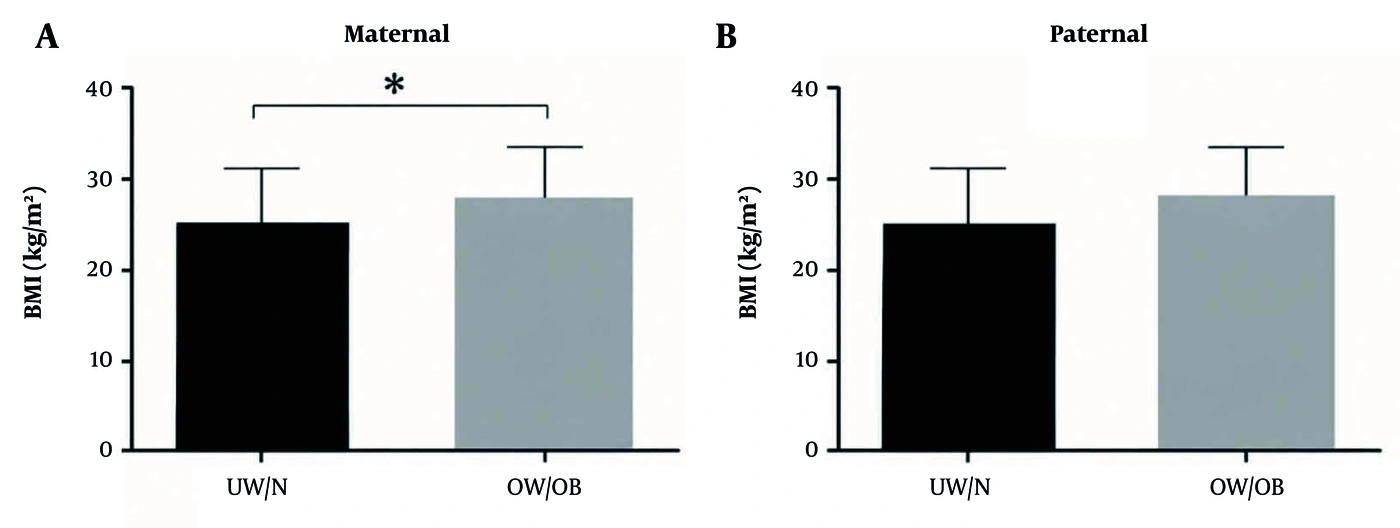
Figure 2.
The parental BMI (kg/m²) of children with autism spectrum disorder (ASD). A represents the BMI of the mothers, and B represents the BMI of the fathers of children diagnosed with ASD. The comparison was made between parents of children in the UW/N group and those in the OW/OB group using an unpaired T-test, and statistical significance was determined at a P value of less than 0.05. * Indicates a statistically significant difference (P < 0.05), while NS indicates a non-significant difference (P ≥ 0.05). Data are presented as mean ± SEM.
4.5. Parental Age
Regarding parental age, the two groups had no significant differences in the ages of fathers, while the age of mothers of OW/OB children was significantly higher than that of mothers of UW/N children. The average maternal age was 33.46 ± 1.326 years for UW/N children and 36.35 ± 2.886 years for OW/OB children. The average paternal age was 37.62 ± 2.814 years for UW/N children and 40.87 ± 3.254 years for OW/OB children (Figure 3).
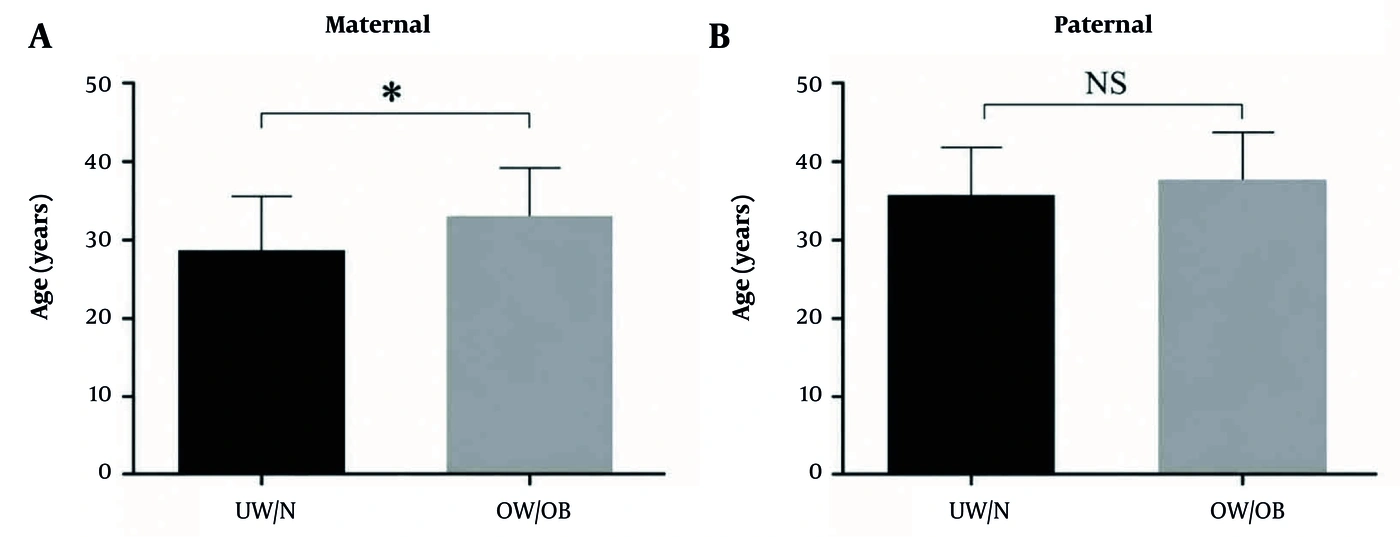
Figure 3.
The parental age (years) of the children with autism spectrum disorder (ASD). A represents the average age of mothers, and B represents the average age of fathers of children diagnosed with ASD in both the UW/N and OW/OB groups. An unpaired T-test was used, and statistical significance was determined at a P value of less than 0.05. * indicates a statistically significant difference (P < 0.05), while NS indicates a non-significant difference (P ≥ 0.05). Data are presented as the mean ± SEM.
4.6. Parental Education
The educational levels of fathers of children with UW/N were as follows: 0% had received no prior education. Of the fathers, 23% had completed primary school, and 23% had completed secondary school. A total of 46% held a diploma or BSc degree, and 8% had attained a higher education degree. Among fathers of children with OW/OB, 8% had not attended school, 9% were primary school graduates, and 39% had graduated from secondary school. Approximately 35% held a BSc degree or diploma, and approximately 9% had higher education degrees. Regarding the mothers of children with UW/N, 8% had received no prior education, and 15% had attended primary school. Approximately 31% had attained secondary education, 38% held a BSc degree or diploma, and 8% had higher education degrees. Among mothers of children with OW/OB, 22% had not attended school, 22% were primary school graduates, and 22% had graduated from secondary school. A total of 30% held a BSc degree or diploma, and approximately 4% had completed higher education, as shown in Table 3.
Table 3.
Parental Education of Autism Spectrum Disorder (ASD) Children a
| Variables | UW/N | OW/OB |
|---|---|---|
| Paternal Education | ||
| None | 0 | 8 |
| Primary | 23 | 9 |
| Secondary | 23 | 39 |
| Tertiary | 46 | 35 |
| Higher degrees | 8 | 9 |
| Maternal Education | ||
| None | 8 | 22 |
| Primary | 15 | 22 |
| Secondary | 31 | 22 |
| Tertiary | 38 | 30 |
| Higher degrees | 8 | 4 |
a Values are expressed as percentage.
4.7. Physical Activity
For physical activity, there was a highly significant difference between the two groups, as shown in Figure 4A, B. UW/N children had a value of 3.462 ± 0.2841, whereas OW/OB children had less frequent activity, with an average of 2.080 ± 1.382 (P < 0.0001**). For intensity, the results again showed a highly significant difference, with values of 1.467 ± 0.09979 for UW/N children and 0.9565 ± 0.5101 for OW/OB children (P value of 0.0001****).
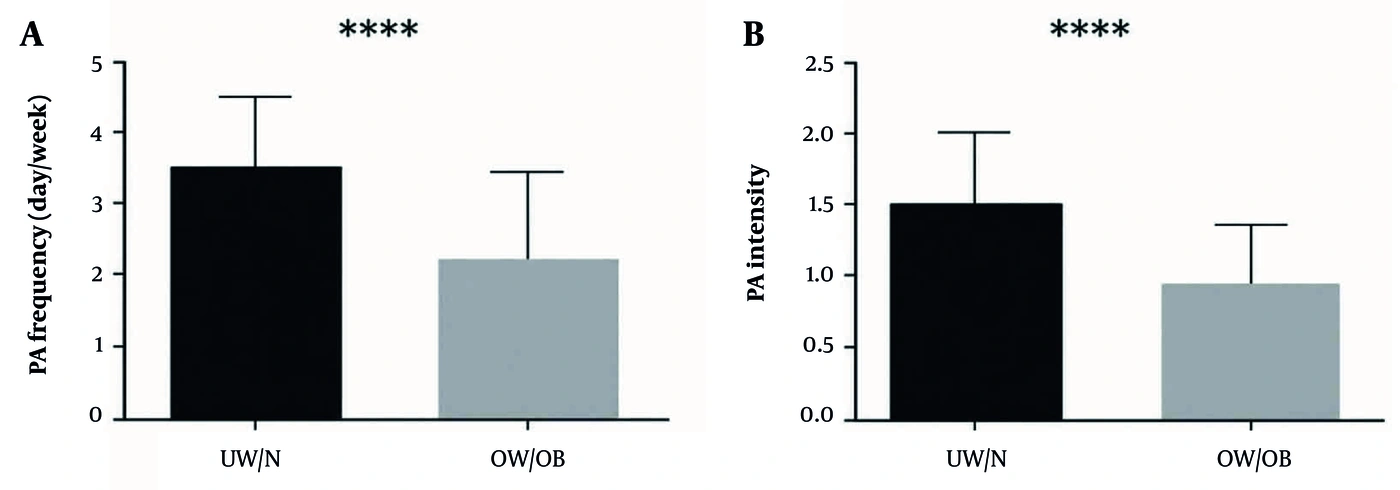
Figure 4.
Physical Activity (PA) Frequency (day/week) and Intensity of Children with autism spectrum disorder (ASD). (A) represents PA frequency, and (B) represents PA intensity in the UW/N and OW/OB groups. An unpaired T-test was used, and statistical significance was determined at a P value of less than 0.05. **** indicates a statistically significant difference (P < 0.0001). Data are presented as the mean ± SEM.
4.8. Mealtime Behavior of Children With ASD
Mealtime behaviors were assessed using the Brief Autism Mealtime Behavior Inventory questionnaire. Significant behaviors included being disruptive during mealtimes, closing the mouth tightly when food was presented, disliking certain foods, and preferring food to be served in a particular way. The other behaviors were non-significant, including crying or screaming during mealtimes, turning his/her face or body away from food, remaining seated at the table until the meal was finished, expelling food that he/she had eaten, being aggressive during mealtimes, displaying self-injurious behavior during mealtimes, being flexible about mealtime routines, being willing to try new foods, refusing to eat foods that require a lot of chewing, preferring the same foods at each meal, preferring “crunchy” foods, accepting or preferring a variety of foods, and preferring to have food prepared in a particular way, as shown in Table 4.
Table 4.
The Mealtime Behavior of Autism Spectrum Disorder Children. It Shows the Results of Multiple Linear Regression Analysis to Identify the Influence of Mealtime Behaviors on BMI in Autism Spectrum Disorder Children. The Level of Significance Is Determined by a P value of Less Than 0.05
| BMI Models | Unstandardized Coefficients | P-Value | Collinearity Statistics | ||
|---|---|---|---|---|---|
| B | Standard Error | Tolerance | VIF | ||
| Cries or screams during mealtime | 0.561 | 0.975 | 0.567 | 0.292 | 3.419 |
| Turns his/her face or body away from food | -0.727 | 0.792 | 0.362 | 0.467 | 2.139 |
| Remains seated at the table until the meal is finished | 1.040 | 0.616 | 0.097 | 0.614 | 1.628 |
| Expels food that he/she has eaten | -1.134 | 0.947 | 0.237 | 0.330 | 3.034 |
| Is aggressive during mealtimes | -0.251 | 0.963 | 0.796 | 0.280 | 3.576 |
| Is disruptive during mealtimes | 2.820 | 0.997 | 0.007 a | 0.331 | 3.023 |
| Displays self-injurious behavior during mealtimes | -1.071 | 0.789 | 0.180 | 0.383 | 2.613 |
| Prefer only sweet food | 0.893 | 0.802 | 0.271 | 0.449 | 2.228 |
| Closes mouth tightly when food is presented | -1.077 | 0.710 | 0.030 b | 0.470 | 2.129 |
| Is flexible about mealtime routines | -1.084 | 0.821 | 0.193 | 0.325 | 3.073 |
| Is willing to try new foods | -0.534 | 0.795 | 0.505 | 0.536 | 1.866 |
| Dislikes certain foods and won’t eat them | 1.689 | 0.610 | 0.008 a | 0.511 | 1.957 |
| refuses to eat foods that require a lot of chewing | -0.463 | 0.866 | 0.595 | 0.441 | 2.270 |
| Prefers the same foods at each meal | -0.980 | 0.564 | 0.088 | 0.726 | 1.377 |
| prefers “crunchy” foods | 0.172 | 0.677 | 0.800 | 0.589 | 1.699 |
| Accepts or prefers a variety of foods | -0.542 | 0.720 | 0.455 | 0.366 | 2.732 |
| Prefers to have food served in a particular way | 2.324 | 0.863 | 0.009 a | 0.455 | 2.198 |
| Prefers to have food prepared in a particular way | -0.865 | 0.749 | 0.253 | 0.340 | 2.943 |
a P < 0.01.
b P < 0.05.
4.9. Sleep Experiences of Children With ASD
During interviews, parents reported several sleep-related behaviors in their children. Significant sleep-related predictors of BMI are presented in Table 5. Higher BMI was significantly associated with struggling at bedtime (B = 2.752, P = 0.014), sleeping the right amount (B = 4.865, P = 0.001), sleeping the same amount each day (B = −3.531, P = 0.003), awakening screaming or sweating (B = 5.969, P = 0.003), moving to another person's bed at night (B = 2.055, P = 0.002), needing a parent in the room to sleep (B = −4.235, P = 0.001), snoring loudly (B = 1.548, P = 0.032), stopping breathing during sleep (B = 2.690, P = 0.031), and waking up in a negative mood (B = 0.858, P = 0.001). The remaining sleep items were not significantly associated with BMI (Table 5).
Table 5.
Sleep Time Experiences of Children with Autism Spectrum Disorder. The Level of Significance Is Determined by a P value of Less Than 0.05
| BMI Models | Unstandardized Coefficients | P-Value | Collinearity Statistics | ||
|---|---|---|---|---|---|
| B | Standard Error | Tolerance | VIF | ||
| Goes to bed at the same time | -0.757 | 0.560 | 0.184 | 0.294 | 3.397 |
| Falls asleep in his own bed | 1.052 | 0.987 | 0.292 | 0.090 | 9.149 |
| Falls asleep in another’s bed | 0.550 | 0.730 | 0.455 | 0.155 | 6.436 |
| Struggles at bedtime | 2.752 | 1.077 | 0.014 a | 0.055 | 8.252 |
| Afraid of sleeping alone | 2.179 | 1.161 | 0.068 | 0.037 | 6.802 |
| Sleeps too little | -0.842 | 0.623 | 0.184 | 0.169 | 5.918 |
| Sleeps the right amount | 4.865 | 1.229 | 0.001 a | 0.057 | 7.634 |
| Sleeps the same amount each day | -3.531 | 1.099 | 0.003 b | 0.079 | 2.652 |
| Wets the bed at night | -0.403 | 0.562 | 0.478 | 0.242 | 4.134 |
| Talks during sleep | -0.406 | 1.504 | 0.789 | 0.067 | 4.904 |
| Restless and moves a lot | -0.516 | 0.635 | 0.421 | 0.135 | 7.417 |
| Sleepwalks | -2.953 | 1.558 | 0.065 | 0.094 | 10.649 |
| Grinds teeth during sleep | -0.461 | 0.618 | 0.460 | 0.262 | 3.818 |
| Awakens, screaming, sweating | 5.969 | 1.914 | 0.003 b | 0.043 | 3.400 |
| Alarmed by a scary dream | 0.106 | 1.118 | 0.925 | 0.199 | 5.015 |
| Moves to others' bed at night | 2.055 | 0.616 | 0.002 b | 0.215 | 4.643 |
| Awakes once during the night | -0.565 | 0.746 | 0.453 | 0.149 | 6.717 |
| Awakes more than once | 0.103 | 0.724 | 0.887 | 0.154 | 6.507 |
| Needs a parent in the room to sleep | -4.235 | 1.078 | 0.001 b | 0.050 | 2.202 |
| Afraid of sleeping in the dark | 0.557 | 0.511 | 0.282 | 0.190 | 5.253 |
| Afraid of sleeping alone | -0.609 | 1.082 | 0.576 | 0.046 | 9.899 |
| Trouble sleeping away | 1.051 | 0.583 | 0.079 | 0.156 | 6.427 |
| Snores loudly | 1.548 | 0.697 | 0.032 a | 0.255 | 3.925 |
| Stops breathing | 2.690 | 1.205 | 0.031 a | 0.105 | 9.507 |
| Snorts and gasps | -0.981 | 0.913 | 0.289 | 0.119 | 8.424 |
| Wakes by himself | 2.039 | 0.590 | 0.084 | 0.314 | 3.189 |
| Wakes up in a negative mood | 0.858 | 0.486 | 0.001 b | 0.285 | 3.514 |
| Others wake the child. | 0.469 | 0.513 | 0.366 | 0.334 | 2.994 |
| Hard time getting out of bed | 0.405 | 0.382 | 0.296 | 0.491 | 2.038 |
| It takes a long time to be alert. | -1.057 | 0.589 | 0.080 | 0.223 | 4.489 |
| Falls asleep in 20 min | 0.858 | 0.486 | 0.084 | 0.285 | 3.514 |
a P < 0.05.
b P < 0.01.
6. Discussion
ASD is a global neurodevelopmental issue that affects social communication and behavior, and its impact is multifaceted. Children with ASD are at an increased risk of obesity due to factors such as low physical activity, dietary selectivity, and sleep disturbances. The results of our study indicate that maternal BMI is associated with being overweight and obesity in children with ASD. Specifically, a higher maternal BMI is linked to a higher BMI in the child. The findings correspond with prior studies that suggest a more significant impact of maternal obesity on childhood obesity as compared to paternal obesity (16). Heslehurst et al. (17) have concluded that there is a 264% increase in the odds of a child becoming obese when their mothers are obese, and as for overweight mothers, it increased the risk for a child’s obesity by 89% (17). Further, the higher severity of ASD is associated with a higher chance of the child being at risk for obesity and overweight, reflecting the potential genetic and environmental influences on the child's weight status (13). Equally, studies have revealed that children of parents who are obese are more likely to acquire autistic disorder and Asperger's disorder, even after considering sociodemographic and lifestyle factors (10, 18, 19). The risk appears to increase with higher paternal BMI, suggesting a dose-response relationship (20).
Our results revealed that paternal age does not significantly affect the prevalence of obesity among children with ASD, whereas maternal age is considerably higher in children with OW/OB than in those with UW/N. This suggests that older maternal age may be associated with a higher likelihood of having overweight or obese children within the ASD population. Parner and Baron-Cohen (21) showed that although parental age is associated with the risk of ASD, it does not necessarily correlate with obesity rates in children with ASD. One study found that both maternal and paternal ages were linked to increased ASD risk, but the underlying mechanisms did not appear to act synergistically with respect to obesity outcomes. This suggests that although older parental age may contribute to ASD, it does not directly influence obesity prevalence.
Additionally, the ratio of male-to-female children diagnosed with ASD is 3:1, indicating a gender bias in diagnosis that suggests females who meet the criteria for ASD are at risk of not receiving an appropriate clinical diagnosis, consistent with the results of recent studies (23).
Parental education is one of the main factors that affects children in many ways, including BMI. Numerous supportive and competing opinions exist on this matter, with various research indicating an inverse correlation. Children of parents with lower levels of education are more prone to suffer an increase in BMI as they grow older. This correlation suggests that higher levels of education provide parents with enhanced knowledge and resources to promote healthy lifestyles, resulting in positive outcomes for their children (22). Lower parental education is often linked to unhealthy habits in children, such as skipping breakfast, consuming more sugary drinks, increasing screen time, and reducing physical activity, all of which contribute to higher BMI (23) besides socioeconomic status that influences the health outcome (24). In contrast to previous studies, there has been a reported positive association between the education of parents and the BMI of the child in higher economic countries. Specifically, the higher the level of education achieved by the parents, the greater the likelihood of the child being overweight (25).
Our study found that children with ASD who are classified as OW/OB participate in physical activity less frequently and with less intensity compared to children with a normal weight. Physical activity is reported to affect children's health at a high rate as it helps in the reduction of body fat compared to those who are less active (26). Many children with ASD have challenges with motor skills and coordination (27), making it difficult for them to engage in physical activities. Their preference for sedentary, repetitive behaviors also contributes to reduced energy expenditure (28). Contrastingly, some studies suggest that physical activity levels among children with ASD do not significantly differ from their neurotypical peers when provided with appropriate interventions (29). This highlights the importance of designing specialized physical activity programs that accommodate the unique needs and preferences of children with ASD. By creating sensory-friendly environments, using structured routines, providing individualized instruction, and incorporating preferred activities, these tailored interventions can help promote increased physical activity engagement and healthier weight statuses in this population.
Numerous studies have shown that the eating habits of children with ASD have a significant impact on their BMI (30, 31). These behaviors can result in either being underweight or becoming obese due to insufficient eating, selective food preferences, and disruptions during mealtime, which are more prevalent in children with ASD compared to those with typical neurological development (32). The analysis of mealtime behaviors revealed several factors significantly associated with BMI among children with ASD. Our findings reveal that some behaviors, such as causing disruptions during mealtimes (P = 0.007), being selective about food choices (P = 0.008), and having preferences for food presentation (P = 0.009), are linked to higher BMI. Mealtime behaviors commonly observed in children with ASD and nutritional imbalances, which in turn increases the risk of obesity. Specifically, food selectivity and sensory sensitivities often lead to a restricted diet high in calories but low in nutritional value, contributing to weight gain (33, 34). A recent study conducted on preschoolers diagnosed with ASD found that children with greater BMI demonstrated an increased tendency to approach food and a decreased tendency to eat slowly (35).
In addition, we observed that tightly closing the mouth when food is offered was inversely correlated with obesity in children with ASD (P = 0.030). However, findings are mixed; some studies have found no significant relationship between specific mealtime behaviors and obesity in children with ASD. These studies suggest that parental strategies and the home food environment may moderate these associations (30, 36). This finding highlights the need for comprehensive interventions that address the child's behaviors, train parents in effective mealtime techniques, and promote healthy eating habits.
Sleep disturbances play a crucial role in the increased risk of obesity observed in children with ASD (13). It's reported that children with ASD experience high rates of sleep disturbances, with estimates suggesting prevalence rates between 50% and 80% (13). These disturbances include difficulties in sleep onset and maintenance, which can lead to insufficient total sleep time. Children diagnosed with ASD exhibit a sleep duration that is, on average, 43 minutes shorter every night in comparison to their regularly developing siblings (37). Short durations of sleep are associated with being overweight, and people with 4 - 6 hours or less sleep per night are susceptible to a higher BMI compared to individuals who slept more than 6 hours (38). Moreover, sleep quality is also associated with neuroendocrine functions that can contribute to weight gain due to glucose tolerance and changes in metabolic activities (39).
The results of our study indicate a notable correlation between specific sleep disturbances and elevated BMI in children diagnosed with ASD. In the multiple linear regression model, higher BMI was significantly predicted by struggling at bedtime (B = 2.752, P = 0.014), awakening screaming or sweating (B = 5.969, P = 0.003), moving to another's bed at night (B = 2.055, P = 0.002), snoring loudly (B = 1.548, P = 0.032), stopping breathing during sleep (B = 2.690, P = 0.031), waking in a negative mood (B = 0.858, P = 0.001), and—unexpectedly—by the item "sleeps the right amount" (B = 4.865, P = 0.001). In contrast, "sleeps the same amount each day" showed a negative coefficient (B = −3.531, P = 0.003), and "needs parent in the room to sleep" was also negatively associated with BMI (B = −4.235, P = 0.001).
The positive coefficient for "sleeps the right amount" should be interpreted with caution. Because parents answered this item on a Likert-type scale and the model adjusts for multiple correlated sleep items, the sign of this coefficient may reflect multicollinearity and suppression effects rather than a true positive effect of adequate sleep on BMI. The same caution applies to "sleeps the same amount each day," for which the negative coefficient most plausibly reflects a contrast with children whose sleep duration varies from night to night. We therefore do not interpret the finding for "sleeps the right amount" as evidence that longer or more adequate sleep increases obesity risk. Rather, we interpret the overall pattern as indicating that disrupted and irregular sleep, including bedtime resistance, night awakenings, parasomnias, and sleep-disordered breathing, is associated with higher BMI.
The intricate correlation between sleep and obesity is influenced by various mechanisms, including neuroendocrine activities and hormonal fluctuations that govern hunger, glucose metabolism, and insulin sensitivity (37). More precisely, a lack of sleep can cause an increase in ghrelin levels (which promote hunger) and a drop in leptin levels (which indicate fullness), resulting in excessive eating, weight gain, and reduced energy expenditure during the day owing to tiredness (40).
The amount of sleep an individual obtains is closely linked to hunger. Insufficient sleep can lead to an irregular appetite, which often results in either obesity or underweight (41). Obese children with ASD who snore loudly and experience periods of not breathing may be showing symptoms of obstructive sleep apnea syndrome. This condition involves extended pauses in breathing during sleep, which disrupt the child's sleep pattern and is a prevalent and troublesome issue among individuals who are obese.
Additionally, these irregularities in sleep patterns can cause various hormonal abnormalities, particularly insulin resistance, which in turn affects both the sleep-wake cycle and hunger (42). In contrast, the correlation between sleep patterns and BMI in children with ASD is complex, and several studies have indicated no significant association between sleep disturbances and BMI in children with ASD (43-45).
Children diagnosed with ASD sometimes experience heightened levels of anxiety and sensory sensitivities, leading to recurrent instances of waking up from sleep. These awakenings are frequently distinguished by actions such as vocalizing loudly, perspiring, and relocating to someone else's bed during the night. Moreover, these children may awaken with a pessimistic disposition. The results of our study show a strong and positive correlation between sleep disruptions and obesity in children with ASD, with P values of 0.003, 0.002, and 0.001, respectively. Children that undergo this may exhibit elevated stress levels, resulting in emotional eating and aversions to food (43). This can be influenced by the presence of parents in the room to sleep, which is negatively correlated with obesity in ASD children; it may be because of decreasing anxiety and better sleep quality. While our finding found significant correlations between sleep disturbances and higher BMI, other research reported no significant correlation, suggesting that the impact of sleep on obesity may be mediated by factors such as dietary habits and physical activity levels. This highlights the multifactorial nature of obesity in children with ASD and the necessity of addressing multiple lifestyle factors concurrently (46).
The results of this study have considerable importance from a global perspective and highlight an urgent need for public health initiatives targeting obesity prevention and management in children with ASD. These initiatives could include community-based programs focusing on healthy eating, physical activity, and parental education. Furthermore, our findings contribute to the growing body of evidence on the complex interplay of behavioral and environmental factors influencing obesity in children with ASD. By addressing these factors through multifaceted interventions, it is possible to improve health outcomes for children with ASD, thereby enhancing their quality of life and long-term well-being.
5.1. Study Limitations
The cross-sectional design limits the ability to establish a causal link between the risk factors and obesity. Therefore, longitudinal studies are needed to better understand the causal pathways. In addition, reliance on parent-reported data for mealtime behaviors, sleep patterns, and physical activity may introduce reporting bias. The sample size, although sufficient for preliminary analysis, may not be representative of the broader population of children with ASD. Finally, the use of raw BMI rather than age- and sex-standardized BMI measures in the regression analyses may have influenced the observed associations, given the age range of the participants.
5.2. Conclusions
In summary, this study demonstrates a substantial association between parental BMI, particularly maternal BMI, and the likelihood of childhood obesity among children with ASD. Higher maternal BMI was associated with overweight and obesity in children with ASD. Other influential factors included parental education, physical activity, mealtime behaviors, and sleep quality. These findings emphasize the need for a comprehensive strategy to address obesity in children with ASD that considers familial and behavioral factors. Future research should focus on developing and testing comprehensive intervention strategies that engage families and leverage community resources to support healthy behaviors and weight management in this vulnerable population.