
1. Background
The advancement of food production processes and recognition of nutrition's impact on health have raised significant concerns regarding consuming unhealthy food items (1). Acrylamide (AA), a recognized potential carcinogen, is known to form in carbohydrate-rich foods subjected to high-temperature processing (2). Extensive research indicates AA's presence in various food products, notably in potato-based items such as chips and fries, where elevated levels have been detected (3). The relationship between AA exposure and cancer development in multiple organs, along with neurological disorders, has been well-documented. Strategies aimed at reducing AA concentrations in food are based on alterations in cooking techniques and the exploration of interventions like water immersion and enzyme treatments (1).
Global studies have consistently identified potato chips as one of the primary sources of elevated AA levels among various food categories (3, 4). Potato chips are growing in popularity in Iran, making understanding the risks associated with AA consumption imperative. Heightened awareness regarding AA content in commonly consumed products like potato chips is indispensable for regulatory authorities and industry experts to proactively address potential health hazards stemming from this carcinogenic compound.
The presence of AA in food items, particularly in products such as potato chips, underscores the critical need for vigilant monitoring and regulation to uphold public health standards. Further targeted interventions are essential to curtail AA exposure and uphold the safety standards of food products consumed by the general populace.
2. Objectives
Hence, this research endeavors to furnish a “policy brief" directed towards enlightening policymakers and healthcare authorities in Iran regarding the imperative necessity to reassess the potato chips manufacturing procedures within Iranian facilities. The main objective is to reduce the AA content and uphold the safety protocols associated with this commodity.
3. Methods
This research is a “health policy brief" that assesses the key findings from relevant research conducted in Iran over the past two decades. Various international databases, including Science Direct, Scopus, PubMed, and Google Scholar, were scrutinized to conduct this assessment.
4. Results
The average monthly consumption of potato chips among adults and children in Iran is about 4.8 ± 0.4 and 7.6 ± 0.6 packets (65 g), equating to daily intakes of 10.40 ± 0.86 and 16.46 ± 1.32 g for adults and children, respectively (1). Sharafi et al. ascertained the AA levels in potato chips retailed in Kermanshah, Iran, while evaluating the consequential health implications. This comprehensive study encompassed the analysis of 120 samples from 40 distinct brands. The mean AA concentrations observed in chips with taste variations such as salty, salty-vinegar, tomato, and onion-parsley were recorded at 1862 ± 158, 2 133 ± 159, 1 924 ± 163, and 1 830 ± 162 pbb, respectively. The study revealed significant AA level variations among brands of the same flavor category (P < 0.001). The non-carcinogenic risk index for adults remained below 1 across all brands, but 77.5% of brands displayed a risk index above 1 for children. Regarding the carcinogenic risk index, only one brand out of the 40 assessed surpassed a threshold of > 10-4 for adults, whereas all brands surpassed this threshold for children. This underscores a potential cancer risk for children and emphasizes the necessity of vigilant monitoring of adult exposure levels. This study advocated for enhancements in the production process, mainly focusing on parameters like temperature and duration, to mitigate AA concentrations and associated health hazards (1). Prior research has also demonstrated that potato chips are contaminated with AA, in line with the abovementioned study. For instance, Vardast et al. assessed the levels of AA in various food products, including bread, biscuits, potato chips, and chocolate from stores in Ilam, with potato chips showing the highest AA content ranging from 320 - 802 ppb (5). Boroushaki et al. revealed a range of AA content in potato chips samples from 244 – 1,688 ppb (6).
5. Discussion
Potato chips, a beloved global snack, have been evaluated very carefully due to AA, a potentially carcinogenic compound formed during high-temperature frying. As potato chips dominate the Iranian market, reassessing production processes is critical to safeguarding public health.
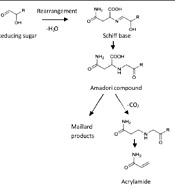
The main pathway of AA formation in potato chips is the Maillard reaction, which occurs when the amino acid asparagine reacts with reducing sugars, such as glucose, during high-temperature cooking (1). The correlation between dietary AA intake and associated health risks has been highlighted in studies, prompting the need for measures to minimize AA formation in potato chips as a proactive public health initiative. Understanding the intricate interplay of potato varieties, climatic conditions, soil compositions, and fertilization practices in Iran is crucial, as these factors significantly impact the levels of asparagine in potatoes—a key precursor to AA formation. Research endeavored to identify potato varieties with naturally lower asparagine content, and devising agricultural practices to curtail asparagine accumulation is essential for mitigating AA risks (5, 6).
Factors influencing AA formation in potato chips include pre-processing storage conditions, frying temperature and duration, pH levels, and the presence of regenerative monosaccharides and amino acids. Increasing frying temperature and duration significantly boost AA levels due to accelerated Maillard reaction rates (1).
Strategic modifications within Iranian potato chips factories can effectively reduce AA formation. Significant reductions in AA levels can be achieved by exercising precise temperature control and potentially lowering frying temperatures marginally. Maintaining potatoes at 8°C before frying helps preserve quality and minimize AA formation. Radiant vacuum thermal techniques instead of direct and conductive methods during production can effectively lower AA levels. Selecting potato varieties with reduced sugar content and asparaginase-producing genes can significantly reduce asparagine as a critical precursor to AA (6).
Pre-treating potatoes through methods such as pre-boiling or soaking aids in removing sugars and asparagine, thereby diminishing AA content in chips. Regulating pH post-blanching and maintaining heating temperatures within 140 to 160°C during frying are effective measures to mitigate AA formation. Opting for larger potato slices, achieving a golden yellow color during frying, prompt cooling, and segregating dark-colored chips are recommended strategies for reducing AA production. These comprehensive strategies target critical factors influencing AA formation in potato chips, providing actionable steps for the industry to address and mitigate the health risks associated with AA consumption (1).
Raising consumer awareness about AA and its associated health hazards through public campaigns is pivotal in fostering informed decision-making and steering demand toward healthier potato chips alternatives. Collaboration among governmental bodies, industry stakeholders, and public health organizations is imperative for the success of such awareness initiatives. Although re-evaluating production processes may pose challenges and necessitate initial investments in new technologies and research, the long-term benefits for public health are substantial. Iran can be ready to emerge as a trailblazer in producing healthier potato chips by prioritizing strategies like asparagine reduction, temperature regulation, alternative frying techniques, and enhanced consumer education. This holistic approach ensures a thriving potato chips industry while upholding public health standards.