
J Inflamm Dis

Image Credit:J Inflamm Dis

Identification and Assessment of Microbial Contamination by Staphylococcus aureus on Clinical Surfaces at Zanjan Dental University During the COVID-19 Pandemic

Author(s):
Moein NavidiMoein NavidiMoein Navidi ORCID1, Kasra NavidiKasra NavidiKasra Navidi ORCID1, Fakhri HaghiFakhri HaghiFakhri Haghi ORCID2, Kamyar MansoriKamyar MansoriKamyar Mansori ORCID3, Mina MohebbianMina MohebbianMina Mohebbian ORCID4,*
1Faculty of Dentistry, Zanjan University of Medical Sciences, Zanjan, Iran
2Zanjan University of Medical Sciences, Zanjan, Iran
3Clinical Research Development Unit, Zanjan University of Medical Sciences, Zanjan, Iran
4Department of Oral, Maxillofacial Surgery, Faculty of Dentistry, Zanjan University of Medical Sciences, Zanjan, Iran

Journal of Inflammatory Diseases:Vol. 28, issue 4; e159646
Published online:Dec 31, 2024
Article type:Research Article
Received:Aug 23, 2024
Accepted:Dec 26, 2024
How to Cite:Navidi M, Navidi K, Haghi F, Mansori K, Mohebbian M. Identification and Assessment of Microbial Contamination by Staphylococcus aureus on Clinical Surfaces at Zanjan Dental University During the COVID-19 Pandemic. J Inflamm Dis. 2024;28(4):e159646. doi: https://doi.org/10.69107/jid-159646

Abstract

Background:

Dental unit surfaces can serve as reservoirs for pathogens, potentially leading to cross-infections such as hepatitis, HIV, and COVID-19. Infection control in dental clinics is crucial to minimize contamination risks.

Objectives:

The present study aimed to assess microbial contamination and identify Staphylococcus aureus on clinical surfaces at Zanjan Dental University during the COVID-19 pandemic.

Methods:

This cross-sectional study was conducted over six months. Twelve enclosed active dental units in the restorative, endodontics, pediatrics, oral surgery, and prosthetics departments were examined during peak student activity hours (10:00 AM - 12:00 PM). Samples were collected midweek from four surfaces: Headrest, light arm, cabin entrance, and sidewall of the isolation cubicle. Sterile cotton swabs moistened with sterile saline were used for sampling. The collected samples were cultured on blood agar and mannitol salt agar to assess microbial load and identify S. aureus. Incubation was performed at 37°C for 24 hours. Data were analyzed using SPSS Statistics release 27.0.1, with statistical significance set at P < 0.05.

Results:

The mean colony-forming units (CFU) of S. aureus on mannitol salt agar before and after working hours were 0.14 CFU/cm2 (8.3%) and 1.04 CFU/cm2 (25%), respectively (P = 0.09). According to previous studies, CFU levels exceeding 0.25 - 0.5 CFU/cm2 are considered potentially hazardous in clinical settings. The total microbial load on blood agar also increased from 63.72 to 117.06 CFU/cm2 (P = 0.41). The highest S. aureus contamination was observed in the restorative department, while the prosthetics department had the highest overall microbial load.

Conclusions:

Our findings indicate that microbial contamination of dental units exceeded recommended thresholds. We recommend implementing UV-C disinfection of high-touch surfaces and mandating hourly surface wiping with 70% ethanol during peak hours. These interventions may help reduce contamination risks and improve infection control practices.

1. Background

Infection control is a fundamental concern in dentistry, as dental clinics serve as potential reservoirs for various pathogenic microorganisms. The risk of cross-infection is particularly high due to the frequent exposure of surfaces, instruments, and personnel to blood, saliva, aerosols, and contaminated hands (1). Among the most concerning bacterial pathogens in dental settings, Staphylococcus aureus is widely recognized for its ability to colonize clinical surfaces and contribute to nosocomial infections (2). Staphylococcus aureus is a facultative anaerobic gram-positive bacterium commonly found on the skin and mucosal surfaces of humans. However, its ability to survive on inanimate surfaces for prolonged periods makes it a serious concern in dental environments (3). Studies have shown that S. aureus contamination of dental unit surfaces, instruments, and airborne particles can increase the risk of infection transmission, particularly in high-contact areas such as dental chairs, handpieces, and overhead light handles (4, 5).

1.1. Impact of COVID-19 on Infection Control

The emergence of the COVID-19 pandemic has significantly influenced infection control practices in dental clinics. Enhanced use of personal protective equipment (PPE), staggered appointment scheduling, and stricter disinfection protocols were adopted to reduce the risk of SARS-CoV-2 transmission (6). These measures may have also impacted the transmission dynamics of other pathogens such as S. aureus, though the extent of their effectiveness remains uncertain. Volgenant et al. emphasized that despite improvements in infection control during the pandemic, residual contamination of clinical surfaces persisted in many dental environments (6). Increased frequency of surface disinfection, implementation of disposable barriers, and improved air ventilation systems were among the main responses to pandemic-related infection risks (7, 8). Despite these efforts, recent studies have raised concerns that routine cleaning protocols may still be insufficient in eliminating microbial contamination, especially in areas subjected to aerosol-generating procedures (9).

1.2. Staphylococcus aureus in Dental Clinics

Several studies have reported persistent S. aureus contamination in dental environments, with colonization rates varying between 10% and 50% depending on the type of surface and department (10, 11). The endodontic, prosthetics, and oral surgery departments have been identified as high-risk zones due to the nature of procedures performed and the higher patient turnover (12). Moreover, improper hand hygiene and insufficient surface disinfection have been identified as key factors contributing to increased microbial loads on headrests, dental light arms, and unit controls (13). In one study, S. aureus contamination was significantly higher after patient treatment sessions, indicating that current decontamination strategies may not be sufficient in preventing cross-contamination (14).

2. Objectives

We hypothesized that microbial contamination on dental unit surfaces increases significantly during clinical hours, with S. aureus being a predominant pathogen. Identifying contamination patterns and evaluating the effectiveness of current disinfection strategies are essential for improving infection control protocols and ensuring the safety of both patients and clinicians.

3. Methods

3.1. Study Design and Setting

This cross-sectional study was conducted over a six-month period in enclosed active dental units at Zanjan Dental University. The departments included pediatrics, prosthetics, endodontics, restorative dentistry, and oral surgery. Twelve dental units were selected to ensure comprehensive representation of all clinical departments while maintaining operational feasibility. The selection of this sample size was based on departmental coverage rather than statistical power calculation. Although a formal sample size calculation was not undertaken, the number of included units was deemed methodologically adequate to ensure departmental representation and facilitate descriptive comparisons. This approach, while pragmatic, may introduce limitations regarding statistical power and external validity, which are acknowledged in the interpretation of findings.

3.2. Sampling Strategy

Samples were collected randomly during peak working hours (10:00 AM - 12:00 PM) from four high-contact surfaces: Headrest, light arm, cabin entrance, and cabin sidewall. Dental units were randomly selected using a computerized random number generator, stratified by department. Sterile cotton swabs moistened with sterile saline were used for sampling.

3.3. Microbiological Analysis

Samples were cultured on blood agar (for total microbial load) and mannitol salt agar (for S. aureus detection). Plates were incubated at 37°C for 24 hours, and bacterial growth was quantified by colony-forming unit (CFU) counting. While mannitol salt agar permits presumptive identification of S. aureus, confirmatory techniques such as coagulase testing or polymerase chain reaction (PCR) were not utilized due to resource limitations. Nevertheless, the chosen culture medium is widely accepted for initial screening in clinical microbiology.

3.4. Ethical Approval

This study was approved by the Ethics Committee of Zanjan Dental University (IR.ZUMS.REC.1400.182). All procedures were conducted following institutional guidelines for research involving human-related environments.

3.5. Statistical Analysis

Data were analyzed using SPSS Statistics (release 27.0.1). Normality was assessed using the Kolmogorov-Smirnov test. Depending on distribution, comparisons were performed using either the paired t-test (for normally distributed data) or the Wilcoxon signed-rank test (for non-normally distributed data). A P-value < 0.05 was considered statistically significant.

4. Results

4.1. Comparison of Pre- and Post-shift Contamination

Table 1 presents the mean CFU of S. aureus and the total microbial load before and after working hours. Although the increase in S. aureus CFU post-shift was not statistically significant (P = 0.09), the nearly seven-fold rise highlights a potential risk of cross-contamination and suggests that routine disinfection protocols may not be sufficient.
Table 1.Comparison of Staphylococcus aureus and Total Microbial Load Before and After Working Hours a, b
Sampling TimeStaphylococcus aureus CFU/cm² (Mannitol)Microbial Load CFU/cm² (Blood Agar)P-Value
Before shift0.14 ± 1.01 (8.3)63.72 ± 302.88 (75)0.09
After shift1.04 ± 3.75 (25)117.06 ± 513.45 (83.3)0.41

Abbreviation: CFU, colony-forming units.

a Values are expressed as mean ± SD (percentage).

b Percentages indicate the proportion of positive samples among total samples collected.

4.2. Department-Wise Distribution of Staphylococcus aureus

Table 2 provides a breakdown of S. aureus contamination in different dental departments. The endodontic department showed a significant increase in S. aureus after working hours (P = 0.02). In other departments, although the post-shift increases in S. aureus CFU values did not reach statistical significance, discernible upward trends were observed. Notably, the reconstructive and prosthetics departments demonstrated measurable elevations in contamination levels, which may reflect a cumulative effect of routine clinical procedures throughout the work period.
Table 2. Staphylococcus aureus CFU/cm2 Before and After Working Hours by Department a, b
DepartmentsStaphylococcus aureus CFU Before ShiftStaphylococcus aureus CFU After ShiftP-Value
Oral diseases0.58 ± 0.66 (8.3)0.66 ± 1.12 (16.7)0.33
Endodontic0 ± 0 (0)1.5 ± 2.34 (62.5)0.02
Pediatrics0 ± 0 (0)0.25 ± 0.58 (12.8)0.35
Surgery0 ± 0 (0)0 ± 0 (0)-
Reconstructive0 ± 0 (0)3.25 ± 4.21 (25)0.33
Prosthetics0 ± 0 (0)0.25 ± 0.61 (25)0.17

Abbreviation: CFU, colony-forming units.

a Values are expressed as mean ± SD (percentage).

b Percentages represent the proportion of positive samples per department.

4.3. Surface-Wise Distribution of Staphylococcus aureus

Table 3 presents S. aureus contamination levels on different dental unit surfaces before and after the shift. None of the observed changes in S. aureus contamination across the examined surfaces reached statistical significance. Nevertheless, upward trends in post-shift CFU values were identified. The cabin sidewall exhibited the highest post-shift contamination, followed by the light arm, while no increase was detected on the surgery headrests. These differences, although not statistically significant, may reflect variations in surface exposure and contact frequency.
Table 3.Staphylococcus aureus CFU/cm² Before and After Working Hours by Surface a, b
SurfaceStaphylococcus aureus CFU Before ShiftStaphylococcus aureus CFU After ShiftP-Value
Headrest0 ± 0 (0)0.5 ± 0.82 (25)0.11
Light arm0 ± 0 (0)0.5 ± 0.91 (33.3)0.08
Cabin entrance0.58 ± 1.12 (8.3)1 ± 1.89 (25)0.17
Cabin sidewall0 ± 0 (0)2.16 ± 2.94 (16.66)0.31

Abbreviation: CFU, colony-forming units.

a Values are expressed as mean ± SD (percentage).

b Percentages represent the proportion of positive samples per surface.

4.4. Department-Wise Distribution of Total Microbial Load

Table 4 summarizes the total microbial load in different departments before and after the shift. None of the departments exhibited statistically significant changes in total microbial load between pre- and post-shift measurements. However, numerical increases were observed in most departments, with the Prosthetics and Endodontic departments showing the highest post-shift CFU values. In contrast, a decrease in microbial load was noted in the pediatrics and surgery departments. These variations, while not statistically significant, suggest heterogeneity in contamination dynamics across clinical settings.
Table 4.Total Microbial CFU/cm² Before and After Working Hours by Department a, b
DepartmentsMicrobial CFU Before ShiftMicrobial CFU After ShiftP-Value
Oral diseases9.41 ± 12.75 (83.3)10.66 ± 13.92 (83.3)0.36
Endodontic0.87 ± 2.34 (50)23.25 ± 34.12 (87.5)0.27
Pediatrics89.5 ± 110.32 (87.5)2.12 ± 3.67 (75)0.35
Surgery36.5 ± 41.22 (75)12 ± 18.64 (75)0.47
Reconstructive4.62 ± 7.85 (50)26.37 ± 32.55 (75)0.20
Prosthetics225 ± 312.67 (75)628.62 ± 742.34 (75)0.34

Abbreviation: CFU, colony-forming units.

a Values are expressed as mean ± SD (percentage).

b Percentages represent the proportion of positive samples per department.

4.5. Surface-Wise Distribution of Total Microbial Load
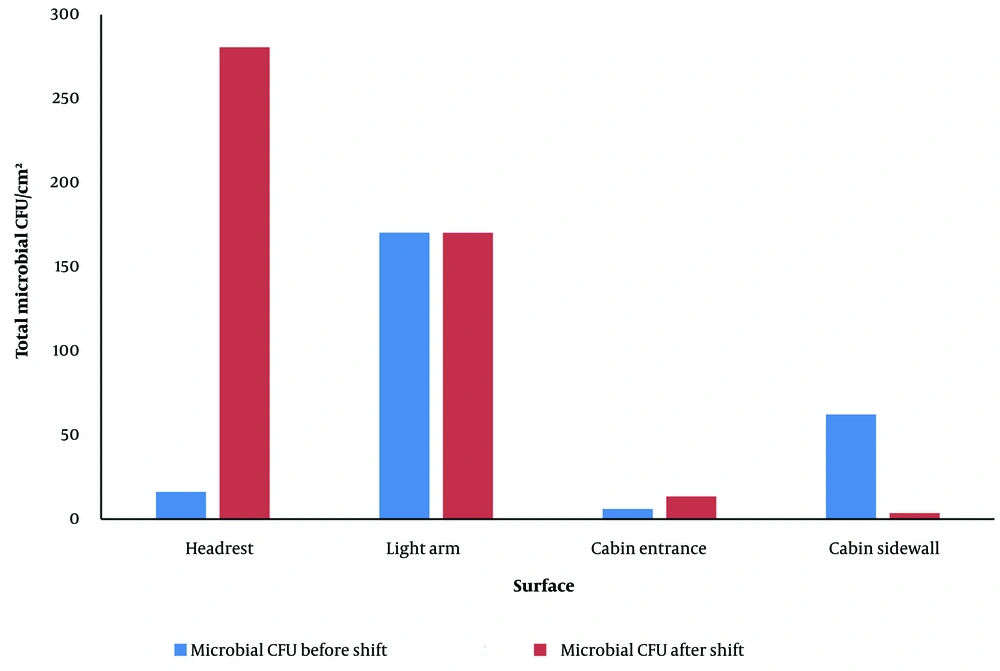
Figure 1 illustrates the total microbial load (CFU/cm2) on four surface types before and after working hours. An increase in contamination was observed on all surfaces except for the light arm, which showed a decrease. The highest post-shift microbial load was detected on the headrest, followed by the cabin entrance, while the light arm exhibited the lowest post-shift values. Although these differences were not statistically significant, the observed variations highlight surface-specific contamination patterns that may reflect differences in contact frequency, cleaning efficiency, or procedural exposure. The results emphasize the need for attention to surface-specific trends when assessing microbial risk.
Total microbial colony-forming units (CFU)/cm<sup>2</sup> before and after working hours by surface
Figure 1.

Total microbial colony-forming units (CFU)/cm2 before and after working hours by surface
4.6. Summary of Findings

- Staphylococcus aureus contamination increased in most departments and surfaces after working hours, but the increase was statistically significant only in the endodontic department (P = 0.02).
- The prosthetics department had the highest total microbial load, suggesting a need for targeted interventions.
- Although most trends were statistically non-significant, several high-contact surfaces demonstrated notable microbial increases, which may have clinical implications for infection control.

5. Discussion

5.1. Interpretation of Findings

The results of this study indicate an increase in microbial contamination on dental unit surfaces after working hours, although most of the differences were not statistically significant. This trend aligns with previous research reporting increased contamination of high-contact surfaces following clinical activities. For instance, studies by Spagnolo et al. (15) and Chughtai et al. (16) demonstrated elevated bacterial counts on frequently touched surfaces in dental settings. Despite the lack of statistical significance in most departments, the nearly seven-fold rise in S. aureus CFU post-shift and the significant increase in the endodontic department (P = 0.02) are clinically relevant. These findings suggest that current disinfection routines may not adequately address microbial accumulation, particularly in departments associated with aerosol-generating procedures. The endodontic department’s elevated post-shift contamination could be attributed to the high frequency of instrumentation and irrigants used during root canal treatments, which produce splatter and increase surface exposure. The prosthetics department’s high total microbial load may result from increased operator movement between clinical and laboratory areas, increasing contact with unit surfaces.

5.2. Methodological Considerations

Although a formal power analysis was not conducted, the sample size was selected to ensure balanced departmental representation and was deemed sufficient for exploratory comparisons. This approach, while methodologically justifiable, may modestly limit the statistical power and generalizability of findings. Future studies should include larger sample sizes and consider inferential modeling to strengthen causal interpretation. Moreover, while mannitol salt agar allows presumptive identification of S. aureus, confirmatory techniques such as coagulase testing or PCR were not performed due to limited laboratory resources. This constraint may have affected specificity; however, the culture-based approach used is widely accepted for initial screening in clinical microbiology.

5.3. Comparison with Previous Studies

Several studies have reported similar contamination patterns in dental settings: Trochesset and Walker (17) and Shweta and Prakash (18) identified S. aureus as one of the most commonly isolated bacteria from dental units, particularly in high-traffic departments. Baudet et al. (19) found that microbial contamination increased significantly after dental procedures, emphasizing the role of aerosols and splatter in cross-contamination. Chen et al. (4) reported that dental light handles, headrests, and armrests were among the most contaminated surfaces, consistent with our findings. However, some differences exist between our findings and previous research. Unlike Esfahani et al. (20), who found significant reductions in bacterial counts after routine disinfection, our study suggests that current disinfection protocols may not be sufficient in certain areas, particularly in the prosthetics and reconstructive departments. This discrepancy highlights the need for improved infection control strategies tailored to specific departments.

5.4. Clinical Implications and COVID-19 Context

The present study was conducted during the COVID-19 pandemic, a period characterized by widespread modifications to routine clinical practice, including the implementation of enhanced PPE, intensified surface disinfection protocols, ventilation improvements, and changes in patient scheduling such as staggered appointments and reduced patient volume (21). These interventions were designed primarily to limit the transmission of SARS-CoV-2 but are also likely to have influenced the transmission dynamics and environmental persistence of other pathogens, including S. aureus (6).
While such heightened infection control measures may have contributed to lower baseline levels of microbial contamination compared to pre-pandemic conditions, our findings demonstrate that measurable accumulation of microbial load still occurred during working hours, particularly on high-contact surfaces. These trends suggest that current practices, while beneficial, may not be sufficient to fully eliminate the risk of environmental contamination. Based on our results, the following recommendations are proposed to strengthen infection control:
(A) Enhancing surface disinfection protocols: (1) Increase the frequency of disinfection for high-contact surfaces, including dental unit handles, light arms, and chair headrests; (2) employ hydrogen peroxide-based disinfectants, which have demonstrated broad-spectrum efficacy against S. aureus and are suitable for high-risk clinical environments; (3) integrate advanced decontamination technologies, such as UV-C sterilization, between patient appointments to supplement routine cleaning procedures; (B) implementing barrier protection strategies: (1) Use disposable plastic barriers on frequently touched surfaces during clinical procedures; (2) promote the use of single-use instrument packaging to reduce the risk of cross-contamination; (C) improving staff training and compliance: (1) Conduct regular training sessions for students and clinical personnel on up-to-date disinfection techniques; (2) reinforce adherence to hand hygiene protocols and proper glove usage as foundational components of infection control; (D) establishing continuous microbiological surveillance: (1) Implement routine monitoring programs to track microbial contamination trends over time; (2) perform regular audits to assess the effectiveness of existing infection control measures and identify areas requiring intervention. By adopting these layered strategies, dental clinics can more effectively manage microbial risks and maintain a safer environment for both patients and healthcare providers.

5.5. Conclusions

This study highlights the ongoing challenge of microbial contamination in dental clinical settings, as evidenced by the post-shift increases in S. aureus and total microbial load, despite the implementation of enhanced infection control protocols during the COVID-19 pandemic. These findings reveal that, although intensified disinfection and protective measures may reduce baseline contamination, they do not fully eliminate the risk of microbial persistence, particularly in high-contact areas and high-risk departments such as endodontics and prosthetics.
The results underscore the need for continuous microbiological monitoring, targeted surface disinfection, and refinement of existing protocols. In addition, strengthening staff training and compliance, particularly regarding hand hygiene and equipment handling, can play a vital role in minimizing contamination risks. Together, these strategies contribute to safer clinical environments for both patients and healthcare personnel and lay the groundwork for more effective, evidence-based infection control practices in dentistry.

5.6. Study Limitations

Despite its strengths, this study has several limitations that should be considered when interpreting the results. First, the modest sample size limited to 12 dental units may have reduced the statistical power to detect significant differences across departments and surfaces, and may also affect the generalizability of the findings. Larger, multicenter studies with more extensive sampling are warranted to validate these results. Second, S. aureus identification was based solely on culture using selective media, without confirmatory molecular techniques such as PCR or matrix-assisted laser desorption/ionization time-of-flight mass spectrometry (MALDI-TOF MS). The absence of such methods may have limited the specificity and sensitivity of pathogen detection. Third, environmental variables such as ventilation, temperature, and humidity were not standardized across the sampled units. These uncontrolled factors could have influenced microbial load and may account for variability in contamination levels. Finally, although standardized cleaning protocols were implemented, variability in compliance and technique due to human factors may have introduced inconsistencies in surface disinfection effectiveness.
Despite these limitations, the present study offers valuable baseline data and yields several important insights into microbial contamination patterns in dental clinical environments. Notably, the identification of surface-specific and department-level trends even under enhanced infection control conditions during the COVID-19 pandemic demonstrates the persistence of contamination risks that may not be detectable through routine visual inspection alone. These findings highlight the value of implementing microbiological monitoring, which involves the regular sampling and laboratory analysis of surfaces to detect and quantify microbial load. Such monitoring provides objective data on contamination trends and enables dental clinics to evaluate the effectiveness of their disinfection protocols over time. Moreover, the methodology applied in this study offers a replicable framework for identifying high-risk areas and guiding targeted improvements in infection control. By combining practical sampling with data-driven interpretation, the study supports the development of more precise and evidence-based strategies to enhance clinical hygiene and protect both patients and healthcare workers.

5.7. Future Directions

To build on the findings of this study, future research should adopt a more expansive and multidimensional approach. Increasing the sample size and including multiple dental institutions would improve the generalizability of results and allow for a more comprehensive analysis of contamination patterns across diverse clinical environments. Further studies should evaluate the comparative effectiveness of various disinfectants and sterilization methods, particularly those targeting S. aureus and other clinically significant pathogens. Incorporating advanced molecular diagnostics such as PCR and MALDI-TOF MS can enhance the accuracy and specificity of microbial identification beyond conventional culture techniques. In addition, future work should explore the role of aerosols and splatter in bacterial transmission through high-resolution imaging or air sampling methods. Longitudinal studies are also needed to monitor microbial contamination over time and assess the sustained impact of enhanced infection control protocols.

Footnotes

References

  • 1.
    Negrini Tde C, Duque C, de Oliveira AC, Hebling J, Spolidorio LC, Spolidorio DM. Staphylococcus aureus contamination in a pediatric dental clinic. J Clin Pediatr Dent. 2009;34(1):13-8. [PubMed ID: 19953803]. https://doi.org/10.17796/jcpd.34.1.n435k10291222035.
  • 2.
    Hayajneh WA, Masaadeh HA, Hayajneh YA. A case-control study of risk factors for hepatitis B virus infection in North Jordan. J Med Virol. 2010;82(2):220-3. [PubMed ID: 20029796]. https://doi.org/10.1002/jmv.21603.
  • 3.
    Goncalves E, Carvalhal R, Mesquita R, Azevedo J, Coelho MJ, Magalhaes R, et al. Detection of Staphylococcus aureus (MRSA/MSSA) in surfaces of dental medicine equipment. Saudi J Biol Sci. 2020;27(4):1003-8. [PubMed ID: 32256160]. [PubMed Central ID: PMC7105652]. https://doi.org/10.1016/j.sjbs.2019.12.003.
  • 4.
    Chen Y, Ao J, Zhang J, Gao J, Hao L, Jiang R, et al. Bioinspired superhydrophobic surfaces, inhibiting or promoting microbial contamination? Materials Today. 2023;67:468-94. https://doi.org/10.1016/j.mattod.2023.06.006.
  • 5.
    Brinker SP, Baker G. Behind-the-Scenes Infection Prevention: Focusing on Clinical Surfaces and Instrument Processing. Compend Contin Educ Dent. 2023;44(9):504-8. quiz 509. [PubMed ID: 37850954].
  • 6.
    Volgenant CMC, Persoon IF, de Ruijter RAG, de Soet JJH. Infection control in dental health care during and after the SARS-CoV-2 outbreak. Oral Dis. 2021;27 Suppl 3(Suppl 3):674-83. [PubMed ID: 32391651]. [PubMed Central ID: PMC7272817]. https://doi.org/10.1111/odi.13408.
  • 7.
    Petti S, Polimeni A, Dancer SJ. Effect of disposable barriers, disinfection, and cleaning on controlling methicillin-resistant Staphylococcus aureus environmental contamination. Am J Infect Control. 2013;41(9):836-40. [PubMed ID: 23375575]. https://doi.org/10.1016/j.ajic.2012.09.021.
  • 8.
    Tzoutzas I, Karoussis I, Maltezou HC. Air Quality in Dental Care Facilities: Update to Current Management and Control Strategies Implementing New Technologies: A Comprehensive Review. Vaccines (Basel). 2022;10(6). [PubMed ID: 35746455]. [PubMed Central ID: PMC9227829]. https://doi.org/10.3390/vaccines10060847.
  • 9.
    Wu M, Shi Z, Yu X, Xu Y, Jin X, Zhang L, et al. Disinfection methods of dental unit waterlines contamination: a systematic review. J Med Microbiol. 2022;71(6). [PubMed ID: 35670283]. https://doi.org/10.1099/jmm.0.001540.
  • 10.
    Bernardo WLC, Silva JJD, Hofling JF, Rosa EAR, Boriollo MFG. Dynamics of the seasonal airborne propagation of Staphylococcus aureus in academic dental clinics. J Appl Oral Sci. 2018;26. e20170141. [PubMed ID: 29641749]. [PubMed Central ID: PMC5912401]. https://doi.org/10.1590/1678-7757-2017-0141.
  • 11.
    Azmi AH, Adnan SNA, Ab Malik N. The Prevalence of Staphylococcus aureus in the Oral Cavity of Healthy Adults in Malaysia. Sains Malaysiana. 2020;49(3):583-91. https://doi.org/10.17576/jsm-2020-4903-13.
  • 12.
    Castiglia P, Liguori G, Montagna MT, Napoli C, Pasquarella C, Bergomi M, et al. Italian multicenter study on infection hazards during dental practice: control of environmental microbial contamination in public dental surgeries. BMC Public Health. 2008;8:187. [PubMed ID: 18644099]. [PubMed Central ID: PMC2430203]. https://doi.org/10.1186/1471-2458-8-187.
  • 13.
    Yaembut N, Ampornaramveth RS, Pisarnturakit PP, Subbalekha K. Dental Student Hand Hygiene Decreased With Increased Clinical Experience. J Surg Educ. 2016;73(3):400-8. [PubMed ID: 26861583]. https://doi.org/10.1016/j.jsurg.2015.12.007.
  • 14.
    Abushahba F, Algahawi A, Areid N, Vallittu PK, Narhi T. Efficacy of biofilm decontamination methods of dental implant surfaces: A systematic review of in vitro studies. Eur J Oral Sci. 2025;133(2). e70005. [PubMed ID: 39980138]. https://doi.org/10.1111/eos.70005.
  • 15.
    Spagnolo AM, Sartini M, Cristina ML. Microbial Contamination of Dental Unit Waterlines and Potential Risk of Infection: A Narrative Review. Pathogens. 2020;9(8). [PubMed ID: 32823641]. [PubMed Central ID: PMC7460066]. https://doi.org/10.3390/pathogens9080651.
  • 16.
    Chughtai AA, Stelzer-Braid S, Rawlinson W, Pontivivo G, Wang Q, Pan Y, et al. Contamination by respiratory viruses on outer surface of medical masks used by hospital healthcare workers. BMC Infect Dis. 2019;19(1):491. [PubMed ID: 31159777]. [PubMed Central ID: PMC6547584]. https://doi.org/10.1186/s12879-019-4109-x.
  • 17.
    Trochesset DA, Walker SG. Isolation of Staphylococcus aureus from environmental surfaces in an academic dental clinic. J Am Dent Assoc. 2012;143(2):164-9. [PubMed ID: 22298558]. https://doi.org/10.14219/jada.archive.2012.0127.
  • 18.
    Prakash SK; Shweta. Dental abscess: A microbiological review. Dent Res J (Isfahan). 2013;10(5):585-91. [PubMed ID: 24348613]. [PubMed Central ID: PMC3858730].
  • 19.
    Baudet A, Guillaso M, Grimmer L, Regad M, Florentin A; Mediqai Study Group. Microbiological Contamination of the Office Environment in Dental and Medical Practice. Antibiotics (Basel). 2021;10(11). [PubMed ID: 34827313]. [PubMed Central ID: PMC8614722]. https://doi.org/10.3390/antibiotics10111375.
  • 20.
    Esfahani M, Sharifi M, Tofangchiha M, Salehi P, Gosili A. Bacterial contamination of dental units before and after disinfection. Sch J Dent Sci. 2017;4(4):206-10.
  • 21.
    Dancer SJ. Reducing the risk of COVID-19 transmission in hospitals: focus on additional infection control strategies. Surgery (Oxf). 2021;39(11):752-8. [PubMed ID: 34658477]. [PubMed Central ID: PMC8511651]. https://doi.org/10.1016/j.mpsur.2021.10.003.

Crossmark
Crossmark
Checking
Share on
Cited by
Metrics

Purchasing Reprints

  • Copyright Clearance Center (CCC) handles bulk orders for article reprints for Brieflands. To place an order for reprints, please click here (   https://www.copyright.com/landing/reprintsinquiryform/ ). Clicking this link will bring you to a CCC request form where you can provide the details of your order. Once complete, please click the ‘Submit Request’ button and CCC’s Reprints Services team will generate a quote for your review.
Search Relations

Author(s):

Related Articles