
1. Background
In any country, students are considered as the future makers of the country (1). One of the important objectives of the modern education system is to nurture those who are able to easily overcome their problems in everyday life and in the social environment. Hence, in the learning process, it is important to provide learning conditions and opportunities so that the best achievements are obtained (2). Therefore, attention should be paid to the psychological characteristics of students and the factors affecting their academic performance.
The students' learning process is very much affected by their mental health, and one of the reasons for students' academic failure is their mental disorders. Obsessive-compulsive disorder (OCD) is a complex disease in children and the fourth most common mental disorder in the world (3). It is also the most common mental disorder reported after fear, drug-related disorders, and major depression disorder (4). Children with OCD may have obsessive or compulsive disorder or both (5). The obsessions are mental actions or repetitive behaviors that occur in response to mental obsessions (6).
There is no consensus on the exact number of people with OCD. This disagreement is due to the diversity of methods of conducting studies and diagnosing OCD. However, in the Fifth Diagnostic and Statistical Manual of Mental Disorders (DSM-5), the prevalence of this disorder in the United States was reported to be 1.2%, which is similar to the international prevalence (1.1 - 8.1%). However, many researchers believe that this prevalence is two to nine times the mentioned rate (7). Due to its disabling nature, OCD can affect different areas of development in children and adolescents and thereby seriously impair their overall functioning. Various factors are involved in the incidence of obsession, including biological, psychological, and environmental factors, among which family factors are one of the strongest predictors of obsession in children (8).
In recent years, OCD has received a great deal of research in terms of its importance and pervasive damage. These studies are often in the field of clinical trials, neuroimaging, and epidemiology (9). In Iran, several studies have been conducted on the prevalence of OCD in different societies. Khosravi and Naseri, in a descriptive-cross-sectional study, reported the prevalence of OCD to be 43.3% in a sample of 411 participants aged 12 - 46 years in Jahrom (10). In a causal comparative study, Hosseini and Dira reported the average prevalence of OCD in high school students in Bushehr (n = 911) to be 29.38% (11). In another study, Hamzeh compared the frequency of OCD in children with and without chronic kidney disease (CKD) and reported 11.12 ± 2.54 and 15.32 ± 7.69 in healthy and CKD children (12). OCD is most commonly diagnosed in children aged nine to 12 years. Coubert reported the peak prevalence of this disorder in children aged ten years (7).
One of the key factors affecting the success of students is the concept of academic well-being, which is one of the newest concepts in positive psychology. DeGarmo and Martinez considered academic well-being as having components such as grade point average, homework skills, willingness to drop out of school, and satisfaction with academic performance and academic aspiration. In general, academic well-being indicates the role of well-being factors in relation to the school context and emphasizes the active role of the student and his/her abilities in creating a lively and desired academic environment (13). Today, scholars consider school as a situation that plays a role beyond creating academic competence and a suitable place to nurture a complete student (14). This growing focus on full student growth and the use of well-being in schools has been accompanied by research support for the positive effect of school on emotional, social, academic, and societal behavior (15).
Therefore, the construct of well-being has influenced the field of education, and one of the important objective of education in advanced societies is to provide well-being opportunities for students (16). The feeling of well-being and life satisfaction plays an important role in the mental health of people. Meanwhile, the lack of mental health provides the basis for various behavioral problems, disorders, and incompatibilities, and hinders the efficiency and development of society (17).
Academic well-being, proposed by Tuominen-Soini et al. (18), was defined in relation to four components of school (19). The first component is school burnout, which includes academic fatigue, pessimistic attitude toward school, and the feeling of inadequacy, which cause stress, undesired motivation, and finally, academic failure (20). The second component is involvement in school assignments and usually has a multidimensional structure, including psychological, educational, motivational, cognitive, and behavioral dimensions (21). It also includes energy and strength in school (motivational), commitment to school (cognitive), and absorption in school work (behavioral) (22). The third component is academic satisfaction, which can be a protective and empowering factor for successful performance in school and increase learning and psychological well-being. However, academic dissatisfaction can act as a risk factor and cause tendency to undesired behaviors such as drug abuse. The fourth component is the value of school, which is usually defined as the students' perception of school attendance and includes internal and external values (23).
The psychological treatment of students with OCD is among the most important psychological issues. Due to the stress and problems caused by OCD, psychological training always seems necessary. Although primary prevention is always effective and beneficial, secondary prevention (psychotherapy interventions) can greatly reduce students' psychosocial problems (24). Studies on the well-being of patients with OCD point to the low level of well-being of these patients. Therefore, these studies may lead to positive changes in their life that facilitate recovery from a critical life (25).
One of the trainings to improve academic well-being and quality of life in these students is positivity training (26). The aim of positivity is not to eliminate disorders but to create factors that cause growth and development in humans without denying the necessity and importance of harm (27). Based on this approach, the strategies that help the subject to build a pleasant, attractive, and meaningful life are called positive interventions. Bolier et al. showed that using positive psychological interventions is a complementary strategy in promoting mental health and treatment programs; positive education can also increase physical and mental well-being and improve the quality of life (28).
2. Objectives
This study aimed to investigate the effectiveness of positivity on academic well-being in students with OCD.
3. Methods
3.1. Design
The present study was a quasi-experimental research with pretest-posttest design and a control group.
3.2. Samples
The statistical population of this study included all female students of the secondary schools in Zahedan, Iran, in the academic year 2020 - 2021.
Joyce et al. considered at least 15 subjects sufficient for experimental research (29). Accordingly, using available sampling method, 30 subjects were selected and assigned into two equal groups of experimental and control (n = 15 in each). First, the participants in both groups completed the academic well-being questionnaire in the pre-test stage. Then, the subjects in the experimental group received eight sessions of positivity training (each session 60 minutes per week). At the end of the treatment sessions, both groups completed the academic well-being questionnaire in the post-test phase.
The study objectives were explained to all students and their parents. All ethical principles, including signing a voluntary informed consent, the right to withdraw from the study at any stage, non-disclosure of information, confidentiality of all data, and avoiding harm to participants were observed. The research protocol was approved by the Research Ethics Committee of Sistan and Baluchestan University (code: IR.USB.REC.1400.015).
The inclusion criteria were as follows: Obtaining a score higher than 20 in Maudsley Obsessive-Compulsive Inventory (MOCI); age between 15 - 18 years; studying in a secondary school; signing an informed consent; appropriate physical and mental conditions to participate in the study; and the absence of concomitant disease to participate in the sessions. The exclusion criteria were as follows: Having comorbid disorders; receiving medical and psychological therapies in the past month or during the study; severe physical or mental diseases; a history of physical and mental diseases; symptoms of psychosis; and unwillingness to participate in the study.
3.3. Intervention
The content and objectives of the positivity training sessions were taken and expanded from Seligman et al. (30). The aim of the meetings was to promote and improve the level of academic well-being, and the meeting sessions was conducted in the form of questions, answers, and group discussions. At the end of each session, homework was presented, and at the beginning of each session, homework and topics were discussed before the session. The content and activities of the sessions have been presented in Table 1 (30).
Table 1.
Summary of the Structure and Content of Positivity Training Sessions Based on Seligman et al.
| Session | Content and Activity of Each Session | Objective |
|---|---|---|
| 1 | Familiarity with the group, explanation of the objectives of the intervention, description of the structure of the intervention (determining the hours and duration of classes), filling out questionnaires, testing and talking about the strengths of the members, and writing the strengths | Preparation |
| 2 | Talking about strengths and how to use them and writing three positive life events | Identification of personal capabilities |
| 3 | Talking about gratitude and writing a letter to friends in this regard | Creation of positive emotion |
| 4 | Conversation about the experience of enjoying the present with a focus on the subject of the present | Enjoy the present |
| 5 | Discussing active/constructive response and interaction with others | Improvement of relationships with others |
| 6 | Discussing the summary of life and talking about the values that a person likes to be attributed to by others in the future | Increase hope |
| 7 | Discussing positive services and how one can present one's abilities | Use of capability |
| 8 | Talking about positive thinking, choosing a favorite exercise from the exercises presented in the previous sessions, and discussing the selected exercise | Review of previous sessions |
3.4. Instruments
3.4.1. The Maudsley Obsessive-Compulsive Inventory
The MOCI was designed to measure OCD and contains 30 questions with yes/no answers. This questionnaire has been designed so that a completely obsessive person can answer exactly half of the questions positively and the other half negatively. Using factor analysis, Hodgson and Rachman obtained four subgroups, including checking, cleaning, slowness, repeating, and doubting. This questionnaire has been used both in clinical trials and in the general population. The total score of MOCI ranges from zero to 30. In different studies, different cut-off points have been selected for OCD. This questionnaire has good reliability and validity, and it has been used frequently (31). The reliability of the re-test is good (r = 0.98), and in two studies in Iran, the mean of this test in obsessive-compulsive patients was 15.75 (standard deviation = 5.63) and 14.67 (standard deviation = 5.76) (32).
3.4.2. Academic Well-being Scale
Academic Well-being Scale was designed by Tuominen-Soini et al. (18). It includes 31 questions and four subscales of school value (eight items), school burnout (ten items), academic satisfaction (four items), and involvement in school assignments (nine items). The items of each subscale include the following:
- School value: Items 2, 3, 4, 5, 6, 7, 8, and 9;
- School burnout: Items 1, 10, 11, 12, 13, 14, 15, 16, 18, and 23;
- Academic satisfaction: Items 19, 20, 21, and 22;
- Involvement in school assignments: Items 17, 24, 25, 26, 27, 28, 29, 30, and 31.
Tuominen-Soini et al. developed the Academic Well-being Scale by modeling and aggregating the four dimensions of school value, school burnout, academic satisfaction, and involvement in school assignments. They reported the validity of the scale and the value of Cronbach's alpha for school value, school burnout, academic satisfaction, and involvement in school assignments as 0.64, 0.77, 0.91, and 0.94, respectively (18). Also, Moradi et al. (19) psychoanalyzed this questionnaire among Iranian adolescents and reported its validity and reliability to be good. For this purpose, the root mean square error was approximated by 0.06, and the reliability of the questionnaire for the dimensions of school value, school burnout, academic satisfaction, and involvement in school assignments were 0.88, 0.73, 0.73, and 0.75, respectively (33).
3.5. Statistical Analysis
The data obtained from this study were analyzed using descriptive statistics (mean and standard deviation) and inferential statistics (multivariate analysis of covariance) by SPSS-16 software.
Multivariate covariance test assumptions, including normality of data, variance homogeneity, and regression line slope were investigated.
4. Results
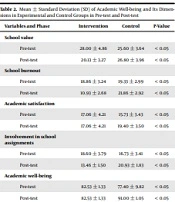
Table 2 shows academic well-being scores and its components in the experimental and control groups, which indicates the improvement of academic well-being and its components in the experimental group.
Table 2.
Mean ± Standard Deviation of Academic Well-being and Its Dimensions in Experimental and Control Groups in Pre-test and Post-test
| Variables and Phase | Intervention | Control | P-Value |
|---|---|---|---|
| School value | |||
| Pre-test | 28.00 ± 4.86 | 25.60 ± 3.64 | < 0.05 |
| Post-test | 20.13 ± 3.27 | 26.80 ± 3.96 | < 0.05 |
| School burnout | |||
| Pre-test | 18.86 ± 3.24 | 19.33 ± 2.99 | < 0.05 |
| Post-test | 10.93 ± 2.68 | 21.86 ± 2.92 | < 0.05 |
| Academic satisfaction | |||
| Pre-test | 17.06 ± 4.21 | 15.73 ± 3.43 | < 0.05 |
| Post-test | 17.06 ± 4.21 | 19.40 ± 3.50 | < 0.05 |
| Involvement in school assignments | |||
| Pre-test | 18.60 ± 3.79 | 16.73 ± 3.41 | < 0.05 |
| Post-test | 13.46 ± 1.50 | 20.93 ± 1.83 | < 0.05 |
| Academic well-being | |||
| Pre-test | 82.53 ± 1.33 | 77.40 ± 9.82 | < 0.05 |
| Post-test | 82.53 ± 1.33 | 91.00 ± 1.05 | < 0.05 |
Analysis of covariance was used to see if positivity training can significantly affect academic well-being and its four components in students with OCD. Kolmogorov-Smirnov test was used to determine the normality of data related to value of school in the pretest (K-S = 0.58, P ≥ 0.88) and posttest (K-S = 0.74, P ≥ 0.63), burnout to school in the pretest (K-S = 0.78, P ≥ 0.56) and posttest (K-S = 0.84, P ≥ 0.47), academic satisfaction in the pretest (K-S = 0.77, P ≥ 0.59) and posttest (K-S = 0.82, P ≥ 0.50), and involvement in school assignments in the pretest (K-S = 0/62, P ≥ 0.83) and posttest (K-S = 0.80, P ≥ 0.53), as well as the total score of academic well-being in the pretest (K-S = 0.72, P ≥ 0.66) and posttest (K-S = 0.72, P ≥ 0.66). The results showed a significance difference (0.05), and all the components of academic well-being had a normal distribution.
Table 3.
Results of Variance Homogeneity Test
| Homogeneity Test of Variance Research Variables | F Levin | DF1 | DF2 | P-Value |
|---|---|---|---|---|
| School value (post-test) | 2.44 | 1 | 28 | 0.12 |
| School burnout (post-test) | 034 | 1 | 28 | 0.56 |
| Academic satisfaction (post-test) | 2.16 | 1 | 28 | 0.15 |
| Involvement in school assignments (post-test) | 0.63 | 1 | 28 | 0.43 |
| Academic Well-being (post-test) | 2.73 | 1 | 28 | 0.10 |
As Table 3 shows, since there was no statistically significant difference between the studied variables, the assumption of variances homogeneity was confirmed.
Another assumption of covariance analysis is the regression line slope. The results of different dimensions were as follows: School value (f = 0.87, P = 0.37), school burnout (f = 0.12, P = 0.72), academic satisfaction (f = 0.26, P = 1.28), involvement in school assignments (f = 0.99, P = 0.32), and total score of academic well-being at the pre-test and post-test stages (f = 0.50, P = 0.48). The results of homogeneity of regression line slope showed that due to the significance level (P < 0.05), the data support the regression slope hypothesis. Now, due to the confirmation of three conditions, we can take the multivariate analysis of covariance.
Table 4.
Summary of Multivariate Analysis of Covariance in Academic Well-being Variable and Its Components
| Test | Value | F | P-Value |
|---|---|---|---|
| Wilks' Lambda | 0.95 | 71.66 | 0.05 |
As can be seen in Table 4, multivariate significance tests on the effectiveness of positivity on academic well-being and its components in students with OCD syndrome were significant at a level less than 0.05. Therefore, there is a difference in at least one of the variables, and multivariate analysis of covariance is used to show the difference level. In order to test the hypotheses more accurately, the results of the multivariate analysis of covariance test for each positivity training are given below.
Table 5.
Multivariate Analysis of Covariance (ANCOVA in MANCOVA) to Investigate the Effect of Positivity Training on Academic Well-being and Its Components
| Variables | Type III Sum of Squares | Mean Square | F | Partial Eta Squared | P-Value |
|---|---|---|---|---|---|
| School value | 393.75 | 393.75 | 142.88 | 0.86 | 0.05 |
| School burnout | 216.04 | 216.04 | 25.34 | 0.52 | 0.05 |
| Academic satisfaction | 364.92 | 364.92 | 41.58 | 0.64 | 0.05 |
| Involvement in school assignments | 544.21 | 544.21 | 77.17 | 0.77 | 0.05 |
| Academic well-being | 5696.20 | 5696.20 | 100.31 | 0.81 | 0.05 |
As Table 5 shows, after excluding the effect of the pre-test on the dependent variables and according to the obtained F coefficient, the school value (η2 = 0.86, P < 0.05, F = 142.88), school burnout (η2 = 0.52, P < 0.05, F = 25.34), academic satisfaction (η2 = 0.64, P < 0.05, F = 41.58), involvement in school assignments (η2 = 0.77, P < 0.05, F = 77.17), and academic well-being (η2 = 0.81 = 2, P < 0.05, F = 100.31), a statistically significant difference was found between the adjusted mean scores of the participants at the two pre-test and post-test stages. According to ETA coefficient, the highest effect was on the variable of school value (0.86%); the difference in the follow-up scores of the variable of school value was related to the effect of positivity training.
5. Discussion
The objective of the present study was to investigate the effectiveness of positivity training on academic well-being and its components in students with OCD. The study results showed that positivity training at the post-test stage promoted and improved academic well-being and its components in students with OCD (Table 5). These results are consistent with some previous results (19, 28, 34-42).
There is no similar research on the effectiveness of positivity therapy in reducing the clinical symptoms of OCD. Therefore, the present study is innovation in the use of positivity therapy to reduce clinical symptoms of fear of negative evaluation on OCD patients. Our results were consistent with studies investigating the effectiveness of positivity therapy in reducing anxiety and depression (27) and increasing psychological and physical well-being (37).
Previous research indicates the poor well-being of OCD patients; therefore, paying attention to the well-being of OCD students may lead to positive changes in their lives and facilitate recovery from a critical life (26). On the other hand, to explain how well-being leads to the reduction of OCD symptoms, it should be stated that psychological well-being plays a mediating role in reducing OCD. The intensity of OCD thoughts in patients is so strong that it disturbs the patient in such a way that they are forced to perform OCD behaviors and rituals to reduce the pressure of such thoughts. Moreover, to withstand the intensity of these thoughts, they need to be able to cope with such pressure. Increasing psychological well-being increases the ability of individuals to deal with psychological problems, and thus welfare-based strategies can be effective as a mediating factor in reducing the OCD symptoms (34).
Therefore, it can be stated that positive psychology has a significant positive effect on well-being (19). Positive psychotherapy can increase students' prosperity due to its special attention to increasing the positive aspects of individuals (28). Increasing the positive psychological feature plays an effective role in increasing hope and well-being (35). Group sessions and positive structure thinking allow the instructor to create high levels of hope, strengths, and positive emotions in the group (36). The positive psychological strategies such as increasing positive emotions, and developing strengths in the direction of meaning and interaction for life reduce depressive symptoms and increase well-being and hope (37). Therefore, positive thinking skills can be used in preventive measures (38). For this reason, promoting academic well-being of students leads to their academic achievement (39).
Dawood (40) found that positive psychological interventions in school in adolescents can help improve mental health, foster mental well-being, and increase health-related behaviors. It also reduces stress, anxiety, and obsession.
Thus, positive psychology interventions are effective in increasing psychological and physical well-being, and they can reduce the symptoms of depression. Also, positive psychology education offers a new method of cognitive processing and emotion regulation, thereby reducing interpersonal and psychological problems. An essential element of a positive psychotherapy intervention is training the clients to direct their attention to positive emotions and create positive resources. In other words, increasing positive emotions leads to more adaptive solution for responding to difficult situations. Finally, this will lead to an increase in the quality of life and a decrease in symptoms of negative emotions (41).
One of the limitations of the present study is the self-reporting nature of the research tool and the lack of a follow-up course. Hence, it is suggested to investigate the long-term effectiveness of the positivity program along with the follow-up period in future studies. Also, in order to generalize the results, research should be conducted in both genders. The mediating role of positivity in the relationship between pre-test and post-test variables and the long-term effects of research variables were not investigated in this study. Therefore, it is suggested to investigate the mediating role of positivity in future studies. According to the study results, it is suggested to provide positivity training in counseling centers and schools to reduce academic problems and promote academic well-being.
5.1. Conclusions
In this study, we evaluated the technique of evidence confirming and refuting the cognitions and beliefs related to OCD, defense of misconceptions, how the thoughts create emotions, how stress management and relaxation methods increase cognition of students with OCD and provide the situation for dealing appropriately with their negative thoughts caused by OCD. The feeling of well-being is a high-level cognitive process that affects how a person solves problems with life tensions and how to deal with them (42). Training positive thinking skills has encouraging effects and it can broaden action and thinking in education and lead to avoiding despair and increasing vitality. Vivacity and vitality in education cause the flourishing of talents; a lively, dynamic and active person in academic life strives hard for his objectives and thus reduces the rate of depressive symptoms. The emotional hope is a prospective consequence that motivates one to progress and keeps one motivated in the face of academic challenges. The hopeful students have clear educational objectives. They design various strategies to acquire the appropriate knowledge in order to achieve academic objectives. They have the motivation needed to maintain the right paths to achieve the objectives that lead to optimism and academic performance. Therefore, it can be concluded that the combination of these characteristics causes the hopeful person to have rich positive experiences in school and experience a sense of well-being by having academic motivation and expecting success.