1. Background
Coronary heart disease is the cause of first mortality in developing countries and one of the most serious health issues and disability factors. Due to the failure to achieve a complete cure and adverse effects of the disease on physical, mental, and social aspects of life, comprehensive support of these patients, which is an important part of the nursing profession, is of special importance. Considering the uniqueness of each patient and their specific care plan is also essential (1-3).
Due to the uniqueness of each patient's care process, health-related organizations are facing many challenges (4). Accordingly, developing health and social policies in order to solve different types of patient problems, provide necessary support, and a clear, consistent, efficient and accountable care are considered important by nursing directors (5). A useful tool to support patients comprehensively is identifying their unique characteristics by nurses (6). Negarandeh (2004) states that nurses are facing multiple difficulties in supporting patients while nurses' relationship with patients, in addition to understanding and identifying their needs, facilitates this support (7). Zainali studied personal and mental characteristics of cardiac patients and showed that they are conscientious, non-flexible, depressed, anxious, and stressed out and need psychological interventions (8). Today, patients with serious and chronic problems need special care for better quality of life and this becomes possible when the nurse's competencies match the patient's characteristics (9). The synergy model is a proposed intervention that focuses on patients' needs and helps nurses identify such needs (10).
The synergy model describes patients' characteristics within the disease-health chain. These characteristics are divided into two general categories of external characteristics (including availability of resources, participation in decision-making, and participation in care) and internal characteristics (including stability, complexity, predictability, vulnerability, and flexibility) (11). This model considers the following factors; patient's physiological balance, prioritizing available information resources to perform fast and patient-centered interventions, reliable and safe interventions in accordance with changes in patient's condition, responding to patients and their family's needs along with changes in lifestyle, patient's self-esteem, patient's safety, continuous monitoring of the patient, and providing the patient with specific services (12). This model was presented by the Intensive Care Nurses Association of America in 1990 for ICU nurses (11). Synergy is established when the patient's characteristics and needs are coordinated with nurses' competencies. According to this model, the nurse's goal is to meet patients and their family's needs to achieve optimum health (13).
This model provides a framework for nurses that allow them to help patients who need intensive care to reduce the progress of their disease (14). Patient's specifications provide the opportunity for nurses to determine how to deal with each patient (9). Brewer et al. (2007) compared the opinions of professional and practical nurses. They concluded that according to practical nurses, patients were different in three characteristics including vulnerability, flexibility, and participation in care while professional nurses believed that patients are different in all eight characteristics (15). Recognition and understanding of these characteristics enables nurses to manage patients with different conditions, which in turn improves awareness and knowledge, participation in care, behavioral changes, trust in medical staff, reduction of future references, satisfaction, reduction of pain and complications, comfort and convenience, and quality of life. Using this model also increases nurses' job satisfaction (9, 12).KhalifehZadeh et al. (2013) studied the effect of the synergy model on patients' satisfaction and stated that understanding patients and harmonizing their needs with nurses' increases patients' satisfaction (16). Hardin et al. (2003) achieved favorable outcomes for patients including increased awareness and knowledge, participation in care, behavioral changes, reduction of future references, increased satisfaction, reduction of pain, and increased comfort and convenience. They believed that the patient is supported comprehensively by implementing the synergy model (9).
2. Objectives
According to the favorable outcomes of identifying patients by the synergy model and due to the lack of research in this regard, this study aimed to characterize cardiac patients based on the synergy model at Afshar Hospital, Yazd.
3. Materials and Methods
This descriptive cross-sectional research studied characteristics of patients with heart failure and coronary artery disease in CCU wards of Yazd Afshar Hospital during summer and fall of 2013. Samples included 40 patients with heart failure and heart attacks and pectoral angina who were randomly selected (using a computer that setsa table of random numbers). Inclusion criteria were full consciousness, ability to cooperate with investigators, speaking in Persian, and having physical conditions for answering questions. It should be noted that patients with medical history of psychiatric diagnoses such as schizophrenia, dementia, and mental retardation (according to a history taken by a nurse or a doctor) were excluded.
To collect data, the check list of characteristics of synergy model patients was used which has two parts. The first part includes patient's personal characteristics such as age, sex, marital status, and underlying diseases. The second part examines eightfold characteristics of patients that is divided into external and internal characteristics. Internal characteristics include stability (the ability to maintain an appropriate and stable position) rated as low stability (level 1), average stability (level 3) and high stability (level 5); complexity (complexity and involvement of two or more systems such as family, body, and community) rated as low complexity (level 5), average complexity (level 3) and high complexity (level 1); predictability (a characteristic that allows a patient to determine the prognosis of accidents or illness) rated as low predictability (level 1), average predictability (level 3) and high predictability (level 5); vulnerability (sensitive to actual or potential stressors that may alter a patient's prognosis) rated as low vulnerability (level 5), average vulnerability (level 3) and high vulnerability (level 1); flexibility (returning to the level of previous performance using compensatory mechanisms, the ability for immediate return from an incident using compensatory mechanisms) rated as low flexibility (level 1), average flexibility (3) and high flexibility (level 5). External characteristics include availability of resources (extent of resources such as financial, personnel, intellectual and social facilities) rated as limited resources (level 1), average resources (3) and high resources (level 5) that are made available in these circumstances by patients, their family and community; participation in decision-making (involvement of the patient and their family in care) rated as limited participation (level 1), average participation (3) and high participation (level 5); participation in care (involvement of the patient and their family in care) rated as limited participation (level 1), average participation (level3) and high participation (level 5) with respect to the status quo. Patients' characteristics were rated as 1 (minimum score), 3 (average score) and 5 (high score). Sampling was done by continuous visits to the Yazd Afshar Hospital. Patients with heart failure and coronary artery diseases, eligible to participate in the study, were interviewed by the researcher through a questionnaire (questions were asked orally). Questionnaires were filled out by the researcher based on the patients' response. The checklist, based on the synergy formula, was first translated into Persian by the researcher and then translation accuracy was verified by experts using back translation. To analyze the data, the SPSS V18statistical software, descriptive statistics index including frequency (percentage) and indicators of analytical statistics including Spearman and Mann-Whitney test were used. The usual ethics such as offering a referral to the hospital, explaining details to patients, obtaining their consent to participate in the research, not forcing patients to participate in the research, refrain from exposing patients' privacy, confidentiality of information and announcing the results anonymously were considered by this study.
4. Results
The results showed that the majority of patients in this study were male (22 patients, 56.9%), married (27 patients, 68.0%) and illiterate (29 patients, 74.2%). The mean and standard deviation of age in hospitalized patients were 64.1 ± 1.7. Furthermore, 86.5% of patients had been readmitted. Among underlying diseases, hypertension (76.9%), history of coronary artery bypass grafting (CABG) (55.8%), diabetes (43.3%) and respiratory diseases (28.8%) had the highest frequency.
Among patients' internal characteristics, reversibility (70.6%), vulnerability (68.6%) and predictability (80.4%) were at level 1 which means they had the lowest score while stability (49%) and complexity (54.9%) were at level 3, which means they had average score. Among patients' external characteristics, the highest frequency was level 1 for participation in decision-making (80.4) and level 3 for care (62.7%) and availability of resources (98%). Table 1 shows the frequency of levels of each of the eightfold characteristics based on the synergy model.
Table 1.
Level of Characteristics of Cardiac Patients in the Coronary Care Unit Based on the Synergy Model a
| level | |||
|---|---|---|---|
| 1 | 2 | 3 | |
| Internal Characteristics | |||
| Reversibility | 30 (70.6) | 10 (27.5) | 0 (0) |
| Vulnerability | 28 (86.6) | 12 (29.4) | 0 (0) |
| Complexity | 18 (41.2) | 22 (54.9) | 0 (0) |
| Stability | 2 (5.9) | 22 (49.0) | 16 (43.1) |
| Predictability | 32 (80.4) | 8 (15.7) | 0 (0) |
| External Characteristics | |||
| Participation in Care | 13 (33.3) | 26 (62.7) | 1 (2.0) |
| Participation in Decision-Making | 31 (80.4) | 9 (17.6) | 0 (0) |
| Availability of Resources | 0 (0) | 40 (98.00) | 0 (0) |
a Values are presented as No. (%).
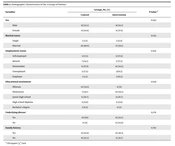
There was a direct relationship between patients' internal characteristics and their external characteristics including participation in care and decision-making. For example with increasing level of participation in care the level of vulnerability increased as well. In other words, patients reduced their vulnerability by participating in care. Tables 2 and 3 show Spearman correlation coefficient and significance level (P value) between external and internal characteristics of cardiac patients, based on the synergy model. Spearman correlation coefficient showed that there was an inverse relationship between age and all internal characteristics of patient, as well as age and external characteristics including participation in care and decision-making. This means that increasing age weakens characteristics. Tables 4 and 5 display the relationship between underlying variables and internal and external characteristics. For example the vulnerability of women was lower than men,which means women are more vulnerable than men (P <0.05). According to marital status, the level of eightfold characteristics (except predictability) in married patients was significantly higher than single patients (widow, divorced, unmarried) (P < 0.05).
Table 2.
Correlation Coefficient and Significance Level (P Value) between Internal and External Characteristics of Cardiac Patients Based on the Synergy Model
| Internal Characteristics | Predictability | Stability | Complexity | Vulnerability | Reversibility |
|---|---|---|---|---|---|
| External Characteristics | |||||
| Participation in Care | P = 0.021, r = 0.379 | P = 0.001,r = 0.451 | P = 0.003, r = 0.411 | P = 0.025, r = 0.317 | P = 0.006, r = 0.384 |
| Participation in Decision-Making | P = 0.012, r = 0.222 | P = 0.000, r = 0.511 | P = 0.016, r = 0.200 | P = 0.047, r = 0.261 | P = 0.004, r = 0.403 |
| Availability of Resources | r = 1.000 | r = 1.000 | r = 1.000 | r = 1.000 | r = 1.000 |
Table 3.
Correlation Coefficient and Significance Level (P Value) Between Internal and External Characteristics of Cardiac Patients Based on the Synergy Model
| Internal Characteristics | Reversibility | Vulnerability | Stability | Predictability | Complexity |
|---|---|---|---|---|---|
| Reversibility | P = 0, r = 1.000 | P = 0.893, r = 0.019 | P = 0.012, r = 0.354 | P = 0.000, r = 0.700 | P = 0.514, r = 0.094 |
| Vulnerability | p = 0.893, r = 0.019 | P = 0, r = 1.000 | P = 0.005, r = 0.395 | P = 0.247, r = 0.167 | P = 0.365, r = 0.131 |
| Stability | P = 0.012, r = 0.354 | P = 0.005, r = 0.395 | P = 0, r = 1.000 | P = 0.729, r = 0.177 | P = 0.039, r = 0.292 |
| Predictability | P = 0.000, r = 0.700 | P = 0.247, r = 0.167 | P = 0.729, r = 0.177 | P = 0, r = 1.000 | P = 0.729, r = 0.050 |
| Complexity | P = 0.514, r = 0.094 | P = 0.365, r = 0.131 | P = 0.039, r = 0.292 | P = 0.729, r = 0.050 | P = 0, r = 1.000 |
| External Characteristics | Availability of Resources | Participation in Care | Participation in Decision-Making | ||
| Availability of Resources | P = 0, r = 1.000 | P = 0, r = 1.000 | P = 0, r = 1.000 | ||
| Participation in Care | P = 0, r = 1.000 | P = 0, r = 1.000 | P = 0.042, r = 0.276 | ||
| Participation in Decision-Making | P = 0, r = 1.000 | P = 0.042, r = 0.276 | P = 0, r = 1.000 |
Table 4.
The Relationship Between External Characteristics and Underlying Variables of Cardiac patients
| External Characteristics | |||
|---|---|---|---|
| Variables | Participation in Care | Participation in Decision-Making | Availability of Resources |
| Gender | |||
| Male | P = 0.056 | P = 0.962 | P = 1.000 |
| Female | |||
| Marital Status | |||
| Married | P = 0.024 | P = 0.044 | P = 1.000 |
| Single | |||
| Readmission | |||
| Yes | P = 0.38 | P = 0.42 | P = 1.000 |
| No | |||
| History of diabetes | |||
| Yes | P = 0.816 | P = 0.114 | P = 1.000 |
| No | |||
| History of CABG | |||
| Yes | P = 0.014 | P = 0.038 | P = 1.000 |
| No | |||
| History of HTN | |||
| Yes | P = 0.715 | P = 0.432 | P = 1.000 |
| No | |||
| Respiratory Disease | |||
| Yes | P = 0.012 | P = 0.048 | P = 1.000 |
| No | |||
Table 5.
The Relationship Between internal Characteristics and Underlying Variables of Cardiac patients
| Internal Characteristics | |||||
|---|---|---|---|---|---|
| Variables | Reversibility | Vulnerability | Stability | Predictability | Complexity |
| Gender | |||||
| Male | P = 0.940 | P = 0.041 | P = 0.965 | P = 0.625 | P = 0.973 |
| Female | |||||
| Marital Status | |||||
| Married | P = 0.042 | P = 0.049 | P = 0.002 | P = 0.97 | P = 0.040 |
| Single | |||||
| Readmission | |||||
| Yes | P = 0.028 | P = 0.010 | P = 0.000 | P = 0.044 | P = 0.047 |
| No | |||||
| History of diabetes | |||||
| Yes | P = 0.018 | P = 0.072 | P = 0.049 | P = 0.240 | P = 0.034 |
| No | |||||
| History of CABG | |||||
| Yes | P = 0.009 | P = 0.015 | P = 0.042 | P = 0.060 | P = 0.037 |
| No | |||||
| History of HTN | |||||
| Yes | P = 0.008 | P = 0.001 | P = 0.008 | P = 0.973 | P = 0.030 |
| No | |||||
| Respiratory Disease | |||||
| Yes | P = 0.022 | P = 0.037 | P = 0.044 | P = 0.030 | P = 0.028 |
| No | |||||
5. Discussion
Studying frequency of eightfold characteristics based on the synergy model in cardiac patients showed that the highest frequency of level 1 belonged to reversibility, vulnerability, predictability and participation in decision-making while the highest frequency of level 3 belonged to availability of resources, participation in care, stability and complexity. Khalifehzadeh et al. (2011) classified patients as level 3 according to reversibility, vulnerability, participation in decision-making, availability of resources and complexity, and as level 5 according to stability, participation in care and predictability (17). This is in agreement with the present study in stability and availability of resources. Freyling (2008) classified patients as level 1 according to reversibility, complexity and predictability, and as level 3 according to vulnerability, stability, participation in care and availability of resources, and as level 5 according to participation in decision-making (18). This is in agreement with the present study regarding reversibility, predictability, availability of resources, participation in care and stability. Based on the fact that in the check list of patients' characteristics, level 1 represents their weakness, patients were weak in characteristics of vulnerability, reversibility, predictability and participation in decision-making. These results are probably due to the severity of disease, underlying diseases, and not receiving adequate and constant medical care and social support from health, medical, and social organizations. According to the findings of this study, with increasing age of cardiac patients, vulnerability, predictability, complexity, reversibility, stability, participation in care, and participation in decision-making are weakened while Khoshtarash (2013) believed that age has no effect on participation in care (19).
Investigating marital status indicated that the level of eightfold characteristics in married patients was significantly higher than single patients (widow, divorced, unmarried). Single patients are probably often socially isolated. They are also deprived of positive results of a life partner's emotional and psychological support. Daryasari (2011) stated that cardiac patients' participation in care was average (20) which is in agreement with the results of the current study. Participation in care is inversely related to readmission. Reduction of patients' participation in care increases their readmission. This reduction can be due to lack of awareness. According to Ghramani (2010), self-care training reduces readmissions and improves patient's performance (21).
Level 1 reversibility of most patients in this study indicates their weakness and inability to compensate, which may be due to lack of training. Hashemzadeh et al. (2011) indicated that in order to achieve complete health and return to pre-disease conditions, cardiac patients should be taught to acquire a new life style including considerations such as quitting smoking, cholesterol diet, regular exercise, and various strategies for dealing with negative emotions like stress, anger, hostility and anxiety (22). According to this study, patients' vulnerability is high and female patients are more vulnerable than males. Fakhari et al. (2008) showed that vulnerability and stressors were higher in women with heart disease (23). In 2006, Frich JC et al. achieved the same conclusions and stated that patients' vulnerability is a personal sense that is intensified by factors such as family history of heart disease, symptoms and progression of disease and self-comparison with other family members with heart disease. Physicians should understand patients' perception of heart disease and manage their vulnerability (24).
This research studied the characteristic of participation in decision-making and the results showed that most patients were not able to decide on their cure and care. Guadagnoli (2008) concluded the same and stated that when doctors have more than one effective treatment option they need to justify each option to the patients and find out about their readiness to participate in decision-making (25).
The results of this study on underlying diseases indicated that these diseases weaken the eightfold characteristicsof patients. Gott et al. (2006) concluded that patients with heart disease and underlying diseases were weakened in physical, psychological, and social aspects of their lives (26). In this study patients were at level 3 in terms of availability of resources (social support being a part of that). This suggests that they need to be provided with more resources. Cheraghi et al. (2012) stated that patients need perceived social support and nurses need to pay greater attention todesigning care, support, and effective plans (3). The main limitation of this study wasthe completionof the questionnaires by researchers and interviewing with most cardiac patients because they were illiterate and elderly. This may have influenced the responses. On the other hand, due to the lack of patients' cooperation in non-clinical environments, this study was limited to cardiac wards. Research findings can be used in developing health and social policies in order to plan properly to solve patients' various problems in their lives and provide the required support by nursing directors. Using this model helps nurses recognize patients and predict their care needs. It can be a useful tool to support patients comprehensively.
Results of this study showed that most cardiovascular patients are at a low level for eightfold characteristics. This depends not only on patients' personal profile and their illness but also medical staff's lack of knowledge about eightfold characteristics, patients' lack of support, lack of proper relationships between staff and patients, lack of accurate and appropriate evaluation and required follow-up of medical staff. Therefore, it is necessary for health care providers and medical staff including nurses to pay special attention to patients' various physical, psychological, and social problems and provide appropriate situations by preparing required conditions for continuous care and designing care, support, and effective plans. However, informing cardiac patients about aggravating factors of their disease and increasing their flexibility in the face of difficulties can be useful. It is recommended that during interventions, nurses evaluate the eightfold characteristics of patients and identify barriers for effective interventions associated with weakness of characteristics in patients and develop and apply plans to remove these barriers.
It is also essential to conduct similar studies on patients in different wards with larger samples or patients in non-clinical environments.