Several studies have been focused on plant-derived agents for cancer treatment that cause lower side effects (
5,
6,
17). In this line, the current study investigated the
Elaeagnus angustifolia. The extracts and soaks of
E. angustifolia fruits, flowers, leaves, and bark have been used traditionally to treat various diseases (
11). Recently some studies have revealed the antioxidant, anti-inflammatory, anti-tumor, and antimicrobial properties of
E. angustifolia (
7,
11-
13).
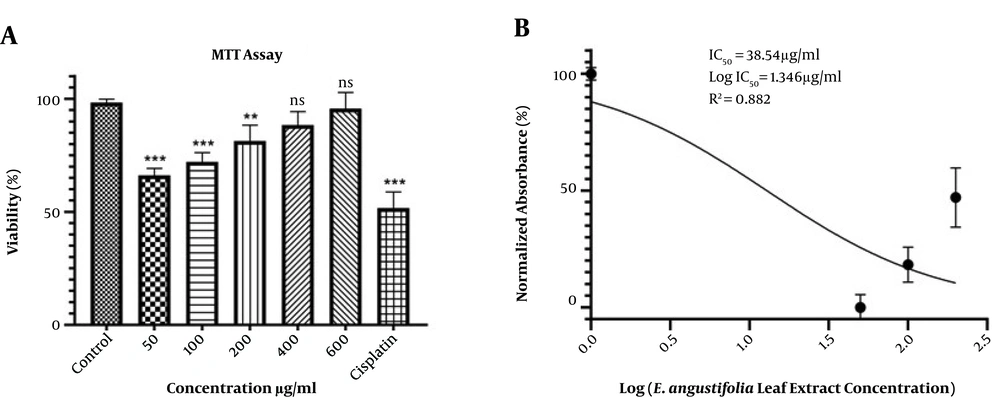
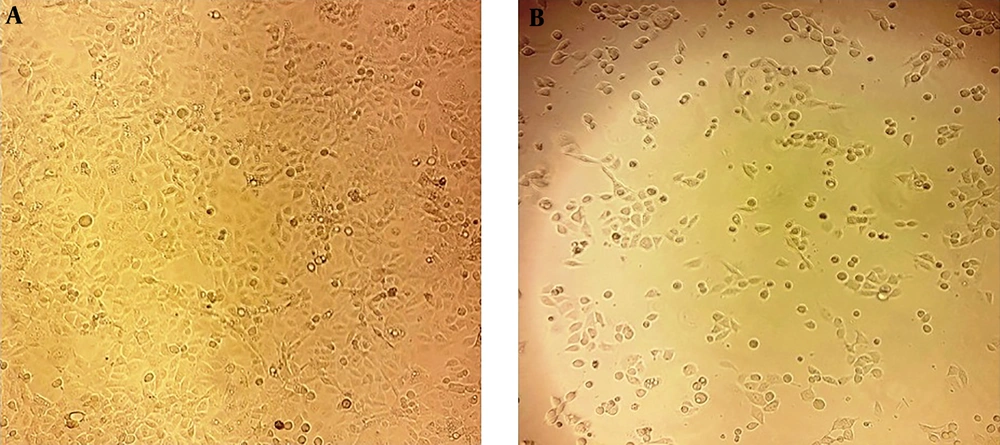
In the present study, the MTT results indicated the cytotoxicity effects of Oleaster leaves extract, and its ability to suppress the liver carcinoma cells.
According to the results, the highest cytotoxicity was obtained for the lowest concentration (50 μg/mL). Kampranis et al. found that a new plant-derived glutathione s-transferase/peroxidase could inhibit the lethality of Bax in yeast (
18). Choi et al. showed that ascorbic acid, an abundant component of plants, could induce bone marrow-derived mesenchymal stem cell proliferation and differentiation (
19). Based on the findings, the authors of the present study, suggest that the Oleaster leaves extract contains components that induce proliferation of cells, particularly at high concentrations. A study by Patel et al. evaluated the cytotoxic activity of Solanum Nigrum extract on HeLa and Vero cell lines via MTT assay (
20).
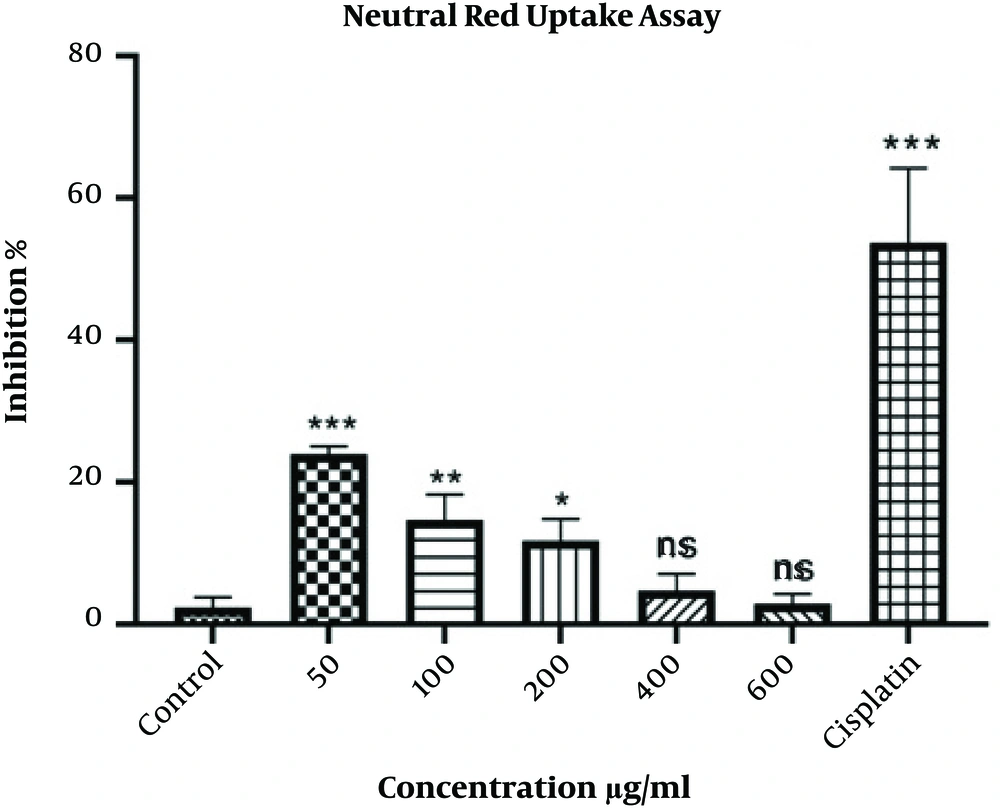
The neutral red method provides a quantitative measurement estimate of the number of viable cells in cell culture. This method is cheaper, and in some cases, more sensitive than other cytotoxicity tests such as the MTT (
21). Borenfreund et al. used the neutral red method to evaluate the cytotoxicity in vitro (
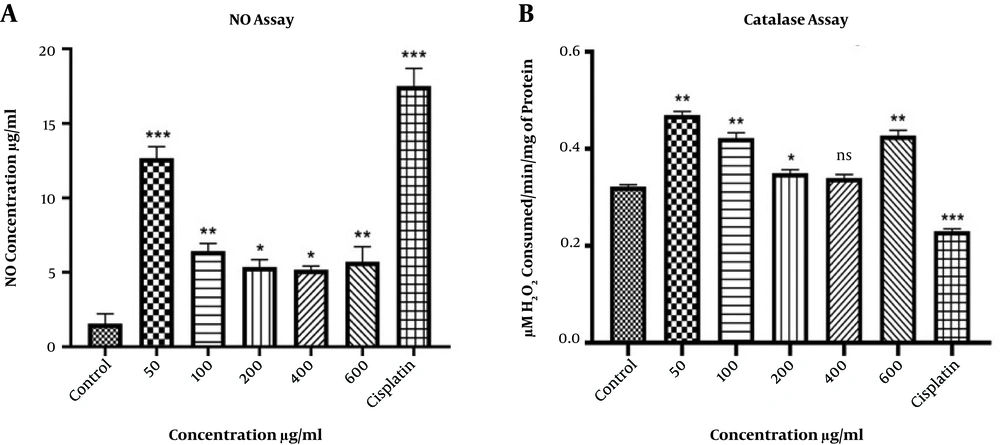
22) and found that higher levels of NO in the cytosol could enhance the membrane permeability in mitochondria, which in turn led to more cytochrome C release from mitochondria and apoptosis in liver carcinoma cell lines (
23).
Moreover, nitrite oxide is known for its activities to induce apoptosis in neuroblastoma cells and hippocampal neurons (
24). In the present study, the alcoholic extract of Oleaster leaf could increase the amount of NO released from the cells. 50 µg/mL of the extract resulted in the maximum production of NO, which was correlated with the MTT and neutral red assay.
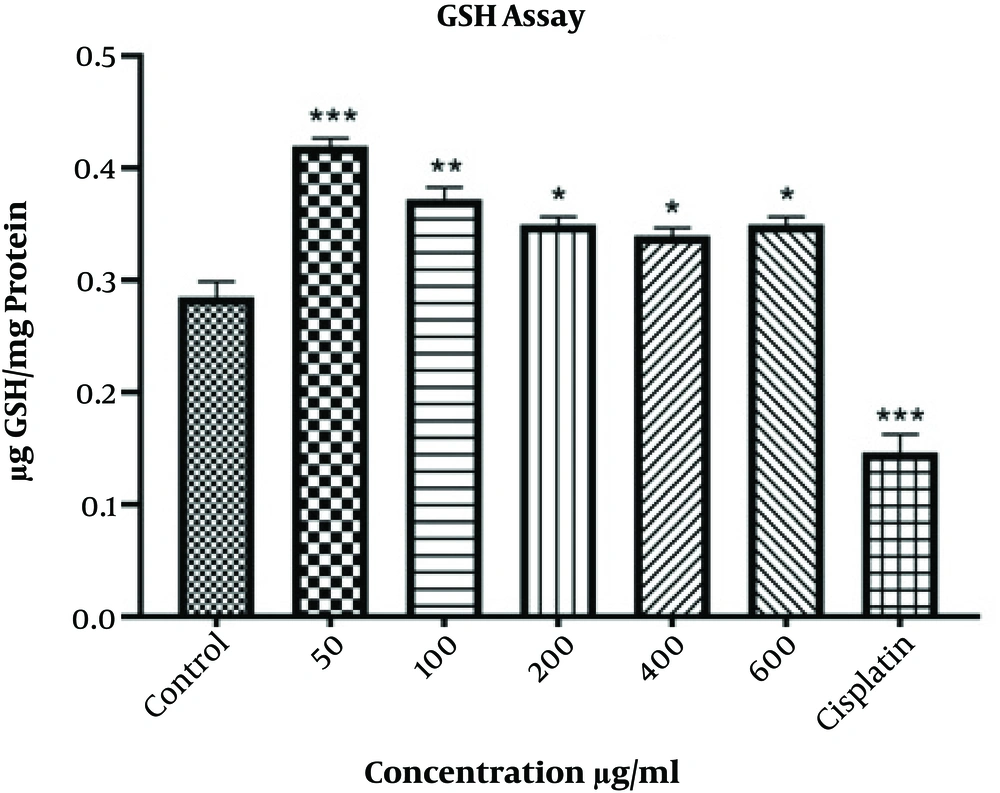
The flower and leaves extract of
E. angustifolia contain flavonoid and phenolic components with antioxidant properties against oxidative damage, which reduce the occurrence of several degenerative diseases (
9). According to the previous studies, the highest level of antioxidant compounds is in the leaves of
E. angustifolia, probably due to the photosynthesis process. There are additionally more flavonoid biosynthesis precursors in the leaves (
9). Various chemical components are identified in the leaves of
E. angustifolia including flavonoids, amino acids, polysaccharides, phenolic compounds, and several other crucial factors. Polysaccharides are one of the most significant compounds of
E. angustifolia that are known for their antioxidant, anti-radiation, and immune-regulating properties (
9,
10). Amino acids can promote the growth of mammalian cells (
25). It’s well-proved that the epigenetic changes, besides genetic alteration, are involved in cancer development. According to recent studies, flavonoid components such as kaempferol, quercetin, and catechin can modify the epigenetic alteration involved in the tumorogenesis process (
26,
27).
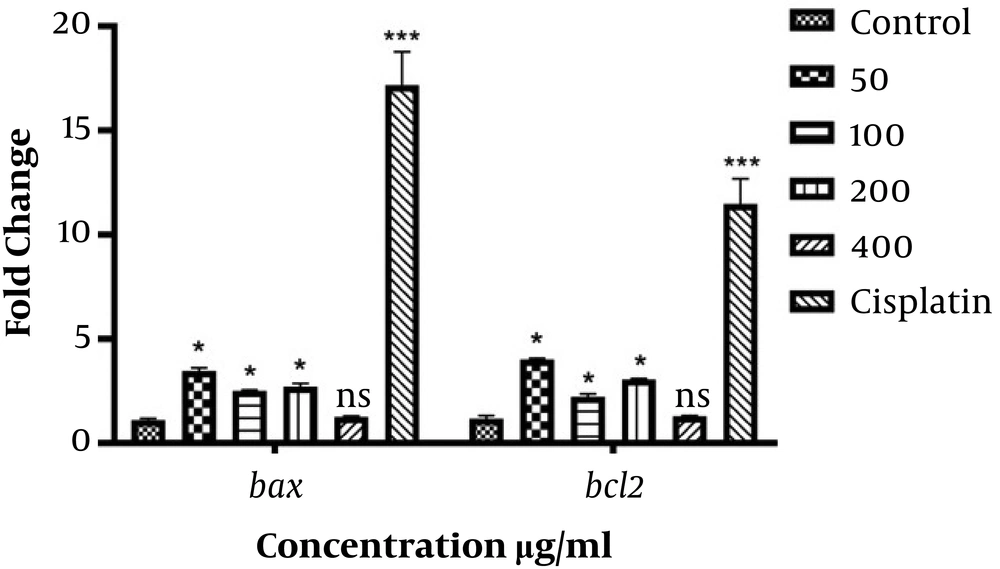
The Bcl-2 family are the regulators of apoptosis, in which Bax and Bcl-2 act as pro-apoptotic and anti-apoptotic elements, respectively. While the intracellular Bcl-2 inhibits apoptosis, Bax could induce apoptosis by inhibiting the activity of Bcl-2. However, it was found that the Bax/Bcl-2 ratio is a significant parameter that heavily influences cell fate (
28,
29). This study showed that the alcoholic extract of Oleaster leaves can significantly change the
bax and
bcl-2 expression as well as the ratio of
bax/
bcl2.
In conclusion, the alcoholic extract of Oleaster leaves, which showed cytotoxic effects on HepG2 cells, could be considered as an alternative or complementary therapeutic option to treat liver cancer.