The present study investigated the effects of flunixin and
Ginkgo biloba on the ovarian cancer viability of the human A2780s cell line. In this study, flunixin and
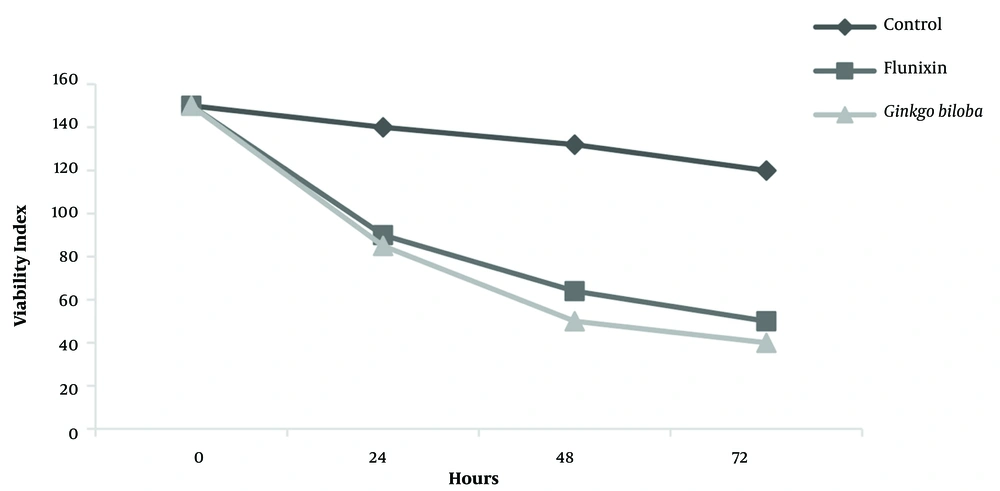
Ginkgo biloba were administered for 24, 48, and 72 h in the cell line. Cell viability decreased over time; however, most deaths occurred within 24 h (50%;
Figure 3). The results showed that the use of 50 µm of flunixin and
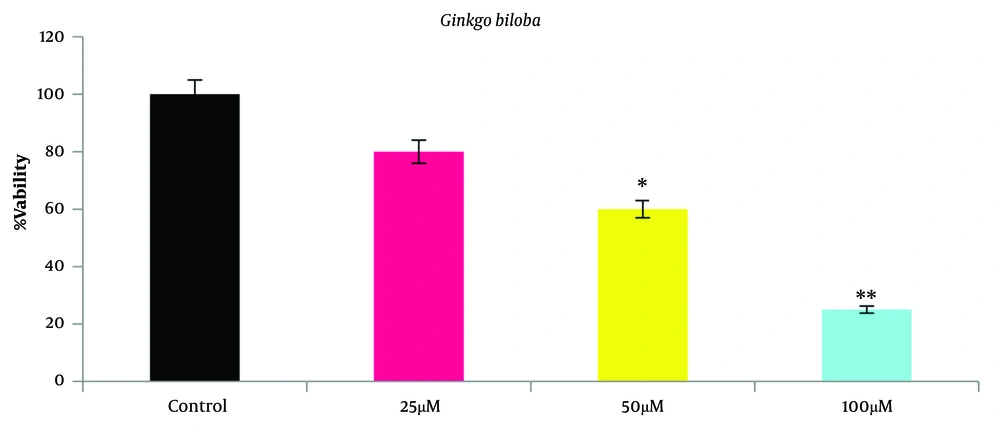
Ginkgo biloba in 24-hour cultivation could reduce the viability of these tumor cells by 25%. In addition, as the concentration increases, the lethality of the drug increases. The concentrations of 100 µm in both drugs reduced cell viability by more than 50%. The results of the present study showed the effects of flunixin and
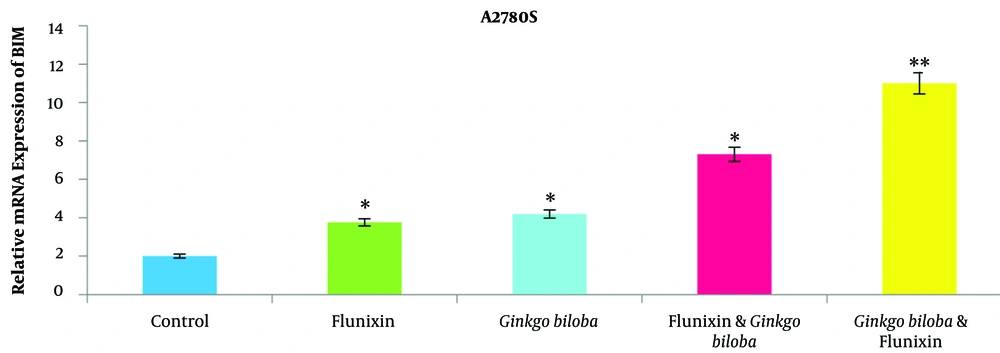
Ginkgo biloba on the A2780s cell line, which causes the expression of the
BIM gene and its increase, increased over time, indicating the difference between the groups at a significant level (
Figure 4).
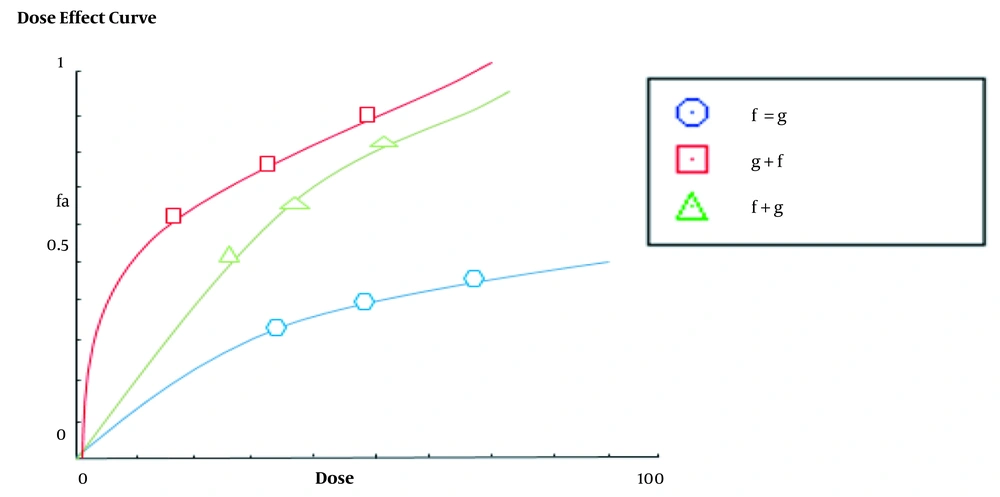
The results showed the interaction and synergy of both drugs on the A2780s cell line, which either affects one drug and the effect of another drug after about 24 hours of effect on the cancer cell multiplied. The expression of the
BIM gene in the cell lines treated with
Ginkgo biloba, exposed to the drug for 48 h, significantly increased in comparison to that reported for 24 h (
Figure 4 and
5). The aforementioned findings are also consistent with the results of a study performed by Jiang et al. showing that
Ginkgo biloba extract could have anticoagulant and apoptotic effects on ovarian cancer cells (
5). According to the aforementioned study, it can be said that
Ginkgo biloba is effective as an anti-inflammatory agent and inhibitor of apoptosis and can be helpful in the treatment of ovarian cancer (
9,
10). The onset of apoptosis is due to cell surface receptors, such as Fas receptors and tumor necrosis factor receptor 1 (external pathway), various genotoxic agents, metabolic toxins, or transcriptional signals (intrinsic pathway), which cause apoptosis (
11).
Cytochrome C secretion and mitochondrial cleavage lead to the activation of caspase-9 and caspase-3 (
12). The external pathway can bypass the mitochondrial stage, leading to cell destruction (
13,
14). This protein induces apoptosis by inhibiting the anti-apoptotic members of this family and plays an essential role in tumor cell biology. Decreased
BIM expression is effective in increasing cell proliferation and metastasis of cancer cells (
15).
Ginkgo biloba inhibits cell cycle in phase G0/G1 to phase S (
14).
Ginkgo biloba and its components, such as quercetin and ginkgolides, are effective in numerous cancers, such as bladder and breast cancers, by increasing antioxidant activity through various pathways (
16).
Flunixin reduces anaplasia and cell proliferation by inhibiting cyclooxygenase by reducing epithelial growth factor (
16,
17). On the other hand, cyclooxygenase by reducing p53 of tumor suppressor gene reduces cell arrest in the G1 stage (
18). In most cancers, p53 levels in the cytoplasm increase with increasing cyclooxygenase. In addition, when inhibitors are removed from P53, it will function to kill cells (
17,
18). Cyclooxygenase increases the production of an enzyme called aromatase by producing E2-type prostaglandins (
18). This enzyme, known as CYP19, is one of the enzymes in cytochrome P450 and can convert endogens to estrogen. Since estrogen induces increased tumor growth (
19), estrogen levels might decrease and inhibit tumor growth by the inhibition of aromatase by cyclooxygenase inhibitors. The inhibition of apoptosis by various (
17,
20), such as the inactivation of tumor necrosis factor receptor (
14), increased expression of anti-apoptotic protein BCL2 (
20), and increased anti-apoptotic protein, prevents the mitochondrial membrane from releasing cytochrome C into the cytocell; finally, apoptosis will not occur (
20,
21). In a study performed by Keramati et al., nonselective cyclooxygenase inhibitors and compounds called celecoxib, which are selective COX-2 inhibitors, were effective in the inhibition and treatment of breast cancer (
10).
Since nonsteroidal anti-inflammatory drugs, such as aspirin, indomethacin, and ibuprofen, act as nonselective cyclooxygenase inhibitors and flunixin is a nonsteroidal anti-inflammatory drug, the results showed that flunixin had a positive effect on the treatment and prevention of cancer. Microscopic results obtained from drug-receiving groups showed that cancer cells are degenerating, to the point that the cells are regaining their regular order.
5.1. Conclusion
Ginkgo biloba and flunixin have an inhibitory effect on the survival of ovarian cancer cells (the A2780s cell line) in a dose-dependent and time-dependent form. Ginkgo biloba and flunixin also increase BIM gene expression in A2780s cells. The present study confirms previous studies and promises that Ginkgo biloba and flunixin have toxic effects on ovarian cancer cells, the A2780s cell line. Furthermore, Ginkgo biloba and flunixin compounds can be used to develop ovarian anti-cancer drugs.