


1. Background
Celery belongs to the family of the Umbelliferae with the scientific name of Apium graveolens (1). Celery is native to Europe (2) and contains a glycoside, called epicyn, which seems to deliver the therapeutic effect of the plant (1). The main components of its oil are limonene, palmitic acid, a kind of phenols, gayakol, some sesquiterpenes, and sedanolide (3). Celery leaves and stalks contain phenols too. The main flavonoids of celery leaves are apiin. Moreover, luteolin, chrysoeriol, and glycosides are found in the leaves of celery. Its stems and leaves also contain furanocoumarins, psoralens, bergapten, xanthotoxin, and isopimpinellin (4). Celery is a vegetable containing α-tocopherol (5), with antioxidant properties (6).
Celery increases the secretion of breast milk (1, 7).There is no anti-implantation effect (of the egg) in celery extracts (8). Celery is used to reduce dysmenorrhea (9) and has antioxidant properties (10); also, celery has a protective effect on the testicles against sodium valproate (VPA) (11). As a result of using celery on the diabetic rats, the concentrations of glucose, cholesterol, creatinine, and also the activity of enzymes (AST, ALT, ALP) in serum will significantly reduce (12).
In ancient times the celery has been used to increase libido and research has shown that celery has the sex hormone of estrone (13). Celery in traditional medicine was used as a stimulant for appetite and sexual power (14) too. Celery juice with its reddish extract is effective in opening for urine and menstrual flow. However, eating too much celery is not recommended for pregnant and lactating women, because it is a lust actuator, which increases menstrual flow and induces abortion(15). However, empirical research on the effects of celery leaves on abortion is not available. The aim of this study was to investigate the effects of celery extract on birth ratio and the number of newborns in the female rats.
In 2009, Nahid et al. tested the effect of Iranian herbal drugs on primary dysmenorrhea. The participants were randomly divided into three groups: the herbal medicine group, mefenamic acid and placebo groups. Herbal drugs group received 500 mg extracts of saffron, celery and fennel, three times a day for three days (the first day of bleeding). Participants repeated two to three cycles of menstruation process. The results of the test showed statistically significant reduction in severity and duration of pain in those who consumed the extract (9).
In 2007, Hamza et al. performed a series of tests in order to evaluate the protective effect of celery against sodium valproate (VPA). Sodium valproate, is commonly used to treat epilepsy and other diseases, is well known to have severe toxic effects on laboratory animals and humans. In this study, the protective effect of celery on testes versus sodium valproate (causing elliptical injury) has been studied. Valproate elliptic toxicity is created at a dose of 500 mg/kg/d for seven consecutive days. The safety group received celery extracts (200mg/kg/d) for 23 days before VPA. The result showed that the relative weight of the testes, epididymis, and the number of sperms all reduced after taking valproate. Testosterone level decreased, whereas FSH level increased. Severe histopathological changes were seen in the testes, while celery extracts reduced the effects of sodium valproate in the safety group (11).
In 1970, Garg et al. conducted an experiment about the effects of five indigenous plants on early pregnancy in albino rats. In this experiment, extracts of five plants, including celery, were given to albino rats. Extracts were adminitered for seven days. Components of celery extract were Butea monosperma and Gossypium herbaceum (100 mg/kg), Ananas comosus (50 mL) and (100, 200, and 500 mg/kg) the Aloe barbadensis mill. The results showed that except for Ananas comosus, other plants did not have anti-implantation effect (8).
In 2007, Sausenthaler et al. tested the effects of maternal diet on the development of eczema and allergies in infants in their first two years. In this study, they examined the relationship between maternal diet during the last four weeks and allergic sensitization and eczema in 2-year-old kids. A total of 2641 two-year-old kids were examined. The experimental results showed that a high intake of margarine [adjusted odds ratio(aOR): 1.49; 95% CI: 1.08,2.04], vegetable oil [(aOR): 1.48; 95% CI: 1.14,1.91], and celery [(aOR): 1.85; 95% CI: 1.18,2.89] during the last 4 weeks of pregnancy increases the risk of the complications, whereas high intake of fish [(aOR): 0.75; 95% CI: 0.57,0.98] reduces this risk (13). Studies have shown that no research has been conducted on the effects of celery leaves on the delivery rate (fertilization and stillbirths), the number, sex ratio (male/female), and body weight at birth as well as rates of neonatal rats, yet.
2. Objectives
The purpose of this research project was to investigate the effects of celery extract on the pregnancy (fertilization and stillbirths), the number of deliveries, sex ratio at birth, and birth-weight rates in female rats.
3. Patients and Methods
This was an experimental study which was conducted on Wistar rats. Because the rats in 11-13 days, who can eat solid food, are infants for 21 days, the time of their maturity is 10 ± 50 days, have a cycle of four to five days, and maximum fertility in them is at 100-300 days (16), so, this study was designed. The sample size was calculated using the previously approved projects. The rats were prepared from proliferation and maintenance Center of Laboratory Animals of Ahvaz Jundishapur University of Medical Sciences.
3.1. Grouping Animals and Medication
Forty-five adult Wistar rats (15 males and 30 females) from Center of Proliferation and Maintenance of Laboratory Animals were collected and kept for a week to get used to the new environment. Rats were kept in a good condition with regard to temperature ( 25 ± 2°C) and 12:12 h cycle of light and darkness. The rats had free access to water and food too.
Next, the rats were divided into three groups (each consists of 15 rats); a control group that only consumed standard compact food (pellets) and the other 2 groups receiving doses of 100 and 200 mg/kg of extract. In each group, five male rats and ten female rats were caged and treated as follows:
1) The control group (no treatment),
2) First experimental group received low dose of aqueous extracts,
3) Second experimental group received high dose of aqueous extracts.
3.2. Materials and Tools
The compounds used in this study were celery leaf, gavage from Tajhiz Gostar Co., Iran; physiological serum (0.9%) normal saline made by Darou Pakhsh company, Iran; ketamine (10%) and xylazine 5 % made by Alfasan, Netherlands; and distilled water. The tools and equipment used in this study were electric mill, Soxhlet apparatus, sensitive digital balance models of 210 Pt, from Sartorius, Germany; oven; disposable gloves and latex for handling and keeping rats in cages, from Tajhiz Gostar Co., Iran; centrifuge machine; Whatman Filter paper Grade 2; and bistoury. Standard food was prepared by the Center for Animal Reproduction of Companies in Shushtar and Isfahan.
3.3. Method for the Preparation of Extracts
Celery leaves were prepared from the gardens (areas planted) around Ahvaz City. They were detected and identified by a faculty member. Then, they were dried in the shade and powdered by an electric mill, and extracted by Soxhlet method. Forty grams of celery leaf powder was weighed and mixed with 400 mL of distilled water for 8 hours at 60°C. Then, the extract was filtered through Whatman Grade 2 Filter paper. The solution was centrifuged at 3000 rpm for 5 minutes; the supernatant solution was separated and placed at 70°C in the oven to evaporate the solvent. The dried extract was shaved with a bistoury and stored in a refrigerator at 5°C (17). Amounts of 100 and 200 mg/kg of the extract were weighted using a digital scale (model) and solved in 1 mL normal saline.
The control group only consumed standard food (pellets); the test groups received 100 and 200 mg/kg extract dose dissolved in 1 mL of normal saline solution for two weeks (18) during their pregnancy (because most changes in the fetal period take place in the first two weeks of pregnancy). The extract was administered orally by a gavage needle (19).
Afterwards, according to our groupings, one male rate and two female rats for mating were kept for five days in a cage to establish mating; meanwhile, the female rats were checked for vaginal plaque. The rats were kept in separate cages to identify childbirth rate (fertilization and stillbirths), and the number of offspring and sex ratio (male to female) of each. Positive history of vaginal plaque was considered as the first day of pregnancy.
If vaginal plaque was negative, non-pregnant female rats would be kept in an isolated cage for 24 hours, and then returned to the cages of male rats in their own group. The percentage of pregnancies in the experimental and control rats was determined after the childbirth.
At the end of the pregnancy period (3 ± 21 days after fertilization), and as soon as every rat was born, mother and children were taken into a separate cage with full precautions (16).
3.4. Checking Appearance Abnormalities
Each neonate was examined carefully for the presence of appearance abnormalities and defects of the extremities such as veiled fingers, the number of fingers, asymmetrical ears, eye and nose status, and the other things with the naked eye.
3.5. Sex Determination and Sex Ratio
Because female rats had consumed celery extract and their neonates would not be used for other tests; therefore, to save time and food intake to determine the sex of newborns, we scarified offspring and detected their sex by cools down method or anesthesia (by administering ketamine 100 mg/kg and xylazine 10 mg/ kg). The sex ratio was calculated by dividing the number of males' to females' infants in each pregnancy (17).
3.6. Statistical Tests
Results were shown as mean ± standard error (Mean ± SE ) and standard deviation. Statistical tests of 1-way analysis of variance (ANOVA), Tukey test and post hoc LSD were used and data were analyzed using software SPSS v.17. P value less than 0.05 were considered as significant (20).
3.7. Ethical Considerations
Free access to water and food (the standard meal as pellets) was provided for all rats; cage cleaning was done at the appropriate time.
4. Results
The results showed that by administration of aqueous extracts of celery at a dose of 100 mg/kg, the average percentage of childbirth (extract 0 ± 100 vs. control 0.16 ± 60), the average total number of neonates (extract 1.2 ± 7.8 vs. control 1.2 ± 3.5), and the average sex ratio of offspring (ratio of male to female with extract 0.37 ± 1.26 vs. control 0.13 ± 0.18) significantly increased (P ≤ 0.05) (Figure 1-3). The aqueous celery extracts at a dose of 200 mg/kg, increased percentage of the childbirth rate (extract 0 ± 100 vs. control 0.16 ± 60), the average number of neonates (extract 0.65 ± 7.1 vs. control 1.2 ± 5.3), and sex ratio of offspring (ratio of male to female extract 0.18 ± 0.95 vs. control 0.13 ± 0.81), although the sex ratio change was not statistically significant. No stillbirths and birth defects were observed in the groups; only two deaths occurred in the neonatal period of 5-10 days in the infants in the control group. Final results of fertility have been shown in Table 1Figure 1-3. Number of male children in the group that received the extract was significantly different from the control group.
The main results suggest that aqueous extracts of celery leaf (with dose 100 and 200 mg/kg) caused a significant increase in the number of neonates in favor of males, and these changes are much more prominent when rats received a dose of 100 mg/kg than 200 mg/kg.
Table 1. Effects of Celery on Sex Ratio, the Number of Infants in Each Group and Deliveries
a Significance compared to the control group
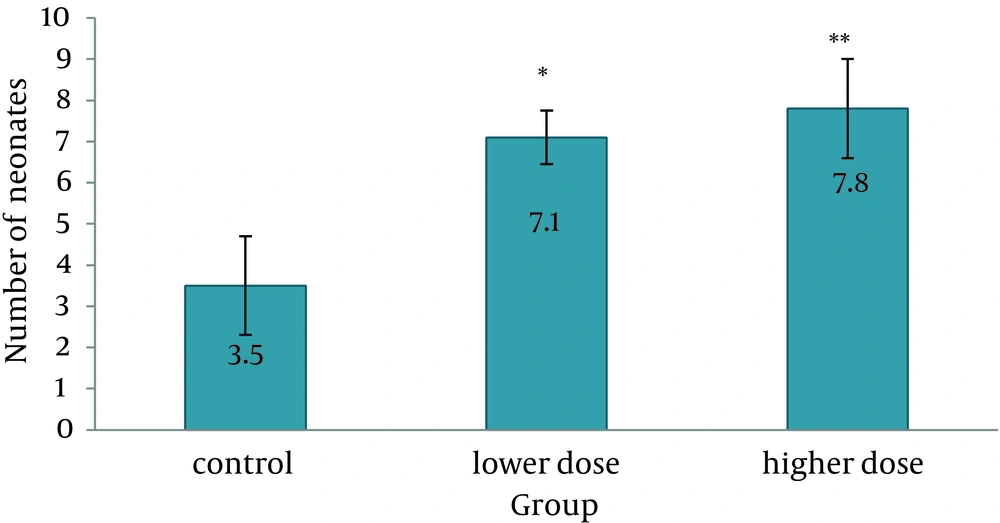
Figure 1.
Number of Neonates (Mean ± SEM) in Every Childbirth of Group of Rats According to Gavage Extract of Celery (* an increase in the number of infants in the low dose celery extract compared with the control group, P ≥ 0. 018, * an increase in the number of infants in the high-dose celery extract compared with the control group (P ≥ 0.014).
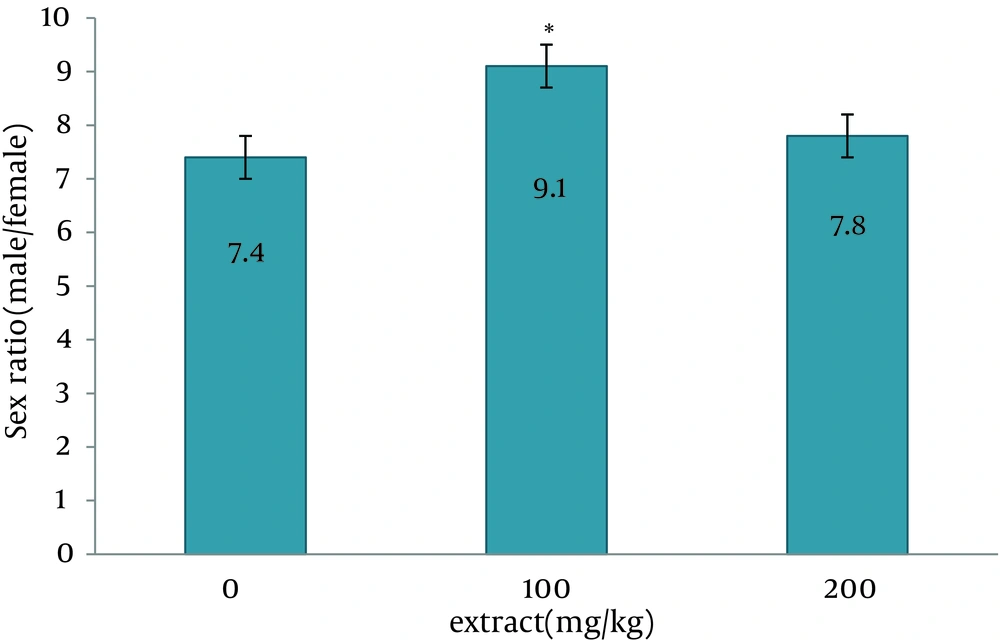
Figure 2.
The significant increase in the low dose group compared to the control group in the sex ratio (P ≤ 0.05 *). The increase in the sex ratio of high dose group compared to the control is seen, which of course is not significant.
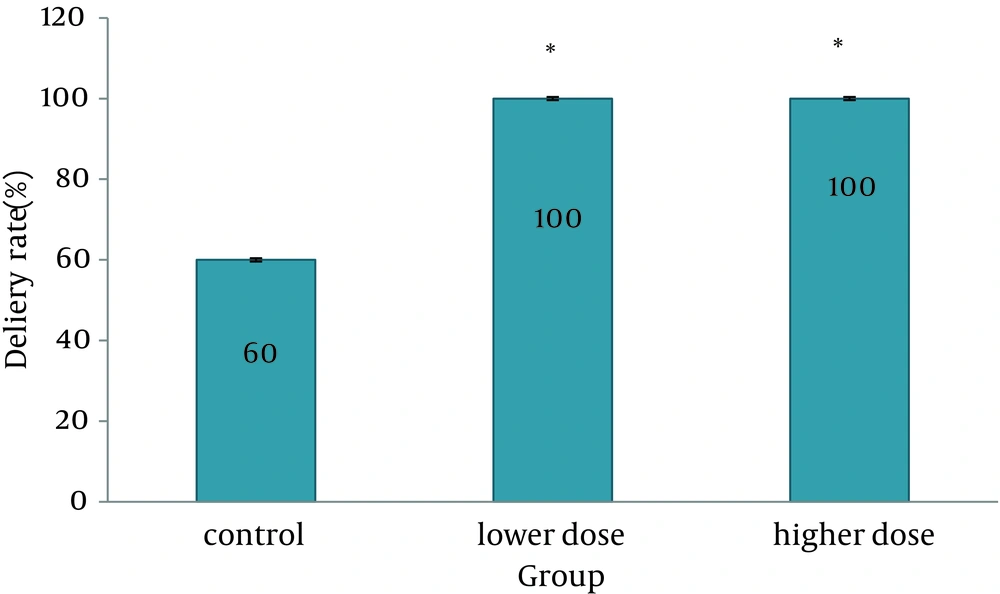
Figure 3.
A significant increase in the low and high dose groups compared to the control group (P ≥ 0.025 *).
5. Discussion
The results showed that the aqueous extracts of celery at the dose of 100 mg/kg have significantly increased the average of the percentage childbirth ratio (extract 0 ± 100 vs. control ± 60), the average total number of neonates (extract 1.2 ± 7.8 vs. control 1.2 ± 3.5), and the average sex ratio of offspring (male to female in extract 0.37 ± 1.26 vs. control 0.13 ± 0.81) (P ≤ 0.05) (Figures of 1 to 3). Several studies have been conducted on the impact of various factors on the fertility of animals, especially rodents mammals used in research. One of the prominent theories in the field of nutritional requirements on gender of infant was expressed by Trivers and Willard. According to this theory, in the natural condition, in which stress is not dominant on the parents' living, in many species, the number of male infants is more than the female infants. This fact can be influenced by nutritional conditions. In a poor nutritional condition, the number of female infants becomes more than the male infants (20). Under some circumstances, this ratio has been observed in rats, but the mechanism has not been established (13). In our study, stress has not been dominant on life of the pregnant rats, and they have been well-fed. Our results showed the effect of extracts and properties of celery (at a dose of 100 mg/kg).
Trivers and Willard theory has been proven on the rat (13), deer (21), sheep (14), stag (15), domestic pigs (16), rats, Syrian hamsters, and other species (22, 23). However, these studies like the present research have been conducted mostly on feeding females.
Feeding female rats by diets containing trans-fatty acids increases the number of female offspring (12). The oral consumption of morphine as a drug has had similar results (10). The more fat goes in the recipe; the higher will be the number of female newborns; however, the infant mortality also rises, and it looks like the stress such as drugs (10, 12). Because of the effect of celery leaf on files Peru lipid profiles (unpublished data), which lowers cholesterol, triglycerides, and LDL, are consistent with other findings (10 and 11) and may be a part of the mechanism for the action of the celery extract to lower serum lipids. So if a certain diet, while keeping a fixed sex ratio, reduces the infant mortality ratio or increases the number of them, it would be desirable. This also emphasizes again on the importance of the increasing stable reproduction in laboratory animals as the number of males to the females, while maintaining their overall health (23). Review of the study results indicates that the consumption of the aqueous extract of celery leaf in a dose of 100 mg/kg as a part of daily diet of the female rats has favorable effects on their fertility (23).
Number of male offspring that a female rat delivers following the aqueous extract of celery leaf (with dose of 100 mg/kg) had significantly increased compared to the control group. Decrease in the number of female children in the experimental group (that females had received the aqueous extract of celery leaf) was considerable compared to the control group. Furthermore, the coefficient of the total number of children was approximately two times compared to the control group.
Sex ratio in the groups receiving the extract show significantly different values from the control group and this difference is mostly in favor of males. Given that, and the other researches and hypotheses (18) that the sex ratio has changed in favor of the male sex (and no birth defects or stillbirths, the use of the aqueous extract of celery leaf, especially at doses of 100 is considered a desired material on fertility, especially in males. The results show that if the female rats receive the aqueous extract of celery leaf, the number of their infants will increase. Of course, this increase is important for the development and the proliferation of rat as a lab animal with high demand.
It has been proven that phytoestrogens may affect, with inhibition of progesterone metabolizing enzymes and thereby increasing the levels of its serum level and optimal induction of progesterone, in maintaining and strengthening of endometrium and continuing of pregnancy until childbirth (20).
The interpretation of these results regarding the effect of aqueous extract of celery leaf on fertility, sex ratio and number of children in rats is not easy; but given that celery is rich in plant phytoestrogens and these materials are key to its many properties; we can consider the effect of antioxidants against free radicals and consequently, lowering the stress and causing a change in the sex ratio in favor of males. Also it may be effective due to hormone-like effects of these compounds to stimulate the reproductive system (17, 19, 24). The interpretation of this issue may be because aqueous extract of celery at higher dose of 200 mg/kg did not have the desired effects of dose 100 mg/kg. Also, eating celery for pregnant and lactating women is not recommended, because increases driving lust, menstruation and abortion (15). However, this study was carried out in a care day, where no cameras were in the cages, and if abortion, stillbirth, or deformed neonatal occurred, we could have not noticed, particularly that rats eat deformed or dead infants. Furthermore, administration of celery extracts at a dose of 200 mg/kg in female rats show typical symptoms of abuse.
This study has some shortcomings such as evaluating the administration of just two doses of the celery extracts. For obtaining more accurate conclusions about the more desired effect of the lower dose (100 mg/kg of celery extract) over the higher dose (200 mg/kg) of the extract did not have the similar desired effects as the dose of ; study on various doses such as 150 and 250 mg/kg are recommended.
The study results indicated that the celery extract causes changes in the hormonal activity, including serum levels of FSH and testosterone in female rats. Also, it might affect ionic status in serums of rats, which leads to serum acidity and vaginal acidity secretions. More extensive researches in this area can be done in the future to determine the active substance or main materials (limonene or my rosin) in this plant and their effect of in the sex ratio and its percentage. Also, the effect of aqueous extract of celery leaf on sperm type X or Y, on the PH of vaginal environment and survival of spermatozoa in this place, and augmenting of ovulation and mechanisms like this could be further investigated.
