1. Background
Fertility problems are considered one of the most complex issues in medicine. Infertility is one of the world’s most common problems, which is seen in about 15% of couples (1). Having children with favorable gender has long been one of human’s wishes and goals. However, gender imbalance in societies would be problematic. Several factors including diet can be helpful in determining the gender of the infants. Constituent ingredients of plants, particularly their minerals, by changing the ratio of Na-K to Ca-Mg are effective in changing gender ratio (2). Currently, in many developed countries, the experimental use of medicinal plants and traditional medicine in the treatment of many diseases is common, including the treatment of wounds (3), diabetes (4), anemia (5), psychological disorders (6), and many other conditions. Approximately, about 80% of people in developing countries are still using medicinal plants to treat diseases (7), yet the indiscriminate use of these herbs can have side effects (8). Therefore, it is necessary to determine the pharmacological properties of various plants by conducting scientific researches.
Celery (Apium graveolens L.) is one of the medicinal plants used in traditional medicine with multiple health benefits. Celery is a biennial herb containing fragrant stems. It is part of the Apiaceae family, and its branches are as high as 20 - 60 cm (9). This plant is indigenous to the Mediterranean region and is cultivated in other parts of the world (10). Celery leaves and its stem contain phenols, they also contain furanocoumarin, psoralen, bergapten, xanthotoxin, and isopimpinellin, whose amounts vary from 12 to 50 mg/kg in celeries grown in Florida, United States (11). Celery extract is associated with reduction in total cholesterol (12), prevention of sexual disease (13), reduction of blood glucose in diabetic rats, reduction of blood pressure, and strengthening of the heart (14). This plant is rich in antioxidant compounds, such as flavonoids (such as apiin and apigenin) and vitamin E and C (15).
Celery stalks and leaves are used in traditional medicine as a stimulant for sexual impotence, and it also increases mother’s milk (16). There has been no experimental study that has examined the effect of celery on fertility in females. Moreover, due to the richness of the celery plant in magnesium, calcium, sodium and potassium, it may be associated with gender determination.
2. Objectives
The purpose of this study was to investigate the effect of hydro-alcoholic extract of leaves of celery in female rats, on delivery (stillbirth and live birth), number of infants, gender ratio and their weight.
3. Methods
3.1. Animals
In this study, a total of 45 male and female Wistar rats (30 females and 15 males) were prepared from the Animals house of Ahvaz Jundishapour University of Medical Sciences (AJUMS). The animals were maintained in plastic cages, under standard conditions and a suitable environment. The temperature of the room was thermostatically controlled at 22-24°C and a 12-hour light/dark cycle was maintained. Water and standard foods, which contain minerals and vitamins, were freely available. All the ethical issues were considered based on Ahvaz Medical University Ethical Protocols (AMUEP) in animal experiments.
3.2. Preparation of Extract
For extraction, fresh celery leaves were prepared from agricultural lands in Dezful (Khuzestan Province), and approved and specified as a graveolens species by an expert at the pharmacognosy department of the Pharmacy Faculty of AJUMS (herbarium code: a140100001p.). The celery leaves were dried in the shade and powdered. About 50 g of celery powder was mixed with 200 mL of 70% ethanol (Merck, Germany). A prepared solution was maintained at room temperature for three days. During these days, the solution was stirred every day until the extract was isolated. After 72 hours, the solution was passed from filter paper and evaporated in an oven at 40°C for 48 hours; extracts were diluted with distilled water (Daru Pakhs, Iran) at a concentration of 100 and 200 mg/kg.
3.3. Experimental Design
In this experimental study, thirty female rats (250 - 200 g) were divided randomly to three groups. Experimental groups 1 and 2 consumed a dose of 100 and 200 mg / kg / BW celery leaf extract daily by gavage for five weeks (17). The control rats received 1 mL of distilled water by gavage. During the fifth week, two females and one male rat were mated for seven days. Thereafter, each female rat was kept in a cage separately until the day of delivery. Female rats consumed celery leaf extract by gavage during mating until the end of pregnancy. At the end of the experiment, the number of delivered female rats, the number of live births (and death if any), and the infants weight were recorded. Moreover, the gender of infants was detected by determining anogenital distance, and their gender ratio (male/female) was recorded thirty days after birth (17).
3.4. Statistical Analysis
Statistical analysis was performed using the SPSS 15 software. We used the analysis of variance (ANOVA) and least significant difference (LSD) test. All parameters are described as mean values ± SD, and a P < 0.05 was considered statistically significant.
4. Results
In our experiment, for each 100 g of celery powder, 15 g of dried extract was obtained, so our extraction efficiency was estimated as 15%.
4.1. Delivery Rate
The results showed that the rats in control and experimental groups 1 and 2, delivered nine (90%), nine (90%) and eight (80%) infants, respectively. A significant difference was not observed between the groups in the delivery rate (P > 0.05) (Figure 1).
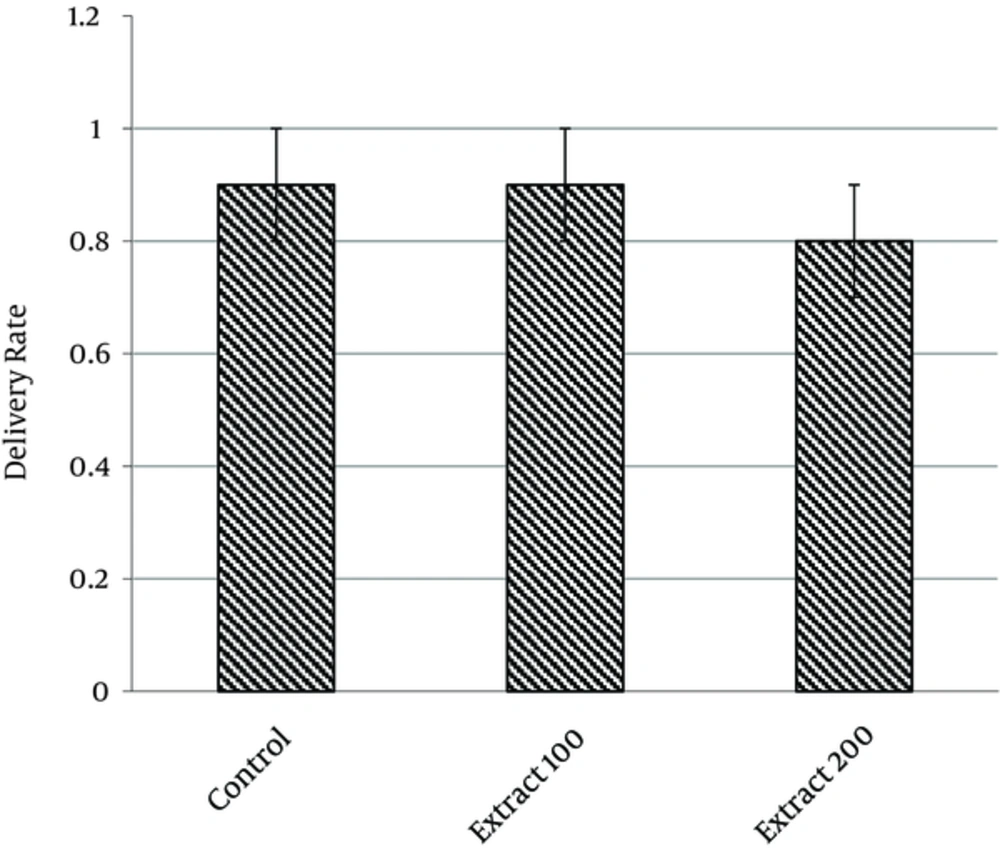
Figure 1.
Data are expressed as mean value ± standard error of mean (SEM).
4.2. Number of Offsprings
The average number of infants in experimental groups 1 and 2 (respectively 8.7 ± 0.5 and 9.12 ± 0.5) increased significantly compared to the control group (6.6 ± 0.3) rats (P ≤ 0.05) (Figure 2).
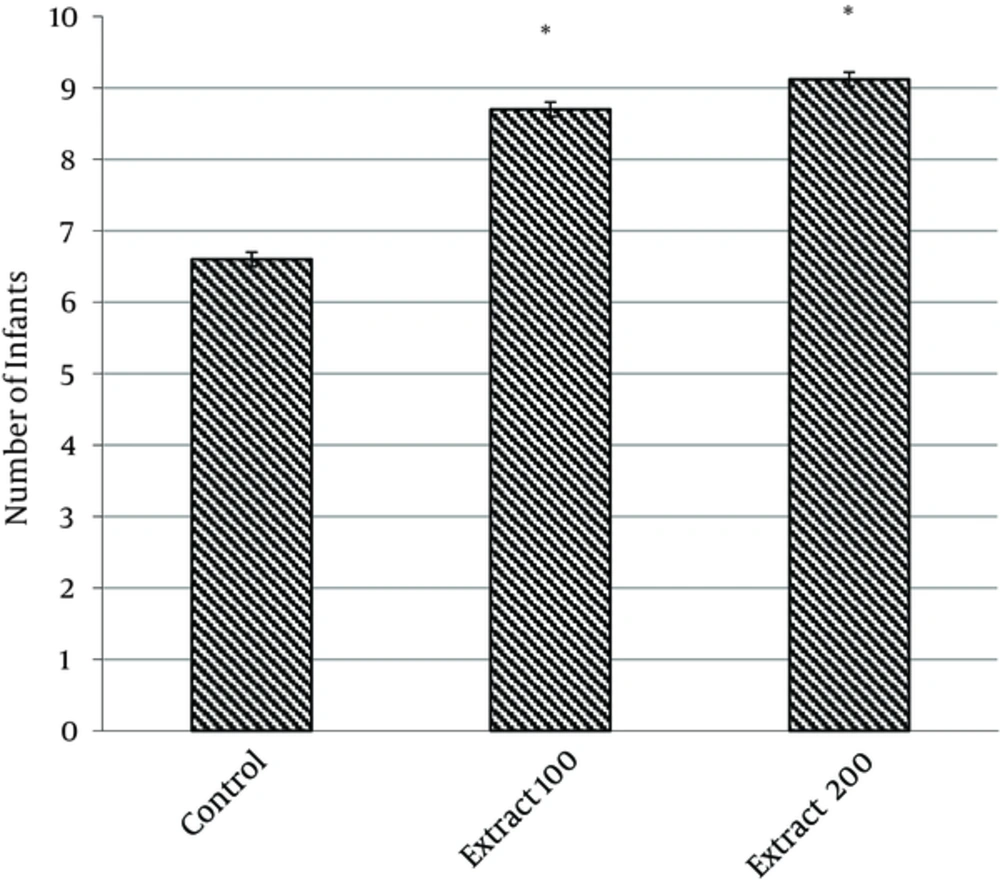
Figure 2.
* indicates a significant difference (P < 0.05) between the experimental groups and the control group. Data are expressed as mean value ± standard error of mean (SEM).
4.3. Sex Ratio
The ratio of male to female infants between the control group (0.1 ± 0.93) and experimental groups 1 and 2 (respectively 0.23 ± 1.25 and 0.11 ± 0.87) was indifferent statistically (P > 0.05) (Table 1, Figure 3).
Table 1.
Effect of Oral Administration of Celery Leaf Extract on Gender Ratio (Percentage of Males and Females) of Infants in the Experimental and Control Groupsa
| Groups | Number of Females | Number of Infants | Male Infant, (%) | Female Infant, (%) | Gender Ratio |
|---|---|---|---|---|---|
| Control | 10 | 60 | 48.4 | 51.6 | 0.1 ± 0.93 |
| Experimental group 1 | 10 | 79 | 55.7 | 44.3 | 0.23 ± 1.25 |
| Experimental group 2 | 10 | 73 | 53.3 | 46.7 | 0.11 ± 0.87 |
aData are expressed as mean value ± standard error of mean (SEM).
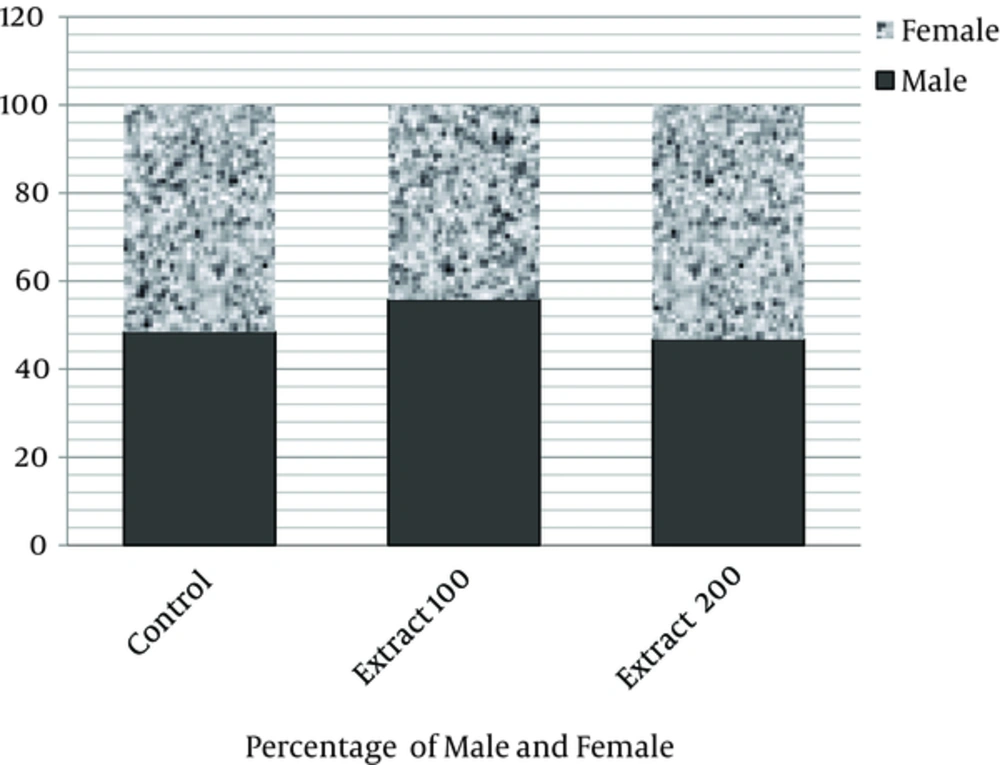
Figure 3.
Percentage of Male and Female Infants in the Experimental and Control Groups
4.4. Weight of Offsprings
Results showed that the average weight for the two experimental groups 1 and 2 (respectively 0.19 ± 4.32 and 0.22 ± 4.46) compared to the control group (0.20 ± 5.98) was significantly reduced (P ≤ 0.05) (Figure 4).
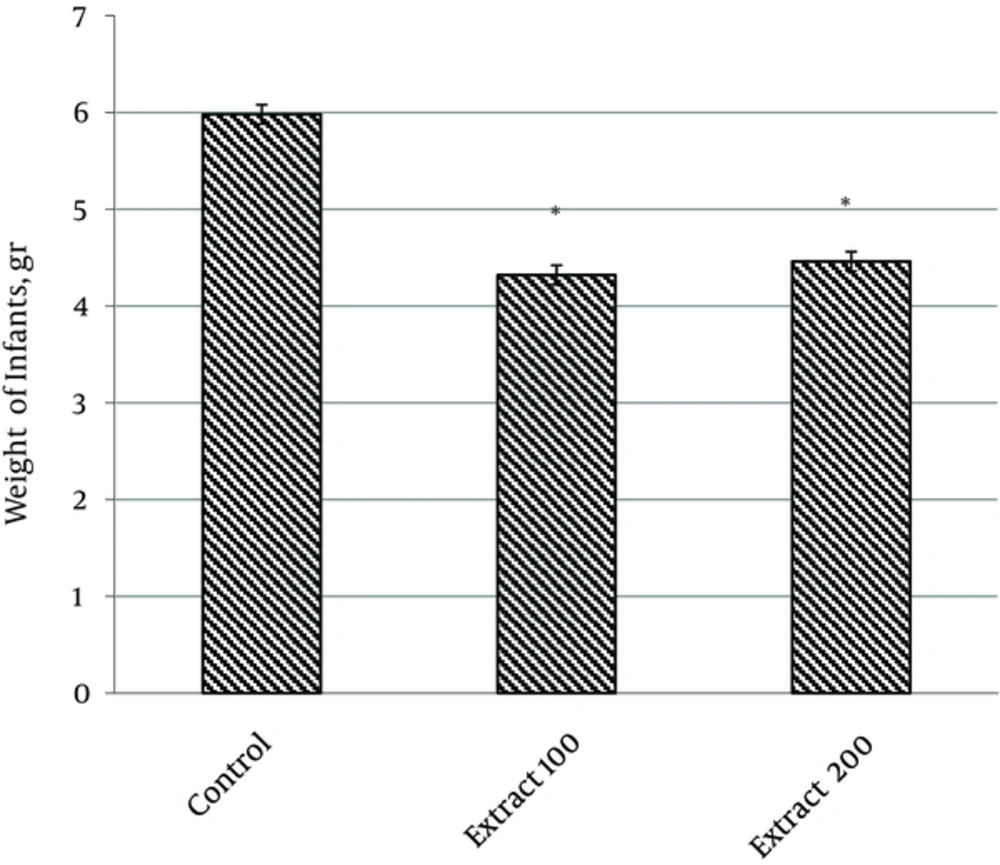
Figure 4.
* indicates a significant difference (P < 0.05) between the experimental groups and the control group. Data are expressed as mean value ± standard error of mean (SEM).
5. Discussion
Infertility in humans is a problem that affects both males and females of the reproductive age. Since there are a variety of causes for infertility, different methods of treatment are needed. Some common drugs used in the treatment of infertility, include Clomiphene, HCG and HMG; yet these drugs have limited effectiveness, significant side effects, and sometimes, high prices.
Raw materials of plants and their total extracts are used in the pharmaceutical industry. Fewer side effects, low cost, and easy use are the main factors that interest people in taking herbal drugs. The purpose of this study was to investigate the effect of hydro-alcoholic extract of celery leaves on the delivery, gender ratio, and weight of infants.
According to this study, celery did not affect delivery rates in female rats. There is no experimental study performed in this regard, yet according to the results of one study, celery did not show anti-implantation effect in females (18).
The findings of this study showed that the consumption of celery in female rats increased the number of newborns without any miscarriages or stillbirth. Celery has powerful antioxidant properties due to having flavonoids, which are a class of phytoestrogens. Phytoestrogens, through inhibiting progesterone breakdown, can enhance endometrium and have beneficial effects on progesterone (19). It has been shown in female rats that beta-sitosterol as a phytosterol increases the activity of glucose-6-phosphate dehydrogenase in uterine, and increases the net weight of the uterus, which implies the strong estrogenic effect of phytosterols (20). On the other hand, quercetin, which is one of the important flavonoids in celery, has been examined in numerous experimental studies. A research found that quercetin improves the endometrial thickness of both the dense and spongy layer. Moreover, it also improves the number and density of cells and glands in the endometrium in ovariectomized rats (21, 22). In normal conditions, there is a balance between the production of free radicals and active oxygen species and antioxidant defense system. Flavonoids are one of the secondary plant metabolites that eliminate harmful free radicals. These compounds cannot be synthesized by the human body and must be received through the diet. Celery is one of the plants that are rich in flavonoids such as apigenin and apiein. It is also rich in vitamin E and C (15). These natural antioxidants improve fertility parameters by inhibiting free radical damage (23). On the other hand, celery probably contributes in infants health and normal delivery due to its anti-spasmodic properties and preventing aberrant uterine contractions (24).
According to the results, celery did not affect infant’s gender due to the antioxidant properties of celery. Experimental studies have shown that changing environmental conditions and stress can disturb the balance of gender ratio, but this finding requires further research (25). In this regard, the study of plants, such as chicory, dill, apple, and fennel, showed similar results (25, 26). The child’s gender can be affected by the mother’s diet, but this diet must be started at least one month before pregnancy. Researches have shown that father’s diets can also affect gender determination. Foods, which contain sodium and potassium, enhance the absorption of the Y chromosome by the oocyte through an alkaline vaginal environment (27). In this study, these effects were not observed after consumption of celery. Perhaps if the extract was administered over a month, or the male rats also received it, then we would’ve observed different results.
According to the results, administration of celery extract in female rats can reduce birth weight. Celery contains compounds such as limonene, coumarin and karvon. In an experimental study, it was found that diets containing high levels of these compounds reduce the weight of rats (28). However, these findings are based on birth weight on the first days after delivery, and these results may change after weeks.
The results of the present study showed that the consumption of celery leaf in females was ineffective on delivery rate and gender ratio of infants, but it can increase the number of infants with weight loss. It should be noted that weight loss could be an important factor for those who consume medicinal plants in their diet. Therefore, their use should be appropriate. These results are needed for future experimental and pharmacological studies, and more investigations are required on biochemical, morphological, hormonal and histological factors to improve fertility parameters by diets of pregnant women in a safe way.