Salmonella is one of the major agents of food-borne diseases, which causes severe illness in humans. It is estimated that the infections due to
Salmonella cause 1.4 million cases annually and result in economic losses between 500 million to 2.3 billion dollars in the US (
12,
13). Poultry products can be the main source of human diseases caused by the pathogenic bacteria of
Salmonella (
14). Polymerase chain reaction has been reported widely for detection of
Salmonella spp. and various pathogens. Meanwhile, the application of this method in the area of food testing compared to the clinical laboratories is limited (
15).
In the recent years, culture-independent methods of PCR-DGGE and PCR-TTGE are used in evaluation and dynamic displaying of the microbial population of fermented foods such as silica cheese and Italian fermented sausages, and cassava fermented paste has provided a rapid and reliable data (
16). Denaturing gradient gel electrophoresis is a widely used method for genetic fingerprinting of the microbial population (
17). This method makes isolation of complex microbial population possible, through the separation and immigration intervals of PCR amplicons, which were different even in one nucleotide in the sequence (
7,
17). While the DGGE method is often used to evaluate the population in the taxonomy level of genus (or higher), some evaluations in species level have also been done (
18).
No research has been conducted for the identification of
Salmonella bacteria with TTGE and DGGE methods using a single copy target sequence. In a study by Anderson et al. in 2010, they evaluated the isolation of different
Salmonella serotypes by PCR-DGGE (
8). Although this method was successful in separating the PCR products of serotypes, it needs to culture, identify, and isolate the bacteria before the PCR-TTGE test, due to using a spacer region located between the 16S and 23S rDNA genes as the target. Due to the nature of this target sequence with multiple copies, determination of special banding profile of each bacterium is essential. Thus, it is not a culture-independent method any longer. Also, the time duration of the DGGE method was 17 hours, which is very long in comparison to the TTGE method optimized in this study (5 h).
The selected single-copy sequence in this study for identification of the subspecies of
S. enterica using TTGE method was evaluated by Aabo et al. in 1993 and the variation of this sequence between different serotypes of
S. enterica (interserovar sequence diversity) was reported (
19), while, the mentioned sequence was introduced as an unknown sequence. According to the conducted evaluations in the present study, this sequence was determined as a non-specific endonuclease gene.
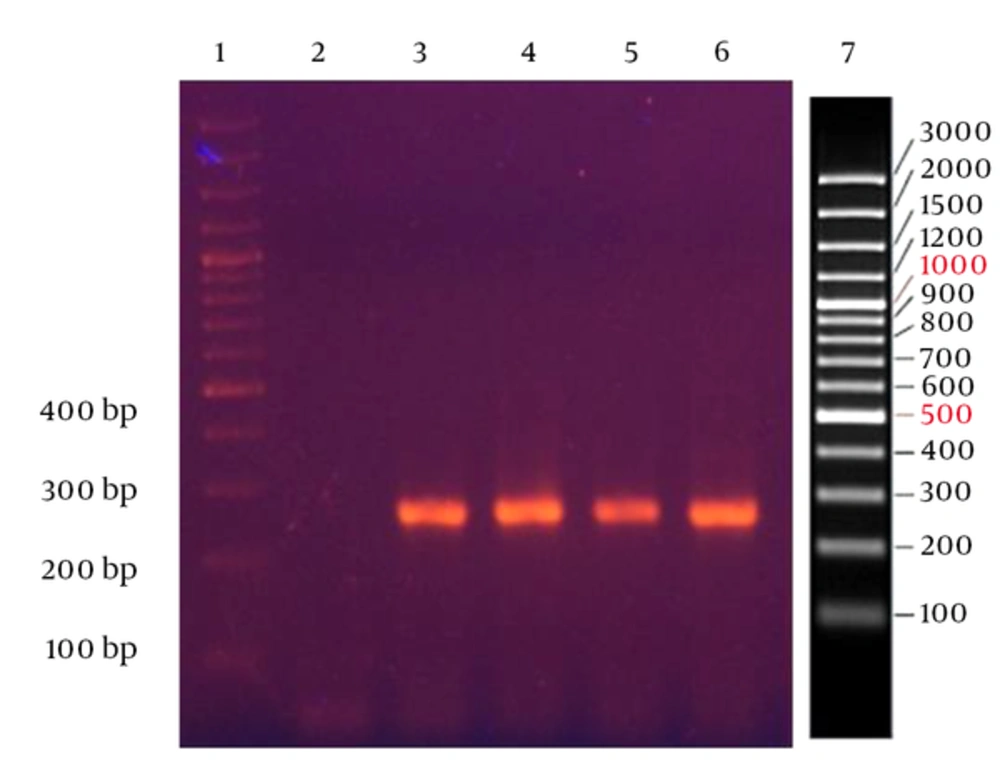
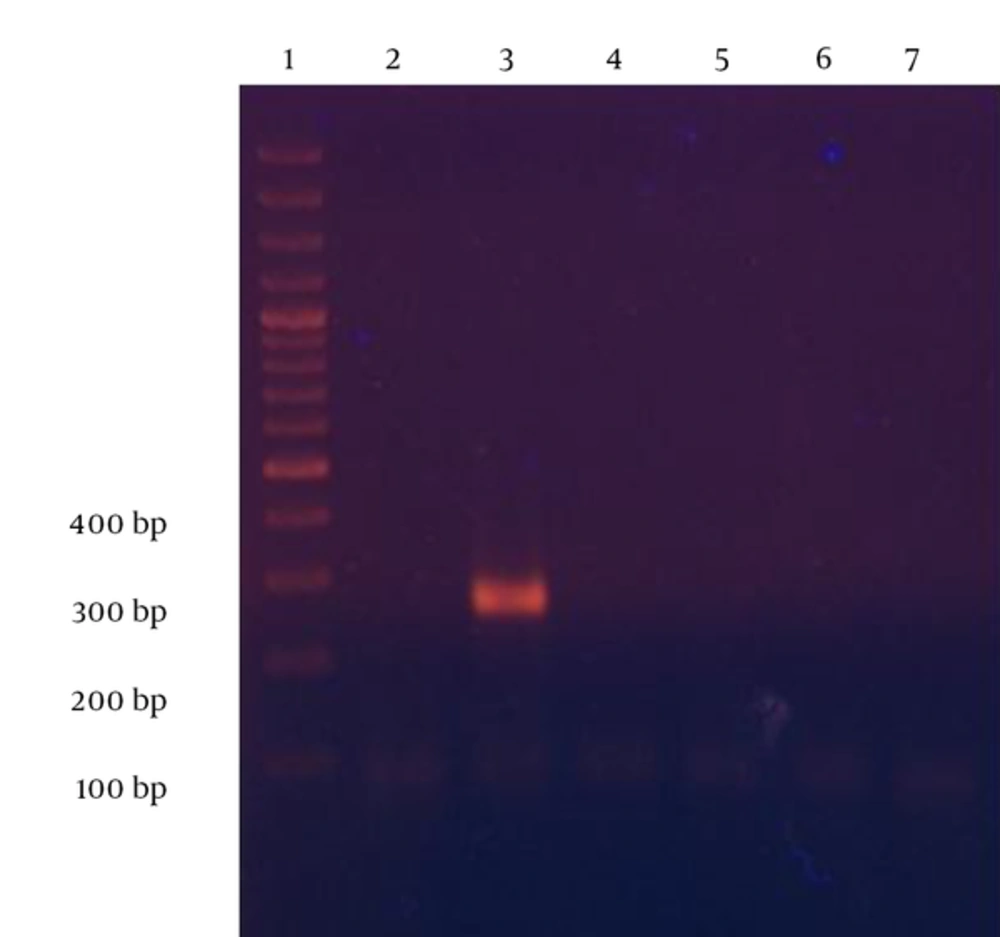
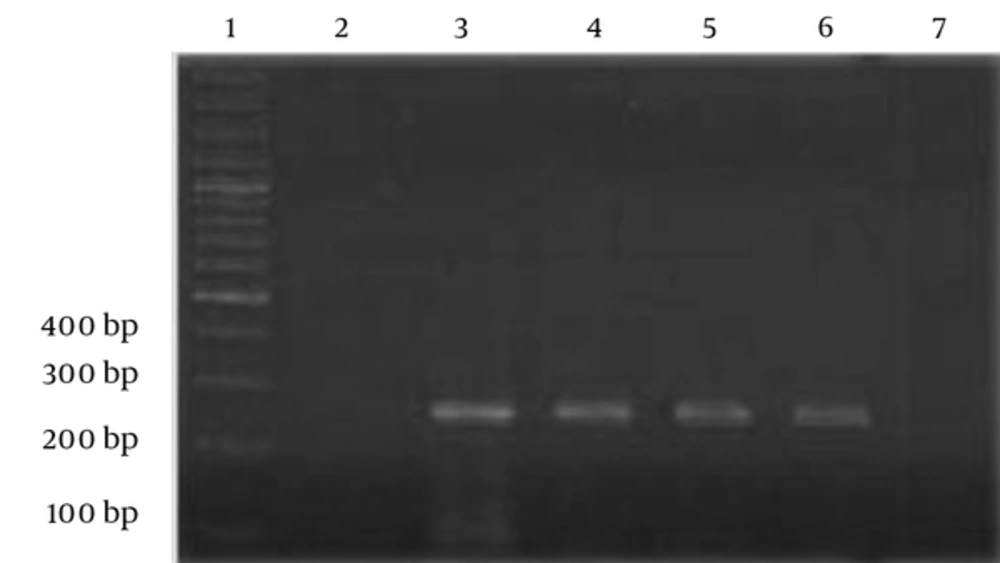
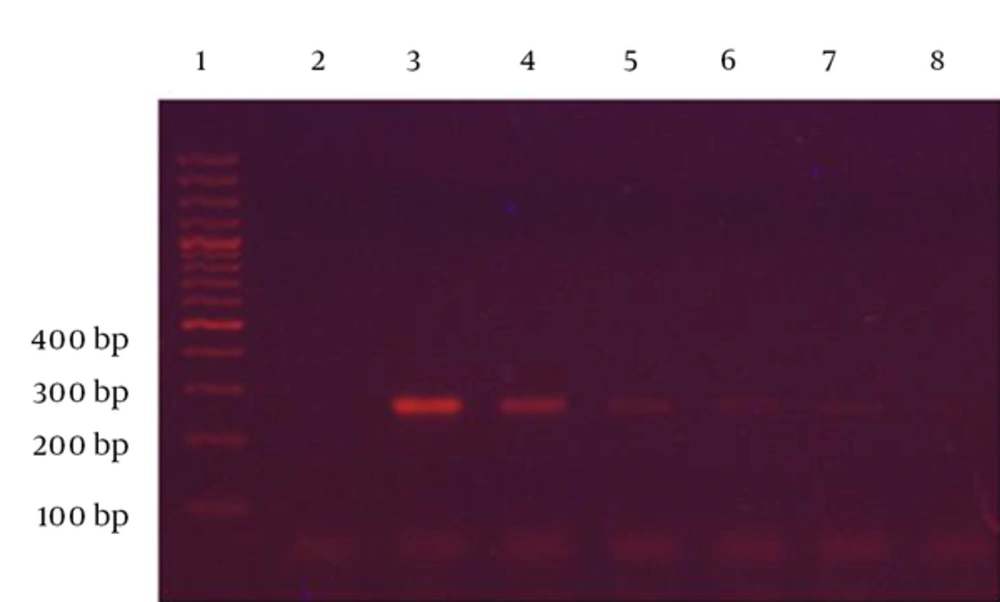
To confirm the specificity of the designed primers, salF and salR, the other bacteria that belonged to the Entrobacteriaceae family, which have a high affinity with S. enterica, were tested. After consecutive experiments and optimization of PCR conditions, especially the annealing temperature and MgCl2 concentration, no non-specific band in relation to this bacteria was observed, confirming the specificity of the selected primers.
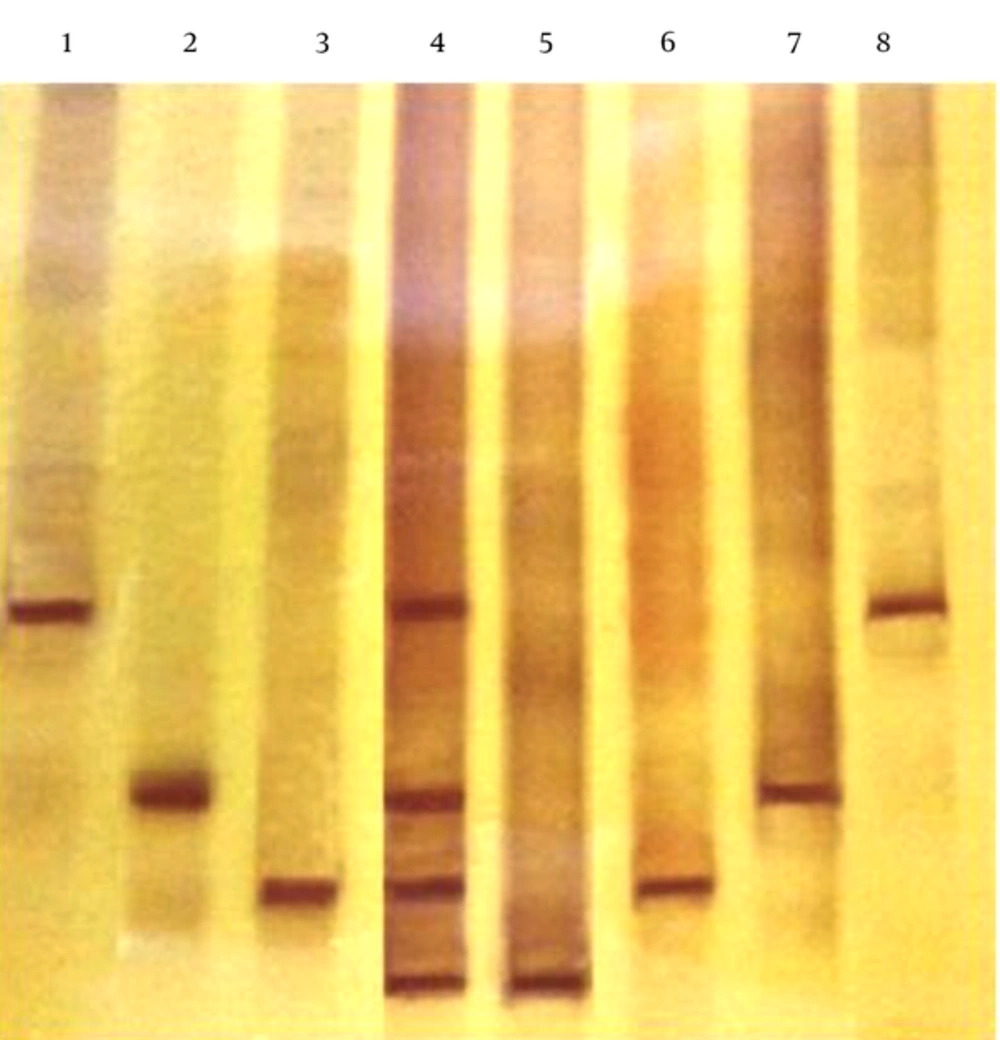
The optimized TTGE method in this study was able to separate the PCR products, with very low number of nucleotide differences, obtained from the amplification of the target sequence in the intended bacteria successfully. The sequences were different only in 2 to 8, in terms of nucleotide content. The same patterns of the electrophoretic bands were produced on PCR products of the inoculated food, making it a suitable choice for identification of the same bacteria in the food industry.
Several studies, including multiplex PCR and real-time multiplex PCR, have been conducted to identify some serotypes of
S. enterica, simultaneously (
10,
20,
21). Multiplex tests identify only a limited number of species in each reaction. Despite the advantage of real-time PCR by providing both qualitative and quantitative results without the need for electrophoresis, the common limitation of multiplex real-time PCR in routine food tests, is its high cost in terms of both devices and materials. Also, the numbers of species, which can simultaneously be detected by this method, are limited because of the low number of fluorophore varieties.
An advantage of the TTGE method is that it can evaluate microbial population in a single test, simultaneously, using one pair of primers. This could reduce the cost and the time of the test. This study indicated the very high sensitivity of the test in detecting the nucleotide differences among sequences, suggesting the entire process as a good method for rapid screening of food-born
Salmonella species; Roudiere et al. in 2009 also isolated 53 different bacterial species from feces samples of infants with optimized TTGE conditions (
22). This technique is also efficient for the detection of microorganisms, which are only 1% of the population, and there is no need to prepare the denaturant gradient of the chemicals, compared to DGGE. This makes it an easy and user-friendly method (
23).
In general, TTGE has the advantages of simultaneous isolation of several serotypes in one experiment, without the use of several primers for amplification of different target sequences. However, TTGE has limitations such as DNA extraction and amplification reaction. Also, only small fragments, up to 500 basepairs, can be analyzed with this method. This limits the amount of sequence information for phylogenetic studies. Furthermore, achieving a good resolution for the analysis of mixed bacterial populations is a problem (
24).
The optimized and more specific results of the PCR-TTGE obtained in this study, proved this method as an appropriate method to detect bacteria belonging to species S. enterica, subspecies enterica in the inoculated food samples. However, for development of an efficient method for direct detection of bacteria in natural food samples and/or environmental or hospital samples, more research is required.