The emergence of CRKP has increased worldwide over the last decades (
32). In mainland China, the first reported CRKP case dates back to 2004, and it was associated with the
K. pneumoniae strain carrying
blaKPC-2 (
33). Here, we report the molecular epidemiological characteristics of CRKP and identify several outbreaks caused by the organism in a non-tertiary hospital in China during 1-year CRKP surveillance. Despite many advances in infection control measures, nosocomial pneumonia ranks second with an incidence of 5 - 20 cases per 1000 admissions (
34). In our study, most patients with CRKP infection had nosocomial pneumonia, which was different from other Chinese CRKP studies focusing on bloodstream infection (
35).
It has been reported that mucosal barrier damage can result in CRKP colonizing the respiratory tract and causing infection because of the frequent use of invasive procedures (
36). Due to the lack of effective antimicrobial treatment, morbidity and mortality rates have shown a disproportionate increase compared to infections caused by non-carbapenem–resistant
K. pneumoniae (
37). In this study, the 30-day mortality was 24.5%, which was higher than that in previous reports (
38). As ICU admission, mechanical ventilation, and central venous catheterization have been considered independent risk factors for CRKP (
39), the high mortality is not surprising as most of the patients in our study were high-risk patients. Another possible explanation is that the patients in our cohort are elderly, which has been found to be associated with 30-day mortality (
40).
Previous carbapenem exposure has been identified as an independent risk factor for CRKP (
41); however, only a few patients in our cohort were treated with carbapenems before CRKP infection. Intensive care unit patients face a significant risk of CRKP infection because of the ability of CRKP to maintain infectivity over the hospital environment, which makes transmission in the environment and between ICU staff members and patients (
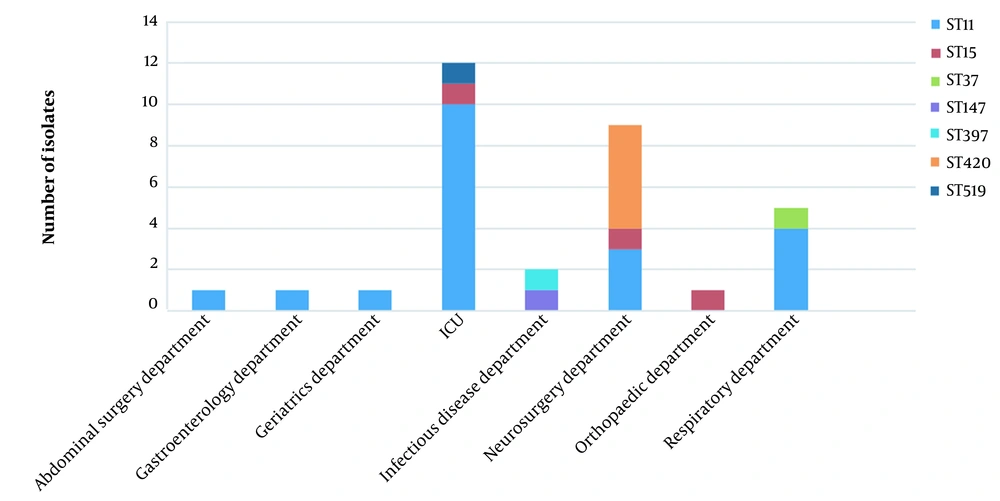
42), as CRKP was mainly detected in ICU, neurosurgery, and respiratory departments, which was similar with other reports (
43-
45). According to these results, a stay in the ICU or surgery wards may be a risk factor for infection with CRKP.
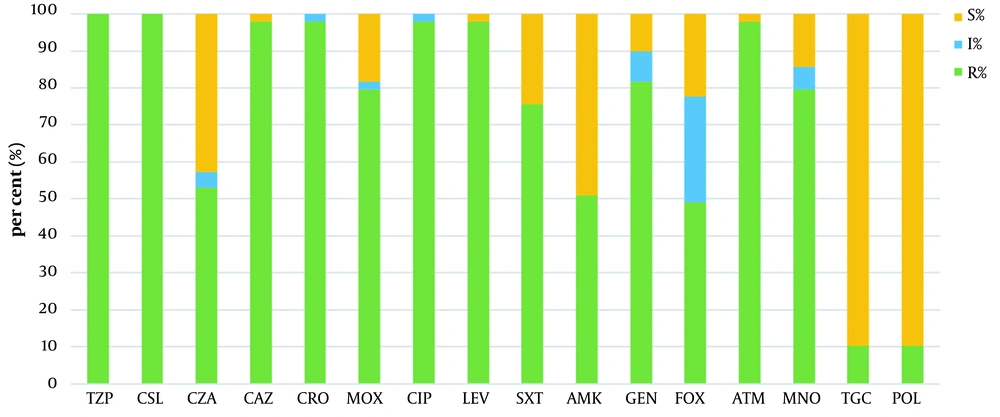
Consistent with previous reports in China (
46,
47), most CRKP isolates in this study were KPC-2 producing, and most CRKP isolates were susceptible to tigecycline and polymyxin B, suggesting a therapeutic option (
48). However, a previous study conducted in 2018 found a tigecycline resistance rate of 13.1% among CRKP isolates; moreover, treatment failure of polymyxin monotherapy for CRKP infections and colistin-resistant CRKP has recently been reported (
49). Ceftazidime-avibactam is a novel BLBLIC with good antibacterial activity against CRKP producing class A and C and some class D carbapenemases, but not metallo–β-lactamases (MBLs) (
50). Five of the CAZ/AVI-resistant isolates produced MBL (NDM-1, NDM-5, and IMP-4), of which 3 produced both MBLs and KPC-2. However, the rate of resistance to CAZ/AVI was higher in our study than in other reports (
51). Resistance to CAZ/AVI has been linked to specific mutations in the
blaKPC gene (
52) or
blaCTX-M-14 gene (
53), while another study has attributed the high expression of
blaKPC to low-level CAZ/AVI resistance (
54). Our results were in line with this, as the MIC for nearly all CAZ/AVI-resistant strains was below 32 µg/mL.
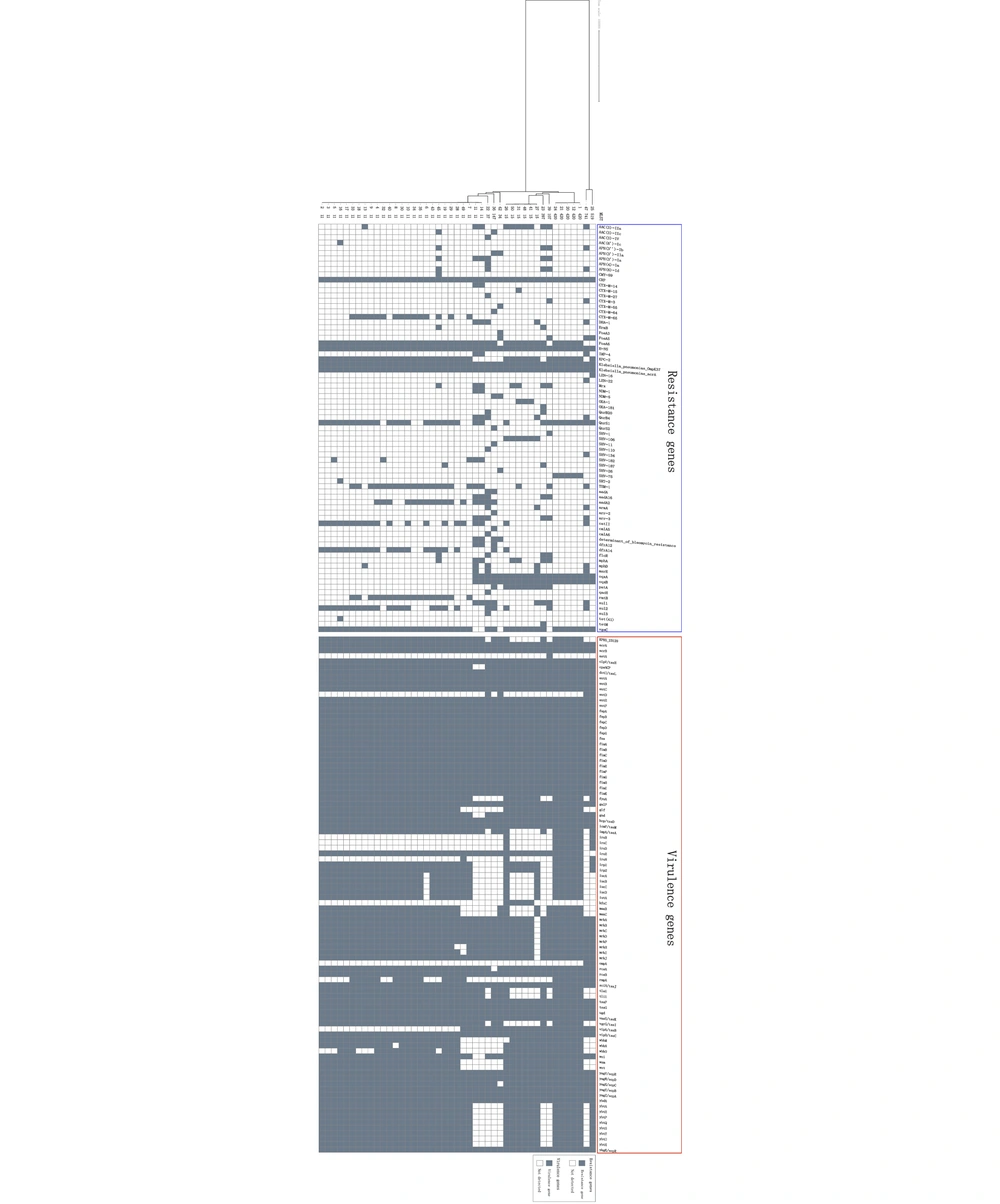
Plasmids belonging to IncF-type and carrying genes (which encode extended-spectrum β-lactamases [ESBL], carbapenemases, and other genes associated with aminoglycoside and fluoroquinolone) are the most common type. In a previous study,
blaKPC-2 genes were frequently found in the IncFII/IncR plasmid replicons (
46). Our research also observed a similar phenomenon, as these plasmids were the most frequently discovered. Numerous factors increase
K. pneumoniae virulence, such as siderophores (scavenge essential iron), lipopolysaccharide (providing serum resistance), and extracellular polysaccharide capsules (for evasion and inhibition of phagocytosis) (
55). While K64 was the dominant K type, no K1 or K2 strains were detected, which are often associated with a highly virulent strain (
56). RKP K64, mainly ST11, has been reported to be highly virulent when the strains acquire virulence plasmids (
57,
58). We found that the CRKP K64 strain carried
rmpA2 and
iucA genes in this study. Therefore, acquiring these virulent isolates in our hospital is of clinical concern as dissemination in the ICU is a distinct possibility. Continuous monitoring of these clones may help control their spread.
With the increasing use of carbapenems in clinical settings worldwide, the cloning spread of CRKP in health care settings poses a major clinical concern. ST11 is the dominant ST of CRKP both in Asia and China (
46), which has led to a global epidemic since its emergence (
59). In this 1-year surveillance study, ST11 was the main epidemic clone, and clonal dissemination was identified mostly in the ICU and neurology departments, which is in line with previous studies (
60). CRKP isolates tend to spread rapidly in the neurology wards and ICU due to exposure to more antibiotics and invasive therapy; thus, active surveillance should be taken in these high-risk departments. As CRKP commonly contaminates the environment, such as ventilator- and sink-related sites and bedside tables, the implementation of disinfection should be strengthened (
61).
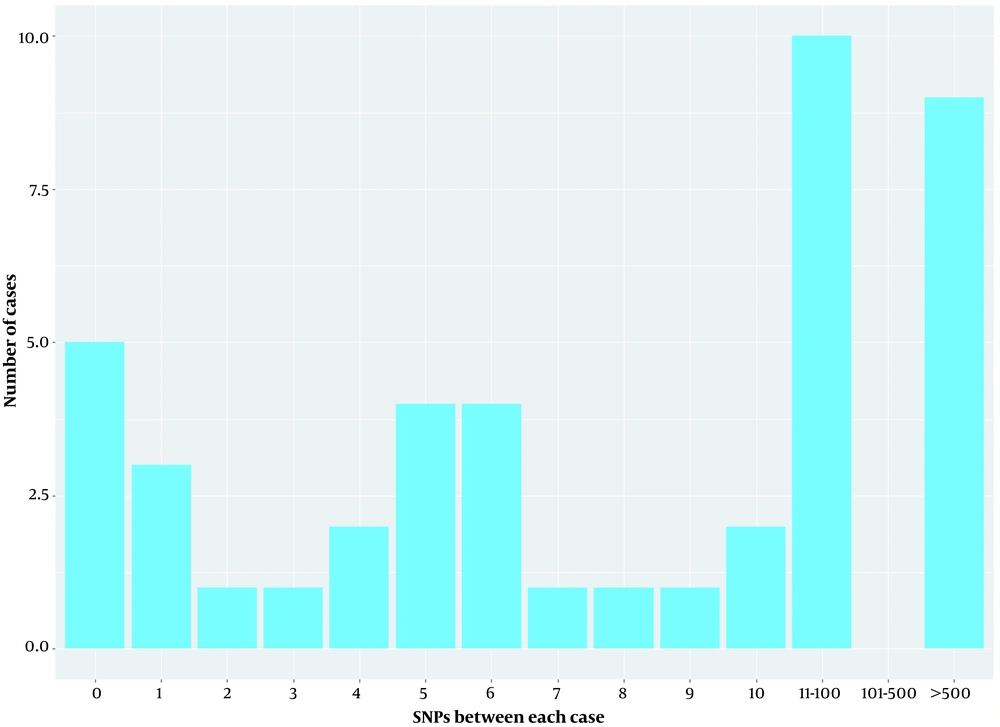
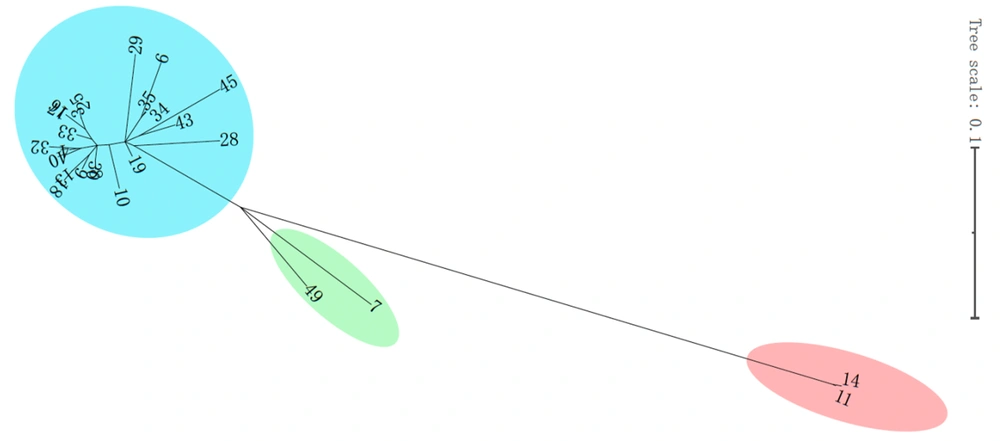
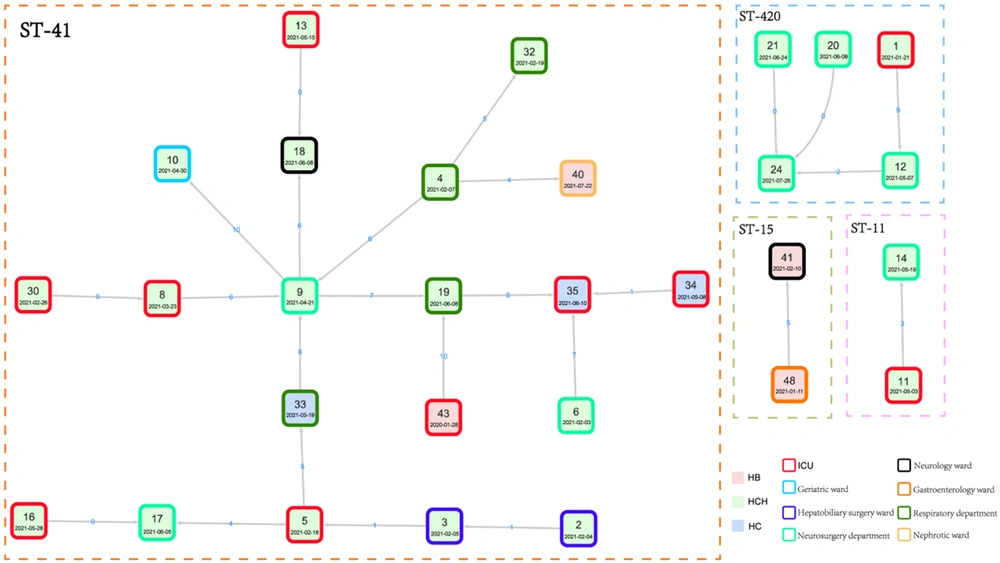
ST11 strains were observed to be transmitted between patients in the same ward, hospital, and region. Two ST11 clones caused 2 transmissions, which is similar to a previous study in which ST11 clones caused an outbreak in a single hospital (
62). Our research also showed that ST11 was grouped into 3 subclades, indicating that the ST11 lineage is the clone complex. Furthermore, we also found potential dissemination of the ST420 clone, indicating that ST420 may be another major high-risk clone in our region besides ST11. Several studies have demonstrated that genes, such as
rmpA,
iucABCD,
iutA, and
iroBCDN, are associated with hypervirulent
K. pneumoniae (
63,
64), and all these genes were detected in ST420 isolates of this study.
This study has some limitations. First, we did not perform active surveillance during the study period, and only a small proportion of isolates in the same region were collected. Moreover, hospital environment samples (such as basin, surface, and sewage) and patients’ screen samples were not included in our study, which would have provided more information on clonal dissemination. However, our findings provide valuable information for understanding the molecular epidemiology of CRKP in a non-tertiary hospital in China. Of note, most surveillance studies were performed in tertiary hospitals in mainland China. This study highlights the need for improvement of infection control practices in non-tertiary hospitals, as well as indicates the importance of performing regional resistance surveillance.
5.1. Conclusions
CRKP strains were mainly isolated from ICU and neurosurgery departments. Several chains of dissemination of CRKP were discovered in the hospital and region, as ST11 was the main epidemic clone. Multiple carbapenemase genes were detected, with blaKPC-2 being the most frequent. The resistance rate of CRKP strains to CAZ/AVI was higher in our study than in previous studies. Our findings highlight the need for more effective antimicrobial stewardship and infection control practices in non-tertiary hospitals in China.