
1. Background
There are eight members of the Herpesviridae family capable of causing diseases in humans. The human herpes virus family includes three subfamilies (i.e., Alpha-, Beta-, and Gamma-Herpesviridae). The herpes simplex virus type-1 (HSV-1), herpes simplex virus type-2 (HSV-2), and varicellovirus-varicella zoster virus are related to the Alphaherpesvirinae subfamily (1). Herpes simplex virus (mainly HSV-2) is one of the most common causes of genital ulcer disease worldwide and can present in many clinical and psychological manifestations (2).
Herpes simplex virus type-1 is a highly infectious neurotropic dsDNA virus, with most infections occurring among children (3). After the primary infection (mainly non-sexual through oral secretions without clear symptoms) (4), the virus becomes latent in the nerve cells and persists for life (5). Latency of HSV-1 usually occurs in the neuronal nuclei located within the ophthalmic branch of trigeminal ganglion due to an immune mechanism in which the cytotoxic T lymphocytes, specific for the immune dominant gB498-505 HSV-1 epitope, are selectively retained and activated in the infected ganglion to produce interferon-gamma (IFN-γ) necessary for latency (6). Symptomatic infections are often characterized by oral or facial lesions at the site of viral entry (i.e., oral, ocular, and cutaneous) and might lead to central nervous system manifestations (e.g., meningitis and encephalitis), corneal blindness, and death, especially among immunocompromised patients (4). Furthermore, HSV-1 has emerged as a leading cause of primary genital and neonatal disease (7, 8).
Following HSV infection, variable time (from 14 up to 90 days) is required for the development of immunoglobulin G (IgG) antibodies after the onset of symptoms, and the anti-HSV-1 IgG persists indefinitely (9). Most individuals can have anti-HSV-1 IgM detected 9 - 10 days following exposure to the virus. Anti-HSV-1 IgM is usually detectable for 7 - 14 days, although, in a small number of individuals, it can be detectable for up to 6 weeks (10). Socioeconomic and geographic diversities can affect HSV-1 prevalence among different regions and populations (11, 12). Reports from Western countries indicate a major role of HSV-1 as a cause of genital herpes that can be transmitted sexually with major clinical and psychosocial morbidities (8, 13-15). In Western countries, exposure to HSV-1 during childhood was limited due to the improvement in hygienic and socioeconomic conditions; consequently, young individuals might reach the age of sexual activity with no anti-HSV-1 defensive antibodies and become at risk of catching the infection genitally (3, 16, 17). In the United States, HSV-1 seroprevalence (as an indicator for defensive antibodies) has decreased among adolescents aged 14 - 19 years by about 30% over a three-decade period (4).
Public education concerning HSV, its transmission, and its complications is of great value (18). Currently, there are no approved prophylactic or therapeutic vaccines against HSV-1 or HSV-2 due to immune evasion by the virus. The immune responses involved in HSV latency and reactivation are major challenges to the development of anti-HSV vaccines because an effective vaccine must not only prevent or treat the active but also the latent state of the virus. Still, there are several promising trials in the pre-clinical and clinical phases of the study, including live-attenuated (not for immunocompromised patients), subunit, DNA, and replication-defective viral vaccines. The rapid development of anti-severe acute respiratory syndrome coronavirus 2 (SARS-CoV-2) messenger ribonucleic acid (mRNA) vaccines has re-energized interest in discovering an effective vaccine against HSV using the same technique; however, there are many concerns regarding the mRNA stability and delivery systems (19).
Although the data are scarce in Saudi Arabia regarding HSV infection and seroprevalence of its antibodies (20-22), HSV-1 is endemic all over the world as indicated by the high seroprevalence of anti-HSV-1 immunoglobulins across different regions (23-25). The virus is typically acquired during childhood (26). In many Western (3, 16, 24, 27-33) and Asian countries (34), the improvement in socioeconomic conditions and hygiene measures appears to have reduced exposure to the virus during childhood. In these countries, many young individuals reach the age of sexual debut without acquiring the protective immunoglobulins against HSV-1 infection; consequently, they become more susceptible to acquiring this infection through the genital route. In Western (13, 15, 30, 35, 36) and Asian countries (34), growing evidence shows that HSV-1 is overwhelming HSV-2 as the leading cause of genital herpes’ first episode of infection. The extent to which such a transition in the epidemiology of HSV-1 is happening in other worldwide areas remains undetermined. From this perspective, the present study aimed to determine the seroprevalence of anti-HSV-1 IgG levels in Sakaka, Aljouf, Saudi Arabia.
2. Objectives
A better understanding of the seroprevalence of HSV-1 antibodies is required in Saudi Arabia to help health policymakers in characterizing the HSV-1 disease burden and exploring its optimal prevention and control strategies, including vaccine development. To the best of our knowledge, this is the first report on the prevalence of anti-HSV-1 IgG in donated blood in Sakaka, Aljouf, Saudi Arabia.
3. Methods
3.1. Study Design, Data, and Samples Collection
Bioethical approval (No. 19-08/42) was obtained from the Local Committee of Bioethics (LCBE) of Jouf University, Kingdom of Saudi Arabia (KSA). The sample size was calculated using an online (Roasoft) sample size calculator (http://www.Raosoft.com/samplesize.html) with a margin of error of 5.66%, response distribution of 50%, and a confidence level of 95% for a total of 250,000 inhabitants of Sakaka, Aljouf, Saudi Arabia. Since HSV-1 is transmitted in the general population mainly by saliva, its seroprevalence among apparently healthy blood donors could reflect that in the total population (11, 12). A cross-sectional study was performed to collect 300 blood samples from the donated blood received in the Blood Bank of Prince Mutaib Bin Abdulaziz Hospital, Sakaka, Aljouf, Saudi Arabia. The participants were randomly selected. Each sample (5 mL) was collected in a sterile tube with anticoagulant ethylenediaminetetraacetic acid (EDTA) (or citrate) and transported in an icebox to the Microbiology and Immunology Laboratory at the College of Medicine, Jouf University, for further processing. Participants' data (i.e., age, gender, education, occupation, income, hand hygiene, travel history, and cupping practice) were collected as shown in Table 1.
3.2. Immunological Detection of Antibodies
On arrival at the Microbiology and Immunology laboratory, the samples were processed using aseptic techniques to avoid contamination. The blood samples were incubated at room temperature for 10 - 20 minutes and then centrifugated at 3,000 rpm for 10 minutes. The plasma supernatant was collected. Plasma aliquots were stored at - 80°C until testing (11). All the samples were tested by indirect enzyme-linked immunosorbent assay (ELISA) (with sensitivity and specificity of 99% and 93%, respectively) for anti-HSV-1 IgG detection according to the manufacturer’s instructions (Catalogue number SL2061Hu, SunLong Biotech Co., LTD, Hangzhou Zhejiang, China). Blank, negative, and positive controls were included with each run. The cut-off value was optical density (OD) ≥ 0.25. The color intensity was directly proportional to the anti-HSV-1 IgG concentration in the samples (12).
3.3. Data Analysis
The data were fed to the computer and analyzed using IBM SPSS software package version 20.0. (Armonk, NY: IBM Corp.). Comparisons between groups for categorical variables were assessed using the chi-square test. The significance of the obtained results was judged at the 5% level.
4. Results
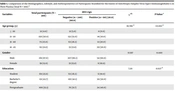
Anti-HSV-1 IgG was detected at a low rate (20%; n = 60/300). There was a highly significant association (P < 0.001*) between anti-HSV-1 IgG-positivity and the age of participants (50.0% of HSV-1 IgG-positive participants in the age group of 41 - 45 years). Another highly significant association with P < 0.001* was observed between having household income less than 10000 SAR and anti-HSV-1 IgG-positivity, where 81.7% of HSV-1 IgG-positive participants had income < 10000 SAR. All the participants performed hand washing with soap before handling food and after using the toilet. Furthermore, there were significant associations (P < 0.05*) between IgG-positivity with education, occupation, travel history, and cupping practice where HSV-1 IgG-positive participants were bachelor’s degree holders, governmental employees, international travelers, and practicing cupping at rates of 50.0% (n = 30/60), 60.0% (n = 36/60), 50.0% (n = 30/60), and 50.0% (n = 30/60), respectively. Moreover, 20.7% (n = 54/261) of the male participants were anti-HSV-1 IgG-positive, compared to the anti-HSV-1 IgG-positive female participants (15.4%; n = 6/39); however, there was no statistically significant association between IgG-positivity and gender (P = 0.440) (Table 1).
Table 1.
Comparison of the Demographics, Lifestyle, and Anthropometrics of Participants Stratified for the Extent of Anti-Herpes Simplex Virus Type-1 Immunoglobulin G in Their Plasma (Total N = 300) a
| Variables | Total participants (N = 300) | HSV-1 IgG | χ2b | P-Value c | |
|---|---|---|---|---|---|
| Negative (n = 240) (80.0) | Positive (n = 60) (20.0) | ||||
| Age group, (y) | 39.786 d | <0.001 d | |||
| ≤ 20 | 12 (4.0) | 12 (5.0) | 0 (0.0) | ||
| 21 - 30 | 150 (50.0) | 132 (55.0) | 18 (30.0) | ||
| 31 - 40 | 75 (25.0) | 63 (26.3) | 12 (20.0) | ||
| 41 - 45 | 63 (21.0) | 33 (13.8) | 30 (50.0) | ||
| Gender | 0.597 | 0.440 | |||
| Male | 261 (87.0) | 207 (86.3) | 54 (90.0) | ||
| Female | 39 (13.0) | 33 (13.8) | 6 (10.0) | ||
| Education | 7.20 | 0.027 d | |||
| Student | 69 (23.0) | 63 (26.3) | 6 (10.0) | ||
| Bachelor’s degree | 131 (43.7) | 101 (42.1) | 30 (50.0) | ||
| Postgraduate | 100 (33.3) | 76 (31.7) | 24 (40.0) | ||
| Occupation | 8.602 d | 0.035 d | |||
| Private sector | 48 (16.0) | 36 (15.0) | 12 (20.0) | ||
| Governmental Employee | 165 (55.0) | 129 (53.8) | 36 (60.0) | ||
| Student | 69 (23.0) | 63 (26.3) | 6 (10.0) | ||
| Not working | 18 (6.0) | 12 (5.0) | 6 (10.0) | ||
| Household income | 34.1 | 0.001 d | |||
| < 10000 SAR | 144 (48.0) | 95 (39.6) | 49 (81.7) | ||
| ≥ 10000 SAR | 156 (52.0) | 145 (60.4) | 11 (18.3) | ||
| Hand washing with soap before handling food and after using the toilet | |||||
| No | 0 (00.0) | 0 (00.0) | 0 (00.0) | - | - |
| Yes | 300 (100.0) | 240 (100.0) | 60 (100.0) | ||
| Travel history | 4.584 d | 0.032 d | |||
| No | 186 (62.0) | 156 (65.0) | 30 (50.0) | ||
| Yes | 114 (38.0) | 84 (35.0) | 30 (50.0) | ||
| Cupping practice | 9.803 d | 0.002 d | |||
| No | 201 (67.0) | 171 (71.3%) | 30 (50.0) | ||
| Yes | 99 (33.0) | 69 (28.8) | 30 (50.0) | ||
Abbreviations: HSV-1, herpes simplex virus type-1; IgG, immunoglobulin G.
a The data shown are frequencies; No. (%).
b Chi-square test.
c P-value for comparing negative and positive HSV-1 IgG.
d Statistically significant at P ≤ 0.05.
5. Discussion
To the best of our knowledge, this is the first report on the prevalence of anti-HSV-1 IgG in donated blood in Sakaka, Aljouf, Saudi Arabia, that could be valuable for health policymakers in implementing health promotion strategies. In the current study, the anti-HSV-1 IgG was detected at a low prevalence (20%). In contrast, a study was conducted in Qatar to detect the seroprevalence of anti-HSV-1 IgG among blood donors from different nationalities reported that the prevalence among Egyptians, Yemenis, Sudanese, Syrians, Jordanians, Qataris, Iranians, Lebanese, and Palestinians was 97.5%, 92.6%, 90.7%, 88.5%, 86.5%, 82.3%, 81.4%, 81.4%, and 80.5%, respectively (11). Another study was conducted in Iraq to determine the frequency of anti-HSV-1 IgG in healthy blood donors in Baghdad province, and the researchers observed that 94.1% of participants had immunoglobulin in their sera (12). Furthermore, Chaabane et al. reported that the HSV-1 seroprevalence in the Middle East and North Africa was 91.5% and 65.2% among adults and children, respectively (8).
It is well known that the HSV-2-seropositive population can cross-react to many HSV-1 antigens (37). The variation of anti-HSV-1 IgG seroprevalence between different countries and populations might be related to differences in the studied population (38) or diversity in the socioeconomic and hygiene measures (39). The low-income individuals might have a higher level of occupation-related stress and/or weather-related stress (exposure to abnormal levels of cold versus heat), leading to the reactivation of HSV-1 latency. With more improvement in socioeconomic conditions and hygiene measures, there is less exposure to the virus during childhood and less anti-HSV-1 IgG seroprevalence during adulthood (8).
In a national survey conducted in Saudi Arabia and published in September 2015, the overall seroprevalence of HSV-1 was high (88.8%), and most (84%) of the population infected with HSV-2 were also coinfected with HSV-1. According to the Saudi geographic areas, the HSV-1 seroprevalence was 97.14%, 97.00%, 95.28%, 94.72%, 94.44%, 94.41%, 92.35%, 91.07%, 89.61%, 88.97%, 87.68%, 86.07%, and 62.25% in Aljouf, Al-Bahah, Najran, Assir, Northern boarders, Tabuk, Jizan, Riyadh, Madinah, Hail, Makkah, Eastern province, and Al-Qassim province, respectively. The authors observed that rural regions had higher HSV-1 seroprevalence than urban areas and explained this by the fact that rural regions are more tight-knit communities where the transmission of HSV-1 is facilitated, for example, by sharing utensils during community events and food gatherings. It is apparent from the study that the seroprevalence of HSV-1 was high in nearly all studied geographic areas, with the lowest seroprevalence of HSV-1 and HSV-2 detected in Al-Qassim province, which is the most conservative region in Saudi Arabia (22).
In the above-mentioned survey, although the highest (97.14 %) HSV-1 seroprevalence was observed in Aljouf province, this might not reflect the actual HSV-1 seroprevalence due to the very small sample size recruited in the study (only 70 participants from Aljouf). Aljouf is a large province that includes many cities, including Sakaka, which is the largest one and the capital of Aljouf. Although the population in Sakaka was estimated to be 240,866 individuals according to the General Authority for Statistics (GAStat) 2010 (40), the population in the Aljouf region was estimated to be 531,952 individuals according to the GAStat 2019 (41). Education, occupation, and household income are the most used indicators of socioeconomic status (42). The low seroprevalence of anti-HSV-1 IgG detected in the current study can be explained by the conservative nature of the population in Sakaka and their improved socioeconomic conditions and hygienic measures, as shown in Table 1.
Regarding the age and gender of the participants in the conducted study, 50.0% (n = 30/60), 90.0% (n = 54/60), and 10.0% (n = 6/60) of HSV-1 IgG-positive participants were in the age group of 41-45 years (statistically significant; P < 0.05*), male, and female, respectively. There was no statistically significant association between IgG-positivity and gender (P = 0.440). The data of many studies totally agree with the aforementioned data (24, 39). Two Iraqi studies reported the predominance of HSV-1 IgG-seropositivity in a younger age group (21 - 40 years) (12, 43). Several studies reported that there was no major gender-specific difference regarding HSV-1 seroprevalence variation (12, 24, 25, 38, 43-45). In the current study, 81.7% of HSV-1 IgG-positive participants had a household income of less than 10000 SAR (P < 0.001*). In Jordan, a recent study reported a high seroprevalence of HSV-1 (75.3%) with a statistically significant association between the anti-HSV-1 IgG seropositivity and the low household income (P = 0.002*) (46). With the improvement of socioeconomic conditions, the predominance of HSV-1 IgG-seropositivity will be in elderly individuals. It was reported that age and socioeconomic conditions could explain half of the HSV-1 seroprevalence variation, although the other factors, such as gender, type of population, and sampling technique, were not significantly associated with the HSV-1 seroprevalence variation (8). The sample collection bias might be less important for HSV-1 seroprevalence variation because the virus is mostly transmitted through the oral route among the general population (11, 12).
In the present conducted study, 60.0% of the HSV-1 IgG-positive participants were government employees with statistically significant association (P < 0.035*). Conversely, the predominance of HSV-1 IgG-seropositivity was observed among the students (33.4%) (43) and private sector employees (54.6%) (12), respectively, with no statistically significant association. Regarding cupping practice (i.e., a sort of oriental traditional medicine) and travel history, a Korean study reported a rare case of cutaneous herpes infection that was suspected to be caused by direct inoculation or reactivation of the virus by cupping mechanical trauma (47). Furthermore, some reports suggested that the number of different strains of HSV-1 in a person could be an indicator of his/her travel history and viral DNA sequencing might be used as a forensic tool to study the human population and their migration patterns (48, 49). The results of the current study showed significant associations (P < 0.05*) between anti-HSV-1 IgG seropositivity only with cupping practice and international traveling, where 30.3% (n = 30/99) and 26.3% (n = 30/114) of participants with cupping practicing and international traveling were anti-HSV-1 IgG-positive, respectively. Nevertheless, a study by Al-Shuwaikh et al. (12) did not find a statistically significant association between HSV-1 IgG seropositivity on one side and neither the travel history nor the cupping practice on the other side.
However, the world is trying to counteract the bad effect of the coronavirus disease 2019 (COVID-19) pandemic, caused by SARS-CoV-2 (50, 51), on the communities, health systems, and economies (52, 53). Anti-SARS-CoV-2 vaccination constitutes the most promising prevention and control measure (54, 55). Recently, a few cases of herpes keratitis (approved by polymerase chain reaction [PCR]) due to the reactivation of HSV after receiving anti-SARS-CoV-2 mRNA vaccination were detected in Saudi Arabia (56), the United Kingdom (57), and Jordan (58). These cases could be explained by the mRNA vaccine-induced dysregulation of the cytotoxic T lymphocytes specific for the immune dominant gB498-505 HSV-1 epitope in the infected trigeminal ganglion (59), vaccine-induced disruption of humoral immunity, autoimmune response, and/or reduction in the neurotrophin that inhibits HSV replication (60). All the aforementioned studies shed light on the importance of being aware of the potential for the reactivation of herpes eye disease that might lead to blindness following anti-SARS-CoV-2 vaccination to enable prompt, effective prevention, control, and treatment. Likewise, five cases of cutaneous HSV-1 reactivation were reported after receiving anti-SARS-CoV-2 mRNA vaccination (61). Currently, it is worth noting that anti-SARS-CoV-2 vaccination is inevitable, as its benefits overshadow the potential risk of HSV reactivation, and the same is true for discovering and approving anti-HSV-1 vaccines.
5.1. Conclusions
In this study, there was a low prevalence of anti-HSV-1 IgG. The study provides an alarm regarding reaching the age of sexual debut without acquiring the protective anti-HSV-1 immunoglobulins, consequently becoming more susceptible to acquiring the HSV-1 infection through the genital route. Although the current study’s findings support previous reports about the key importance of improving socioeconomic conditions and hygiene measures in reducing the spread of HSV-1, there is an urgent need to develop an effective vaccine against HSV-1.