In the past decade, cases of
C. auris infections have risen exponentially, spreading to over 50 countries across six continents (
9), with particularly high prevalence in the U.S. and India, posing a significant threat to global health.
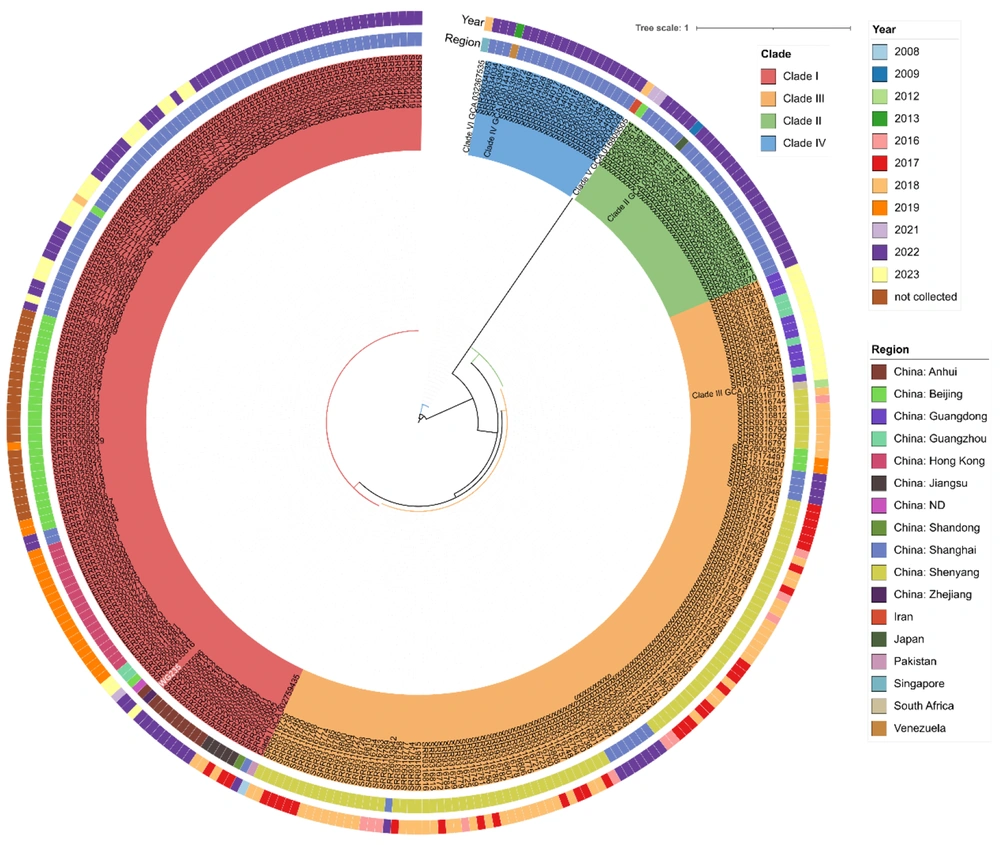
Candida auris is geographically divided into four clades: Clade I (South Asia), clade II (East Asia), clade III (South Africa), and clade IV (South America) (
10). Currently, three clades—Clade I, II, and III—are circulating in China (
6). Clade I, III, and IV strains are commonly associated with multidrug resistance and nosocomial outbreaks, whereas clade II strains are typically susceptible to all antifungal drugs and have not been linked to outbreaks (
11).
The isolate in this study belonged to clade I and was resistant only to fluconazole, a finding consistent with other studies in China (
4). Patients infected or colonized with
C. auris almost always present with multiple underlying diseases or comorbidities, including diabetes, sepsis or BSIs, pulmonary diseases, chronic or acute kidney failure, malignancies, cardiovascular diseases, and liver disease. In this case, the
C. auris isolate was detected in a patient with severe pneumonia who had multiple underlying diseases: Diabetes, hypertension, and renal insufficiency. This profile aligns with other reported cases in the literature (
12), where critically ill patients with multiple comorbidities were identified as being at high risk for
C. auris colonization or infection.
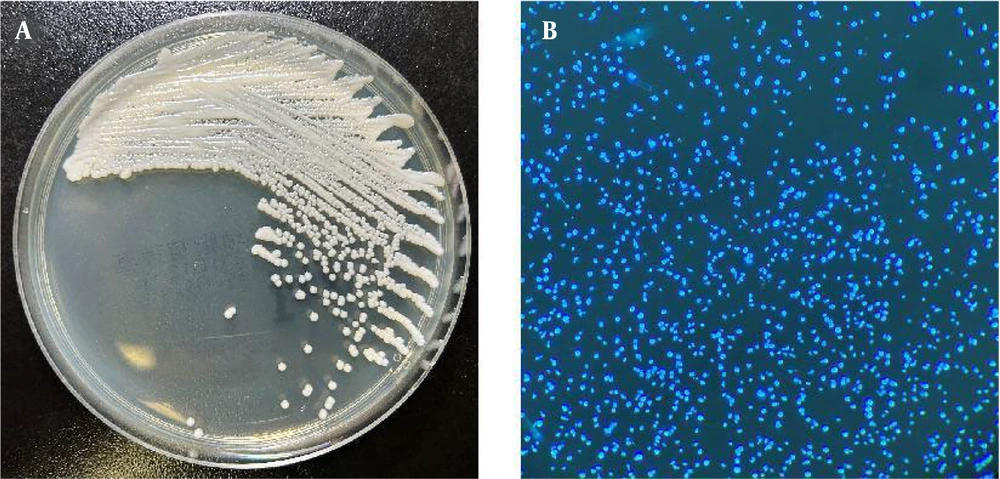
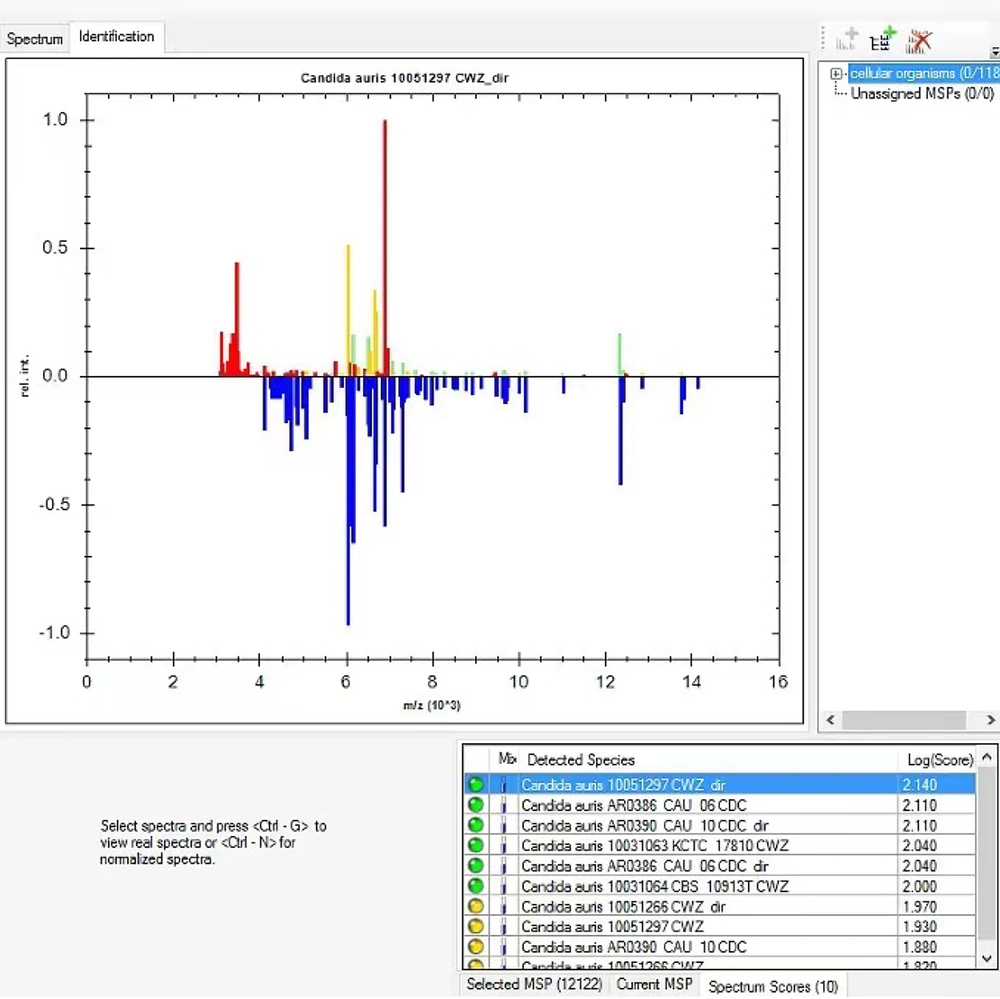
The patient had been treated in several hospitals before being transferred to the ICU of our hospital, where sputum culture and other diagnostic tests were performed on the first day of admission, alongside empirical treatment with imipenem, voriconazole, and oseltamivir. On the third day, white colonies growing on a CHROMagar plate were identified by MALDI-TOF MS as C. auris, highlighting the importance of this technology for accurate and rapid identification.
There are no specific established antifungal susceptibility breakpoints for
C. auris; however, the CDC has proposed tentative resistance breakpoints (
13). Echinocandins are generally recommended as the initial antifungal therapy for
C. auris, but in this case, the patient was treated with voriconazole based on susceptibility testing. Despite the low MIC value for voriconazole, the patient’s condition continued to deteriorate, with inflammatory markers rising. This lack of improvement could be attributed to the patient’s overall health status, compromised immunity, severity of infection, or the choice of antifungal therapy.
Clinicians decided not to modify the antifungal regimen, and while C. auris was again detected in a sputum culture on the fourth day, the patient’s worsening condition and the family’s decision to discontinue treatment precluded further adjustments. In this case, the precise role of C. auris in the clinical aggravation and multiorgan failure remains unclear. However, the association of C. auris with higher mortality rates underscores the pathogen’s potential contribution to the unfavorable outcome.
Candida auris is challenging to identify and is associated with strong infectivity, multidrug resistance, immune evasion, and high fatality rates in BSIs. Accurate and early identification of this pathogen is critical for improving patient outcomes and preventing transmission. The microscopic morphology of
C. auris is not distinctive, and it forms polychromatic colonies (white, pink, or purple) on CHROMagar plates, complicating its identification through conventional laboratory methods.
Candida auris isolates are often misidentified as
C. haemulonii or
Rhodotorula glutinis by automated yeast identification systems such as Vitek2 (
14). These identification challenges likely result in significant underestimation of
C. auris infections in healthcare facilities across China.
Molecular testing methods, including PCR and MALDI-TOF MS with updated databases, are the most effective and widely used diagnostic tools. Systems like the Bruker Biotyper
™ and Vitek MS can detect
C. auris with 100% sensitivity and specificity within minutes (
12). Although WGS is not a routine diagnostic method for
C. auris, it serves as a reference for strain-level identification and is vital for epidemiological analyses during outbreaks. In this case, MALDI-TOF MS accurately identified
C. auris, demonstrating its utility as a fast, precise, convenient, and cost-effective diagnostic tool.
Candida auris can colonize and spread in hospital environments, surviving on wet or dry surfaces for at least seven days and persistently on plastic surfaces for at least two weeks (
15). Its ability to survive in various conditions and spread easily necessitates regular monitoring and disinfection of potentially contaminated healthcare facilities.
In this case, the patient’s prolonged hospitalization in multiple hospitals and potential carriage of MDRO led to the implementation of protective measures upon admission. The patient was housed in an isolation room, and staff utilized personal protective equipment. When C. auris was isolated, the patient was already under surveillance by the local Infection Prevention team. Safety measures were subsequently reinforced, including reducing equipment sharing, strictly adhering to hand hygiene practices, and regularly disinfecting the entire ICU. These measures successfully prevented further transmission, with no additional C. auris isolates reported. Given that the patient had been previously treated in the ICU of hospitals in Nanjing and that C. auris was detected only after transfer to the ICU of Jinhua Hospital, Zhejiang University, it is plausible that the infection or colonization occurred in one of the Nanjing hospitals.
In summary, this case highlights the critical importance of appropriate prevention and control measures, timely identification, and individualized treatment strategies for C. auris, particularly in critically ill patients. The timely and accurate detection of C. auris by MALDI-TOF MS is of significant value in preventing its spread. These findings emphasize the necessity for routine monitoring and preparedness in healthcare facilities to manage C. auris outbreaks and reinforce the role of MALDI-TOF MS as a frontline diagnostic tool in settings where C. auris is suspected or identified.
3.1. Conclusions
To date, this is the first reported case of clade I C. auris in Zhejiang. As an advanced microbial detection tool, MALDI-TOF MS enables rapid and accurate identification of C. auris. Based on the patient’s hospitalization history, it is plausible that this C. auris isolate was acquired from the hospital in Nanjing, highlighting the risk of inter-hospital transmission due to the convenience of medical transfers. Recommendations: (1) Critically ill patients with prolonged ICU stays and multiple underlying diseases are at increased risk of C. auris infection and should be routinely screened for C. auris with appropriate preventive and control measures implemented; (2) upon detection of C. auris, immediate contact precautions, routine monitoring, and thorough disinfection of potentially contaminated healthcare facilities are essential; (3) with the rising epidemic of C. auris in China, clinicians should enhance their diagnostic and therapeutic capabilities for managing C. auris infections.