Trichosporon spp. is an emerging basidiomycetous yeast that can cause both superficial and invasive infections. This yeast-like fungus is characterized by morphological and physiological complexity and exhibits similarities to
C. albicans. Like other dimorphic fungi,
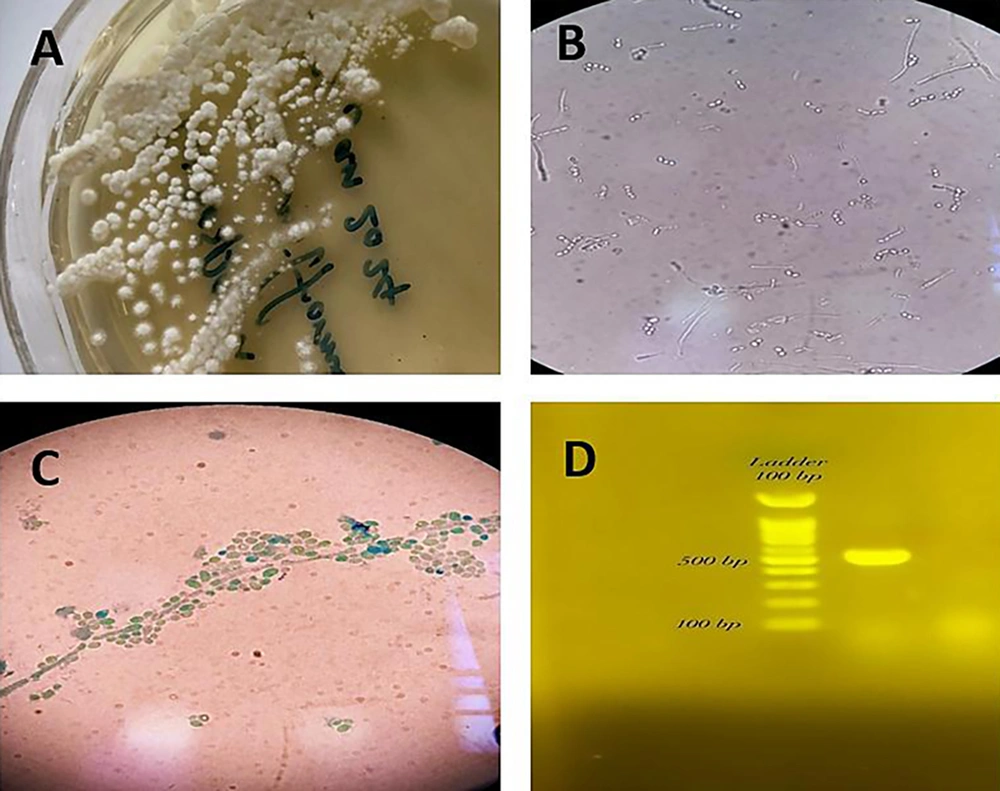
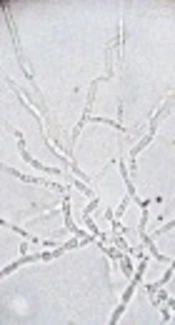
Trichosporon has the ability to grow as a budding yeast and develop filaments, which produce septate hyphae containing numerous arthroconidia and blastoconidia (
1). The ability of
Trichosporon to infiltrate the skin and various tissues relies on several virulent characteristics, such as the transition from yeast to hyphae, biofilm formation, enzymatic actions of lipases and proteases, and changes in the composition of the cell wall (
10) (
Figure 2).
These infections are most commonly found in immunocompromised patients, particularly those with hematological malignancies and neutropenia. Surgery and antibiotic use have been found to have a statistically significant association with higher rates of trichosporonosis. The genus
Trichosporon is known to cause a variety of conditions, including white piedra, summer-type hypersensitivity pneumonitis, and various types of invasive infections. These invasive infections primarily affect individuals with compromised immune systems and can pose a significant risk to their lives. Despite antifungal treatment, the mortality rates for invasive trichosporonosis range from 42% to 90% (
3).
Recently,
Trichosporon spp. has been reported to cause invasive infections in humans; however, studies on vaginitis caused by
Trichosporon spp. remain limited. Previous studies have shown that
T. inkin is occasionally found in vulvovaginal cultures, though it is usually considered a nonpathogenic agent.
Trichosporon species, such as
T. asahii, are more commonly associated with systemic and invasive skin diseases, while
T. inkin has been isolated primarily from genital specimens (
2). Instances of
T. coremiiforme have been documented in non-clinical samples, as well as in cases of summer hypersensitivity pneumonitis (SHP) caused by
Trichosporon species in animals, and in nail and skin samples. It has also been successfully isolated from soil samples in Iran (
10,
11). However, clinical cases of trichosporonosis caused by
T. coremiiforme remain relatively rare (
Table 1).
| Clinical Specimens | Method | Patients Age or Age Range/Gender | Origin | Associated Condition(s) | Therapy | Outcome | Reference |
|---|
| Subcutaneous abscess/urine | IGS1 region sequencing | NAa | Spain | NA a | NA a | NA a | (12) |
| Skin/nails | IGS1 and ITS region sequencing | NAa | Brazil | NA a | NA a | NA a | (13) |
| Bloodstream | IGS1 region sequencing | 10 days/female | Brazil | Pulmonary emphysema/pulmonary hypertension | Fluconazole | Survived | (6) |
| Bloodstream | MALDI-TOF MS | 15 - 49/male | Chin | NA a | NA a | NA a | (3) |
| Catheter-related bloodstream | MALDI-TOF MS | 46/female | Argentin | HIV/pulmonary tuberculosis/leukopenia/thrombocytopenia | Amphotericin B and fluconazole | Survived | (6) |
| Vaginal discharge | ITS region sequencing | 35/female | Iran | _ | Voriconazole and miconazole (vaginal oinment) | Survived | Current study |
a NA: Clinical and epidemiological data for patient were not available.
An important case report from 2019 documented the isolation of
T. coremiiforme from a blood culture taken from an HIV-positive woman; however, there is no report of trichosporonosis caused by
T. coremiiforme in vaginal samples. We report a case of vulvovaginal trichosporonosis in an immunocompetent patient. In this case, the resolution of symptoms was consistent with a previously positive vaginal culture for
T. coremiiforme, which became negative after antifungal treatment. Transient colonization of
Trichosporon species occurs mainly in African-American women with significant vaginal flora disturbances, such as bacterial vaginosis and increased trichomoniasis (
14). The pathogenic consequences of
Trichosporon colonization in the vagina appear to be very rare. Treatment should continue until a second culture shows persistence of
Trichosporon species in a symptomatic patient in whom no other cause of symptoms has been identified (
12). Accurate identification of opportunistic pathogens at the species level is crucial for understanding species-specific pathology and determining appropriate antifungal therapy (
15).
Trichosporon species exhibit variations in their susceptibility to antifungal drugs, making precise identification necessary. Identifying the genus
Trichosporon is essential for determining the best antifungal therapy because, like other Basidiomycete yeasts, it is intrinsically resistant to echinocandins (
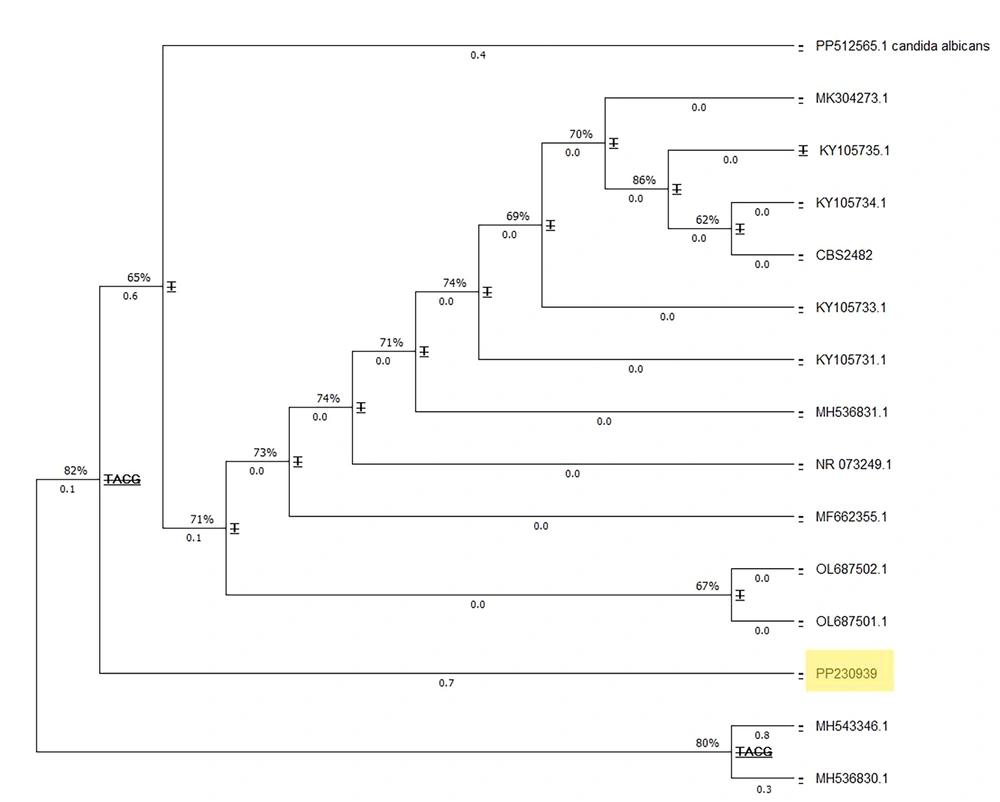
16). The fragment sequences of ITS1-5.8rRNA-ITS2 obtained in this study were found to be identical to sequences of
T. coremiiforme and T. montevideense isolated from humans. This suggests that these isolates are pathogens that can be transmitted between humans. However, species identification in clinical laboratories remains a challenge because conventional identification methods are not reliable, and DNA-based methods are generally only available in reference laboratories (
1,
2,
10).
In this study, the
In vitro activity of six antifungal drugs on
T. coremiiforme was tested, and azole drugs were found to be more effective than amphotericin B, which is consistent with other studies. Based on laboratory susceptibility, clinical eradication of
T. coremiiforme should be followed by treatment with topical or oral azoles. According to Guo et al., voriconazole exhibited superior efficacy due to its requirement for the lowest concentration to inhibit growth (
3) (
Table 2).
| Sources (Human) | Minimium Inhibitory Concentration (μg/mL) | Reference |
|---|
| AMB (S ≤ 1 μg/mL; R > 1 μg/mL) | FLU (S ≤ 8 μg/mL; R ≥ 64 μg/mL) | VOR (S ≤ 1 μg/mL; R ≥ 4 μg/mL) |
|---|
| Fecal material | 0.5 | 1 | 0.5 | (15) |
| Bloodstream | 1 | 1 | 0.03 | (6) |
| N/A | 8 | 0.25 | - | (1) |
| Blood | 0.5 | 4 | 0.06 | (3) |
| Blood and respiratory tract | 2 - 4 | 0.5 - 4 | 0.03 - 0.06 | (2) |
| N/A | 0.5 | 1 | 1 | (16) |
| Urine, subcutaneous abscess | 4.0 - 4.0 | 2.0 - 2.0 | 0.06 - 0.12 | (12) |
| N/A | 0.5 | 0.5 | 0.03 | (16) |
| Vaginal discharge | ≥ 8 | 4 | 0.03 | Current study |
| TrichosporoncoremiiformeMIC range | 0.5 - 8 | 0.25 - 4 | 0.03 - 1 | - |
Abbreviations: AMB, amphotericin B; FLU, fluconazole; VOR, voriconazole; R, resistance; S, sensitive; MIC, minimium inhibitory concentration.
a N/A: Clinical and epidemiological data for patient were not available.
3.1. Conclusions
To the best of our knowledge, this is the first description of a vulvovaginal T. coremiiforme infection worldwide. Early diagnosis using accurate methods, such as PCR sequencing, and treatment with antifungal drugs like voriconazole or amphotericin B, is effective in managing such infections in patients.