
1. Background
Adenovirus (ADV), part of the ADV family and mammary ADV genus, characterized by non-encapsulated, double-stranded linear DNA viruses, can cause various illnesses such as respiratory tract infections (RTI) and conjunctivitis (1). The ADV is a common pathogen in pediatric RTI, and children frequently exhibit symptoms like fever and are susceptible to complications such as encephalitis and liver damage, which can result in severe chronic pulmonary sequelaes in severe cases (2). According to reports, the incidence of severe pneumonia due to ADV infection increases annually, posing a significant threat to the lives and health of children (3). After admission, more child patients are diagnosed with mycoplasma pneumonia, affecting clinical recovery (4).
The ADV infection is mainly diagnosed using pathogenetic tests, but these tests can sometimes yield false positives, leading to misdiagnosis. Consequently, it is crucial to figure out a more simple and convenient method for clinical diagnosis and disease assessment. Studies have shown that ADV infection can lead to immune dysfunction and pathological inflammation (5), indicating that diagnosis can be achieved by testing changes in inflammatory factors. In children, respiratory infections are often closely associated with changes in cytokine levels, particularly cytokines such as interleukin (IL)-13 and IL-17A. Viral infections are known to cause severe inflammatory responses in the respiratory tract, and elevated levels of IL-13 and IL-17A can exacerbate these conditions. For example, it has been shown that IL-17A is involved in the pathogenesis of respiratory syncytial virus infections, which usually occur in conjunction with ADV infections, leading to lung pathology due to its role in promoting neutrophil recruitment and inflammation (6).
It has been shown that IL-13 is associated with severe rhinovirus infections which may lead to severe hypoxemia in infants and children (7). In addition, IL-17 plays an important role in the pathophysiology of asthma and its expression level is significantly elevated in children with severe asthma (8). Increases in these cytokines are strongly associated with the severity and prognosis of respiratory infections. In immunocompromised children, the risk of respiratory viral infections is higher and the infections may be followed by more severe symptoms. The cytokine response is often weaker in these children, which may lead to more severe disease manifestations (9). In addition, pediatric cancer patients have a higher incidence of respiratory viral infections and multiple infections (10). However, studies on their correlation with ADV RTI are still being actively pursued.
2. Objectives
Based on this background, the present study was devoted to an in-depth investigation of the potential value of serum IL-13 and IL-17A in the diagnosis and prognostic assessment of ADV RTI in children, aiming to provide a scientific basis and reference for the clinical treatment program of this disease.
3. Methods
3.1. Patient Inclusion Criteria and Diagnosis
This study was a prospective cohort study. From May 2019 to March 2021, 96 children with ADV RTI were included as the infection group, meeting the diagnosis of ADV RTI in the Technical Guidelines for the Prevention and Control of Human ADV Respiratory Infection (2019 Edition) (11). They were identified as ADV infections by pathogenetic examination. Fifty-two pediatric patients with respiratory diseases who were not infected with ADV (negative for ADV infection by pathogenetic examination) were selected as controls during the same period. Inclusion criteria: (1) Age ≤ 14 years old; (2) complete clinical data; and (3) clinical symptoms like fever and cough on admission. Exclusion criteria: (1) Child patients complicated with severe cardiovascular diseases; (2) child patients with respiratory malformations; (3) child patients complicated with other viral infections; (4) child patients complicated with acute and chronic inflammatory diseases; (5) child patients with malignant tumor diseases; (6) child patients with severe immune system diseases; (7) child patients with congenital diseases. As shown in Table 1, there was no significant difference in the general data between the two groups (P > 0.05).
| Classifications | The Infection (N = 96) | The Control (N = 52) | χ2/t | P-Value |
|---|---|---|---|---|
| Gender | 0.902 | 0.342 | ||
| Male | 57 | 35 | ||
| Female | 39 | 17 | ||
| Age (y) | 8.21 ± 1.47 | 8.65 ± 1.51 | 1.722 | 0.087 |
| Disease’s course (d) | 7.05 ± 1.82 | 6.47 ± 1.68 | 1.901 | 0.059 |
| Fever | 83 (86.46) | 41 (78.85) | 1.439 | 0.230 |
| Thermal range (d) | 7.75 ± 1.37 | 7.34 ± 1.50 | 1.681 | 0.095 |
| Wheezing | 32 (33.33) | 15 (28.85) | 0.313 | 0.576 |
| Complicated extrapulmonary symptoms | 24 (25.00) | 9 (17.31) | 1.152 | 0.283 |
a Values are expressed as No. (%) or mean ± SD.
b Results are shown as P-values and are statistically significant at P < 0.05.
Nasopharyngeal swabs were collected from children who complained of respiratory symptoms or fever without lesions. The samples were sent as soon as possible to perform multiplex PCR for respiratory viruses. The ADV, influenza A and B viruses, RSV, parainfluenza virus, rhinovirus, coronavirus, human metapneumovirus, and human bocavirus were detected using the commercially available AdvanSureTM RV real-time PCR kit (LG Life Sciences Co., Ltd., Seoul, Korea). The infection group included children whose PCR results were positive for ADV or for two or more viruses, with ADV being one of them.
3.2. Samples
Fasting venous blood (3 mL) was collected from each pediatric patient 24 hours after admission and then centrifuged using an Eppendorf high-speed centrifuge. Detection of serum IL-13 and IL-17A in child patients was performed using kits (Shenzhen Jingmei Biotechnology Co., Ltd., Shenzhen, China).
3.3. Observation Indices
(1) Serum IL-13 and IL-17A in the infection group and the control group were compared to analyze their diagnostic value for ADV infection.
(2) Patients in the infection group were sub-divided into the mild (non-pneumonia), moderate (mild pneumonia) and severe (severe pneumonia) groups in the light of the severity of lung infection. Diagnosis of mild and severe pneumonia was performed on the basis of the Guidelines for the Diagnosis and Treatment of Community Acquired Pneumonia (12).
(3) Patients in the infection group were divided into the good prognosis group and the poor prognosis group in line with the incidence of serious complications, sequelae or death during hospitalization, and the predictive value of serum IL-13 and IL-17A for prognosis was analyzed.
3.4. Statistical Analysis
Data were processed using SPSS 24.0 software and count data were expressed as percentages. Differences between groups were compared using the χ2 test; measurements were expressed as
(
4. Results
4.1. Comparison of Serum Interleukin-13 and Interleukin-17A
Serum IL-13 and IL-17A in the infection group were elevated compared with the control group (P < 0.05), as presented in Figure 1.
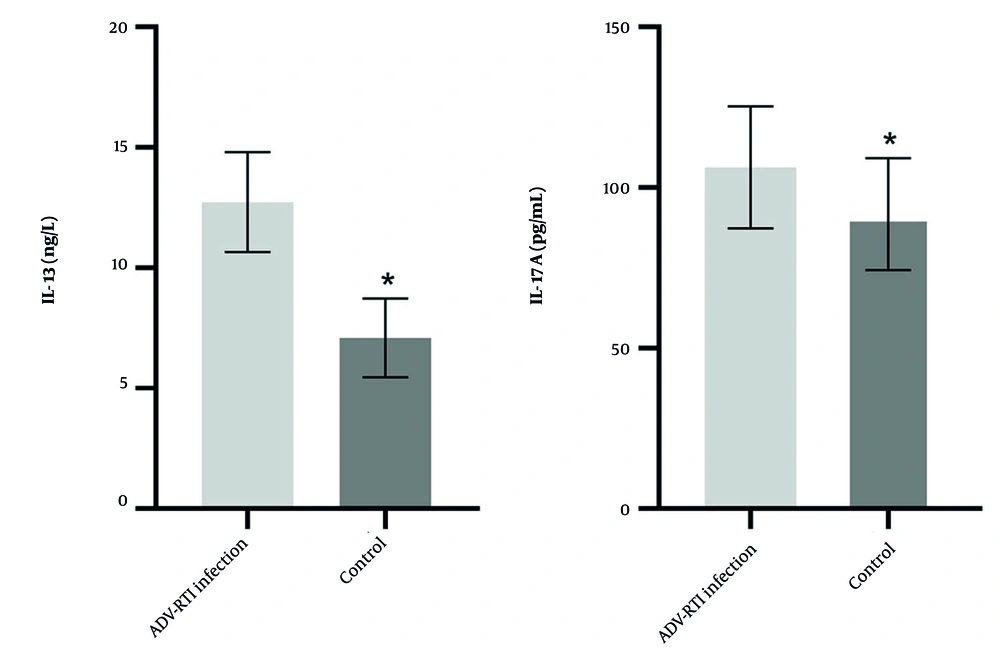
Figure 1.
Comparison of serum interleukin (IL)-13 and IL-17A in the infection group and control group. The control group tested negative for adenovirus (ADV) infection in the pathogen examination (* P < 0.05 vs. the control).
4.2. The Diagnostic Value of Serum Interleukin-13 and Interleukin-17A for Adenovirus Infection
For diagnosing ADV infection, the area under the curve (AUC) of the combined serum IL-13 and IL-17A test was greater than that of each test individually (P < 0.05), as presented in Table 2 and Figure 2.
Table 2.
Diagnostic Value of Serum Interleukin-13 and Interleukin-17A for Adenovirus Infection
| Indices | Cut-off | Sensitivity (%) | Specificity (%) | AUC | SE | 95% CI |
|---|---|---|---|---|---|---|
| IL-13 | 9.16 ng/L | 86.9 | 70.4 | 0.724 | 0.044 | 0.639 ~ 0.810 |
| IL-17A | 101.35 pg/mL | 82.6 | 80.2 | 0.795 | 0.042 | 0.713 ~ 0.877 |
| Combined detection a | - | 88.9 | 89.6 | 0.863 | 0.033 | 0.798 ~ 0.927 |
Abbreviations: AUC, area under the curve; SE, standard error; CI, confidence interval; IL, interleukin.
a The IL-13 combined with IL-17A.
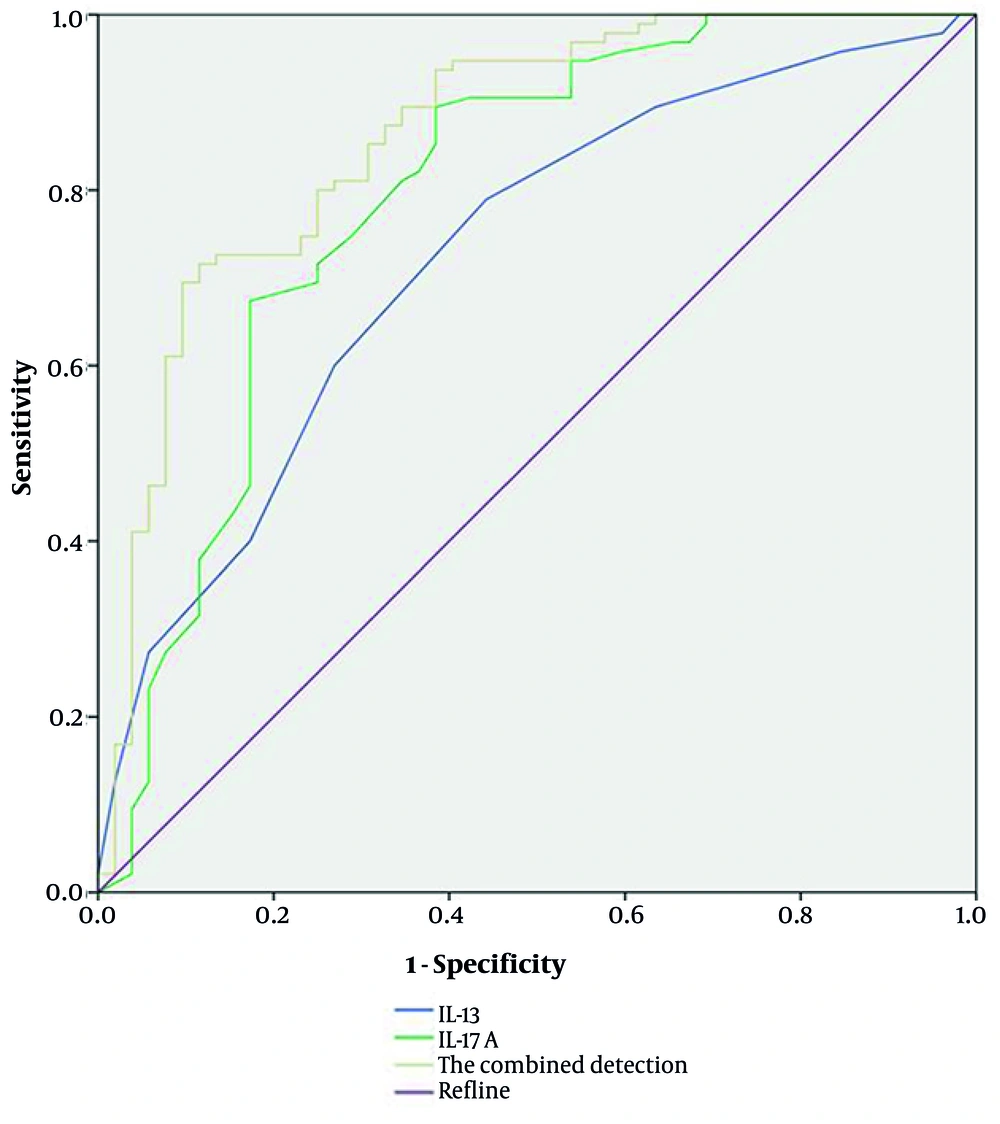
Figure 2.
Receiver operating characteristic (ROC) curve analysis of serum interleukin (IL)-13 and IL-17A in the diagnosis of adenovirus (ADV) infection
4.3. Comparison of Serum Interleukin-13 and Interleukin-17A in Child Patients with Different Severity
In pediatric patients with ADV RTI, serum IL-13 and IL-17A levels rose with increasing severity (P < 0.05), as presented in Figure 3.
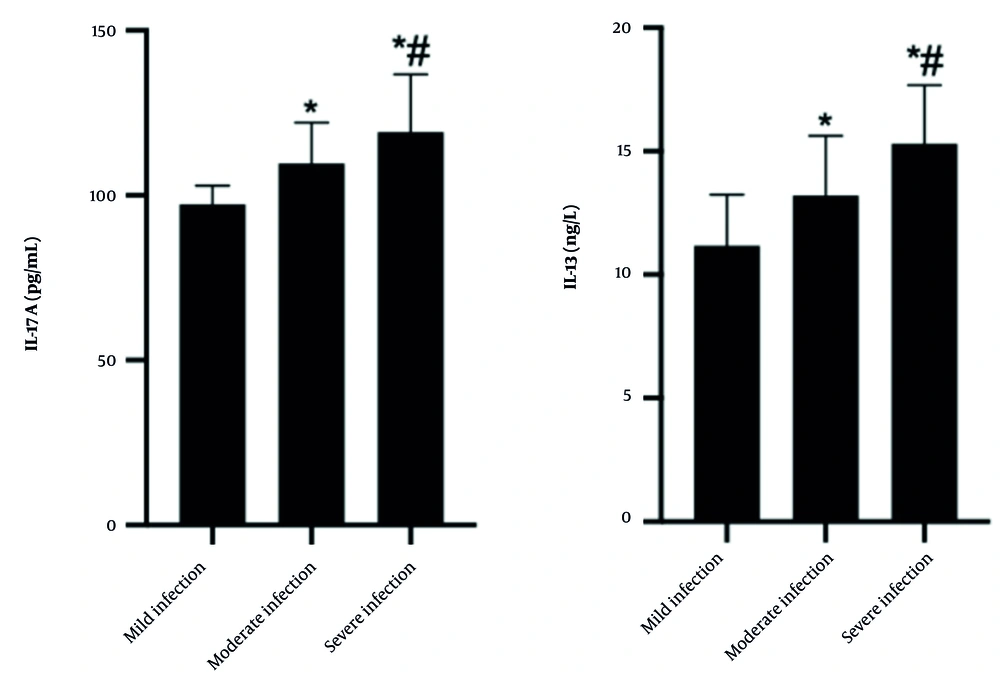
Figure 3.
Serum interleukin (IL)-13 and IL-17A in child patients with different disease severity (* P < 0.05 vs. the non-pneumonia; # P < 0.05 vs. the normal pneumonia)
4.4. Assessment Value of Serum Interleukin-13 and Interleukin-17A in Assessing Disease Severity
The AUC for evaluating RTI severity in children was enhanced when combining serum IL-13 and IL-17A detection compared to using each marker individually (P < 0.05), as presented in Table 3 and Figure 4.
Table 3.
Association Between Serum Interleukin-13 and Interleukin-17A and Disease Severity
| Indices | Cut-off | Sensitivity (%) | Specificity (%) | AUC | SE | 95% CI |
|---|---|---|---|---|---|---|
| IL-13 | 12.96 ng/L | 70.6 | 76.9 | 0.779 | 0.059 | 0.664 ~ 0.895 |
| IL-17A | 110.38 pg/mL | 75.6 | 72.3 | 0.731 | 0.072 | 0.590 ~ 0.871 |
| Combined detection a | - | 76.9 | 79.5 | 0.832 | 0.049 | 0.736 ~ 0.929 |
Abbreviations: AUC, area under the curve; SE, standard error; CI, confidence interval; IL, interleukin.
a The IL-13 combined with IL-17A.
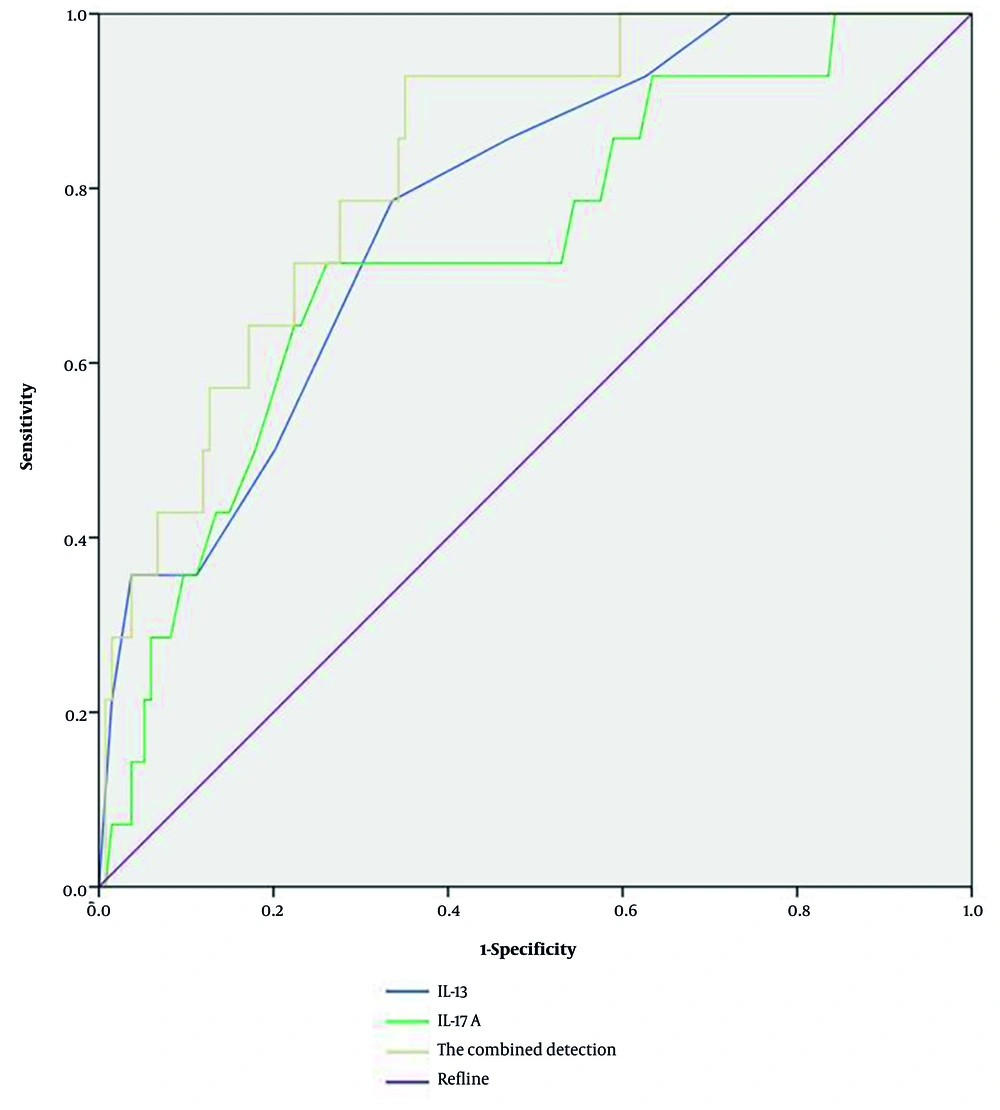
Figure 4.
Receiver operating characteristic (ROC) curve analysis of serum interleukin (IL)-13 and IL-17A for assessment of the severity of the illness
4.5. Correlation Analysis of Serum Interleukin-13 with Interleukin-17A and Disease Severity in Child Patients
Serum IL-13 and IL-17A were positively correlated with disease severity in pediatric patients (P < 0.05), as presented in Figure 5.
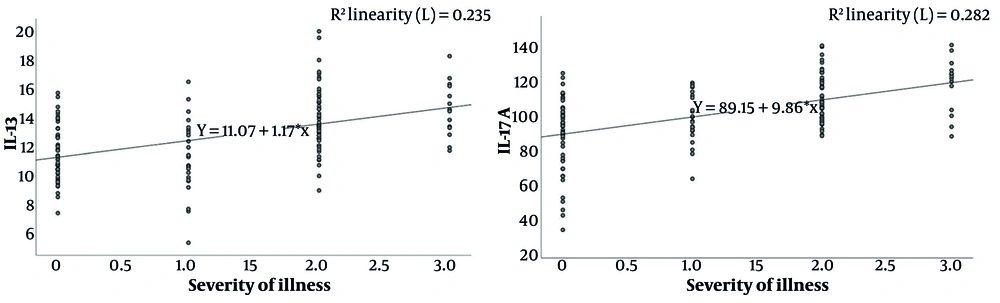
Figure 5.
Correlation analysis of serum interleukin (IL)-13 with IL-17A and disease severity in child patients. R2 represents the correlation coefficient, assessing the goodness of fit of the model.
4.6. Comparison of Serum Interleukin-13 and Interleukin-17A in the Good Prognosis and Poor Prognosis Groups
Serum IL-13 and IL-17A in the poor prognosis group were elevated compared with the good prognosis group (P < 0.05), as presented in Figure 6.
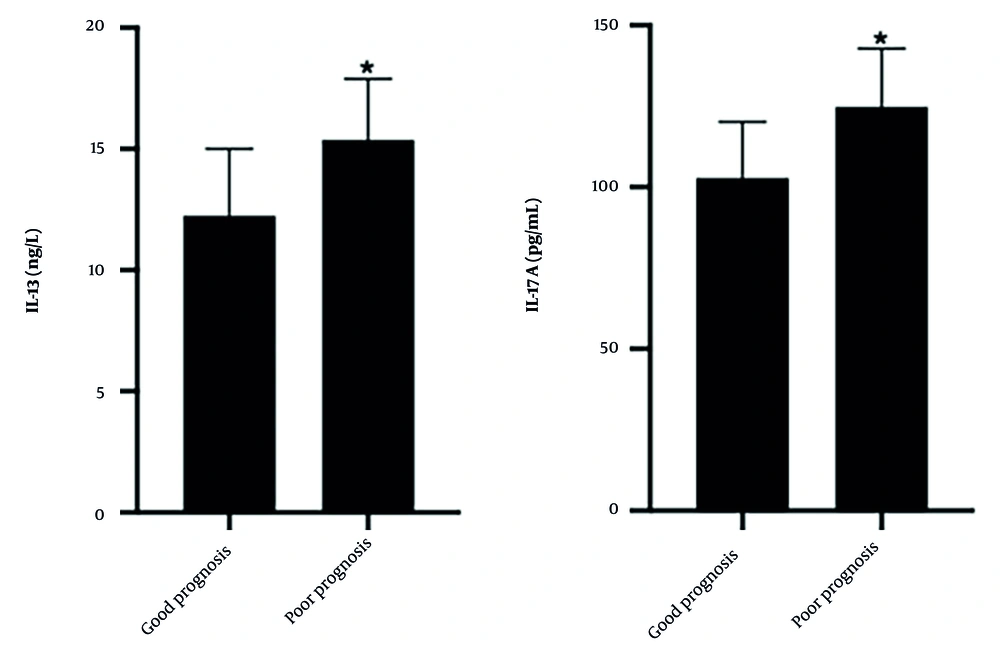
Figure 6.
Comparison of serum interleukin (IL)-13 and IL-17A in the good prognosis group and poor prognosis group (* P < 0.05 vs. the better prognosis)
4.7. Predictive Value of Serum Interleukin-13 and Interleukin-17A on Prognosis
The AUC for the combined test of serum IL-13 and IL-17A was increased in predicting poor prognosis in child patients with adenoviral RTI compared to using each index on its own (P < 0.05), as presented in Table 4 and Figure 7.
Table 4.
Predictive Value of Serum Interleukin-13 and Interleukin-17A for Prognosis
| Indices | Cut-off | Sensitivity (%) | Specificity (%) | AUC | SE | 95% CI |
|---|---|---|---|---|---|---|
| IL-13 | 13.58 ng/L | 60.5 | 63.6 | 0.583 | 0.072 | 0.442 ⁓ 0.724 |
| IL-17A | 115.86 pg/mL | 62.8 | 58.9 | 0.682 | 0.082 | 0.522 ⁓ 0.843 |
| Combined detection a | - | 65.4 | 70.5 | 0.737 | 0.080 | 0.579 ⁓ 0.894 |
Abbreviations: AUC, area under the curve; SE, standard error; CI, confidence interval; IL, interleukin.
a The IL-13 combined with IL-17A.
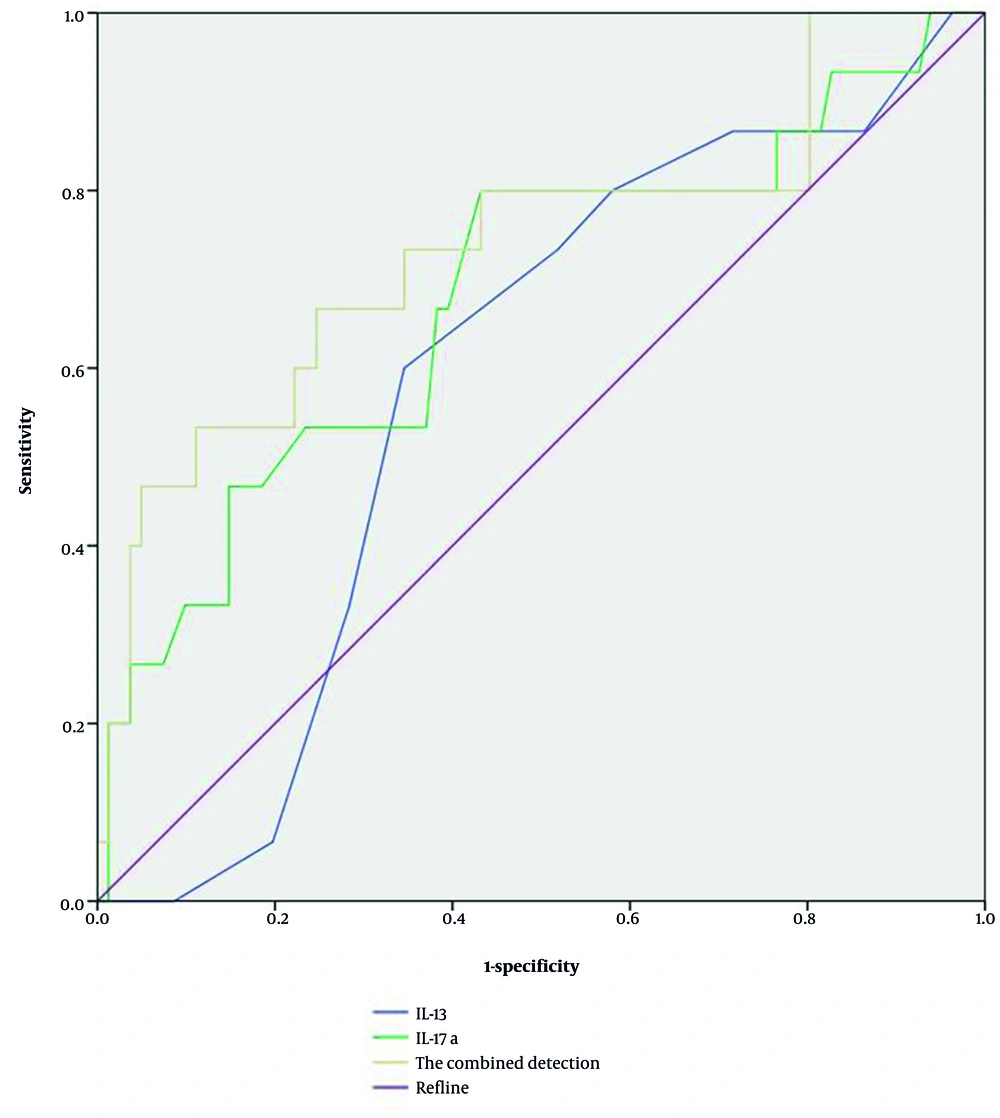
Figure 7.
Receiver operating characteristic (ROC) curve analysis of serum interleukin (IL)-13 and IL-17A for predicting prognosis
5. Discussion
The ADV, a double-stranded DNA virus without a shell, is available to be transmitted via air droplets. When ADV infects the body, it activates the body's immune response and produces large amounts of inflammatory cytokines that can cause severe multi-organ damage (13, 14). This study's findings indicated that IL-13 and IL-17A have strong predictive value in ADV RTI and may correlate with the severity of the disease. The diagnostic value for ADV RTI was improved when IL-13 was paired with IL-17A. It has been shown that children with ADV infections exhibit a specific cytokine profile that includes elevated levels of IL-2, IL-5 and IL-8 in addition to IL-13 and IL-17A. This cytokine milieu may partially explain the clinical features observed in such infections, such as increased inflammation and respiratory distress (15). In addition, the role of IL-17A in promoting inflammation is further supported by studies showing its involvement in immune responses to other respiratory pathogens, such as Streptococcus pneumoniae, where it enhances neutrophil recruitment and airway inflammation (16).
The interaction between IL-13 and IL-17A in respiratory infections is complex. The role of IL-13 in promoting the Th2 response can lead to increased mucus production and airway remodeling, which is deleterious in viral infections such as ADV. On the other hand, the role of IL-17A in promoting the Th17 response may lead to excessive inflammation, which, while facilitating clearance of infection, may also lead to tissue damage and exacerbate disease severity (17). In conclusion, elevated levels of IL-13 and IL-17A during ADV respiratory infections in children highlight the importance of these cytokines in regulating the immune response. Understanding their role could help in the development of targeted therapies to reduce the inflammatory damage caused by such infections (18).
The IL-13 is involved in the development of RTI, as observed in patients with this condition (19, 20). The IL-13 can influence B cell differentiation and trigger airway hyperresponsiveness, contributing to the development and progression of respiratory diseases. IL-17A, known for its potent pro-inflammatory effects, collaborates with Th1 cells in the body's immune defense mechanism (21). The study revealed that serum IL-13 and IL-17A levels were increased in children with ADV RTI, indicating that ADV infection could cause abnormal serum IL-13 and IL-17A levels. This could be related to the fact that ADV infection can enhance the secretion and release of local inflammatory factors (22, 23). The results of this study showed that combined testing of serum IL-13 and IL-17A had a higher AUC for the diagnosis of ADV infection than testing each indicator individually, which suggests that combined testing of serum IL-13 and IL-17A has diagnostic value for ADV infection.
In children, RTI is a prevalent disease characterized by a quick onset and rapid changes. Child patients with declined immunocompromised immune function tend to develop severe pneumonia due to lack of rational and timely cure after being infected with ADV, which might endanger life in severe cases (24, 25). The current method for assessing diseases in children with RTI involves considering their clinical symptoms, lab test indices, and physical signs. This assessment is relatively complicated and has more limitations in clinical application (26). Therefore, improving disease evaluation in children with ADV RTI is essential for developing clinical treatment plans. Findings from this research showed that assessing serum IL-13 and IL-17A levels in children has potential value for evaluating RTI severity. In this study, IL-13 and IL-17A in the serum of pediatric patients were positively correlated with disease severity, which was associated with elevated cardiopulmonary load, activation of the body's immune response, increased secretion of cytokines and inflammatory mediators in pediatric patients infected with ADV (27-29).
The ADV infection mainly affects the respiratory system, and children with severe ADV-related pneumonia often experience complications in multiple systems, have a high risk of death, and face a poor prognosis (30, 31). Early prognosis prediction and targeted interventions can lead to better outcomes for child patients (32). The research indicated that measuring both serum IL-13 and IL-17A offers predictive insights into the prognosis of children with ADV RTI. This may be related to the abnormal secretion of inflammatory factors that exacerbate localized edema and airway hyperresponsiveness in lung tissue (33, 34).
5.1. Conclusions
In brief, serum IL-13 and IL-17A levels are abnormal in pediatric patients with ADV RTI, and measuring both serum IL-13 and IL-17A offers diagnostic benefits for ADV infection and helps assess the severity and prognosis of the disease.