This study revealed a moderate seroprevalence of influenza antibodies among nurses, with a notable proportion being seropositive for both influenza A and B. Interestingly, our findings indicated a slightly higher seropositivity rate for influenza B compared to influenza A. This pattern aligns with a study conducted among children in the United Arab Emirates, which also reported greater seroprevalence for influenza B (
17). In contrast, a study from Thailand involving older adults aged 60 to 95 years demonstrated a higher prevalence of influenza A (
18). These contrasting observations highlight the variability in population-level immune responses to different influenza virus subtypes, potentially influenced by factors such as age, regional virus circulation patterns, and previous exposure histories (
19,
20). Despite the differences in seroprevalence across gender, age groups, and nationality, no significant associations were observed in this study, underscoring the multifactorial nature of influenza immunity. Additionally, this finding may be attributed to the relatively homogenous occupational environment and lifestyle of the participants, who share similar exposure risks and vaccination practices.
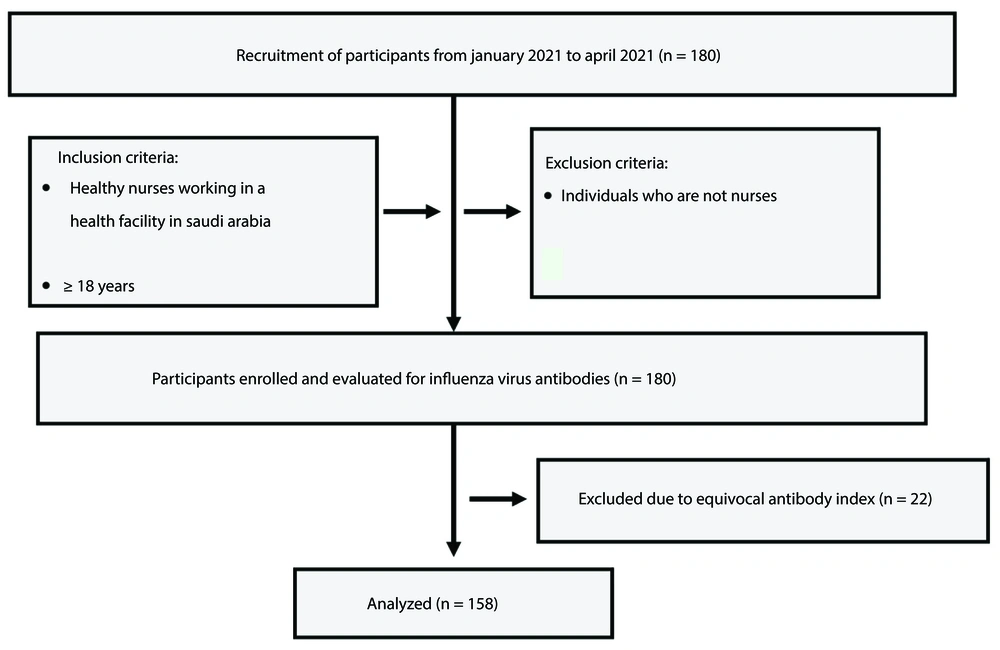
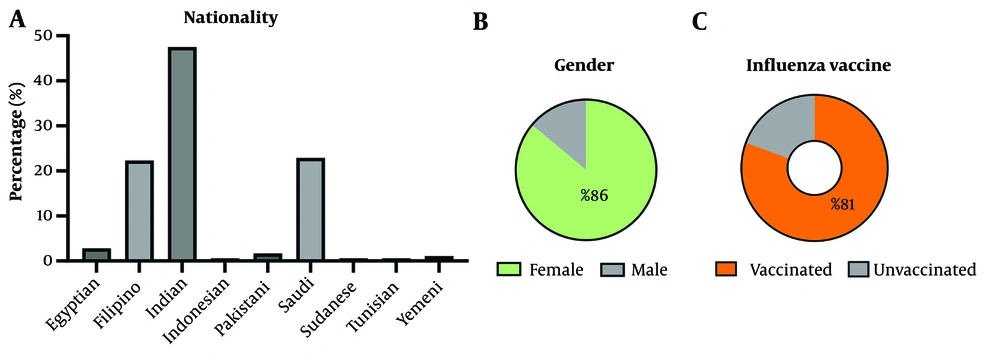
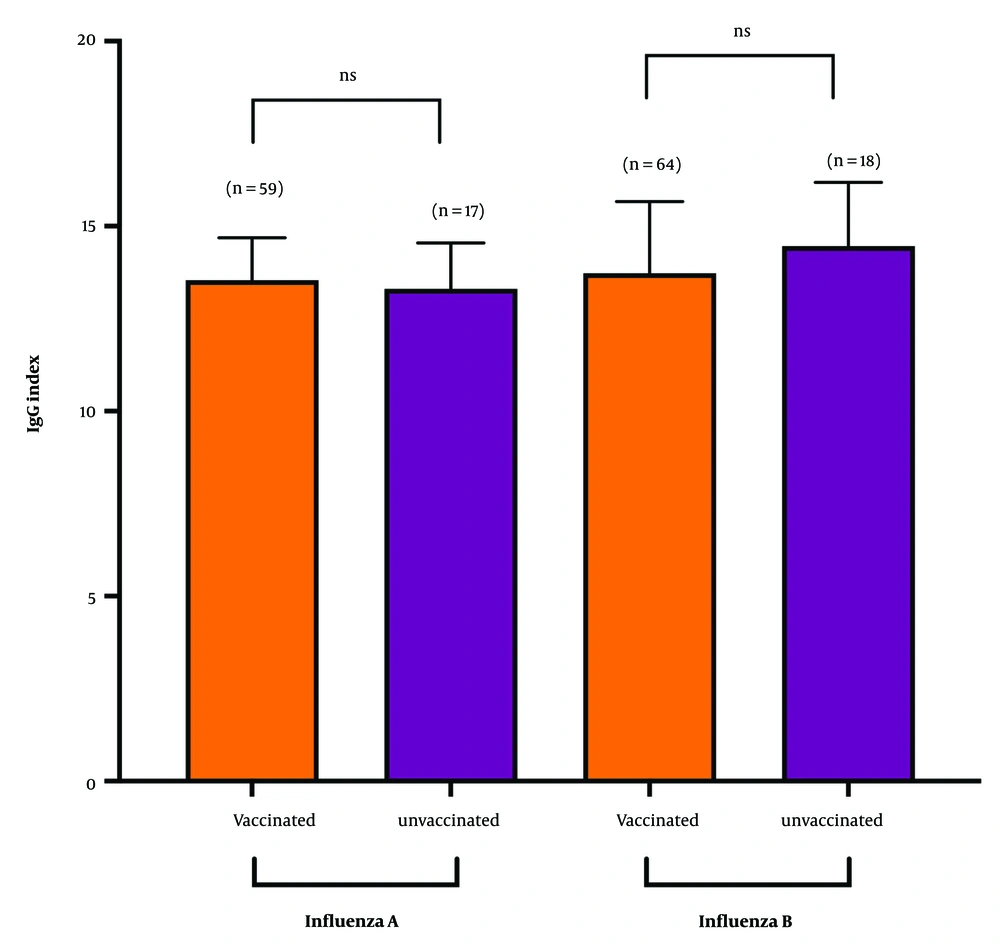
Interestingly, the youngest age group (21 - 30 years) exhibited higher seropositivity rates for both influenza A and B. This could reflect differences in exposure or immune response dynamics, as younger healthcare workers might have more frequent interactions with patients or exhibit stronger immune responses compared to older counterparts (
21). The absence of significant gender-based differences suggests that both the male and female study cohort are equally exposed and susceptible to influenza. Approximately 82% of the participants with definite antibody results reported receiving the influenza vaccine, with seropositive vaccinated individuals demonstrating comparable influenza A IgG levels to their unvaccinated counterparts. However, influenza B antibody levels were slightly lower among vaccinated participants, although this difference was not statistically significant. These findings suggest that natural infection may play a crucial role in maintaining higher antibody levels, particularly for influenza B, in settings with suboptimal vaccine efficacy or uptake (
22,
23). Furthermore, the absence of significant differences in antibody levels between vaccinated and unvaccinated groups suggests that both natural and vaccine-induced immunity contribute comparably to overall seropositivity.
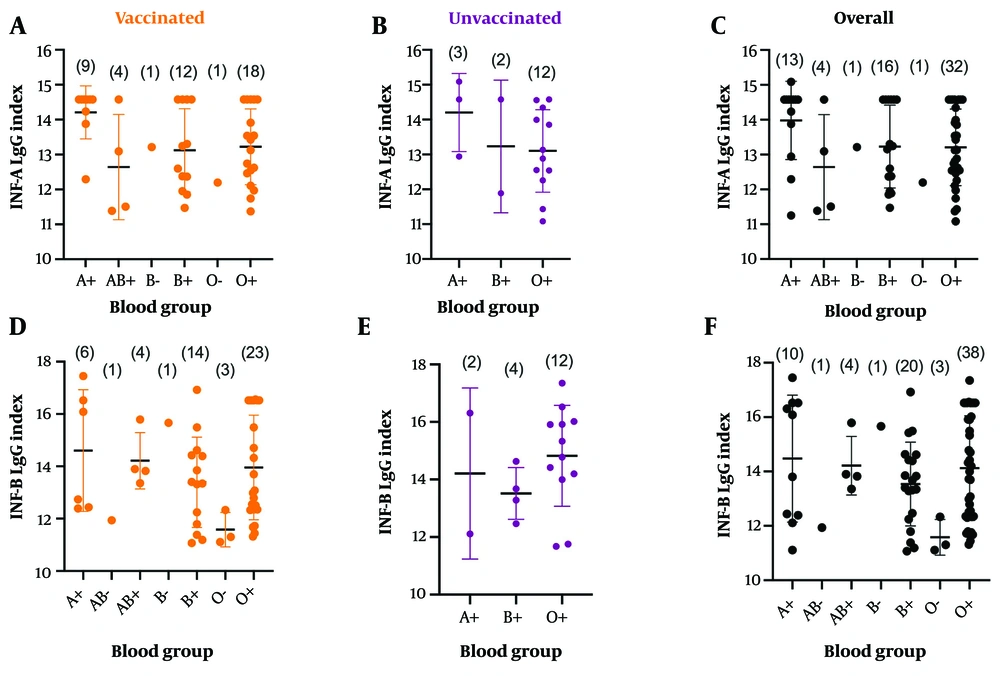
Exploring the relationship between ABO and Rh blood groups and influenza antibodies revealed interesting, though not statistically significant, trends. For both influenza A and B, individuals with the A+ blood group exhibited the highest antibody levels, while among unvaccinated participants, those with the O+ blood group showed elevated levels of influenza B antibodies. The reason behind the elevated influenza B antibody levels in unvaccinated participants with the O+ blood group remains unclear. This observation may suggest a greater natural exposure or a stronger innate immune response to influenza B in this group. However, current evidence on the role of ABO blood groups in shaping immune responses, particularly against influenza viruses, is scarce and inconclusive. This highlights the need for further research to explore underlying genetic and immunological factors that could account for such patterns.
Nonetheless, prior studies have indicated similar associations between blood groups and susceptibility to infectious diseases, including SARS-CoV-2, where group A individuals were reported to have increased risks of infection, potentially due to differences in antigen expression and immune modulation (
14,
15). Although the role of blood groups in influenza remains less established, the observed trends warrant further investigation with larger, more diverse cohorts to confirm or refute these associations. Additionally, our findings underscore the importance of reporting results irrespective of statistical significance, particularly in under-researched areas, as they contribute valuable data that may inform future investigations and cumulative evidence.
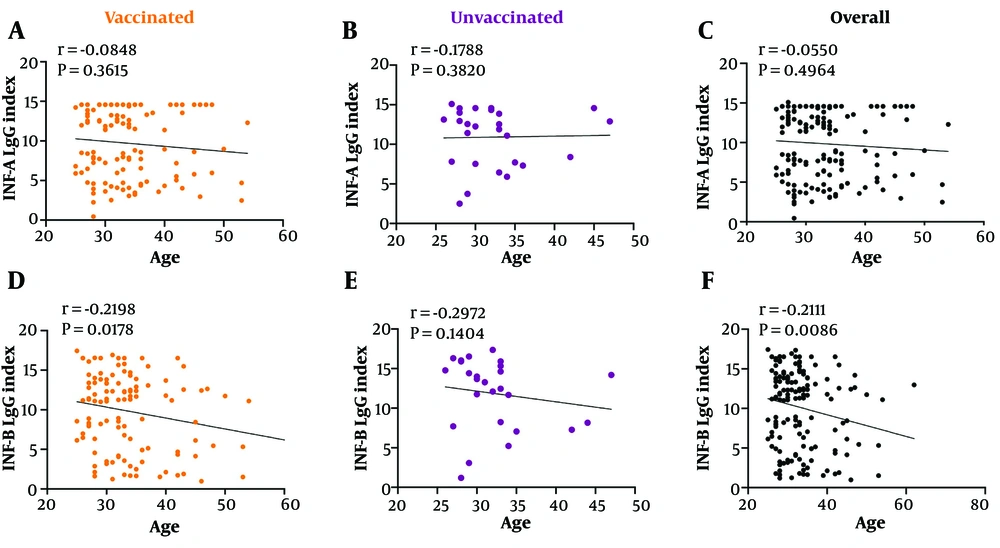
Upon probing the association between antibody levels and age, a negative correlation was observed between age and influenza B antibody levels, with older participants showing lower antibody levels. This relationship was particularly significant among vaccinated individuals, suggesting an age-related decline in immune responses to influenza B. Such findings are consistent with immunosenescence, the gradual weakening of the immune system with age, which may affect vaccine efficacy and natural immunity (
24,
25). Given that healthcare workers play a crucial role in infection control, these age-related variations underscore the need for tailored vaccination strategies within this group. For instance, the use of high-dose or adjuvanted influenza vaccines may be more effective for older healthcare workers, helping to overcome diminished immune responses and ensure sustained protection. Implementing such targeted approaches could enhance occupational health programs and reduce influenza-related morbidity in healthcare settings.
Continuous surveillance is critical in addressing the ongoing challenges posed by influenza infections in Saudi Arabia. The establishment of the Sentinel Surveillance Program in 2017 and the subsequent implementation of the Integrated Influenza Sentinel Surveillance System (IISS) across the country have significantly enhanced monitoring and response efforts. However, greater focus is needed on Najran, a region bordering Yemen, where cross-border interactions pose unique public health challenges. Yemen’s limited capacity for influenza surveillance increases the risk of unmonitored virus transmission, which can have serious health implications for Najran’s population. Strengthening surveillance in this high-risk area is essential to mitigate these risks and protect public health effectively.
While this study provides valuable insights, certain limitations must be acknowledged. The study’s focus on a specific occupational group may limit the generalizability of the findings. Additionally, the cross-sectional design precludes causal inferences regarding the observed associations. Further, the study did not conduct an a priori power analysis, as the sample size was constrained by the available funding and logistical resources, which limited the number of participants that could be included. As such, while the findings offer important preliminary insights, the sample size may be insufficient to detect small or moderate statistical differences. Future research with larger, prospectively designed samples is recommended to validate these results. Furthermore, the lack of significant differences in antibody levels among vaccinated and unvaccinated participants calls for further investigation into vaccine effectiveness, particularly against influenza B. Molecular studies examining the genetic and immunological underpinnings of blood group associations with influenza could also deepen our understanding of host-pathogen interactions.
5.1. Conclusions
This study highlights the seroprevalence of influenza antibodies among nurses in Najran and explores intriguing trends related to ABO and Rh blood groups. The findings emphasize the critical role of vaccination in maintaining immunity among healthcare workers while raising questions about the nuanced interplay between demographic, genetic, and immunological factors in shaping immune responses. Moving forward, comprehensive studies that integrate these variables are essential to deepen our understanding of influenza immunity. Additionally, the implementation of robust and effective influenza surveillance systems will be crucial for informing targeted public health strategies, especially for high-risk groups such as healthcare workers.