
1. Background
Staphylococcus aureus is a common pathogenic bacterium that is widely present on human skin, in the nasal cavity, and in other body sites, and can cause a variety of infections, such as skin and soft tissue infection (SSTI), respiratory infection, and bloodstream infection. In recent years, with the widespread use of antibiotics, the drug resistance of S. aureus has become increasingly serious, especially with the emergence of methicillin-resistant Staphylococcus aureus (MRSA), which has created significant challenges for clinical treatment (1). The MRSA is resistant to many commonly used antibiotics, including penicillin, erythromycin, and clindamycin. Its increasing infection rate has markedly raised both the difficulty of treatment and patient mortality.
As a major tourism and economic hub in China, Hainan experiences frequent population movement and an uneven distribution of medical resources, factors that may influence the distribution and antibiotic resistance patterns of S. aureus. Therefore, investigating the infection distribution, antimicrobial susceptibility, and resistance profiles of S. aureus in Hainan is crucial for guiding rational clinical antibiotic use and strengthening the prevention and control of nosocomial infections (2).
Staphylococcus aureus has the highest isolation rate in dermatology settings, particularly from pus, wound secretions, and other skin-related specimens, which are the most common sources of clinical isolates in SSTIs (3). The drug resistance of MRSA strains is significantly greater than that of non-MRSA strains and MRSA strains generally exhibit higher resistance than non-MRSA strains. However, in Hainan, no cases of reduced vancomycin susceptibility have been reported and no supporting literature has been published (4).
Staphylococcus aureus resistance is associated not only with antibiotic use, but also with its ability to form biofilm membrane-like multicellular complexes composed of microbial cells and their secreted polymers. These biofilms significantly increase bacterial resistance to antimicrobial agents and host immune responses, making infections more persistent and difficult to eradicate (5). Therefore, understanding the mechanisms of S. aureus biofilm formation and its relationship with drug resistance is highly important for developing new treatment strategies and preventive measures.
2. Objectives
The present study aimed to describe the clinical and microbiological epidemiology of dermatology inpatient SSTIs caused by S. aureus in Hainan, including an analysis of demographics, infection sites, specimen types, and comorbidities; to determine the susceptibility and resistance profiles of S. aureus, including MRSA, as interpreted according to Clinical and Laboratory Standards Institute (CLSI) M100; to evaluate year-over-year trends from 2019 to 2023; and to translate these findings into practical guidance for local empiric antibiotic selection and antimicrobial stewardship.
3. Methods
3.1. Study Flowchart
Figure 1 presents the flowchart of this study.
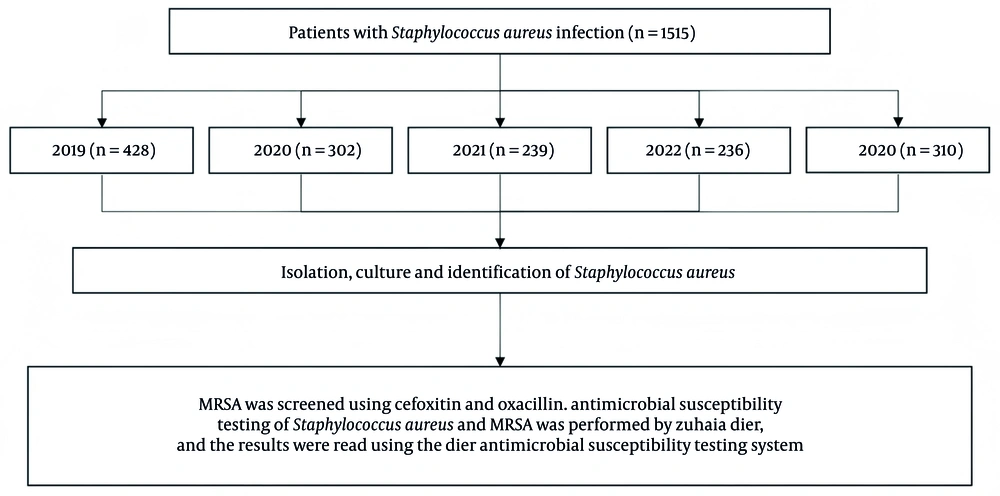
Figure 1.
Study flowchart
3.2. Strain Source
A retrospective study was conducted on 1,515 patients with S. aureus infection of the skin and soft tissue who were admitted to dermatology hospitals from January 2019 to December 2023. Duplicate strains (i.e., isolates from the same patient and the same anatomical site) were excluded. The quality control strain ATCC25923 was used. The inclusion criteria for patients were as follows: Meeting the diagnostic criteria for S. aureus infection as outlined in the diagnostic criteria for nosocomial infection (trial); patients of all ages were eligible for inclusion; absence of concurrent infectious diseases; and complete clinical data, pathogen identification, and antimicrobial susceptibility test results. The exclusion criteria were: Presence of other severe malignant tumors and a history of mental illness or other psychiatric conditions.
3.3. Main Reagents and Sources
Blood agar plates were produced by Guangzhou Dijin Microbial Technology Co., Ltd. Broth media and antimicrobial susceptibility testing plates were supplied by Zhuhai Dier Biotechnology Co., Ltd., and interpreted using the Dier antimicrobial susceptibility testing system. API STAPH Staphylococcus identification plates, oxidase reagents, and catalase reagents were produced by Zhuhai Dier Company. Drug sensitivity plate data were read by the Dier drug sensitivity system.
3.4. Main Instruments and Sources
The biochemical incubator was produced by Shanghai Boxun. The turbidimeter was produced by Zhuhai Dier Biotechnology Co., Ltd. The electric heating constant-temperature water bath box was produced by Shanghai Yuejin Medical Equipment Co., Ltd. The HSCD biological safety cabinet was produced by Sentinel GLOD. The SANYO ultra-low temperature refrigerator was produced by Sanyo in Japan. The BCM1000 ultra-clean workbench was produced by Suzhou Purification Production.
3.5. Method
3.5.1. Data Collection
The clinical data of all subjects, including sex (male and female), were collected via the hospital’s electronic medical record system. The primary infection sites were limited to the skin and soft tissue regions, including wounds. All patients were treated in the dermatology department. Specimen types included pus, wound secretions, tissue fluid, skin scales, and blister fluid. All cases involved skin-related diseases; therefore, underlying conditions unrelated to dermatological infections (e.g., stroke, respiratory distress, and renal failure) were excluded. Only dermatology-relevant comorbidities, such as diabetes with associated skin complications, were recorded.
3.5.2. Isolation, Culture, and Identification of Strains
- Collection of specimens: Samples from patients with suspected infection in the hospital or outpatient department were collected. Specimen types included pus, wound secretions, tissue fluid, skin scales, blister fluid, and others.
- Isolation culture: Specimens were directly inoculated onto blood agar plates and cultured at 35°C for 18 - 24 hours.
3.5.3. Bacterial Identification
Colonies with smooth surfaces and obvious β-hemolytic rings, suspected to be S. aureus, were selected and examined by Gram staining. Under the microscope, the morphology of the gram-positive cocci appeared as singles, pairs, short chains (3 - 4 cells), or irregular clusters. The catalase test was positive, and a coagulase test was subsequently performed. Colonies exhibiting gram-positive cocci in clusters, catalase-positive, and coagulase-positive reactions were confirmed as S. aureus. The bacteria were further identified using the DLSTAPH system: Colonies were selected, and 0.5 McFarland suspensions were prepared. Using a pipette, 100 μL of the bacterial suspension was added to each well of the DL reagent plate according to the manufacturer’s instructions. After sealing the DL reagent plate with film, it was placed directly into the incubator at 35 - 37°C for 18 - 24 hours. Results were interpreted based on color changes in the wells via the DL system software.
3.5.4. Data Analysis and Processing
The drug sensitivity results were entered into WHONET 5.5 software to analyze the drug resistance of S. aureus and MRSA in the hospital.
3.5.5. Antimicrobial Susceptibility Testing and Interpretive Criteria
The antibiotic panel was selected based on the hospital formulary and the CLSI M100 recommendations for testing S. aureus in SSTIs. Susceptibility testing was performed on the Dier platform according to the manufacturer’s instructions, and S/I/R categories were interpreted using the CLSI M100 editions contemporaneous with each study year: 2019: CLSI M100 — 29th ed.; 2020: CLSI M100 — 30th ed.; 2021: CLSI M100 — 31st ed.; 2022: CLSI M100 — 32nd ed.; 2023: CLSI M100 — 33rd ed. The MRSA was determined by the CLSI-recommended cefoxitin screen (and/or oxacillin as applicable) performed in our laboratory. Quality control included S. aureus ATCC 25923. If breakpoints or agent availability changed across editions, results were interpreted according to the CLSI version in effect at the time of testing; sensitivity analyses using a single reference edition can be provided on request. A full list of tested agents is provided in Appendices 1 and 2 in Supplementary File with their corresponding CLSI categories.
3.5.6. Statistical Analysis
We summarized annual susceptibility as proportions (susceptible/total tested) for 2019 - 2023. Temporal trends were evaluated using a Cochran-Armitage test for trend in proportions and confirmed by weighted least-squares regression of annual susceptibility on calendar year (weights = number tested per year). For selected agents, we conducted a sensitivity analysis using logistic regression with year as an ordinal predictor. Two-sided α = 0.05 defined statistical significance. Results are presented as P-for-trend and visualized with line plots and 95% confidence intervals. As breakpoints may shift across CLSI M100 editions, our primary analyses used the contemporaneous interpretations (2019 - 2023), consistent with laboratory practice; sensitivity analyses using a single reference (CLSI M100 Ed.33, 2023) can be provided on request.
4. Results
4.1. Clinical Characteristics of Patients with Staphylococcus aureus Infection from 2019 - 2023
Among patients with S. aureus infection, males accounted for the highest proportion each year: 65.19%, 69.54%, 65.27%, 58.90%, and 63.87% from 2019 to 2023, respectively (Table 1).
Table 1.
Clinical Characteristics of Patients with Staphylococcus aureus Infection from 2019 to 2023 a
| Clinical Features | 2019 (n = 428) | 2020 (n = 302) | 2021 (n = 239) | 2022 (n = 236) | 2023 (n = 310) |
|---|---|---|---|---|---|
| Gender | |||||
| Male | 279 (65.19) | 210 (69.54) | 156 (65.27) | 139 (58.90) | 198 (63.87) |
| Female | 149 (34.81) | 92 (30.46) | 83 (34.73) | 97 (41.10) | 112 (36.13) |
| Age (y) | |||||
| Radius | January ~ 90 | March ~ 96 | June ~ 93 | January ~ 90 | February ~ 92 |
| x̄ ± s | 54.72 ± 10.55 | 55.81 ± 10.66 | 55.17 ± 9.56 | 58.47 ± 10.44 | 53.81 ± 12.44 |
| Specimen type | |||||
| Secretion | 111 (25.93) | 54 (17.88) | 53 (22.18) | 57 (24.15) | 68 (21.94) |
a Values are expressed as No. (%) or mean ± SD.
4.2. Susceptibility of Staphylococcus aureus to Drug Resistance from 2019 - 2023
The sensitivity of S. aureus to penicillin from 2019 to 2023 was low: 6.22%, 8.63%, 12.4%, 10.85%, and 11.54%, respectively. The corresponding drug resistance rates were 93.78%, 91.37%, 87.6%, 89.15%, and 88.46%. The sensitivity of S. aureus to other antibiotics (except penicillin) was greater than 30% throughout the study period.
In 2019, S. aureus exhibited low resistance rates and high sensitivity to amikacin, nitrofurantoin, linezolid, chloramphenicol, moxifloxacin, norfloxacin, gentamicin, tigecycline, teicoplanin, vancomycin, and levofloxacin. In 2020, S. aureus demonstrated low resistance and high sensitivity to amikacin, nitrofurantoin, linezolid, moxifloxacin, gentamicin, tigecycline, teicoplanin, vancomycin, and levofloxacin. In 2021, high sensitivity and low resistance were maintained for amikacin, nitrofurantoin, linezolid, moxifloxacin, gentamicin, tigecycline, teicoplanin, vancomycin, and levofloxacin.
In 2022, S. aureus continued to show low resistance rates and high sensitivity to amikacin, nitrofurantoin, linezolid, moxifloxacin, tigecycline, teicoplanin, and vancomycin. In 2023, low resistance and high sensitivity were observed for amikacin, nitrofurantoin, cotrimoxazole, linezolid, chloramphenicol, moxifloxacin, gentamicin, tigecycline, teicoplanin, and vancomycin (Appendices 1 and 2 in Supplementary File; Figures 2, 3, and 4).
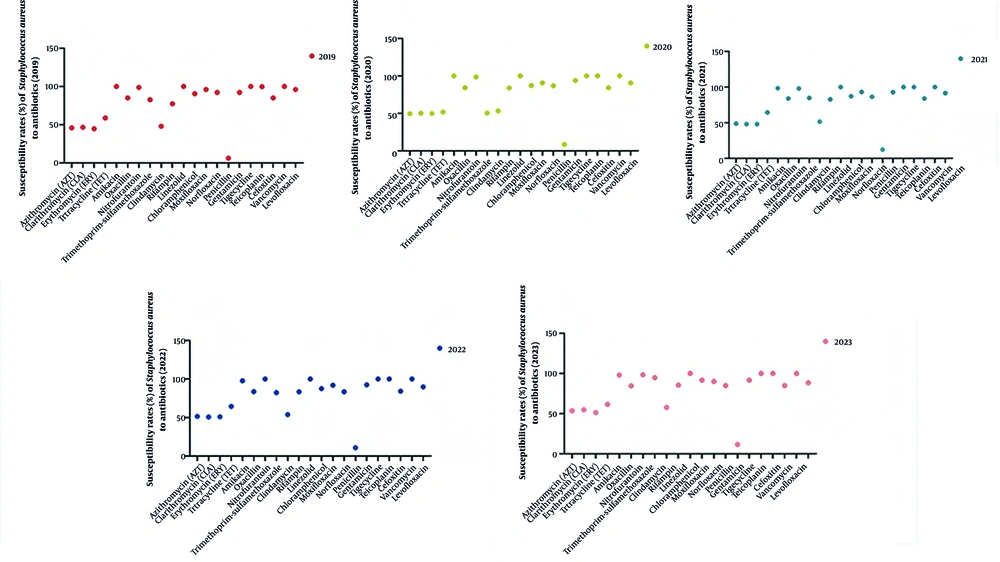
Figure 2.
Susceptibility rate of Staphylococcus aureus to antibiotics (%) (2019 - 2023)
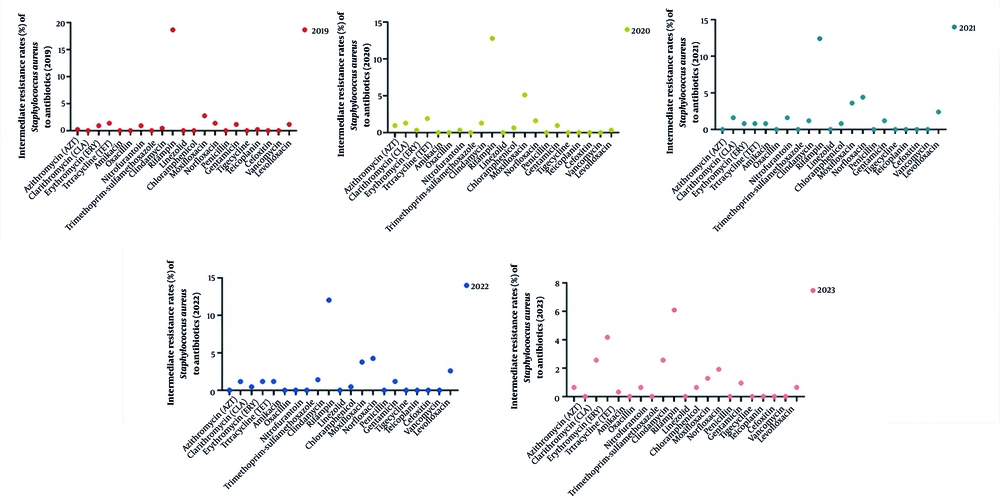
Figure 3.
Moderate resistance rate of Staphylococcus aureus to antibiotics (%) between 2019 and 2023
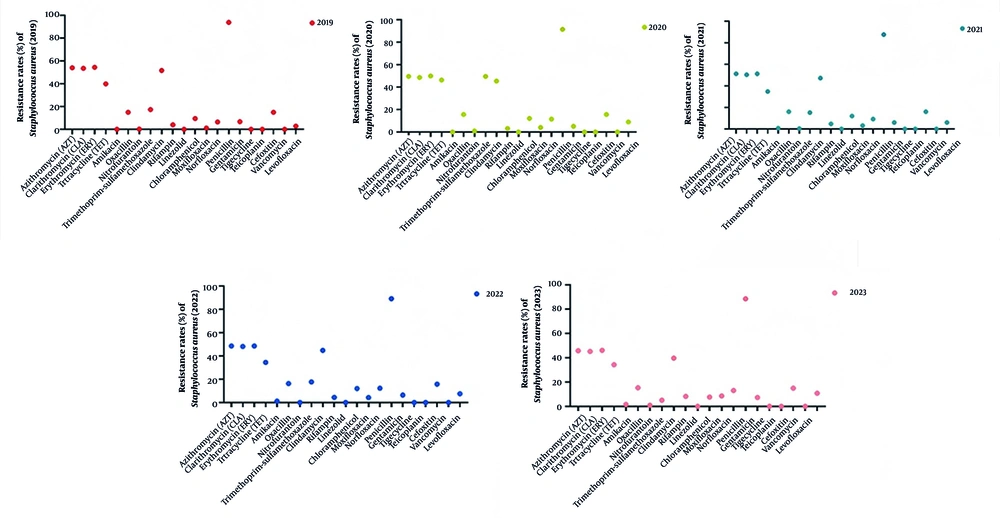
Figure 4.
Antibiotic resistance rates of Staphylococcus aureus (%) between 2019 and 2023
4.3. Susceptibility to Methicillin-Resistant Staphylococcus aureus Resistance from 2019 - 2023
In 2019, the sensitivity of MRSA to levofloxacin, tetracycline, linezolid, chloramphenicol, azithromycin, norfloxacin, teicoplanin, vancomycin, nitrofurantoin, gentamicin, moxifloxacin, cotrimoxazole, rifampicin, and tigecycline was greater than 30%. In 2020, MRSA exhibited sensitivity rates greater than 30% to levofloxacin, linezolid, chloramphenicol, norfloxacin, gentamicin, moxifloxacin, cotrimoxazole, rifampicin, and tigecycline.
In 2021, MRSA sensitivity rates above 30% were observed for levofloxacin, amikacin, linezolid, chloramphenicol, norfloxacin, teicoplanin, vancomycin, nitrofurantoin, cefoxitin, gentamicin, moxifloxacin, cotrimoxazole, and tigecycline. In 2022, MRSA sensitivity rates above 30% were seen for levofloxacin, amikacin, linezolid, teicoplanin, vancomycin, nitrofurantoin, gentamicin, moxifloxacin, and tigecycline. In 2023, MRSA demonstrated sensitivity rates greater than 30% to levofloxacin, amikacin, linezolid, chloramphenicol, norfloxacin, teicoplanin, vancomycin, nitrofurantoin, gentamicin, moxifloxacin, cotrimoxazole, and tigecycline (Appendices 3 and 4 in Supplementary File).
4.4. Trend Analysis
Formal year-over-year analysis of susceptibility proportions (Cochran-Armitage test; sensitivity analyses with weighted regression and logistic models) revealed a statistically significant increase in penicillin susceptibility from 2019 to 2023 (6.22% to 11.54%; P-for-trend = 0.004). No significant monotonic trends were observed for vancomycin, teicoplanin, linezolid, tigecycline, or fluoroquinolones (all P-for-trend > 0.05).
5. Discussion
This study is necessary because Hainan lacks locality- and SSTI-focused inpatient data on S. aureus, despite high population mobility and uneven healthcare resources that may influence epidemiology and resistance profiles. Our five-year analysis (2019 - 2023) of 1,515 dermatology inpatient isolates provides new insights: Detailed patterns by infection site and specimen type, formally tested year-over-year susceptibility trends (including MRSA), and practical findings translated into empiric therapy and stewardship guidance for the Hainan inpatient setting. Susceptibility interpretations in this study followed CLSI M100 guidance (2019: Ed29; 2020: Ed30; 2021: Ed31; 2022: Ed32; 2023: Ed33), with MRSA defined by the CLSI-recommended cefoxitin screen; this standardization enhances comparability across years. Where breakpoints changed across editions, we used contemporaneous interpretations and verified key findings with sensitivity analyses; notably, penicillin showed a small but statistically significant upward trend (P-for-trend = 0.004) while remaining clinically low in absolute susceptibility.
5.1. Distribution and Clinical Features of Infection
According to the statistical analysis of S. aureus infection in Hainan, China from 2019 - 2023, the sex distribution of the infected population showed a significant male predominance, with the proportion of male patients each year being 65.19%, 69.54%, 65.27%, 58.90%, and 63.87%, respectively. This phenomenon may be related to social activity patterns and occupational exposure among men. Men constitute a greater proportion of high-risk industries, such as construction and machinery operations, and are more likely to be exposed to environments that favor infection. Additionally, the secretion of sebaceous glands in male skin is more vigorous, which provides a more favorable environment for the growth of S. aureus (6). Despite the male predominance, there was no significant linear trend in the male proportion over time (P-for-trend > 0.05), suggesting a stable demographic structure during the study period.
5.2. Drug Resistance and Sensitivity of Staphylococcus aureus
In the monitoring of drug resistance and sensitivity of S. aureus in Hainan from 2019 - 2023, the sensitivity to penicillin remained low at 6.22%, 8.63%, 12.4%, 10.85%, and 11.54%, respectively, while the resistance rates were relatively high at 93.78%, 91.37%, 87.6%, 89.15%, and 88.46%, respectively. Trend testing confirmed a modest but statistically significant increase in penicillin susceptibility across the years (P-for-trend = 0.004), although absolute activity remained ≤ 12%, which is inadequate for empiric use. Penicillin, a classic antibiotic, has been widely used in clinical practice for decades; however, extensive and prolonged use has led to the development of bacterial resistance. Staphylococcus aureus, for example, produces penicillinase and utilizes other mechanisms to alter the structure of penicillin, thereby rendering it ineffective. Clinically, these findings argue against empiric penicillin (or narrow-spectrum β-lactam) therapy for suspected S. aureus SSTIs in this setting; de-escalation to β-lactams should be culture-confirmed.
Despite this resistance, S. aureus remains susceptible to several other antibiotics, with sensitivity rates exceeding 30%. In 2019, S. aureus exhibited low resistance and high sensitivity to a range of antibiotics, including amikacin, nitrofurantoin, linezolid, chloramphenicol, moxifloxacin, norfloxacin, gentamicin, tigecycline, teicoplanin, vancomycin, and levofloxacin. Across 2019 - 2023, susceptibility for key anti-MRSA agents — vancomycin, teicoplanin, linezolid, and tigecycline — remained consistently high without significant monotonic trends (all P-for-trend > 0.05), supporting their continued role in the treatment of severe infections with MRSA risk. These antibiotics play important roles in the effective management of S. aureus infections. Amikacin, an aminoglycoside antibiotic, has strong antibacterial activity against S. aureus, particularly in the management of severe infections such as sepsis and pneumonia. For dermatology inpatients, initial MRSA-active coverage is justified when risk is present, followed by early de-escalation guided by culture, infection site, and clinical response. Nitrofurantoin, on the other hand, is primarily used for urinary tract infections. Owing to its high urinary concentration, it is especially effective in eradicating S. aureus in the urinary system (7).
Linezolid, as a newer oxazolidinone antibiotic, has potent antibacterial effects on a variety of resistant strains, including S. aureus, and is especially effective in treating MRSA infection. Chloramphenicol has a broad spectrum of antibacterial activity; however, its clinical application is limited due to potential serious adverse effects, such as aplastic anemia. Nevertheless, in specific cases, it can be considered for the treatment of S. aureus infection. Moxifloxacin and levofloxacin are fluoroquinolone antibiotics with strong activity against S. aureus, wide distribution in the body, and utility for multiple types of infections, such as respiratory tract infections and SSTIs (8).
Norfloxacin, also a fluoroquinolone, has seen a gradual decline in clinical use, likely due to increasing bacterial resistance. Gentamicin, a representative aminoglycoside, is often used in combination with other antibiotics to enhance antibacterial efficacy against S. aureus. Tigecycline, a glycylcycline antibiotic, is active against various gram-positive and gram-negative bacteria, including S. aureus, and has demonstrated good efficacy in complex SSTIs and abdominal infections (9). Teicoplanin and vancomycin, both glycopeptide antibiotics, are considered first-line treatments for MRSA infections. They exhibit potent antibacterial activity against S. aureus, and resistance to these agents has developed relatively slowly (10, 11).
From a stewardship perspective, we recommend: (A) avoiding empiric penicillin or macrolide monotherapy for suspected S. aureus SSTIs; (B) reserving fluoroquinolones for cases where susceptibility and clinical context support their use, given class adverse-effect profiles and the risk of resistance selection; and (C) applying area under the curve (AUC)-guided vancomycin dosing and monitoring when used, to balance efficacy and nephrotoxicity.
In 2020, S. aureus showed low resistance rates and high sensitivity to amikacin, nitrofurantoin, linezolid, moxifloxacin, gentamicin, tigecycline, teicoplanin, vancomycin, and levofloxacin. Compared with 2019, chloramphenicol and norfloxacin were not mentioned, possibly reflecting decreased clinical use and research attention or changes in bacterial resistance during this period. The drug resistance of other antibiotics remained stable, indicating that these antibiotics continued to be effective and reliable for the treatment of S. aureus infection.
In 2021, S. aureus exhibited low resistance rates and high sensitivity to amikacin, linezolid, moxifloxacin, gentamicin, tigecycline, teicoplanin, vancomycin, and levofloxacin. Compared with the previous two years, the antibiotic resistance situation did not change significantly, suggesting that rational use and ongoing resistance monitoring have contributed to effective control of further resistance development.
In 2022, S. aureus showed low resistance and high sensitivity to amikacin, nitrofurantoin, linezolid, moxifloxacin, tigecycline, teicoplanin, and vancomycin. Levofloxacin was not mentioned, possibly due to a change in its resistance profile or a shift in clinical application strategy. The resistance patterns of other antibiotics remained stable, indicating that treatment strategies for S. aureus infection in Hainan have been consistent and stable. When selecting antibiotics, clinicians can refer to previous drug resistance monitoring data and rationally select agents with high sensitivity to effectively control infection and reduce the emergence of resistance (12, 13).
In 2023, S. aureus demonstrated low resistance rates and high sensitivity to amikacin, nitrofurantoin, cotrimoxazole, linezolid, chloramphenicol, moxifloxacin, gentamicin, tigecycline, teicoplanin, and vancomycin. Cotrimoxazole was newly noted in reports during the year, suggesting its potential role in the treatment of S. aureus infections, likely due to its relatively low resistance rate and emerging clinical value. Similarly, the re-inclusion of chloramphenicol in antimicrobial surveillance, along with its low resistance rate, indicates it may be considered as a treatment option for S. aureus infections in specific scenarios; however, its use requires careful risk-benefit assessment. Overall, resistance patterns to other antibiotics remained stable, reflecting extensive local experience in managing S. aureus infections.
The region has demonstrated effective antibiotic stewardship and resistance monitoring, enabling timely adjustments to treatment strategies based on local resistance profiles and increasing the capacity to respond to infection challenges (14, 15). For non-severe infections and when culture supports activity, oral step-down with agents such as cotrimoxazole or doxycycline/minocycline may facilitate earlier discharge and cost reduction. As CLSI editions changed over time, minor breakpoint shifts are possible; the results reflect the edition in effect at the time of testing, and key conclusions (e.g., penicillin’s low absolute activity) were robust in sensitivity analyses using a single reference (Ed33, 2023).
5.3. Analysis of Changes in Methicillin-Resistant Staphylococcus aureus Resistance
In the monitoring of MRSA resistance, MRSA in 2019 showed sensitivity rates greater than 30% to levofloxacin, tetracycline, linezolid, chloramphenicol, azithromycin, norfloxacin, teicoplanin, vancomycin, nitrofurantoin, gentamicin, moxifloxacin, cotrimoxazole, rifampicin, and tigecycline. These results indicate that MRSA in Hainan still maintains meaningful sensitivity to a variety of antibiotics, providing several options for clinical treatment. Levofloxacin and moxifloxacin, as fluoroquinolone antibiotics, demonstrate good antibacterial activity against MRSA, particularly in the treatment of respiratory and urinary tract infections. While tetracycline is used less frequently for MRSA, a sensitivity above 30% suggests it may be considered in select cases of mild infection or when resistance to other antibiotics is present.
Linezolid, a newer antibiotic, exhibits strong antibacterial activity against MRSA and is an important agent in its treatment. The sensitivity of MRSA to other antibiotics such as chloramphenicol, azithromycin, norfloxacin, teicoplanin, vancomycin, nitrofurantoin, gentamicin, cotrimoxazole, rifampicin, and tigecycline was also above 30%, indicating that MRSA resistance to these agents has not reached a critical level in Hainan and that multiple effective clinical treatment options remain available. Across 2019 - 2023, however, formal trend testing did not identify significant monotonic changes in MRSA susceptibility for vancomycin, teicoplanin, or linezolid (all P-for-trend > 0.05), indicating stability of first-line MRSA agents during the study period.
In 2020, MRSA maintained sensitivity rates exceeding 30% to several antibiotics, including levofloxacin, linezolid, chloramphenicol, norfloxacin, gentamicin, moxifloxacin, cotrimoxazole, rifampicin, and tigecycline. Compared with 2019, tetracycline, azithromycin, teicoplanin, vancomycin, and nitrofurantoin were not reported, possibly reflecting changes in resistance profiles or shifts in clinical application strategies during the year. Despite these changes, sensitivity to levofloxacin, linezolid, chloramphenicol, norfloxacin, gentamicin, moxifloxacin, cotrimoxazole, rifampicin, and tigecycline remained stable, supporting their continued effectiveness for MRSA infections in Hainan. Healthcare professionals can consider these agents with high sensitivity rates to improve treatment outcomes (16). Clinically, for severe SSTIs with MRSA risk, initiating MRSA-active therapy (such as vancomycin, teicoplanin, or linezolid) remains appropriate, with de-escalation once cultures and clinical response permit.
In 2021, MRSA demonstrated sensitivity rates above 30% to levofloxacin, amikacin, linezolid, chloramphenicol, norfloxacin, teicoplanin, vancomycin, nitrofurantoin, cefoxitin, gentamicin, moxifloxacin, cotrimoxazole, and tigecycline. The inclusion of amikacin and cefoxitin in this year highlights increased attention to their activity against MRSA. Amikacin, an aminoglycoside antibiotic, has strong antibacterial effects, especially in the management of severe infections such as sepsis and pneumonia. Cefoxitin, a β-lactam antibiotic, possesses certain in vitro activity against MRSA due to its ability to inhibit bacterial cell wall synthesis. The continued stable sensitivity to other antibiotics suggests that antimicrobial strategies in Hainan have been effectively adjusted in response to evolving resistance patterns, facilitating timely responses to infection challenges. Given the stability of core MRSA agents, infection-control measures (including wound care, device stewardship, and transmission prevention) remain critical to prevent future resistance escalation.
In 2022, MRSA maintained sensitivity rates above 30% to levofloxacin, amikacin, linezolid, teicoplanin, vancomycin, nitrofurantoin, gentamicin, moxifloxacin, and tigecycline. Compared with 2021, chloramphenicol, norfloxacin, cefoxitin, and cotrimoxazole were not reported, which may reflect changes in their resistance profiles or modifications in clinical practice. Nevertheless, the sensitivity of the consistently reported antibiotics remained stable, reinforcing their continued effectiveness and reliability for MRSA infection treatment in Hainan. These agents should continue to be prioritized by healthcare professionals to enhance therapeutic outcomes.
In 2023, MRSA demonstrated sensitivity rates greater than 30% to levofloxacin, amikacin, linezolid, chloramphenicol, norfloxacin, teicoplanin, vancomycin, nitrofurantoin, gentamicin, moxifloxacin, cotrimoxazole, and tigecycline. The reappearance of chloramphenicol and norfloxacin, along with sensitivity rates above 30%, suggests a potential decline in resistance or renewed clinical interest in their therapeutic value. The stable sensitivity of other antibiotics further indicates a consistent and well-monitored antibiotic use strategy in Hainan. This stability in antimicrobial resistance surveillance supports timely adjustments to treatment regimens, ensuring effective responses to MRSA infection challenges (17). Where linezolid or glycopeptides are used, AUC-guided vancomycin dosing and careful hematologic/renal monitoring should be implemented to optimize outcomes and minimize toxicity. Culture-directed oral step-down therapy (for example, cotrimoxazole or doxycycline/minocycline where active) can shorten hospital stays.
5.4. Conclusions
In summary, S. aureus infections in our dermatology hospital from 2019 - 2023 primarily presented as SSTIs, with pus, secretions, and tissue fluid as the main specimen types. A relatively high proportion of infections occurred among male patients, with skin and soft tissue specimens such as pus, secretions, and tissue fluid being the primary sources of S. aureus isolates. Regarding antimicrobial resistance, S. aureus continues to be highly resistant to penicillin, whereas it remains highly sensitive to several other antibiotics, including amikacin, nitrofurantoin, and linezolid. Although the resistance profile of MRSA has fluctuated slightly over the years, overall sensitivity to multiple antibiotics has remained stable. These findings provide valuable insights for the development of clinical treatment protocols and infection control strategies in Hainan. They support rational antibiotic selection by healthcare professionals, enhance treatment efficacy, and contribute to reducing the risk of antimicrobial resistance. Overall, this work fills a gap in local evidence; the use of the largest dermatology inpatient cohort in Hainan (n = 1,515) with formal trend analyses provides clinically actionable susceptibility profiles (including MRSA) to guide empiric therapy and antimicrobial stewardship in the region.