Cover image of the article: Global Overview of Group B Streptococcus (GBS) in Dairy Cattle: Prevalence, Distribution, and Association with Mastitis - A Systematic Review and Meta-analysis

Image Credit:Jundishapur J Microbiol

Global Overview of Group B Streptococcus (GBS) in Dairy Cattle: Prevalence, Distribution, and Association with Mastitis - A Systematic Review and Meta-analysis

Authors

Leila DolatshahLeila Dolatshah ORCID1, Hadis ShahriariHadis Shahriari ORCID2, Abdollah DerakhshandehAbdollah Derakhshandeh ORCID3, Amin Salehi-AbargoueiAmin Salehi-Abargouei ORCID4, 5, 6, 7, Maryam SadehMaryam Sadeh ORCID8, 9,*
1Department of Bacteriology and Virology, School of Medicine, Shiraz University of Medical Sciences, Shiraz, Iran
2Department of Microbiology, Faculty of Medicine, Shahid Sadoughi University of Medical Sciences, Yazd, Iran
3Department of Pathobiology, School of Veterinary Medicine, Shiraz University, Shiraz, Iran
4Nutrition Research Center, Shiraz University of Medical Sciences, Shiraz, Iran
5School of Nutrition and Food Sciences, Shiraz University of Medical Sciences, Shiraz, Iran
6Research Center for Food Hygiene and Safety, School of Public Health, Shahid Sadoughi University of Medical Sciences, Yazd, Iran
7Department of Nutrition, School of Public Health, Shahid Sadoughi University of Medical Sciences, Yazd, Iran
8Infection Diseases Research Center, Shahid Sadoughi Hospital, Shahid Sadoughi University of Medical Sciences, Yazd, Iran
9Department of Laboratory Sciences, School of Paramedicine, Shahid Sadoughi University of Medical Sciences, Yazd, Iran
*Corresponding Author: Infection Diseases Research Center, Shahid Sadoughi Hospital, Shahid Sadoughi University of Medical Sciences, Yazd, Iran. Email: sadeh_m20@yahoo.com

Jundishapur Journal of Microbiology:Vol. 19, issue 9; e171607
Published online:Sep 23, 2026
Article type:Systematic Review
Received:May 01, 2026
Accepted:Jun 19, 2026
How to Cite:Dolatshah L, Shahriari H, Derakhshandeh A, Salehi-Abargouei A, Sadeh M. Global Overview of Group B Streptococcus (GBS) in Dairy Cattle: Prevalence, Distribution, and Association with Mastitis - A Systematic Review and Meta-analysis. Jundishapur J Microbiol. 2026;19(9):e171607. doi: https://doi.org/10.5812/jjm-171607

Abstract

Context:

Group B Streptococcus (GBS) remains one of the most important contagious pathogens associated with bovine mastitis, causing substantial economic losses in dairy production and raising concerns regarding antimicrobial resistance.

Evidence Acquisition:

A PRISMA-based systematic review (2000 - 2022) analyzed studies on GBS in cattle using multiple databases, with independent screening, data extraction, and meta-analysis in STATA.

Results:

From 1,691 records, 115 studies were included. GBS prevalence in dairy cows was 5.9% by culture and 16.2% by PCR, with a mastitis prevalence of 35%. Antimicrobial resistance was notable, particularly to penicillin and tetracycline. The review primarily addresses prevalence in cattle and milk samples rather than direct transmission to humans.

Discussion:

Standardized diagnosis, improved control strategies, and stronger antimicrobial stewardship are urgently needed to reduce GBS-related economic and health impacts in dairy farming.

1. Introduction

Group B Streptococcus (GBS) is a highly contagious intramammary pathogen in dairy cattle responsible for clinical and subclinical mastitis and major economic losses in the dairy industry (1, 2). Beyond bovine infection, GBS can also cause serious human diseases, such as urinary tract infections, pneumonia, bacteremia, and meningitis (3). Its prevalence on dairy farms varies widely across regions, from < 10% in Northern Europe to approximately 50% in South America and > 90% in China (4, 5).
The mammary gland is the main site of infection, but extramammary reservoirs, such as the gastrointestinal and genital tracts, contribute to transmission through contaminated milking processes. Mastitis remains one of the most costly dairy diseases, and a large proportion of antimicrobials (60% - 70%) are used for its control (6). However, high levels of antimicrobial resistance have been reported among mastitis pathogens, including GBS, along with concerns about antibiotic residues in milk that may affect human health (7).
Given its veterinary and public health importance, this study systematically reviews the diagnosis, prevention, and treatment of GBS to reduce its economic and health impacts in dairy cattle.

2. Methods

This study was conducted according to the Preferred Reporting Items for Systematic Reviews and Meta-Analyses (PRISMA) guidelines (8).

2.1. Search Strategy

A comprehensive search was conducted in PubMed, Scopus, Embase, Web of Science, ScienceDirect, Google Scholar, and internal sources for studies published between January 2000 and December 2022. Both MeSH and free-text terms were used without language or study-design restrictions. Search terms were adapted for each database. English- and Persian-language studies were eligible. Persian-language studies were screened and translated when needed for extraction. Three reviewers independently screened the studies, with disagreements resolved by consensus.

2.2. Inclusion Criteria

Studies were eligible if they reported the prevalence of GBS in dairy cattle or milk samples using culture or PCR methods. The unit of analysis (cow level, quarter level, herd level, or milk-sample level) was extracted as reported in each study and considered during synthesis. Clinical mastitis was defined as the presence of visible clinical signs, whereas subclinical mastitis was defined according to diagnostic indicators such as somatic cell count (SCC), California Mastitis Test (CMT), or bacteriological findings, based on the definitions used in the original studies. When studies included mixed animal types or diagnostic approaches, only clearly reported dairy cattle data with complete denominators were included in the analysis.

2.3. Exclusion Criteria

Publications were excluded if 1) they failed to use the standard method to isolate Group B Streptococcus; 2) they had an irrelevant sampling source (eg, women, neonates, or men); or 3) they were reviews, meta-analyses, systematic reviews, or repeated publications of the same study.

2.4. Data Collection

After the literature search and screening process, eligible original studies conducted in Iran and other countries were included in the analysis, whereas nonoriginal papers were excluded. Relevant data, such as authorship, year, country, sample size, study type, prevalence, antibiotics studied, and animal status, were extracted. Discrepancies encountered during data collection were discussed until consensus was achieved (Figure 1).
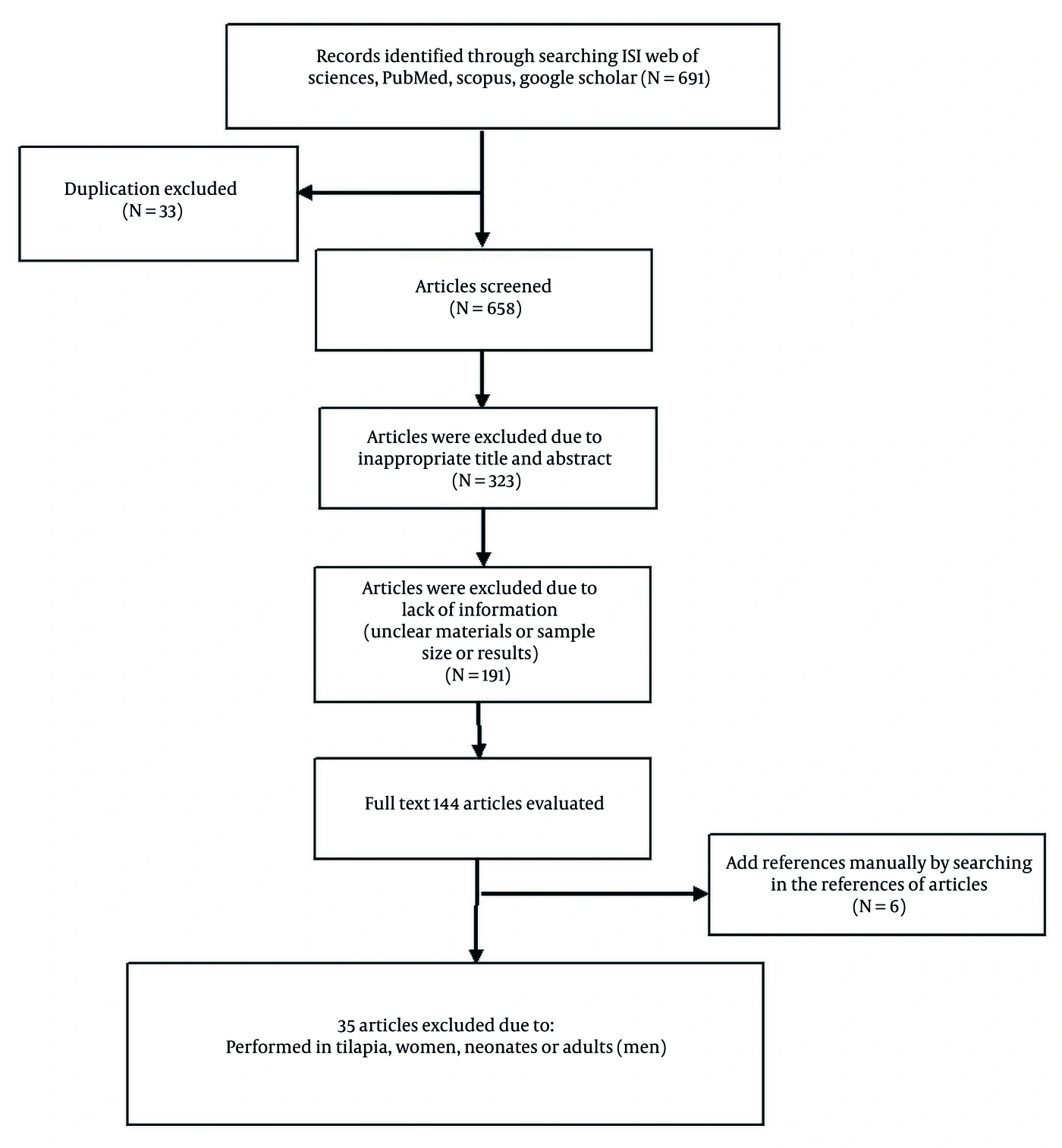
Flow diagram of the research process
Figure 1.
Flow diagram of the research process

2.5. Quality Assessment and Statistical Analyses

Study quality was assessed using the 9-item checklist proposed by Hoy et al. (9), and each study was categorized according to its potential risk of bias. To estimate pooled prevalence values, a random-effects meta-analysis based on the DerSimonian-Laird approach was applied. The Freeman-Tukey double-arcsine transformation was used to stabilize variance across studies, including studies reporting zero-event data. Statistical heterogeneity among studies was evaluated using Cochran Q test and the I2 statistic. Subgroup analyses were conducted according to variables such as diagnostic technique, mastitis status, sample type, and sampling level. Additional exploratory analyses were performed whenever substantial heterogeneity was identified. All statistical procedures were completed using STATA version 11.2.

3. Results

According to Figure 1, 1,691 records were identified through database searches. After removing 33 duplicate records, 1,658 records remained for title and abstract screening. Following screening, 1,323 records were excluded. The full texts of 335 articles were assessed for eligibility, of which 101 were excluded because of unclear methods, sample size, or results, and 35 were excluded because of an inappropriate population or source. Finally, 115 studies were included in the review.

3.1. Prevalence of Group B Streptococcus in Dairy Cows and Milk Samples

Prevalence estimates were synthesized according to the reported unit of analysis, and differences in sampling level and diagnostic methods were considered during interpretation. The prevalence of GBS among dairy cows was 5.9% (95% CI, 0.044 - 0.080) based on 89 studies. Based on culture tests, the prevalence was 5.9% (95% CI, 0.046 - 0.074) from 81 studies; using PCR, it was 16.2% (95% CI, 0.043 - 0.452) from 11 studies (Table 1). For each pooled estimate, the corresponding I2, Q statistic, and prediction interval (when heterogeneity was substantial) are reported to reflect between-study variability. A study-level summary of the risk-of-bias assessment is provided in Table 1.
Table 1.
Prevalence Status of Group B Streptococcus in Dairy Cows and Milk Samples
Author/Year (Ref.)CountryMilk Sample/ %GBSCow Sample/ %GBSTest MethodQuality Assessment
Abboud/ 2021 (10)Lebanon90/ 12.277/ 14.3CultureLow risk
Abd El-Tawab/ 2017 (11)Egypt124/ 29.8124/ 29.8CultureLow risk
ABD EL-RADY/ 2009 (12)Egypt1400/ 1.8350/ 7.1CultureLow risk
Abed/2021 (13)Egypt1060/ 10.3270/ 40.4CultureLow risk
Abera/ 2013 (14)Ethiopia264/ 3.066/ 12.1CultureLow risk
Abera/ 2012 (15)Ethiopia766/ 1.0201/ 4.0CultureLow risk
Abrahmsén/ 2014 (16)Uganda760/ 2.0195/ 7.7CultureLow risk
Ahmed/ 2020 (17)Egypt50/ 2.050/ 2.0CultureLow risk
Ait-Kaki/ 2019 (18)Algeria100/ 3.0100/ 3.0CultureLow risk
Alekish/ 2013 (19)Jordan-205/ 5.9CultureLow risk
Alemu/ 2013 (20)Ethiopia165/ 9.769/ 23.2CultureLow risk
Ali/ 2011 (21)Pakistan2400/ 1.1600/ 4.3CultureLow risk
Almaw/ 2008 (22)Ethiopia1347/ 0.9351/ 3.4CultureLow risk
Amin/ 2011 (23)Egypt240/ 6.3240/ 6.3CultureLow risk
Amin/ 2017 (24)Ethiopia127/ 16.5384/ 5.5CultureLow risk
Ayano/ 2013 (25)Ethiopia-546/ 7.0CultureLow risk
Azevedo/ 2016 (26)Portugal92/ 18.592/ 18.5PCRLow risk
Barrett/ 2005 (27)Ireland285/ 2.5285/ 2.5CultureLow risk
Bedane/ 2012 (28)Ethiopia1840/ 8.7460/ 34.8CultureLow risk
Belayneh/ 2013 (29)Ethiopia1172/ 1.6303/ 6.3CultureLow risk
Bengtsson/ 2009 (30)Sweden987/ 0.6669/ 0.9CultureLow risk
Bi/ 2016 (5)China894/ 92.2-PCR
Bortolami/ 2015 (31)Italy380/ 6.698/ 25.5CultureLow risk
Bosward/ 2016 (32)Australia120/ 90.8120/ 90.8CultureLow risk
Botrel/ 2010 (33)France1770/ 0.9-CultureLow risk
Carvalho-Castro/ 2017 (34)Brazil-65/ 90.8PCRLow risk
Cervinkova/ 2013 (35)Czech Republic669/ 0.7-CultureLow risk
Cheng/ 2010 (36)China100/ 27.01740/ 1.6CultureLow risk
Cicconi-Hogan/ 2013 (37)United States290/ 2.1-PCRLow risk
Cobo-Angel/ 2018 (1)Colombia1809/ 18.11712/ 19.1CultureLow risk
Cobo-Angel/ 2019 (4)Colombia2092/ 12.5-CultureLow risk
Cortinhas/ 2016 (38)Brazil-358/ 6.7CultureLow risk
Cvetnić/ 2016 (39)Croatia1540/ 0.2385/ 0.8CultureLow risk
Deng/ 2021 (40)Netherlands317/ 18.081/ 70.4CultureLow risk
Dereje/ 2018 (41)Ethiopia484/ 1.0186/ 2.7CultureLow risk
Deressa/ 2013 (42)Ethiopia-384/ 1.0CultureLow risk
Dieser/ 2014 (43)Argentina2296/ 2.12228/ 2.2CultureLow risk
Ding/ 2016 (44)China360/ 15.8360/ 15.8PCRLow risk
Duguma/ 2014 (45)Ethiopia340/ 6.590/ 24.4CultureLow risk
Đuričić/ 2020 (46)Croatia1216/ 0.178/ 1.3CultureLow risk
Dyson/ 2022 (47)Australia2572/ 0.22651/ 0.2CultureLow risk
Effendi/ 2018 (48)Indonesia173/ 20.8173/ 20.8CultureLow risk
Elhaig/ 2015 (49)Egypt1240/ 4.8310/ 19.4CultureLow risk
Elias/ 2012 (50)Brazil247/ 39.7-CultureLow risk
El-Jakee/ 2013 (51)Egypt-300/ 19.3PCRLow risk
Favero/ 2015 (52)Brazil-231/ 24.2CultureLow risk
Ferguson/ 2007 (53)Italy18711/ 1.29721/ 2.3CultureLow risk
Fosgate/ 2013 (54)South Africa1848/ 2.9173/ 31.2CultureLow risk
Oliveira/ 2015 (55)Brazil12464/ 7.09789/ 8.9CultureLow risk
Ostensson/ 2013 (56)Vietnam458/ 21.0-CultureLow risk
Palii/ 2020 (57)Ukraine-75/ 5.3CultureLow risk
Pankaj/ 2013 (58)India326/ 1.282/ 4.9CultureLow risk
Persson/ 2011 (59)Sweden583/ 0.2583/ 0.2CultureLow risk
Pol/ 2007 (60)United States5672/ 1.61453/ 6.1CultureLow risk
Ramirez/ 2014 (61)Colombia71915/ 4.1-CultureLow risk
Rato/ 2013 (62)Portugal444/ 13.5365/ 16.4CultureLow risk
Reinoso/ 2010 (63)Argentina1223/ 0.9-PCRLow risk
Reyes/ 2015 (64)Colombia1104/ 27.9CultureLow risk
Riekerink/ 2010 (65)Canada904/ 0.7-CultureLow risk
Rossi/ 2018 (66)Brazil1164/ 15.8-CultureLow risk
Saed/ 2020 (67)Egypt191/ 17.8128/ 26.6CultureLow risk
Schwarz/ 2010 (68)Germany145065/ 0.3CultureLow risk
Seid/ 2015 (69)Ethiopia1422/ 1.1358/ 4.2CultureLow risk
Sharma/ 2006 (70)India423/ 1.4109/ 5.5CultureLow risk
Shome/ 2012 (71)India209/ 8.1-PCRLow risk
Singh/ 2018 (72)India69/ 62.3-PCRLow risk
Soltau/ 2017 (73)Germany6335/ 0.6-CultureLow risk
Song/ 2020 (74)China1153/ 4.3-CultureLow risk
Suriyasathaporn/ 2011 (75)Thailand133/ 2.368/ 4.4CultureLow risk
Teklesilasie/ 2014 (76)Ethiopia1412/ 1.3365/ 5.2CultureLow risk
Tenhagen/ 2006 (77)Germany-751/ 0.4CultureLow risk
Tenhagen/ 2009 (78)Germany6915/ 0.1-CultureLow risk
Tian/ 2019 (79)China735/ 3.0-CultureLow risk
Timonen/ 2017 (80)Estonia522/ 14.4522/ 14.4PCRLow risk
Tomazi/ 2018 (81)Brazil4212/ 5.92637/ 9.4CultureLow risk
Vakkamaki/ 2017 (82)Finland117511/ 0.4331764/ 0.2PCRLow risk
Verbeke/ 2014 (83)Finland845/ 0.4677/ 0.4CultureLow risk
Workineh/ 2002 (84)Ethiopia396/ 2.3186/ 4.8CultureLow risk
Wraight/ 2003 (85)Australia440/ 1.6-CultureLow risk
Gao Jian/ 2012 (86)China3288/ 2.83190/ 2.9CultureLow risk
Gharari / 2014 (87)Iran700/ 39.7-CultureLow risk
Gillespie/ 2005 (88)America192/ 0.3-PCRLow risk
Gitau/ 2014 (89)Kenya241/ 5.8234/ 6.0CultureLow risk
Gonçalves/ 2018 (90)Brazil584/ 3.9584/ 3.9CultureLow risk
Green/ 2005 (91)England960/ 0.1480/ 0.1CultureLow risk
Guélat-Brechbuehl/ 2010 (92)Switzerland2538/ 0.2-CultureLow risk
Hameed/ 2007 (93)Poland704/ 0.7-CultureLow risk
Hernandez/ 2021 (2)Argentina1500/ 3.71500/ 3.7PCRLow risk
Holko/ 2019 (7)Slovakia633/ 4.7512/ 5.9CultureLow risk
Holmoy/ 2018 (94)Norway595/ 6.2578/ 6.4CultureLow risk
Holmøy/ 2019 (95)Norway25136/ 2.311485/ 5.1CultureLow risk
Idriss/ 2014 (96)Slovakia390/ 1.5-CultureLow risk
Ikiz/ 2013 (97)Turkey270/ 9.3132/ 18.9CultureLow risk
Karimuribo/ 2008 (98)Tanzania1500/ 0.8434/ 2.8CultureLow risk
Keneth I. K./ 2014 (99)Uganda-124/ 4.8CultureLow risk
Kilyenyi/ 2021 (100)Tanzania745/ 2.4195/ 9.2CultureLow risk
Kivaria/ 2007 (101)Tanzania1964/ 13.61365/ 19.6CultureLow risk
Krukowski/ 2020 (102)Poland38852/ 2.622587/ 4.5CultureLow risk
Lago/ 2011 (103)Canada449/ 0.1442/ 0.1CultureLow risk
Lakew/ 2019 (104)Ethiopia1536/ 0.3384/ 12.0CultureLow risk
Lakew/ 2009 (105)Ethiopia892/ 1.9223/ 7.6CultureLow risk
Leelahapongsathon/ 2014 (106)Thailand1827/ 2.0467/ 7.9CultureLow risk
Levison/ 2016 (107)Canada936/ 0.1743/ 0.1CultureLow risk
Lin/ 2021 (108)China379/ 11.1-PCRLow risk
Mahmmod/ 2013 (109)Denmark2456/ 2.2614/ 8.6CultureLow risk
Makovec/ 2003 (110)America77172/ 4.5-CultureLow risk
Mbindyo/ 2020 (111)Kenya1580/ 0.3395/ 1.0CultureLow risk
Memon/ 2012 (112)China1660/ 1.6415/ 6.3CultureLow risk
Moatamedi/ 2007 (113)Iran120/ 15.8-CultureLow risk
Moges/ 2011 (114)Ethiopia-322/ 8.1CultureLow risk
Mpatswenumugabo/ 2017 (115)Rwanda-123/ 3.3CultureLow risk
Mureithi/ 2016 (116)Kenya688/ 1.9172/ 7.6CultureLow risk
Nam/ 2009 (117)Korea12508/ 0.012508/ 0.0CultureLow risk
Manning/ 2010 (118)United States-115/ 1.7CultureLow risk
Among dairy cows, the prevalence of GBS was 6.0% (95% CI, 4.4 - 8.2) in cattle across 86 studies, whereas buffalo showed a prevalence of 4.2% (95% CI, 3.2 - 5.7) in 3 studies. Based on breed, prevalence was 5.3% (95% CI, 4.8 - 5.9) in local breeds, 5.8% (95% CI, 3.1 - 10.7) in crossbreeds, and 7.7% (95% CI, 4.0 - 14.4) in Holstein cattle (Figure 2).
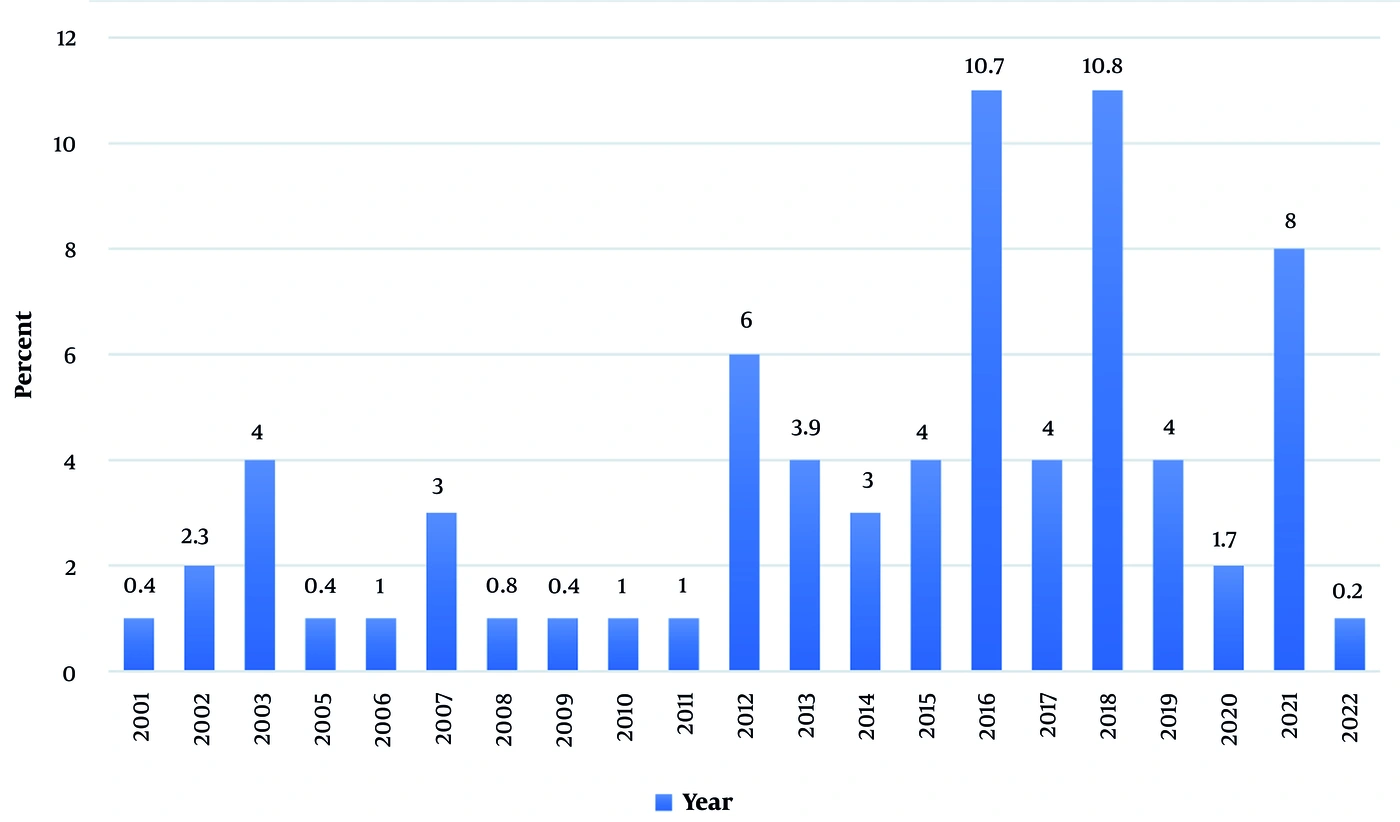
Prevalence of GBS in dairy cows according to animal species and breed
Figure 2.
Prevalence of GBS in dairy cows according to animal species and breed
Among 74 studies reporting mastitis cases, 35% (95% CI, 0.285 - 0.422) of dairy cows had mastitis, including 16.6% (95% CI, 0.075 - 0.329) with clinical mastitis and 48.5% (95% CI, 0.434 - 0.537) with subclinical mastitis.
The prevalence of GBS in milk samples across 102 studies was 3.1% (95% CI, 0.025 - 0.040). Based on culture tests, the prevalence across 89 studies was 2.8% (95% CI, 0.022 - 0.035), and using PCR across 16 studies, it was 12.6% (95% CI, 0.034 - 0.368). Furthermore, the prevalence of GBS in cattle milk was 3% (95% CI, 0.024 - 0.039), whereas in buffalo milk it was 1.1% (95% CI, 0.008 - 0.016).

3.2. Geographic Distribution of Group B Streptococcus in Dairy Cows and Milk Samples

Across the reviewed studies, the highest frequency of GBS in dairy cows was 31.2% (95% CI, 0.248 - 0.385) in South Africa, based on one study, followed by 23.2% (95% CI, 0.157 - 0.329) in Colombia, based on two studies. The highest prevalence of GBS in milk samples was 26.5% (95% CI, 0.095 - 0.551) in Iran, based on two studies, followed by 20.8% (95% CI, 0.154 - 0.275) in Indonesia, based on one study (Table 2).
Table 2.
Geographic Distribution of GBS Prevalence in Dairy Cows and Milk Samples a
Sample TypeContinentCountryNo. of StudiesPooled Prevalence (%)95% CI
Dairy cowAfricaSouth Africa131.224.8 - 38.5
Dairy cowAmericasColombia223.215.7 - 32.9
Milk sampleAsiaIran226.59.5 - 55.1
Milk sampleAsiaIndonesia120.815.4 - 27.5
a Abbreviation: CI, confidence interval.

3.3. Temporal Trends in Group B Streptococcus Prevalence

The prevalence of GBS in dairy cows varied between 2001 and 2022, with the highest prevalence observed in 2021 (20.2%; 95% CI, 5.9 - 14.2). Peaks were also observed in 2002, 2007, 2013, 2015, and 2021 (Figure 3). Similarly, temporal analysis of GBS in milk samples revealed a peak prevalence of 10.8% (95% CI, 6.2 - 18.2) in 2018 during the period from 2001 to 2022 (Figure 4).
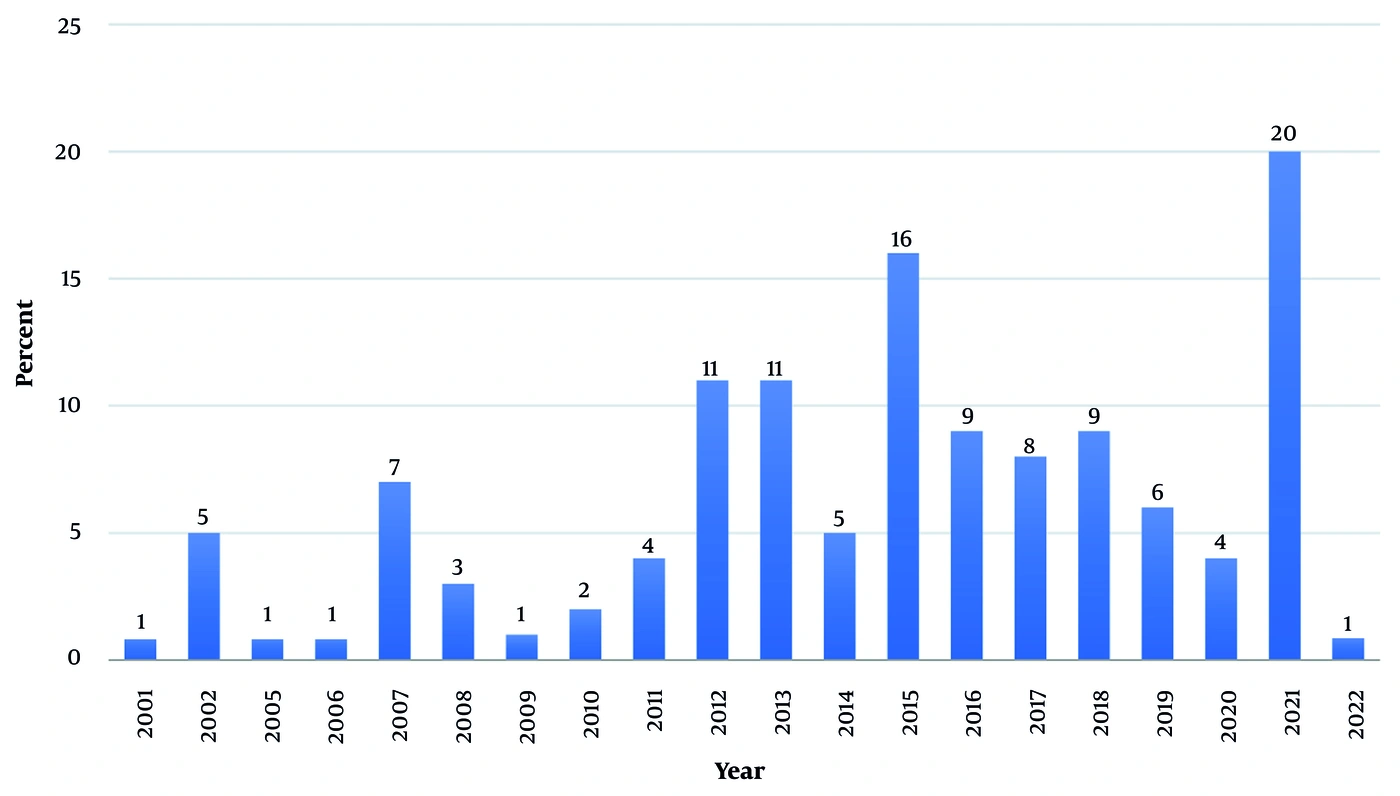
Temporal trends in the prevalence of GBS in dairy cows, 89 studies
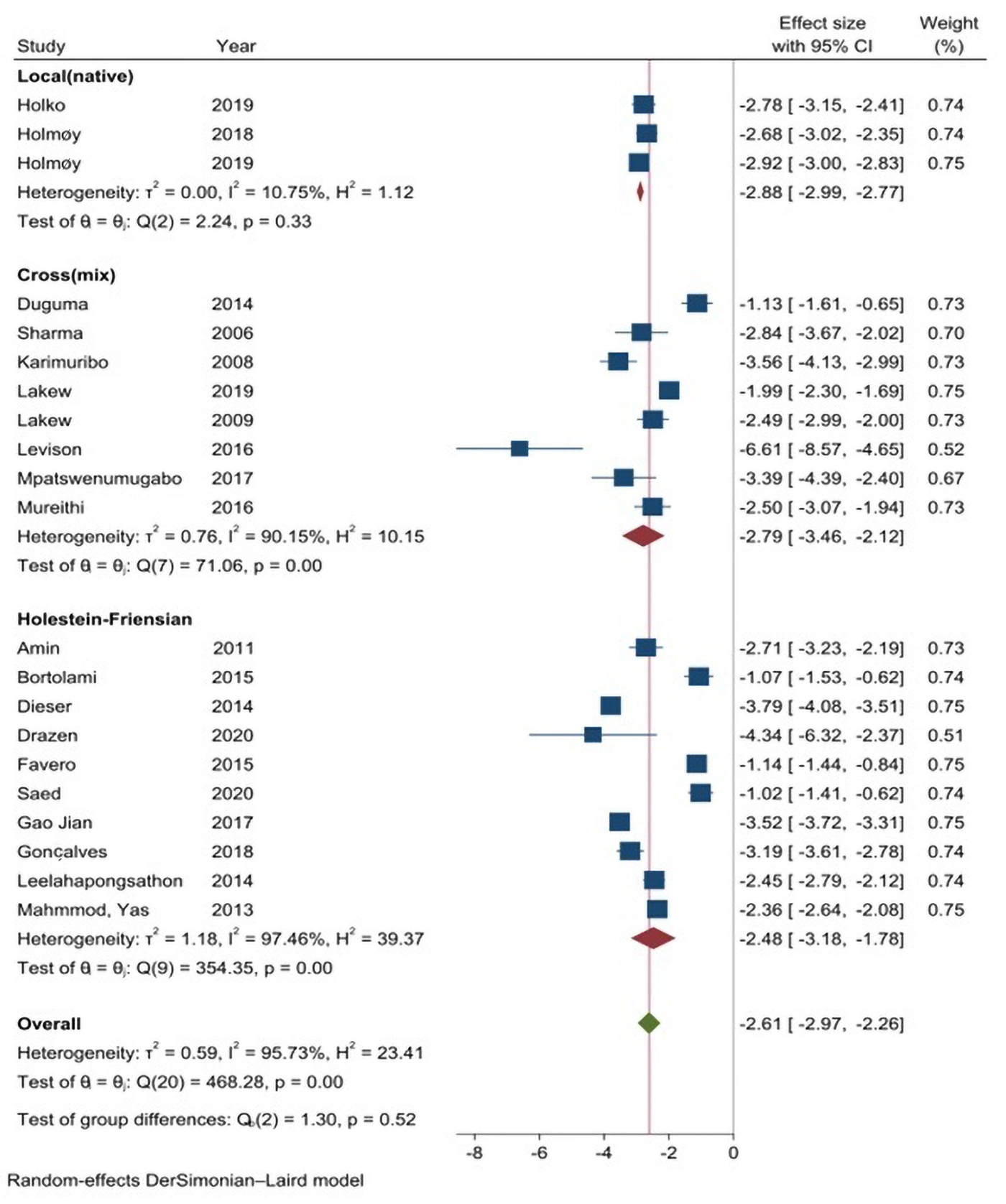
Figure 3.
Temporal trends in the prevalence of GBS in dairy cows, 89 studies
Temporal trends in the prevalence of GBS in milk samples, 102 studies (<a href="#AARTICLEREF7">7</a>, <a href="#AARTICLEREF23">23</a>, <a href="#AARTICLEREF31">31</a>, <a href="#AARTICLEREF43">43</a>, <a href="#AARTICLEREF45">45</a>, <a href="#AARTICLEREF52">52</a>, <a href="#AARTICLEREF67">67</a>, <a href="#AARTICLEREF70">70</a>, <a href="#AARTICLEREF86">86</a>, <a href="#AARTICLEREF90">90</a>, <a href="#AARTICLEREF94">94</a>, <a href="#AARTICLEREF95">95</a>, <a href="#AARTICLEREF98">98</a>, <a href="#AARTICLEREF104">104</a>–<a href="#AARTICLEREF107">107</a>, <a href="#AARTICLEREF109">109</a>, <a href="#AARTICLEREF115">115</a>, <a href="#AARTICLEREF116">116</a>)
Figure 4.
Temporal trends in the prevalence of GBS in milk samples, 102 studies (7, 23, 31, 43, 45, 52, 67, 70, 86, 90, 94, 95, 98, 104–107, 109, 115, 116)

3.4. Antimicrobial Susceptibility

Among studies reporting antibiotic resistance of GBS isolated from dairy cows and milk samples, resistance prevalence varied across agents. Resistance to penicillin was 20% (95% CI, 0.063 - 0.482) based on 10 studies. Resistance to tetracycline was 39.4% (95% CI, 0.177 - 0.664) based on 7 studies, erythromycin resistance was 36.7% (95% CI, 0.160 - 0.638) based on 7 studies, clindamycin resistance was 42.9% (95% CI, 0.192 - 0.704) based on 7 studies, and levofloxacin resistance was 23.6% (95% CI, 0.07 - 0.562) based on 3 studies. Because some pooled estimates were derived from only a small number of studies, particularly for levofloxacin, these results should be interpreted with caution.

4. Discussion

This systematic review and meta-analysis identified a global prevalence of GBS in dairy cows of 5.9% by culture and 16.2% by PCR, with mastitis affecting 35% of cows and having a significant impact on animal health and production. The prevalence of GBS in milk samples was estimated at 3.1%. Although some external literature suggests possible transmission to humans through farm exposure (118) or consumption of contaminated products (119), this review primarily synthesized prevalence data in cattle and milk. Direct evidence of transmission pathways and the extent of human health risk from bovine GBS were not the primary focus of the included studies and require further investigation. Comparison of these findings with the higher global prevalence observed in pregnant women, 10% - 40%, (120, 121, 122) highlights differences in GBS epidemiology between host species. Livestock generally show lower rates, although findings vary widely across studies (13, 32, 39, 40, 47, 107), likely reflecting differences in control programs and management practices. Additionally, GBS prevalence is lower in buffaloes than in dairy cows (4.2% vs 6%), possibly because of greater resistance to mastitis (49).
Regarding antimicrobial susceptibility, notable resistance was observed, particularly to penicillin (20%) and tetracycline (39.4%), among other agents. However, the considerable uncertainty in pooled resistance estimates for some antibiotics, because of the limited number of contributing studies (eg, only 3 studies for levofloxacin), warrants cautious interpretation. These findings underscore the need for ongoing surveillance and improved antimicrobial stewardship in dairy farming to mitigate the burden of GBS and the emergence of resistance.

Acknowledgments

Footnotes

  • AI Use Disclosure:The authors declare that no generative AI tools were used in the creation of this article.

  • Authors' Contribution:Study Concept and Design: M. S.; Data Acquisition: H. S. and L. D.; Data Analysis and Interpretation: A. S. A.; Manuscript Drafting: M. S. and A. D.; Critical Revision for Important Intellectual Content: M. S. and A. D.; Statistical Analysis: A. S. A.; Study Supervision: M. S.

  • Conflict of Interests Statement:The authors declare no conflict of interest.

  • Data Availability:The data presented in this study are available within the article and supplementary materials submitted during the submission process. The dataset presented in the study is available on request from the corresponding author during submission or after publication.

  • Funding/Support:This study was funded by Shahid Sadoughi University of Medical Sciences, Yazd, Iran (Grant No. 10439).

References

  • 1.
    Cobo-Ángel C, Jaramillo-Jaramillo AS, Lasso-Rojas LM, Aguilar-Marin SB, Sanchez J, Rodriguez-Lecompte JC, et al. Streptococcus agalactiae is not always an obligate intramammary pathogen: Molecular epidemiology of GBS from milk, feces and environment in Colombian dairy herds. PLoS One. 2018;13(12). e0208990. [PubMed ID: 30532177]. [PubMed Central ID: PMC6287850]. https://doi.org/10.1371/journal.pone.0208990.
  • 2.
    Hernandez L, Bottini E, Cadona J, Cacciato C, Monteavaro C, Bustamante A, et al. Multidrug Resistance and Molecular Characterization of Streptococcus agalactiae Isolates From Dairy Cattle With Mastitis. Front Cell Infect Microbiol. 2021;11. 647324. [PubMed ID: 33996629]. [PubMed Central ID: PMC8120232]. https://doi.org/10.3389/fcimb.2021.647324.
  • 3.
    Panahi S, Khalili MB, Sadeh M, Vakili M. Determination of pilus-islands profile and antibiotic susceptibility of Streptococcus agalactiae isolated from urine of pregnant women. Iran J Microbiol. 2023;15(2):219-24. [PubMed ID: 37193229]. [PubMed Central ID: PMC10183068]. https://doi.org/10.18502/ijm.v15i2.12473.
  • 4.
    Cobo-Angel CG, Jaramillo-Jaramillo AS, Palacio-Aguilera M, Jurado-Vargas L, Calvo-Villegas EA, Ospina-Loaiza DA, et al. Potential group B Streptococcus interspecies transmission between cattle and people in Colombian dairy farms. Sci Rep. 2019;9(1). 14025. [PubMed ID: 31575879]. [PubMed Central ID: PMC6773701]. https://doi.org/10.1038/s41598-019-50225-w.
  • 5.
    Bi Y, Wang YJ, Qin Y, Guix Vallverdú R, Maldonado García J, Sun W, et al. Prevalence of Bovine Mastitis Pathogens in Bulk Tank Milk in China. PLoS One. 2016;11(5). e0155621. [PubMed ID: 27187065]. [PubMed Central ID: PMC4871341]. https://doi.org/10.1371/journal.pone.0155621.
  • 6.
    Stevens M, Piepers S, De Vliegher S. Mastitis prevention and control practices and mastitis treatment strategies associated with the consumption of (critically important) antimicrobials on dairy herds in Flanders, Belgium. J Dairy Sci. 2016;99(4):2896-903. [PubMed ID: 26874421]. https://doi.org/10.3168/jds.2015-10496.
  • 7.
    Holko I, Tančin V, Vršková M, Tvarožková K. Prevalence and antimicrobial susceptibility of udder pathogens isolated from dairy cows in Slovakia. J Dairy Res. 2019;86(4):436-9. [PubMed ID: 31727191]. https://doi.org/10.1017/S0022029919000694.
  • 8.
    Moher D, Liberati A, Tetzlaff J, Altman D, Antes G, Atkins D, et al. Preferred reporting items for systematic reviews and meta-analyses: The PRISMA statement (Chinese edition). Chin J Integr Med. 2009;7(9):889-96. https://doi.org/10.3736/jcim20090918.
  • 9.
    Hoy D, Brooks P, Woolf A, Blyth F, March L, Bain C, et al. Assessing risk of bias in prevalence studies: modification of an existing tool and evidence of interrater agreement. J Clin Epidemiol. 2012;65(9):934-9. [PubMed ID: 22742910]. https://doi.org/10.1016/j.jclinepi.2011.11.014.
  • 10.
    Abboud Z, Galuppo L, Tolone M, Vitale M, Puleio R, Osman M, et al. Molecular Characterization of Antimicrobial Resistance and Virulence Genes of Bacterial Pathogens from Bovine and Caprine Mastitis in Northern Lebanon. Microorganisms. 2021;9(6):1148. [PubMed ID: 34071800]. [PubMed Central ID: PMC8228836]. https://doi.org/10.3390/microorganisms9061148.
  • 11.
    Abd El-Tawab AA, Nahla A, Roos F, I I, El H, Hass-naa EA. Molecular studies regarding to virulence factors of Streptococcus species isolated from raw milk. Benha Vet Med J. 2017;32:145-52.
  • 12.
    AbdelRady A, Sayed M. Epidemiological Studies on Subclinical Mastitis in Dairy Cows in Assiut Governorate. Vet World. 2009;2(10):373-80. https://doi.org/10.5455/vetworld.2009.373-380.
  • 13.
    Abed AH, Menshawy AMS, Zeinhom MMA, Hossain D, Khalifa E, Wareth G, et al. Subclinical Mastitis in Selected Bovine Dairy Herds in North Upper Egypt: Assessment of Prevalence, Causative Bacterial Pathogens, Antimicrobial Resistance and Virulence-Associated Genes. Microorganisms. 2021;9(6):1175. [PubMed ID: 34072543]. [PubMed Central ID: PMC8229104]. https://doi.org/10.3390/microorganisms9061175.
  • 14.
    Abera B, Lemma D, Iticha I. Study of bovine mastitis in asella government dairy farm of Oromia Regional state, South Eastern Ethiopia. Int J Curr Res Aca Rev. 2013;1(2):134-45.
  • 15.
    Abera M, Habte T, Aragaw K, Asmare K, Sheferaw D, production. Major causes of mastitis and associated risk factors in smallholder dairy farms in and around Hawassa, Southern Ethiopia. Trop Anim Health Prod. 2012;44(6):1175-9. [PubMed ID: 22231019]. https://doi.org/10.1007/s11250-011-0055-3.
  • 16.
    Abrahmsén M, Persson Y, Kanyima BM, Båge R. Prevalence of subclinical mastitis in dairy farms in urban and peri-urban areas of Kampala, Uganda. Trop Anim Health Prod. 2014;46(1):99-105. [PubMed ID: 23955012]. [PubMed Central ID: PMC3895220]. https://doi.org/10.1007/s11250-013-0455-7.
  • 17.
    Ahmed W, Neubauer H, Tomaso H, El Hofy FI, Monecke S, Abdeltawab AA, et al. Characterization of Staphylococci and Streptococci Isolated from Milk of Bovides with Mastitis in Egypt. Pathogens. 2020;9(5):381. [PubMed ID: 32429272]. [PubMed Central ID: PMC7281669]. https://doi.org/10.3390/pathogens9050381.
  • 18.
    Kaki AA, Djebala S, Latif MB, Moula N. Evaluation of the Prevalence of Subclinical Mastitis in Dairy Cattle in the Soummam Valley (Bejaia, Algeria). Bull Univ Agric Sci Vet Med Cluj-Napoca Food Sci Technol. 2019;76(2):143-8. https://doi.org/10.15835/buasvmcn-vm:2019.0006.
  • 19.
    Alekish MO, Al-Qudah KM, Al-Saleh A. Prevalence of antimicrobial resistance among bacterial pathogens isolated from bovine mastitis in northern Jordan. Rev Med Vet (Toulouse). 2013;164(6):319-26.
  • 20.
    Getaneh A, Gizat A, Mesele A. Incidence rate of Staphylococcus aureus and Streptococcus agalactiae in subclinical mastitis at smallholder dairy cattle farms in Hawassa, Ethiopia. Afr J Microbiol Res. 2014;8(3):252-6. https://doi.org/10.5897/AJMR2013.6290.
  • 21.
    Ali M, Ahmad M, Muhammad K, Anjum A. Prevalence of sub clinical mastitis in dairy buffaloes of Punjab, Pakistan. J Anim Plant Sci. 2011;21(3):477-80.
  • 22.
    Almaw G, Zerihun A, Asfaw Y. Bovine mastitis and its association with selected risk factors in smallholder dairy farms in and around Bahir Dar, Ethiopia. Trop Anim Health Prod. 2008;40(6):427-32. [PubMed ID: 18575970]. https://doi.org/10.1007/s11250-007-9115-0.
  • 23.
    Amin AS, Hamouda RH, Abdel-All AA. PCR assays for detecting major pathogens of mastitis in milk samples. World J Dairy Food Sci (WJDFS). 2011;6(2):199-206.
  • 24.
    Amin B, Deneke Y, Abdela N. Bovine Mastitis: Prevalence, Risk Factors and Isolation of Streptoccocus Species from Small Holders Dairy Farms in and Around Haramaya Town, Eastern Ethiopia. Global J of Med Res. 2017;17(1):27-38.
  • 25.
    Ayano AA, Hiriko F, Simyalew AM, Yohannes A. Prevalence of subclinical mastitis in lactating cows in selected commercial dairy farms of Holeta district. J Vet Med Anim Health. 2013;5(3):67-72. https://doi.org/10.5897/JVMAH12.056.
  • 26.
    Azevedo C, Pacheco D, Soares L, Moitoso M, Maldonado J, Guix R, et al. Prevalence of bovine milk pathogens in Azorean pastures: mobile versus fixed milking machines. Vet Rec Open. 2016;3(1). e000181. [PubMed ID: 27843558]. [PubMed Central ID: PMC5093392]. https://doi.org/10.1136/vetreco-2016-000181.
  • 27.
    Barrett DJ, Healy AM, Leonard FC, Doherty ML. Prevalence of pathogens causing subclinical mastitis in 15 dairy herds in the Republic of Ireland. Ir Vet J. 2005;58(6). 333. [PubMed ID: 21851671]. [PubMed Central ID: PMC3113904]. https://doi.org/10.1186/2046-0481-58-6-333.
  • 28.
    Bedane A, Kasim G, Yohannis T, Habtamu T, Asseged B, Demelash B. Study on prevalence and risk factors of bovine mastitis in Borana pastoral and agro-pastoral settings of Yabello District, Borana zone, Southern Ethiopia. American-Eurasian J Agric & Environ Sci. 2012;12(10):1274-81. https://doi.org/10.5829/idosi.aejaes.2012.12.10.61201.
  • 29.
    Belayneh R, Belihu K, Wubete A. Dairy cows mastitis survey in Adama town, Ethiopia. J Vet Med Anim Health. 2013;5(10):281-7. https://doi.org/10.5897/JVMAH2013.0222.
  • 30.
    Bengtsson B, Unnerstad HE, Ekman T, Artursson K, Nilsson-Öst M, Waller KP. Antimicrobial susceptibility of udder pathogens from cases of acute clinical mastitis in dairy cows. Vet Microbiol. 2009;136(1 - 2):142-9. [PubMed ID: 19058930]. https://doi.org/10.1016/j.vetmic.2008.10.024.
  • 31.
    Bortolami A, Fiore E, Gianesella M, Corrò M, Catania S, Morgante M. Evaluation of the udder health status in subclinical mastitis affected dairy cows through bacteriological culture, somatic cell count and thermographic imaging. Pol J Vet Sci. 2015;18(4):799-805. [PubMed ID: 26812823]. https://doi.org/10.1515/pjvs-2015-0104.
  • 32.
    Bosward KL, House JK, Deveridge A, Mathews K, Sheehy PA. Development of a loop-mediated isothermal amplification assay for the detection of Streptococcus agalactiae in bovine milk. J Dairy Sci. 2016;99(3):2142-50. [PubMed ID: 26778303]. https://doi.org/10.3168/jds.2015-10073.
  • 33.
    Botrel MA, Haenni M, Morignat E, Sulpice P, Madec JY, Calavas D. Distribution and antimicrobial resistance of clinical and subclinical mastitis pathogens in dairy cows in Rhone-Alpes, France. Foodborne Pathog Dis. 2010;7(5):479-87. [PubMed ID: 19919286]. https://doi.org/10.1089/fpd.2009.0425.
  • 34.
    Carvalho-Castro GA, Silva JR, Paiva LV, Custódio DAC, Moreira RO, Mian GF, et al. Molecular epidemiology of Streptococcus agalactiae isolated from mastitis in Brazilian dairy herds. Braz J Microbiol. 2017;48(3):551-9. [PubMed ID: 28256391]. [PubMed Central ID: PMC5498452]. https://doi.org/10.1016/j.bjm.2017.02.004.
  • 35.
    Cervinkova D, Vlkova H, Borodacova I, Makovcova J, Babak V, Lorencova A, et al. Prevalence of mastitis pathogens in milk from clinically healthy cows. Vet Med (Praha). 2013;58(11):567-75. https://doi.org/10.17221/7138-VETMED.
  • 36.
    Cheng D, Zhu S, Yin Z, Ding W, Mu Z, Su Z, et al. Prevalence of bacterial infection responsible for bovine mastitis. Afr J Microbiol Res. 2010;4(11):1110-6.
  • 37.
    Cicconi-Hogan KM, Gamroth M, Richert R, Ruegg PL, Stiglbauer KE, Schukken YH. Associations of risk factors with somatic cell count in bulk tank milk on organic and conventional dairy farms in the United States. J Dairy Sci. 2013;96(6):3689-702. [PubMed ID: 23548286]. https://doi.org/10.3168/jds.2012-6271.
  • 38.
    Cortinhas CS, Tomazi T, Zoni MSF, Moro E, Veiga dos Santos M. Randomized clinical trial comparing ceftiofur hydrochloride with a positive control protocol for intramammary treatment of nonsevere clinical mastitis in dairy cows. J Dairy Sci. 2016;99(7):5619-28. [PubMed ID: 27157576]. https://doi.org/10.3168/jds.2016-10891.
  • 39.
    Cvetnić L, Samardžija M, Habrun B, Kompes G, Benić M. Microbiological monitoring of mastitis pathogens in the control of udder health in dairy cows. Slov Vet Res. 2016;53(3):131-40. https://doi.org/10.26873/SVR-24719-2016.
  • 40.
    Deng Z, Koop G, Hogeveen H, Fischer EAJ, van den Borne BHP, van der Tol R, et al. Transmission dynamics of Staphylococcus aureus and Streptococcus agalactiae in a Dutch dairy herd using an automatic milking system. Prev Vet Med. 2021;192. 105384. [PubMed ID: 34033990]. https://doi.org/10.1016/j.prevetmed.2021.105384.
  • 41.
    Dereje K, Kebede A, Abebe N, Tamiru Y. Isolation, identification and antimicrobial susceptibility test of mastitis causing bacteria at Holeta Agricultural Research Center dairy farms. J Int J Animal Sci Technol. 2018;2(1):6-13. https://doi.org/10.11648/j.ijast.20180201.12.
  • 42.
    Lidet GM, Benti D, Feyissa B, Abebe M. Study on prevalence of bovine mastitis in lactating cows and associated risk factors in and around Areka town, Southern of Ethiopia. Afr J Microbiol Res. 2013;7(43):5051-6. https://doi.org/10.5897/AJMR2013.6202.
  • 43.
    Dieser SA, Vissio C, Lasagno MC, Bogni CI, Larriestra AJ, Odierno LM. Prevalence of pathogens causing subclinical mastitis in Argentinean dairy herds. Pak Vet J. 2014;34(1):124-6.
  • 44.
    Ding Y, Zhao J, He X, Li M, Guan H, Zhang Z, et al. Antimicrobial resistance and virulence-related genes of Streptococcus obtained from dairy cows with mastitis in Inner Mongolia, China. Pharm Biol. 2016;54(1):162-7. [PubMed ID: 25856704]. https://doi.org/10.3109/13880209.2015.1025290.
  • 45.
    Ararsa D, Tadele T, Aster Y. Prevalence of clinical and sub-clinical mastitis on cross bred dairy cows at Holleta Agricultural Research Center, Central Ethiopia. J Vet Med Anim Health. 2014;6(1):13-7. https://doi.org/10.5897/JVMAH2013.0259.
  • 46.
    Đuričić D, Sukalić T, Marković F, Kočila P, Žura Žaja I, Menčik S, et al. Effects of Dietary Vibroactivated Clinoptilolite Supplementation on the Intramammary Microbiological Findings in Dairy Cows. Animals (Basel). 2020;10(2):202. [PubMed ID: 31991715]. [PubMed Central ID: PMC7070774]. https://doi.org/10.3390/ani10020202.
  • 47.
    Dyson R, Charman N, Hodge A, Rowe SM, Taylor LF. A survey of mastitis pathogens including antimicrobial susceptibility in southeastern Australian dairy herds. J Dairy Sci. 2022;105(2):1504-18. [PubMed ID: 34955276]. https://doi.org/10.3168/jds.2021-20955.
  • 48.
    Effendi MH, Oktavianto A, Hastutiek P. Tetracycline Resistance Gene In Streptococcus agalactiae Isolated From Bivine Subclinical Mastitis In Surabaya, Indonesia. Philipp J Vet Med. 2018;55(SI):115-20.
  • 49.
    Elhaig MM, Selim A. Molecular and bacteriological investigation of subclinical mastitis caused by Staphylococcus aureus and Streptococcus agalactiae in domestic bovids from Ismailia, Egypt. Trop Anim Health Prod. 2015;47(2):271-6. [PubMed ID: 25374070]. https://doi.org/10.1007/s11250-014-0715-1.
  • 50.
    Elias AO, Cortez A, Brandão PE, da Silva RC, Langoni H. Molecular detection of Streptococcus agalactiae in bovine raw milk samples obtained directly from bulk tanks. Res Vet Sci. 2012;93(1):34-8. [PubMed ID: 21862092]. https://doi.org/10.1016/j.rvsc.2011.07.016.
  • 51.
    El-Jakee J, Hableel HS, Kandil M, Hassan OF, Khairy EA, Marouf SA. Antibiotic resistance patterns of streptococcus agalactiae isolated from mastitic cows and ewes in Egypt. Global Veterinaria. 2013;10(3):264-70. https://doi.org/10.5829/idosi.gv.2013.10.3.7248.
  • 52.
    Fávero S, Portilho FVR, Oliveira ACR, Langoni H, Pantoja JCF. Factors associated with mastitis epidemiologic indexes, animal hygiene, and bulk milk bacterial concentrations in dairy herds housed on compost bedding. Livest Sci. 2015;181:220-30. https://doi.org/10.1016/j.livsci.2015.09.002.
  • 53.
    Ferguson JD, Azzaro G, Gambina M, Licitra G. Prevalence of mastitis pathogens in Ragusa, Sicily, from 2000 to 2006. J Dairy Sci. 2007;90(12):5798-813. [PubMed ID: 18024774]. https://doi.org/10.3168/jds.2006-903.
  • 54.
    Fosgate GT, Petzer IM, Karzis J. Sensitivity and specificity of a hand-held milk electrical conductivity meter compared to the California mastitis test for mastitis in dairy cattle. Vet J. 2013;196(1):98-102. [PubMed ID: 22981736]. https://doi.org/10.1016/j.tvjl.2012.07.026.
  • 55.
    Oliveira CSF, Hogeveen H, Botelho AM, Maia PV, Coelho SG, Haddad JPA. Cow-specific risk factors for clinical mastitis in Brazilian dairy cattle. Prev Vet Med. 2015;121(3):297-305. [PubMed ID: 26302854]. https://doi.org/10.1016/j.prevetmed.2015.08.001.
  • 56.
    Östensson K, Lam V, Sjögren N, Wredle E. Prevalence of subclinical mastitis and isolated udder pathogens in dairy cows in Southern Vietnam. Trop Anim Health Prod. 2013;45(4):979-86. [PubMed ID: 23212834]. https://doi.org/10.1007/s11250-012-0320-0.
  • 57.
    Palii A, Ulko Y, Bogomolov O, Kis-Korkishchenko L, Kambur M, Zamaziy A, et al. Species composition of microbiota of cows udder and raw milk quality at mastitis. Ukr J Ecol. 2020;10(4):78-85. https://doi.org/10.15421/2020_171.
  • 58.
    Pankaj, Sharma A, Chhabra R, Sindhu N. Sub-clinical mastitis in Murrah buffaloes with special reference to prevalence, etiology and antibiogram. Buffalo Bull. 2013;32(2):107-15. https://doi.org/10.14456/ku-bufbu.2013.17.
  • 59.
    Persson Y, Nyman AKJ, Grönlund-Andersson U. Etiology and antimicrobial susceptibility of udder pathogens from cases of subclinical mastitis in dairy cows in Sweden. Acta Vet Scand. 2011;53(1). 36. [PubMed ID: 21649936]. [PubMed Central ID: PMC3118135]. https://doi.org/10.1186/1751-0147-53-36.
  • 60.
    Pol M, Ruegg PL. Relationship between antimicrobial drug usage and antimicrobial susceptibility of gram-positive mastitis pathogens. J Dairy Sci. 2007;90(1):262-73. [PubMed ID: 17183094]. https://doi.org/10.3168/jds.S0022-0302(07)72627-9.
  • 61.
    Ramírez NF, Keefe G, Dohoo I, Sánchez J, Arroyave O, Cerón J, et al. Herd- and cow-level risk factors associated with subclinical mastitis in dairy farms from the High Plains of the northern Antioquia, Colombia. J Dairy Sci. 2014;97(7):4141-50. [PubMed ID: 24792788]. https://doi.org/10.3168/jds.2013-6815.
  • 62.
    Rato MG, Bexiga R, Florindo C, Cavaco LM, Vilela CL, Santos-Sanches I. Antimicrobial resistance and molecular epidemiology of streptococci from bovine mastitis. Vet Microbiol. 2013;161(3 - 4):286-94. [PubMed ID: 22964008]. https://doi.org/10.1016/j.vetmic.2012.07.043.
  • 63.
    Reinoso E, Dieser S, Calvinho L, Bogni C, Odierno L. Phenotyping and genotyping of streptococci in bovine milk in Argentinean dairy herds. Acta Vet Hung. 2010;58(3):287-95. [PubMed ID: 20713320]. https://doi.org/10.1556/AVet.58.2010.3.2.
  • 64.
    Reyes J, Chaffer M, Sanchez J, Torres G, Macias D, Jaramillo M, et al. Evaluation of the efficacy of intramuscular versus intramammary treatment of subclinical Streptococcus agalactiae mastitis in dairy cows in Colombia. J Dairy Sci. 2015;98(8):5294-303. [PubMed ID: 26074229]. https://doi.org/10.3168/jds.2014-9199.
  • 65.
    Olde Riekerink RGM, Barkema HW, Stryhn H. The effect of season on somatic cell count and the incidence of clinical mastitis. J Dairy Sci. 2007;90(4):1704-15. [PubMed ID: 17369210]. https://doi.org/10.3168/jds.2006-567.
  • 66.
    Rossi RS, Amarante AF, Correia LBN, Guerra ST, Nobrega DB, Latosinski GS, et al. Diagnostic accuracy of Somaticell, California Mastitis Test, and microbiological examination of composite milk to detect Streptococcus agalactiae intramammary infections. J Dairy Sci. 2018;101(11):10220-9. [PubMed ID: 30146291]. https://doi.org/10.3168/jds.2018-14753.
  • 67.
    Saed H, Ibrahim H. Antimicrobial profile of multidrug-resistant Streptococcus spp. isolated from dairy cows with clinical mastitis. J Adv Vet Anim Res. 2020;7(2):186-97. [PubMed ID: 32607349]. [PubMed Central ID: PMC7320817]. https://doi.org/10.5455/javar.2020.g409.
  • 68.
    Schwarz D, Diesterbeck US, Failing K, König S, Brügemann K, Zschöck M, et al. Somatic cell counts and bacteriological status in quarter foremilk samples of cows in Hesse, Germany--a longitudinal study. J Dairy Sci. 2010;93(12):5716-28. [PubMed ID: 21094743]. https://doi.org/10.3168/jds.2010-3223.
  • 69.
    Seid U, Zenebe T, Almaw G, Edao A, Disassa H, Kabeta T, et al. Prevalence, risk factors and major bacterial causes of Bovine mastitis in West Arsi Zone of Oromia Region, Southern Ethiopia. J Nat Sci. 2015;13(8):19-27.
  • 70.
    Sharma A, Dhingra P, Pander B, Kumar R. Bovine subclinical mastitis: prevalence and treatment with homeopathic medicine. Int J Cow Sci. 2006;2(1):40-4.
  • 71.
    Shome BR, Bhuvana M, Mitra SD, Krithiga N, Shome R, Velu D, et al. Molecular characterization of Streptococcus agalactiae and Streptococcus uberis isolates from bovine milk. Trop Anim Health Prod. 2012;44(8):1981-92. [PubMed ID: 22588571]. https://doi.org/10.1007/s11250-012-0167-4.
  • 72.
    Singh K, Chandra M, Kaur G, Narang D, Gupta DK. Prevalence and antibiotic resistance pattern among the mastitis causing microorganisms. Open J Vet Med. 2018;8(4):54-64. https://doi.org/10.4236/ojvm.2018.84007.
  • 73.
    Soltau JB, Einax E, Klengel K, Katholm J, Failing K, Wehrend A, et al. Within-herd prevalence thresholds for herd-level detection of mastitis pathogens using multiplex real-time PCR in bulk tank milk samples. J Dairy Sci. 2017;100(10):8287-95. [PubMed ID: 28780090]. https://doi.org/10.3168/jds.2016-12385.
  • 74.
    Song X, Huang X, Xu H, Zhang C, Chen S, Liu F, et al. The prevalence of pathogens causing bovine mastitis and their associated risk factors in 15 large dairy farms in China: An observational study. Vet Microbiol. 2020;247. 108757. [PubMed ID: 32768210]. [PubMed Central ID: PMC8262138]. https://doi.org/10.1016/j.vetmic.2020.108757.
  • 75.
    Suriyasath W. Epidemiology of subclinical mastitis and their antibacterial susceptibility in small holder dairy farms, Chiang Mai province, Thailand. J Anim Vet Adv. 2011;10(3):316-21. https://doi.org/10.3923/javaa.2011.316.321.
  • 76.
    Teklesilasie T, Kebeta MM, Fayera T. Bovine mastitis: Prevalence and isolation of major pathogens in dairy farms of selected sites in Addis Ababa, Ethiopia. AJH. 2014;3(3):31-7. https://doi.org/10.5829/idosi.ajh.2014.3.3.86205.
  • 77.
    Tenhagen BA, Köster G, Wallmann J, Heuwieser W. Prevalence of mastitis pathogens and their resistance against antimicrobial agents in dairy cows in Brandenburg, Germany. J Dairy Sci. 2006;89(7):2542-51. [PubMed ID: 16772573]. https://doi.org/10.3168/jds.S0022-0302(06)72330-X.
  • 78.
    Tenhagen BA, Hansen I, Reinecke A, Heuwieser W. Prevalence of pathogens in milk samples of dairy cows with clinical mastitis and in heifers at first parturition. J Dairy Res. 2009;76(2):179-87. [PubMed ID: 19121235]. https://doi.org/10.1017/S0022029908003786.
  • 79.
    Tian XY, Zheng N, Han RW, Ho H, Wang J, Wang YT, et al. Antimicrobial resistance and virulence genes of Streptococcus isolated from dairy cows with mastitis in China. Microb Pathog. 2019;131:33-9. [PubMed ID: 30940606]. https://doi.org/10.1016/j.micpath.2019.03.035.
  • 80.
    Timonen AAE, Katholm J, Petersen A, Mõtus K, Kalmus P. Within-herd prevalence of intramammary infection caused by Mycoplasma bovis and associations between cow udder health, milk yield, and composition. J Dairy Sci. 2017;100(8):6554-61. [PubMed ID: 28601455]. https://doi.org/10.3168/jds.2016-12267.
  • 81.
    Tomazi T, Ferreira GC, Orsi AM, Gonçalves JL, Ospina PA, Nydam DV, et al. Association of herd-level risk factors and incidence rate of clinical mastitis in 20 Brazilian dairy herds. Prev Vet Med. 2018;161:9-18. [PubMed ID: 30466663]. https://doi.org/10.1016/j.prevetmed.2018.10.007.
  • 82.
    Vakkamäki J, Taponen S, Heikkilä AM, Pyörälä S. Bacteriological etiology and treatment of mastitis in Finnish dairy herds. Acta Vet Scand. 2017;59(1). 33. [PubMed ID: 28545485]. [PubMed Central ID: PMC5445452]. https://doi.org/10.1186/s13028-017-0301-4.
  • 83.
    Verbeke J, Piepers S, Supré K, De Vliegher S. Pathogen-specific incidence rate of clinical mastitis in Flemish dairy herds, severity, and association with herd hygiene. J Dairy Sci. 2014;97(11):6926-34. [PubMed ID: 25218745]. https://doi.org/10.3168/jds.2014-8173.
  • 84.
    Workineh S, Bayleyegn M, Mekonnen H, Potgieter LND. Prevalence and Aetiology of Mastitis in Cows from Two Major Ethiopian Dairies. Trop Anim Health Prod. 2002;34(1):19-25. [PubMed ID: 11887418]. https://doi.org/10.1023/A:1013729626377.
  • 85.
    Wraight MD. A comparative efficacy trial between cefuroxime and cloxacillin as intramammary treatments for clinical mastitis in lactating cows on commercial dairy farms. N Z Vet J. 2003;51(1):26-32. [PubMed ID: 16032286]. https://doi.org/10.1080/00480169.2003.36326.
  • 86.
    Gao J, Yu FQ, Luo LP, He JZ, Hou RG, Zhang HQ, et al. Antibiotic resistance of Streptococcus agalactiae from cows with mastitis. Vet J. 2012;194(3):423-4. [PubMed ID: 22627045]. https://doi.org/10.1016/j.tvjl.2012.04.020.
  • 87.
    Gharari K, Ghasemi M, Radjabalizade K. Prevalence and antibiotic susceptibility of Streptococcus spp. in cows with mastitis in Germi Iran. Vet Anim Sci. 2014;2(2):31-5. https://doi.org/10.11648/j.avs.20140202.13.
  • 88.
    Gillespie BE, Oliver SP. Simultaneous detection of mastitis pathogens, Staphylococcus aureus, Streptococcus uberis, and Streptococcus agalactiae by multiplex real-time polymerase chain reaction. J Dairy Sci. 2005;88(10):3510-8. [PubMed ID: 16162525]. https://doi.org/10.3168/jds.S0022-0302(05)73036-8.
  • 89.
    Gitau GK, Bundi RM, Vanleeuwen J, Mulei CM. Mastitogenic bacteria isolated from dairy cows in Kenya and their antimicrobial sensitivity. J S Afr Vet Assoc. 2014;85(1):950. [PubMed ID: 24831695]. https://doi.org/10.4102/jsava.v85i1.950.
  • 90.
    Gonçalves JL, Kamphuis C, Martins CMMR, Barreiro JR, Tomazi T, Gameiro AH, et al. Bovine subclinical mastitis reduces milk yield and economic return. Livest Sci. 2018;210:25-32. https://doi.org/10.1016/j.livsci.2018.01.016.
  • 91.
    Green MJ, Green LE, Medley GF, Bradley AJ, Burton PR, Schukken YH. Prevalence and associations between bacterial isolates from dry mammary glands of dairy cows. Vet Rec. 2005;156(3):71-7. [PubMed ID: 15689035]. https://doi.org/10.1136/vr.156.3.71.
  • 92.
    Guélat‐Brechbuehl M, Thomann A, Albini S, Moret‐Stalder S, Reist M, Bodmer M, et al. Cross-sectional study of Streptococcus species in quarter milk samples of dairy cows in the canton of Bern, Switzerland. Vet Rec. 2010;167(6):211-5. [PubMed ID: 20693505]. https://doi.org/10.1136/vr.167.6.211.
  • 93.
    Hameed KGA, Sender G, Korwin-Kossakowska A. Public health hazard due to mastitis in dairy cows. Anim Sci Pap Rep. 2007;25(2):73-85.
  • 94.
    Holmøy IH, Toft N, Jørgensen HJ, Mørk T, Sølverød L, Nødtvedt A. Latent class analysis of real time qPCR and bacteriological culturing for the diagnosis of Streptococcus agalactiae in cow composite milk samples. Prev Vet Med. 2018;154:119-23. [PubMed ID: 29685435]. https://doi.org/10.1016/j.prevetmed.2018.03.019.
  • 95.
    Holmøy IH, Toftaker I, Kirkeby C, Østerås O, Jørgensen HJ, Nødtvedt A. A cohort study of the effect of Streptococcus agalactiae on milk yield and somatic cell count in Norwegian dairy cows. J Dairy Sci. 2019;102(9):8385-99. [PubMed ID: 31301833]. https://doi.org/10.3168/jds.2018-16155.
  • 96.
    Idriss SE, Foltys V, Tančin V, Kirchnerová K, Tančinová D, Zaujec K. Mastitis pathogens and their resistance against antimicrobial agents in dairy cows in Nitra, Slovakia. Slovak J Anim Sci. 2014;47(1):33-8.
  • 97.
    İki̇z S, Başaran B, Bi̇ngöl EB, Çeti̇n Ö, Kaşikçi G, Özgür NY, et al. Presence and antibiotic susceptibility patterns of contagious mastitis agents (Staphylococcus aureus and Streptococcus agalactiae) isolated from milks of dairy cows with subclinical mastitis. Turkish J Vet Anim. 2013;37(5):569-74. https://doi.org/10.3906/vet-1302-63.
  • 98.
    Karimuribo ED, Fitzpatrick JL, Swai ES, Bell C, Bryant MJ, Ogden NH, et al. Prevalence of subclinical mastitis and associated risk factors in smallholder dairy cows in Tanzania. Vet Rec. 2008;163(1):16-21. [PubMed ID: 18603630]. https://doi.org/10.1136/vr.163.1.16.
  • 99.
    Kasozi KI, Tingiira JB, Vudriko P. High Prevalence of Subclinical Mastitis and Multidrug Resistant Staphylococcus aureus Are a Threat to Dairy Cattle Production in Kiboga District (Uganda). Open J Vet Med. 2014;4(4):35-43. https://doi.org/10.4236/ojvm.2014.44005.
  • 100.
    Damian K, Robinson M, Lughano K, Gabriel S. Prevalence and risk factors associated with subclinical mastitis in lactating dairy cows under smallholder dairy farming in North East Tanzania. J Vet Med Anim Health. 2021;13(1):55-64. https://doi.org/10.5897/JVMAH2019.0775.
  • 101.
    Kivaria FM, Noordhuizen JPTM. A retrospective study of the aetiology and temporal distribution of bovine clinical mastitis in smallholder dairy herds in the Dar es Salaam region of Tanzania. Vet J. 2007;173(3):617-22. [PubMed ID: 16516507]. https://doi.org/10.1016/j.tvjl.2006.01.008.
  • 102.
    Krukowski H, Lassa H, Zastempowska EWA, Smulski S, Bis-Wencel H. Etiological agents of bovine mastitis in Poland. Med Weter. 2020;76(4):221-5. https://doi.org/10.21521/mw.6339.
  • 103.
    Lago A, Godden SM, Bey R, Ruegg PL, Leslie K. The selective treatment of clinical mastitis based on on-farm culture results: I. Effects on antibiotic use, milk withholding time, and short-term clinical and bacteriological outcomes. J Dairy Sci. 2011;94(9):4441-56. [PubMed ID: 21854917]. https://doi.org/10.3168/jds.2010-4046.
  • 104.
    Lakew BT, Fayera T, Ali YM. Risk factors for bovine mastitis with the isolation and identification of Streptococcus agalactiae from farms in and around Haramaya district, eastern Ethiopia. Trop Anim Health Prod. 2019;51(6):1507-13. [PubMed ID: 30746591]. [PubMed Central ID: PMC6597589]. https://doi.org/10.1007/s11250-019-01838-w.
  • 105.
    Lakew M, Tolosa T, Tigre W. Prevalence and major bacterial causes of bovine mastitis in Asella, South Eastern Ethiopia. Tropical Animal Health and Production. 2009;41(7):1525-30. [PubMed ID: 19333772]. https://doi.org/10.1007/s11250-009-9343-6.
  • 106.
    Leelahapongsathon K, Schukken YH, Suriyasathaporn W. Quarter, cow, and farm risk factors for intramammary infections with major pathogens relative to minor pathogens in Thai dairy cows. Trop Anim Health Prod. 2014;46(6):1067-78. [PubMed ID: 24823898]. https://doi.org/10.1007/s11250-014-0603-8.
  • 107.
    Levison LJ, Miller-Cushon EK, Tucker AL, Bergeron R, Leslie KE, Barkema HW, et al. Incidence rate of pathogen-specific clinical mastitis on conventional and organic Canadian dairy farms. J Dairy Sci. 2016;99(2):1341-50. [PubMed ID: 26686728]. https://doi.org/10.3168/jds.2015-9809.
  • 108.
    Lin L, Huang X, Yang H, He Y, He X, Huang J, et al. Molecular epidemiology, antimicrobial activity, and virulence gene clustering of Streptococcus agalactiae isolated from dairy cattle with mastitis in China. J Dairy Sci. 2021;104(4):4893-903. [PubMed ID: 33551160]. https://doi.org/10.3168/jds.2020-19139.
  • 109.
    Mahmmod YS, Toft N, Katholm J, Grønbæk C, Klaas IC. Estimation of test characteristics of real-time PCR and bacterial culture for diagnosis of subclinical intramammary infections with Streptococcus agalactiae in Danish dairy cattle in 2012 using latent class analysis. Prev Vet Med. 2013;109(3 - 4):264-70. [PubMed ID: 23194895]. https://doi.org/10.1016/j.prevetmed.2012.10.018.
  • 110.
    Makovec JA, Ruegg PL. Results of milk samples submitted for microbiological examination in Wisconsin from 1994 to 2001. J Dairy Sci. 2003;86(11):3466-72. [PubMed ID: 14672176]. https://doi.org/10.3168/jds.S0022-0302(03)73951-4.
  • 111.
    Mbindyo CM, Gitao GC, Mulei CM. Prevalence, Etiology, and Risk Factors of Mastitis in Dairy Cattle in Embu and Kajiado Counties, Kenya. Vet Med Int. 2020;2020:8831172-12. [PubMed ID: 32832063]. [PubMed Central ID: PMC7424489]. https://doi.org/10.1155/2020/8831172.
  • 112.
    Memon J, Kashif J, Yaqoob M, Liping W, Yang Y, Hongjie F. Molecular characterization and antimicrobial sensitivity of pathogens from sub-clinical and clinical mastitis in Eastern China. Pak Vet J. 2012;33(2):170-4.
  • 113.
    Moatamedi H, Seyfiabad Shapouri M, Ghorbanpoor M, Jamshidian M, Gooraninejad S. A polymerase chain reaction based study on the subclinical mastitis caused by Streptococcus agalactiae, S. dysgalactiae and S. uberis in cattle in Ahvaz. Iran J Vet Res. 2007;8(3):260-5.
  • 114.
    Moges N, Asfaw Y, Belihu K, Tadesse A. Aantimicrobial Susceptibility of Mastitis Pathogens from Smallholder Dairy Herds in and Around Gondar, Ethiopia. J Anim Vet Adv. 2011;10(12):1616-22. https://doi.org/10.3923/javaa.2011.1616.1622.
  • 115.
    Mpatswenumugabo JP, Bebora LC, Gitao GC, Mobegi VA, Iraguha B, Kamana O, et al. Prevalence of Subclinical Mastitis and Distribution of Pathogens in Dairy Farms of Rubavu and Nyabihu Districts, Rwanda. J Vet Med. 2017;2017:8456713-8. [PubMed ID: 28798952]. [PubMed Central ID: PMC5535704]. https://doi.org/10.1155/2017/8456713.
  • 116.
    Mureithi D, Njuguna M. Prevalence of subclinical mastitis and associated risk factors in dairy farms in urban and peri-urban areas of Thika Sub County, Kenya. J Dev. 2016;28(2):2.
  • 117.
    Nam HM, Lim SK, Kang HM, Kim JM, Moon JS, Jang KC, et al. Antimicrobial resistance of streptococci isolated from mastitic bovine milk samples in Korea. J Vet Diagn Invest. 2009;21(5):698-701. [PubMed ID: 19737768]. https://doi.org/10.1177/104063870902100517.
  • 118.
    Manning SD, Springman AC, Million AD, Milton NR, McNamara SE, Somsel PA, et al. Association of Group B Streptococcus colonization and bovine exposure: a prospective cross-sectional cohort study. PLoS One. 2010;5(1). e8795. [PubMed ID: 20098699]. [PubMed Central ID: PMC2808344]. https://doi.org/10.1371/journal.pone.0008795.
  • 119.
    Carra E, Russo S, Micheli A, Garbarino C, Ricchi M, Bergamini F, et al. Evidence of Common Isolates of Streptococcus agalactiae in Bovines and Humans in Emilia Romagna Region (Northern Italy). Front Microbiol. 2021;12. 673126. [PubMed ID: 34177854]. [PubMed Central ID: PMC8226232]. https://doi.org/10.3389/fmicb.2021.673126.
  • 120.
    Sadeh M, Salehi-Abargouei A, Azartoos N, Mirzaei F, Khalili MB. Distribution of Streptococcus agalactiae Among Iranian Women from 1992 to 2018: A Systematic Review and Meta-Analysis. Jundishapur J Microbiol. 2020;13(7). e102314. https://doi.org/10.5812/jjm.102314.
  • 121.
    Goudarzi L, Khalili MB, Vakili M, Sadeh M. Prevalence and Serotype Determination of Streptococcus agalactiae Isolated From Non-Pregnant Women in Tehran, Iran. Acta Med Iran. 2020;57(9):560-4. https://doi.org/10.18502/acta.v57i9.2641.
  • 122.
    Sadeh M, Firouzi R, Derakhshandeh A, Bagher Khalili M, Kong F, Kudinha T. Molecular Characterization of Streptococcus agalactiae Isolates From Pregnant and Non-Pregnant Women at Yazd University Hospital, Iran. Jundishapur J Microbiol. 2016;9(2). e30412. [PubMed ID: 27127592]. [PubMed Central ID: PMC4842249]. https://doi.org/10.5812/jjm.30412.

Copyright

Copyright © 2026, Dolatshah et al. This open-access article is available under the Creative Commons Attribution 4.0 (CC BY 4.0) International License (https://creativecommons.org/licenses/by/4.0/), which allows for unrestricted use, distribution, and reproduction in any medium, provided that the original work is properly cited.

Similar Articles

27
Sep
2020
Distribution of Streptococcus agalactiae Among Iranian Women from 1992 to 2018: A Systematic Review and Meta-Analysis

Distribution of Streptococcus agalactiae Among Iranian Women from 1992 to 2018: A Systematic Review and Meta-Analysis

Maryam Sadeh,
Amin Salehi-Abargouei,
Nastaran Azartoos,
Farzaneh Mirzaei,
Mohammad Bagher Khalili

Sadeh M, Salehi-Abargouei A, Azartoos N, Mirzaei F, Khalili MB. Distribution of Streptococcus agalactiae Among Iranian Women from 1992 to 2018: A Systematic Review and Meta-Analysis. Jundishapur J Microbiol. 2020;13(7):e102314. doi: https://doi.org/10.5812/jjm.102314

7
Feb
2018
Serotype, Genotype, and Clinical Manifestations of Group B Streptococcus (GBS) Isolated from Neonates in China

Serotype, Genotype, and Clinical Manifestations of Group B Streptococcus (GBS) Isolated from Neonates in China

Shaohua Wang,
Li Li,
Benqing Wu,
Weiyuan Wu

Wang S, Li L, Wu B, Wu W. Serotype, Genotype, and Clinical Manifestations of Group B Streptococcus (GBS) Isolated from Neonates in China. Inn J Pediatr. 2018;28(1):e14580. doi: https://doi.org/10.5812/ijp.14580

27
Jan
2018
Detection of Brucella spp. in Dairy Products by Real-Time PCR

Detection of Brucella spp. in Dairy Products by Real-Time PCR

Elham Moslemi,
Mohammad Mehdi Soltandalal,
Mohammad Reza Beheshtizadeh,
Afsoon Taghavi,
Hamidreza Kheiri Manjili,
Reza Mahmoudi Lamouki
,et al.

Moslemi E, Soltandalal MM, Beheshtizadeh MR, Taghavi A, Kheiri Manjili H, et al. Detection of Brucella spp. in Dairy Products by Real-Time PCR. Arch Clin Infect Dis. 2018;13(1):e12673. doi: https://doi.org/10.5812/archcid.12673

22
Sep
2025
Frequency of Antibiotic Resistance and Virulence Factors in Streptococcus agalactiae Isolated from Vaginal and Urine Samples of Pregnant Women in Yazd, Iran: A Cross-sectional Study

Frequency of Antibiotic Resistance and Virulence Factors in Streptococcus agalactiae Isolated from Vaginal and Urine Samples of Pregnant Women in Yazd, Iran: A Cross-sectional Study

Nastaran Azartoos,
Maryam Sadeh,
Mahmoud Vakili

Azartoos N, Sadeh M, Vakili M. Frequency of Antibiotic Resistance and Virulence Factors in Streptococcus agalactiae Isolated from Vaginal and Urine Samples of Pregnant Women in Yazd, Iran: A Cross-sectional Study. Jundishapur J Microbiol. 2025;18(10):e162606. doi: https://doi.org/10.5812/jjm-162606

15
Feb
2016
Molecular Characterization of Streptococcus agalactiae Isolates From Pregnant and Non-Pregnant Women at Yazd University Hospital, Iran

Molecular Characterization of Streptococcus agalactiae Isolates From Pregnant and Non-Pregnant Women at Yazd University Hospital, Iran

Maryam Sadeh,
Roya Firouzi,
Abdollah Derakhshandeh,
Mohammad Bagher Khalili,
Fanrong Kong,
Timothy Kudinha

Sadeh M, Firouzi R, Derakhshandeh A, Bagher Khalili M, Kong F, et al. Molecular Characterization of Streptococcus agalactiae Isolates From Pregnant and Non-Pregnant Women at Yazd University Hospital, Iran. Jundishapur J Microbiol. 2016;9(2):e30412. doi: https://doi.org/10.5812/jjm.30412

More by these authors

Leila DolatshahPubMedScholar
Hadis ShahriariPubMedScholar
Abdollah DerakhshandehPubMedScholar
Amin Salehi-AbargoueiPubMedScholar
Maryam SadehPubMedScholar
Share
Cited by
Metrics