1. Background
Adenotonsillectomy is usually performed to resolve obstructive symptoms and recurrent infections. Chronic infection is the third most common indication for surgery (1, 2). Adenoid may act as a reservoir for bacteria, causing ear infection and cholesteatoma and result in development of recurrent and secretory otitis and recurrent adenotonsillitis (3). Usual and unusual bacterial load in the adenoids contributes to the etiology of adenoid hypertrophy. Some experts consider this as the common etiology for rhino-sinusitis and adenoid hypertrophy. Adenotonsillectomy is efficient in reducing the number and severity of subsequent episodes of infection for at least 2 years (1, 2). Chlamydophila pneumoniae is an obligate intracellular organism and its culture requires long incubation time and is difficult and insensitive to perform. Serologic results are difficult to interpret because C. pneumoniae specific antibodies are prevalent in the general population and IgM antibodies are often absent in reinfection (3, 4). Optimal serologic testing depends on the age of the patient, time of testing, obtaining paired (acute and convalescent) sera, appropriate technique and experience of the laboratory technician.
Molecular methods like the PCR are always reliable for C. pneumoniae rapid detection in clinical samples. Besides, PCR is a rapid and highly sensitive method in patients previously treated with antibiotics (4, 5). C. pneumoniae infection may present as asymptomatic upper or lower respiratory tract infections (LRTIs) in children (6, 7). C. pneumoniae had been found in adenotonsillar tissue of children with community acquired infections (7, 8). A number of reports defined the role of other atypical infections like C. pneumoniae in children with rhinosinusitis and adenoid hypertrophy (8, 9). Huminer et al. found C. pneumoniae in adenoids and tonsils of children undergoing adenoidectomy or tonsillectomy (7). Diagnosis of C. pneumoniae infection is usually made by serology or PCR, but to confirm the active C. pneumoniae infection only cultures are helpful (9, 10). Engstrand et al. (10) Isolated C pneumoniae from adenoid tissue in children with and without secretory otitis media, using immunohistochemistry and PCR. A prevalence of 2-5% was determined for C. pneumoniae in LRTI, using culture and validated real-time PCR. Early and effective antibiotic treatment is necessary to reduce the infectious period, mucosal injuries and complications.
2. Objectives
Rhinosinusitis is common in the Iranian population (10, 11). For C. pneumoniae detection, PCR is a more sensitive method than serology (12, 13). Little is known about the role of C. pneumoniae in children’s adenoid hypertrophy, accompanied with rhinosinusitis. The goal of this study is to determine C. pneumoniae infection in adenoid tissue by PCR and serology in children undergoing adenoid surgery and compare the results with that of the normal children.
3. Patients and Methods
This case control study was conducted in the ENT and pediatric wards of Rasoul Akram Hospital, Tehran (2008-2011). It was approved by the Ethical Committee of the ENT Department of Hazrat Rasul Hospital, Tehran University of Medical Sciences. We studied 53 patients undergoing adenoid surgery (adenoid hypertrophy concomitant with rhinosinusitis) and 31 controls. From a total 53 patients 48% (25) were male and 52% (28) were female. The age range was 3-14 years, with a mean of 8 ± 2 years. Most subjects were between 6-9 years old (71.5%). The diagnosis of rhinosinusitis was based on clinical and imaging diagnostic criteria (2). Written consents were obtained from patients and controls. Initially a questionnaire was completed by an authorized physician and then complete clinical exams were performed.
A total of 31 children undergoing elective surgeries in the general surgery ward (like appendicitis, hernia, etc.) were selected and studied as the control group. They were age matched with the cases and then visited by a pediatrician before surgery to be assessed for rhinosinusitis and LRTI symptoms. Only after appropriate physical exams with proof of no present disease manifestations, they were selected as the controls. The normal adenoid tissue is small and not easily reachable for examination. The extra blood from pre-elective surgery routine blood tests was used for running the serological tests. All cases with known proven pathological causes of adenoid hypertrophy other than infection (like malignancy or immunodeficiency) and those treated by any type of antibiotics, at least two weeks prior to the surgery, were excluded. Blood samples (2 mL) were obtained from cases and controls and centrifuged. The sera were then transferred to our lab and kept frozen at a -20°C refrigerator.
Specific C. pneumoniae (IgM and IgG) antibodies were looked for by the ELISA assay (Biochem Immuno Systems, Italy). ELISA reader at 450 nm was used in this study. The results were interpreted by cut-off control as suggested by the manufacturer. To detect C. pneumoniae-DNA, nasopharyngeal swabs were used in the control group (ethics restrictions in controls). In the study group, 1 cm3 resected adenoid tissues, cut by the surgeon, during the surgery, were used. All samples were then transferred to the research laboratory right away. They were kept frozen at -80°C until the DNA was extracted by the PCR template Purification Kit (Roche; Germany). The binding column tubes were transferred to a new 1.5 mL tube and 200 µL of elution buffer was added to them and then centrifuged at 8000 rpm for one minute. The integrity of the DNA was assessed by gel electrophoresis (1% agarose).
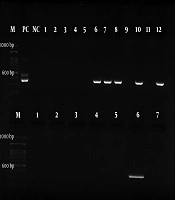
Primers for C. pneumoniae (PCR kits, Chemicon; Germany) were used for detecting the C. pneumoniae-DNA, based on the constructions provided by the manufacturer. The results of positive PCRs were confirmed by positive and negative DNA controls of C. pneumoniae. The main outer membrane protein genes (Omp A) of C. pneumoniae were chosen as the amplification target for the PCR, 333 bases pair product:
CPl (sense) 5' TTA CAA GCC TTG CCT GTA GG 3' 61-80
CP2 (anti-sense) 5'GCG ATC CCA AAT GTT TAA GGC3' 373-393
The reactions were performed in a final volume of 50 mL, containing 0.1 µM C. pneumoniae probe and 10 mL DNA. To determine any significant difference regarding continuous variables, the Student’s t test was used. Chi-square values (CI 95%; P < 0.05) were calculated for all categorical variables and a P value < 0.05 was considered of a significant value. All analysis was conducted using SPSS version 13.5, USA.
4. Results
In 77.6%, 9% and 3% of cases, the maxillary, frontal and ethmoid sinuses were involved, respectively and in 10.4% pan sinusitis were detected. Regarding time of the surgeries, 23% of cases went under adenoid surgery in spring, 17% in summer, 28% in autumn and 32% in winter. Positive C. pneumoniae PCR results were detected in adenoid samples of 13.2 % (7/53) of cases, but none of the controls. Although most cases with positive PCR were older than the negative cases (> 5 years old), there was no significant difference between the two (2/53 vs 2/3; P = 0.1). The mean age of the subjects did not show a significant difference between cases with positive and negative PCR results (6.8 ± 1.9 years vs 8 ± 2 years, P = 0.1).
Positive PCR results in adenoid tissues and the season in which adenoid surgery was performed were related (P = 0.05). However, no correlation was found between positive PCR results and patients' gender (Table 1). Anti C. pneumoniae IgM was detected in 11% (6.51) of patients in the study group and 6.5% (2.31) of controls, without any significant difference (P = 0.7). Even though IgG was not detected in any patients in the study group, (0.51) 13.3% of controls revealed IgG in their blood (P = 0.007) (Table 2). Positive IgM did not have a significant difference with PCR results (P = 0.7). Positive IgG results had a significant difference with PCR results (P = 0.05).
Table 1.
Demographic Distribution in Cases With Positive and Negative PCR Results a
| Results/Variables | Positive PCR | P Value b |
|---|---|---|
| Gender | 0.4 | |
| Male | 4 | |
| Female | 3 | |
| Seasons | 0.05 | |
| Cold | 5 | |
| Warm | 2 | |
| Age, y | 0.1 | |
| > 5 | 5 | |
| < 5 | 2 |
b P value < 0.05 was considered statistically significant.
aAbbreviation: PCR: polymerase chain reaction.
Table 2.
Comparison of the PCR and Serological Results Between Cases and Controls
| Variable results Test | Case, (%) | Control, (%) | P Value a |
|---|---|---|---|
| Positive PCR | 13.5 | 0 | 0.05 |
| Positive IgM | 11 | 6.5 | 0.7 |
| Positive IgG | 0 | 13.3 | 0.007 |
a P value < 0.05 was considered statistically significant.
5. Discussion
We had positive PCR results in 13.2% of adenoid samples in cases (mean age = 6.8) but in none of the controls (P = 0.05). The condition was more prevalent in warmer seasons (spring & summer = 5/7; P = 0.05). Although, based on our findings, recent infection (positive IgM) was seen twice as frequently in cases, but it still was of no significance (11% vs 6.5%, P = 0.7). Positive IgG (previous immunity) was detected in none of the cases (0.51) and 13.3% of the controls, without any significant difference (P = 0.007), suggesting that patients in the study group did not have a C. pneumoniae infection history and thus, the immunity against it. Finding IgM in the sera correlated well with positive PCR results in the cases. The results of the study showed a positive correlation between PCR and serology (IgM) results in the case group.
The positive correlation between PCR and IgM test results indicates the probable role of recent C. pneumoniae infection in at least 13% of cases with adenoid hypertrophy. None of the studied cases showed previous immunity (positive IgG) against C. pneumoniae, however, 13.3% of controls were immune to the disease (P = 0.007). It is not unreasonable to assume that Iranian children get infected with C. pneumoniae between the ages of 6-8 and thus, get immune against C. pneumoniae. In fact, the absence of a protective immunity in some infected cases leads to organism reservation in the adenoid tissue and rhinosinusitis concomitant with adenoid hypertrophy. For the diagnosis of C. pneumoniae infection, culture is the gold standard diagnostic method. However, C. pneumoniae culture is not considered as the optimal method due to limitations like slow growth, technical difficulty and limited viability of the bacteria.
Serological tests are the most common methods for of C. pneumoniae infection Diagnosis. Detection of C. pneumoniae–specific antibodies is also possible by micro immuno fluorescence, ELISA and EIA. As recommended by disease control and prevention centers, for acute C. pneumoniae infection diagnosis, a single IgM titer of greater than or equal to 1:64 or a fourfold increase in the IgG titer in acute and convalescent serum, measured 4 weeks apart from each other, is enough. The use of single IgG or IgA titers is discouraged due to their relatively high overall seroprevalence in healthy populations (4, 5, 9).
Positive PCR results in the present study were two times higher than those reported by Normann et al. (7%) (10) and 5% Cultrara et al. (5%) (6), but very lower than in children with pneumonia (14). Cultrara et al. did not isolate C. pneumoniae from sinus specimens in children, with the use of sensitive culture methods (6). According to Volanen et al. (15) C. pneumoniae infection probably occurs at an early age, asymptomatically, resulting in the consecutive high IgG and IgA antibody concentrations at the ages of seven and eight years. Multiple Iranian studies (using serology and PCR methods) defined a higher incidence of C. pneumoniae infections in respiratory tracts.
The incidence of C. pneumoniae in our population is higher than that of the developed countries (11, 16). C. pneumoniae played a prominent role in pediatric C. pneumoniae (mean age of 3.8 years) (13). Most of the children were seropositive (IgG) at the age of five. The previous immunity (IgG) was present in 57% of children with pneumonia but had similar results in cases and controls. Recent C. pneumoniae infection (IgM) was significantly higher in pneumonia cases (P > 0.001) (13). C. pneumoniae is a common respiratory pathogen in our pediatric populations (< 5 years). C. pneumoniae can occur commonly at an early age, often asymptomatically but may colonize in the adenoid tissue in children. (12, 13). C. pneumoniae was also separated from nasal polyps in adult cases (14).
In recent years, a new role was reported for C. pneumoniae in asthma exacerbation, in North east of Iran (16). C. pneumoniae was separated from 7.6% of nasopharyngeal epithelial cell cultures of patients with asthma exacerbation and 35% of patients with chronic stable asthma and from 14.3% and 5% of their control groups, respectively. Successful eradication of C. pneumoniae was accompanied with clinical improvement (16). Most studies performed in Iran, except for one study, detected C. pneumoniae infection by serological tests and PCR or cultures were not used to confirm the active C. pneumoniae infection (16). Using the most sensitive culture methods, Piacentini et al. (8) were not able to isolate C. pneumoniae from sinus specimens of children. Due to the higher sensitivity of PCR for C. pneumoniae detection, in comparison with serological tests, detection of DNA in adenoid tissues would exaggerate and magnify even the smallest differences between the two groups.
Theoretically, the use of suitable antibiotics to eradicate the C. pneumoniae, before performing adenoid surgery in cases with rhinosinusitis might be helpful. However, it needs further randomized controlled trials before being approved as a treatment measure. The positive PCR and serological (IgM) tests proved the existence of recent C. pneumoniae infection in patients undergoing adenoidectomy. None of these patients had any sign of previous immunity, unlike the controls. All these findings indicate the probable role of C. pneumoniae infection in adenoid hypertrophy in nearly 13% of cases. In our opinion adenoid tissue might act as a reservoir for C. pneumoniae and cause rhinosinusitis concomitant with adenoid hypertrophy in infected children. To establish the effect of suitable antibiotics in C. pneumoniae eradication, before submitting for adenoidectomy, needs more randomized clinical trials in the future.