1. Background
Mycoplasma pneumoniae, the smallest self-replicating microorganism, is associated with respiratory tract and extra pulmonary diseases (1). These bacteria are among the most common causes of atypical pneumonia, especially among school-aged children and young adults (2). The peak of the prevalence of this infection is in late summer and early fall and occurs epidemically every 4 to 7 years (3). In addition, M. pneumoniae is also responsible for other respiratory tract infections such as tracheobronchitis, bronchiolitis, croup, and less severe upper respiratory tract infections (4). The atypical pneumonia due to M. pneumoniae is almost asymptomatic, self-limited, and accounted for 7 - 40% of community-acquired pneumonia (CAP) (3, 5). Furthermore, 18% of the children with M. pneumoniae infection require hospitalization (5). The symptoms of the infection with M. pneumoniae appear gradually and can persist from weeks to months. These symptoms are non-specific, including incessant coughs, discolored sputum in late phase of the infection, pharyngitis, rhinorrhea, and ear pain. Chill is a common occurrence among many cases (6).
Since the diagnosis of this infection, based on clinical signs and symptoms, is impossible, the performance of some reliable laboratory tests to detect M. pneumoniae is essential (7). To diagnose M. pneumoniae infection, collection and preparation of an appropriate clinical specimen is necessary. The clinical specimens include bronchial lavage fluid (BLF), bronchial washings, sputum, and the Dacron swabs collected from oropharynx and nasopharynx areas. Nowadays, the detection of M. pneumoniae is established based on the microbiological, molecular, and serological methods. Moreover, each of these methods has its own advantages and limitations (8). Historically, bacterial culture growth is the gold standard for diagnosis, but it is a time-consuming method with high specificity and low sensitivity (9).
Polymerase chain reaction (PCR) is a reliable method with the high sensitivity and specificity able to detect even a few organisms in a clinical sample. Another advantage of PCR is to detect the infectious agent before raising the titer of antibodies (6). Several gene targets are usually used to detect M. pneumoniae by PCR such as amplification of 16S rRNA, the elongation factor tuf, the P1 adhesin, ATPase, parE, and repetitive elements repMp1 (9, 10). Since there are highly conserved regions in the sequence of the P1 gene, it is an attractive target to design species-specific PCR primers. Hence, the amplification of the P1 gene is reported to be more sensitive than those targeted at the 16S rRNA (11).
In general, in any infection, IgM antibodies appear earlier than IgG antibodies. The detection of IgM in serum is widely used for the serologic diagnosis of infection caused by M. pneumoniae, especially in children (7). A titer of IgM is almost appeared 7 days after the onset of disease and it can be detected in the acute phase of infection (10). The serologic test of gold standard for M. pneumoniae diagnosis is the measurements of specific IgG titers of 4-fold or more after 2 to 3 weeks. However, it is not useful in clinical practice (12).
2. Objectives
Since to date the detection of M. pneumoniae was not studied in Ahvaz, Iran, the current study aimed at evaluating the detection of M. pneumoniae among children with pneumonia in this city using bacterial culture growth, PCR, and the enzyme-linked immunosorbent assay (ELISA).
3. Methods
3.1. Ethics Statement
The ethics committee of Ahvaz Jundishapur University of Medical Sciences approved the study (IR.AJUMS.REC.1394.421).
3.2. Study Patients and Sampling
The current cross sectional study was conducted from September 2015 to February 2016 on pediatric patients with acute pneumonia referred to Abouzar and Imam Khomeini hospitals (Ahvaz, Iran). A total of 136 children under 16 years old (46 males and 90 females) were enrolled in the current work. The patients’ inclusion criteria were as follows: an abnormal chest X-ray suggestive of pneumonia with respiratory symptoms and distress. The patients with the following symptoms were excluded from the study: chronic respiratory problems such as asthma, cystic fibrosis, and consumption of immunosuppressive drugs. The patients enrolled in the current study received no antibiotic during the first 72 hours of admission before the nasopharynx swabs collection (13).
Two nasopharyngeal Dacron swabs were collected from each patient by a pediatrician, 1 was suspended into a 4-mL pleuropneumonia-like organisms (PPLO) broth (Biolife, Spain) and the second swab was suspended into one microliter phosphate buffered saline (PBS) extracting genomic DNA. For serological tests, 1-2 mL of venous blood sample was collected in labeled tubes. In addition, the convalescent phase sera were taken from the patients at the intervals of 2 - 3 weeks after the first sampling.
3.3. Identification
For bacterial culture, the tubes containing PPLO broth (Biolife, Spain) were vortexed, and their contents passed through the 0.45-nm-diameter filters and inoculated on selective enrichment PPLO broth supplemented with 2.5% yeast extract (Scharlab, Spain), thallium acetate (Sigma, US) 1 mg/mL, penicillin (Sigma, US) 500 U/mL, 20% horse serum, 0.2% phenol red (Sigma, US), and 0.5% glucose (Sigma, US). The tubes were incubated for 3 to 5 weeks under a microaerophilic condition (5% - 10% CO2) at 37°C. If growth proceeded, a color change to yellow was observed due to the metabolic activity of the bacteria (fermentation of glucose). Then, as soon as this color changed, 50 µL of the broth medium was incubated on selective enrichment PPLO agar under microaerophilic conditions (8% CO2) at 37°C for 3 to 5 weeks (14).
3.4. Serology
Determination of M. pneumoniae-specific antibodies (IgG and IgM) in the sera was performed by ELISA using commercial kit of Euroimmun (Germany) according to the manufacturer’s recommendations.
3.5. Molecular Method
First, the pellets of the nasopharynx swabs were suspended in 200 µL PBS. Then, they were transferred to the 1.5-mL microtubes. Genomic DNA extraction was performed using high pure PCR template preparation kit (Roche Diagnosis, Mannheim, Germany) according to the manufacturer's instruction. In order to identify M. pneumoniae, the amplification of P1 gene was established (encoding P1 adhesion conserved in all M. pneumoniae species). The primers used for this purpose were a forward primer: 5’ - AGGCTCAGGTCAA TCTGGCGTGGA - 3’, and a reverse primer: 5’- GGATCAAACAG ATCGGTGACTGGG - 3’, which amplified a 440-bp fragment of the P1 gene. The total volume of the reaction was 25 µL prepared as follows: 12.5 μL 2x master mix (Ampliqon, Denmark), 0.6 pM/μL of each primer, 5 μL of template DNA, and distilled water. The amplification was carried out in a thermal cycler (Eppendorf-Germany). The cycling program was corresponded to 1 cycle at 94°C for 5 minutes, 35 cycles at 94°C for 45 seconds, 52°C for 45 seconds, and 72°C for 30 seconds, and a final extension cycle at 72°C for 10 minutes. The PCR products were electrophoresed on a 1% agarose gel (Sinaclone, Iran) and stained with ethidium bromide. The sequence of P1 gene of M. pneumoniae with accession number of KX018790.1 was documented in GenBank, the national center for biotechnology information (NCBI) (as positive control). Distilled water was used as negative control.
3.6. Statistical Analysis
The descriptive statistics, Chi-square, sensitivity, specificity, negative predictive value (NPV), and positive predictive value (PPV) were measured with SPSS version 22.00, and the level of significance was P < 0.05 in the current study.
4. Results
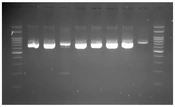
In the current study, 136 throat swab specimens were collected from children under 16 years old with the clinical presentation of pneumonia. Also, 2 serum samples were taken from each patient at intervals of 2 - 3 weeks. The mean age of the study population was 7.52 ± 4.4 years. Moreover, 75 (55.1%) children were less than 5 years old and 61 (44.8%) were 5 - 16 years old. The results of the current study showed that 16 cases had acute pneumonia caused by M. pneumonia, with a significant difference in the age distribution (P < 0.05). Therefore, 18.7% of them were < 5 years old and 81.2% were ≥ 5. The comparison of respiratory symptoms in children with M. pneumoniae pneumonia and non-M. pneumoniae pneumonia is shown in Table 1. There was no correlation between these symptoms and infection with M. pneumoniae (P > 0.05). Descriptive statistical analysis of the laboratory tests in children with M. pneumoniae infection is shown in Table 2. Molecular identification of M. pneumoniae was performed by amplification of the P1 gene (Figure 1). The DNA of these bacteria was detected in 11 out of 136 (8.08%) cases. The sequence of P1 gene with accession number of KX018790.1 was documented in the GenBank, NCBI.
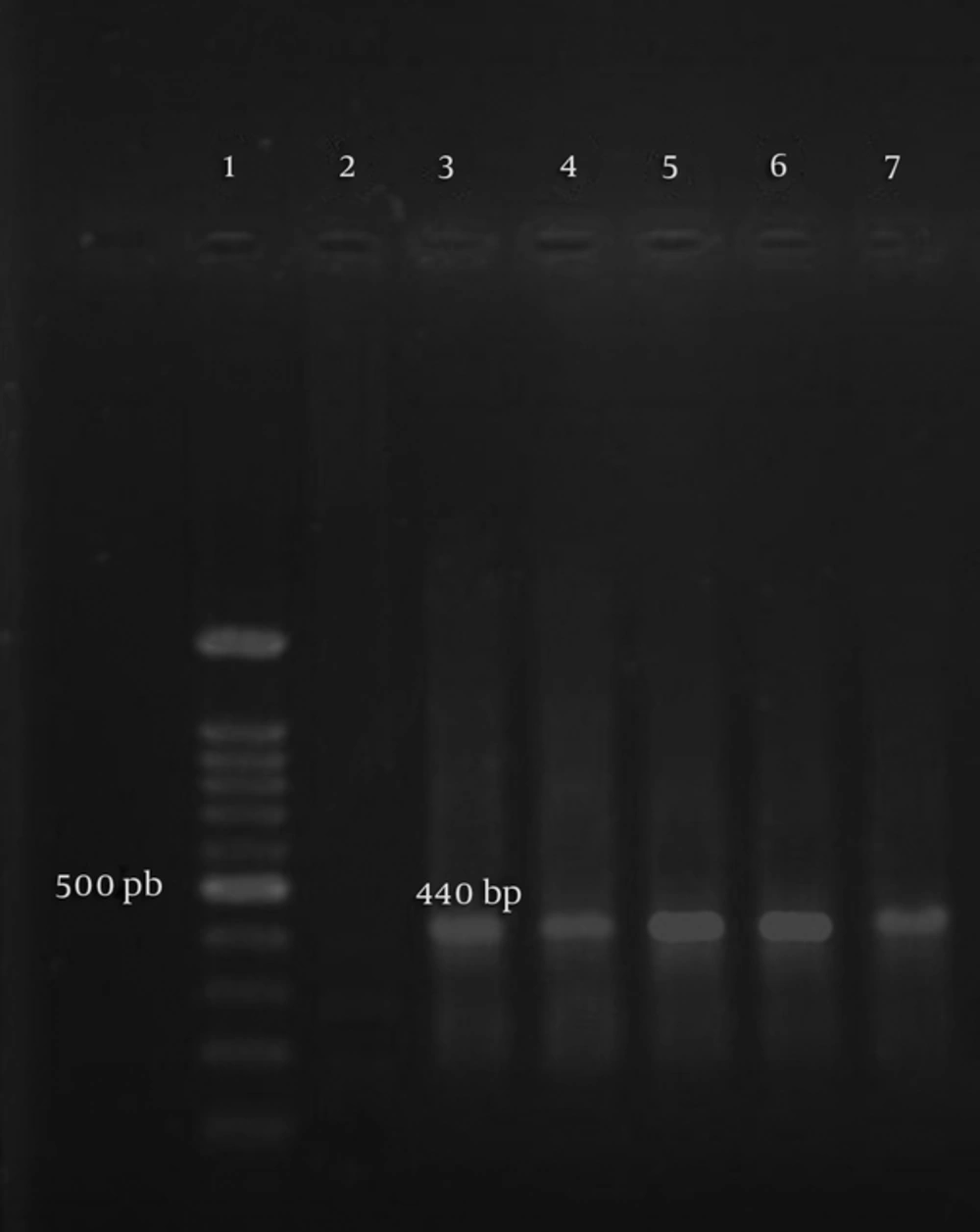
Figure 1.
Lane 1: Ladder of 100 bp (Cinnagen, Iran), lane 2: Negative control (distilled water), lane 3: Positive control (M. pneumoniae; GenBank: KX018790.1.), lanes 4-7: M. pneumoniae from clinical samples.
Table 1.
Comparison of Respiratory Symptoms in Patients with Mycoplasma pneumoniae and non-Mycoplasma pneumoniae Infections
| Symptom | Pneumonia Caused by Mycoplasma Infection (N = 16) | Pneumonia Caused by Non-Mycoplasma Infection (N = 120) | P Value |
|---|---|---|---|
| Vomiting (59) | 9 | 50 | 0.27 |
| Respiratory rales (59) | 4 | 55 | 0.16 |
| Wheezing (67) | 9 | 58 | 0.89 |
| Tachypnea (60) | 7 | 53 | 0.86 |
| Fever (89) | 14 | 75 | 0.09 |
| Consolidation(51) | 6 | 45 | 0.53 |
Table 2.
The Characteristics of Cases with a Positive PCR or Culture Growth Result Based on the Titers of IgM and IgG
| Number | Age | PCR | IgM | First IgG | Second IgG | Culture Growth |
|---|---|---|---|---|---|---|
| 1 | 12 | + | 1.47 | 18 | 81 | - |
| 2 | 11 | + | 2.3 | 21 | 102 | - |
| 3 | 9 | + | 1.2 | 8 | 112 | - |
| 4 | 8 | + | 0.71 | 8 | 91 | - |
| 5 | 7 | + | 0.54 | 9 | 115 | - |
| 6 | 6 | + | 1.3 | 7 | 115 | - |
| 7 | 4 | + | 1.2 | 14 | 150 | + |
| 8 | 6 | + | 0.92 | 12 | 55 | + |
| 9 | 5 | + | 1.75 | 15 | 78 | + |
| 10 | 13 | + | 0.53 | 3 | 87 | - |
| 11 | 4 | + | 1.1 | 10 | 102 | - |
| 12 | 5 | - | 1.01 | 16 | 51 | - |
| 13 | 8 | - | 1.67 | 14 | 36 | - |
| 14 | 3 | - | 1.2 | 12 | 91 | - |
| 15 | 4 | - | 1.8 | 19 | 86 | - |
| 16 | 9 | - | 1.7 | 8 | 76 | - |
In the current study, the acute infection was diagnosed in 14 cases by measuring 4-fold or more increase of IgG in the paired sera and in 12 cases by measuring an IgM titer with ratio ≥ 1.1. In addition, 15 cases had an IgM titer in the borderline range that among them only 1 case had a positive result both for the PCR and culture. In addition, this case had a 4-fold titer of IgG in the paired sera. Mycoplasma pneumoniae was detected in 3 out of 136 (2.2%) cases based on culture growth and this finding was confirmed by PCR, too. In addition, M. pneumoniae DNA was recognized in the throat swabs of all the 3 cases with positive culture results. Moreover, 2 out of 3 cases with positive culture results had an IgM titer with ratio ≥ 1.1 and another case had an IgM titer in the borderline range. However, these 3 patients had 4-fold or greater titers of IgG.
The results of the diagnostic values of the 3 different methods (IgM in acute-phase sera, PCR, and culture growth) compared with those of the 4-fold or greater IgG titers in paired sera as the gold standard are shown in Table 3. According to the data, the sensitivity and specificity of IgM were high. The rates of sensitivity, specificity, PPV, and NPV for IgM and 4-fold or greater IgG titers compared with those of the PCR are shown in Table 4. When PCR was considered as the gold standard, the specificities of the 3 methods were relatively similar. However, the sensitivity of the culture method was low.
Table 3.
Diagnostic Values of Different Methods with a 4-Fold or Greater Increase of IgG Titers in Paired Sera as the Gold Standard
| Sensitivity (%) | Specificity (%) | PPV (%) | NPV (%) | |
|---|---|---|---|---|
| IgM | 95 | 93 | 64.3 | 96 |
| PCR | 71.4 | 99.2 | 90.9 | 96.8 |
| Culture growth | 21.4 | 100 | 100 | 91.7 |
Table 4.
Diagnostic Values of Different Methods Compared with Those of PCR as the Gold Standard
| Sensitivity (%) | Specificity (%) | PPV (%) | NPV (%) | |
|---|---|---|---|---|
| IgM | 63.6 | 94.4 | 50 | 96.7 |
| IgG | 71.4 | 99.2 | 90.9 | 96.8 |
| Culture growth | 27.3 | 100 | 100 | 94 |
5. Discussion
The current study found that 11.76% of cases of pneumonia in Ahvaz were caused by M. pneumoniae. In agreement with the current study results, other studies reported that children aged above 5 years had the higher rates of M. pneumoniae infections in comparison with children less than 5 years old (15-17). In the current study, the detection of M. pneumoniae DNA in the nasopharynx swabs was performed by the amplification of the P1 gene and 11 out of 136 cases (8.08%) were positive. The prevalence of these bacteria by PCR in other reports was different and ranged from 2.6 - 27% (18-20). The differences could be attributed to the heterogeneity of the epidemiologic conditions, types of clinical specimens, the study population, and the molecular techniques used in the studies.
In the current study, 3 out of 136 (2.2%) cases were positive by the bacterial culture. The frequency of these microorganisms using culture in other regions including 10.33% in Japan (20), 2.01% in Iran (21), and 10.8% in Serbia (22) was different in comparison with that of the current study. There are some controversies about the gold standard method to diagnose M. pneumoniae. Some authors indicated that the bacterial culture is a gold standard (23), while others mentioned that PCR or serology tests were the gold standard methods to diagnose acute Mycoplasma infection (24). In the current study, the acute infection was diagnosed in 16 cases, based on the combination of an IgM titer in acute phase and PCR, while with the combination of IgG titers in paired sera and PCR, M. pneumoniae was recognized only in 14 cases. According to the current study findings, it seems that the combination of PCR with IgM ELISA is the most appropriate approach for the laboratory diagnosis of acute M. pneumoniae infection in children. This view is in agreement with the results of researches conducted by Almasir et al. (16) and Chang et al. (25). It is proved that 4-fold or more increase of M. pneumoniae specific IgG titers during 2 to 3 weeks is the gold standard for serologic diagnosis; however, it is not helpful for early treatment of pediatric patients (12).
In the current study, the 4-fold IgG titers and PCR were suggested separately as the gold standard tests and other methods were compared with them. According to the current study results, the rates of the sensitivity and specificity of IgM compared with those of PCR were 63.6% and 94.4%, respectively. Also, the rates of the sensitivity and specificity of IgG compared with those of PCR were 95% and 93%, respectively. Medjo et al., reported the rates of sensitivity and specificity of IgM compared with those of PCR 80.00% and 98.63%, respectively, and for IgM compared with IgG the rates were 81.8% and 100%, respectively (18). Also, Chang et al., (25) used RT-PCR as a reference method and showed that sensitivity and specificity of IgM antibodies were 62.2% and 85.5%, respectively.
These differences in sensitivity can be affected by the time of the sera collection. On the other hands, in the current study the values of NPV and PPV for IgM compared with those of PCR were 96.7% and 50%, respectively. These findings indicated that almost all samples with negative IgM were truly negative, but some of the IgM positive results were false positive. Thus, it is necessary to follow up any positive result with a more reliable test such as PCR to obtain a more accurate assessment to diagnose this organism. The current study results showed that the sensitivity and specificity of PCR in compassion with those of IgG were 71.4% and 99.2%, respectively. In accordance with the current study data, Morozumi (26) and Medjo (22) found similar specificities, while the sensitivity rates were higher in their studies than those of the current study. On the other hand, some researchers reported lower sensitivity and specificity of PCR method in comparison with those of the IgG serology (24, 27). These differences in the results of such studies could be due to PCR types (conventional PCR or RT-PCR), gene targets used for amplification reaction, sample type, or time of sampling.
6. Conclusion
The current study detected the acute infection of M. pneumoniae in 16 cases. It was suggested that the combination of PCR with the IgM was a reliable approach to detect the acute infection caused by M. pneumoniae in pediatric patients.