1. Background
The most common epithelial malignancy in the oral cavity is squamous cell carcinoma (SCC), which includes 90% of oral malignancies with its different varieties and also has a poor prognosis (1). Oral squamous cell carcinoma (OSCC) is a complex malignancy of environmental factors, viral infections and genetic variations, which affect reciprocally and cause a malignant condition (1). The effects of different oncogenic viruses such as HPV, HSV and EBV are discussed in its development (2, 3). Human cytomegalovirus (HCMV) is a member of the Betaherpesvirinae subfamily of Herpesviridae. It is a common pathogen that infects the majority of the population (4). It’s presented in the gingival sulcus fluid (GSF) in many healthy people (5). The CMV-related disease is happened when the immune system is still undeveloped or in the immunosuppressed cases (6). There is a high prevalence of HCMV in tumors with different sources such as brain cancer (7) and salivary gland cancer (8). Also, it has been proved that HCMV has the ability to control host gene expression, oncomudulatory or oncogenic function (9).
2. Objectives
Since the role of the HCMV infection in the OSCC has not been investigated in the south east of Iran and according to the importance of the role of viral factors in development of the OSCC, we decided to investigate the matter in this study.
3. Materials and Methods
All of the paraffin-embedded biopsies with OSCC diagnosis were investigated in the oral pathology department of Zahedan Dental Faculty (Center of the greatest southeast province of Iran) from 2005 to 2014. The demographic information including age, gender, and location of the lesions were extracted from the patient’s records. Two oral and maxillofacial pathologists determined the histopathological grade of the samples by observing the microscopic H & E slides. Tumors with high maturity were classified as grade I whereas tumors with high cellular and nuclear polymorphism and few or no keratin products were graded as grade III and tumors between these two grades named as grade II (10). Then 60 microns in diameter were cut from paraffin blocks and DNA samples were extracted using the RecoverAll™ total Nucleic Acid Isolation Kit for formalin- or paraformalin-fixed, paraffin-embedded (FFPE) tissues (Ambion, Carlsbad, California, USA) during 4 phases of deparaffinization, protease digestion, nucleic acid isolation, nuclease digestion and final purification. DNAs were maintained in -20C temperature during the exam. The DNA quality was also evaluated using spectrometers at wavelengths of 260/280 nm.
Specific primers AmpliSens®EBV/CMV/HHV-6-screen-FRT PCR kit (Moscow, Russia) was used for quantitative assessment of cytomegalovirus Real-Time Polymerase Chain Reaction (RT-PCR) method. Data were analyzed using ANOVA and chi-square test with SPSS 19 software (Inc., Chicago, Illinois, USA). P < 0.05 was considered statistically significant. The protocol of this study was approved by the ethical committee of research deputy of Zahedan University of Medical Sciences with code number 6156.
4. Results
The mean age of the OSCC samples was 58.6 ± 13.8. Among the 48 reviewed cases, 32 cases (66.7%) were female with the mean age of 56.4 ± 12.8 years and 16 (33.3%) were male with a mean age of 63 ± 15.3 years old. Twenty one cases (43.8%) were histopathological grade I, 19 cases (39.6%) were grade II and 8 cases (16.7%) were grade III. In general, 32.7% of the OSCC samples were found in the buccal mucosa, 32.7% in mandibular gingiva, 17.3% in maxillary gingiva, 7.7% in lip, 7.7% in tongue, and 1.9% in floor of mouth. ANOVA and chi-square tests showed no significant difference (P > 0.05) between gender, mean age and histopathological grades respectively (Tables 1 and 2).
Table 1.
Comparison of Age in Different Histopathological Grades of Oral Squamous Cell Carcinoma
| Grade | n | Mean ± SD | Median | Interquartile Range | P Value |
|---|---|---|---|---|---|
| I | 21 | 59.6 ± 11.7 | 60 | 14 | 0.85 |
| II | 19 | 57 ± 16.7 | 60 | 30 | |
| III | 8 | 59.7 ± 14 | 61 | 32 |
Table 2.
Comparison of Gender in Different Histopathological Grades of Oral Squamous Cell Carcinoma a
| Grade | n | Male | Female | P Value |
|---|---|---|---|---|
| I | 21 | 8 (38.1) | 13 (61.9) | 0.38 |
| II | 19 | 7 (36.8) | 12 (63.2) | |
| III | 8 | 1 (12.5) | 7 (87.5) |
a Data are presented as No. (%).
Only 3 cases (6.3%) of 48 samples were positive for HCMV which included a 76-year-old male with OSCC in the maxillary gingiva, a 70-year-old female with a lesion in the mandibular gingiva and a 60-year-old female with OSCC in tongue. All of 3 positive cases were grade I and the load average of the virus was 57.7 × 10³ ± 57.6 × 10³. Due to the low number of the HCMV positive cases, we did not find its relationship with other parameters.
5. Discussion
In the present study, the prevalence of HCMV in the OSCC was 6.3%. The overall prevalence of HCMV in patients with OSCC lesions in different areas have been reported from 0 to 91.5% (2, 3, 11-13). The HCMV in this study was more prevalent than the study in the northeast of Iran. This difference, however, could be owing to the population under study because Delavarian examined only OSCC in patients younger than 40 years (2). Wei reported higher prevalence of HCMV in OSCC than normal oral tissues (11). One property of herpesviruses is diversity incidence in different geographic areas. A variety of genetic, environmental, or viral agents can clarify this regional difference (14).
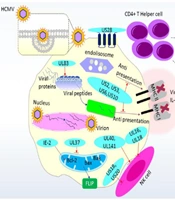
The presence of the HCMV near some tumors and its role in the tumor’s development and progression were discussed in numerous articles (7, 8). Human cytomegalovirus encodes various proteins that affect cellular processes and result in increased proliferation, inhibition of apoptosis, stimulation of cellular migration, release of stimulating factors, induction of resistance to chemotherapy and raising telomerase activity (15). It is considered that HCMV and tumors help each other to achieve their common purpose theory nowadays (escape from the immune system). One side, viruses gain weak immunological environment of tumors to avoid detection by the immune system. On the other hand HCMV creates immune tolerance in tumor cells and avoids immune surveillance by encoding viral proteins (i.e. through non-coding RNAs) and induction of cellular factors (16). For example several products of the primary HCMV genes block major histocompatibility complex (MHC) class I antigen expression that is needed for CD8+ cytotoxic tumor killing (17).
Studies have shown that gender, age, and location of lesions in patients with cutaneous SCC are not associated with HCMV prevalence (18, 19). In the present study due to the small positive HCMV cases, it was not possible to survey relationship with such parameters. In general, according to the low incidence of HCMV infection in OSCC, it can be concluded that the virus can infect epithelial cells but probably would not have a direct oncogenic role shown (3). The presence of HCMV in cancerous tissues implies that the virus can increase the possibility of oncogenesis or involve cancerous tissues as an opportunistic infection (20). Prevalence of HCMV in OSCC is very low in the southeast of Iran and the virus probably has little or no role in the development of OSCC. It is suggested that future studies be performed to investigate the synergistic effects of factors such as smoking and tobacco on HCMV infection and active protein expression of this virus in OSCC.