
1. Background
Human Papillomavirus (HPV) infection is considered as the most common sexually transmitted virus infection (1). Cervical cancer is the second/third leading cause of cancer in females, with an estimated 493,000 cases and 273,000 deaths, annually (2). The Human Papillomavirus genotypes 6, 11, 16 and 18 are transmitted sexually and considered as the most common cause of anogenital warts and cervical cancers (3, 4). Human Papillomavirus are small, non-enveloped, double-stranded circular DNA, 8 kb in size, surrounded by a 55-nm capsid. So far, more than 150 genotypes of the virus have been identified (5). Furthermore, HPV are generally divided to groups of low and high risk. Low risk HPVs result in benign tumors, while high-risk HPVs generate malignant tumors. Human Papillomavirus types 6 and 11 have low malignant potential; however, some studies have introduced these types as risk factors for vulvar malignancy (1, 2). Genotypes 16 and 18 of HPV are high risk HPVs and responsible for 70% of all cervical cancer cases (3-5). A high prevalence of HPV genotypes 16 and 53 has been reported in Iran (6, 7).
The Pap smear, cytological evaluations, serological and immunohistochemical staining methods for identification of HPV variants are insensitive. On the other hand, a highly specific and sensitive test for HPV genotyping determination is the polymerase chain reaction (PCR) (3). Thus, the PCR can be a screening test for detection of HPV DNA in precancerous lesions of genital warts (4, 5).
2. Objectives
The present study was conducted to determine the frequency of HPV genotypes in patients with anogenital warts.
3. Patients and Methods
3.1. Study Design and Population
This study was a cross sectional research designed with 54 patients with anogenital warts referred and registered at the dermatology department of Imam hospital of Ahvaz city, Southwest Iran, during 2011 to 2012. Patients with anogenital warts who under treatment, those with severe systemic diseases, and immunocompromised (cancerous and organ transplanted) individuals were excluded from the study. The ethical committee of Ahvaz Jundishapur university of medical sciences approved this study (ETH-488) and all patients signed an informed consent form. A questionnaire was set up and completed based on the patients’ data such as age, gender, marital status, characteristic of lesions (duration, location and shape) and physical examination. Laboratory tests including venereal disease research laboratory (VDRL), human immunodeficiency virus (HIV), and Hepatitis C virus (HCV) antibodies as well as HBS Ag were carried out for all patients. The warts were diagnosed based on clinical findings for typical lesions while histopathological assessment was performed for suspicious lesions. The specimens of anogenital warts were prepared by shaving with a curette. The samples were then fixed in 10% formalin and sent to a virology laboratory affiliated to Ahvaz Jundishapur university of medical sciences.
3.2. Polymerase Chain Reaction Test
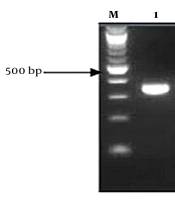
The DNA was extracted from the patients’ tissue sample using a high pure PCR template kit (Roche, Germany), according to the manufacturer’s instruction. The PCR was performed using the following primers (6): forward, GP5 5’ - TTTGTTACTG TGGTA GATACTAC - 3’, and reverse, GP6 5’ - GAAAAATAAACTGTAAA TCATATTC - 3. The PCR reaction mixture was then prepared containing: 5 µL template, 1 µL dNTP 10 mM, 0.3 µL enzyme Taq polymerase 5 U/uL, 5 µL PCR buffers 10X, 1 µL of each primer (GP5 and GP6) at a concentration of 30 picomoles and 36.7 µL of DNase free water with a final volume 50 µL. The PCR reaction mixture including patient samples, positive and negative control was subjected to a thermocycler (Teqlab, Germany) and the following thermal cycles were set up: initial denaturation at 95°C for five minutes, followed by 35 cycles of denaturation at 95°C for 40 seconds, annealing at 40°C for 40 seconds, extension at 72°C for 45 seconds, and final extension 72°C for three minutes. An amount of 6 µL of positive PCR product was electrophoresed on 1.5% agarose and the presence of a 150 bp band indicated a positive reaction. The positive PCR product was then sequenced (ABI sequencer, Bioneer Co. South Korea). The results of sequences were blasted using the national center for biotechnology information (NCBI) site.
3.3. Statistical Analysis
For the analysis of variable mean and standard division, Chi-square and T Student test were used. Data were analyzed using the SPSS 19 software. A P value of less than 0.05 was considered significant.
4. Results
All patients had negative test results for VDRL, HBs Ag, HIV and HCV antibodies. Out of 54 samples, 46 (85.18%) cases showed positive results for HPV DNA. A total of 26 (56.6%) samples were from males and 20 (43.4%) from females while eight (14.81%) showed negative results for HPV DNA (Table 1). The patients’ age ranged from 19 to 44 years with a mean age of 29.6 ± 6.8 years. Overall, 37 (80%) patients had multiple sexual partners, and nine (20%) had one sexual partner. The frequency of anogenital warts was higher in married patients. Duration of disease in 16 participants was less than one month whereas in 18 participants this duration was equal or more than three months, and in 12 patients it was one to three months. The lesions in males were detected on the penis (24 cases), scrotum (1 case), penis-scrotum (11 cases) and suprapubic area (1 case). The lesions in females were found in vulva (12 cases) and anus (7 cases). Anal involvement was seen only in a single female.
A total of 32 (70%) patients with flat condylomata and 14 (30%) with condylomata acuminate were found. Condylomata acuminata was found in 19 females and 13 males whereas flat condyloma was observed in six females and eight males. The HPV genotypes were found in 46 samples including 26 (48.14%) males and 20 (37.03%) females. The results of sequencing revealed that frequency of HPV16, HPV11 and HPV6 was 58.69%, 26.08% and 15.21%, respectively. Furthermore, HPV16 was observed in 17 (31.48%) males and 10 (18.51%) females. Human Papillomavirus 11 was found in seven (12.96%) males and five (9.25%) female, while HPV6 was detected in two (3.7%) males and five (9.25%) females.
Table 1.
The profile of the Studied Patients
| Category | Valuesa |
|---|---|
| Gender | |
| Male | 26 (56.6) |
| Female | 20 (43.4) |
| Region | |
| Urban | 43 (93) |
| Rural | 3 (6.6) |
| Marital Status | |
| Married | 35 (76) |
| Single | 10 (21) |
| Divorced | 1 (3) |
| Lesions | |
| Genital | 39 (84.7) |
| Anal | 7 (15.3) |
| Warts | |
| Flat warts | 14 (30) |
| Condylomata acuminate | 32 (70) |
aData are presented as No. (%).
5. Discussion
In the present study, 46 patients with anogenital warts showed positive results for HPV. A higher rate of positive HPV was found in male patients, which is in accordance with the results of Ciconte et al. (8) and Parkin et al. (2). It is likely that more frequent anal intercourse was the reason behind this finding. In the current study, 76% of married patients had positive HPV results, which was in accordance with the study of Nassiri et al. (9). The most probable reason for the higher rate of genital warts in married individuals might be multiplicity of sexual partners. Genital (85.18%) and anal (15.2%) areas were the most common anatomical locations of the warts. The most common sites of involvement were the penis in males and the vulva in females. In some studies, involvement of genital locations was found more than anal sites (3, 10). In our investigation, the single female patients had only anal involvement. In the Iranian culture, proof of a girls’ virginity prior to her marriage is required, thus anal sexual contact is preferred by some unmarried girls.
In our study, out of 54 patients with anogenital warts, 46 (85%) samples showed a strong positive PCR for HPV. Aubin et al. from France (2008), studied acuminata condylomata among 214 females and 209 males. They detected HPV-DNA with dominant genotypes of HPV6 (69%), and low prevalence of HPV11 (16%) and HPV16 (9%) (11). In the present study, HPV 16 and 6 showed the highest and lowest frequencies in both genital and anal locations, respectively. Wang et al. in 2012, studied a total of 120, 772 samples from female cervical in 37 Chinese cities and reported that the most prevalent genotypes were HPV16 (4.82%) and HPV52 (4.52%), followed by HPV58 (2.74 %). Two genotypes HPV6 (4.01%) and HPV11 (2.29%) were predominant in the low-risk HPV (lrHPV) type, while the mixed genotypes HPV16 + 52 and HPV52 + 58 were most common in females with multiple infections (12).
Skerlev et al. detected HPV 6 or 11 in 79% of the specimens, and HPV 16 or 18 in 21% of samples (3). Nassiri et al. reported that most cases of anogenital warts were associated with high prevalence of HPV 6 and 11 followed by low prevalence of HPV 16 and 18, which were not consistent with our results (9). In our study, one couple with genital warts shared the HPV 11 strain and the other couple shared HPV 16 infection. In the study of Konno et al. on 12 couples with genital warts, 78% of couples had the same HPV DNA, detected by DNA hybridization (13). In conclusion, our findings revealed that the most prevalent genotypes in anogenital warts were HPV 16, 11 and 6, respectively. Human Papillomavirus 16, as the high risk HPV, showed the greatest frequency.