


1. Background
2. Objectives
3. Materials and Methods
3.1. Cell Lines
3.2. Optimization of gD Gene and Construction of Its Expression Vector
3.3. The Expression and Purification of gD Recombinant Proteins
3.4. Western Blot Analysis
3.5. Immunization and Generation of Hybridomas
3.6. Preparation and Purification of Ascites
3.7. Antibody Isotype Determination
4. Results
4.1. Plasmid Construction
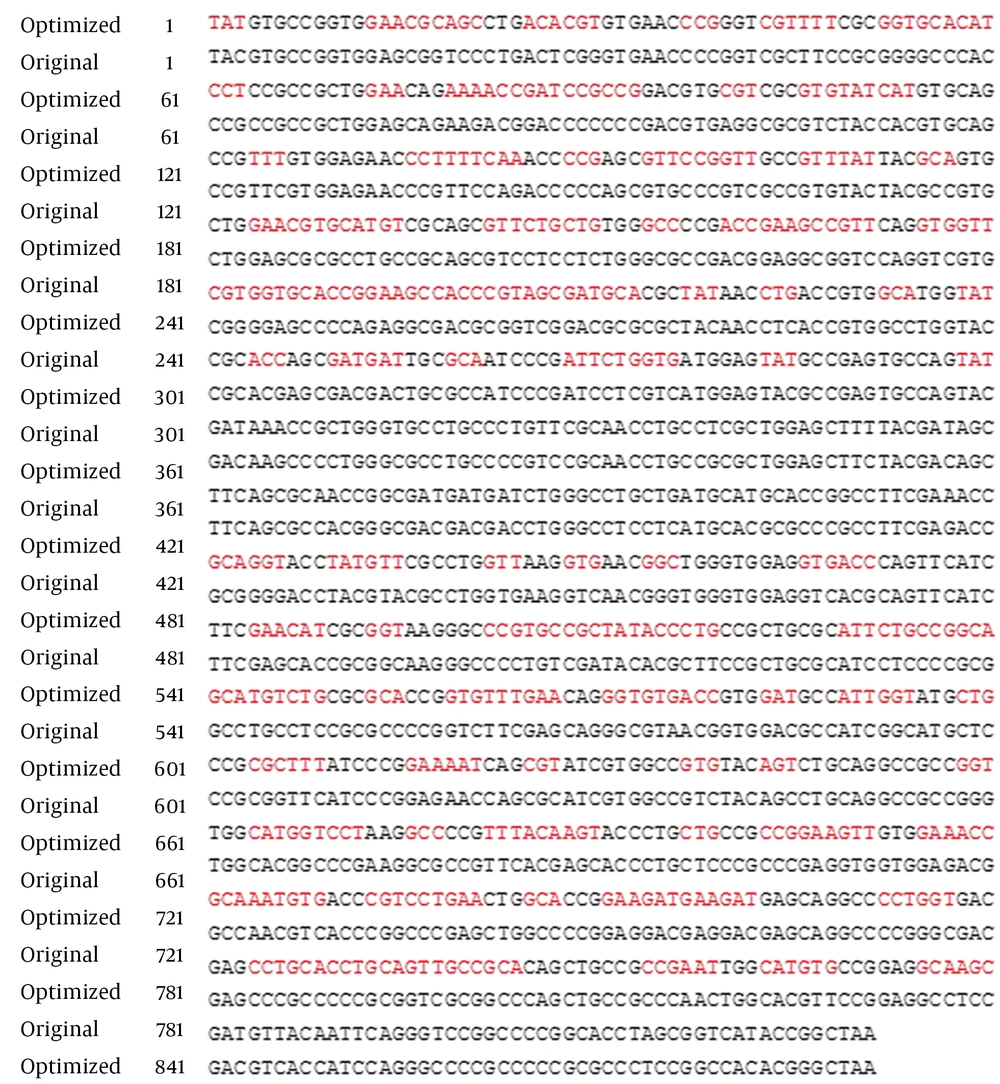
The Comparision of the Optimized and Original Sequence of the Herpes B Virus Gd Gene
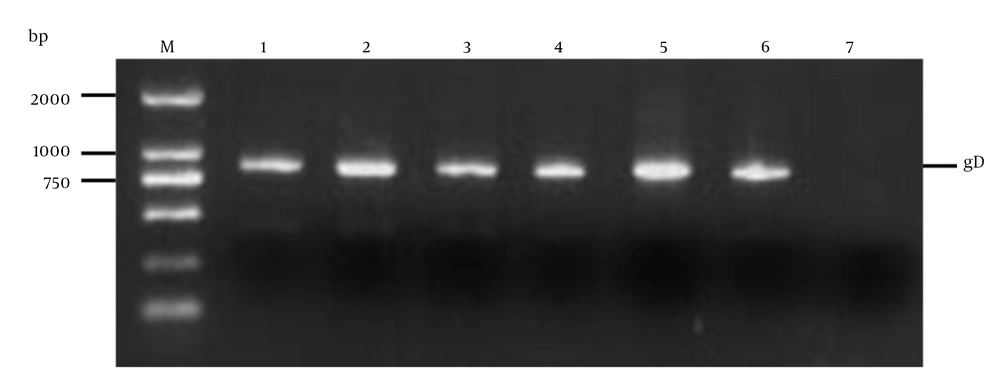
M, DL2000 DNA marker; 1 - 6, randomly selected colony; 7, negative control.
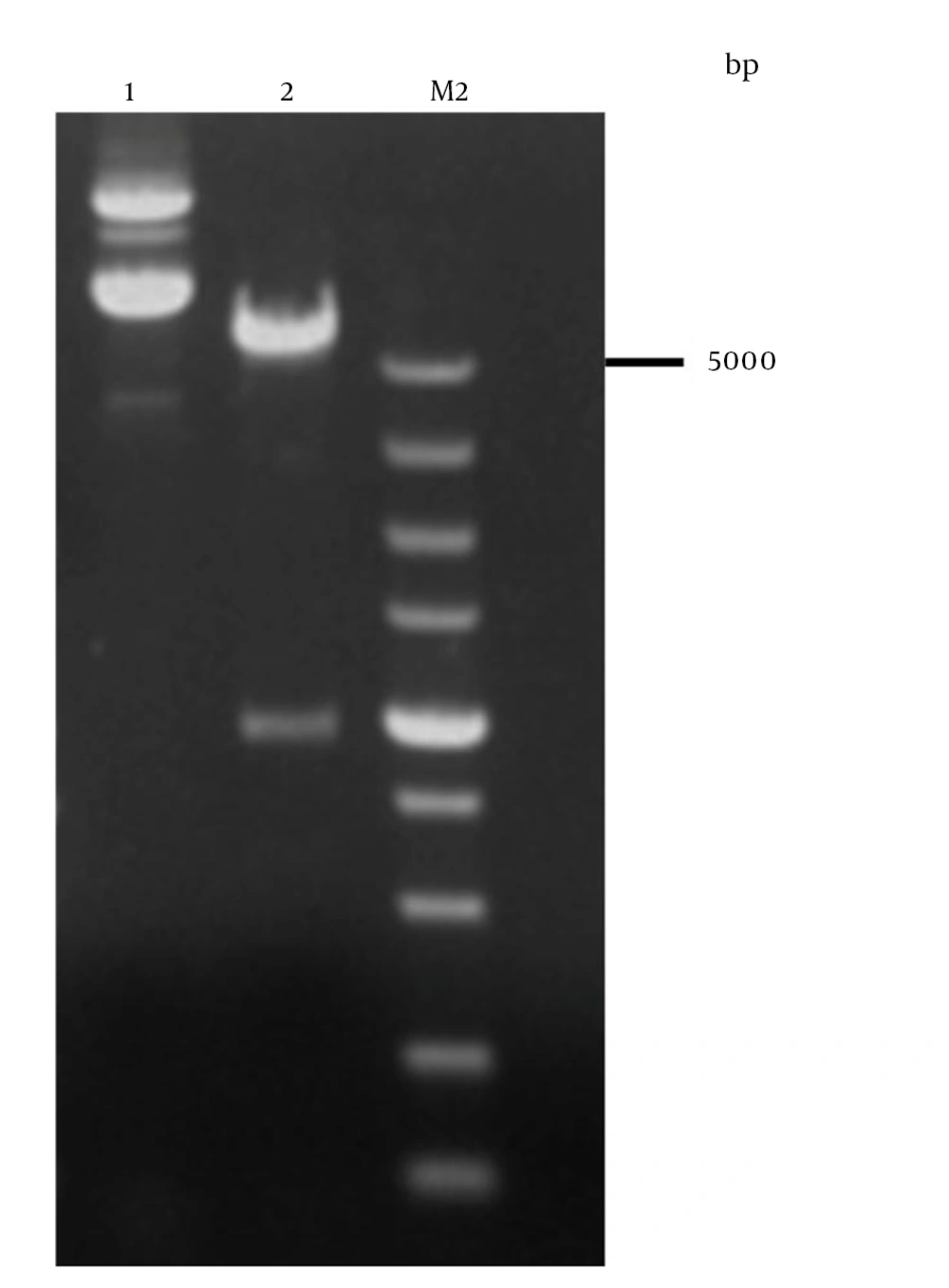
M, DL5000 DNA marker; 1, recombinant plasmid pET-32a-gD; 2, digested product of pET-32a-gD.
4.2. Expression and Purification of the gD Protein
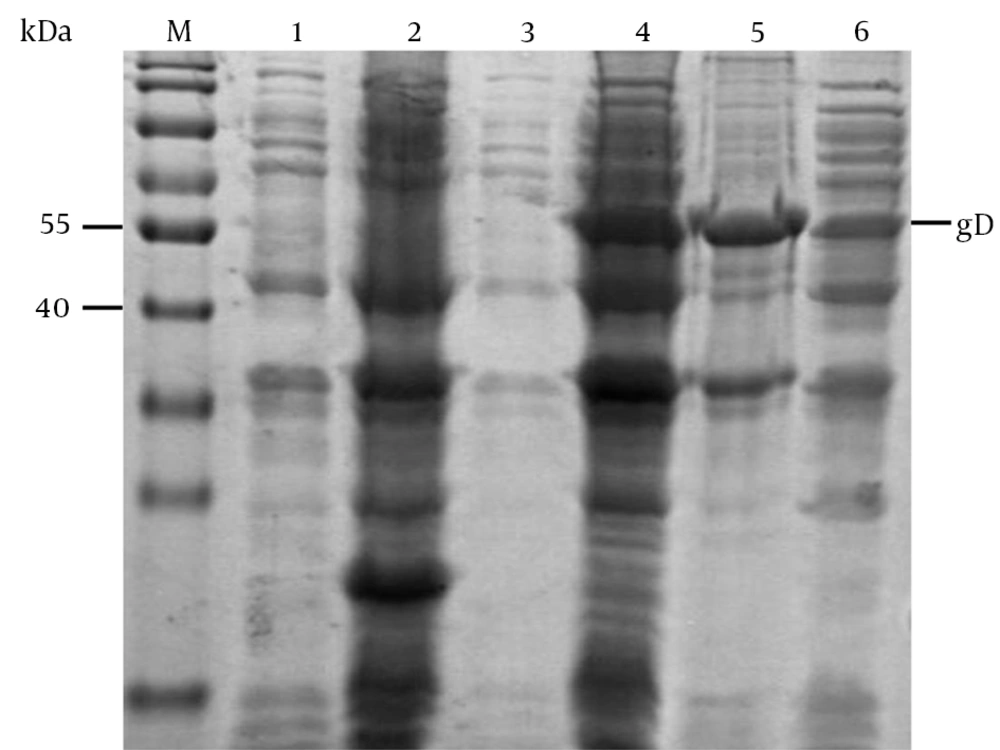
M, protein marker; 1, E. coli Rosetta (DE3) containing pET-32a (+) before induction; 2, E. coli Rosetta (DE3) containing pET-32a (+) was induced with IPTG; 3, E. coli Rosetta (DE3) containing pET-32a-gD before induction; 4, E. coli Rosetta (DE3) containing pET-32a-gD induced with IPTG; 5, inclusion bodies of the E. coli Rosetta (DE3) with pET-32a-gD induced by IPTG; 6, supernatants of the E. coli Rosetta (DE3) lysates with pET-32a-gD induced by IPTG.
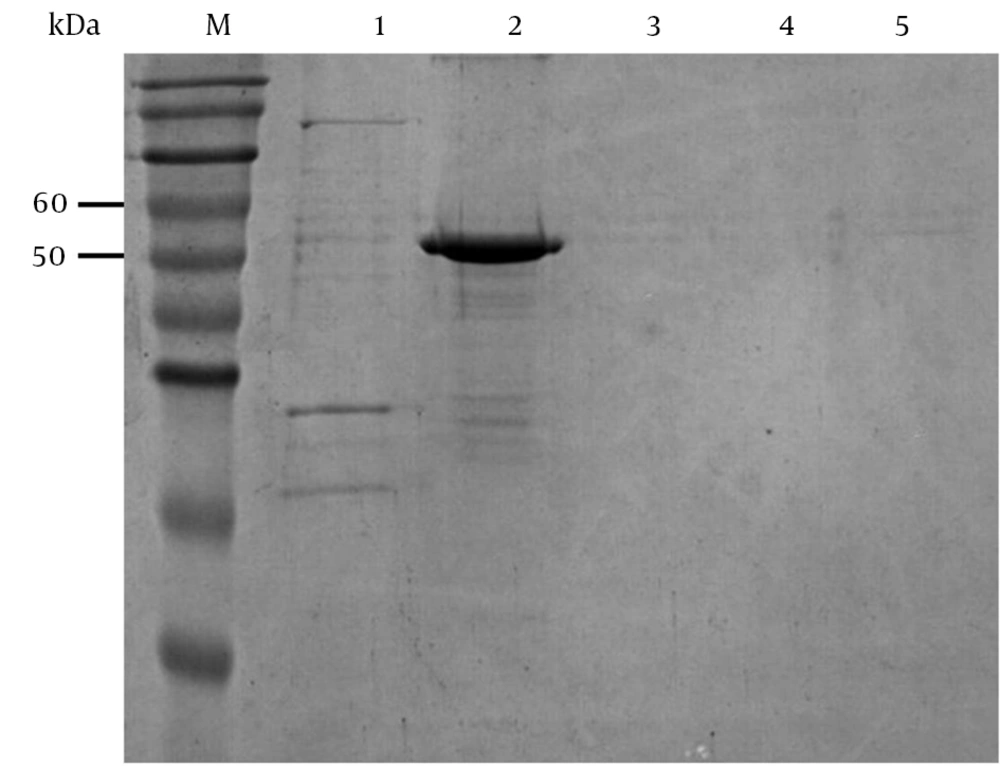
M, protein marker; 1, elution buffer: binding buffer = 2:8; 2, elution buffer: binding buffer = 4:6; 3, elution buffer: binding buffer = 6:4; 4, elution buffer: buffer = 8:2; 5, 100% elution buffer.
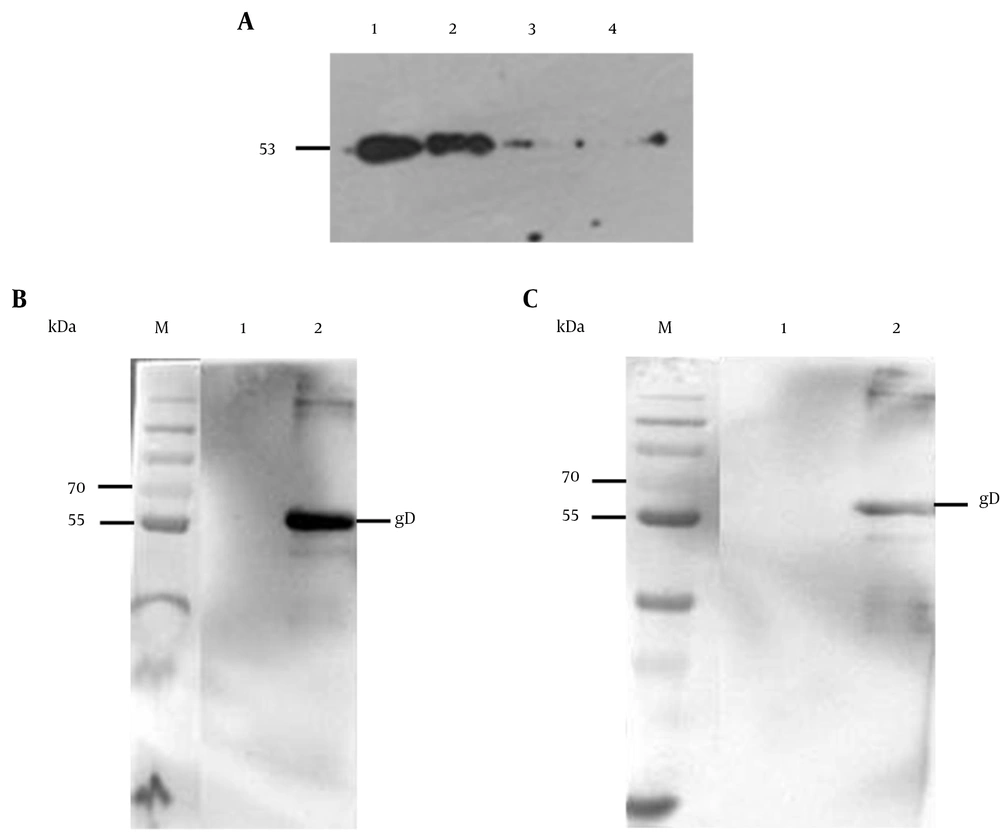
A: 1, purified gD protein from E. coli Rosetta (DE3) containing pET-32a-gD; 2, IPTG induced E. coli Rosetta (DE3) containing pET-32a-gD; 3, non-induced E. coli Rosetta (DE3) containing pET-32a-gD; 4, IPTG induced E. coli Rosetta (DE3) containing pET-32a; B: M and 1, E. coli Rosetta (DE3) containing pET-32a-gD before induction; 2, purified E. coli Rosetta (DE3) containing pET-32a-gD; C: 1, E. coli Rosetta (DE3) containing pET-32a-gD before induction; 2, Purified E. coli Rosetta (DE3) containing pET-32a-gD.
4.3. Preparation of gD Protein-Specific mAb
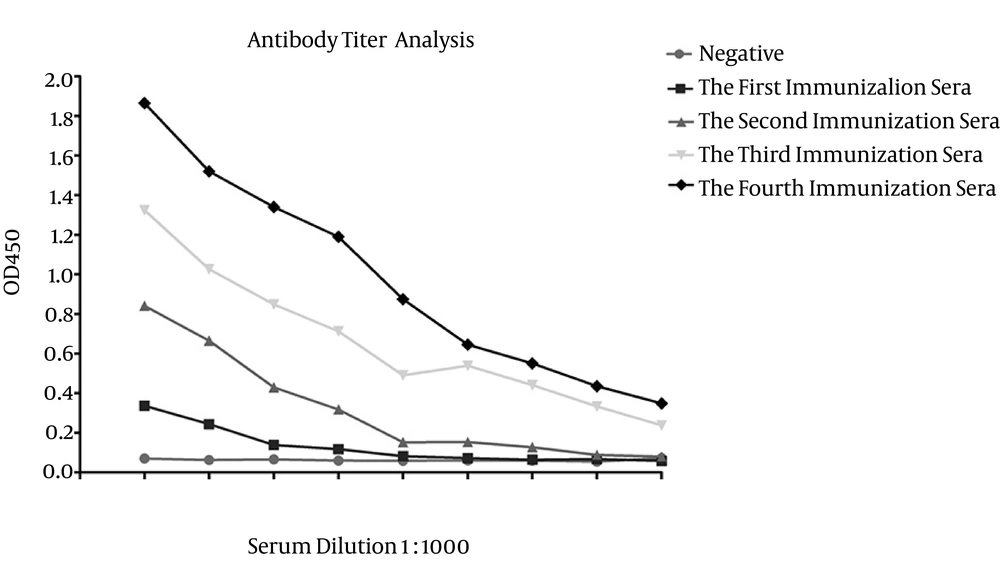
Mouse antiserum was diluted sequentially. 1, 1: 2000; 2, 1: 4000; 3, 1: 8000; 4, 1: 16,000; 5, 1: 32,000; 6, 1: 64,000; 7, 1: 128,000; 8, 1: 256,000; 9, 1: 512,000.
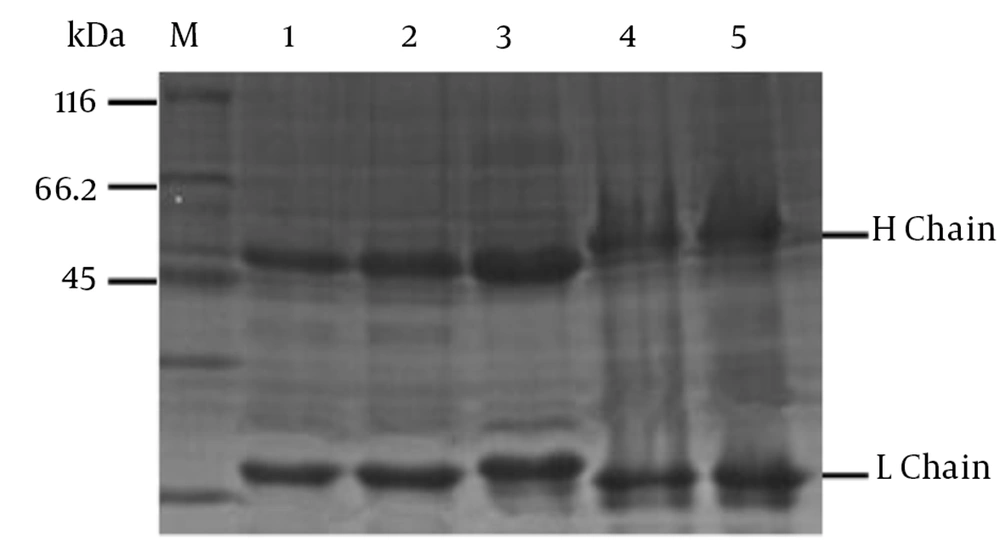
M, protein marker; 1-5, primary purified mAbs 3E7, 3F8, 4B6, 4E3 and 1H3.
| MABs | Isotype | Ascites Titre | Ascites Concentration, mg/mL |
|---|---|---|---|
| 4E3 | IgG2b, κ chain | 10-6 | 3.5 |
| 3F8 | IgG1, κ chain | 10-5 | 3 |
| 3E7 | IgG1, κ chain | 10-5 | 2 |
| 1H3 | IgG2b, κ chain | 10-3 | 1.5 |
| 4B6 | IgG1, κ chain | 10-2 | 0.9 |
