
1. Background
Staphylococcus aureus is a well-known and versatile pathogen, which causes a wide variety of infections, such as cutaneous infections, furunculosis, impetigo, septic shock, scalded skin syndrome, and toxic shock syndrome (1). Staphylococcus aureus secretes various proteins and virulence factors, including toxins, hemolysins, and tissue-degrading enzymes, at the end of an exponential growth period, with the expression levels regulated by a network of interacting regulators in a process called quorum sensing (2). Quorum sensing is a mechanism by which a bacterial population receives input from adjacent cells and generates an appropriate response, enabling the bacteria to survive within the host (3). This regulatory system includes the SarA protein family and two-component systems, including agr and sae (4). The accessory gene regulator locus (agr) of S. aureus is a quorum sensing gene cluster of five genes (hld, agrA, agrB, agrC, and agrD) (5). The agr locus, which controls approximately 150 genes, is critical to S. aureus virulence (6). The hld gene encodes δ-hemolysin and a fragment of RNAIII, which acts as the effector of the agr system.
Quantification of the δ-toxin reflects the agr activity of S. aureus (7, 8). δ-hemolysin is a 26-amino-acid peptide and heat-stabile protein produced by 97% of S. aureus strains. The toxin is capable of causing membrane damage in a wide range of cells and organelles. It is also able to bind and exert toxic effects in immune cells (7). The tst gene of S. aureus encodes TSST-1, which is controlled by the agr system. TSST-1 is the key causative agent of toxic shock syndrome, which is an acute-onset and potentially life-threatening staphylococcal syndrome (9). In addition, δ-hemolysin and TSST-1 are superantigens and exotoxins. Bacterial resistance to antibiotics is a rapidly growing problem in both hospital and community settings. The need for alternative antimicrobial agents has led to increased research on the use of treatments for infections based on natural resources (10).
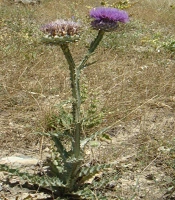
The genus Ferula belongs to the Apiaceae family. It is represented by about 140 species in the Mediterranean area and central Asia. Oleo-gum resin obtained from exudates of rhizomes of Ferula assa-foetida has commercial uses. It has also long been used as a folk phytomedicine for the treatment of different diseases, such as asthma, epilepsy, flatulence, intestinal parasites, poor digestion, and influenza (11).
Carum copticum also belongs to the Apiaceae family. Traditionally, C. copticum has been used as a treatment for various ailments, including bloating, indigestion, respiratory distress, and diarrhea. Other health benefits of C. copticum include antibacterial, antioxidant, and antiparasitic effects (12). Despite research on the antibacterial effects of plant extracts, little is known about the effects of these extracts on the expression of bacterial pathogenicity and virulence factors.
2. Objectives
The goal of this study was to assess the impact of subinhibitory concentrations F. assa-foetida oleo-gum resin and C. copticum fruit on the expression of tst and hld genes in methicillin-resistant S. aureus (MRSA) and methicillin-sensitive S. aureus (MSSA) strains.
3. Methods
3.1. Bacterial Strains and Reagents
MRSA (ATCC 33591) and MSSA (ATCC 29213) strains were obtained from the Pasteur institute of Iran. F. assa-foetida L (oleo-gum resin) plants and C. copticum fruit were obtained from the medicinal plants research center of Isfahan university.
3.2. Extraction of Plant Materials
Dry plant materials were ground into a fine powder using a homogenizer. Ethanolic extracts were obtained from the plant samples by soaking them in flasks containing 95% denatured EtOH in a ratio of 2.5 g of plant material to 50 mL of EtOH for 72 hours. The flasks were agitated daily. Stock concentrations of 50 mg/mL of dry extract in an excipient (DMSO or dH2O) were prepared, sterile filtered (0.2 μm), and stored in darkness at 25°C.
3.3. Antimicrobial Susceptibility Assays
3.3.1. Determination of Minimum Inhibitory Concentrations (MICs)
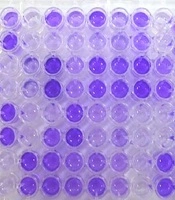
The MICs of F. assa-foetida and C. copticum for MRSA and MSSA were assessed in triplicate, using the microdilution method as recommended by the clinical and laboratory standards institute (CLSI) (13). The MIC was defined as the lowest drug concentration that inhibited growth.
3.3.2. Well Diffusion Assay
The susceptibility of the bacteria to the plant extracts was first determined using a well diffusion assay, following the method described in the CLSI manual (14). Each dried plant extract sample was dissolved and prepared as described. The bacteria were cultured overnight (24 hours) on nutrient agar at 37°C for the preparation of cell suspensions. The bacterial cell suspensions were adjusted to a 0.5 McFarland standard (107 CFU/mL) and spread evenly over the entire surface of the agar plates using a sterile cotton swab. Using a cork borer, 6-mm wells were made on the plates. The plates were allowed to air-dry. Then, 150 μL of the F. assa-foetida (50 mg/mL) and C. copticum (25 mg/mL) extracts were added to the wells, and the same concentrations of ethanol and ampicillin (10 μg) were added as a negative control and positive control, respectively. The tests of each extract were replicated three times. The plates were then incubated at 37°C for 24 hours. The diameter of the zone of inhibition was measured in millimeters, and the results were recorded.
3.4. Bacterial Cultures
For all the experiments, an overnight culture was made from bacterial frozen stock in 5 mL of BHI medium (Lio Filchem, Italy) at 37°C. Isolated colonies were adjusted to a turbidity equivalent to that of a 0.5 McFarland standard corresponding to 108CFU/mL, as confirmed by bacterial counts. When the optical density reached a turbidity equivalent to that of 1.5 × 10⁵CFU/mL, concentrations of 25 mg/mL and 12.5 mg/mL of the sMIC of each plant extract (F. assa-foetida and C. copticum, respectively) were added to glass culture tubes. Cultures with or without antibiotics (growth control) were incubated at 37°C, with shaking. Aliquots were taken 7 and 16 hours later.
3.5. RNA Extraction and cDNA Synthesis
Total RNA was extracted using an RNX-Plus solution (Cinnagen, Iran) kit based on the manufacture’s protocol, with some modifications. Briefly, from each sample, 1 ml was transferred to a sterile 1.5 mL microtube and centrifuged at 6708 × g for 5 minutes. The pellet was washed three times with phosphate-buffered saline and centrifuged at 1677 × g for 5 minutes. Then, 200 µL of ice-cold RNX-Plus lysis buffer were added to each tube, homogenized by vortexing for 10 seconds, and incubated at 70°C for 30 minutes. The vortex process was repeated every 5 minutes (15). Subsequent RNA extraction steps followed the manufacturer’s instructions. After extraction, each sample was treated with DNase I (Thermo Scientific, U.S.) according to the manufacturer’s instructions. RNA integrity was analyzed by electrophoresis on a 1% agarose gel (Cinnagen, Iran). RNA quantification was performed by measuring the absorbance at 260 nm. Nucleic acid purity was assessed by measuring the ratio of the absorbance at 260 nm and 280 nm. Extracted RNAs were stored at -70°C until required for the experiments. The cDNA synthesis of each sample was measured using a cDNA synthesis kit (Thermo Scientific, U.S.), following the manufacturer’s instructions. All the samples were stored at -20°C until used in the analysis.
3.6. Relative Quantitative Real-Time PCR
SYBR Green Real-Time PCR Master Mix (Thermo Scientific, U.S.) was used for amplification and the real-time PCR analysis, according to the manufacturer’s instructions.
The primers (Pishgam, Iran) used were tst-F: 5′-ATTTGTTCACTGTGTCGATAATCC-3′; tst-R: 5′-GGAGTGATTTCAATGGCACAAG-3′; hld-F: 5′-CTGATGCTGCCATCTGTGTT-3′; hld-R: 5′-GTAAGCCCTTTGTTGCTTGC-3′; 16SrRNA-F: 5′-CTGCTGCCTCCCGTAG-3′; and 16SrRNA-R: 5′-CCGACCTGAGAGGGTGA-3′ (16-18).
The amplification was done with the Applied Biosystems StepOne (Thermo Fisher Scientific, ABI, U.S.) system and proceeded as follows: denaturation at 95°C for 5 minutes and then 40 cycles, including denaturation at 95°C for 1 minute, annealing at 55°C for 30 seconds, and 72°C for 30 seconds. The final extension was done at 72°C for 1 minute. A negative control was included in each run. All the samples were analyzed in triplicate, and the 16SrRNA housekeeping gene served as an internal control to normalize the expression levels of the samples. The relative expression levels were analyzed by the ΔΔCT method described in the Applied Biosystems user bulletin no. 2 (19).
3.7. Statistical Analysis
The relative expression ratios were calculated by the ΔΔCt method, and the statistical analysis was done using a Chi-square test with SPSS vs. 16.0.
4. Results
4.1. Determination of the MIC
The MIC of the F. assa-foetida extract for the MSSA and MRSA strains was 25 mg/mL and 50 mg/mL, respectively. The MIC of the C. copticum extract for the MSSA and MRSA strains was 25 mg/mL.
4.2. Well Diffusion Assay
The inhibition zone diameter (IZD) of the F. assa-foetida extract for the MSSA and MRSA strains was 18 mm and 16 mm, respectively. The IZD of the C. copticum extract for the MSSA and MRSA strains was 13 mm and 14 mm, respectively. The IZD for the positive control (ampicillin, 10 μg) was 12 mm for MSSA and 30 mm for MRSA. Ethanol was negative in all the samples.
4.3. Effects of F. assa-foetida on the Expression of MRSA hld and tst Genes
The goal was to examine the influence of a subinhibitory concentration of F. assa-foetida (25 mg/mL) on hld and tst gene expression. Real time-PCR was performed to detect the relative expression levels of the hld and tst in cultures of the MRSA strain, grown with and without F. assa-foetida for 7 and 16 hours. The results represent the differences in hld mRNA levels detected in the presence of F. assa-foetida, relative to the hld mRNA level of the growth control. As expected, the transcription levels of the hld gene of MRSA declined significantly in response to the F. assa-foetida treatment, whereas no effects were observed on the gene expression of tst. The values presented are the means ± SD of three repeated experiments) (Table 1).
Table 1.
Relative Gene Expression Levels of the S. aureus ATCC 29213 hld gene After Treatment With 12.5 mg/mL and 25 mg/mL of C. copticum and F. assa-foetida, Respectively, After 7 and 16 Hours
| Gene | Product | Fold Change ± SDa |
|---|---|---|
| FII hld | δ-toxin | -1 ± 1.2 |
| FIII hld | δ-toxin | -0.08 ± 0.43 |
| CII hld | δ-toxin | -0.23 ± 0.37 |
| CIII hld | δ-toxin | -0.27 ± 1.6 |
aThe real-time PCR results represent the mean of three biological replicates, with three technical replicates for each gene. SD, standard deviation.
4.4. Effects of Carum copticum on the Expression of MRSA hld and tst Genes
The transcription levels of the hld gene were significantly decreased in the MRSA strain (ATCC 33591) upon treatment with C. copticum (Table 1). When the strain was cultured with a 12.5 mg/mL of C. copticum (sMIC), the transcriptional levels of hld decreased by -0.23 ± 0.37 and -0.27 ± 1.6 after 7 and 16 h, respectively. Carum copticum had no effects on tst gene expression of MRSA strains.
4.5. Effect of F. assa-foetida and Carum copticum on the Expression of MSSA hld and tst Genes
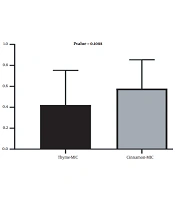
The influence of subinhibitory concentrations of F. assa-foetida and C. copticum (25 mg/mL and 12.5 mg/mL, respectively) on hld and tst gene expression of the MSSA strain (ATCC 29213) was investigated. Carum copticum at a sMIC of 12.5 mg/mL inhibited tst gene expression of MSSA after 16 hours of exposure (fold change of -0.37 ± 0.07), but it had no effect on hld gene expression. Ferula assa-foetida had no effect on the expression of the tst or hld genes in the MSSA strain.
5. Discussion
The increasing incidence of bacterial infections due to MRSA and the resistance of S. aureus to many commonly used antibiotics, such as macrolides, tetracyclines, and aminoglycosides, have reduced the number of therapeutic options (20). Staphylococcus aureus produces virulence factors, which play an important role in the pathogenesis of infection.
Studies have shown that the use of antibiotics and medicinal plants at suboptimal concentrations can interfere with the translation of one or more virulence factors and gene products, such as exoprotein-encoding genes, in S. aureus (21). For example, subinhibitory concentrations of clindamycin differentially repressed the transcription of S. aureus exoprotein genes and acted partially through the two-component system sar (22). The rich antimicrobial content of plants has been described previously, including the quorum sensing inhibitory ability of some antimicrobials, such as eugenol (4-allyl-2-methoxyphenol), an essential oil component in plants (clove) (23). A Western blot analysis in the aforementioned study showed that eugenol reduced the production of staphylococcal enterotoxin A and toxic shock syndrome toxin-1, as well as the expression of α-hemolysin (23). Aqueous extracts from edible plants and fruits, such as Ananascomosus, Musa paradiciaca, Manilkarazapota, and Ocimum sanctum, displayed quorum sensing inhibitory ability against violacein production by C. violaceum, in addition to pyocyanin pigment production, staphylolytic protease production, elastase production, and biofilm formation by P. aeruginosa PAO1 (24).
The present study investigated the effect of F. assa-foetida and C. copticum hydroalcoholic extracts on the expression levels of hld and tst genes in both MSSA and MRSA strains. The sMIC of the F. assa-foetida extract for the MRSA and MSSA strains was 25 mg/mL and 12.5 mg/mL, respectively. The sMIC of the C. copticum extract for both MRSA and MSSA was 12.5 mg/mL. In this study, the expression of the hld and tst genes was examined after 7 and 16 hours of exposure, and the 16srRNA gene was used as an internal control (25). According to the results, at a concentration of 25 mg/mL, exposure to F. assa-foetida decreased the expression of the MRSA hld gene compared to that of the control sample. After 7 hours, the expression of the hld gene was greatly reduced compared with afar 16 hours of exposure. A previous study of three medicinal plants (Ballotanigra, Castaneasativa, and Sambucusebulus) reported a dose-dependent response in the production of δ-hemolysin, indicating strong antiquorum sensing activity in a pathogenic MRSA isolate (5). In the present study, the C. copticum extract also reduced the expression of the MRSA hld gene after exposure for 7 and 16 hours.
The results of the present study showed that the F. assa-foetida extract was more effective that the C. copticum extract in reducing hld gene expression of MRSA, but this finding was inconsistent with the microdilution results. Based on the microdilution results, C. copticum (MIC, 25 mg/mL) inhibited the growth of MRSA at a lower concentration than F. assa-foetida (MIC, 50 mg/mL). However, the F. assa-foetida extract was more effective than the C. copticum extract in decreasing the expression of the hld gene of MRSA. Hamamelitannin extracted from the bark of Hamamelis virginiana (witch hazel), in common with RIP, did not affect the growth of Staphylococcus spp. (26) However, it inhibited the quorum-sensing regulator RNAIII and prevented biofilm formation and cell attachment in vitro (26). In addition, Burt et al. showed that at sublethal concentrations (0.5 mM), carvacrol inhibited the formation of biofilms of Chromobacterium violaceum (ATCC 12472) and Salmonella enterica subsp. but did not impair the bacterial growth or survival of Typhimurium (DT104) and S. aureus (ATCC 0074) (27).
The results of the present study are consistent with those of Burt et al.’s study. In the current study, the expression of the MSSA hld gene showed no decrease following exposure to the sMIC (12.5 mg/mL) of F. assa-foetida and C. copticum. The F. assa-foetida extract was not effective in reducing the expression of the MSSA tst gene at the same exposure. However, the C. copticum extract decreased the expression of this gene after 16 hours of exposure compared to the control sample. As the quorum sensing system plays an important role in regulating the expression of virulence factors, sporulation, and biofilm formation, a better understanding of this system may be helpful in the control and management of diseases and antimicrobial therapy.