1. Background
Invasive fungal infections (IFIs) are among the major infectious complications in critically ill or immunocompromised pediatric patients with prolonged neutropenia or various types of organ transplant. Pediatric patients with hematologic disorders are predisposed to IFIs, mainly due to the use of aggressive chemotherapy regimen or receiving immunosuppressive agents. Based on prior studies, it is estimated that IFI occurs in 8% - 17% of pediatric patients with hematologic malignancies (1-3).
The most common fungi causing invasive infections are Candida and Aspergillus species with respective mortality rates of 30% and 80% in allogeneic hematopoietic stem cell transplantation (4, 5). Conventional diagnostic methods such as blood culture, considered as the gold standard, are insensitive and time consuming (6, 7). Different studies show how delay in starting antimycotic therapy increases the risk of mortality from 15% to 40%, when blood culture is used to isolate fungi (8-10). Other diagnostic procedures including histological examination and culture of deep tissues require an aggressive approach. Given these limitations, non-culture-based diagnostic methods used to detect circulating serum biomarkers, cell wall components or fungal antigens in the blood specimens should be considered to confirm fungal infections.
Galactomannan (GM), one of the major components of fungal cell walls, and circulating antigen in the blood during Aspergillus infections is widely used to diagnose invasive aspergillosis (IA), with an overall sensitivity of 90% and specificity of 92% in daily clinical practices (11). β-D-glucan (BDG), as a pan-fungal marker, is a useful antigen to diagnose Candida and Aspergillus species with 80% sensitivity and 82% specificity (12, 13). Detection of fungal DNA by polymerase chain reaction (PCR) is evaluated in several studies as an attractive alternative test for faster detection of fungal DNA in the blood and other clinical specimens with overall sensitivity and specificity of 86.6% and 82%, respectively (14-17).
2. Objectives
The current study aimed to investigate the incidence of IFIs and evaluate the diagnostic performance of three non-invasive laboratory tests; BDG, galactomannan and nested-PCR in pediatric patients with hematologic disorders.
3. Methods
3.1. Patients and Sample Collection
This cross-sectional study was conducted in a university medical center, Namazee hospital in Shiraz, South-West of Iran, from October 2014 to January 2015. Ninety pediatric patients with hematologic disorders who experienced febrile neutropenia (< 0.5 × 10³ neutrophils/µL) and no response to broad-spectrum antibiotics more than 72 - 96 hours were eligible for inclusion in the current study and due to death or discharge from the hospital, 62 patients remained throughout the study. These patients did not receive any antifungal prophylaxis and were examined for fungal infection signs and symptoms twice weekly. Their clinical samples were collected during the admission periods. After blood collection, presumptive antifungal therapy was started for the patients with suspected fungal infections.
Eighteen healthy pediatrics with no evidence of fungal infections were considered as the control group and all tests were done on their bloods to determine sensitivity and specificity of tests. Patients’ demographic data and pathologic results were collected from their records. All the patients were classified according to diagnostic criteria of the European organization for research and therapy of cancer and mycoses study group (EORTC/MSG) consensus revised definitions draft (18). In the current study, all the suspected patients had host factors. Proven IFIs was defined as positive histopathological evidence of IFIs or a positive culture of specimen obtained by a sterile procedure from a normally sterile site with clinical sign and symptoms of infection. Probable IFIs patients are those with host factor with clinical signs and symptoms of infections (one major or two minors) and positive mycological culture of specimens obtained from none sterile sites. Possible IFIs are those with host factors criteria with mycological evidence or clinical (one major or two minors) criteria (18).
3.2. Ethical Considerations
The ethics committee of Professor Alborzi clinical microbiology research center, Shiraz University of Medical Sciences, approved the current study, which was conducted in accordance with the 1975 declaration of Helsinki, as revised in 1983. Written informed consents were obtained from all parents of pediatric patients and controls prior to the study.
3.3. Culture
Clinical samples such as cerebrospinal fluid, pleural and abdominal taps, tissue, bronco-alveolar lavage and sputum from patients with signs of fungal infections were cultured on sabouraud dextrose agar with chloramphenicol (Merck, Germany) and evaluated by direct microscopic examination. The plates were incubated at 30°C for 7 - 14 days. At least two blood cultures were obtained aseptically by inoculating the samples into BACTEC medium (Becton-Dickinson, Spark, MD, USA). Yeasts isolated from positive cultures were identified using API 20C Aux (bioMerieux, Hazelwood, Mo), according to the manufacturer’s instructions. Molds were identified by lacto phenol cotton blue smear and colony morphology studies.
3.4. Serologic Examination
Blood samples were collected from all patients and controls and separated serums were kept frozen at -20°C until further examination. Galactomannan, β-D-glucan (BDG) and nested-PCR testing were checked at least twice per week for each patient. BDG was determined using the glucan detection kit, Glucatell (associates of CapeCod, Falmouth, MA, USA). A cut-off value of ≥ 60 pg/mL was considered as positive (19). Detection of the GM antigen was performed by the Platelia Aspergillus enzyme immunoassay (EIA) (Bio-Rad Laboratories, Hercules, USA), according to the manufacturer’s instructions. Positive and negative controls were included in each assay. A result was considered positive if the level of GM was ≥ 0.5 ng/mL in duplicate tests.
3.5. Nested-PCR
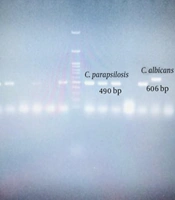
DNA extraction from the sera was performed using the QIAamp DNA Kit (Qiagen, Hilden, Germany), in accordance with the manufacturers’ instructions. Procedures described by Yamakami et al. (15) were used for the nested-PCR, with two sets of universal primers (ITS1, ITS4) for all the Aspergillus species and species-specific forward and reverse primers applied for Candida spp. as described by Lindsley et al. (16). The amplification of the rRNA gene resulted in an approximately 600-bp-long amplicon for all tested fungi. Primers were synthesized by TIB-MOLBIOL (Berlin, Germany). Amplified DNA fragments were detected by gel electrophoresis using 2% agarose gels.
3.6. Statistical Analysis
Data were transferred into SPSS ver. 16 (IBM SPSS, Chicago, USA). The diagnostic performances of the GM, BDG and nested-PCR were evaluated in terms of sensitivity, specificity, positive predictive value (PPV) and negative predictive value (NPV) of each test.
4. Results
A total of 62 pediatric patients with hematologic disorders were included in the study. Among the patients, 64.5% (n = 40) were male and 35.5% (n = 22) were female, with the mean age of 9.3 years (ranged from 1 to 16 years). The underlying diseases were hematologic disorders including acute lymphocytic leukemia (n = 29, 46.8%), acute myeloblastic leukemia (n = 12, 19.4%), aplastic anemia (n = 3, 4.8%), pancytopenia (n = 6, 9.7%), chronic granulomatous disease (n = 2, 3.2%) and other disorders (n = 10, 16.1%) such as solid tumor or myelodysplastic syndrome. Culture, BDG, GM and nested-PCR were done on all of the 321 blood specimens (average five samples for each patient). On the whole, samples of 134 patients including seventy-two bronco-alveolar lavages, ten sinus tissues, thirty-nine sputum, seven cerebrospinal fluids, three abdominal and three pleural fluids were examined by routine culture and microscopic examinations.
On the basis of positive culture results of clinical samples along with suggestive host factor, clinical and radiological criteria, patients were categorized into the proven, probable or possible groups (18). According to EORTC/MSG criteria, 26 patients were considered as proven and probable IFIs with the overall incidence of 42%, including 3 (5%) proven and 23 (37%) probable cases. Eighteen (29%) patients were considered as possible cases. Fungal species were isolated from 18 patients by culture. The etiologic agents were six cases of C. albicans, two cases of C. tropicalis, four cases of A. flavus and six cases of A. fumigatus (Table 1). Of the three proven patients, the blood culture was positive for C. albicans and one for C. tropicalis species. The third one had positive sinus histopathology result (invasion) and tissue culture for A. flavus species.
According to EORTC/MSG (18), 23 patients were considered as probable including 15 patients with positive culture (Candida and Aspergillus species) of their non-sterile clinical samples (bronco-alveolar lavage, lung/bronchial washing, sinus/sinus washing) (Table 1) and eight patients with positive GM test of their blood samples (Table 2). Among the 18 cases of control group, four patients had BDG level ≥ 60 pg/mL and two had positive PCR results. None of the controls was positive by GM test. For 26 patients with proven and probable criteria (documented cases), the sensitivity, specificity, negative and positive predictive values of BDG test were reported 92.3%, 77.7%, 85% and 87.5%, respectively.
Of the patients with suspected IFIs according to culture and positive GM results, based on EORTC/MSG criteria, 18 were classified as proven and probable invasive aspergillosis (IA) and eight as systemic candidiasis (Tables 1 and 2). In 17 out of 18 patients with IA, GM serum levels were ≥ 0.5 ng/mL in at least two blood samples. The sensitivity, specificity, negative and positive predictive values of GM test in the collected serum samples from patients with proven and probable IA were 94.4%, 100%, 100% and 94.7%, respectively. The sensitivity of nested-PCR in the study was 1 CFU/mL. Twenty-two out of 26 patients with proven and probable criteria were PCR positive for Aspergillus and Candida species (Tables 1 and 2). The sensitivity, specificity, positive and negative predictive values of the nested-PCR in this group of patients were 84.6%, 88.8%, 91.7%, and 80%, respectively.
Table 1.
Diagnostic Performance of Galactomannan, β-D-glucan and Nested-PCR in Patients with Proven or Probable Invasive Fungal Infections Documented by Culture
| Case No. | EORTC/MSG | GM, ng/mL | BDG, pg/mL | Site of Infection | Culture Result | PCR Result |
|---|---|---|---|---|---|---|
| 1 | Proven | 0.111 | 77 | Blood | Candida tropicalis | _ |
| 2 | Proven | 0.108 | 85 | Blood | C. albicans | + |
| 3 | Proven | 0.500 | 112 | Sinus/biopsy | Aspergillus flavus | + |
| 4 | Probable | 0.545 | 65 | Lung/bronchial washing | A. flavus | + |
| 5 | Probable | 0.530 | 192 | Lung/bronchial washing | A. fumigatus | + |
| 6 | Probable | 0.915 | 95 | Lung/bronchial washing | A. flavus | + |
| 7 | Probable | 0.300 | 50 | Sinus/sinus washing | A. fumigatus | _ |
| 8 | Probable | 1.154 | 110 | Lung/bronchial washing | Aspergillus spp. | + |
| 9 | Probable | 0.610 | 74 | Lung/bronchial washing | A. flavus | + |
| 10 | Probable | 0.598 | 125 | Lung/bronchial washing | A. fumigatus | _ |
| 11 | Probable | 1.790 | 72 | Lung/bronchial washing | A. fumigatus | + |
| 12 | Probable | 0.841 | 55 | Lung/bronchial washing | A. fumigatus | + |
| 13 | Probable | 0.147 | 119 | BAL | C. albicans | + |
| 14 | Probable | 0.108 | 113 | BAL | C. albicans | + |
| 15 | Probable | 0.112 | 130 | Sputum | C. albicans | + |
| 16 | Probable | 0.147 | 340 | FUO | C. tropicalis | _ |
| 17 | Probable | 0.200 | 132 | FUO | C. albicans | + |
| 18 | Probable | 0.154 | 128 | FUO | C. albicans | + |
Abbreviations: BAL, bronco-alveolar lavage; EORTC/MSG, European organization for research and therapy of cancer and mycoses study group; FUO, fever of unknown origin; PCR, polymerase chain reaction.
Table 2.
Diagnostic Performance of Galactomannan, β-D-glucan and Nested-PCR in Patients with Probable Invasive Fungal Infections and Negative Culture Results
| Case No. | EORTC/MSG | GM, ng/mL | BDG, pg/mL | Site of Infection | Culture Result | PCR Result |
|---|---|---|---|---|---|---|
| 1 | Probable | 0.514 | 190 | FUO | _ | + |
| 2 | Probable | 0.555 | 72 | FUO | _ | + |
| 3 | Probable | 0.532 | 163 | FUO | _ | + |
| 4 | Probable | 0.725 | 137 | FUO | _ | + |
| 5 | Probable | 0.625 | 201 | FUO | _ | + |
| 6 | Probable | 0.500 | 75 | FUO | _ | + |
| 7 | Probable | 0.634 | 149 | FUO | _ | + |
| 8 | Probable | 0.834 | 94 | FUO | _ | + |
Abbreviations: EORTC/MSG, European organization for research and therapy of cancer and mycoses study group; PCR, polymerase chain reaction.
5. Discussion
In patients with suspected fungal infections, rapid and accurate diagnosis of IFIs is hampered by non-specific clinical manifestations and difficulties in obtaining appropriate biological samples. Traditional diagnostic methods were insensitive and the gold standard diagnostic tests (histopathologic evidence and cultures from deep tissues) needed invasive procedures in high risk patients, due to their critical conditions and concomitant severe thrombocytopenia (20). In that case, accurate diagnosis was made by clinical and radiological data (computed tomography (CT) scan) and laboratory tests including culture, GM in serum or bronco-alveolar lavages, BDG and PCR on clinical samples of patients.
Available data show a remarkable increase in the incidence of Candida and Aspergillus species, the most common agents responsible for IFIs, among patients during the past decades (1). The overall incidence of IFIs in children with malignancy or severe hematological diseases is different. The present study reported the incidence rate of IFIs in pediatric patients with onco-hematological diseases (42%), including (n = 3, 5%) proven and (n = 23, 37%) probable cases. Eighteen (29%) patients were considered as possible cases. In the study by Mor et al., 75 out of 1047 (7.2%) children hospitalized in the hematology/oncology department were diagnosed as IFIs including proven (n = 16, 21.3%), probable (n = 18, 24%) and possible (n = 41, 54.7%) cases (2). In a recent report on the frequency of IFIs in a pediatric cohort by Watanabe et al., who retrospectively reviewed the records of 743 neutropenic episodes from 1997 to 2008, the overall frequency was 0.8% (n = 6) and frequencies of proven, probable and possible fungal infections were 0.3% (n = 2), 0.4% (n = 3) and 0.1% (n = 1), respectively (21). The difference between the current observations and the above mentioned results may be attributed to substantial impacts of different characteristics of the study population, diagnostic methods or health care systems.
Development of reliable methods for the early diagnosis of IFIs is the most important goal in the management of the patients. Recent studies demonstrated the importance of BDG to diagnose fungal infections (19, 22, 23). According to the current study, the sensitivity, specificity, NPV and PPV of BDG test were 92.3%, 77.7%, 85% and 87.5%, respectively. Karageorgopoulos et al. reported an overall sensitivity of 77% and a specificity of about 85%, NPV of 95% and PPV ranging from 59% to 96% in pediatric patients with hematologic disorders through a meta-analysis study (24). Variable ranges of sensitivity and specificity of BDG among patients are largely due to the use of different cut-off values, as Ostrosky-Zeichner et al. reported that when the Glucatell assay was performed in 22 out of 163 patients with cut-off of 60 pg/mL, the sensitivity of the test was 69.9% and specificity 87.1%, but increasing the cut-off to 80 pg/mL provided a sensitivity of 64% and specificity of 92.4% (25). Moreover, false positive results may occur during the treatment, due to the use of some immunoglobulins or contaminated albumin with fungal elements or concomitant β-lactam therapies and bacterial co-infections (26, 27).
The diagnostic potential of circulating GM Ag to predict the development of IA is increasingly considered in patients with hematologic disorders and several studies confirmed the value of GM detection in this group (28-30). As indicated in the current study, GM test demonstrated high sensitivity and specificity (94.4% and 100%, respectively) with NPV and PPV of 100% and 94.7%, respectively. Hoenigl et al. evaluated the diagnostic potential of the GM test and reported the overall sensitivity, specificity, NPV and PPV of 80%, 98%, 89% and 95%, respectively, among pediatric hematologic patients with proven and probable IFIs (30). In contrast, a recent study evaluating the Aspergillus antigen test reported a sensitivity of 79%, specificity of 61%, NPV and PPV of 54% and 83%, respectively (31).
The discrepancy in the results may be attributed to the possibility of concomitant use of antifungal therapy or probability of obtaining a false-negative result based on the optical density cutoff value used (optimal value was 0.5 ng/mL). False-positive results might be originated from factors such as concurrent use of some antibacterial treatments (piperacillin/tazobactam even up to five days after the cessation of treatment), concomitant administration of amoxicillin with or without clavulanate and use of various brands of milk formula and liquid nutrient supplements containing soybean protein (32).
The other test for the sensitive detection of IFIs and fungal DNA of most fungi is PCR. Depending on the type of PCR assay, differences in DNA extraction and product detection method, the reported sensitivity and specificity in the diagnosis of IFIs could vary. Based on the current study data, the overall sensitivity and specificity of nested-PCR in proven and probable cases were 84.6% and 88.8%, respectively. For panfungal PCR and nested-PCR assays, these rates were reported 75%, and 92% (31), and 80% and 81%, respectively (33). Some studies focused on pediatric patients with hematological malignancy demonstrated a complete lack of sensitivity of PCR (28); whilst in others sensitivities were similar to those of the current population (8). However, given the fact that until recently there was no standardized protocol for PCR test, diversity of the designs of different studies did not allow the easy comparison of study results. Although high sensitivity and specificity were reported for PCR in the current assay, it was a technique that should be validated in further prospective studies.
5.1. Conclusions
Based on the current study data, the rate of IFIs in pediatric patients was high. Early diagnosis of infection has an important role in prognosis of the patients. Non-invasive methods such as BDG, GM, and nested-PCR tests can serve as efficient diagnostic tools in pediatric hematologic patients with suspected IFIs, especially in cases without any positive culture results. The results should be interpreted with caution and only in combination with clinical, radiological, and microbiological findings.