
1. Background
Lots of patients require several drugs to treat multiple chronic diseases. Recommendation of multiple drugs is related to the increased risk of adverse drug, particularly among patients with hepatic injury (1). Liver is one of the most important organs in the body; it performs a major role in the metabolism of foreign compounds entering the body (2). The common causative agents of liver injuries are exposure to the foreign compounds such as therapeutic drugs (e.g., paracetamol, antibiotics, anti-tubercular drug, etc.), toxic chemicals (e.g., carbon tetrachloride (CCL4), aflatoxin, etc.), and microbial agents (e.g., hepatitis viruses, malarial parasites, and Leptospira spp.). Therefore, these compounds have many toxic effects on the human liver (3, 4). CCL4 is a chemical substance greatly used to induce liver tissue damage model in empirical studies, and its acute hepatotoxicity is studied widely in experimental animals and humans (5, 6). CCL4 in liver, by producing free radicals (CCL3 and/or CCL3OO), can react with sulfhydryl groups and the covalent binding to the cell proteins that eventually lead to membrane lipid peroxidation and finally to cell necrosis (7-9). Liver diseases are among the most critical health problems (10, 11). Herbal medicines are more and more accepted and their usage is prevalent for many diseases such as liver disease (12). Therefore, interest in alternative medicine is increasing worldwide, probably because there are only few universally effective and available options to treat liver diseases. Actually, since humans realized that they can use plants to relieve ailments and diseases, use of herbal medicines was started (13). As obtaining a synthetic drug is expensive, the developing countries tend to use these natural medicines (14). According to the world health organization (WHO), 80% of people in the developing countries depend on traditional medical practices to meet and/or supplement their basic health needs. Among medicinal plants, Prunus cerasus may be a candidate for therapeutic uses in specific diseases; it contains natural compounds with potential disease-fighting and antioxidative properties (15). However, legal regulations concerning herbal medicine are still missing to confirm their effective usage in liver diseases. Even so, some medicinal herbs have promising results (16).
2. Objectives
The current study aimed at evaluating the hepatoprotective effects of microemulsion (ME)-based system of Prunus cerasus kernel extract on CCL4-induced liver damage in mice.
3. Methods
3.1. Animals and Chemicals
Male albino mice (average body weight: 25 - 30 g) were purchased from the animal house of Ahvaz Jundishapour University of Medical Sciences, Ahvaz, Iran. Food and water were given ad libitum. All animals were housed (5 animals per cage) in polypropylene cages, kept at constant temperature of 22 ± 2°C and humidity of 50% - 55%, with automatically controlled 12:12 hour light/dark cycle.
Analytical CCL4 (> 98% purity), Span 20, Tween 80 and propylene glycol (PG) used in the current experiment of pharmacopoeia grades were purchased from Merck, Germany. Other materials (ethanol, formalin, paraffin, salts, and olive oil) were purchased from local markets; all chemicals and solvents were of analytical grade. Prunus cerasus kernel was donated by the department of pharmacology (Iran-Ahvaz).
3.2. Extraction Procedure
Solid fraction of Prunus cerasus kernel seed was extracted in the department of toxicology (Iran-Ahvaz). The solid kernel fraction was soaked in 70% ethanol for 3 days with occasional shaking. The extract was filtered through a clean cotton cloth, and then, solvent was evaporated using a rotary evaporator at 40°C temperature in vacuum. The extract doses were selected on the basis of experiments conducted in the university laboratory and earlier reports (17). Therefore, with regard to the effective doses of Prunus cerasus kernel extract in mice (250, 500, and 1000 mg/kg), the current study used the same doses considering the body weight of the mice rather than the base ME; thus, 2.5%, 5%, and 10% ME extracts were obtained.
3.3. Microemulsion Preparation
ME components were detected through construct a pseudoternary phase diagram by the titration method. The system components included olive oil (oily phase), Tween 80, and Span 20 with the ratio of 1:1:1 as surfactant and PG as co-surfactant. The ratio of surfactant to co-surfactant was 3:1. A clear and transparent system was obtained after adding various doses of Prunus cerasus kernel extract.
Various MEs were selected from the pseudoternary phase diagram with 3:1 weight ratio and 2.5%, 5%, and 10% Prunus cerasus kernel extracts. The stability of MEs was studied regarding the temperature and centrifugation. Finally, the best MEs in terms of stability and the mean globular droplet size were selected and used in the experiment (Figure 1). The MEs were used to evaluate toxicity effects on mice (18). The components of suitable formulation were 35.42% oil, 60.66% s + c, and 3.90% water.

Figure 1.
Mixture-water system at the 3:1 weight ratio of olive oil /Tween 80, Span 20/propylene glycol at ambient temperature; dark area shows microemulsion zone.
3.3.1. Mean Globular Particle Size Measurements
The mean droplet size of MEs was measured by SCATTER SCOPE 1 QUIDIX (South Korea) at 25°C and their refractory indices were also computed (19).
3.3.2. Determination of pH and Viscosity Values
To evaluate the physical stability of ME, the pH values of nanoemulsions were determined directly in the samples using a digital pH meter (Mettler Toledo seven easy, Switzerland) at room temperature. Similarly, the viscosity of MEs was measured with a Brookfield viscometer (DV-II + Pro Brookfield, USA) using spindle no. 34 with shear rate 100 rpm at 25°C (20).
3.4. Experimental Design
In the current study, mice were randomly divided into 7 equal groups (n = 10). Each mice received 20 µL/g of Prunus cerasus kernel extract (25 units of insulin was administered in a 25-g mouse) by oral gavage once daily for 10 days.
Group 1- received physiological saline (1 mL/kg, per os) and served as the normal control group.
Group 2- The positive control group; animals were given base ME without extract per os + 1 mg/kg of CCL4 solution in olive oil intraperitoneally (i.p) on the day 10.
Group 3- The negative control group; animals were treated with ME base + an equal volume of olive oil (i.p) on the day 10.
Group 4- Animals were treated with 2.5% ME Prunus cerasus kernel extract + 1 mg/kg of CCL4 solution in olive oil on the day 10.
Group 5- Animals were treated with 5% ME extract + 1mg/kg of CCL4 solution in olive oil on the day 10.
Group 6- Animal were treated with 10% ME Prunus cerasus kernel extract + 1 mg/kg of CCL4 solution in olive oil on the day 10.
Group 7- Animals were treated with 1000 mg/kg Prunus cerasus kernel extract solution in normal saline + 1 mg/kg of CCL4 solution in olive oil on the day 10.
Two hours after the administration of the last dose in the groups 2, 4, and 7 groups on the day 10, the animals intraperitoneally received a 25% (v:v) CCL4 solution in olive oil 0.4 mL per 100 g body weight (1 mL of CCL4 per kg body weight). Group 3 received an equal volume of olive oil intraperitoneally. All animals were sacrificed on the day 11 (twenty-four hours after the injection).
3.5. Animal Sacrifice and Collection of Blood and Tissue Samples
The mice were anesthetized with diethyl ether and suitable blood samples were taken by cutting the jugular veins. Sera were separated by centrifuging the blood samples at 6000 rpm for 10 minutes. It was used to measure enzymatic activities such as glutamate pyruvate transaminase (SGPT), glutamate oxaloacetate transaminase (SGOT), alkaline phosphatase (ALP), gamma glutamyl transpeptidase (γGT), and the level of direct and total bilirubin. The enzymatic activities were expressed in international units (U: l) based on mg/dL. After the bleeding process, abdomen was cut open quickly, the liver of each animal was removed and washed, and the sections were fixed at 10% buffered formalin solution for histological studies (21, 22).
3.6. Histopathology
For pathological experiments, the samples were extracted from formalin buffer and dehydrated in graded alcohol concentrations and then, embedded in paraffin. Sections of 4 - 6-µm and serial sections stained with hematoxylin and eosin (H and E) were prepared for hepatotoxicity assessment. Liver histology was assessed using a light microscopy (Olympus BH2). Finally, required pictures were taken by MD130 camera, and photos were analyzed by Quick Photo Micro 2.3 software.
3.7. Determination of Hepatoprotective Effect
As a sign of hepatocyte death, the activities of serum hepatic marker enzymes including SGPT, SGOT, ALP, and γGT were evaluated as indicators of hepatic function, respectively, according to Reitman and Frankel, and King et al., protocols (23, 24). Serum bilirubin (direct and total) was determined according to the Watson and Rogers method (25).
3.8. Statistical Analysis
All data were analyzed with SPSS software version 18.0; the results were expressed as means ± standard deviation (SD). The significant differences between the normal and Prunus cerasus kernel extract ME were compared among the groups by one-way analysis of variance (ANOVA) followed by the post hoc Tukey test. P values < 0.05 were considered statistically significant. All experiments were repeated 3 times.
4. Results
A single intraperitoneally injection of 1 mL/kg of 25% CCL4 in olive oil caused acute hepatotoxicity in the mice after 24 hours of exposure and showed a significant difference (P < 0.001) in the serum levels of SGPT, SGOT, and ALP as evident in the positive control (group 2 vs. group 1; Table 1); consequently, CCL4 significantly (P < 0.05) increased direct and total bilirubin concentrations (group 2 vs. group 1; Table 2). The γGT activity also increased in response to CCL4, but not significantly (P > 0.05) (group 2 vs. group 1; Table 1). There was no significant change (P > 0.05) in the activities of serum biochemical levels in negative control group, compared with those of the normal control group (group 3 vs. group 1; Tables 1 and 2).
Table 1.
Effect of Oral Administration of ME Extracts of Prunus Cerasus Kernel on Serum Enzymes Activitya
| Group | SGPT, IU/L | SGOT, IU/L | ALP, IU/L | γGT, IU/L |
|---|---|---|---|---|
| Normal saline (I) | 75.83 ±10.04b | 217.91 ±29.60b | 154.14 ±31.69b | 3.52 ±0.28b |
| CCL4 (II) | 3516.44 ± 479.49 | 3245.11 ±324.49 | 296.68 ±56.08 | 5.86 ±0.57 |
| ME base (III) | 80.74 ± 11.48b,c | 230.12 ±38.76b,c | 149.70 ±22.10b,c | 3.43 ±0.25b,c |
| 2.5% extract ME + CCL4 (IV) | 1259.56 ± 202.75b,d | 1449.67 ±202.26b,d | 232.38 ±44.62b | 5.28 ±0.4b |
| 5% extract ME + CCL4 (V) | 705.30 ± 137.27b,d | 813.51 ±151.89ab,d | 197.22 ±25.08b,c,d | 5.0 ±0.53b |
| 10% extract ME + CCL4 (VI) | 2902.93 ± 211.74b | 2731.58 ±230.70b | 272.64 ±42.69 | 5.31 ±0.21b |
| 1000 mg/kg extract + CCL4 (VII) | 519.37 ± 118.36b,d | 625.55 ±119.91b,d | 181.95 ±27.41b,c,d | 5.15 ±0.29b |
aThere are 10 mice in each group, 2 hours after the final treatment, the mice were treated with CCL4 (1 mL/kg, ip) in the groups 2, 4 - 7. Hepatotoxicity was determined 24 hours later by quantifying the serum activities of glutamate pyruvate tranaminase (SGPT), glutamate oxaloacetate transaminase (SGOT), alkaline phosphatase (ALP) and gamma glutamyl transpeptidase (γGT). Results are expressed as mean ± SD.
bP < 0.001, Significantly different compared with the group 2.
cP > 0.05, no significant difference compared with the group 1.
dP < 0.05, significantly different in the groups 4, 5, and7 compared with the group 6.
Table 2.
Effect of Oral Administration of ME Extracts of Prunus Cerasus Kernel on Direct and Total Bilirubin Levelsa
| Group | D BIL, mg/dL | T BIL, mg/dL | D BIL/ T BIL |
|---|---|---|---|
| Normal saline (I) | 0.214 ±.017b | 0.715 ± 0.035b | 0.299 |
| CCL4 (II) | 0.577 ±.033 | 1.337 ± 0.090 | 0.431 |
| ME base (III) | 0.243 ±.035b,c | 0.687 ± 0.033b,c | 0.357 |
| 2.5% extract ME + CCL4 (IV) | 0.386 ±.028b,d | 0.964 ± 0.074b,d | 0.400 |
| 5% extract ME + CCl4 (V) | 0.313 ± 0.028b,d | 0.876 ± 0.106b,d | 0.357 |
| 10% extract ME + CCL4 (VI) | 0.531 ± 0.046 | 1.120 ± 0.115b | 0.0474 |
| 1000 mg/kg extract + CCL4 (VII) | 0.284 ± 0.044b,d | 0.807 ± 0.055b,c,d | 0.351 |
aTen mice were in each group, 2 hours after the final treatment, the mice were treated with CCL4 (1 mL/kg, ip) in the groups 2, 4 - 7. Hepatotoxicity was determined 24 hours later by quantifying the concentrations of direct and total bilirubin. Results are expressed as mean ± SD.
bP < 0.001; significantly different compared with the group 2.
cP > 0.05; no significant difference compared with the group 1.
dP < 0.05; significantly different in the groups 4, 5, and 7 compared with the group 6.
The 2.5%, 5%, and 10% of MEs had the mean droplet size of 35.5 ± 1.1, 6.32 ± 0.7, and 22.1 ± 0.09 nm, respectively. The MEs had the average viscosity of 87.6 ± 3.5 cps and average pH of 5.6 ± 0.1.
The increasing doses of ME Prunus cerasus kernel extract in the groups 4, 5, and non-ME extract in the group 7 exhibited a gradual recovery in SGPT, SGOT, and ALP activities in addition to bilirubin levels, compared with those of the negative control. This effect could be reversed by the co-addition of Prunus cerasus kernel extracts ME (Tables 1 and 2). In addition, direct and total bilirubin concentrations slightly decreased responding to a single dose of CCL4, but none of the effects described above was observed in the group 6 (10% extract ME).
There was a slight and statistically non-significant increase in serum γGT activities after the injection of the toxicant(P > 0.05) that reduced in response to the co-added ME Prunus cerasus extract and non-ME extract doses (the groups 4 to 7 vs. group 2; Table 1).
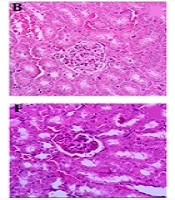
Histopathological observations also supplied supportive evidence for the biochemical analysis. The liver histopathological finding revealed no observed histopathological changes in the normal and negative control groups (Figure 2A, C). The presence of interstitial edema, fatty changes, and severe centrilobular necrosis accompanied by inflammation and ballooning degeneration were observed in the liver of the CCL4 model mice (Figure 2B).

Figure 2.
A, Normal control group, normal morphology of histological section of mice liver; B, positive control group, 24 hours after the injection of CCL4. Note to necrotic cells (white star) with eosinophilic cytoplasm in compare with normal cells and pyknotic nuclei (dark arrows). Also ballooning degeneration with free space in hepatocytes (white arrows) is evident; C, negative control group, 24 hours after the injection of olive oil. Note to normal structure of liver. D, low dose microemulsion (2.5%) pre-treated group; E, median dose microemulsion (5%) pre-treated group; F, high dose microemulsion (10%) pre-treated group and G, 1000 mg/kg non-microemulsion of extract pre-treated group, 24 hours after the injection of CCL4. Magnification × 400.
Toxin mediated changes in the liver 24 hour after the injection of CCL4 was much less intense with the increasing doses of ME Prunus cerasus kernel extract in the groups 4 and 5, and using non-ME extract (group 7); and improvement of histoarchitecture compared with those toxicities observed in the livers of the positive control mice except in the group 6 (Figure 1D - G).
5. Discussion
Design and development of novel drug delivery systems aimed at improving the efficacy of drugs is a progressing procedure in pharmaceutical researches. These systems are necessary for a pharmaceutical solution including a therapeutic dose of the drug in an amount pivotal for administration (26). Emulsion technology is utilized in a wide variety of industries including the cosmetics, agriculture, food and pharmaceutics (27). ME solutions were recognized in 1943 when Hoar and Schulman mixed a milky solution with hexanol to produce a uniform single-phase, non-conducting solution (28). MEs are clear and thermodynamically stable mixtures of oil and water stabilized by emulsifiers. Therefore, they have the solubility for hydrophilic and lipophilic drugs. Droplet sizes of MEs are in the diameter range of 10 to 100 nm. These small droplet sizes increase the surface area to volume ratio for drug absorption; leading to improved bioavailability (29). Hence, according to the mentioned reasons, MEs can be the successful candidate systems for topical drug delivery, parenteral delivery, ocular and pulmonary delivery, and especially in oral drug delivery (30). The easiest and most common employed method of drug delivery is oral ingestion. For many of the effective compounds found in plant extracts, adequate absorption and controlled release in gastrointestinal tract is important. ME formulations suggest some advantages over routine oral formulation for oral administration, which include raised absorption, enhancement of clinical potency, and reduction of drug toxicity (31). Therefore, ME can supply a well-designed basis to study the oral bioavailability enhancement of various drugs and plant extracts.
Liver plays the main role in the metabolism and removal of drugs (32). Hundreds of millions of people worldwide have liver diseases, which are one of the prominent reasons of morbidity and mortality (33). A number of environmental toxicants, chemicals, and drugs can cause serious cellular injuries in various organs of the body by metabolic activation (34). CCL4 is one of the environmental chemicals that cause hepatic injuries. Therefore, it is widely used for animal models of acute hepatotoxicity in experimental studies (7). Extensive research on drug-induced hepatic damage worldwide was conducted in the last decade. However, there are still serious concerns about hepatotoxicity due to these drugs (35). Medicinal plants are an important source of natural antioxidant agents because of their less toxic nature and less side effects compared with synthetic antioxidants. They are the potential sources for new therapeutic agents that can be used to inhibit hepatic injuries. Natural products rich in triterpenes, flavonoids or polyphenols are now used as strong hepatoprotective agents in experimental liver-injury and animal models (36, 37). In the current study, with regard to the well-known antioxidant and anti-inflammatory effects of Prunus cerasus kernel, hepatoprotective effect of ME-based system of Prunus cerasus kernel extract against CCL4-induced liver damage in mice was studied.
The obtained results of the current study showed that pretreatment with ME and non-ME Prunus cerasus kernel extract inhibited acute liver toxicity induced by CCL4 with a decrease in liver enzyme activities (SGPT, SGOT, ALP, and γGT) and serum bilirubin concentrations in a dose-dependent manner (Tables 1 and 2). In addition to non-ME extract (1000 mg/kg/day), low and medium ME extract doses (2.5% and 5%) almost could prevent the CCL4-induced increase, excessive serum SGPT, SGOT, and ALP. Also, the plant extract in the above mentioned doses prevented the increase of direct and total bilirubin that showed the capacity of the extract to protect biliary dysfunction in mouse liver against hepatic injury. But, high ME extract dose (10%) did not prevent the elevation of biochemical serum levels and bilirubin concentration. In addition, the liver morphological and histopathological findings exhibited the protective activity of this extract against CCL4-induced liver injury (Figure 2). These positive effects could be attributed to the existence of antioxidant substances.
Consistent with the current study findings (38), it was also reported that CCL4 had negative effects on the impaired liver and digestive system function. Similar to the current study, many scientists reported (39, 40) that various medicinal plants had a good potential for hepatoprotective activity against CCL4. Therefore, the current study used a well-studied model of hepatotoxicity (CCL4) and both biochemical and histological markers of liver injury. However, there were some weaknesses such as non-recognition of active members in the current study; hence, further evaluation is required. In spite of the fact that Prunus cerasus kernel extract significantly decreased SGPT, SGOT, ALP, and bilirubin activity in the groups 4, 5, and 7; it cannot totally return these biochemical factors to the normal levels and minimal injury of the structure of hepatocytes was observed in liver tissue of mice treated with CCL4 and the extract. In a toxicity study, Bak et al., reported that daily oral administration of Prunus cerasus kernel extract preparations in 250, 500, and 1000 mg/kg dosages for 8 days did not result in any adverse effects, but Prunus cerasus kernel above the 1000 mg/kg had adverse effect on mice (41). Consistent with the study by Bak et al., the current study confirmed that 10% extract ME had similar toxicity with doses more than 1000 mg/kg/day.
Although preparation of plant extract rarely meets the standards due to problems identifying plants, growing conditions, differences in the processing of extracts, and lack of information about the pharmacologically active ingredients, however, consistency in biological activity and composition are essential to ensure the safety of therapeutic agents.
5.1. Conclusion
The current study provided support for the concept that ME of Prunus cerasus kernel extract can better exert both enhancement delivery and protective roles in the development of liver tissue injury.